Buyer Fit Snapshot
| Best fit | Custom Embossed Paper Sleeves projects where brand print, material claims, artwork control, MOQ, and repeat-order consistency need to be specified before quoting. |
|---|---|
| Quote inputs | Share finished size, material target, print colors, finish, packing count, annual reorder estimate, ship-to region, and any compliance wording. |
| Proofing check | Approve dieline scale, logo placement, barcode or warning zones, color tolerance, closure strength, and carton packing before bulk production. |
| Main risk | Vague material claims, crowded artwork, missing packing details, or unclear freight terms can make a low unit price expensive after revisions. |
Fast answer: Custom Embossed Paper Sleeves: Material, Print, Proofing, and Reorder Risk should be specified like a repeatable production item. The safest quote records material, print method, finish, artwork proof, packing count, and reorder notes in one written spec.
Production checks before approval
Compare the actual filled-product size with the drawing, then confirm tolerance on folds, seals, hang holes, label areas, and retail display edges. Reserve space for logos, QR codes, warning copy, and material claims before decorative graphics fill the panel.
Quote comparison points
Review material grade, print process, finish, sampling route, tooling charges, carton quantity, and freight assumptions side by side. A quote is only useful when the supplier can repeat the same color, closure quality, and packing count on the next order.
Custom embossed paper sleeves can do more than wrap a carton. I have watched buyers place two otherwise similar products on a table, then watch the embossed sleeve get picked up first, even before the brand is explained. That extra moment matters. A plain box gets skimmed, then forgotten; the same product with a crisp embossed sleeve feels deliberate, giftable, and, frankly, more trustworthy. That is the real appeal of custom embossed paper sleeves: they add texture, brand presence, and a premium first impression without pushing you into heavy plastic, loud ink coverage, or a full package redesign.
From a packaging buyer's point of view, that matters because sleeves are one of the few product packaging formats that can improve package branding without disrupting the line. They fit soaps, candles, bakery boxes, apparel, cosmetics, and inserts that need cleaner retail packaging. If the base carton already works, a sleeve can lift the presentation without rebuilding the structure. If the base carton is weak, embossing will not rescue it. A prettier failure is still a failure.
Custom embossed paper sleeves sit in a useful middle ground. They feel more tactile than simple print, cost less than reworking a rigid box, and scale more easily than many boutique finishing tricks. That is why they appear so often in branded packaging and packaging design for small premium products. Subtle usually wins. Loud embossing on a flimsy sleeve does not look elevated; it looks like someone chased texture before function. And that happens a lot, kinda more often than teams want to admit.
A good way to compare formats is by the job each one performs. A carton protects. A sleeve brands. A label explains. The best sleeve makes the product feel finished in about three seconds and does not ask the buyer to decode a busy graphic system. If you want a wider view of structures, review Custom Packaging Products before you settle the sleeve spec.
A sleeve should make the product feel intentional. If it needs five tricks to do that, the design is already overworked.
Custom Embossed Paper Sleeves: What They Are and Why They Stand Out
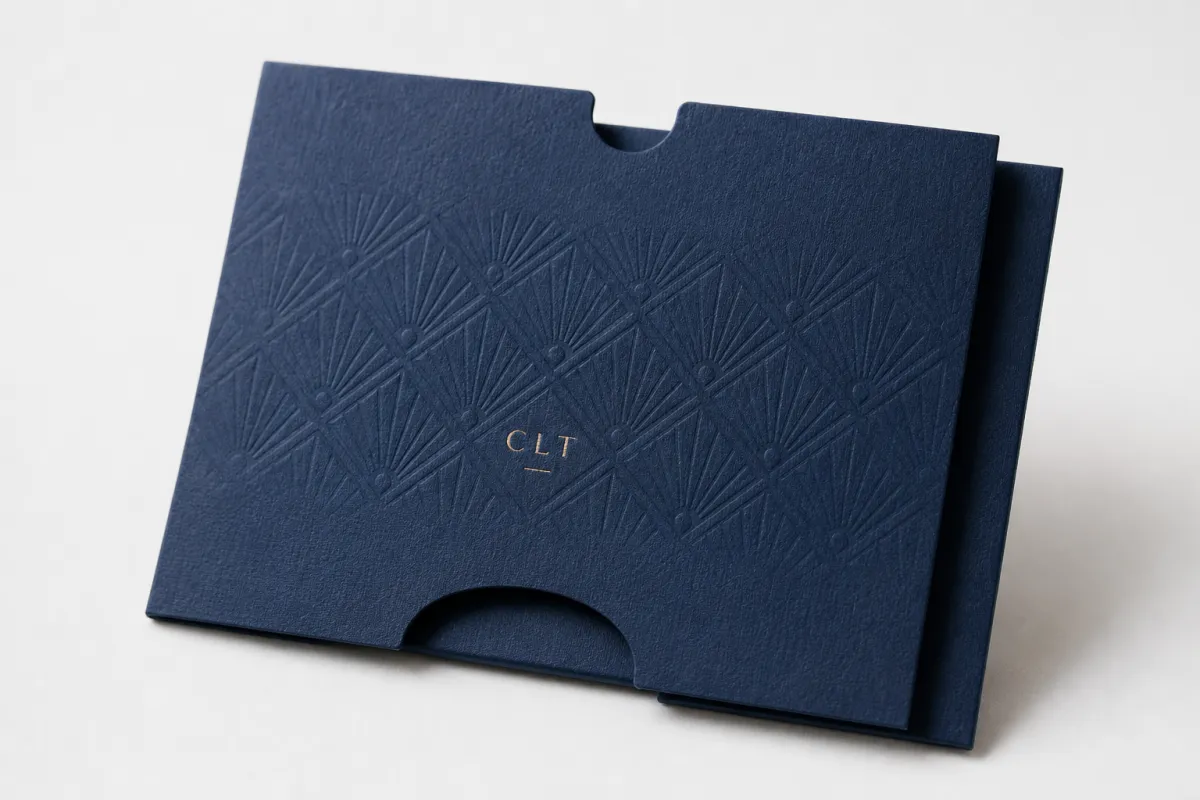
Custom embossed paper sleeves are printed or unprinted paper wraps formed to fit over a product, carton, tray, tube, or inner pack. Embossing raises selected areas of the paper so a logo, pattern, border, or message has physical depth. That tactile detail is the difference. Flat print can look sharp from a distance. Embossing changes the experience in the hand, and that is where premium packaging often earns its keep.
Three effects get mixed up constantly. Embossing lifts the design above the paper surface. Debossing pushes it inward. A printed relief effect only simulates texture with ink, shadow, or foil. The last one is cheaper, yes, but it does not deliver the same physical cue. If the buyer handles the package, the distinction is immediate. If the package is only seen in a photo, the tactile value is invisible, yet the visual lift still matters.
Where do custom embossed paper sleeves fit best? Usually on products where the base packaging is already solid and you want a cleaner, more premium front end. Think soaps in kraft cartons, candles in gift boxes, bakery sleeves around pastry trays, cosmetic sets, apparel bundles, and premium inserts inside a mailer. They also work well when you want to hide a plain stock carton under a branded wrap without retooling the entire package system.
That flexibility explains why sleeves show up in both retail packaging and ecommerce packaging. They can carry a logo, a seasonal message, a product variant, or a clean retail front panel. They also pair well with Custom Printed Boxes when you want layered branding: box structure underneath, sleeve for the visual punch on top.
The promise is simple. Done well, custom embossed paper sleeves raise perceived value quickly. Done badly, they turn into wrinkled board that looks more expensive in the quote than in the hand. A sleeve needs to fit cleanly, fold neatly, and keep the embossing readable. If it can do those three things, it has earned its place.
Most problems start when the sleeve is asked to carry too many messages. Texture gets crowded, hierarchy gets muddy, and the buyer ends up noticing everything except the brand. One strong embossed moment usually beats a crowded field of competing details.
How Custom Embossed Paper Sleeves Are Made
The production path for custom embossed paper sleeves begins long before the press runs. First comes the brief: dimensions, product weight, target finish, quantity, and whether the sleeve needs to slide on, wrap around, or lock at a seam. Then comes the dieline. A nice PDF mockup is not a dieline. A proper dieline includes fold lines, glue areas if needed, bleed, safe zones, and the allowance needed so the sleeve sits correctly once folded.
After that comes stock selection. The paper choice matters more than most buyers expect. A sleeve that looks elegant on screen can fail on press if the board is too thin, too coated, or too rigid for the fold structure. For many custom embossed paper sleeves, a 300gsm to 400gsm uncoated or lightly coated paperboard is a practical starting point. Heavier structures may need more. Lighter wraps may need less. Product size and handling pressure change the answer every time.
Next, the emboss tooling gets built. The die shapes the raised area, and the counter-die supports the back side of the paper. Grain direction matters. If the grain fights the fold, you get cracking, whitening, or a rough edge right where you wanted a clean finish. On a good run, grain runs with the fold direction where possible, and the relief is designed with enough space around small letters so the detail does not blur.
There are a few build choices worth understanding before you approve anything:
Emboss styles and layout choices
Blind embossing uses no ink in the raised area. It is the cleanest look and often the most elegant on premium packaging. Printed embossing combines texture with ink, which can work well for logos and borders. Multi-level embossing adds more depth, but it also increases tooling complexity and cost. On custom embossed paper sleeves, one clear focal area usually works better than a busy relief map. The paper is not a billboard.
Another choice is whether the printed artwork sits beside the emboss or directly on top of it. Both can work. Tiny text over a deep emboss is asking for trouble. A logo in a broad, quiet field survives better than fine typography squeezed into an aggressive texture zone. The paper has limits, and it always collects its debt.
What changes after the first sample
Not everything is fixed after the first sample. In many custom embossed paper sleeves projects, the sample shows whether the fit is correct, whether the emboss reads clearly, and whether the stock is too soft or too stiff. You can often still adjust fold depth, artwork placement, emboss relief, or board weight. What you do not want is a full restart because the original brief skipped the actual product dimensions. That is how budgets vanish in small, expensive steps.
There is also a sustainability side to the process. If your goal is recyclable packaging, keep the structure simple. Avoid unnecessary laminates, minimize adhesive, and choose paper that works with the recycling stream you are targeting. For broader guidance on responsible fiber sourcing and certification, the FSC certification guidance is a useful reference. For general recycling basics, the EPA recycling guidance is the better reality check than guessing at what a supplier thinks counts as recyclable.
Key Factors That Affect Durability, Look, and Sustainability
Good-looking custom embossed paper sleeves usually come from restraint. The strongest sleeve is not always the thickest one, and the best-looking sleeve is not always the one with the deepest emboss. Strength, texture, fit, and sustainability claims all pull on each other. Ignore one and the rest begin to wobble.
Paper weight is the first major lever. Too thin, and the sleeve feels soft, wrinkles at the corners, or collapses under handling. Too thick, and it can resist folding or flatten the embossed detail. For many premium sleeve jobs, the sweet spot often sits somewhere between 300gsm and 450gsm, but that range shifts with sleeve size, product weight, and whether the package travels inside a shipper. A candle sleeve and a bakery sleeve do not need the same structure, even when they look similar in a mockup.
Emboss depth is the second lever. Deep relief looks impressive in a presentation, but the paper has limits. Fine logos, tiny type, and dense patterns usually need conservative depth. Push the relief too far and you risk cracking, flattening, or visible pressure marks around the design. A clean, controlled emboss usually beats a dramatic one that looks tired after the first handling.
Finish is where sustainability can get messy. Uncoated stock feels natural and usually supports a cleaner recycling story. Light aqueous coating adds a bit of protection without changing the feel too aggressively. Soft-touch film and heavy lamination can create a luxe look, but they can make recycling less straightforward. If the goal is eco-minded retail packaging, the finish should support the message, not fight it. Decorative extras are fine until they start arguing with the claim on the side panel.
Fit matters as much as cosmetics. Custom embossed paper sleeves need to stay snug on the carton, tube, tray, or cup they are wrapping. If the sleeve slides, the embossing can shift out of alignment or the edge can move during shipping. A sleeve that looks perfect on the bench and loose in transit is not a win. It is a reprint.
For shipping durability, ask whether the sleeve and its base package have been checked under realistic handling. If the pack travels in a master carton, compression testing such as ASTM D642 can help identify weak spots. If it ships parcel-style, ISTA-style transit testing is worth discussing. The sleeve itself is rarely the only thing that matters; the whole package stack has to survive distribution.
Environmental tradeoffs deserve straight talk. Recycled content can be a plus, but recycled fiber may behave differently under emboss pressure. FSC sourcing can be a strong signal if chain-of-custody matters to your brand. Heavy ink coverage, foil, plastic lamination, and overdesigned finishes all chip away at the simplicity that makes paper sleeves appealing in the first place. If the sleeve only looks "sustainable" because the marketing copy says so, buyers will notice the gap quickly.
- Best for clean branding: uncoated or lightly coated paper with one embossed feature.
- Best for handling resistance: a slightly heavier board with controlled fold lines.
- Best for recycling clarity: paper-only construction, minimal adhesive, no plastic film.
- Best for premium retail packaging: restrained print plus one tactile brand moment.
Custom Embossed Paper Sleeves Pricing, MOQ, and Quote Basics
Pricing for custom embossed paper sleeves is usually driven by setup, tooling, stock, print coverage, and how complicated the relief is. The sleeve may look simple. The quote rarely is. Tooling for a basic emboss is often one of the first added costs, and any revision that changes the die can add more. That is normal. What is not normal is a supplier hiding setup charges inside a vague per-unit number and hoping nobody notices until the invoice arrives.
As a practical range, simple sleeve jobs often land around $0.12 to $0.28 per unit at 5,000 pieces, with tooling or setup in the $120 to $350 range depending on size and detail. More complex custom embossed paper sleeves with print, deeper relief, special folds, or premium board can move into the $0.25 to $0.55 per unit range at similar volumes. Short runs cost more per unit because setup is spread across fewer pieces. That is not a trick. It is just production math.
The MOQ question depends on the factory and the sleeve design. Simple flat sleeves may allow smaller runs, sometimes a few hundred to low thousands. Once you add deep embossing, special folds, or multi-panel registration, the minimum usually climbs. If you need a pilot run, ask for the lowest viable MOQ rather than the smallest imaginable one. There is a difference, and suppliers know it.
| Option | Typical Setup | Indicative Unit Range | Best Use | Main Tradeoff |
|---|---|---|---|---|
| Simple blind embossed sleeve | Standard dieline, one emboss tool, minimal print | $0.12-$0.28 at 5,000 pieces | Soap, candles, minimalist branded packaging | Elegant, but detail is limited |
| Printed + embossed sleeve | Print setup plus emboss tooling | $0.18-$0.40 at 5,000 pieces | Retail packaging, cosmetics, gift sets | More visual control, higher setup cost |
| Multi-level embossed sleeve | Complex tooling, tighter press control | $0.25-$0.55 at 5,000 pieces | Premium launches, limited editions | Higher risk of distortion and longer lead time |
A useful quote request for custom embossed paper sleeves should include dimensions, carton or product specs, artwork files, target stock, quantity, desired finish, and whether the sleeve must arrive flat-packed or pre-assembled. If you want real numbers instead of guesswork, include the product itself. A supplier can do much better when they can measure actual size and wrap behavior rather than reading a spreadsheet with optimistic dimensions.
Hidden cost traps show up fast. Last-minute artwork changes can force a new tool. An overly tight fit can create waste when sleeves crack or slide during assembly. Weak stock may lower unit price but raise damage rates. Vague revision cycles also cost money because every additional proof run drags time and labor. A good quote on custom embossed paper sleeves should separate tooling, materials, print, and shipping so you can compare apples to apples.
If you are deciding between sleeves and a full reprint, compare the sleeve against Custom Packaging Products that may already fit your budget and distribution plan. Sometimes the cleaner answer is a better sleeve. Sometimes it is a simpler carton with a stronger print plan. Packaging is not supposed to be a personality contest.
Production Steps, Process, and Timeline You Can Expect
The production sequence for custom embossed paper sleeves usually follows the same order, even if the timeline does not always behave. Discovery and brief review come first. Then the dieline gets confirmed. Artwork is prepared or adjusted. A sample is made. Revisions happen. Final proof gets approved. Production starts, then inspection, packing, and delivery follow. That sounds tidy on paper. In real life, the sample stage is where the clock starts arguing with the calendar.
For a first-time job, a realistic timeline often looks like this: 2 to 5 business days for dieline and brief alignment, 5 to 10 business days for the first sample, and 10 to 20 business days for production after final approval. Add more time if the tooling is new, the artwork is not press-ready, or the emboss depth needs more than one adjustment. Repeat orders can move faster, sometimes much faster, because the spec is already locked and the supplier is not rebuilding the plan from scratch.
Lead time gets misread all the time. People assume the press run is the long part. Often it is not. The slow part is approval. If you have not seen the sleeve on the actual product, under actual lighting, with actual handling, you are still in decision mode. Custom embossed paper sleeves can be straightforward to produce, but only after the fit and the texture are settled.
What a clean timeline looks like
- Brief and spec review: product dimensions, quantity, stock preference, and finish goals.
- Dieline confirmation: fold lines, glue areas, safe zones, bleed, and emboss placement.
- Sample and fit check: the sleeve goes over the real product or carton.
- Revision window: small changes to relief, size, or artwork placement.
- Final approval: all specs locked before mass production.
- Production and QC: print, emboss, cut, fold, inspect, and pack.
Lead time changes when the job gets complicated. Deep embossing often needs slower setup and tighter pressure control. Multi-panel sleeves need more registration checks. Specialty papers can add sourcing delays. For custom embossed paper sleeves, one extra day of proofing can save a full rerun later. That is the trade worth making.
Build buffer time into the schedule for freight delays and rework. This matters even more if the packaging launch is tied to a store rollout, a seasonal campaign, or a product refresh. If the sleeve is late, the product can still ship, but the presentation suffers. No one wants to launch a premium item in a plain carton because the packaging crew had to improvise.
Common Mistakes With Embossed Paper Sleeves
Most problems with custom embossed paper sleeves are not mysterious. They come from trying to make the sleeve do too much, too fast, with too little testing. The classic mistake is asking for a deep emboss on lightweight paper. That usually leads to cracking, pressure marks, or a relief that flattens the moment it leaves the press. Texture should support the board, not bully it.
Another common error is sizing the sleeve from the carton drawing instead of the physical product. Paper dimensions on a drawing do not show how the sleeve behaves once folded, wrapped, and handled by real people. A sleeve that appears correct in a PDF can be loose by a few millimeters, which is enough to make it look cheap. For custom embossed paper sleeves, a millimeter can matter more than a whole paragraph of branding copy.
Busy artwork is another problem. If the design already has a lot going on, embossing can make it feel cluttered rather than premium. The eye has no place to rest. Good packaging design uses contrast and hierarchy. Strong packaging design knows when to stop. A single embossed logo on an open field often outperforms a dozen decorative features fighting for attention.
There is also the sustainability mismatch. Some brands ask for eco-friendly sleeves and then add plastic film, foil, and extra adhesives because they like how the mockup looks. That is not a sustainable brief. That is a wish list. If your packaging story depends on recyclability, keep the structure as clean as possible. Use responsibly sourced board, minimal finishing, and ink only where it earns its place.
Finally, people approve digital mockups and never check a physical sample under normal handling. That is risky. A screen cannot tell you if the embossed area catches light badly, if the fold line is too sharp, or if the sleeve rubs against the product coating. Custom embossed paper sleeves need a real-world sample before you commit. Otherwise you are buying a guess with a logo on it.
If the sample has not been held, folded, slipped over the product, and looked at under normal light, the job is not approved. It is merely postponed.
Expert Tips and Next Steps for Better Results
If you want better results with custom embossed paper sleeves, start with the product, not the decoration. Decide what the sleeve needs to do: increase shelf presence, improve unboxing, signal sustainability, or support a seasonal version. Then choose the stock, texture, and print system that fits the job. That order matters. Too many buyers do it backward and end up designing around a finish instead of around the product.
Ask for a physical sample with the real item inside. Not a stand-alone sleeve. Not a flat sheet. The real thing. That is the only way to judge fit, texture, edge behavior, and visual hierarchy at the same time. If the supplier cannot provide a practical sample workflow, keep looking. For a packaging buyer, a good sample is cheaper than a bad production run.
Keep one strong brand moment and let it breathe. A clean embossed mark, a quiet border, or a single tactile panel usually works better than trying to emboss every face of the sleeve. The material has to carry the texture gracefully. Custom embossed paper sleeves are strongest when they look calm, not crowded. Premium packaging is not the same thing as maximum decoration.
When comparing vendors, look beyond unit price. Ask about tooling clarity, revision policy, defect handling, quality checks, and packaging for shipment. A low quote can turn expensive if the supplier is vague about approval stages or if the sleeves arrive dented. Good suppliers are usually precise about setup, honest about tolerances, and willing to explain where cost comes from. That is the kind of detail you want in branded packaging work.
Here is a practical action list if you are ready to move:
- Measure the product or carton in the real world, not just on a spec sheet.
- Define the sleeve's job: shelf appeal, gift presentation, or brand reinforcement.
- Choose a stock range that supports embossing without cracking.
- Request one physical sample and test it under normal handling conditions.
- Compare quotes with setup, tooling, and shipping broken out clearly.
- Lock the final spec before you scale the order.
If you are still sorting through product packaging formats, a broader look at Custom Packaging Products can help you compare sleeves, boxes, inserts, and other retail packaging options without guessing. Sometimes the sleeve is the right answer. Sometimes it is the better answer for now. That is the practical way to think about it.
Custom embossed paper sleeves work best when they are treated like a precision packaging piece, not a decorative afterthought. Choose the Right board, keep the emboss controlled, respect the fit, and be honest about sustainability tradeoffs. Do that, and custom embossed paper sleeves can add real value without dragging the whole package into unnecessary cost. For a lot of products, that is exactly the balance worth paying for.
Are custom embossed paper sleeves recyclable?
Usually yes, if the sleeve is made from recyclable paper stock and does not use plastic lamination or heavy mixed-material finishes. The details matter more than the marketing line. Ask the supplier about coating, adhesive, and ink systems, because those choices decide whether recycling stays simple. A cleaner spec is almost always easier to recycle than one loaded with decorative extras that do not improve function.
How much do custom embossed paper sleeves usually cost?
Cost depends on size, stock, emboss complexity, quantity, and whether a new tool is needed. Short runs cost more per unit because setup and tooling are spread across fewer sleeves. For many projects, simple sleeves can start around $0.12-$0.28 per unit at larger quantities, while more complex embossed versions can move higher. The best quote is the one that explains setup separately from unit cost.
What is the minimum order quantity for custom embossed paper sleeves?
MOQ varies by factory and by how complex the sleeve is. Simple flat sleeves may allow smaller runs, while deep embossing or special folding usually pushes the minimum higher. If you need a pilot order, ask for the lowest viable MOQ and expect a higher unit price. That tradeoff is normal. Low volume and custom tooling do not usually live happily together.
How long does it take to produce embossed paper sleeves?
First-time projects usually take longer because they need artwork checks, dielines, sample approval, and tooling setup. Repeat orders move faster if the spec is already locked and the artwork is unchanged. The biggest delay is often approval, not the press run, so build in time for revisions. A sample delay now is better than a production mistake later.
Which paper stock works best for custom embossed paper sleeves?
A sturdy uncoated or lightly coated paperboard usually gives the cleanest emboss detail and folds well without cracking. Very thin stock can collapse, while overly stiff stock may resist fine texture and create rough edges. The best choice depends on the product weight, sleeve size, handling conditions, and how premium you want the finish to feel. There is no magic stock, despite what sales copy likes to imply.

