Buyer Fit Snapshot
| Best fit | Custom Embossed Rigid Packaging Supplier projects where brand print, material claims, artwork control, MOQ, and repeat-order consistency need to be specified before quoting. |
|---|---|
| Quote inputs | Share finished size, material target, print colors, finish, packing count, annual reorder estimate, ship-to region, and any compliance wording. |
| Proofing check | Approve dieline scale, logo placement, barcode or warning zones, color tolerance, closure strength, and carton packing before bulk production. |
| Main risk | Vague material claims, crowded artwork, missing packing details, or unclear freight terms can make a low unit price expensive after revisions. |
Fast answer: Custom Embossed Rigid Packaging Supplier: Board, Finish, Dieline, and Unit Cost should be specified like a repeatable production item. The safest quote records material, print method, finish, artwork proof, packing count, and reorder notes in one written spec.
Production checks before approval
Compare the actual filled-product size with the drawing, then confirm tolerance on folds, seals, hang holes, label areas, and retail display edges. Reserve space for logos, QR codes, warning copy, and material claims before decorative graphics fill the panel.
Quote comparison points
Review material grade, print process, finish, sampling route, tooling charges, carton quantity, and freight assumptions side by side. A quote is only useful when the supplier can repeat the same color, closure quality, and packing count on the next order.
Custom Embossed Rigid Packaging Supplier: What to Know
A custom embossed rigid packaging supplier does more than make a box look expensive. Good embossing changes how a package feels before the product even comes out. The raised detail catches light, throws shadow, and adds texture in a way flat print cannot fake. That tiny shift in surface changes the whole read of the package.
Rigid packaging starts with thick paperboard, then gets wrapped in printed, coated, textured, or specialty paper. The result feels solid in the hand. A folding carton can be the right answer for lighter retail products. A rigid box is what brands choose when they need better presentation, better protection, and a more deliberate unboxing moment. If the product has some weight to it, or the brand needs the packaging to do a little heavy lifting, rigid usually makes sense.
For custom logo projects, the real question is not whether the mockup looks good. It is whether the box works in production, packs cleanly, ships without falling apart, and still feels premium when the customer opens it. A strong custom embossed rigid packaging supplier thinks through structure, decoration, materials, sampling, and freight. That is the difference between premium packaging and an expensive screenshot. I have seen beautiful concepts turn into production headaches because nobody asked the boring questions early enough. Those boring questions matter.
What a custom embossed rigid packaging supplier does
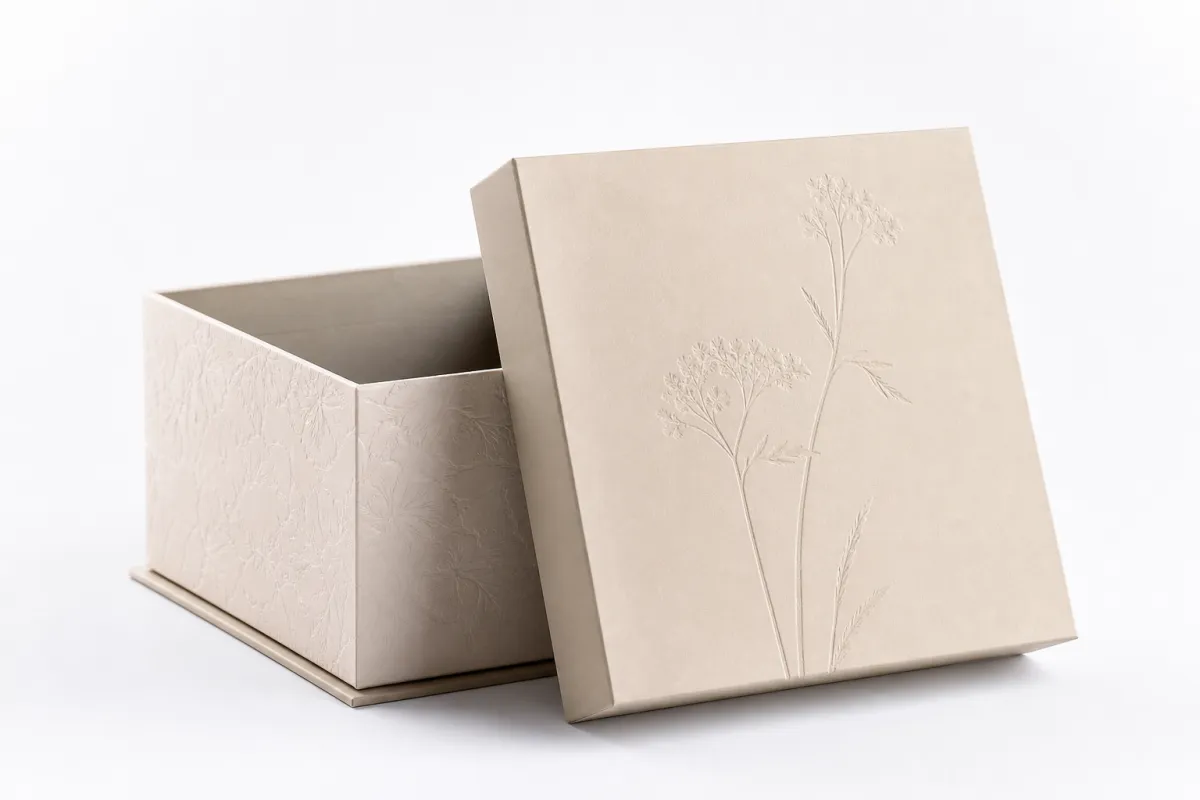
A custom embossed rigid packaging supplier sits between packaging design and manufacturing reality. That sounds neat. It is not. The job is broad. The supplier has to turn a brand idea into a rigid structure, place artwork where it actually belongs, choose board and wrap materials that can handle the build, and keep the whole thing manufacturable at the target quantity.
When embossing is done well, the surface picks up a raised detail the eye catches fast. That detail might be a logo, a monogram, a pattern, or a product mark. It gives the packaging a tactile edge because the hand notices texture before the brain has time to label it. Customers may not know why the box feels better. They just know it does. A blind emboss can feel quiet and expensive. A registered emboss, where the raised area aligns with printed artwork, can add precision. Both have their place.
Rigid packaging is usually built from chipboard or gray board, then wrapped with printed paper, coated paper, textured stock, or another specialty wrap. Compared with standard custom printed boxes, it is heavier, stiffer, and more durable. It also costs more. So the format only makes sense when the product value, margin, or presentation goal justifies the spend. If the packaging is going straight into a low-margin commodity lane, rigid is probably overkill. If the box is part of the product story, it earns its keep fast.
That is why the best custom embossed rigid packaging supplier is not just a print vendor. They behave more like a production partner. They look at whether the box needs to protect glass, cosmetics, electronics, apparel, gift sets, or luxury accessories. They also look at whether it has to survive shelf handling, e-commerce shipping, or retail display. Each use case pushes the structure in a different direction, which changes board weight, closure style, inserts, and finish choices. One project might need a snug tray and a lift ribbon. Another might need a magnetic closure and a foam insert. Same category, very different engineering.
A good rigid box should feel composed before the lid opens, because structure and surface do half the selling before the product is visible.
From a packaging buyer’s point of view, the value of a custom embossed rigid packaging supplier is simple: they cut down the guesswork. They know where embossing looks crisp and where it turns muddy, where corner wraps start to fail, and how much detail survives once glue, pressure, and shipping get involved. That kind of practical knowledge keeps premium product packaging from becoming a very expensive revision loop. It also keeps teams from arguing about taste when the actual issue is manufacturability.
If you are comparing packaging options for a launch, it helps to think in tiers. A folding carton may be enough for a low-friction retail item. A rigid box may be the right move for a higher-ticket kit, a presentation set, or a gifting program. A custom embossed rigid packaging supplier helps you sort that out based on the product, not the mood board. That sounds obvious. It is not how a lot of sourcing starts.
Brands building a fuller packaging system often coordinate rigid boxes with labels, inserts, and secondary shipper cartons. That is where a broader supplier set matters. If you need to compare structures or finish combinations, our Custom Packaging Products page is a useful place to start mapping the format mix.
How a custom embossed rigid packaging supplier turns artwork into structure
The actual work starts before the first sample exists. A custom embossed rigid packaging supplier begins by turning the brief into a dieline, because artwork cannot be designed in a vacuum. Lid depth, panel width, wrap turn-ins, and spine thickness all affect where graphics land. Ignore the structure until the end and embossing can end up too close to a fold, too near a corner, or centered in a way that feels off once the box is assembled. That is the kind of miss that makes an otherwise good design feel slightly wrong.
Board selection is one of the first technical decisions. Thicker board gives a more substantial feel, but it can tighten corner wraps and create bulky edges if the design is not engineered carefully. The wrap paper matters too. Smooth coated paper behaves differently from linen-texture stock or a soft-touch laminated wrap. Some surfaces hold embossed detail sharply. Others soften it a little. A thoughtful custom embossed rigid packaging supplier knows the final tactile result comes from substrate, tooling, and pressure, not just the emboss plate.
Emboss depth deserves restraint. People tend to assume deeper means better. Packaging design does not always agree. A subtle rise usually looks cleaner, especially on logos with fine lines or tight letter spacing. Push too hard and small shapes can get crushed or the printed layer can distort around the mark. A skilled custom embossed rigid packaging supplier sizes the emboss to the graphic instead of forcing the graphic to adapt to the emboss. That is where experience shows up. The best-looking premium boxes usually have a little discipline baked in.
Tooling is another place where experience shows up fast. The die has to be accurate, pressure has to be tuned, and registration has to stay consistent across the run. If the box includes foil stamping, spot UV, and embossing together, the order of operations matters. A small shift at one stage can create visible mismatch later. That is why a reliable custom embossed rigid packaging supplier talks through sequence instead of treating decoration like a checkbox. The production plan is part of the design, whether the creative team wants to think about that or not.
Assembly quality matters just as much as decoration. Adhesive wrapping, corner finishing, and insert placement all affect the final feel. A box can have beautiful embossing and still look weak if the corners are loose or the lid wall bows slightly. On premium retail packaging, those defects stand out fast. Buyers may not know the technical cause, but they see the result immediately. I have opened samples that looked gorgeous in render form and then fell apart the second the lid flexed. Not fun. Definitely not premium.
Sampling is where the project gets real. In many cases, the supplier will send a digital mockup first, then a blank structural sample, then a decorated prototype once the artwork and decoration positions are confirmed. That sequence gives the brand a chance to check fit, proportions, and presentation before committing to production. A serious custom embossed rigid packaging supplier should encourage that process instead of sprinting straight to a full run. The blank sample is often the one that saves the job. It is not glamorous, but it tells the truth.
One practical lesson from packaging production: the best sample is not always the prettiest sample. Sometimes the useful one is the ugly one that exposes a problem early. Moving an emboss mark, adjusting a panel size, or softening a wrap corner is cheap before the order is in motion. It is much less charming after the cartons are already moving. That is the kind of problem-solving you want from a custom embossed rigid packaging supplier. A good supplier will tell you, flat out, that a tiny detail needs to move. That honesty is worth more than a polished sales pitch.
For brands balancing presentation and performance, the structure also has to fit the product handling plan. Does the item ship nested in an insert? Does it sit upright for display? Does the lid need a ribbon lift, magnetic closure, or thumb notch? Each answer changes the engineering. A Custom Rigid Box for a fragrance set is not the same thing as a rigid presentation box for a tech accessory, even if both share the same embossed logo style. The right custom embossed rigid packaging supplier treats those differences as part of the design, not as afterthoughts.
Key factors that shape cost and pricing
Pricing for a custom embossed rigid packaging supplier quote is shaped by several variables at once. The confusion usually starts when buyers look only at unit price. Better question: what is included, how much setup is needed, and how much finishing complexity does the design introduce? Once those answers are clear, the numbers stop looking random. A quote is just a math problem with too many missing pieces.
The biggest cost drivers are usually board thickness, wrap material, print coverage, emboss complexity, foil coverage, spot UV, and insert design. A plain wrap with a simple logo emboss costs less than a heavily printed box with multi-pass decoration and a custom fitted insert. Add a magnetic closure or a layered tray system and the build gets more labor-intensive. A good custom embossed rigid packaging supplier shows which features are driving the price instead of hiding everything inside a vague line item. If they cannot explain the cost, they probably do not understand the build well enough yet.
Tooling and setup fees matter a lot on lower-volume projects. An emboss die, cutting tools, and special finishing plates may need to be made before production starts. When quantity is small, those fixed costs get spread across fewer units, which pushes unit pricing up. That is why a short run of 500 units can look expensive compared with a 5,000-unit order even when the materials are similar. A custom embossed rigid packaging supplier should explain the breakpoint so you can see the volume effect clearly. Otherwise, people end up comparing apples to a truckload of oranges.
Minimum order quantity is another thing buyers often underestimate. At lower quantities, the factory absorbs more setup time per box. As volume rises, the line runs more efficiently and the cost per unit usually improves. For many rigid box projects, pricing gets noticeably better once the order moves into the low thousands, though the exact breakpoint depends on the build. That is normal, not a sign that the supplier is inventing a number. It is just how production works.
Here is a practical comparison of common packaging paths:
| Packaging option | Typical build | Approx. unit cost at 5,000 pcs | Best fit |
|---|---|---|---|
| Folding carton | Paperboard with print and basic coating | $0.25-$0.60 | Retail packaging with lower weight and simpler presentation |
| Basic rigid box | Thick board with wrapped paper, no emboss or light decoration only | $0.85-$1.80 | Gift sets, accessories, and premium product packaging |
| Embossed rigid box | Rigid base with custom emboss, optional foil, and tailored insert | $1.20-$3.50 | Luxury branded packaging and presentation boxes |
| High-decor rigid box | Emboss, foil, spot UV, specialty wrap, complex insert system | $2.50-$6.00+ | Premium launches where package branding is part of the product value |
Those numbers are directional only. Final pricing depends on coverage, size, insert complexity, and freight. A box with a large surface area and heavy print coverage will cost more than a small box with restrained decoration. The same is true for deep embossing or specialty paper wraps. A credible custom embossed rigid packaging supplier makes those differences visible in the quote instead of pretending they do not exist. If someone gives you a too-clean number with no breakdown, be cautious.
It also helps to compare quotes on the same basis. Ask whether the price includes assembly, inserts, sampling, inner trays, and freight to your location. Some quotes look low because they exclude shipping, customs, or warehouse receiving. Others hide differences in board grade or adhesive quality. A quote from one custom embossed rigid packaging supplier may be genuinely better, but only if the specification matches what you asked for. Otherwise the cheapest number is just the smallest number on paper.
For launches that need external validation on packaging performance or shipping durability, standards matter. If the box will travel through parcel networks, many teams look to ISTA testing guidance for distribution and transit considerations. If sourcing paper responsibly is part of the brand promise, FSC certification information is a useful reference when discussing wrap stock and board content.
Honestly, one of the clearest signs that you are working with a capable custom embossed rigid packaging supplier is that they ask questions before they price the job. If they want to know fill weight, display orientation, shelf life, and whether the box has to survive e-commerce drops, they are thinking like a production partner rather than a quote machine. That kind of curiosity usually leads to fewer surprises later.
Process and timeline: from brief to delivery
A custom embossed rigid packaging supplier usually moves through a predictable sequence, but the speed of each stage depends on how much information you provide up front. The process starts with discovery: dimensions, product weight, quantity, launch date, budget range, and the role the box needs to play in the brand experience. Clear brief, faster project. Thin brief, more back-and-forth. That is just reality.
The sample stage usually takes longer than buyers expect, especially when the box needs custom inserts or multiple decorative finishes. A digital proof can confirm layout and copy placement, but it cannot tell you how the box feels in the hand. A blank structural sample shows size and closure, while a decorated sample reveals how the emboss, print, and wrap interact. A good custom embossed rigid packaging supplier makes room for those checkpoints, because changing something after production starts is always more expensive. This is where patience saves money.
Once the sample is approved, production enters the manufacturing queue. Lead time depends on press availability, wrap material sourcing, die readiness, and finishing complexity. Simple rigid boxes may move faster. A more detailed build with foil, spot UV, and custom insert work needs more buffer. In many rigid packaging projects, the range lands somewhere around 12 to 20 business days from approval to completion, though larger or more complex orders can run longer. A careful custom embossed rigid packaging supplier will not promise a fake rush timeline just to win the job. If they do, they are selling stress.
Inspection and packing are part of the schedule too. If the supplier checks random cartons for corner integrity, lid fit, emboss clarity, and print alignment before shipping, that adds a little time but protects the order. Worth it. A box that arrives on time but fails quality checks costs more in the end than a slightly slower one that meets spec. This is where the discipline of a custom embossed rigid packaging supplier pays off. Quality control is not a bonus; it is part of the product.
Freight planning deserves its own attention. Production is only one slice of the calendar. Transit time, customs clearance, warehouse booking, and receiving windows all affect when the boxes are actually available for pack-out. A good supplier will ask where the cartons are going, how they will be received, and whether the destination is a distribution center, a co-packer, or a retail launch site. That question sounds basic. It is often the difference between a clean rollout and a preventable delay.
From a buyer’s perspective, the safest path is to work backward from the launch date. Leave time for artwork review, sample revisions, approval, production, transit, and contingency. If you need a rigid box for an event, gifting season, or retail launch, build the calendar with buffers instead of optimism. The best custom embossed rigid packaging supplier will help map those buffers honestly. If the timeline is tight, they should say so early, not after the schedule is already breathing down everybody’s neck.
Revision timing matters too. If the structural sample is approved and the artwork changes after that, the schedule can move. That is not a failure. It is normal packaging development. What matters is that everyone understands which changes are still safe and which ones reopen tooling or production steps. A seasoned custom embossed rigid packaging supplier will separate cosmetic changes from structural changes so the team can decide quickly.
Step-by-step guide to choosing the right supplier
Start with the job the box has to do. Does it need to protect a fragile item, create a premium first impression, support unboxing content, or all three? The answer shapes the build. A custom embossed rigid packaging supplier is much easier to evaluate once the goal is clear, because every supplier can say they make beautiful boxes. Not every supplier can solve the same packaging problem.
Next, shortlist suppliers with real rigid packaging experience, especially if embossing is central to the design. Ask to see examples of similar closure styles, insert systems, and wrap finishes. A supplier that has worked on high-detail embossing should be able to show clean edges, accurate registration, and consistent corner wrapping. If the samples look soft, uneven, or overloaded, keep moving. Weak samples usually stay weak when scaled.
Request samples and handle them in person if you can. Photos help, but they do not tell you everything. Texture, lid resistance, board rigidity, and the clarity of an embossed mark are hard to judge on screen. A custom embossed rigid packaging supplier should be comfortable sending physical samples because the tactile part of the box is the point. If they are reluctant to do that, I would ask why.
Then review the quote line by line. Check materials, tooling, sampling stages, assembly, inserts, freight terms, and revision rules. Ask what happens if the artwork changes after approval, and ask whether the quoted price includes packing for shipment. That matters even more for custom printed boxes and branded packaging programs where multiple components are being produced together. Small exclusions have a habit of becoming big budget problems.
Communication rhythm matters more than many teams realize. If you need quick feedback on dielines, a clear approval chain, and one contact who can explain technical tradeoffs, say that early. A strong custom embossed rigid packaging supplier will adapt to that rhythm instead of letting the project drift between departments. Packaging moves best when everyone knows who signs off on structure, graphics, and budget. No mystery. No dead air.
- Confirm the supplier has recent rigid box work, not just general print capability.
- Ask for at least one physical sample that shows emboss quality.
- Check whether the quote covers inserts, assembly, and freight.
- Clarify sample rounds and revision limits before artwork starts.
- Make sure the supplier can support your timeline with realistic lead times.
If your brand is comparing multiple packaging paths, map the same brief against more than one structure. A rigid presentation box, a refined folding carton, and a hybrid mailer can each serve different budgets and launch needs. The supplier who helps you compare honestly is often the one worth keeping. In many cases, the best custom embossed rigid packaging supplier is the one that explains where a simpler structure would work just as well. That answer may feel less exciting, but it is usually the smarter one.
Common mistakes when working with a custom embossed rigid packaging supplier
One common mistake is designing the artwork first and the structure second. That usually leads to a logo landing too close to a fold, a pattern that fights the panel layout, or embossing that disappears into a corner wrap. In rigid packaging, the box geometry is part of the design system. A custom embossed rigid packaging supplier can usually correct that early, but only if the structure is discussed before the artwork is frozen.
Another mistake is choosing the cheapest quote without checking what the quote actually covers. Low numbers can hide thin board, loose adhesive standards, or weak sample control. They can also hide the real cost of freight or assembly labor. A good custom embossed rigid packaging supplier will help you compare on specification, not just on price. Cheap can get expensive fast once fixes, replacements, and delays show up.
Skipping a physical sample is risky. A render can look perfect, then the actual box shows a lid that sits too tight, a wrap edge that peeks at the corner, or an emboss that reads flatter than expected. Once production starts, those issues get expensive fast. Approving a sample is one of the simplest ways to protect the project, and a serious custom embossed rigid packaging supplier will push for that checkpoint. If a supplier is trying to skip samples, that is a red flag, plain and simple.
Unclear specifications are another quiet cost driver. If the supplier does not know whether the insert is foam, paperboard, molded pulp, or a simple card divider, they have to guess. If they do not know the pack-out orientation, they may engineer the wrong nesting direction. If finish expectations are vague, the sample can drift away from the brand standard. A competent custom embossed rigid packaging supplier wants detail because detail reduces waste. Clarity up front beats correction later, every time.
People also forget to plan storage and freight. Rigid boxes ship as nested components or flat wrap sets in some cases, but the final cartons still take up room once packed and delivered. If the warehouse is tight, or if the project arrives in stages, that needs to be in the plan early. A custom embossed rigid packaging supplier should be able to talk through palletization, carton packing, and shipping method without making it sound like an afterthought. Otherwise, you are just borrowing trouble.
Here is a short reality check that applies to a lot of premium packaging projects: fancy is not the same as effective. A box with too many effects can feel busy, expensive, and hard to reproduce. A simpler structure with well-placed embossing, clean typography, and a good material choice often looks more luxurious than a crowded one. That is where the best custom embossed rigid packaging supplier earns trust. Quiet confidence usually beats loud decoration.
Expert tips and next steps before you request quotes
Before you request pricing, build a one-page brief. Include box dimensions, product weight, quantity, budget range, desired finish, and launch date. That one sheet saves time for you and for the custom embossed rigid packaging supplier, because it turns a vague inquiry into a usable manufacturing conversation. If you already know the approximate structure, say that too. If you do not, say that as well. Ambiguity hidden behind confident language is still ambiguity.
It also helps to gather the right files before the first quote request. Send vector artwork, logo files, copy, product photos, and any dieline or structural reference you have. If you have inspiration images for texture or finish direction, include those as well. The better the reference set, the easier it is for a custom embossed rigid packaging supplier to judge whether the build should be understated, polished, tactile, or more decorative. A good brief makes the supplier faster, which usually makes the project calmer.
Ask about sample stages up front. Some jobs only need a structural sample and a final pre-production proof. Others need more than one decorated prototype, especially if emboss depth, foil placement, or insert layout is still being refined. Ask who owns the tooling, how revisions are handled, and what triggers a new setup charge. Those questions can save a lot of frustration later, and a transparent custom embossed rigid packaging supplier will answer them directly. If the answers are fuzzy, that is useful information too.
Internally, decide who signs off before the project starts moving. Someone should approve structure, someone should approve graphics, and someone should protect the budget. If those roles are unclear, the project can stall while people debate details that should have been settled earlier. In packaging terms, speed comes from clarity, not pressure. That is especially true when you are coordinating custom printed boxes, inserts, and premium decorative finishes together. One missing approval can gum up the whole schedule.
When you start comparing quotes, look for practical differences rather than cosmetic ones. Does one supplier show a clearer emboss specification? Does another give you better control over sampling? Does one offer a cleaner path for shipping and receiving? Those details matter more than a small difference in unit price. In the long run, the right custom embossed rigid packaging supplier is the one that fits your product, your launch timing, and your tolerance for complexity. Everything else is noise.
If you are exploring options across product packaging and retail packaging formats, you can also review our packaging product lineup to narrow down what structure fits your brand best. That usually makes quote requests sharper and sample reviews easier.
One last practical tip: compare two or three realistic manufacturing paths, not ten. Too many options muddy the decision, especially when every supplier describes their own approach a little differently. A tighter comparison makes the tradeoffs easier to see and helps the team Choose the Right route with confidence. You do not need the whole universe. You need the right shortlist.
Closing thoughts
A custom embossed rigid packaging supplier is worth serious attention when the box is part of the product story, not just a protective shell. The right partner can shape the structure, control the tactile feel, and keep the line moving without stripping away the premium look the brand needs. That takes more than decoration skill. It takes material judgment, sample discipline, and honest conversations about timing and cost.
From a buyer’s point of view, the smartest move is to start with a clear brief, ask for samples, compare quotes on the same specification, and leave enough time for approvals and freight. Do that well and the packaging becomes an asset instead of a headache. Choose the custom embossed rigid packaging supplier who can explain the tradeoffs clearly, and your product packaging has a much better chance of looking right in hand, not just on screen. The simple takeaway: start with the structure, then layer on the finish.
What should I ask a custom embossed rigid packaging supplier before quoting?
Ask about board grade, wrap paper, emboss depth, tooling fees, minimum order quantity, and expected lead time. Also confirm what sample stages are included so you know whether you will see a digital mockup, a blank sample, or a decorated prototype. Finally, check whether the quote includes assembly, insert production, and freight or only the printed box itself. If you are comparing suppliers, make every one answer the same set of questions.
How much does embossed rigid packaging usually cost?
Cost is driven by quantity, board thickness, decoration complexity, insert style, and whether new tooling is required. Short runs usually carry a higher unit price because setup and die costs are spread across fewer boxes. Add shipping, customs, and warehouse receiving to the total so you are looking at landed cost, not just factory price. A fair quote should make those pieces visible, not hide them in the margins.
How long does a custom embossed rigid packaging project take?
Simple projects can move from approved brief to sample and production faster, while complex builds need more time for tooling and revisions. Expect extra time when the design uses deep embossing, specialty finishes, or custom inserts that need testing. Build in a buffer for approvals and freight so the packaging arrives before product launch, not after it. That extra room is usually the difference between calm and chaos.
What files do I need to send to a custom embossed rigid packaging supplier?
Send vector artwork, brand colors, box dimensions, copy, product weight, and any dieline or structural reference you already have. Include finish preferences and reference images so the supplier understands the look and tactile feel you want. If the pack has inserts or multiple components, provide pack-out instructions so the supplier can engineer the box correctly. The more direct the input, the less the project drifts.
Can embossed rigid boxes include foil, inserts, or magnetic closures?
Yes, embossed rigid packaging can combine foil, spot effects, inserts, and closures, but each addition affects cost and production complexity. The key is to balance premium features with manufacturability so the box looks refined without becoming difficult to produce. A good supplier will show where to simplify if the design starts to create registration or assembly risks. That kind of pushback is useful, not annoying.

