Buyer Fit Snapshot
| Best fit | Custom Embossing on Paper Bags projects where brand print, material claims, artwork control, MOQ, and repeat-order consistency need to be specified before quoting. |
|---|---|
| Quote inputs | Share finished size, material target, print colors, finish, packing count, annual reorder estimate, ship-to region, and any compliance wording. |
| Proofing check | Approve dieline scale, logo placement, barcode or warning zones, color tolerance, closure strength, and carton packing before bulk production. |
| Main risk | Vague material claims, crowded artwork, missing packing details, or unclear freight terms can make a low unit price expensive after revisions. |
Fast answer: Custom Embossing on Paper Bags: Premium Finish Explained should be specified like a repeatable production item. The safest quote records material, print method, finish, artwork proof, packing count, and reorder notes in one written spec.
Production checks before approval
Compare the actual filled-product size with the drawing, then confirm tolerance on folds, seals, hang holes, label areas, and retail display edges. Reserve space for logos, QR codes, warning copy, and material claims before decorative graphics fill the panel.
Quote comparison points
Review material grade, print process, finish, sampling route, tooling charges, carton quantity, and freight assumptions side by side. A quote is only useful when the supplier can repeat the same color, closure quality, and packing count on the next order.
Custom Embossing on paper bags is one of those finishes that looks restrained on a spec sheet and unexpectedly rich in the hand. I have seen a plain kraft carrier do exactly that: look ordinary on screen, then feel far more expensive once the raised logo caught the light and the fingers found the texture. That shift is not magic. Human eyes register relief and surface variation before they fully sort out color, so custom embossing on paper bags can make a brand feel deliberate without covering the whole surface in ink.
That distinction matters because a bag is rarely just a bag. It is retail packaging, a moving impression, and often the first physical proof that a brand paid attention to presentation. Custom embossing on paper bags can support package branding, make product packaging feel more premium, and leave customers with a tactile memory after the sale is over. If your line already includes Custom Printed Boxes or other branded packaging, the bag can sit inside the same visual system instead of feeling like an afterthought.
There is a catch, and it is a practical one. Custom embossing on paper bags can look elegant, or it can come out faint, crushed, or awkwardly placed. Stock choice, artwork detail, die depth, and bag construction usually decide which outcome you get. The safest version is simple: custom embossing on paper bags works best when the design respects the material and the structure from the start.
"A raised mark does not need volume to feel expensive. It needs enough depth to catch the hand and enough restraint to let the paper carry the moment."
Custom Embossing on Paper Bags: Why It Feels Premium
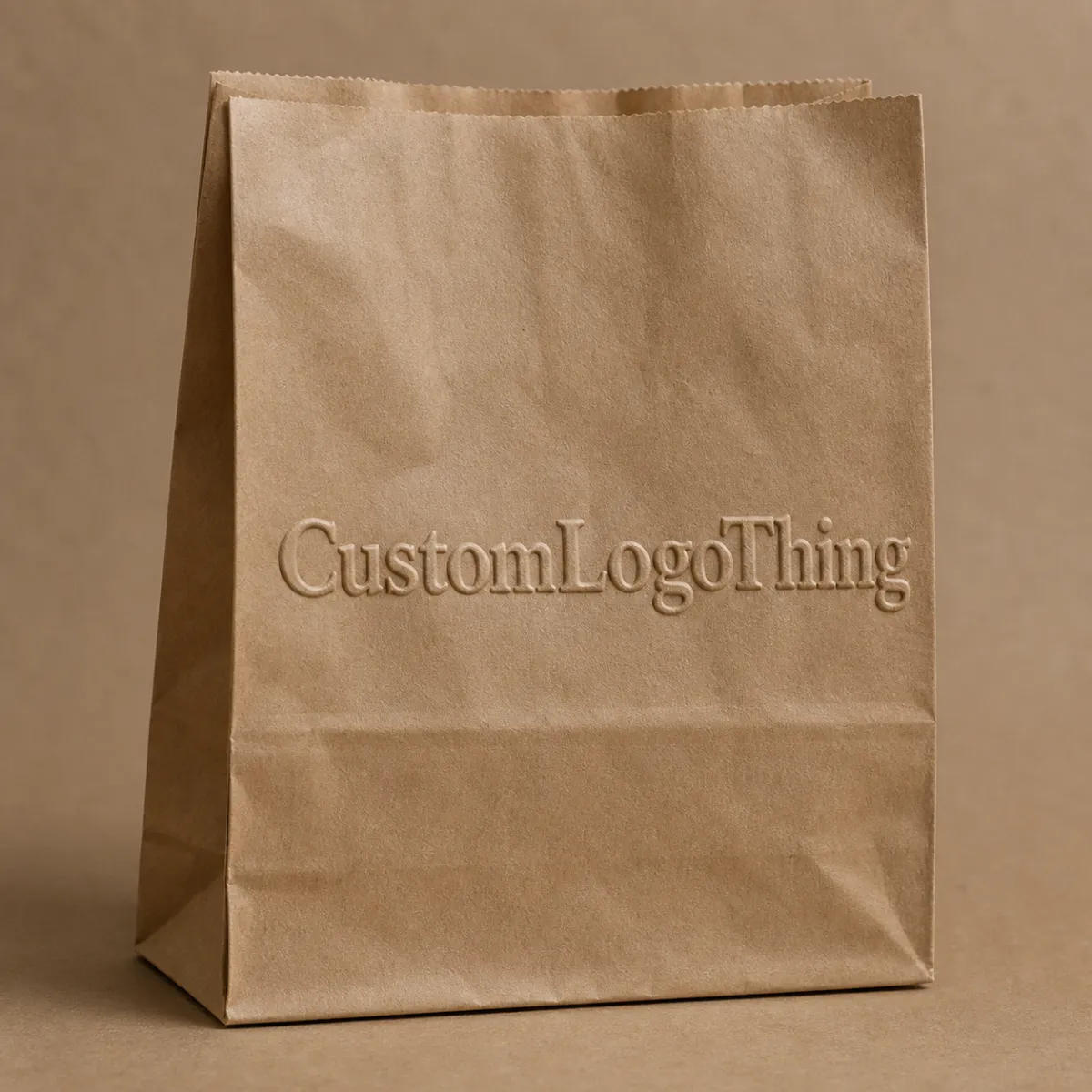
Step into a boutique, a cosmetics counter, or a specialty food shop and watch the reaction when a customer leaves with a bag finished with custom embossing on paper bags instead of a louder, busier print treatment. The logo may be identical in size to a printed version, yet the tactile effect changes the entire read. It feels edited. It feels intentional. That is the quiet strength of custom embossing on paper bags: the finish works with the paper instead of fighting it.
Embossing relies on pressure, not ink. A die and counter-die compress the paper fibers so the design rises above or sinks below the surface. The result can be shallow or pronounced depending on the stock and the die depth. In custom embossing on paper bags, that restraint is often the point. A shopper feels the raised mark first, then confirms the brand visually. The sequence matters more than people expect. Texture reaches the hand before the eye gets around to analyzing the logo.
That is one reason custom embossing on paper bags can feel more premium than a crowded full-color graphic. Heavy print coverage can work, but it competes for attention. Custom embossing on paper bags takes the opposite route. It gives the paper a voice. It says the brand cared enough to finish the bag properly. For jewelry, apparel, chocolate, wine accessories, candles, and boutique gifts, that message can land harder than another burst of color.
Two broad styles matter here. Blind embossing uses no foil and no ink inside the relief, so the texture does the talking. Foil embossing adds a metallic or pigmented layer, which makes the raised shape read faster from across the room. Blind work tends to feel quieter and more editorial. Foil embossing feels more celebratory. Both can work well for custom embossing on paper bags, though each supports a different brand mood.
The first embossed bag sample I reviewed for a cosmetics client made this distinction clear. On a monitor, the bag looked almost plain. In person, the logo caught side light and the whole package suddenly felt more composed. That is the difference between a finish that photographs well and one that survives the hand test.
Brands with broader packaging systems often use the bag as the connective piece. A store may already rely on custom printed boxes, tissue, stickers, and inserts. Custom embossing on paper bags can echo the same logo treatment or monogram without copying every detail. That restraint usually looks more confident than stacking every finish on one surface.
Context matters too. In a busy retail aisle, custom embossing on paper bags may not shout from a distance the way print does. Once the customer picks up the bag, the tactile cue starts working harder than a flat graphic ever could. That trade-off is useful. Custom embossing on paper bags is not trying to win a billboard contest. It is aiming for a premium moment in the hand.
Buyers comparing formats do well to think of the bag as part of product packaging rather than a separate line item. If the bag is part of the reveal, the finish should match the product margin and the brand story. For teams still mapping the wider mix of packaging design, our Custom Packaging Products page is a practical place to compare carriers, boxes, and other presentation pieces.
How Custom Embossing on Paper Bags Is Made
Custom embossing on paper bags begins with artwork, but the artwork does not go straight to press. It has to become tooling. The design is usually converted into a metal die and a matching counter-die. Those two pieces press into the paper under controlled pressure, creating the raised or recessed form. The quality of custom embossing on paper bags depends on how faithfully the tooling reflects the linework and how well the press matches the stock.
The setup stage is where many first-time buyers underestimate the work. A logo that looks clean on screen may include lines too thin to hold a crisp relief. A serif font may lose shape. A detailed crest may fill in. In custom embossing on paper bags, every fine element asks the paper to do more than it can comfortably do. Simpler artwork usually performs better. Bold initials, a short wordmark, or a compact symbol often produce the strongest result.
Registration matters too, especially if embossing sits near print, a border, or foil. A shift of just 1-2 mm can make custom embossing on paper bags feel careless instead of premium. If the raised logo lands too close to a printed frame, the design starts to feel crowded. If the emboss needs to align with a handle, seam, or gusset fold, the bag may require revised artwork or a different placement. That is why production teams study dielines so closely before approving a run.
The paper itself changes the result. Uncoated kraft, white kraft, coated art paper, recycled blends, and laminated boards all respond differently under pressure. Custom embossing on paper bags often looks cleaner on stronger stock because the fibers can take the impression without tearing or rebounding too much. Thin paper can wrinkle, crack, or flatten once the bag is folded and handled. A supplier who understands embossing should ask about caliper, gsm, grain direction, and whether the bag will be coated or left natural.
Grain direction deserves more attention than many buyers give it. Paper fibers resist pressure differently depending on orientation. On a bag panel, the wrong direction can soften the emboss or create uneven depth across the logo. In custom embossing on paper bags, that difference may barely show in a PDF proof, yet it can appear clearly in the finished sample. Physical approval matters far more than a digital mock-up.
Industry standards and trade bodies can help teams frame the decision properly. The Paperboard Packaging Council, FSC certification guidance, and general handling standards such as ASTM and ISTA do not dictate a design, but they do clarify how materials behave once a bag has to survive real use. The point is not to overcomplicate the bag. The point is to remember that custom embossing on paper bags is a material process, not just an art file with a special effect.
Production teams also watch for failure points before release. Common checks include cracking at the raised edge, uneven depth across the logo, flattening after handling, and weak impressions on stock that is too light. A solid sample will show whether custom embossing on paper bags keeps its shape after the bag is creased, carried, and stacked. That is the real test, because the customer never sees the bag in a vacuum. They use it, fold it, and set it down.
Design and Material Factors That Shape the Result
If custom embossing on paper bags succeeds or disappoints, design and material choices usually decide it. A good logo on a weak stock can flatten the whole effect. A simple mark on strong paper can look expensive right away. Custom embossing on paper bags rewards restraint, and that can be a hard sell for a brand team that wants the bag to do everything at once.
Paper weight is the first filter. Heavier stock usually holds a cleaner impression because the fibers resist collapse. For shopping bags, a common planning range is about 170-250 gsm for kraft paper and higher for laminated or premium art paper constructions, although the right range depends on bag size and handle load. Thin stock can still work for custom embossing on paper bags, but it needs testing. If the paper is too light, the emboss may lose definition once the bag is folded at the bottom gusset or pulled by the handles.
Bag construction matters just as much. Side gussets, base folds, twisted handles, rope handles, patch reinforcements, and window cutouts all affect where custom embossing on paper bags can safely sit. A central seal can look perfect on a flat mock-up, then collide with a seam in production. A corner emboss may feel subtle and elegant, but only if it stays clear of the fold line. The best designs respect the bag structure instead of fighting it.
Artwork simplicity shows up again and again in premium packaging. Bold initials, a symbol, a monogram, or a short wordmark usually emboss more cleanly than dense illustrations. Fine type below about 6-7 pt, hairline rules, and packed patterns are risky. In my experience, lines below roughly 0.3-0.4 mm start to disappear more often on softer stock, though exact results depend on the paper and the die maker. Custom embossing on paper bags works best when the design has open space around it. The raised area needs room to breathe. If the artwork is crowded, the relief turns muddy and the premium effect disappears.
Placement and scale can change the tone more than many people expect. A small embossed mark in the lower corner can read as quiet luxury. A larger centered seal can feel more ceremonial. Neither option is automatically better. The right choice depends on the category, the audience, and the price point. For luxury cosmetics, a discreet mark may be enough. For gift packaging or event bags, a more visible front-panel emboss can carry the moment. Custom embossing on paper bags should mirror the intent of the purchase.
Finish selection around the emboss is another decision point. Uncoated paper gives a soft tactile feel and tends to show the relief clearly. Coated paper can create a crisper visual edge, though the coating may crack if the design is too deep. Recycled stock can be excellent for custom embossing on paper bags, yet the fiber mix is less predictable. If sustainability is part of the brand story, choose papers with credible certification and test them first. FSC-certified stocks are often a sensible option, and the FSC site explains the certification framework clearly.
Some of the strongest results come from one restrained ink color, a small foil accent, and custom embossing on paper bags as the tactile anchor. That combination can feel more refined than a full-surface layout because each effect has a job. Print handles recognition. Foil adds contrast. Embossing adds touch.
Packaging teams often borrow the same discipline they use when specifying custom printed boxes: choose one hero element, protect the quiet space around it, and make sure the substrate can carry the finish. That logic works for custom embossing on paper bags too.
The planning numbers below are directional, not universal. Region, paper grade, die complexity, and shipping method can move them quite a bit, so treat them as budget ranges rather than a quote.
| Finish option | Typical tooling/setup | Approx. per-unit impact | Best use case | Practical note |
|---|---|---|---|---|
| Blind embossing | $120-$350 | $0.08-$0.25 | Subtle, premium retail packaging | Best on stronger stock with simple artwork |
| Foil embossing | $180-$450 | $0.15-$0.40 | Higher contrast and stronger shelf visibility | Needs careful registration and enough design space |
| Print + emboss combination | $150-$400 plus print plates | $0.20-$0.55 | Branded packaging with layered presentation | Works best when the emboss remains the hero finish |
If a buyer is comparing options, the right question is not "Which finish looks most expensive?" It is "Which finish supports the product, the margin, and the bag structure?" That is the practical lens for custom embossing on paper bags. A finish can look beautiful and still be the wrong fit for a budget bag or a launch with tight timing.
Custom Embossing on Paper Bags: Cost, Pricing, and MOQ
Pricing for custom embossing on paper bags is usually driven by five factors: tooling, setup labor, paper stock, bag size, and whether the finish is blind or combined with foil or print. The die is often the first fixed cost, and it matters because the artwork cannot be embossed without it. For many orders, the die cost is modest compared with a full print program, yet it still changes the economics of small runs. That is why custom embossing on paper bags tends to make more sense as quantities rise.
In broad terms, a low-volume order may carry a higher per-bag cost because the setup fee gets spread across fewer units. A larger order pushes that cost down fast. It is common to see a setup charge in the range of $75-$250 for simple work and more for complex or multi-level designs, with unit pricing improving as the run grows. For custom embossing on paper bags, the premium is often manageable at 3,000-5,000 pieces, but low MOQ orders can feel expensive if the bag is oversized or paired with special handles.
The bag price is only one part of the packaging budget. Artwork cleanup, sample fees, shipping cartons, freight, and extra finishing steps can all add up. If the order includes branded packaging across several formats, it helps to compare the bag against the rest of the packaging design system. If the same campaign also uses custom printed boxes and insert cards, the entire presentation should be priced together so the final look stays consistent.
MOQ is not only a supplier preference. It reflects machine setup time, proofing, die creation, and the number of sheets or blanks needed to keep production efficient. Many suppliers set a minimum run because custom embossing on paper bags requires the press, the tooling, and the bag conversion steps to stay aligned. A small order may still be possible, but the economics are usually less favorable. If the supplier offers a very low MOQ, ask what has been simplified. Sometimes the design is limited, the stock is standard, or the finish is shallower than it appears.
Comparing quotes properly means reading beyond the headline number. Check whether the quote includes artwork adjustment, die costs, proof samples, packaging, and freight. Ask whether the quoted stock is the stock you actually want, not a generic substitute. Ask whether the paper is FSC certified if that matters to your brand story. Ask whether the supplier has handled custom embossing on paper bags before or is quoting a generic bag program. The answers tell you more than a discount.
A useful budget frame is to compare the bag to the total product margin. If the product has a healthy margin and the bag is part of the reveal, custom embossing on paper bags can be a sound investment. If the bag is purely functional and disappears the moment the customer leaves, a simpler finish may deliver better value. That does not make embossing wrong. It makes it conditional.
For orders that also need transit protection or carton performance, teams may look at ISTA distribution methods or ASTM handling and compression guidance for the outer pack. The bag is a retail piece, but the shipment still has to survive the trip. That is one more reason custom embossing on paper bags should be planned with the full packaging system in mind, not in isolation.
Rush work is possible, though it can distort the budget quickly. If the artwork is simple, the paper stock is already approved, and the supplier has press availability, a rushed run of custom embossing on paper bags may still be feasible. If any one of those pieces is missing, the price usually rises faster than buyers expect.
Process, Timeline, and Lead Time for Custom Embossing on Paper Bags
The production path for custom embossing on paper bags is straightforward on paper and sensitive in practice. It usually follows this sequence: artwork review, dieline confirmation, die making, sample approval, production, finishing, packing, and dispatch. Miss one step and the schedule can slip. That risk rises when the bag is part of a launch, a seasonal campaign, or a store opening.
The first pressure point is the dieline. Before custom embossing on paper bags moves into tooling, the supplier should confirm the exact bag dimensions, panel areas, fold lines, handle positions, and any print or foil alignment. That file is the production map. If the dieline is wrong, the emboss can land too close to the edge or cross a fold. Fixing that late adds time and cost.
The second pressure point is die creation. Depending on the supplier and the complexity of the art, die making may take about 3-7 business days. Simple custom embossing on paper bags usually moves faster than detailed work. Multi-level relief, foil registration, or unusually large designs can extend the timeline. During busy periods, assume the die stage is not a same-week task unless the supplier has already confirmed capacity.
Sampling saves money later. A physical sample shows whether custom embossing on paper bags has enough depth, whether the stock wrinkles, whether the lines hold, and whether the effect still looks good after the bag is folded. Digital proofs cannot show that. They can show position and artwork, not pressure response. Sample approval should never be treated as a formality. It is the closest thing to a real-world test before the run begins.
Once approved, production often takes about 7-15 business days for standard quantities, depending on size and supplier workload. Add time for packing and freight. If the bags are shipping overseas, customs and transit can easily add more days than the embossing itself. That is why custom embossing on paper bags should be scheduled with buffer, not hope.
Here is the practical way to think about lead time:
- Simple program: artwork finalized, standard stock approved, and a familiar bag size; custom embossing on paper bags may move through the system faster.
- Moderate complexity: unique size, custom handle, foil pairing, or recycled stock; allow extra proof and sample time.
- High-stakes launch: retail opening, holiday campaign, or trade show; build in shipping buffer and a contingency week.
The smartest move is to work backward from the launch date. If the store opens on a fixed day, custom embossing on paper bags should be ordered early enough that approval delays do not eat the margin of safety. In packaging, the calendar usually punishes optimism.
If the bag is one part of a broader order, this is the moment to coordinate the rest of the branded packaging. The emboss can echo the box, the tissue, or the insert card, and the timeline should account for all of them. A coherent package branding system is easier to manage when the components are approved in one planning cycle.
Common Mistakes to Avoid With Embossed Paper Bags
The biggest mistake with custom embossing on paper bags is trying to make the finish do too much. Embossing needs breathing room. If the artwork sits inside a crowded layout packed with logos, taglines, patterns, and metallic accents, the raised mark stops feeling premium and starts feeling busy. The eye cannot settle. The hand cannot isolate the texture. Quiet space is not wasted space here; it is part of the design.
Choosing paper that is too light is another common error. The bag may look fine flat on a proof table, then the handles get lifted and the base is folded, and the emboss loses depth or shows stress marks. With custom embossing on paper bags, the paper has to survive handling, not just printing. That matters most for retail packaging that will be carried, stacked, and stored briefly before use.
Placement mistakes show up often too. Designers sometimes position the emboss too close to a fold, too near the handle attachment, or too near the bottom gusset. Pressure in those areas is less predictable. The result can look distorted or asymmetric. Custom embossing on paper bags works best in calmer zones of the panel where the press can do its job evenly.
Skipping a physical sample is a serious risk. A PDF can show the art, the placement, and the size. It cannot show depth, texture, or how the bag feels when held. The difference is not subtle. In many cases, a sample reveals that the design needs a thicker line, a smaller emblem, or a different stock altogether. That is why custom embossing on paper bags should be tested with real materials before sign-off.
Another mistake is assuming embossing replaces every other finish. It does not. Some of the best custom embossing on paper bags programs use one restrained ink color or a small foil accent to anchor the logo, then let the emboss handle the tactile work. That balance gives the design hierarchy. Too many finishes compete. The bag ends up trying too hard.
A final mistake is treating the supplier as a print vendor instead of a packaging partner. The right partner will ask about use case, fill weight, handle style, bag thickness, and brand positioning. They will also say when the idea is too ambitious for the stock. That honesty matters. A supplier who understands die cutting, embossing, and bag construction can prevent expensive revisions before they happen.
For brands comparing formats, the lesson stays consistent across custom embossing on paper bags and other presentation pieces. Good packaging design protects white space, respects the substrate, and keeps the finish aligned with the product value. That logic applies whether the job is a boutique carrier or a run of custom printed boxes.
Expert Tips and Next Steps for Your First Run
If this is your first order, start with one hero element. A logo, a monogram, or a single icon usually gives custom embossing on paper bags the clearest read. That one decision can do more than a crowded layout because it gives the eye a focal point and gives the fingers a shape worth tracing. Simple is not cheap-looking here. Simple is often the smarter premium move.
Test more than one paper stock if the brand story is still flexible. A recycled kraft may signal warmth and restraint. A smooth white stock may feel cleaner and more upscale. A heavier board-like bag may support a deeper relief and a more structured look. Custom embossing on paper bags behaves differently on each of them, so a two- or three-sample comparison is usually worth the time.
It helps to compare blind embossing and foil embossing on the same design concept. Blind work shows the texture story. Foil shows the shelf-visibility story. One may fit the brand better than the other, or the answer may be a restrained combination. The point is to see how custom embossing on paper bags feels in hand before deciding on volume.
Before requesting a quote, prepare a clean brief:
- Bag dimensions, handle type, and paper weight
- Artwork files in vector format
- Target quantity and expected reorder volume
- Preferred finish: blind, foil, or print plus emboss
- Delivery deadline and ship-to location
That brief shortens back-and-forth and helps suppliers price the work properly. It also makes custom embossing on paper bags easier to compare against alternate formats. If the team is still evaluating broader options, our Custom Packaging Products collection is a practical way to see how embossed bags fit alongside bags, boxes, and other branded packaging components.
For brands that care about sustainability claims, ask for paper certification details and confirm whether the stock is FSC certified or another approved option for your market. If the bags will be part of a larger product packaging rollout, it can help to keep one shared material standard across carriers and boxes so the visual system feels coherent. That kind of discipline often makes the whole package branding program look more expensive than it actually is.
My honest view: custom embossing on paper bags is worth serious consideration when the bag has a customer-facing role, the artwork is disciplined, and the stock can carry the relief cleanly. It is less convincing when the bag is purely functional or when the timeline is so tight that sample approval gets rushed. Ask for samples, confirm the dieline, compare pricing, and approve the run only when custom embossing on paper bags fits the brand, budget, and timeline.
What paper weight works best for custom embossing on paper bags?
Heavier stock usually holds a cleaner, deeper impression because the fibers can take pressure without tearing or springing back too much. For custom embossing on paper bags, ask the supplier for a recommended gsm or caliper range before you lock the artwork. If the bag uses recycled paper, test a sample first, because the fiber mix can change how sharply the emboss reads in real life.
Is custom embossing on paper bags more expensive than printing?
Usually yes at the setup stage, because embossing requires tooling and press setup in addition to the bag itself. On larger runs, the premium per bag can become more manageable, especially when the design is simple. The real comparison is value: custom embossing on paper bags often creates a higher perceived finish without adding more color or ink, which can help a retail package feel more refined.
How long does custom embossing on paper bags usually take?
Lead time depends on die creation, sample approval, and the supplier's production queue. Simple orders move faster when artwork is finalized and the paper stock is already approved. Build extra time for shipping, revisions, and seasonal delays so the bags arrive before launch. For custom embossing on paper bags, the calendar usually matters more than the press speed.
Can embossing be combined with foil or print on paper bags?
Yes, many brands combine embossing with foil stamping or restrained print for a more dimensional look. The design needs enough spacing and a suitable stock so the extra layers do not blur or crack. Combination finishes usually increase cost and timeline, so ask for a sample before committing. In practice, custom embossing on paper bags often works best when the raised element stays the hero and the other finishes support it.
What artwork is best for custom embossing on paper bags?
Bold logos, monograms, icons, and short words usually emboss more clearly than fine lines or tiny text. Simple shapes are easier to read by touch and from a distance. Keep the design open and well spaced so the raised area does not collapse into the surrounding paper. If you want the finish to feel premium rather than crowded, custom embossing on paper bags should stay clean, direct, and proportioned to the bag itself.
The safest path is simple: choose the paper first, simplify the artwork second, and approve a physical sample before you authorize production. That order prevents most of the expensive surprises, and it is usually the difference between custom embossing on paper bags that looks intentional and custom embossing on paper bags that looks improvised.

