Custom Embroidered Beanies Bulk Order: Avoid Costly Reorders
If you are planning a custom embroidered Beanies Bulk Order, the difference between a smooth run and a painful reorder usually comes down to three things: the right style, the right artwork, and the right approval process. That sounds basic. It is not. A cold-weather uniform order for a contractor crew, ski shop, school, or retail launch can go sideways fast if the logo is too small, the knit is too loose, or the quote hides setup fees until the last minute.
Beanies earn their keep. They are useful, unisex, easy to size, and visible all winter. That makes them more valuable than a lot of seasonal promo items that get stuffed in a drawer after one event. For buyers who care about brand exposure, embroidery tends to hold up better than decoration methods that crack, peel, or fade. For buyers who care about cost, bulk pricing usually improves sharply once the order reaches a practical run size. That is why the custom embroidered beanies bulk order route often beats buying small batches over and over.
From a packaging buyer's point of view, this is familiar territory. Good package branding works because it is consistent, legible, and appropriate to the product. Beanies follow the same logic. A sharp logo on a well-chosen cuffed knit does more for perceived value than a crowded design on a flimsy cap. If you also care about retail packaging, branded packaging, or even custom printed boxes for a bundled winter promo kit, the same lesson applies: clarity sells, and sloppy specs cost money.
Why Bulk Beanies Beat One-Off Winter Swag
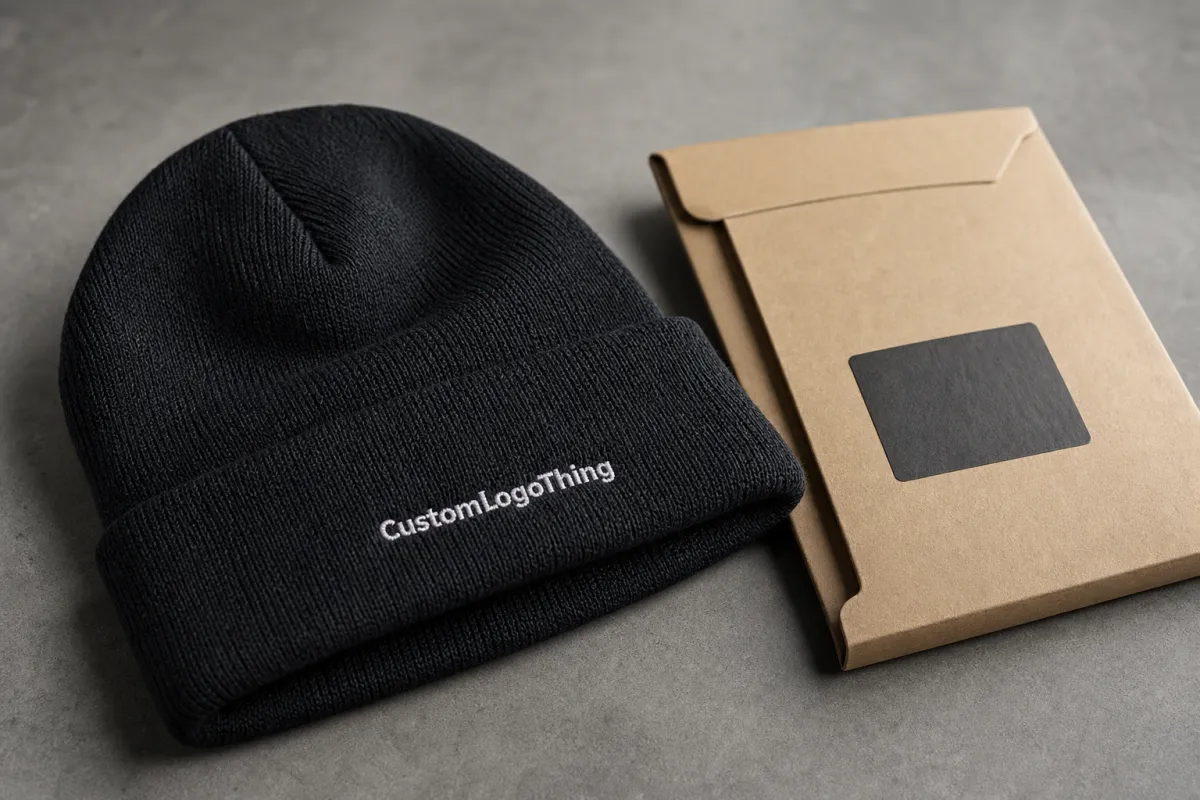
A custom embroidered beanies bulk order makes sense when the item has to do real work. A crew on a job site needs warmth and visibility. A ski resort wants a retail-ready item that looks good in photos and at the register. A school group may need a unified look for trip season, while an event team wants a practical giveaway that does not feel disposable. In each case, the beanie is not just merch. It is part of the uniform, the retail assortment, or the brand's winter presence.
Here is the surprising part: beanies are often worn more than many seasonal promo items because they solve an actual problem. They cover a need, and that means repeat use. Repeat use means more impressions. More impressions means better brand recall without extra spend. That is a cleaner return than ordering three small runs, each with its own setup and price variance.
Embroidery also has a practical advantage. Stitched logos tend to stay crisp after repeated wear, laundering, and cold-weather abuse. That matters more than most buyers admit. A logo that survives six months of use does more for brand trust than a decoration that looks fine on day one and tired by week three. If the order is for field staff, retail resale, or team identity, embroidery usually beats short-lived print decoration.
For larger programs, the economics improve quickly. A single order of 500 units often costs less per piece than two separate 250-unit runs, even before you factor in duplicate proofing, duplicate shipping, and the added risk of inconsistent color or placement. The same logic shows up in Wholesale Programs for apparel and in Custom Packaging Products: scale reduces friction if the specs are clean.
Who benefits most? Contractor crews, ski resorts, retail brands, school groups, event teams, nonprofit winter drives, and companies that need a dependable uniform item for staff. If the item must look credible in a store or on a person, a custom embroidered beanies bulk order usually delivers the best balance of cost, durability, and brand visibility.
For buyers who want a simple rule: if the beanie is meant to be worn often, seen often, and reordered later, embroidery is the safer bet.
Beanie Styles, Fabrics, and Embroidery Placement Options
The beanie style you choose changes how the logo reads. A cuffed beanie gives you a flat, reliable embroidery zone. A slouch beanie feels more fashion-driven, but the logo area may sit lower or drape differently. A watch cap tends to look clean and utilitarian. Rib knit usually offers stronger stretch and a more classic winter look. Pom styles add retail appeal, though the top detail can change the visual balance of the mark.
Fabric choice matters just as much. Standard acrylic is the budget workhorse: warm, consistent, and easy to produce at scale. Acrylic-wool blends feel a little richer and can justify a higher retail price. Recycled yarns are increasingly common for brands that want a sustainability story, but availability and pricing can vary. Premium knits typically have a better hand feel and a more polished presentation, which makes sense if the beanies sit near other retail packaging, gift sets, or branded packaging displays.
| Style | Typical Use | Logo Visibility | Price Impact |
|---|---|---|---|
| Cuffed beanie | Uniforms, crews, resale basics | High | Usually lowest to mid |
| Slouch beanie | Fashion retail, youth programs | Medium | Often mid |
| Watch cap | Workwear, utility programs | High | Usually efficient |
| Pom beanie | Merchandise, sports retail | Medium | Often higher |
Placement is where buyers can either sharpen the design or ruin it. The most common spot is centered on the cuff. Side-panel embroidery can feel more contemporary, especially for retail brands. Back-hem placement works when the front panel is reserved for another mark or when you want understated branding. Patch application can help with detailed logos, and tonal thread on tonal fabric creates a subtle look that suits premium collections.
Knit density is not a small detail. Tight knits support cleaner stitch edges. Loose or very stretchy knits can let embroidery sink, wobble, or pucker if the logo is too detailed. A small crest with fine text may look perfect on a mockup and still fail in production if the structure is wrong. That is why a custom embroidered beanies bulk order should be matched to the knit, not just the color palette.
If the purpose is giveaway volume, keep the logo simple. If the purpose is retail resale, you can push into more design detail, but only when the knit and placement support it. That is the same discipline used in packaging design: a good concept can still fail if the substrate cannot carry the detail. The material has to earn the artwork.
Specs That Affect Fit, Stitch Quality, and Artwork Prep
Fit is more than size. One-size stretch sounds easy, but crown depth, cuff height, and knit elasticity change how the hat sits on different heads. A shallow crown can feel snug on one wearer and awkward on another. A taller cuff creates more room for embroidery and often improves the logo's visibility. For mixed groups, that comfort range matters because staff and customers notice fit faster than they notice thread count.
Stitch quality depends on the relationship between fabric and artwork. Thicker knits support bolder logos. Lighter knits often need simplified artwork to keep letters clean and readable. Thin lines can disappear. Tiny text can fill in. Fine gradients do not translate well to embroidery at all, so the design should be adjusted before digitizing begins.
Send the right files upfront: a vector logo, brand colors, a preferred logo size, and any placement references. If the order has a specific uniform use, say so. If it is a retail item, say that too. The use case changes the decoration decisions. A field crew's beanie and a resale beanie are not the same product, even if the logo is identical.
The digitizing step is where many buyers underestimate the work. Thread paths determine how the machine will sew the design. Stitch counts influence both cost and texture. Small text often needs to be removed or enlarged because embroidery has physical limits. If a supplier does not explain those constraints clearly, the final result can drift from the proof in ways that are expensive to fix.
"The safest approval is the one that leaves no unanswered question about size, color, placement, and spelling."
Before production starts, confirm the following:
- Logo size in inches or millimeters
- Thread colors with pantone-like references, if needed
- Exact placement on cuff, panel, or hem
- Beanie style and knit weight
- Approved spelling, punctuation, and capitalization
This is the part of the process where buyers protect themselves. A careful pre-approval checklist is cheaper than a rework. In a custom embroidered beanies bulk order, one missed letter can turn into a box of unusable inventory.
For teams that care about documentation, this is also where internal process helps. Good records make repeat orders faster. That matters the same way records matter in product packaging or custom printed boxes: once a spec set is clean, the next run is easier, cheaper, and less risky.
Pricing, MOQ, and Unit Cost for Larger Runs
Pricing is shaped by five variables: quantity, stitch count, decoration size, thread color count, and beanie style. Add in rush timing or specialty yarns and the quote moves again. Buyers often look only at the unit price. That is a mistake. A lower per-piece quote can become more expensive if it hides a high setup charge or a costly second proof.
MOQ, or minimum order quantity, depends on the style and decoration method. Some cuffed beanies with simple embroidery may support lower minimums. Complex logos, patch builds, or premium knit selections usually push the minimum upward. If a supplier says the MOQ is flexible, ask what changes when you mix colors, sizes, or artwork versions. Flexibility is useful only when the pricing logic is clear.
For practical budget planning, these ranges are common starting points for a custom embroidered beanies bulk order:
| Run Size | Typical Unit Range | Common Notes |
|---|---|---|
| 100-249 units | $6.50-$10.00 | Higher setup impact, simple logos help |
| 250-499 units | $4.75-$7.25 | Better unit value, mixed colors may work |
| 500-999 units | $3.85-$6.25 | Stronger pricing, more room for options |
| 1,000+ units | $3.25-$5.50 | Best value if art and specs stay stable |
Those numbers are directional, not universal. A dense logo, a complex patch, or a premium wool blend can push the price higher. A simpler cuffed beanie with one thread color can land lower. Freight matters too, especially if the order ships to multiple locations or needs staged delivery.
Direct embroidery is usually the cleanest and most cost-effective method for simple logos. Patch-based decoration can improve detail on complex marks, make the product feel more retail-ready, and sometimes reduce stitch issues on looser knits. It is not automatically cheaper. It is just better in certain cases. Good buyers compare both against the same use case, not against habit.
One more thing: unit cost is only part of the value equation. If the order supports a winter sales push, a staff program, or a launch tied to retail packaging and branded packaging, the beanie may be doing the work of a marketing asset, not just an apparel item. That changes the threshold for what counts as a good price.
Production Process and Lead Time From Proof to Delivery
A clean production flow usually follows this sequence: inquiry, quote, artwork review, digital proof, digitizing, sample approval if needed, production, and shipment. Each step has a chance to save money or lose time. The biggest delays usually come from incomplete artwork, slow approvals, or requests to change details after digitizing is already underway.
Standard lead time for a custom embroidered beanies bulk order is often 12 to 15 business days after proof approval, though the real range depends on volume, material selection, and the season. Winter orders can stack up fast. Rush service may be available, but it usually compresses the window, raises cost, or both. Expedited shipping can help, but it does not fix bad artwork.
Approval is where buyers still have control. Before you sign off, you can typically change placement, thread colors, or small artwork details. Once production starts, those changes become expensive. That is why the proof stage matters more than many first-time buyers expect. It is not just a formality. It is the last practical checkpoint before the run turns into inventory.
If the order has a hard event date, work backward and add buffer time. A one-week cushion is better than a last-minute scramble. Two weeks is safer if the order involves multiple colorways, a complex logo, or anything that could require a second proof. For buyers coordinating with other materials, such as custom printed boxes or a bundled launch kit, the packaging schedule should move in sync with the apparel schedule.
For quality planning, it helps to think like a standards-driven buyer. Organizations such as ISTA and FSC remind the market that process, materials, and documentation matter. The same discipline shows up in good apparel programs. If the production path is vague, the result usually is too.
One practical rule: if the deadline is fixed, do not wait for the perfect mood board. Send the facts, approve the proof, and keep the run moving.
Quality Checks That Reduce Reorders and Mistakes
Quality control in embroidery is not cosmetic. It protects labor, freight, and brand perception. In a bulk run, the main checks are thread tension, logo alignment, color consistency, and clean finishing. If the thread pulls too tight, the knit puckers. If the logo sits low or off-center, the item looks sloppy. If one thread color drifts from the approved shade, the whole batch feels off.
Carton labeling matters more than buyers think. Size sorting, color separation, and clear pack counts make distribution much easier. A 600-piece order that arrives in neatly labeled cartons can be handed to departments, event teams, or retail locations without repacking. That saves labor. It also reduces mistakes when inventory is moved quickly.
Saved art files and production notes are another quiet advantage. Repeat orders move faster when the supplier already has the digitized file, the approved placement, the thread list, and the last production notes. This is the same reason repeat buyers of branded packaging or product packaging keep their spec sheets tight. The second order should not feel like the first one all over again.
Common mistakes usually come from unclear instructions rather than bad machines. Buyers ask for tiny text that cannot sew cleanly. They approve a logo that looks fine on screen but collapses in stitch form. They forget to confirm whether black thread should be matte or slightly glossy. They assume mixed colors will not affect MOQ or schedule. Each of those decisions can trigger rework or a second run.
ISO-style discipline is useful here, even if the order is small. A short approval trail, one file of record, and a single point of contact reduce confusion. That is not bureaucracy. It is protection.
If a batch arrives wrong, the damage is rarely just the replacement cost. It is the time lost, the labor to sort the issue, and the missed date that cannot be recovered. That is why quality checks should be treated as a business control, not a finishing touch.
What to Send Before You Request an Accurate Quote
Accurate quoting starts with clean inputs. Send quantity by color, preferred beanie style, logo file, deadline, and shipping destination. If you already know the delivery split across departments or stores, include that too. A supplier cannot price freight properly without the destination, and cannot size the embroidery without the art.
Vector artwork is the best starting point. Add brand color references, even if the logo is simple. If the order is for uniforms, say so. If it is for resale, say that too. If the beanies will be paired with custom printed boxes, gift packaging, or other retail packaging elements, mention it early. The supplier may recommend a style that fits the full presentation, not just the hat.
Before you request a quote, answer these questions:
- What is the total quantity, and how many colors are included?
- Which beanie style do you want, and is there a backup option?
- What is the deadline, and how much buffer do you have?
- Is the order for uniforms, resale, giveaways, or events?
- Can colors be mixed without changing the approved logo setup?
The most efficient buyers are not the ones who know every technical term. They are the ones who provide the right details quickly and make one clean decision path. That is how you keep a custom embroidered beanies bulk order on schedule and out of the rework pile.
Use the same discipline you would use for packaging design: define the purpose, confirm the material, lock the artwork, and protect the deadline. That process saves more money than chasing the lowest line-item price ever will.
If you are ready to move forward, gather the quantity, style, artwork, and delivery window, then request a quote for your custom embroidered beanies bulk order before the calendar gets tight. The earlier the proof is approved, the fewer surprises you pay for.
What is the minimum for a custom embroidered beanie bulk order?
MOQ depends on the beanie style, the decoration method, and how much setup is required. Orders with simpler artwork and fewer thread colors usually qualify for lower minimums. If you need flexibility, ask whether mixed colors can share the same embroidery program.
How long does a custom embroidered beanies bulk order usually take?
Most timelines include artwork review, digitizing, proof approval, production, and shipping. Rush options may be available, but the fastest path is to send final artwork early. Lead time changes when the order uses special materials, complex logos, or custom packaging.
Can I mix beanie colors in one bulk order?
Often yes, as long as the same logo placement and embroidery setup is used. Color mixing can help with team assignments, retail assortments, or event segmentation. Confirm whether mixed colors affect MOQ, unit cost, or production sequencing.
What artwork file works best for embroidered beanies?
Vector files are preferred because they scale cleanly for digitizing. Thin lines, tiny text, and low-contrast logos may need simplification before stitching. Send brand colors and placement notes so the proof matches your expectations.
Which beanie style is best for company uniforms?
Cuffed beanies usually work best because they give the logo a flat, visible area. Slouch styles are better when the goal is a fashion-forward retail look. Choose the knit weight and fit based on the climate, wearer comfort, and brand image.

