The cheapest-looking event hat is rarely the true lowest-cost hat once decoration, setup, spoilage allowance, freight, packing, and rush handling are counted. A custom event hats Unit Cost Breakdown gives buyers a cleaner way to compare quotes instead of staring at one printed unit price and hoping every supplier used the same assumptions.
Hats carry more variables than flat promotional items. A cap has crown structure, panel seams, bill shape, sweatband quality, closure hardware, thread density, patch substrate, packing method, and carton protection. Ignore those details and the quote gets fuzzy fast.
For teams already buying branded packaging, retail kits, product packaging, or custom printed boxes for the same event, the logic is familiar: define the spec first, then compare numbers. Price-shopping before the spec is locked usually creates bad comparisons. One supplier quotes a basic blank with one logo. Another includes a structured cap, sewn patch, polybagging, and freight. Same quantity. Totally different order.
Custom Event Hats Unit Cost Breakdown: What Buyers Pay For
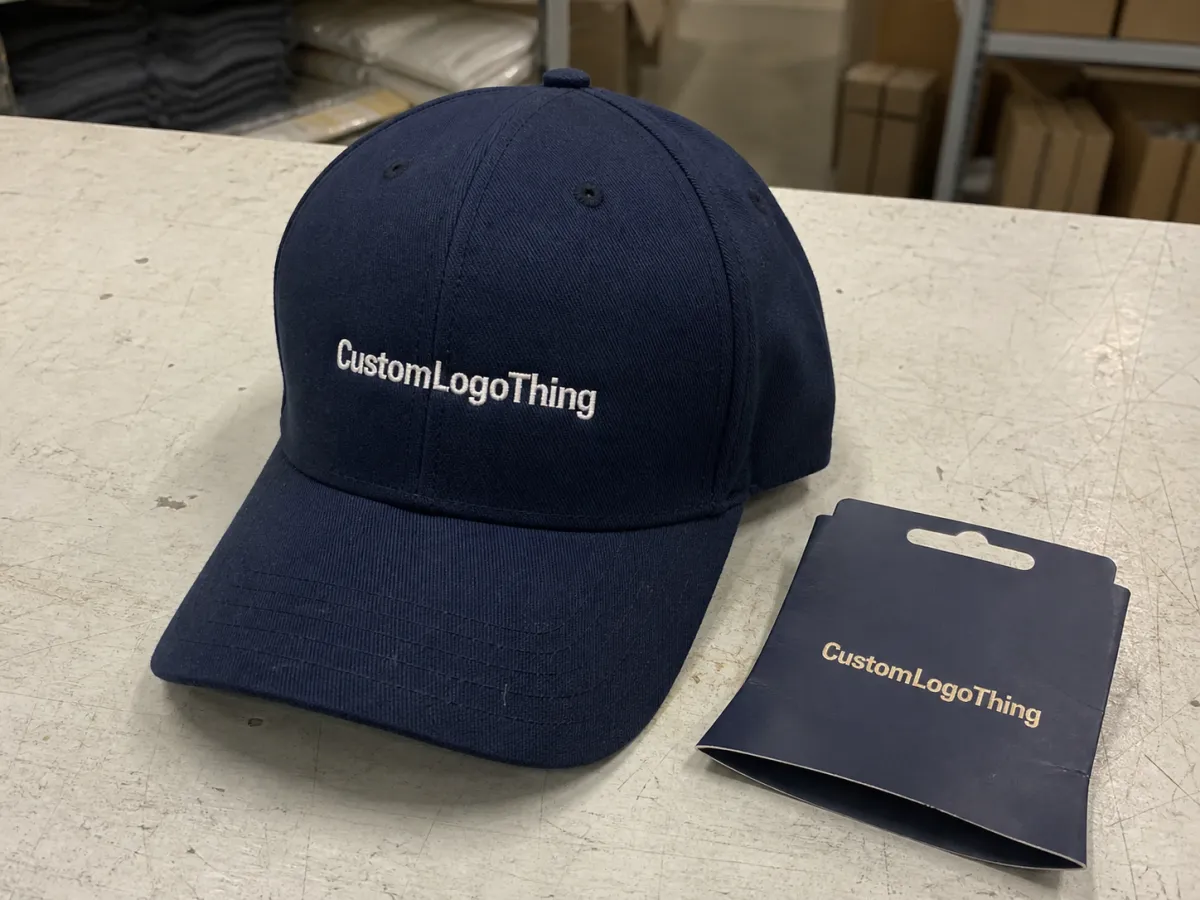
A clean custom event hats Unit Cost Breakdown separates the hat itself from the work required to decorate, pack, inspect, and deliver it. That sounds obvious. It is also where many messy orders start.
Most event hat costs sit in these buckets: blank cap or custom-made cap, decoration, digitizing or setup, proofing, sampling if required, packaging, freight, duties for imported goods when applicable, and rush charges if the schedule is tight. A simple 5-panel giveaway cap with one-color embroidery will not price like a structured 6-panel hat with a woven patch, side embroidery, individual polybagging, and delivery to three hotel receiving docks.
The right specification depends on event purpose, expected wear time, budget, deadline, and how visible the logo needs to be from 6 to 10 feet away. A one-day booth handout does not need the same fabric weight or decoration detail as a sponsor gift packed into a retail-style kit. Pretending those are the same product is how buyers end up either overspending or ordering hats nobody wants to wear.
Practical buyer rule: do not overspec a giveaway hat, but do not underspec the parts people notice first: crown shape, front logo alignment, bill curve, and closure comfort.
The goal is steady, predictable value. No buyer wants flimsy caps, uneven embroidery, crushed cartons, or surprise add-ons after the purchase order is placed. A proper cost breakdown gives purchasing, marketing, and operations the same working picture before production starts.
Choose the Right Event Hat Before You Compare Quotes
Cap style drives cost before decoration enters the discussion. Classic 5-panel caps are common for large giveaways because the front panel is open and easy to decorate. Structured 6-panel caps create a more retail-looking shape, often with buckram or fused front panels that hold their form. Dad hats are softer, lower-profile, and better for casual brand activations. Trucker hats suit outdoor events because mesh backs add airflow. Performance caps fit races, golf days, field teams, and summer staff programs where moisture management matters.
Construction changes the price. Structured crowns need stable front panels and cleaner shaping. Unstructured hats require softer handling during embroidery so the front does not wrinkle. Mesh backs can reduce fabric in one area but add component variation. Specialty fabrics such as recycled polyester, ripstop nylon, brushed cotton, nylon blends, or performance polyester usually cost more than standard cotton twill or basic polyester.
Use case should guide the spec. A trade show giveaway can usually use a simpler cap and one decoration location. Sponsor gifts, VIP kits, staff uniforms, and resale merchandise often justify better fabric, a smoother sweatband, a cleaner closure, and more exact logo work.
The difference may only be $0.75 to $2.50 per unit. That small spread can decide whether the hat is worn again or abandoned in a hotel room. Harsh, but accurate.
Perceived value forms quickly. Attendees judge fit, front-panel shape, bill curve, and logo placement almost immediately. Small upgrades, such as a metal buckle instead of hook-and-loop or a woven patch instead of dense embroidery, can lift the item without turning it into an expensive retail cap.
Early style decisions make pricing cleaner because the manufacturer can quote the actual blank, decoration process, and packing format instead of estimating from a vague request. If your event also includes Custom Packaging Products, keeping the hat style and package branding aligned can make the whole kit feel deliberate rather than assembled from leftovers.
Decoration Methods That Change the Unit Price
Decoration is often the biggest swing factor in a Custom Event Hats unit cost breakdown. Embroidery is durable and familiar, but it is not automatically the right answer for every logo. Woven patches, printed patches, leatherette patches, sublimated patches, heat transfer, screen print, and direct-to-film transfer each behave differently on curved fabric.
| Decoration Method | Best Use | Typical Cost Behavior | Buyer Watchout |
|---|---|---|---|
| Embroidery | Clean logos, wordmarks, moderate detail | Often efficient at scale; stitch count drives price | Tiny text and dense fills can pucker on curved panels |
| Woven Patch | Detailed logos, small lettering, premium merch | Adds patch component plus sewing labor | Patch size, edge type, and backing affect cost |
| Printed or Sublimated Patch | Gradients, fine graphics, full-color marks | Good for complex art; setup varies by substrate | May look less dimensional than embroidery |
| Leatherette Patch | Outdoor events, lifestyle brands, sponsor gifts | Material and laser work add cost | Fine tonal detail can be limited |
| Heat Transfer or DTF | Bold event marks, short-use activations, gradients | Can be efficient for color-rich artwork | Adhesion depends on fabric, heat, pressure, and cure |
Embroidery pricing depends on stitch count, logo size, thread colors, placement, and digitizing quality. A dense 12,000-stitch badge across a structured front panel takes more machine time and thread than a 4,000-stitch wordmark. More thread colors can also slow production because machines require setup and color sequencing.
Digitizing is not just file conversion. It tells the embroidery machine how to build the logo with thread: stitch direction, density, underlay, pull compensation, trims, and color order. Cheap digitizing can make even a good cap look rough. Thread does not behave like ink, and curved panels are not forgiving.
Patches add a separate component. That component may need a woven base, printed face, leatherette substrate, merrowed edge, satin stitch edge, adhesive backing, heat application, or sewing. Sometimes there is a mold, die, or setup charge. The tradeoff is clarity. A patch can make complex artwork look cleaner than direct embroidery, especially on small text or shield-style logos.
Print-based decoration makes sense for bold event marks, short-use activations, and artwork with gradients. Direct-to-film transfer can hold color detail that embroidery cannot. Screen print may work on foam-front trucker caps or flatter panels, but cap shape still matters. A process that looks great on a T-shirt may fight the curve of a crown.
Do not quote from a logo screenshot alone. Vector art, Pantone references, desired placement, and finished decoration size let the production team price with fewer assumptions. The ASTM library is a useful reference point for buyers who want to understand how material and test standards support consistent manufacturing language, even though each hat spec still needs its own production review.
Specifications Buyers Should Lock Before Ordering
A serious quote should show the cap style, panel count, crown profile, structured or unstructured front, fabric, bill type, closure, decoration method, decoration size, number of colors, quantity, packing, and delivery location. If any of those are missing, the number may be fine as a rough estimate. It is not a dependable purchase price.
Sizing matters. Adjustable closures are usually safest for broad attendee groups because one size can cover most adults. Fitted and flex-fit caps can look cleaner, but they require a size curve, usually split across small/medium, medium/large, and large/extra-large ranges. That complicates forecasting and can leave buyers with too many of one size after the event.
Closures affect cost and perceived quality. Snapbacks are common for streetwear-style and trucker caps. Metal buckles feel more polished on dad hats. Hook-and-loop is practical for staff use but can read lower-end on sponsor gifts. Plastic buckles keep weight down. Fitted bands cost more to manage because size distribution matters.
Logo placement deserves a careful decision. Front center is the standard choice, but side panel, back arch, bill edge, underbill, and multi-location decoration can all work. Each additional location usually adds setup, handling, machine time, and inspection time. A front logo plus side sponsor mark may be worth it; four decoration locations on a low-budget giveaway usually create more cost than value.
Proofing should include thread colors, patch edge color, scale on the cap, placement from seams, orientation on curved panels, and any small text that may fill in or lose clarity. For color-sensitive brand programs, use Pantone references where possible. Exact color matching on fabric is not the same as ink on paperboard, plastic, or custom printed boxes, so approve the hat as its own material system.
Also confirm packing. Bulk-packed hats cost less and work for many handout programs. Individual polybags, size stickers, hangtags, inner cartons, or kitting into branded boxes add labor and materials. Those details sound small until the order reaches the packing table.
Pricing, MOQ, and Quote Variables That Move Fast
MOQ means minimum order quantity, and it is not a random barrier. It depends on cap style, decoration method, material sourcing, and whether the buyer chooses an in-stock blank or a fully custom build. In-stock decorated caps may have lower MOQs, while custom fabric, specialty closures, private-label tags, or custom patches may require higher quantities.
A typical Custom Event Hats unit cost breakdown includes the blank cap, decoration, setup or digitizing, proofing or sampling, packaging, freight, duties if applicable, and rush fees. As a general planning range, an in-stock cotton twill dad hat with front embroidery might land around $5.50-$9.50 per unit at moderate volume. A structured cap with a custom woven patch and individual polybagging may run closer to $8.00-$14.00 depending on quantity, patch detail, attachment method, packing, and freight.
Small orders sit higher because setup and handling are spread across fewer units. That part is not mysterious. Art preparation, machine changeover, proofing, carton handling, and administration all happen whether the order is 72 pieces or 1,000 pieces.
Volume pricing drops for a reason, but material and labor do not disappear. If a quote falls too sharply between quantity breaks, ask what changed. The supplier may have switched to a lighter blank, removed packing, reduced stitch density, excluded freight, or assumed a different decoration method. Sometimes the lower price is legitimate. Sometimes it is just incomplete.
Two quotes for the same quantity can differ by several dollars per hat. One may include heavier twill, a higher stitch count, a sewn patch, individual polybags, and delivered freight. Another may show only a basic decorated cap price before shipping. Line-item clarity prevents a fake savings comparison.
Ask whether freight is included, whether setup charges repeat on reorders, whether the MOQ applies to one design or several artwork versions, and whether overruns or underruns are allowed. Also ask how spoilage is handled. Decoration on hats is not risk-free, especially with tight placement, dense embroidery, or multi-location branding.
If you are building event kits with Custom Packaging Products, confirm whether hats ship loose, in inner cartons, or packed into boxes with other items. Packing labor can change the unit cost, and so can carton dimensions. Hats are light, but they are bulky. Freight carriers charge for space, not just weight.
Production Steps and Timeline From Artwork to Delivery
The process is usually straightforward when the spec is clear: quote request, specification review, artwork check, decoration recommendation, digital proof, optional physical sample, production approval, bulk manufacturing, quality control, packing, and shipment. Each step protects the final order.
Timeline is driven by both buyer decisions and production capacity. Delayed artwork, unclear color references, late sponsor logos, missing ship-to details, or design changes after proofing can add more days than embroidery itself. A production team can only move quickly when the order details stop changing. Annoying, yes. Also true.
Simple in-stock decorated hats often move faster than custom builds. A front-only embroidery order on available blanks may be planned in roughly 7-12 business days after proof approval, depending on capacity and quantity. Custom patches can add several business days because the patch is produced first, then attached. Imported or fully custom caps need more logistics coordination, especially if fabric, trims, labels, or special packing are involved.
Physical samples are useful for higher-value orders, resale merchandise, executive gifts, or programs with strict brand standards. They add time and cost, so they are not always practical for rush giveaways. For many event orders, a digital proof plus clear production notes is enough. For a complex patch, unusual placement, or premium kit, skipping the sample can be a false economy.
Proof approval should be treated as a final manufacturing checkpoint. Review logo scale, color callouts, cap color, placement, spelling, date-sensitive event information, and sponsor marks. If a sponsor name is misspelled on 2,000 hats, the low unit price will not matter. Nobody enjoys explaining that meeting.
Rush orders need discipline. Choose available blanks, simplify decoration, reduce logo placements, approve proofs quickly, and confirm a shipping method that matches the deadline. Air freight can save time but can also add a sharp cost increase, especially when cartons are bulky. If the hats must arrive at a hotel, venue, warehouse, or registration desk by a fixed date, build in receiving time. Delivery confirmation is not the same as product being unpacked and ready for staff.
Quality Checks That Protect Your Event Budget
Quality control is financial protection. A low price is not a win if hats arrive with puckered embroidery, crooked patches, inconsistent thread color, weak closures, fabric stains, or cartons crushed in transit. The best cost breakdown includes enough production care to avoid rework, refunds, or emergency replacement orders.
Practical inspection points include front panel shape, seam alignment, decoration centering, stitch tension, loose threads, patch adhesion or sewing consistency, bill curvature, closure function, fabric marks, and carton count accuracy. On multi-location decoration, inspectors should also confirm that side and back placements are consistent from piece to piece.
Artwork has limits. Tiny lettering, thin outlines, gradients, distressed textures, and very dense badge logos may need adjustment so the hat looks clean at real wearing distance. This is where many buyers lose value: they try to force a detailed event poster onto a 2.5-inch decoration area, then wonder why the result feels crowded. A simplified mark often looks more premium.
Material checks matter too. Cotton twill should not feel papery unless the spec is intentionally low-cost. Mesh should not snag before the hats leave the carton. Performance fabric should be compatible with the chosen heat process if transfers are used. Sweatbands should be cleanly sewn, not twisted or loose. Closures should open and close without sharp edges or weak stitching.
Packing affects condition on arrival. Bulk carton packing is economical, and for many giveaways it is enough. Individual polybags, inner packs, carton dividers, or reinforced cartons may be worth considering for VIP kits, resale merchandise, influencer mailers, or multi-location distribution. The International Safe Transit Association publishes resources around transport testing that can help buyers think more clearly about distribution risk, especially for larger event programs.
The same thinking used in packaging design and retail packaging applies to caps: protect the item, present the brand clearly, and remove avoidable surprises before shipment. Custom Logo Things reviews technical details before production so the finished hats support the event experience instead of becoming a last-minute problem.
Next Steps to Build a Clean Hat Order
Start with the facts that affect price: event date, delivery address, target quantity, preferred cap style, budget range, logo files, decoration preference, cap color, packing needs, and whether the hats are giveaways, staff gear, sponsor gifts, or resale merchandise. Those details give the production team enough direction to recommend a real specification.
Send vector artwork when available. AI, EPS, SVG, or clean PDF files are usually more useful than compressed PNG or JPG files. Include Pantone colors or brand guidelines if color matters. Clean files reduce back-and-forth and help the production team flag small-detail issues before quoting.
Rank the priorities before asking for options. Lowest unit cost, fastest turnaround, premium feel, exact brand color, and retail-level decoration do not always point to the same cap. A buyer focused on speed may choose an in-stock structured cap with embroidery. A buyer focused on merch value may choose a custom patch, better closure, and individual packing.
A well-built quote should return confirmed product specs, MOQ, unit price, setup charges, proofing steps, estimated production timeline, freight assumptions, and artwork risks. If the order connects with product packaging, custom printed boxes, or broader package branding, share that early so the hat presentation does not feel separate from the rest of the event materials.
The cleanest buying process is not complicated. Define the cap. Define the decoration. Confirm the packing and delivery path. Then compare the real numbers. A Custom Event Hats unit cost breakdown should make decisions easier, not bury the buyer in vague line items and cheerful promises.
FAQ
What is included in a custom event hats cost breakdown?
A useful breakdown separates the blank cap, decoration, setup or digitizing, sampling if needed, packaging, freight, and any rush or special handling charges. It should also state whether the price is based on one design, one decoration location, and one cap style, because changes to any of those details can affect the unit cost.
How does MOQ affect the unit cost for custom event caps?
Higher quantities usually lower the unit cost because setup, art preparation, machine changeover, and freight are spread across more pieces. MOQ can change by cap type and decoration method, especially if the order requires custom fabric, custom patches, specialty closures, private-label tags, or multiple artwork versions.
Is embroidery or a patch more cost-effective for event hats?
Embroidery is often efficient for clean logos with moderate stitch counts, while patches can be better for detailed artwork, small text, or a premium merch look. The better value depends on logo complexity, order quantity, decoration size, and whether the patch requires custom materials, special edging, or added sewing labor.
How early should I request a quote for branded event hats?
Request the quote as soon as the event date, delivery location, quantity, and logo direction are known, especially if proofing or sampling is required. Simple decorated in-stock caps can move faster, but custom builds, multi-location decoration, patch production, and freight planning need more lead time.
What information gets the most accurate custom event hat quote?
Send the target quantity, event date, ship-to ZIP or destination, preferred cap style, cap color, logo file, decoration method, decoration size, and packing requirements. If you are unsure about the best decoration method, provide the use case and budget range so the quote can compare realistic options instead of guessing.

