Why a Custom Five Panel Caps Bulk Order Works for Brand Math
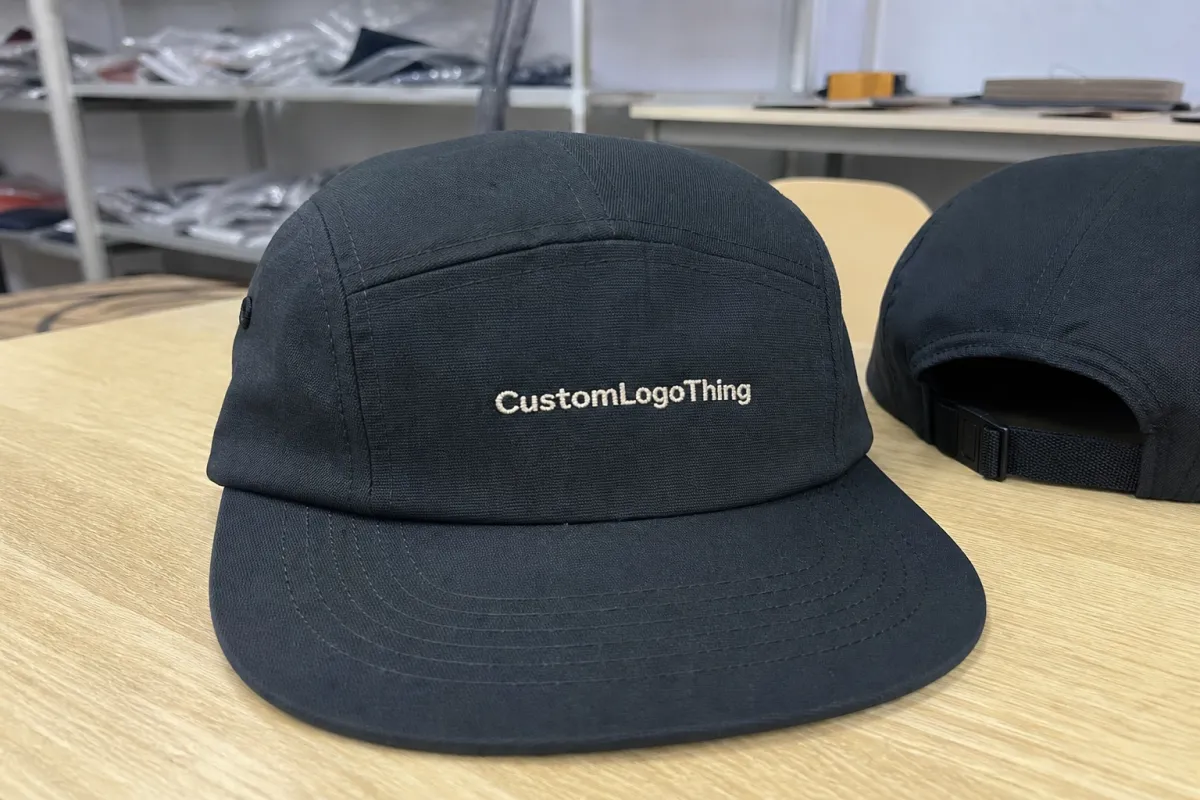
A cap can outwork a disposable insert by months. Buyers considering a custom five panel Caps Bulk Order are not only buying headwear; they are buying repeatable brand exposure with a unit cost that can be forecast, compared, and controlled.
That is the practical reason caps keep showing up in merchandise programs, staff kits, retail drops, field uniforms, event tables, and launch mailers. A printed card may be seen once. A well-made five panel cap may be worn 30, 60, or 100 times if the fit feels right and the decoration does not look cheap after a few weeks of use. From a packaging buyer's point of view, the cap behaves more like mobile retail packaging than a throwaway promotional item. It carries a logo in public, under real light, against real clothing, with no media fee attached after the first handoff.
The five panel construction gives the buyer one important advantage: a broad front panel with fewer seam interruptions. That makes logo reading cleaner than on many six panel caps, especially for woven labels, rubber patches, puff embroidery, badge artwork, rectangular lockups, and bold screen prints. If the mark includes small type, a mascot, or a sponsor line, the uninterrupted front zone can protect the design from being cut apart by construction seams.
Bulk ordering makes sense when the use case is planned before quoting begins. Product drops, field teams, festival merchandise, campus programs, influencer kits, retail resale, trade show giveaways, and employee uniforms all have different performance needs. The buyer has to compare landed unit cost, decoration durability, perceived retail value, reorder consistency, and inventory flexibility across sizes, colorways, and shipping points.
The real question is not whether caps are popular. The question is whether the buyer controls fabric, fit, branding method, quantities, and delivery timing before the campaign deadline starts making those decisions for them.
Stripped of hype, the sales case is simple. If a cap lands at $6.80 and feels like a $24 retail accessory, the math is very different from a $2 giveaway that gets abandoned in a hotel room. Better specifications create better economics because they make the finished product more likely to be worn.
Five Panel Cap Product Details Buyers Should Lock Before Quoting
A five panel cap uses one broad front panel, two side panels, and rear panels to form either a low-profile flexible silhouette or a more structured retail shape. That difference is not cosmetic. Crown height, fabric weight, brim stiffness, sweatband quality, and lining determine whether the cap feels like an outdoor camp cap, a streetwear piece, or a uniform item meant for daily use.
Common styles include camp caps, flat brim caps, curved brim promotional caps, foam-front caps, performance caps, nylon outdoor caps, and canvas workwear caps. Each carries a different buyer logic. A nylon camp cap may suit travel brands, beverage launches, and outdoor events because it is light and packable. A cotton twill curved brim cap may work better for employee wear because the shape feels familiar and does not ask every wearer to adopt a niche silhouette.
The front panel changes the branding decision. Long wordmarks, small typography, badge designs, sponsor logos, and multi-color artwork read better when seams do not break the decoration area. For Custom Printed Boxes, the front panel is the main display face. For Five Panel Caps, that same logic applies, except the display surface bends, stretches, and sits on a moving person.
Closure choice deserves early attention. Plastic snapbacks signal casual streetwear and allow fast adjustment. A fabric strap with a metal buckle gives a cleaner retail finish. Hook-and-loop closures suit work crews because they are practical, fast, and glove-friendly, though they can feel too utilitarian for fashion merchandise. Elastic fit can work for performance caps, but size planning becomes more sensitive because one size rarely satisfies everyone.
Fabric selection should match the environment. Cotton twill gives a classic texture and accepts embroidery well when the front panel has enough support. Polyester improves durability and color stability. Nylon suits outdoor, travel, and rain-prone use, though decoration compatibility should be checked before approval. Canvas creates a heavier workwear feel. Mesh combinations help with heat, especially for summer crews or outdoor event staff.
A cap can look strong in a mockup and fail in the hand. That usually happens because crown height, brim shape, fabric weight, and decoration method were treated as separate choices. They are connected. A heavy patch on a very soft unstructured front panel can sag. Dense embroidery on lightweight nylon can pucker. A wide flat brim may make sense for a retail merch drop and feel wrong for a field service uniform. Lock the product architecture before anyone starts arguing about thread color.
Specifications That Decide Fit, Finish, and Logo Quality
Good quoting starts with a specification sheet, even if it is only one page. Buyers should prepare cap style, crown profile, brim type, fabric, color, closure, logo size, decoration method, placement, quantity, packaging, and delivery location before requesting pricing. Without those inputs, two suppliers can quote the same general cap description and still mean very different products.
- Cap style: camp, flat brim, curved brim, foam front, performance, nylon, canvas, or mesh-back.
- Crown profile: low, mid, high, structured, or unstructured, with depth expectations if fit is critical.
- Brim type: flat, curved, or pre-curved, with contrast, sandwich, or rope details if needed.
- Decoration: embroidery, woven patch, rubber patch, screen print, heat transfer, printed label, or clip label.
- Packaging: bulk pack, individual polybag, hangtag, barcode label, inner carton, or retail-ready carton.
Unstructured caps feel casual and flexible. Structured caps hold shape better for retail display, uniforms, and higher perceived value. Neither option is automatically better. A brewery merch drop may prefer an unstructured cotton cap with a woven label because the relaxed shape fits the brand. A field service team may need a structured front panel so the logo remains readable after repeated wear, storage, and washing by hand.
Brims carry social signals. Flat brims suit streetwear and limited merchandise drops. Curved brims fit broader promotional audiences. Pre-curved brims reduce break-in time because the wearer does not need to shape the cap by hand. It sounds like a small choice until the box arrives and half the audience decides the cap is not their style.
Decoration method sets the ceiling for logo quality. Embroidery gives texture and durability, but stitch count drives cost and fine details can fill in. Woven patches handle small type and thin lines better than standard embroidery. PVC or rubber patches suit outdoor use because they resist moisture and abrasion, though they add weight. Screen printing is efficient for bold flat graphics. Heat transfer can reproduce gradients or very fine detail, but fabric compatibility, temperature settings, and wash expectations need to be checked.
Quality-control checkpoints should be named before production: stitch density, thread color matching, logo centering, patch edge finish, seam alignment, fabric consistency, color tolerance, brim shape, sweatband attachment, and closure strength. For sustainability claims or certified paper components, ask how documentation is handled. The Forest Stewardship Council is relevant when paper hangtags, cartons, or retail packaging carry certified fiber claims.
Artwork is another common risk point. Vector files are preferred because they scale cleanly. Pantone references reduce guesswork across embroidery thread, printed patches, branded packaging, and hangtags. Many cap designs improve when buyers remove detail instead of adding it. Simplified artwork often produces a stronger finished cap than an intricate logo forced into a 2.5-inch decoration area.
Pricing, MOQ, and Unit Cost Drivers for Bulk Cap Orders
Cap pricing is a system, not a flat sticker. Unit cost depends on quantity, fabric, construction, decoration method, artwork complexity, number of logo locations, packaging, freight, and delivery deadline. A custom five panel Caps Bulk Order with one woven patch is not priced like the same cap with front embroidery, side embroidery, private labels, individual polybags, and split shipments.
MOQ depends on how custom the build is. Stock blank decoration can often support lower quantities because the cap already exists. Fully custom manufacturing usually requires higher minimums to justify sourcing, setup, fabric cutting, trims, labels, and production line changes. That does not mean every custom order must be huge, but it does mean the buyer should ask early rather than discovering the minimum after creative approval.
| Order Scenario | Typical Quantity Range | Common Unit Cost Range | Main Cost Drivers |
|---|---|---|---|
| Stock blank with front embroidery | 100-250 pieces | $7.50-$12.00 | Stitch count, thread colors, blank quality, freight |
| Stock blank with woven patch | 250-500 pieces | $8.25-$13.50 | Patch size, patch backing, merrowed edge, application labor |
| Fully custom cap with private label | 500-1,000 pieces | $6.80-$11.75 | Fabric, trims, label setup, sampling, carton packing |
| Retail-ready cap program | 1,000-2,500 pieces | $5.90-$10.25 | Hangtags, barcode labels, color splits, inspection, shipping terms |
These ranges are directional, not universal. Custom-dyed fabric, premium closures, recycled materials, rush freight, complex patches, or multi-location decoration can push costs higher. The lowest quote may also hide weaker fabric, loose stitching, limited proofing, vague freight terms, or inconsistent color control.
The biggest levers are predictable: embroidery stitch count, patch type, custom fabric color, special trims, private labels, individual polybags, hangtags, and split shipments. Increasing volume usually reduces unit cost, but complex decoration can keep pricing high because labor and machine time do not disappear at 1,000 pieces.
Quote in tiers. Ask for 100, 250, 500, 1,000, and 2,500 pieces if the program may scale. Procurement then sees real breakpoints instead of guessing. A buyer may discover that moving from 250 to 500 pieces cuts unit cost by 18%, while moving from 1,000 to 2,500 saves only 6%. That changes the inventory decision.
For buyers already managing product packaging, the logic should feel familiar. Materials, finishing, setup, freight, and packing assumptions decide the final number. The same discipline used for Custom Packaging Products belongs in a cap program too.
Process and Timeline From Artwork Review to Delivery
The order path should be visible from the first email: inquiry, specification review, artwork check, quote, digital mockup, sample or proof approval, bulk production, quality inspection, packing, shipping, and delivery. If any step is vague, schedule risk increases.
The fastest projects usually have final vector artwork, confirmed quantity, one shipping address, clear Pantone targets, quick proof approvals, and early disclosure of event deadlines. A buyer who sends those details on day one can remove several rounds of clarification.
Delays usually come from unclear logo files, changing cap colors after proofing, adding private labels late, complex multi-location decoration, custom fabric dyeing, and peak production capacity. Sampling adds control, but it also adds time. That tradeoff can be sensible for retail resale, paid merchandise, and high-visibility launches. For a simple staff order, a digital proof may be enough if the blank cap and decoration method are familiar.
Stock-based decorated caps are generally faster than fully custom manufactured caps. A decorated stock order may run in roughly 7-15 business days after proof approval, depending on decoration queue and quantity. A fully custom cap can require 25-45 business days or more if sampling, custom fabric, labels, or ocean freight are involved. Air freight shortens transit, but it can damage the budget quickly on bulky cartons.
Proofing decisions should match the risk. Digital proofs verify layout, logo scale, placement, and cap color direction. Physical samples confirm fabric hand-feel, embroidery texture, patch thickness, crown shape, brim memory, and color perception under real light. Screens lie. So do bright office lamps.
Timeline management is risk management. A cap arriving two days after an event has an effective promotional value of zero, no matter how attractive the unit cost looked on the quote. The deadline should be treated like a specification, not a preference.
Packaging standards can also matter if caps are shipped as part of kits, retail cartons, or influencer mailers. For distribution testing references, buyers can review resources from the International Safe Transit Association, especially if caps are packed with rigid goods, custom printed boxes, glass, electronics, or fragile branded merchandise.
Common Bulk Ordering Mistakes That Raise Cost or Delay Production
Most cap-order problems are not manufacturing mysteries. They are specification gaps discovered too late.
The first mistake is choosing decoration before confirming fabric and crown structure. Dense embroidery on a soft, lightweight front panel can pucker. A large rubber patch can drag down an unstructured cap. Screen print may look crisp on cotton twill but behave differently on textured canvas or coated nylon.
The second mistake is approving a mockup without checking real logo scale against the front panel. A 3-inch badge may look balanced on a computer screen and oversized on a low-profile cap. Long wordmarks can shrink until they lose legibility. Small sponsor logos usually fail first, especially when embroidery is used instead of a patch or print.
The third mistake is underestimating fit preferences across the audience. Adjustable closures reduce risk, but they do not eliminate crown-depth preferences. Field crews, retail shoppers, campus ambassadors, warehouse teams, and executives may not want the same silhouette. One cap can serve many people, but only if the profile is chosen deliberately.
The fourth mistake is comparing supplier quotes without matching assumptions. Freight, packaging, decoration locations, proofing, lead time, cap blank quality, and inspection standards can change the quote by dollars per unit. A lower number may simply exclude work another supplier included.
The fifth mistake is ordering exactly the event quantity. No overage. No buffer. That leaves no room for VIP additions, retail demand, internal team requests, shipping damage, or quality rejects. A 3%-5% overage is often cheaper than a panic reorder with new setup charges and rush freight.
One more issue appears often in branded merchandise programs: buyers treat the cap as separate from package branding. It is not. If the cap ships in a kit with retail packaging, inserts, labels, or product packaging, the color and finish should feel connected. A soft-touch black box and a neon polyester cap may be intentional. Or it may look like two campaigns collided.
How to Evaluate a Cap Supplier Before Production
A good supplier should be able to discuss caps as controlled production items, not as generic promo products pulled from a catalog. A Custom Five Panel caps bulk order touches design, sourcing, decoration, packing, freight, and deadline management. Each variable affects cost, appearance, or delivery risk.
Ask how the supplier reviews artwork before quoting. If the logo has tiny type, gradients, distressed edges, or a narrow line weight, the decoration recommendation should reflect that. Embroidery may not be the right answer. A woven patch, printed patch, or simplified mark may produce a cleaner result.
Ask what is included in the quote. Product cost, decoration, setup, proofing, packaging, freight, duties if applicable, and delivery timing should not be left to assumption. If cartons need labels, if each cap needs a polybag, or if the order must be split across several locations, those details belong in the first quote request.
Ask about sampling and inspection. Not every order needs a physical pre-production sample, but high-volume, retail-ready, or high-visibility programs often benefit from one. At minimum, buyers should expect a clear proof and basic inspection for logo placement, stitching, cap color, loose threads, damaged trims, and carton counts.
Brand, procurement, and operations teams usually care about different details. Brand wants the cap to look right. Procurement wants unit cost, payment clarity, and fewer hidden charges. Operations wants delivery timing, carton counts, labels, and clean receiving. A well-run cap order aligns the visual goal, budget ceiling, delivery requirement, and reorder plan before production starts.
That same discipline applies to repeat packaging and merchandise programs. If your company already uses Wholesale Programs for recurring packaging or branded goods, cap specifications can be documented the same way: fabric, profile, decoration, packaging, carton counts, reorder notes, and approved artwork files. It is not glamorous work, but it is how buyers avoid paying twice for preventable confusion.
Next Steps Before You Request a Bulk Cap Quote
Start with a brief that answers the production questions, not only the creative ones. Choose the cap style. Estimate quantity. Select a fabric direction. Decide whether embroidery, patch, print, or transfer is most likely. Prepare logo files. Define the deadline. Confirm shipping locations. Note packaging requirements.
- Choose the silhouette: camp, curved brim, flat brim, foam front, nylon, canvas, or performance.
- Set the quantity target and ask for tiered pricing around that number.
- Send vector artwork, Pantone references, and any alternate logo versions.
- Identify the deadline, event date, in-hands date, or retail launch date before quoting.
- List packaging needs, including hangtags, polybags, barcode labels, inner cartons, or kit packing.
Reference photos help. Not to copy them, but to communicate crown shape, brim attitude, decoration scale, and finish expectations quickly. A photo can prevent five rounds of vague language about “premium,” “low profile,” or “streetwear fit.”
Ask for timeline options as well as price tiers. Sometimes ordering more reduces cost. Sometimes simplifying decoration protects the date. Sometimes using stock components gets 90% of the visual result with much less production risk. The best choice depends on the non-negotiable: event date, brand color, logo placement, retail feel, budget ceiling, sustainability requirement, or reorder consistency.
If questions remain, review the FAQ or prepare the project brief before requesting pricing. The strongest quote starts with precise specs, clean artwork, realistic quantities, and a deadline the production team can actually protect. Ask for a quote that separates product cost, decoration, packaging, freight, and timing assumptions so the final decision is based on the full program, not only the lowest unit price.
Frequently Asked Questions
What is the usual MOQ for a custom five panel caps bulk order?
MOQ depends on whether the order uses stock blanks or fully custom manufacturing. Stock cap decoration can often support lower quantities, while custom fabric, custom closures, private labels, or unique color matching usually require higher minimums. Ask for tiered pricing so you can compare the unit cost difference between small, mid-size, and larger production runs.
How should I choose the best decoration method for bulk five panel caps?
Use embroidery for durable texture, woven patches for detailed marks, PVC or rubber patches for outdoor durability, screen Printing for Bold flat graphics, and heat transfer for gradients or fine detail. The best method depends on logo complexity, fabric, budget, and whether the cap is for retail resale, staff use, events, or giveaways. Request a mockup and decoration recommendation before approving production.
How long does a bulk order of custom five panel hats take?
Lead time varies based on stock availability, decoration complexity, sampling, order size, and shipping method. Orders using existing cap blanks are typically faster than fully custom caps with custom fabric, labels, or trims. The fastest path is to provide final artwork, confirmed specs, quantity, deadline, and shipping details at the quote stage.
What files do I need for custom five panel cap artwork?
Vector artwork such as AI, EPS, or editable PDF files is preferred for clean scaling and production accuracy. Pantone color references help reduce color ambiguity, especially for embroidery thread, patches, and printed designs. If only a PNG or JPG is available, ask whether the artwork needs to be redrawn before production.
Can I split a custom five panel caps bulk order across colors or designs?
Split orders may be possible, but pricing and MOQ can change when colors, decoration methods, or artwork versions vary. The most efficient split usually keeps the same cap style and decoration method while changing only fabric color or thread color. Provide the desired quantity per color or design during quoting so the supplier can calculate setup, production, and packing correctly.


