A buyer ordering 500, 2,500, or 10,000 hats is usually balancing three pressures at once: the caps need to look retail-ready, arrive before a fixed date, and stay inside a real per-piece budget. That is the practical work behind a Custom Trucker Caps bulk order. The hat has to carry the brand clearly, fit a broad group of people, survive packing and freight, and still feel good enough that people keep wearing it after the event, shift, launch, or promotion is over.
Trucker caps have stayed popular because the format solves several buyer problems at once. A structured front panel gives the logo a visible surface. The mesh back keeps the cap wearable in warm settings. An adjustable closure removes most of the complexity that comes with sized headwear. For outdoor crews, route drivers, brewery teams, farm supply counters, trade show staff, warehouse programs, and summer promotions, that combination is hard to beat.
The strongest bulk cap order is rarely the cheapest hat on a spreadsheet. It is the cap that matches the audience, decoration method, packing plan, and delivery date without creating surprises after proof approval.
Custom Logo Things supports buyers who need repeatable branded merchandise and practical branded packaging, not vague product descriptions or one-off novelty pieces. The sections below cover materials, decoration choices, quoting details, MOQ, pricing drivers, lead time, quality checks, and the information that helps turn a rough idea into accurate production pricing.
Custom Trucker Caps Bulk Order: Why Buyers Choose Mesh-Back Hats
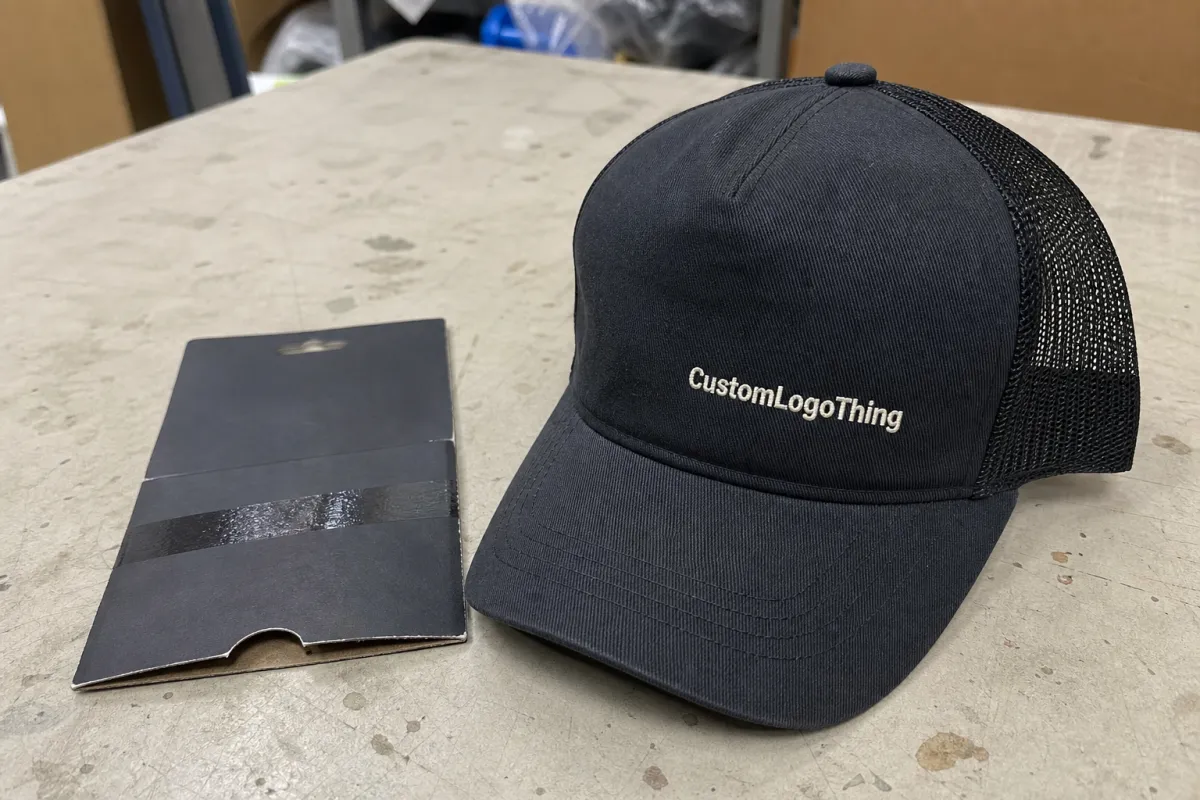
The value of a trucker cap becomes clearer once you compare logo visibility per dollar. A structured 5-panel or 6-panel trucker keeps the front logo upright, the mesh helps with airflow, and the snapback or adjustable closure covers most adult wearers without requiring a full size run. For event teams and distributors, fewer fit issues usually means fewer returns, fewer leftovers, and better brand exposure.
A custom trucker Caps Bulk Order works especially well for outdoor activations, driving routes, warehouse teams, field crews, breweries, agricultural brands, apparel labels, and corporate merchandise programs. These buyers often care less about making a “fun hat” and more about building a repeatable specification: the same crown shape, same logo size, same thread colors, same carton labeling, and the same packing method on every reorder.
Mesh-back caps also fit neatly into broader product and event packaging programs. They can be packed with Custom Printed Boxes, mailers, stickers, apparel, bottles, sample kits, or retail inserts. If the cap is part of a launch box or sales kit, the finish should feel connected to the rest of the presentation. A premium patch on the hat, a thin low-grade label on the bag, and a mismatched insert card can make an otherwise strong brand system feel improvised.
Use trucker caps where breathability and logo visibility both matter. Summer retail drops, outdoor trade shows, farm tours, construction safety days, brand ambassador kits, and route-driver apparel programs are all practical fits. In colder environments or more formal uniform programs, a cotton twill dad hat, structured performance cap, or beanie may serve the audience better. The right choice depends on use case, climate, dress code, and how long the buyer expects the item to remain in circulation.
Cap Construction, Materials, and Logo Placement Options
A standard trucker cap usually includes a structured front crown, front panels made from foam, cotton twill, polyester, or a blended fabric, a breathable polyester mesh back, a visor, sweatband, top button, and adjustable rear closure. Some builds include eyelets on the front panels. Foam-front caps often skip them because the decoration surface needs to stay clean and uninterrupted.
Foam-front caps create a bold promotional look and work well with screen printing, puff print, and certain heat transfer methods. Cotton-twill fronts feel more apparel-driven and usually hold embroidery well when the panel has enough structure. Polyester fronts are common where buyers want clean color consistency and durability. Performance-style truckers may use moisture-wicking fabric, lighter mesh, and sweatbands designed for warm weather or active use.
Profile changes the whole feel of the cap. High-profile foam truckers are strong for large patches, retro branding, and event merchandise that needs to be seen from a distance. Mid-profile caps usually feel more retail-friendly because they sit lower while still leaving enough room for the logo. Low-profile truckers look softer and less promotional, but logo height needs to be checked early; a tall crest or stacked wordmark can look cramped on a low crown.
Panel count matters too. A 5-panel cap gives a clean, uninterrupted front surface, which helps with large prints, patches, and logos that should not be split by a center seam. A 6-panel cap has a more traditional crown shape, though the front seam can affect embroidery, patch placement, and very fine artwork. Neither option is automatically better. The artwork and intended look should drive the decision.
Logo placement is not limited to the front panel. A bulk order can include a centered front logo, side embroidery, visor embroidery, a woven label near the back opening, a seam tag, branded inside taping, or a private-label sweatband print when volume supports that level of finishing. For most event programs, one strong front decoration remains the cleanest choice. Extra placements add cost and production touchpoints, and they do not always add meaningful brand value.
Decoration compatibility deserves careful review. Embroidery gives dimension and durability, but small text can fill in, especially under about 0.20 inches tall. Woven patches handle fine detail better. Embroidered patches add texture and a heavier outdoor feel. Faux leather patches work well for lifestyle, farm, field, and brewery brands. Screen printing is often cost-efficient on foam fronts, especially with one or two print colors. Heat transfers can carry detail, but the front material, pressure, temperature, and dwell time all need to be right.
Specifications to Confirm Before You Request a Quote
Good quotes start with clear specs. Before requesting pricing, define the cap style, panel count, crown height, front material, mesh color, visor shape, visor sandwich color if needed, closure type, sweatband material, size range, and quantity by colorway. If you need 1,000 caps split across navy, black, and khaki, state that early because color splits affect blank availability, decoration setup, and carton sorting.
Closure choice should match the wearer. Plastic snapback is the classic trucker look and covers a wide fit range. Hook-and-loop works well for uniforms and jobsite crews because it adjusts quickly, though it feels less retail. A metal buckle creates a more refined finish, usually with a fabric strap. Fitted or flexfit programs can look sharp, but they require size planning and can create leftover inventory if the size curve is wrong.
Artwork should be production-ready. Vector files such as AI, EPS, or clean PDF are preferred because the logo can scale without losing edge quality. Embroidery requires thread color references, stitch-count review, and sometimes artwork simplification. Patch orders need decisions on shape, border style, backing, and attachment method. A merrowed border, satin stitch border, heat-applied patch, and sewn patch all create different cost and durability profiles.
Color control has real limits. Stock cap colors move faster and cost less. Custom-dyed panels or mesh may require higher minimums, longer lead time, and tolerance approval because cotton, polyester, embroidery thread, woven labels, and patch substrates do not absorb or reflect color the same way. If a brand color must be close, provide Pantone references and expect a practical discussion about material behavior rather than a blanket promise of exact matching across every component.
- Proofing: confirm logo size, placement measurement, decoration method, and cap color before production.
- Sampling: decide whether a physical sample is practical for the timeline, budget, and order value.
- Packing: choose bulk pack, individual polybagging, hang tags, retail labels, or kit-ready sorting.
- Cartons: define master carton labels, colorway separation, and shipping marks if your receiving team needs them.
If the cap order connects to packaging design, product packaging, or a larger launch kit, gather those assets before quoting. A hat, box, mailer, label, and insert card should feel like one brand system rather than five separate purchases.
Pricing, MOQ, and Unit Cost Drivers for Bulk Trucker Hats
The unit cost for a custom trucker Caps Bulk Order is shaped by quantity, base cap selection, decoration method, logo locations, patch type, stitch count, color count, packaging, shipping method, and whether the order uses stock blanks or a fully custom build. A simple front embroidery on a stock cap is a very different project from custom panel colors, private labeling, faux leather patches, hang tags, and retail carton packing.
MOQ depends on the production route. Stock-cap decoration usually supports lower quantities because the cap body already exists. Fully custom caps, custom mesh colors, molded patches, branded taping, or retail packaging often require higher minimums because materials must be purchased, cut, printed, sewn, and packed to order. Buyers save time by identifying what is fixed and what can flex: delivery date, cap color, logo size, decoration method, packaging format, or total budget.
| Order Route | Typical MOQ Range | Common Cost Behavior | Best Fit |
|---|---|---|---|
| Stock trucker cap with front embroidery | Often 144-288 pieces | Cost varies by stitch count, logo size, and quantity | Events, uniforms, distributor programs |
| Stock foam-front cap with screen print | Often 144-300 pieces | Favors fewer print colors and larger runs | Promotions, festivals, budget-sensitive giveaways |
| Stock cap with woven or leather patch | Often 288-500 pieces | Includes patch setup, patch production, and application | Retail-style brands, outdoor programs, breweries |
| Fully custom cap build | Often 1,000+ pieces | Driven by fabric, dyeing, labels, trims, and sewing setup | Apparel brands, retail packaging programs, repeat SKUs |
These ranges are planning references, not promises. Blank availability, logo complexity, labor rates, freight, and packing requirements change the math. As a broad planning range, a stock decorated trucker cap may land around $4.25-$9.50 per unit on many mid-sized runs, while premium patches, multi-location decoration, individual polybags, hang tags, and freight can push the number higher. Air shipping 2,000 structured caps is rarely gentle on a budget because crowns take space, even when the hats are light.
To receive firm pricing, send quantity, delivery location, in-hands date, cap color preferences, decoration locations, artwork files, packaging needs, and any retail compliance requirements. If you are comparing quotes, review the base cap quality, proofing support, setup charges, sample options, lead time, freight assumptions, and carton pack details. A low unit price can hide costs if it leaves out labeling, sorting, special packing, or realistic freight.
Cost control does not have to cheapen the cap. Consolidate colorways. Use a standard cap body. Limit logo locations. Choose one strong front decoration. Approve digital proofs quickly. Plan freight before rush shipping becomes the only option. For buyers building a broader program, Custom Logo Things can also coordinate hats with Wholesale Programs and other branded merchandise planning.
Process, Timeline, and Lead Time From Artwork to Delivery
A clean production path follows a steady sequence: inquiry review, quote, artwork check, proof creation, proof approval, sample or pre-production confirmation when needed, cap decoration, quality inspection, packing, freight booking, and delivery. Skipping one of those steps may feel faster at the beginning, but it can create expensive corrections later.
Lead time depends on cap source and decoration route. Stock caps with one front logo are generally faster. Custom-built caps, special fabric colors, patches, private labels, and retail packaging add planning time because more materials and suppliers are involved. A practical range for stock decoration might be 10-20 business days after proof approval, while custom builds can take 45-75 days or more depending on materials, sampling, production load, and freight. Some orders move faster, but that range is safer than assuming every cap order behaves like a rush print job.
The proof should show logo size, placement, thread or print colors, patch dimensions, cap color, decoration method, and packaging notes. For embroidery, ask for stitch count and thread references when the logo has tight detail. For patches, confirm finished patch width, border, attachment, and location measurement from the crown seam or visor edge. Small measurement differences can become obvious once hundreds of caps are placed side by side.
Experienced buyers tend to watch the same timeline risks: incomplete artwork, late proof approvals, quantity changes after proofing, extra colorways added midstream, missed sample approvals, peak production load, and freight delays near major event dates. Work backward from the in-hands date. Build in approval time. Decide early whether a physical sample is needed. Choose air, ground, or freight service based on the actual production schedule, not best-case hope.
If caps will be packed into event kits, coordinate the cap schedule with boxes, inserts, labels, and other Custom Packaging Products. ISTA transit testing guidelines from ISTA are useful for understanding how packed goods behave under vibration, compression, and handling, especially when structured caps need to hold their crown shape through parcel or LTL movement.
Quality Checks That Keep Bulk Cap Orders Consistent
Consistency matters because hats are often worn side by side. Staff, crews, customers, and event attendees will notice uneven logo placement, mismatched thread color, crooked patches, mixed silhouettes, or wrinkled front panels quickly. A bulk order magnifies small mistakes.
Front-end controls prevent many problems before production starts. Confirm cap construction, panel stiffness, crown height, closure type, logo size, stitch density, patch edge finish, print opacity, and color references. If the logo includes small lettering, ask whether embroidery will hold it cleanly or whether a woven patch is smarter. A useful supplier should flag a decoration method that will make the artwork look worse, even if that method was the buyer’s first request.
In-process inspection should cover decoration alignment, thread trimming, patch adhesion or stitch security, print cure, heat-transfer pressure, visor shape, closure function, sweatband cleanliness, loose threads, and fabric marks. For screen printing or heat transfer, cure and pressure affect durability. For embroidery, tension and backing affect how cleanly the logo sits on the panel. For patches, edge finish and placement consistency matter as much as the artwork itself.
Packing checks deserve the same attention. Confirm quantity per carton, colorway separation, size labeling if applicable, polybagging, hang tags, master carton labels, shipping marks, and packing methods that protect crown shape during transit. If the caps are heading to a retailer, event venue, or fulfillment center, carton labels may need exact SKU, PO, color, quantity, and destination details. Missing information can slow receiving even when the hats themselves are correct.
For packaging-related sustainability questions, buyers may also want to review guidance from the EPA Sustainable Materials Management program. Polybags, cartons, hang tags, and retail labels all add function, but they should be specified with purpose. More packaging is not automatically better, especially if the hats are going straight to a staff handout table or internal event.
A disciplined approval and inspection routine protects deadlines, reduces returns, and makes future reorders easier. If the first bulk order is documented with cap style, logo size, thread colors, packaging format, and carton pack, the next run becomes much smoother.
What Custom Logo Things Brings to Bulk Cap Production
Custom Logo Things focuses on the production details that decide whether a branded product feels organized or improvised: material selection, decoration compatibility, order planning, packing, and repeatable specifications. Those details matter for hats just as much as they matter for boxes, bags, labels, and retail display materials.
The useful guidance is technical, not inflated. A rugged workwear cap may need a structured cotton-poly front, hook-and-loop closure, and durable embroidery. A lifestyle retail cap may call for a mid-profile crown, woven patch, branded hang tag, and individual polybag. A cost-sensitive promotional hat might be best as a foam-front cap with a clean one-color print. Each route has a place, and each carries different tradeoffs in cost, feel, lead time, and reorder consistency.
Sourcing flexibility helps buyers balance speed, budget, and brand presentation. Stock-cap decoration is often the right move when an event date is firm. More customized cap builds make sense when the buyer needs specific panel colors, labels, packaging, or a long-term retail SKU. The key is matching the order path to the actual business need instead of overbuilding a giveaway or underbuilding a retail product.
Proofing and communication carry the order. Custom Logo Things can review artwork, prepare production-ready proofs, discuss realistic lead time, and recommend practical changes before the job moves into production. That may mean simplifying tiny embroidery text, changing a patch border, reducing logo width by 0.25 inches, or choosing a cap body that fits the decoration better.
Caps can also be coordinated with custom printed boxes, mailers, bags, labels, apparel packaging, event kits, and retail-ready product packaging. For buyers who want one consistent supply partner, that coordination reduces the chance that the hat, box, label, and insert all tell slightly different brand stories. For common ordering questions, the FAQ page is a useful place to start.
Next Steps to Prepare Your Bulk Trucker Cap Order
Start with the practical checklist: target quantity, cap style, preferred colors, logo placement, decoration method, delivery date, shipping destination, packaging needs, and whether the hats are for giveaway, staff uniform, retail sale, or kit assembly. A 300-piece staff order and a 5,000-piece retail launch should not be quoted with the same assumptions.
Gather the right files before asking for firm pricing. Send vector logo artwork, brand color references, previous cap samples if available, retail label files, packaging artwork, and any compliance or carton-labeling instructions required by your receiving team. If the order has to match an existing cap, include photos from the front, side, inside label, closure, and underside of the visor.
Decide where flexibility exists. The delivery date may be fixed. The logo color may be fixed. Cap color, patch shape, closure type, or packaging format may have room to adjust. Sharing that early helps quoting move faster because production can be built around the constraints that truly matter.
- Confirm the audience and use case: event, retail, staff, outdoor crew, or kit insert.
- Select the cap route: stock blank decoration or fully custom cap build.
- Choose the decoration: embroidery, woven patch, leather patch, screen print, or heat transfer.
- Define packing: bulk carton, individual polybag, hang tag, retail label, or kit-ready sort.
- Set the schedule: proof deadline, sample decision, production window, freight method, and in-hands date.
Compare quotes carefully. Review the base cap quality, decoration method, proofing support, setup costs, freight assumptions, sample options, production lead time, and packing plan. The lowest unit price can become expensive if it ignores carton labeling, event delivery, decoration limits, or cap structure.
For a custom trucker Caps Bulk Order, the best preparation is specific but not overcomplicated: clear artwork, realistic quantities, defined packaging needs, and an honest delivery date. With those details in place, pricing is more accurate, proofs are easier to approve, and production has a better chance of landing the way the buyer expected.
FAQs
What is the usual MOQ for a custom trucker caps bulk order?
MOQ depends on whether the order uses stock caps or a fully custom cap build. Stock-cap decoration often supports lower quantities, while custom fabrics, labels, mesh colors, private trims, or special packaging require higher minimums. For the most accurate MOQ, provide the cap style, target quantity, decoration method, and whether the order needs private labeling or retail packaging.
How much does bulk ordering custom trucker hats cost per unit?
Unit cost is affected by quantity, cap material, decoration method, stitch count or patch type, number of logo placements, packaging, and freight. A clean one-location logo on a stock trucker cap is usually more cost-efficient than a multi-location design with custom labels, patches, and individual retail packaging.
What decoration method is best for custom mesh-back caps in bulk?
Embroidery is durable and gives a classic branded look. Patches are strong for premium outdoor or retail styles. Screen printing works well on many foam fronts, and heat transfers can handle fine detail when the panel material is compatible. The best choice depends on logo detail, desired finish, budget, and cap front material.
How long does production take for bulk custom trucker caps?
Lead time depends on cap availability, decoration method, proof approval speed, sample requirements, order size, packaging needs, and freight method. Stock caps with standard decoration are typically faster than custom-built caps with special materials, labels, patches, or retail packaging.
What should I send to get an accurate quote for custom trucker hats?
Send your target quantity, cap style or reference photo, logo artwork, preferred colors, decoration locations, delivery ZIP or destination, in-hands date, and packaging requirements. If you have brand color standards, previous samples, carton labeling rules, or retail compliance needs, include those details before quoting begins.


