custom five-panel Caps for Fitness brands work when the logo needs a flatter, cleaner front panel and the buyer wants something that feels more retail than promo. The style gives blocky marks, short wordmarks, and simple icons a better stage than many curved caps, which matters when the hat is seen fast in a gym, at an expo, or in social photos.
They also have to survive real use. Sweat, sun, repeat wear, and shipping all affect how the cap looks and whether people keep wearing it. For buyers, the cap should be judged the same way as any other branded product: by spec, cost, MOQ, lead time, decoration, and inspection quality.
What custom five-panel caps mean for fitness brands
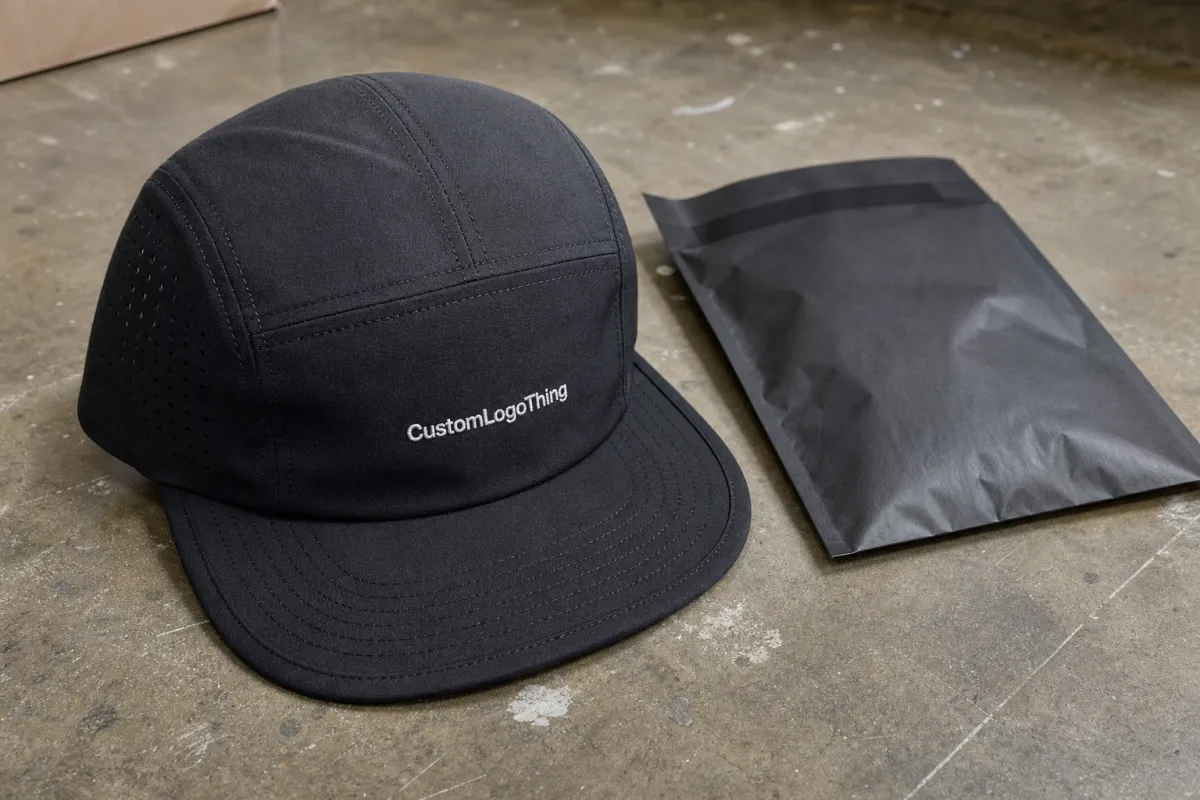
A five-panel cap uses one uninterrupted front panel, with two side panels and two rear panels. That front panel gives logos less seam interruption, so the mark reads more cleanly and feels easier to place. For fitness brands, that matters because the cap has to be recognizable at a glance, not studied up close.
The silhouette is usually lower and cleaner than a bulky trucker, which makes it a good fit for gyms, run clubs, supplement launches, outdoor events, and studio staff wear. It can feel sporty without looking overly technical, and it is flexible enough to work as both a uniform piece and a retail item.
Five-panel construction also helps when the decoration is simple. Embroidery, woven patches, and rubber patches all benefit from the flatter front panel because the logo is not fighting the crown seams. In practice, that means a smaller or simpler design often looks more deliberate and more expensive than it would on a more segmented cap.
If the logo reads clearly from six feet away, the cap is probably doing its job.
For staff programs, giveaways, and off-duty merch, the style usually lands in the middle ground buyers want: casual enough to wear often, structured enough to hold a brand, and clean enough to photograph well. That last point matters more than most people admit.
Materials, fit, and decoration choices that matter
Cotton twill is the safest default for many orders because it feels familiar, holds structure well, and takes embroidery nicely. Polyester is a better fit when quick drying and sweat resistance matter more, especially for training environments or outdoor activations. Nylon feels lighter and can handle weather better. Blends try to balance comfort, structure, and cost.
Fit affects wearability more than many buyers expect. A snapback is the easiest choice for staff, events, and giveaways because it covers more head sizes. Strapback and hook-and-loop closures can feel softer and less promotional. Fitted caps can look sharper in photos, but they create more inventory risk unless the order includes multiple size runs.
Decoration should match the artwork. Embroidery is durable and familiar, especially for bold lettering and simple icons. Woven patches handle smaller detail better than stitching alone. Rubber patches create a more athletic, dimensional look. Heat-applied graphics can work, but they need extra scrutiny if the caps will be worn hard or washed often.
Small construction details become important once the cap is on a head. A soft sweatband improves comfort, eyelets help airflow, bill shape changes the mood, and crown depth affects how secure the cap feels. Too shallow can feel unstable; too tall can look awkward.
Artwork should be checked early, before a tiny screenshot turns into a production mistake. Thin lines, small text, and subtle gradients often fail when they are reduced to a cap-sized decoration area. A simplified version of the logo usually produces a better result.
For brands building a full merchandise line, the cap should match the rest of the system. If it is going out with apparel or inserts, the finish level and color story should stay consistent. The hat can also sit alongside Custom Packaging Products when the whole rollout needs to feel like one collection instead of separate items.
Custom cap pricing, MOQ, and unit cost factors
Pricing usually drops as quantity rises, but the quote is not just about the blank cap. Setup, artwork prep, patch tooling, stitch count, packing, and other add-ons can move the total as much as the shell fabric itself. Lower-quantity runs usually look expensive because the fixed work is spread across fewer pieces.
As a rough planning range, a simple embroidered five-panel cap may land around $4.00-$6.50 per unit at a few hundred pieces. Patch-heavy or more premium builds can move into the $5.50-$8.50 range depending on fabric, finish, and decoration complexity. Smaller runs usually sit higher, especially when the MOQ is low.
| Option | Typical MOQ | Common unit range | Best use case |
|---|---|---|---|
| Simple embroidery | 100-300 pcs | $4.00-$6.50 | Clean logos, staff hats, event giveaways |
| Woven or embroidered patch | 200-500 pcs | $4.75-$7.50 | Detailed artwork, retail merchandise, stronger brand presence |
| Rubber patch or raised detail | 300+ pcs | $5.50-$8.50 | Premium drops, sport-lifestyle collections, bold shelf appeal |
To compare quotes fairly, ask what is included. Does the price cover mockups, revisions, sample approval, carton packing, and freight estimates? Are custom labels, hang tags, or retail inserts extra? If the caps are part of a broader rollout, bundle pricing may help when packaging or print items are ordered together.
MOQ matters because it changes the business decision. A lower MOQ helps when testing a new design, launching a local gym line, or checking demand before a larger retail run. A higher MOQ usually improves unit cost and supports wider distribution. The right quantity should match the plan, not a random number.
If the quotes do not use the same assumptions, the cheapest one may not be the best one. One supplier might include a patch, another may quote embroidery only, and a third may leave out packing. Reviewing a supplier's Case Studies can help show how decoration method, volume, and packing choices affect the final cost structure.
Production process, lead time, and turnaround basics
The usual path is inquiry, spec review, proof, sample approval, production, quality check, and packing. Each stage catches a different problem: color mismatch, logo placement, patch scale, stitch detail, or carton count. Good production is not just making hats; it is making the same hat repeatedly without surprises.
Lead time depends on complexity. A straightforward cap with standard embroidery may move through production in roughly 10-15 business days after proof approval. A first-time run with custom patches, specialty fabric, or branded packaging can stretch to 15-25 business days before transit. If the launch date is fixed, build in shipping buffer.
Approval speed also matters. Production moves only as fast as the artwork and sample review process. If the proof sits unapproved for three days, the schedule slips by three days. Reorders are usually faster because the approved spec and notes already exist, so the second run should feel predictable.
Quality control should cover stitch density, patch adhesion, logo centering, thread color consistency, crown symmetry, bill shape, sweatband attachment, and closure function. For fitness use, comfort after a few hours of wear matters too. A cap that looks right but sits badly still fails.
For cartons or mixed kits, shipping durability is worth checking. The ISTA test methods are a useful reference if you want to reduce damage from vibration, compression, or rough handling. If inserts or hang tags are part of the order, FSC-certified stock from FSC can support the sustainability story without changing the cap itself.
How to order custom five-panel caps step by step
Start with use case, not decoration. A staff uniform cap, a retail drop, an influencer kit, and a race-day giveaway all need different specs even if the logo stays the same. Summer activations may need a polyester shell and a more breathable sweatband; retail styles may need tighter finishing and better packaging.
- Define the use case, quantity, and deadline.
- Choose the cap structure, fabric, closure, and color story.
- Prepare artwork in vector format if possible.
- Select the decoration method: embroidery, patch, print, or a mix.
- Request quotes with packaging and shipping details included.
- Review the proof carefully and approve a sample if the order is large or detailed.
- Confirm packing, carton count, and delivery window before production starts.
The cleanest orders usually come from buyers who send one spec sheet that actually answers questions. Include cap style, Pantone or close color references, logo size, decoration method, quantity per size or color, packing requirements, and delivery destination. If the caps are part of a launch kit, include the box spec too, especially if you are matching them with Custom Printed Boxes or retail inserts.
Choose the base cap first, then lock the artwork. Many buyers do the reverse and end up forcing a complex logo into a cap style that was never meant to carry it. A cleaner process reduces revision rounds and gives production fewer chances to create problems.
When comparing samples, focus on the details that mockups hide. Check thread thickness, patch edge quality, logo placement, and whether the front panel sits straight. A good sample is worth the wait because it shows the real version of the product before the whole order is made.
Common mistakes that weaken fitness cap orders
The first mistake is overcomplicated artwork. Tiny text, thin outlines, and detailed gradients are risky on a small front panel because embroidery and patch construction have physical limits. A five-panel cap gives a strong canvas, but the design still has to survive real production sizes.
Second, color contrast gets ignored too often. A dark logo on a dark shell can disappear in photos and at retail. A bright logo on a busy cap can lose definition. Fitness brands usually want strong visibility, so contrast should be chosen intentionally, not because the first mockup looked close enough.
Fit problems are another frequent miss. A cap may look good flat, then feel too shallow, too stiff, or too tall once worn. If people are training in it, running in it, or wearing it during long shifts, comfort decides whether the cap gets used or tossed aside.
Packaging is where rushed orders unravel last. If carton counts, inner packs, labels, or destination marks are unclear, receiving teams end up sorting the mess. The best orders arrive with packing and paperwork already aligned, which saves time and avoids unnecessary cost.
Expert tips and next steps before you send a spec
Simplify the logo first. That does not mean weakening the brand. It means choosing the strongest shape and letting it do the work. A bold wordmark, a clean icon, or a short initial usually wears better than artwork that depends on fine detail.
Choose contrast with purpose. If the shell is dark, the logo needs enough lift to read from a distance. If the cap is light, the mark should still feel deliberate. Ask for stitch closeups or patch photos if the order is going to a launch, sponsor activation, or retail drop.
Build a one-page spec before requesting quotes. Include the cap shape, quantity, logo size, decoration method, color references, packing needs, and delivery window. That page helps suppliers price the job accurately and gives you a cleaner way to compare offers. It also makes reorders easier because the approved sample becomes the baseline.
Watch for price signals that suggest hidden tradeoffs. If one quote is much lower than the others, check whether it excludes patch tooling, sampling, shipping, or packaging. If one quote is much higher, ask whether it includes extras you do not need. Most bad purchasing decisions start with not reading the quote carefully enough.
For most fitness brands, the right move is straightforward: order the cap that fits the use case, approve the artwork carefully, and stay honest about how the hat will actually be worn. That is what separates a useful product from one that only looks good in a spreadsheet.
Are custom five-panel caps good for fitness brands?
Yes. The flat front panel gives logos a cleaner display than many curved caps, and that makes the style useful for gyms, trainers, run clubs, event merch, and retail drops. It works best when the brand wants something sporty, simple, and easy to wear often.
What decoration method works best on custom five-panel caps for fitness brands?
Embroidery is a strong choice for simple logos and a classic premium feel. Woven or embroidered patches are better when the artwork has small details or needs a bolder outline. Heat-applied graphics can work too, but they should be checked carefully if the caps will see heavy wear.
How much do custom five-panel caps for fitness brands usually cost?
Pricing depends on quantity, fabric, decoration method, and whether the order needs custom packaging or labels. Lower quantities usually cost more per unit because setup work is spread across fewer caps. For a meaningful quote, ask for tiered pricing at several volume levels.
What is the usual turnaround for custom five-panel caps?
Simple repeat orders are often faster than first-time runs with custom patches, detailed embroidery, or special packaging. A realistic plan is to allow roughly 10-15 business days after proof approval for simpler jobs, and longer for more complex builds or overseas transit.
What should I send before requesting a quote for five-panel caps?
Send your logo file, target quantity, preferred colors, and the decoration method you want to use. It also helps to include the intended use, such as team wear, retail merchandise, or event giveaways, plus any deadline or packaging requirement so the quote reflects the actual job.

