Buyer Fit Snapshot
| Best fit | Custom Flat Pack Boxes projects where brand print, material claims, artwork control, MOQ, and repeat-order consistency need to be specified before quoting. |
|---|---|
| Quote inputs | Share finished size, material target, print colors, finish, packing count, annual reorder estimate, ship-to region, and any compliance wording. |
| Proofing check | Approve dieline scale, logo placement, barcode or warning zones, color tolerance, closure strength, and carton packing before bulk production. |
| Main risk | Vague material claims, crowded artwork, missing packing details, or unclear freight terms can make a low unit price expensive after revisions. |
Fast answer: Custom Flat Pack Boxes: Board, Finish, Dieline, and Unit Cost should be specified like a repeatable production item. The safest quote records material, print method, finish, artwork proof, packing count, and reorder notes in one written spec.
Production checks before approval
Compare the actual filled-product size with the drawing, then confirm tolerance on folds, seals, hang holes, label areas, and retail display edges. Reserve space for logos, QR codes, warning copy, and material claims before decorative graphics fill the panel.
Quote comparison points
Review material grade, print process, finish, sampling route, tooling charges, carton quantity, and freight assumptions side by side. A quote is only useful when the supplier can repeat the same color, closure quality, and packing count on the next order.
Many brands still pay to store air. It is a strange little habit, but it shows up everywhere once you start looking: half-full cartons in a warehouse aisle, oversized boxes stacked in corners, freight charges built around unused volume. That is why custom flat pack boxes deserve attention. They ship flat, take up far less space before use, and turn into finished packaging only when the line needs them. For ecommerce, subscription kits, and retail programs, that shift can change freight, labor, and storage costs in ways that are easy to miss until the monthly numbers make the point for you.
From a packaging buyer's perspective, custom flat pack boxes are not a decorative upgrade or a niche experiment. They address three pressures that show up in nearly every packaging program: too much cube, too much handling, and too much waste. The strongest packaging programs balance packaging design, print quality, assembly speed, and board selection so the box protects the product without forcing the business to carry avoidable cost.
That balance matters more than many teams expect. A carton that saves freight but adds 12 seconds to packout can erase its own savings. A box that looks premium yet uses overspecified board can burn through fiber for no real gain. Smart custom flat pack boxes only work when structure, material, and workflow are designed together, not treated like separate meetings with separate opinions.
What Are Custom Flat Pack Boxes? Why They Matter
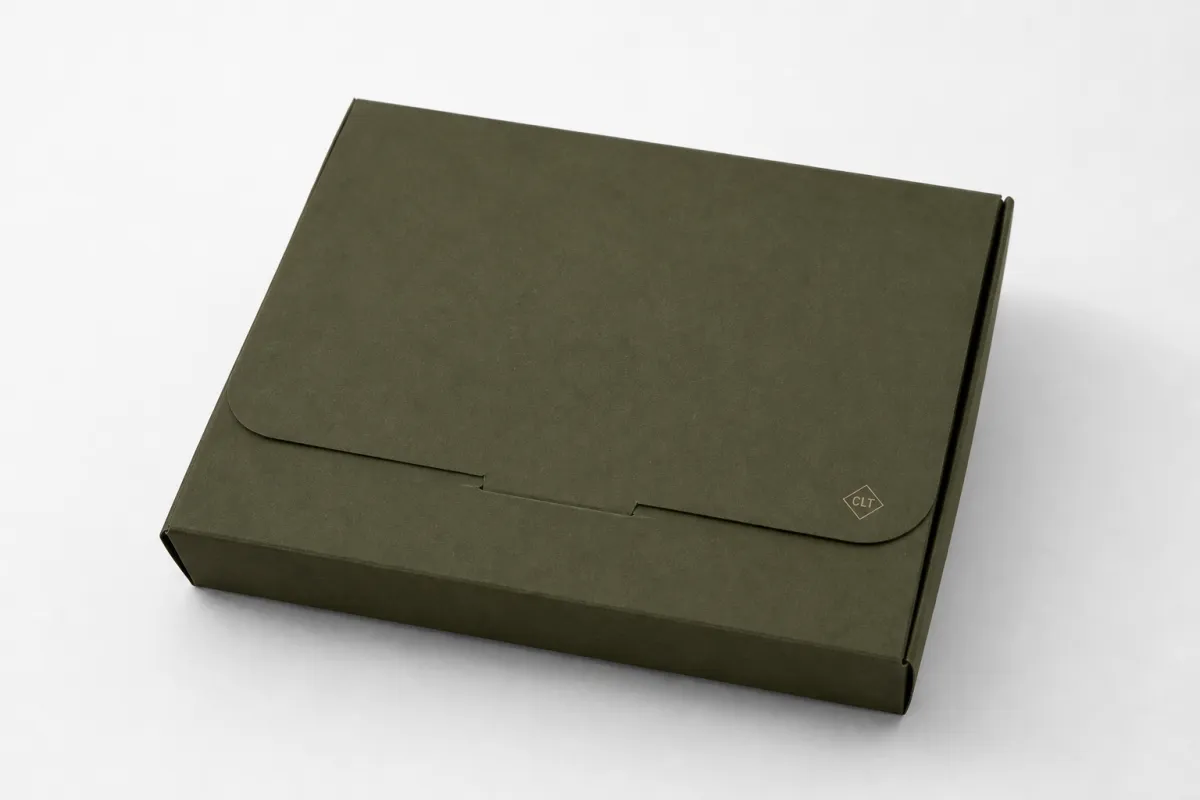
Custom flat pack boxes are packaging formats that ship flat and are formed later, either by hand or on simple forming equipment. The idea is direct: instead of moving fully assembled cartons through the supply chain, brands receive blanks, store them compactly, and fold them into shape at the point of use. That sounds minor on paper. It is not. A structural choice like that can alter the economics of an entire packaging system.
Packaging is never just a container. It is a storage decision, a freight decision, and a labor decision. With custom flat pack boxes, a brand can often fit more units on a pallet, reduce inbound truck volume, and use backroom or 3PL space more efficiently. Fewer pallets in the warehouse means fewer touches at receiving and less time spent moving bulky cartons around before they ever meet the product.
The sustainability case is hard to ignore. Less cube in transit usually means fewer truckloads for the same number of boxes, and fewer truckloads can mean lower emissions and less handling damage. The U.S. Environmental Protection Agency has long placed source reduction and smarter material use near the top of waste-prevention priorities, which is one reason packaging teams keep revisiting structural choices instead of treating them as fixed. For brands trying to cut material waste, custom flat pack boxes often fit the brief better than bulky pre-built packaging because the format uses only the space it truly needs.
They are especially useful for ecommerce, subscription kits, lightweight consumer goods, retail inserts, and promotional mailers that need fast assembly. A skincare brand may want a crisp unboxing experience. A supplement company may need a carton that folds quickly and labels cleanly. A gift set may need a package That Feels Premium without becoming a storage headache. In those cases, custom flat pack boxes offer a practical middle ground.
Flat pack does not mean flimsy. It means the box is engineered for efficiency before it is formed. The strongest custom flat pack boxes look simple from the outside because the real work happened upstream, where geometry, board grade, and closure style were chosen to support actual production behavior instead of a mockup made for a presentation slide.
A box that cuts warehouse cube in half but adds a confusing folding step is not automatically better. The real question is whether the full system saves space, time, and material together.
How Custom Flat Pack Boxes Work in Production
The production flow for custom flat pack boxes is usually simpler than people imagine. A design becomes a dieline, then the material is cut, scored, printed, and converted into blanks. Depending on the structure, the box may be glued, locked, or left as a flat blank with tabs that form during assembly. After that, the cartons are bundled and shipped flat for setup later.
That sequence sounds clean, yet each step changes how the box behaves. Die-cutting determines fold accuracy. Scoring controls how cleanly the board bends. Gluing affects strength and packing speed. Closure style matters too. Tuck tabs, auto-lock bottoms, mailer-style closures, and wrap-around sleeves each create a different tradeoff between assembly speed and rigidity. For custom flat pack boxes, the structure is often as important as the artwork.
Smaller runs are often folded by hand. That works well if the design is intuitive and the volume is manageable. Higher-volume operations may use semi-automated carton-forming equipment to speed the process, especially for standardized styles. Kitting lines and fulfillment centers usually prefer custom flat pack boxes that can be erected in a few motions and loaded without the operator fighting the structure.
The logistics advantage is real. Flat shipping can reduce freight volume dramatically compared with assembled cartons, especially at scale. One pallet of flats may replace several pallets of formed boxes, and that difference matters when inbound freight rates keep rising. In a warehouse, the savings compound: less cube on the dock, less cube in storage, and less time spent moving packaging from one area to another. Good custom flat pack boxes are already doing quiet work before the product arrives.
Another payoff often gets missed. Flat shipments are easier to stage, which lets brands order packaging in larger batches without clogging the building with unused cartons. That matters for promotional seasons, product launches, and fast-growing ecommerce operations where demand can change quickly. The best custom flat pack boxes support that flexibility without turning every adjustment into a structural headache.
I have seen teams overlook this part and then scramble later. A box that fits the product is only half the story; the other half is how it behaves on a busy Tuesday in a fulfillment center with three people packing, one person training, and a stack of outbound orders waiting. That is where the design either earns its keep or starts causing little delays that add up fast.
Key Factors That Affect Strength, Sustainability, and Fit
Start with the board. For custom flat pack boxes, board choice drives nearly everything else: crush resistance, print quality, fold memory, and the feel in hand. Corrugated options usually depend on flute type and paper quality; paperboard choices depend on caliper and finish. A thin 18pt carton behaves very differently from a single-wall E-flute mailer or a sturdier B-flute structure. The right answer depends on what the box must survive, not on what looks premium in a sample book.
Dimensional fit comes next, and this is where many programs slip. Internal dimensions should match the product and any insert system closely enough to prevent movement, but not so tightly that packout becomes a hassle. A good rule is to build for real packing tolerances, not perfect CAD dimensions. If the item includes a pouch, charger, bottle, or leaflet, the total stack height matters. Custom flat pack boxes protect best when the contents fit the geometry instead of forcing the geometry to compensate later.
Print and finish choices can support sustainability or quietly work against it. Heavy ink coverage, film laminates, soft-touch coatings, foil, and complex varnishes all change the recycling conversation. Not every premium finish is a bad idea, but each one should earn its place. If the box is headed for a curbside recycling stream, the specification should stay as simple as the brand can tolerate. Many custom flat pack boxes look better, perform better, and recycle more cleanly when the finish strategy stays restrained.
Product weight and shipping method matter too. A set of cosmetic sachets behaves differently from a carton holding books, glass bottles, or electronics. The first may need brand presence and careful presentation. The second may need more edge strength, better closures, or internal support. From a packaging buyer's angle, that is exactly why custom flat pack boxes should never be chosen on looks alone.
Testing closes the loop. Drop tests, Edge Crush Tests, stacking tests, and assembly checks expose weak assumptions before a program scales. ISTA methods are widely used for transport simulation, and the organization outlines testing standards at ISTA. That matters because failures in the field usually cost far more than surprises in the lab. A box that looks perfect on screen but splits at the corner after the third drop is not ready, no matter how polished the artwork is. The most dependable custom flat pack boxes are the ones that survive real handling, not just digital proofing.
Certification can help with trust, but only if the actual board specification supports the claim. If a program needs chain-of-custody documentation, FSC-certified fiber should be requested upfront. You can review certification details at FSC. The label alone is not enough; substrate, supplier documentation, and finished carton all need to align. That is true for many custom flat pack boxes programs, especially where branded packaging is part of a public sustainability claim.
One more practical detail: moisture exposure. A carton that lives in a dry office does not need the same treatment as packaging that sits near a loading bay or in a damp stockroom. Paperboard can warp, corrugated can soften, and coatings can behave differently in humid conditions. If your storage environment is variable, say that out loud during the spec stage. It saves everyone from pretending the box lives in a perfect climate-controlled bubble, which, frankly, it probably does not.
Custom Flat Pack Boxes: Cost, Pricing, and MOQ
Cost is where the conversation gets real. Custom flat pack boxes are often cheaper than rigid setup packaging, but the final number depends on material, print method, size, inserts, and die complexity. A simple mailer with one- or two-color print may sit in a very different price band from a premium presentation carton with specialty coating and a custom insert. The mistake is comparing only unit price without understanding what the box must do.
Minimum order quantity matters because setup costs need to be spread across enough units. Lower MOQ usually means higher per-unit pricing, not because anyone is being difficult, but because the press, die, and finishing steps still have to be paid for. Larger runs often bring the unit cost down in a meaningful way. That is one reason custom flat pack boxes become more economical once a SKU proves itself and forecast volume steadies.
Here is a practical lens: if a box costs a bit more per unit but cuts packout time, reduces freight cube, and lowers damage rates, it may still be the cheaper choice overall. If it saves a penny but forces the team to overpack with filler, the packaging budget is only telling half the story. The full cost of custom flat pack boxes includes warehouse space, labor, and the risk of rework when a structure is awkward.
| Box style | Typical use | Estimated unit cost | What drives the price |
|---|---|---|---|
| Folding carton with simple print | Cosmetics, accessories, sample kits | $0.18-$0.42 | Paperboard grade, number of colors, dieline size |
| Single-wall corrugated mailer | Ecommerce orders, subscription packaging | $0.42-$0.88 | Flute type, print coverage, score quality |
| Self-locking corrugated carton | Books, small consumer goods, shipping kits | $0.55-$1.10 | Structure complexity, board thickness, closure design |
| Premium presentation box with insert | Retail packaging, gift sets, branded unboxing | $1.20-$2.40 | Insert die, coatings, print coverage, finishing steps |
Hidden costs show up too. Freight from the converter, storage charges, sample revisions, and manual assembly labor can all shift the true budget. An overspecified box may look tidy on paper but consume more board than necessary. A tricky lock can add seconds at the packing station, which becomes a labor line item faster than most purchasing teams expect. The smartest custom flat pack boxes are not the ones with the lowest sticker price; they are the ones with the best total cost of ownership.
That is why it helps to compare a few constructions side by side before committing. A team can review options through Custom Packaging Products and evaluate what each format does to cost, handling, and brand presentation. One design may save print cost. Another may save assembly time. A third may cut shipping volume enough to matter in the freight budget. Good custom flat pack boxes rarely win on a single metric alone.
For brands moving from pilot to steady production, pricing can improve once a repeat spec is established. Tooling is already complete, sampling becomes easier, and the supplier can plan around consistent volume. That is one reason custom flat pack boxes often become more attractive after the first launch cycle, not before it.
There is also a trust angle here. If a quote looks unusually low, check what is missing. Sometimes board thickness is lighter than expected. Sometimes print coverage is reduced. Sometimes freight and secondary packaging are not included. Cheap is only cheap if the spec is real. Otherwise, the invoice just gets to surprise you later, which is a pretty lousy way to run packaging.
Process, Timeline, and Lead Time for Ordering
The ordering process usually starts with a brief: product dimensions, weight, shipping method, target branding level, and any sustainability requirements. From there, the packaging partner develops a structural spec, then artwork, then a sample or prototype. After approval, production begins, followed by finishing, packing, and freight booking. For custom flat pack boxes, the sequence is manageable, but only if each step gets approved in the right order.
Lead time varies more than many teams expect. Simple stock-based or near-standard designs can move quickly once the artwork is ready. More complex jobs with new tooling, specialty finishes, or custom inserts need longer. In practice, many standard custom flat pack boxes programs land in the 12-15 business day range after proof approval, while more involved jobs can stretch beyond that depending on material availability and finishing complexity. If the launch date is fixed, the packaging calendar should be built backward from that date, not forward from the quote.
Delays usually come from the same places. Late dieline changes can force a new proof cycle. Artwork revisions can reset production if the file is not press-ready. Material shortages, especially on specific board grades or coated stocks, can change the schedule. Last-minute requests for special print effects add another layer. For custom flat pack boxes, the most reliable way to protect timing is to freeze the structure before polishing the artwork.
Seasonality matters too. Holiday packaging, back-to-school promotions, and product launches all hit converters at the same time. If your packaging window overlaps with a busy seasonal run, sampling should begin early. That may sound obvious, but it is one of the easiest ways to avoid a bottleneck. I have seen packaging become the last thing holding a launch hostage, and it is rarely because the box was difficult to make. It is usually because the team treated custom flat pack boxes like a commodity instead of a production input.
Build a buffer. A little extra time protects against shipping delays, proof corrections, and the simple reality that no production line likes surprises. That matters even more if the boxes must arrive before inventory, because empty shelves and ready products create a strange kind of pressure. The best custom flat pack boxes programs leave room for that pressure without turning every change into a crisis.
If there is one honest warning here, it is this: lead times on paper and lead times in a busy factory are not always the same thing. A supplier can have a clean schedule and still get clipped by a board shortage, a finishing backlog, or a freight delay. That is not a sign of failure so much as the normal messiness of manufacturing. Still, it means the safest plan is to confirm the structure early and leave the artwork edits for last.
Step-by-Step Guide to Choosing the Right Box
Step 1 is the least glamorous and the most useful: define the product accurately. Measure the item in its actual packed state, not just the bare object. Include closures, sleeves, inserts, and anything that changes height or width after the product is loaded. If the item ships with literature or accessories, account for them. Custom flat pack boxes work best when the numbers come from the real packout, not a theoretical spec sheet.
Step 2 is choosing the style. A tuck-top mailer works for many ecommerce and retail packaging needs. A self-locking carton may be better when assembly speed and retention matter. A sleeve can be ideal when the goal is to elevate branded packaging without overbuilding the format. The right style depends on opening behavior, display needs, and shipping method. Custom flat pack boxes should feel like a fit for the operation, not just a fit for the logo.
Step 3 is material selection. If the product is light and the route is gentle, paperboard may be enough. If the item is more fragile or the distribution chain is rougher, corrugated board or a stronger flute may be the smarter move. Insert strategy matters here too. Sometimes a folded paperboard insert is enough. Sometimes molded pulp or a die-cut corrugated cradle makes more sense. Good custom flat pack boxes use structure first and filler second.
Step 4 is deciding how much branding the box really needs. Full-wrap print can be powerful, but it is not the only way to create impact. A restrained design with strong typography, one or two colors, and a clean closure can still look premium. That is where package branding and sustainability start to align. If the brand story can be told with less ink and fewer coatings, the box often becomes easier to recycle and easier to produce. Many of the strongest custom flat pack boxes are visually confident without being visually loud.
Step 5 is testing the real thing. Request samples, fold them on the actual line, time the assembly, and check whether the box performs under pressure. Test with the intended insert, the intended label, and the intended closure method. If the box will be packed by a team of five during a busy shift, that is the condition that matters. Custom flat pack boxes should be judged in context, not on a sample table alone.
A simple decision sequence can help:
- Confirm product dimensions and weight.
- Choose the box style based on use case.
- Select board grade and insert material.
- Lock the artwork and finish strategy.
- Test assembly speed and shipping performance.
That sequence feels almost too straightforward, which is exactly why it gets skipped. It is usually the difference between packaging that performs and packaging that merely photographs well. The most dependable custom flat pack boxes pass each step without forcing the team to make excuses for the structure later.
One extra check helps more than people admit: ask the person who will actually fold the box what they think. A design can look elegant in a deck and still be annoying in the hand. The operator usually spots the awkward tab, the too-tight score, or the confusing fold direction in about ten seconds. That feedback is not "just operational." It is the difference between a box that works and a box that kind of works.
Common Mistakes When Ordering Flat Pack Boxes
The first mistake is designing to the product spec sheet and ignoring real-world tolerances. Boxes rarely fail because the product was the wrong size on paper. They fail because closures, insert thickness, or material memory were left out of the calculation. That is a common trap for custom flat pack boxes, especially when the first sample is too tight by just a few millimeters and the problem only appears during fast packing.
The second mistake is choosing a decorative finish that looks great but does not help the package do its job. Foil, lamination, and heavy coating can all be useful, but they should not be automatic. If the finish increases cost or complicates recyclability without improving shelf impact or customer experience, it deserves scrutiny. A lot of custom printed boxes are overfinished simply because the sample looked impressive in the meeting.
The third mistake is underestimating assembly labor. A box that takes 3 seconds to form is one thing. A box that takes 15 seconds and two extra motions is another. Multiply that by 10,000 units and the difference becomes visible in labor planning. Custom flat pack boxes should reduce work, not just move work from the factory to the pack station.
The fourth mistake is skipping sample testing. Teams sometimes approve a design because the mockup feels right, then discover that the formed box bows, crushes, or prints poorly after setup. That is expensive because problems caught after production tend to involve freight, rework, or replacement orders. With custom flat pack boxes, a small sample run is usually cheaper than a large assumption.
The fifth mistake is ordering before the forecast is stable. If volume changes after the run is locked, the company can end up with shortages or excess inventory. Shortages disrupt fulfillment. Excess stock ties up space and cash. Either way, the packaging budget absorbs the stress. The better path is to validate demand first, then place the custom flat pack boxes order against a forecast with at least some history behind it.
There is also a quieter mistake: ignoring the supply chain outside the box itself. If the cartons are perfectly designed but arrive late, the program still suffers. If the board is right but the folding process is awkward for the fulfillment team, the box still underperforms. In packaging, the shortest route to waste is believing the carton ends at the dieline. Custom flat pack boxes are only as good as the line, the warehouse, and the people using them.
And yes, sometimes the problem is simply that the team tries to solve too many things with one structure. One box for every product, one finish for every SKU, one insert for every shipping path. That sounds tidy, but packaging is rarely that neat. A lighter item and a fragile item do not need the same answer, even if the brand identity wants them to. The better move is usually a family of formats, each sized to its actual job.
Expert Tips and Next Steps for Smarter Packaging
Start with a packaging audit. Map the product size, shipping route, storage constraints, and assembly time before choosing a structure. That sounds basic, yet it is where many packaging programs improve quickly. If a box has to perform in ecommerce fulfillment, retail packaging, and internal storage all at once, the design brief should say so. Otherwise, custom flat pack boxes can drift into a compromise nobody truly wanted.
Benchmark two or three constructions side by side. Compare fit, freight cube, print impact, and assembly speed objectively. Do not assume the most expensive option is the strongest or the cheapest option is the smartest. I would rather see a brand test a mailer, a self-locking carton, and a sleeve format than pick the first sample that looks acceptable. That comparison often shows that a modest structural change does more for custom flat pack boxes than a costly finish upgrade ever could.
Ask for samples made with the actual production board. Mockups are useful, but they do not always show how the material behaves after scoring, gluing, or repeated folding. Real board has memory. Real board has friction. Real board can surprise you. That is why the sample stage matters so much for custom flat pack boxes and for any packaging design that will be handled by a live operation.
Use sustainability claims carefully and accurately. Recycled content, source certification, and recyclability all depend on the exact specification, not just the concept. If the business wants to talk about responsible sourcing, the material statement should be traceable and honest. The EPA's packaging and waste-prevention guidance makes one thing clear: source reduction and better material choice are often the most practical first steps. That is especially relevant for custom flat pack boxes, where the format already supports lower cube and better storage efficiency.
There is a final point worth making. A packaging system should make the business easier to run. If the box is beautiful but awkward, it is not finished. If it is efficient but forgettable, it may still be right depending on the SKU. The best programs sit in the middle: practical, branded, and honest about tradeoffs. That is where custom flat pack boxes tend to shine, because they can support product packaging, retail packaging, and branded packaging goals without demanding unnecessary material or space.
For a practical next step, review your current packout, request a quote, and test custom flat pack boxes against your top-selling SKU first. That gives you a real baseline for cost, labor, and fit. From there, it becomes much easier to decide whether the same structure should extend to the rest of the line, or whether a second format makes better sense for heavier or more delicate items.
That is usually where the smartest packaging teams land: not on the flashiest box, but on the one that helps the operation breathe. If custom flat pack boxes can cut storage cube, support cleaner branding, and keep assembly simple, they are doing real work. In packaging, real work is what matters.
One last practical takeaway: choose the box by the journey, not by the render. If the carton has to move through a warehouse, a fulfillment line, a truck, and a customer's hands, every step deserves a say in the spec. That is how you end up with packaging that holds up outside the spreadsheet.
What products work best with custom flat pack boxes?
Custom flat pack boxes work well for ecommerce goods, cosmetics, accessories, books, and subscription kits because those categories benefit from efficient storage and controlled assembly. They are especially useful when you ship in volume but want to keep warehouse space and freight costs under control. For fragile or heavier items, add inserts or stronger board so the box protects the product without overpacking.
Are custom flat pack boxes cheaper than rigid packaging?
Usually yes, because custom flat pack boxes use less material and ship more efficiently than rigid setup boxes. The final price still depends on board grade, print coverage, inserts, and order volume, so the cheapest-looking option is not always the lowest total cost. If labor time matters, compare unit price against packout speed before deciding.
How much lead time do custom flat pack boxes usually need?
Lead time varies by structure complexity, print method, and whether you need new tooling or only a standard die. Simple custom flat pack boxes can move quickly, while custom inserts, special coatings, or heavy revision cycles add time. Build in extra buffer if the packaging must arrive before a product launch or seasonal sales window.
What materials are best for sustainable custom flat pack boxes?
Recycled corrugated board and responsibly sourced paperboard are common choices for sustainable packaging programs. Choose the lightest material that still passes strength and shipping tests, because over-specifying board wastes fiber and budget. Keep coatings and laminates minimal if recyclability is a priority in your custom flat pack boxes specification.
Can custom flat pack boxes be printed inside and out?
Yes, many custom flat pack boxes support exterior and interior printing for branding, instructions, or unboxing messages. Interior print adds cost, so reserve it for moments that improve customer experience or reduce insert needs. Ask how full-coverage print affects recyclability, ink usage, and lead time before approving the final design.

