Buyer Fit Snapshot
| Best fit | Custom Flat Paper Bags projects where brand print, material claims, artwork control, MOQ, and repeat-order consistency need to be specified before quoting. |
|---|---|
| Quote inputs | Share finished size, material target, print colors, finish, packing count, annual reorder estimate, ship-to region, and any compliance wording. |
| Proofing check | Approve dieline scale, logo placement, barcode or warning zones, color tolerance, closure strength, and carton packing before bulk production. |
| Main risk | Vague material claims, crowded artwork, missing packing details, or unclear freight terms can make a low unit price expensive after revisions. |
Fast answer: Custom Flat Paper Bags: Film, Print, MOQ, and Carton Packing should be specified like a repeatable production item. The safest quote records material, print method, finish, artwork proof, packing count, and reorder notes in one written spec.
Production checks before approval
Compare the actual filled-product size with the drawing, then confirm tolerance on folds, seals, hang holes, label areas, and retail display edges. Reserve space for logos, QR codes, warning copy, and material claims before decorative graphics fill the panel.
Quote comparison points
Review material grade, print process, finish, sampling route, tooling charges, carton quantity, and freight assumptions side by side. A quote is only useful when the supplier can repeat the same color, closure quality, and packing count on the next order.
Custom Flat Paper Bags: Uses, Costs, and Ordering Basics
A flat paper bag can look unremarkable at first glance, yet custom flat paper bags change the feel of a package quickly once the paper weight, width, print coverage, or seal style shifts. That is the point for many buyers. Fewer variables. Cleaner pack-out. A format that suits lightweight items that do not need side volume. The same packaging logic that guides Custom Packaging Products, retail packaging, and custom printed boxes applies here too, only in a slimmer and usually less expensive form.
Bakery items, samples, inserts, stationery, accessories, and handout packaging all fit naturally into custom flat paper bags. The format uses less storage space than bulkier options and creates less material waste in many applications. Brand teams also get a tidy surface for package branding, without fighting gussets or heavy structure. For companies trying to keep product packaging costs under control while still looking deliberate, this is a format worth serious attention.
What Are Custom Flat Paper Bags?
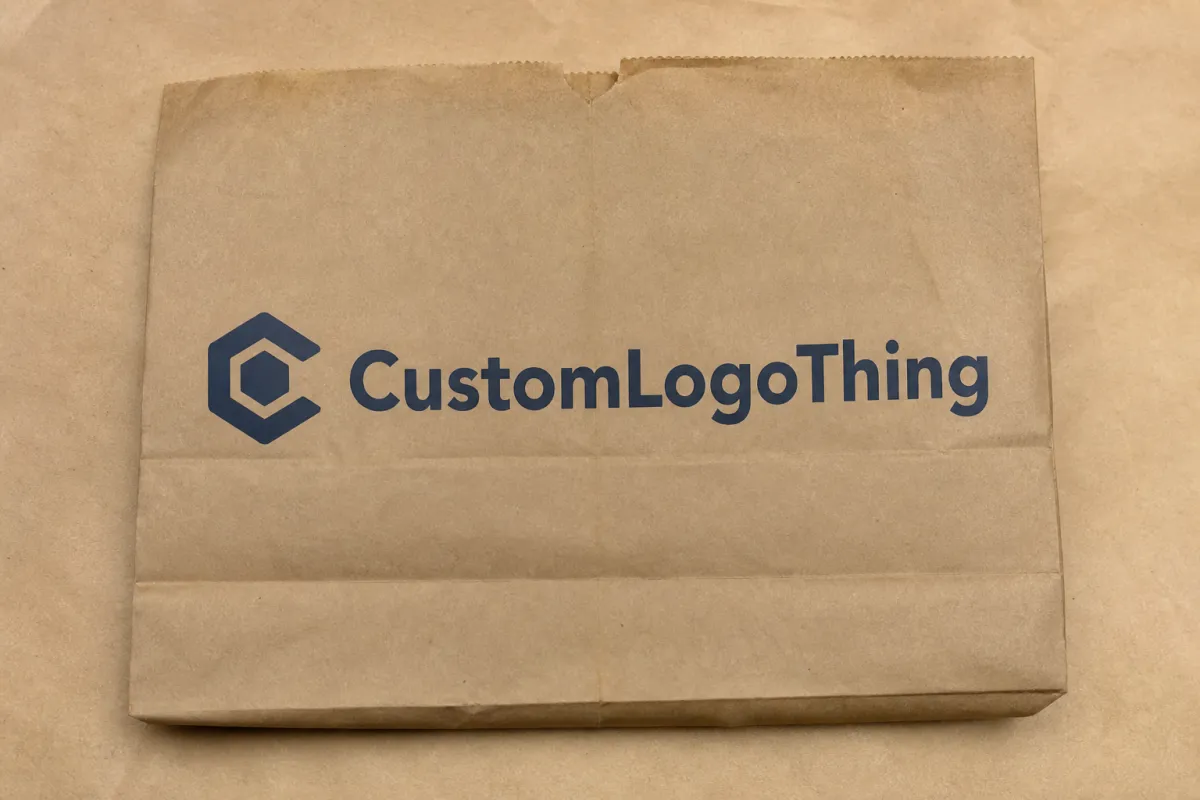
Custom flat paper bags are non-gusseted paper bags made for slim, light, or evenly stacked products that do not need extra side volume. Put simply, the bag stays flat because the body comes from a basic sheet structure rather than a folded box shape. That is why custom flat paper bags show up again and again with products that need clean presentation more than deep capacity.
Small changes in spec can alter the finished bag more than buyers expect. A 40 gsm bag and a 70 gsm bag may share the same outline, but the lighter sheet folds softly and feels delicate while the heavier one resists wrinkling and holds shape better in the hand. Width matters too. Half an inch can decide whether a product slides in smoothly or catches at the opening. Staff notice that immediately, customers do too, and anyone filling bags on a line notices it first.
Common uses include:
- Bakery slices, cookies, and dry snacks that do not need barrier performance
- Stationery, cards, labels, and flat inserts
- Apparel accessories, gift cards, jewelry cards, and small retail handouts
- Samples, literature, and event takeaway packs
- Light mail inserts or inner packaging for broader retail packaging programs
The main difference between flat bags and gusseted bags is side expansion. Gusseted bags open wider and accept thicker contents. Custom flat paper bags make more sense when footprint, consistency, and cost control matter more than volume. That tradeoff often works well for brands that want simpler packaging design and a neater shelf profile. A lot of buyers overestimate the capacity they need and end up paying for structure their product never uses.
That also explains why custom flat paper bags fit easily into branded packaging programs built around clean presentation rather than a heavy structural statement. If the product is slim, the bag should not pretend otherwise. The better questions are straightforward: does the bag protect the item, support the brand, and move efficiently through the packing process?
Before an order goes out, size, paper stock, print method, quantity, and turnaround usually drive the decision. Those five variables shape almost every order for custom flat paper bags, and the rest of this post breaks them down in practical terms.
How the Production Process Works for Custom Flat Paper Bags
The production path for custom flat paper bags usually begins with a spec sheet and ends with stacked cartons ready for shipment. The steps look simple on paper. Each one carries variables that affect price, lead time, and appearance. In a well-run project, the converter, the buyer, and the design team all work from the same dieline and the same print expectations before any material gets cut.
Artwork setup comes first. That stage checks safe zones, edge distances, ink limits, and any copy that could be compromised by a fold or glue area. Simple art moves quickly. Rich solids, fine type, and multiple colors demand more care because even a small shift shows up fast on a flat surface. That is especially true for custom flat paper bags, where there is no gusset hiding variation in the print.
Material selection follows. Kraft, white sulfite, recycled content paper, and coated papers behave differently through print and converting. Kraft usually gives a natural look and decent stiffness. Smoother white sheets sharpen logos and small text. Recycled stock can fit sustainability goals, though it may show more visual variation from sheet to sheet. FSC-certified material is worth requesting early, along with chain-of-custody paperwork from FSC if the supplier can provide it for the specific stock being quoted.
Printing comes next. One-color work usually costs the least and stays the easiest to keep consistent, especially on larger runs. Two-color and multi-color work can still look strong, but they add setup time and raise the chance of registration drift if the layout is crowded. Full-coverage branding shifts the budget further because higher ink coverage slows drying and can increase handling. In practice, custom flat paper bags with limited-color graphics often strike the best balance between cost and shelf impact.
After printing, the web gets cut, folded, and glued into shape. This is the converting stage, the point where the bag becomes a bag instead of printed paper. Seams need to bond properly. Edges need to stay square. The finished stack has to stay even enough for packing. Tight tolerances matter because a small shift in fold placement changes stackability, fill consistency, and the way the bag sits at retail. If the bag moves through a customer-facing line, that consistency matters as much as the artwork.
Quality checks usually happen before packing and again before shipment. Converters often sample for print clarity, glue integrity, count accuracy, and carton packing. For projects that travel in master cartons or move through distribution, transit conditions deserve attention too. ISTA testing is a useful reference point if you need a clearer picture of how packaging behaves under vibration, compression, and routine handling stress through ISTA.
A good flat bag should be almost boring in the best possible way: easy to fill, easy to stack, and consistent enough that staff do not think about it twice.
Lead time depends on several moving parts. Proof approval is one of the biggest, because a project can sit idle while artwork waits for signoff. Stock availability matters too; if the selected paper is not on hand, the order can move from days into weeks. More finishing steps, more colors, and special inspection requests all add time. For custom flat paper bags, a realistic timeline is often 12-15 business days from proof approval for simple runs, with more customized work taking longer depending on quantity and paper choice.
If you are comparing vendors, ask for these details before production starts:
- A dieline with exact panel dimensions
- A digital proof or press-ready mockup
- A written material specification with basis weight or gsm
- A realistic delivery window that includes proofing and freight
- A note on whether the quoted price includes plates, setup, or art prep
Custom Flat Paper Bags Cost: What Drives Pricing
Cost for custom flat paper bags follows the same core drivers seen in most custom packaging work: size, stock, print coverage, finishing, and total quantity. The bag itself looks simple. The economics are not. A slightly larger format uses more paper and can reduce how many blanks fit on a sheet. A deeper ink build adds drying time. A custom size may require a dedicated converting run instead of an easier stock format.
The clearest price break usually comes from quantity. Setup work has to be spread across the run, so unit cost drops as volume rises. A 1,000-piece order can look expensive per unit. A 10,000-piece order often looks far more manageable. For custom flat paper bags, that spread can be the difference between a small trial and a serious production order.
MOQ matters here. Some converters quote a low minimum to win the job, but the real question is whether the quote includes art prep, proofing, freight, plates, or special handling. A low front-end number can climb once setup charges or shipping appear. Buyers should ask for a clean breakdown so they can see the actual landed cost.
Paper choice matters too. Kraft is often the baseline because it is durable, widely available, and common in packaging design. Bleached white stocks can raise print clarity and make logos stand out, though they may add a modest premium. Coated or very smooth sheets sharpen fine type, but material and handling costs can climb. If sustainability is part of the brief, recycled or FSC-certified paper may matter more than a few cents saved on the bag itself.
| Stock Option | Typical Use | Print Behavior | Relative Cost Impact |
|---|---|---|---|
| Natural kraft, 60-80 gsm | Everyday retail and food handout packaging | Good for simple logos, one-color art, and bold typography | Usually the baseline |
| White sulfite, 70-90 gsm | Retail packaging that needs brighter brand presentation | Sharper for small type and detailed artwork | Often adds about $0.01-$0.03 per bag |
| Premium coated paper, 80-100 gsm | Higher-end branded packaging and premium product packaging | Best for fine detail, strong solids, and cleaner color fidelity | Often adds about $0.02-$0.06 per bag |
| Recycled content stock | Sustainability-focused programs | Can show more fiber variation, which may suit a natural brand look | Varies by certification, availability, and print coverage |
The price ranges above are illustrative only. Real quotes vary by region, run length, paper market conditions, and the converter's setup model.
Special finishes can change the budget quickly. Windowing, coatings, embossing, premium inks, or unusual cuts all add complexity. Even a custom width can alter how the bag nests, how it packs, and how efficiently the converter runs the job. That is why custom flat paper bags should be priced as a full package, not just paper plus ink.
Print coverage deserves its own scrutiny. A small logo in one corner costs less to run than a flood of dark ink across the entire face of the bag. More coverage can also create a longer drying window or more scuff risk if the bags stack too soon. For a premium look without blowing up the budget, a restrained layout with a strong mark usually works better than a heavy all-over graphic.
From a buyer's perspective, the real question is not, "What is the cheapest quote?" It is, "Which quote gives the best total value for the product, the brand, and the packing operation?" For custom flat paper bags, that usually means balancing appearance, durability, pack speed, and the risk of rework. A bag that reduces damage or improves fill efficiency can pay back far more than a lower sticker price.
Freight matters too. Flat bags are lightweight but bulky by count, so shipping can matter more than people expect. A small change in carton count or case pack can alter pallet density and shipping classes. For large orders, ask whether the vendor can optimize case counts or pallet patterns so the landed cost stays reasonable.
Step-by-Step: How to Specify the Right Bag
The easiest way to get custom flat paper bags right is to start with the product, not the bag. Measure the finished length, width, and thickness of the item as it will actually be packed, not as it appears in a catalog photo. Then think about how a person will insert and remove it. A slim accessory may slide in easily, while a folded insert with a rigid card backing may need more clearance at the top or bottom.
After that, decide how much structure the bag actually needs. A paper stock that is too light can feel flimsy, wrinkle during handling, or signal a low-cost impression even if the print looks good. A heavier stock can improve stiffness and shelf presence, yet it can also add cost and reduce foldability. In most custom flat paper bags projects, the best choice lands in the middle: enough weight to hold shape, not so much that the bag fights the workflow.
Here is a practical way to build the spec:
- Measure the product in its final packed state.
- Choose a bag width that allows easy insertion without excess slack.
- Choose paper grade based on weight, feel, and print requirements.
- Decide on print coverage and number of colors.
- Confirm seam placement, safe zones, and any fold-sensitive text.
- Request a proof against the actual product if possible.
That last step matters more than many buyers realize. A digital proof can look perfect and still miss a real-world issue, such as a logo sitting too close to a fold or a barcode landing where a seam interrupts scanning. For custom flat paper bags, an actual sample or a mockup with the true product in hand is the cleanest way to catch fit problems before full production.
Print choice should follow the brand's needs, not the other way around. If the goal is cost discipline, a one-color logo on kraft often delivers a dependable result. If the goal is a premium shelf effect, smoother paper and tighter print registration usually matter more than extra bag structure. That is where packaging design and package branding start to overlap, because the bag has to work both as a container and as a brand signal.
Build the spec around production reality. Write down case pack quantity, carton dimensions if you have a storage limit, and any warehouse handling requirements. Make sure the final file includes the right bleed and a clear indication of which panel is front, back, or reverse print. When purchasing, design, and the converter all work from the same version of the spec, custom flat paper bags tend to move faster and with fewer revisions.
Think about how the bag behaves after it leaves the converter. If the product will sit in inventory, check storage conditions. Heat, humidity, and poor stacking can affect the paper before it is ever used. The strongest custom flat paper bags design in the world still disappoints if the cartons are stored in a damp corner or squeezed under heavier cases.
Common Mistakes When Ordering Flat Paper Bags
One of the most common errors with custom flat paper bags is undersizing the bag. A package that looks fine on paper can become hard to fill once a label, card insert, or product variation gets added. Too little margin slows the line, increases tearing risk, and can lead to wasted product if staff have to force the item in. A small amount of extra clearance is usually cheaper than a packing bottleneck.
Another mistake is approving artwork before checking the live dimensions. Artwork that looks balanced on a screen can sit too close to a fold, a seam, or a cut edge in production. Fine text and small logos are especially vulnerable. For custom flat paper bags, compare the proof against the actual dieline and the real product dimensions before anyone signs off.
Buyers also underestimate quantity more often than they admit. If the bags will go to multiple locations, support more than one product line, or get consumed during seasonal spikes, a short order can turn into a fast emergency reorder. Emergency reorders are rarely kind to budget or schedule. A slightly larger run often creates enough cushion to avoid paying higher unit cost for a rush job later.
Paper thickness is another blind spot. A light stock can print beautifully and still feel weak in the hand, wrinkle under pressure, or fail to communicate the quality of the item inside. A stock that is too heavy can make packing awkward and drive up freight. The right answer depends on the product, but for custom flat paper bags it usually comes down to finding the minimum weight that still feels intentional and dependable.
Lead times get misunderstood as well. Some buyers assume every paper bag order moves on the same schedule, but print complexity, stock availability, proof turnaround, and quantity all affect the timeline. Simple runs can move quickly once artwork is approved. More customized custom flat paper bags often need extra days for setup and inspection. A plan that ignores those steps can miss a launch window.
The cheapest quote can become the most expensive choice in practice. If the bag wrinkles, tears, or slows down packing, labor costs rise. If the print is muddy, the bag loses shelf appeal. If the dimensions are off, the bag may need to be pulled or reworked. I have seen buyers save a few cents per unit and lose that advantage many times over in rehandling and waste. That is why the real value of custom flat paper bags has to include the work they save, not just the number on the quote.
A final mistake is treating the bag as separate from the rest of the package system. It is not separate. It sits inside a larger product packaging operation, alongside inserts, cartons, labels, and shipping materials. If the bag supports a retail presentation, it should match the broader tone of the brand instead of feeling like an afterthought. That applies whether you are building custom flat paper bags, Custom Printed Boxes, or a full branded packaging program.
Expert Tips for Better Performance and Print
Good custom flat paper bags usually begin with disciplined artwork. Put the most important branding in the cleanest area of the panel and leave the edges for quiet space. Small logos, contact details, and fine type belong where the eye can read them easily, not where a fold may distort them. A simple layout often prints more reliably and looks more expensive than a crowded one.
Match the stock to the brand experience. Kraft gives a natural, sturdy feel that works well for artisan food, simple retail packaging, and earth-toned brands. Smoother white stock can sharpen detail and support brighter color work, which matters if the bag sits beside premium product packaging or a clean, minimal identity. The paper should support the story, not fight it.
Think about handling, not just appearance. A bag that looks fine in a proof may scuff too easily in a stack, or feel awkward when staff fill it quickly. If the bags move through a shipping carton, sit in a master case, or display near a register, test them the way they will actually be used. That practical check often reveals whether custom flat paper bags need a heavier sheet, a slightly wider opening, or a different print placement.
If the budget is tight, simplify the art. Fewer colors, stronger type, and clean spacing often print more consistently and create a clearer read from a distance. A buyer may assume more decoration equals more value, but with custom flat paper bags the opposite can be true. The simplest bag often looks more deliberate, especially when the paper stock and print quality are chosen well.
Testing should include the real product, the real packing motion, and the real storage plan. Insert the actual item, fold the bag the way staff will fold it, and check for tearing, corner scuffing, or too much slack. If the bags sit in inventory, watch moisture and heat. Paper moves with the environment, and even well-made custom flat paper bags can shift in feel if they are stored poorly.
For brands concerned with sustainability claims, ask for paper sourcing documentation and avoid vague language. FSC certification helps when you need a traceable chain of custody, but the paperwork has to match the actual stock used on the job. A clear sustainability claim is much stronger than a broad promise, and buyers are wise to ask for specifics before they print them on packaging.
If the bags sit inside a broader branded packaging system, keep them visually consistent with other materials. The same logo treatment, color family, and type hierarchy that works on labels or custom printed boxes can usually be adapted to custom flat paper bags with very little extra complexity. That kind of alignment helps package branding feel intentional rather than pieced together.
Next Steps for Custom Flat Paper Bags
The easiest way to move forward with custom flat paper bags is to turn the idea into a simple working spec. Measure the product, choose the bag size, decide on paper stock, and write down the print requirements in plain language. Once that is done, you can ask for a quote with enough detail to get useful pricing instead of a broad estimate that will need revision later.
If you are still comparing options, start with a basic internal checklist:
- What exact product will go inside the bag?
- How many bags do we need per month or per launch?
- Do we want natural kraft, white stock, or something premium?
- How many print colors are truly necessary?
- Will the bag be used in retail packaging, food service, mail inserts, or a mixed setting?
Once that is answered, request a proof or sample and compare it against the actual item. That check catches fit issues, text placement issues, and any mismatch between the bag and the way your team packs the product. For custom flat paper bags, that one review step can save a lot of frustration later.
It also helps to compare options by total value rather than unit cost alone. A slightly higher price may buy better print clarity, faster packing, better carton count, or a sturdier feel in the hand. Those are real business benefits, not nice-to-have extras. If the order supports a retail launch, the bag can shape how the product is received before the customer even opens it.
Before final approval, give purchasing, operations, and brand stakeholders one last chance to review the spec. That sounds simple, but it prevents a lot of wasted reprints. The approved version of custom flat paper bags should be the one everyone can live with: the one that fits the product, fits the budget, and fits the brand.
The most useful rule is also the plainest: start with the packed product in hand, not with a catalog size. Measure it, test the insertion, and only then choose the paper and print treatment. That single habit prevents most ordering mistakes and gives custom flat paper bags a better chance of doing their real job quietly and well.
FAQ
What are custom flat paper bags best used for?
They are best for lightweight, slim, or evenly stacked items that do not need side volume. Common uses include bakery packaging, samples, retail handouts, inserts, and accessory packaging. They work well when you want a simple, consistent package that is easy to store and pack, which is exactly why custom flat paper bags stay popular in retail packaging and food service settings.
How do custom flat paper bags pricing and MOQ usually work?
Pricing usually depends on size, paper stock, print coverage, and total quantity. MOQ matters because setup costs spread across the run, so smaller orders usually cost more per bag. Ask whether the quote includes artwork prep, proofing, freight, and any setup or plate charges, because those items can change the real cost of custom flat paper bags more than the headline unit price.
Which paper stock is best for custom flat paper bags?
Kraft is a strong choice when you want durability and a natural look. Smoother white papers can improve print clarity and make branding look sharper. The best stock depends on the product weight, branding style, and whether sustainability is a priority. In many custom flat paper bags projects, the right answer is the stock that supports both the product and the packing process without adding unnecessary cost.
What is a typical turnaround for custom flat paper bags?
Turnaround depends on proof approval, stock availability, print complexity, and order size. Simple runs with approved artwork usually move faster than highly customized projects. The fastest way to reduce delays is to submit a complete spec and review proofs quickly. For custom flat paper bags, a realistic schedule often starts after approval rather than when the first inquiry is sent.
Can custom flat paper bags be printed on both sides?
Yes, many flat paper bag projects can be printed on both sides if the converter and layout allow it. Double-sided printing can increase cost and may require more careful artwork planning. Keep important text away from folds and edges so the final print stays readable and clean. That extra planning helps custom flat paper bags hold their visual quality once they are folded, stacked, and handled in real use.

