Buyer Fit Snapshot
| Best fit | Custom Foam Free Inserts Wholesale projects where brand print, material claims, artwork control, MOQ, and repeat-order consistency need to be specified before quoting. |
|---|---|
| Quote inputs | Share finished size, material target, print colors, finish, packing count, annual reorder estimate, ship-to region, and any compliance wording. |
| Proofing check | Approve dieline scale, logo placement, barcode or warning zones, color tolerance, closure strength, and carton packing before bulk production. |
| Main risk | Vague material claims, crowded artwork, missing packing details, or unclear freight terms can make a low unit price expensive after revisions. |
Fast answer: Custom Foam Free Inserts Wholesale: Sustainable Packaging should be specified like a repeatable production item. The safest quote records material, print method, finish, artwork proof, packing count, and reorder notes in one written spec.
Production checks before approval
Compare the actual filled-product size with the drawing, then confirm tolerance on folds, seals, hang holes, label areas, and retail display edges. Reserve space for logos, QR codes, warning copy, and material claims before decorative graphics fill the panel.
Quote comparison points
Review material grade, print process, finish, sampling route, tooling charges, carton quantity, and freight assumptions side by side. A quote is only useful when the supplier can repeat the same color, closure quality, and packing count on the next order.
Custom Foam Free Inserts Wholesale: Sustainable Packaging That Actually Holds Up
custom foam free inserts wholesale is usually not the first thing a brand gets excited about. It shows up after the breakage report, after the returns spike, or after somebody notices the product is rattling around inside a box like a loose bolt. That is not a branding problem. That is a packaging problem with a bill attached.
The shift away from plastic foam is real. Buyers are replacing it with molded fiber, corrugated inserts, paperboard structures, and hybrid paper-based designs because those materials can stop movement without adding unnecessary waste. Done right, they also improve the opening experience for retail packaging, ecommerce kits, and subscription programs. Done badly, they become expensive cardboard guesswork. So the details matter.
For teams comparing product packaging options at scale, the question is not whether a foam-free insert sounds better on paper. The question is whether it protects the product in the actual shipping lane, keeps pack-out fast, and lowers total cost per protected unit. That is the number that matters. Not the marketing slide. Not the pretty sample photo.
Why custom foam free inserts wholesale can cut damage costs
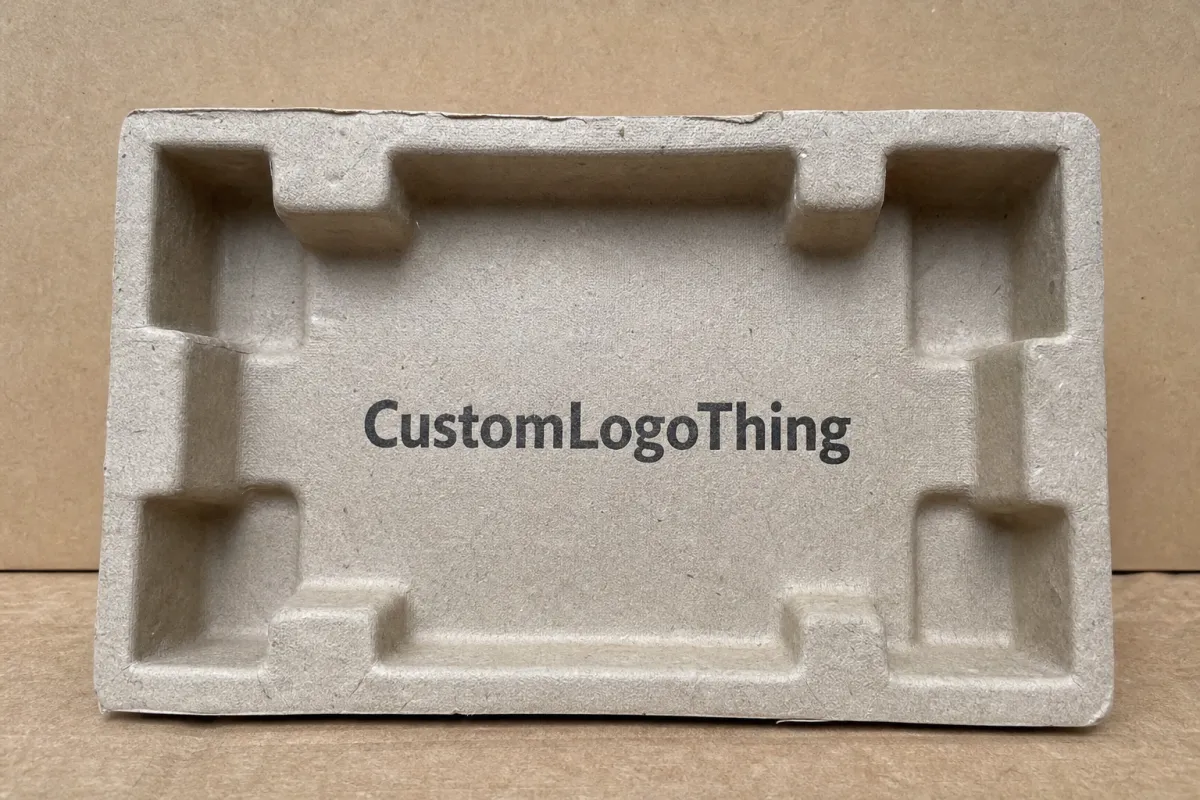
A cracked corner, scuffed finish, or bent accessory tray costs more than the insert itself. Returns handling alone can take a big bite out of margin. Add replacement inventory, customer service time, and the plain annoyance of a bad first impression, and the economics get ugly fast. From a buyer’s point of view, custom foam free inserts wholesale is often a logistics decision before it is a sustainability story.
The weak point in many packages is not the outer carton. It is movement inside the carton. If a product shifts even a few millimeters during parcel handling, it can hit a corner, rub a printed surface, or crush a lid. Good packaging design stops that motion. It uses structure, not excess material, to do the work.
That is where foam-free inserts earn their keep. Foam can hide sloppy geometry because it forgives a lot. Paper-based structures do not give that same cushion, which forces the pack to be more precise. That is a good thing. A cleaner fit usually means lower material weight, easier disposal, and a better fit for sustainable packaging goals. It also means the packaging team has to stop hoping the insert will fix a bad design later.
The damage math is easy to underestimate. A 2% breakage rate on 10,000 shipped units creates 200 problems. If each claim costs $18 to $40 after labor, freight, and replacement product, the annual loss can outrun the insert savings quickly. Buyers who compare only unit price are looking at the wrong number. Buyers who compare landed cost and claim reduction are much closer to reality.
A package only needs one weak edge to fail. If the product can move, the cost shows up later in returns, not on the quote sheet.
Foam-free inserts also help brands align with sustainability targets without making the pack feel like a compromise. That matters for consumer-facing products that rely on Custom Printed Boxes, retail packaging, and package branding to create a clean opening moment. The insert is visible. Buyers notice whether it looks engineered or improvised. They notice immediately.
There is a supply-chain angle too. Paper-based structures are often easier to source, easier to flatten for shipping, and easier to pack in volume. In practice, that can reduce inbound freight and improve pallet efficiency. Lighter inserts help cube, and cube affects freight. Not a shocking discovery, but a useful one.
For many programs, the strongest case is not abstract sustainability language. It is fewer replacements, less pack-out waste, faster assembly, and a structure that survives the actual distribution channel. If the insert only looks good in a sample photo, the wholesale order is where the fantasy ends.
Packaging teams often benchmark performance against ISTA test procedures because real shipping is rougher than a hand fit on a bench. Sustainability targets also tend to sit beside material-use goals from the EPA. Those references do not replace product testing, but they keep the buying conversation tied to measurable outcomes instead of opinions with better fonts.
Product details: the foam-free materials that replace foam
The phrase “foam-free” covers several different material families. That matters because a molded fiber insert and a folded corrugated cradle do not behave the same way under compression or in humid conditions. Treat them as interchangeable and you will either overpay or underprotect the product. Occasionally both. That is a fun way to lose money twice.
Molded fiber is usually the best-known foam alternative. It is made from recycled paper fiber or virgin fiber, depending on the spec, and it can form deep pockets, ribbed support zones, and perimeter walls. It is a strong option for glass bottles, cosmetic sets, premium electronics accessories, and other products that need a form-fit cavity. It can also support FSC-linked procurement goals if the fiber source is certified.
Molded pulp is closely related, though the surface finish is usually more utilitarian. It is common where protection matters more than a polished reveal. The material can absorb shock well, but it can also show more texture variation and less refined edge quality. That is not a defect if the product ships in a secondary carton. It may be a problem if the insert is visible the moment the customer opens the box.
Corrugated inserts are often the fastest route for custom foam free inserts wholesale programs because they can be die-cut, folded, and assembled with less tooling complexity. They work well for lightweight electronics, subscription kits, and multi-item packs with clear orientation. A 32 ECT or 44 ECT board grade is common, but the right choice depends on product weight, stacking pressure, and how much crush resistance the insert needs during transit.
Paperboard structures can create a cleaner, more premium visual field. Think locking tabs, ribs, sleeves, and nested compartments. These work well for branded packaging where appearance matters as much as protection. They also ship flat before assembly, which helps warehouse operations and reduces freight volume. The tradeoff is simple: the structure needs to be designed well, because paperboard does not hide mistakes.
Hybrid paper-based solutions combine paperboard with molded elements or layered corrugate. This is where packaging design gets more interesting. A hybrid insert can use a rigid outer frame, a precision fold, and a lower-cost support bed to create a secure fit without overbuilding the whole structure. For buyers balancing retail packaging aesthetics with shipping durability, that flexibility matters.
Different products need different structures:
- Lightweight cosmetics: usually do well with paperboard locks, compartments, and printed retail-ready presentation.
- Glass bottles and jars: usually need deeper cavities, corner support, and crush control from molded fiber or reinforced corrugate.
- Electronics accessories: benefit from tight orientation, cable management, and snap-fit or nested channels.
- Subscription kits: need assembly speed, a consistent reveal, and enough rigidity to survive repeated handling.
Humidity matters too. Uncoated fiber can soften in warm, damp warehouses or during long ocean freight cycles. That does not mean foam-free inserts cannot work in those conditions. It means the coating, caliper, board grade, and seal structure all deserve attention. A spec that works in a dry sample room may behave differently after three weeks in a container.
Some buyers assume foam-free packaging has to look plain. It does not. Print, embossing, color, and structural cut lines can make the insert part of the product packaging story. Used well, the insert supports package branding instead of hiding behind it. Used poorly, it looks like someone stopped halfway through the brief and called it strategy.
If you want to compare material families alongside other Custom Packaging Products, start with the product itself, not the trend. The right structure depends on fragility, presentation, and the amount of movement the carton can tolerate.
Specifications to confirm before you approve samples
Sample approval is where many projects either save money or wander into a redesign loop. A good brief prevents that. Before you sign off on a sample, the measurement set should be specific enough that another supplier could build the same insert and land in the same place.
Start with the product dimensions, but do not stop there. Capture the widest points, any protruding features, and the surfaces that cannot be scratched. If a bottle has a thin neck or a device has a button that cannot bear pressure, those details matter more than the overall length and width. A few millimeters can change fit, labor time, and damage risk.
Then define the carton. Interior dimensions are the important number, not the marketing size printed on the case pack. If the insert is meant to sit inside a shipping carton plus a retail sleeve, the stack-up needs to be measured as a system. That is especially important for custom printed boxes, where the visual fit is part of the approval criteria.
Performance requirements should be written down before sampling starts. Not every program needs the same target. A box that sits on a pallet in a controlled warehouse does not need the same crush resistance as a parcel-shipped subscription box. In many cases, buyers use one or more of these references:
- Drop height: for example, 24 to 36 inches depending on parcel risk and product weight.
- Compression resistance: enough to survive stacking and warehouse pressure without permanent deformation.
- Humidity exposure: expected range if cartons pass through damp storage or mixed-climate shipping.
- Return shipping: whether the insert must survive a second trip after the customer opens and reseals the pack.
- Assembly time: target pack-out seconds per unit, especially for high-volume fulfillment.
Tolerances are another common gap. If the supplier does not know how much variance is acceptable, the first sample can be misleading. Ask for dimensional tolerance, board caliper, fiber density or basis weight where relevant, and surface finish if the insert is visible. For paperboard, a spec such as 350gsm to 500gsm may be useful. For corrugated, the flute style and ECT rating can change crush performance more than the graphics do.
Ask how the insert will be tested. A fit check is not the same as a transit simulation. If the item is fragile, request a ship test, a drop sequence, or at minimum a documented shake test with the actual product inside the actual carton. ASTM and ISTA-based testing logic is useful here because it keeps the discussion anchored to evidence, not opinions from the loudest meeting attendee.
The clearest specification sheets usually answer these questions:
- What is the exact product geometry, including fragile points?
- What carton or shipper will the insert sit in?
- What shipping method will be used?
- What is the performance target?
- What finish or print visibility is expected?
That level of detail makes quotes comparable. It also lowers the chance that a supplier will need to rework the insert after approval, which is one of the easiest ways to lose time and budget.
Custom foam free inserts wholesale pricing, MOQ, and quote structure
custom foam free inserts wholesale pricing varies more than most buyers expect. The biggest drivers are not just size and material. Tooling, print, assembly, and freight can move the final landed cost more than the unit price itself. That is why a quote should be read line by line, not treated like a single number somebody tossed over the wall and called it procurement.
For simple die-cut or folded paperboard structures, buyers may see unit pricing in the range of $0.08 to $0.22 at around 5,000 pieces, depending on complexity and print coverage. More protective corrugated designs often land around $0.10 to $0.28 at similar volumes. Molded fiber programs can be higher, commonly $0.18 to $0.55 per unit, especially if tooling is custom and the cavity geometry is highly specific. Hybrid solutions can sit anywhere in between, sometimes reaching $0.20 to $0.60 if the structure combines rigid board, molded elements, and printing. These are illustrative ranges, not promises. Real pricing moves with volume, region, material market conditions, and finish requirements.
MOQ is tied to the production method. A simple board insert can often start at a lower quantity because die-cutting is flexible. Molded fiber and custom tool-dependent programs generally need a larger run to justify setup. That does not automatically make them less attractive. If the product volume is high enough, the lower damage rate and cleaner presentation can justify the tooling quickly.
Tooling fees are another important line. Depending on the structure, the initial tooling cost can be modest or substantial. A straightforward die may be a few hundred dollars. A custom molded tool or multi-part setup can climb into the low thousands. That is not a red flag by itself. It is a signal that the buyer should compare repeat-order economics instead of staring at the first order and pretending it is the whole story.
Here is a practical way to compare common options:
| Insert option | Best fit | Typical MOQ | Indicative unit cost | Typical lead time | Buying note |
|---|---|---|---|---|---|
| Folded paperboard | Light products, premium reveal, fast pack-out | 500 to 2,000 | $0.08 to $0.22 | 7 to 12 business days after approval | Good for short runs and branded packaging |
| Corrugated insert | Accessories, kits, moderate protection | 1,000 to 5,000 | $0.10 to $0.28 | 10 to 15 business days after approval | Often the best balance of cost and protection |
| Molded fiber | Glass, fragile items, premium protection | 3,000 to 10,000 | $0.18 to $0.55 | 20 to 35 business days including tooling | Higher setup, stronger structure, lower plastic use |
| Hybrid paper-based | Complex packs, retail packaging, multi-part products | 2,000 to 5,000 | $0.20 to $0.60 | 15 to 30 business days | Useful where presentation and protection both matter |
The best way to read that table is not to ask which option is cheapest. Ask which one has the lowest total cost per protected shipment. A cheaper insert can become expensive if it slows pack-out by 8 seconds per unit, adds carton cube, or creates one extra damage claim out of every hundred shipments. Those costs are real, even when they do not show up in the unit line.
Quote structure should always include sample fees, tooling, unit price, assembly or kitting charges, inner-pack configuration, palletization, and freight. If the insert ships flat and the supplier can pack efficiently, freight may stay controlled. If the product is bulky or awkward, logistics can quietly rewrite the economics. Compare apples to apples, not wishful thinking to a spreadsheet.
Repeat orders can change the picture again. Once the die or mold is paid for, the per-unit cost often improves. That is one reason buyers planning long product cycles should think beyond launch volume. A slightly higher setup cost can be a strong trade if the insert is stable for multiple production runs.
For teams building wholesale programs, the right sourcing move is to collect tiered pricing for a pilot run, a launch run, and a reorder run. That creates a more accurate forecast and helps procurement decide whether to lock a custom format or stay with a more flexible short-run structure. If you are comparing volume options, our Wholesale Programs page is a useful starting point.
Production process and lead time: from sample to shipment
Good programs do not move from quote to production in one jump. They move through a sequence that catches problems before they become expensive. The steps are usually predictable, but the timing depends on structure complexity and how quickly approvals move.
The process usually starts with product review and a design brief. That brief should include product dimensions, carton size, shipping method, target price, and visible presentation requirements. If the insert is part of the customer experience, the finish, color, and opening order should be documented too. A paper insert that works for a warehouse pack may fall flat for a premium retail launch if the reveal feels awkward or sloppy.
Next comes CAD or dieline development. This is where the geometry gets translated into a structure that can actually be made. A simple folded board insert can move quickly through this stage. Molded or tool-dependent programs take more time because the shape must work in a real forming process, not just on a screen with perfect edges and no humidity.
Then comes the sample build. This is the most valuable checkpoint in the whole chain. A sample should be tested with the actual product, not a placeholder weight or a lookalike object. If the product sits too loosely, the issue will only get worse in shipping. If it is too tight, assembly time will slow and the carton may bow. Either problem costs money.
Most buyers should expect these rough timing bands:
- Simple folded structures: often 7 to 12 business days after final approval.
- Corrugated inserts with die work: often 10 to 15 business days.
- Molded fiber or custom tooling: often 20 to 35 business days, sometimes longer if tooling is complex.
There are three common reasons schedules slip. First, the measurements are incomplete. Second, artwork or branding files arrive late. Third, the buyer requests a redesign after the first sample. None of those delays are unusual. They are simply avoidable.
Approval checkpoints reduce risk. A clean process normally includes:
- A physical sample in the actual carton.
- A fit test with the real product and accessories.
- A shipment or drop simulation where the pack is handled like a real parcel.
- Documented revisions before the wholesale order moves to full production.
Transit planning matters too. If the inserts are part of a launch shipment, inventory timing must account for production, packing, freight, and inbound receiving. Too many teams approve a design and then forget that the warehouse needs a buffer. A two-week production delay can become a launch problem if the cartons were already booked for a retailer or a seasonal sale.
Assembly speed is another operational factor. A beautiful insert that takes 20 seconds to fold and load may be too slow for high-volume fulfillment. A slightly simpler design can save a full shift over the course of a run. That is the kind of detail that separates elegant packaging design from packaging that only looks elegant on a slide deck.
Why buyers choose us for sustainable packaging programs
Buyers looking for sustainable packaging do not need slogans. They need options, consistency, and honest tradeoffs. That is the standard that matters for custom foam free inserts wholesale programs, especially when the order must support product packaging, retail packaging, or branded packaging at scale.
The first reason procurement teams care is control. A good supplier should be able to talk through material choices, fit, cost, and shipping behavior without overselling the result. Foam-free inserts are not automatically better. They are better when the structure matches the product and the distribution lane. That practical mindset avoids over-specifying the insert, which can drive cost up without improving protection.
The second reason is engineering support. If a supplier can review product geometry, shipping method, carton size, and unboxing goals together, the resulting structure is usually smarter. For example, a cosmetic bottle set may need a tight cavity and a printed reveal, while a small electronics kit may need a locking tray and a cable channel. Those are different problems. Treating them the same is how packaging projects go sideways.
Quality control is the third factor. Buyers should expect repeatable dimensions, stable board grades, and clear communication about revisions or shortages. The best wholesale programs reduce surprises. That includes pallet consistency, inner-pack labeling, and a sample trail that makes reorders easier. A buyer should not have to rediscover the spec on every shipment.
There is also a sustainability credibility issue. Many teams want claims they can stand behind. FSC-certified fiber, recyclable paperboard, and reduced plastic content are easier to explain than vague eco messaging. That does not mean every insert must be compostable or fiber-only. It means the material story should match what the pack can genuinely deliver.
What buyers usually appreciate most is the ability to compare options without pressure. Some launches need the lightest possible insert. Others need maximum protection because the product margin cannot absorb a high return rate. A reliable supplier helps teams see those tradeoffs clearly instead of pushing one material for every use case.
For sourcing teams that want a wider view of options, our Custom Packaging Products catalog can help benchmark insert styles against other packaging components. That makes it easier to keep the insert, outer carton, and branding system aligned instead of solving each piece in isolation.
From an operational point of view, the best result is a pack that survives, looks intentional, and supports the brand without adding unnecessary material. That is especially true for custom printed boxes and ecommerce kits where the customer opens the package alone, with no salesperson in the room to explain the experience.
If your team is comparing suppliers, ask for the kind of detail that reveals how they think. Can they recommend a lower-cost board grade if the product is light? Can they explain why a deeper cavity may reduce edge damage? Can they identify where the carton needs extra support and where it does not? Those answers tell you whether you are dealing with a vendor or a packaging partner.
Next steps: compare quotes, test fit, and scale
Once the business case is clear, the buying process should get simpler, not messier. Start with the facts you already know: product dimensions, carton size, shipping method, target unit cost, and any failure history from earlier packaging runs. That information gives the supplier a usable starting point and reduces the chance of endless revisions.
Ask for two sample directions. One should be optimized for cost. The other should be optimized for protection. That comparison tends to make the tradeoffs obvious in a single review cycle. A lower-cost design may be acceptable if the product is resilient. A higher-protection design may be worth the extra cents if the item is fragile or returns are expensive.
Then evaluate the sample with a simple scorecard. Use the same checklist for every option so the comparison stays fair. A practical checklist often includes:
- Fit: does the product stay centered and secure?
- Assembly: how long does it take to pack one unit?
- Protection: do corners, surfaces, and accessories stay intact after handling?
- Presentation: does the insert support the product story and package branding?
- Efficiency: does the insert add unnecessary cube or weight?
If possible, run a small pilot before scaling. A pilot reveals what a sample cannot always show: pack-out speed, carton consistency, freight efficiency, and how the design behaves at real volume. Even a few hundred units can expose problems that a bench fit misses.
Once the pilot proves the design, lock the specification sheet. That matters more than people think. A locked spec reduces reorder mistakes, keeps print and material consistent, and makes forecasting easier for both procurement and operations. It is the difference between a one-off project and a repeatable wholesale program.
One final point: do not optimize only for sustainability language. Optimize for performance first, then fit the material story around the evidence. If the insert protects better, ships lighter, and reduces damage while moving away from foam, that is a strong result. If it fails transit, the green language will not rescue the margin.
For brands trying to improve product packaging without inflating costs, the best path is simple: compare quotes carefully, test the structure in the real carton, and scale only after the sample proves itself. That is the most reliable way to turn custom foam free inserts wholesale from a sourcing idea into a durable operating advantage.
What materials are used for custom foam free inserts wholesale?
Common options include molded fiber, molded pulp, corrugated board, paperboard structures, and hybrid paper-based designs. The right material depends on product weight, fragility, presentation goals, and whether the insert needs to support recyclability or FSC-based sourcing claims. Ask for samples in the actual carton so you can judge fit, crush resistance, and unboxing quality together.
What MOQ should I expect for foam-free inserts wholesale orders?
MOQ depends on the production method. Simple die-cut formats often start lower than molded or custom-tool programs. Tooling usually raises the starting quantity, but it can lower unit cost at scale. A practical approach is to request tiered pricing for a pilot quantity, a launch run, and a full reorder so you can compare real economics instead of guessing.
How long does the process take for custom foam free inserts wholesale?
Timing usually includes design, sample approval, production setup, and shipment, so the total depends on how quickly approvals move. Simple structures are faster than molded or tool-dependent inserts. The fastest path is to submit exact dimensions, shipping specs, and a clear performance target before sampling starts. That removes avoidable redesign loops.
Can foam-free inserts protect fragile products as well as foam?
Yes, when the insert is engineered around the product’s failure points and the carton’s real shipping conditions. Fit, corner support, crush zones, and movement control matter more than the material label alone. Ask for a drop test or a sample fit test before approving a wholesale order, and compare the result against the actual shipping lane.
How do I compare custom foam free inserts wholesale quotes fairly?
Compare more than unit price. Include tooling, freight, assembly labor, carton cube, and any added handling time. Ask each supplier to quote the same product dimensions, carton size, and performance requirement. Use landed cost and damage reduction together, because the lowest quote is not always the lowest total cost.

