Buyer Fit Snapshot
| Best fit | Custom Foil Pouches with Window projects where brand print, material claims, artwork control, MOQ, and repeat-order consistency need to be specified before quoting. |
|---|---|
| Quote inputs | Share finished size, material target, print colors, finish, packing count, annual reorder estimate, ship-to region, and any compliance wording. |
| Proofing check | Approve dieline scale, logo placement, barcode or warning zones, color tolerance, closure strength, and carton packing before bulk production. |
| Main risk | Vague material claims, crowded artwork, missing packing details, or unclear freight terms can make a low unit price expensive after revisions. |
Fast answer: Custom Foil Pouches with Window: Film, Print, MOQ, and Carton Packing should be specified like a repeatable production item. The safest quote records material, print method, finish, artwork proof, packing count, and reorder notes in one written spec.
Production checks before approval
Compare the actual filled-product size with the drawing, then confirm tolerance on folds, seals, hang holes, label areas, and retail display edges. Reserve space for logos, QR codes, warning copy, and material claims before decorative graphics fill the panel.
Quote comparison points
Review material grade, print process, finish, sampling route, tooling charges, carton quantity, and freight assumptions side by side. A quote is only useful when the supplier can repeat the same color, closure quality, and packing count on the next order.
A small clear panel can do the work of a demo case. That is the quiet appeal of custom foil pouches with window: shoppers can verify the product before they buy it, while the pouch still delivers the structure, barrier, and shelf polish that foil packaging is known for. The format turns a split-second glance into a buying cue, which is why it keeps showing up on coffee shelves, snack racks, supplement aisles, pet treat displays, and beauty sample launches.
The blend of proof and presentation matters more than many teams expect. A window can reduce hesitation, support brand claims, and make an item feel more credible in a crowded aisle. The compromise is real, though. Every window changes the barrier story, the print layout, and the cost equation. Buyers who understand those tradeoffs usually end up with stronger packaging and fewer surprises after the run begins.
Custom foil pouches with window are not decoration by default. They are decision tools. The right structure can protect aroma, block light, and hold a zipper seal while still exposing enough of the product to move the first unit. The wrong structure may look sharp in a rendering and still fail once the fill line, shelf-life target, or freight lane enters the picture.
If you are comparing flexible formats with other branded packaging choices, our Custom Packaging Products page is a useful place to start. It helps to see how custom foil pouches with window fit alongside other packaging design options before you commit to a production run.
What custom foil pouches with window solve on shelf
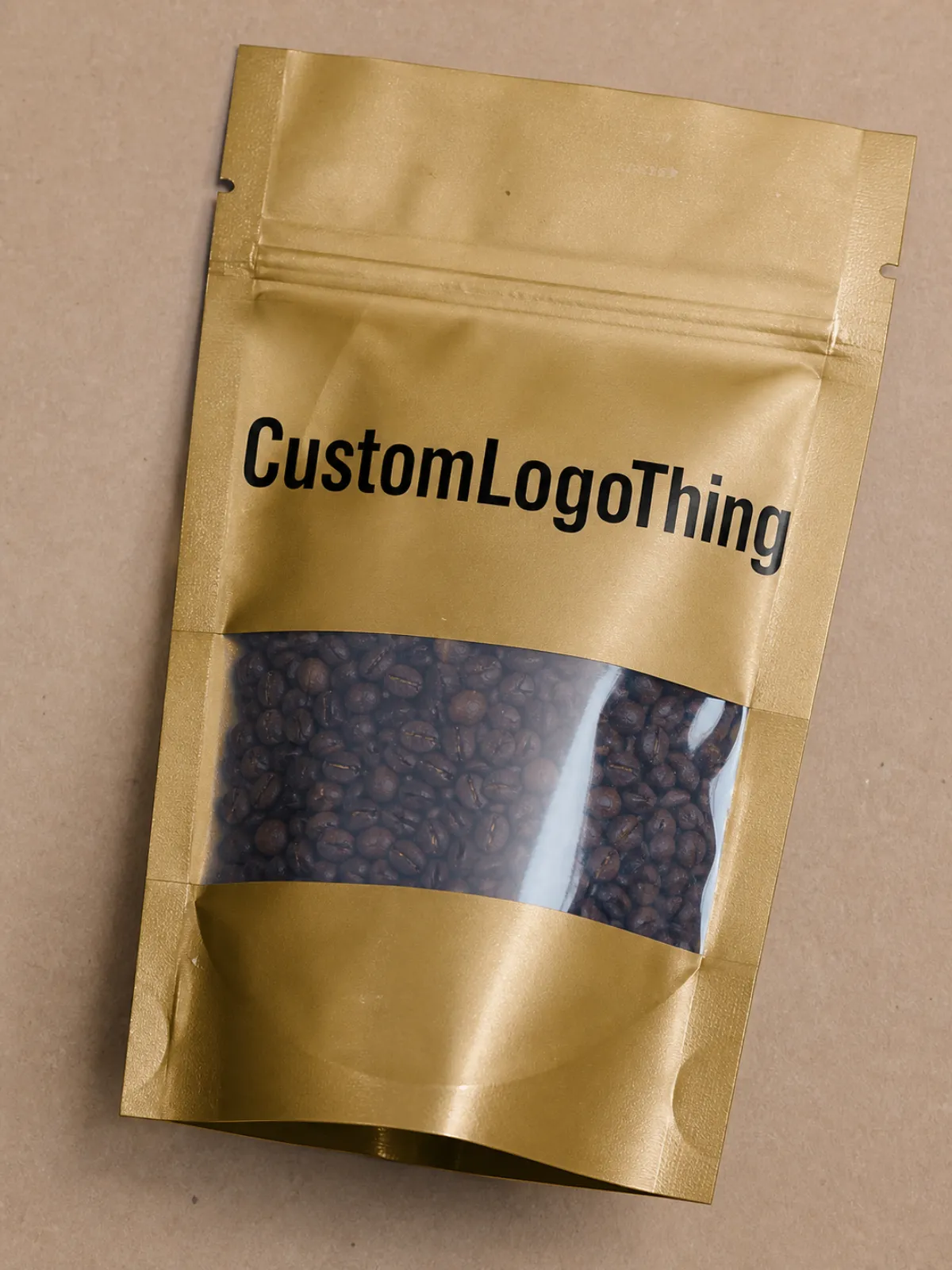
Shoppers trust what they can verify. A small clear panel answers that problem quickly. Is the coffee ground uniform? Does the snack look fresh? Do the supplements appear clean and free-flowing? Does the pet treat size match the expectation on the label? Custom foil pouches with window answer those questions in seconds, which is often faster than copy, icons, or claims can manage.
The format combines a foil-laminated pouch with a transparent window placed on the front or back panel. The foil or high-barrier layer handles protection, while the window adds visibility. That pairing is the reason custom foil pouches with window show up in categories where appearance influences conversion. Snacks, tea, coffee, protein blends, dried fruit, pet treats, and sample-size beauty products all benefit when buyers can inspect texture or fill level at a glance.
Another reason brands reach for custom foil pouches with window is the middle ground they create. A fully transparent pouch can expose too much and make protection harder. A fully opaque pouch can feel safer, but it also asks the shopper to trust a promise. The window gives a measured amount of proof. For many products, that is enough to close the gap.
The central tradeoff is simple. More visible product can build trust, but more visible product can also expose the pack to light, dust, and the visual noise of inconsistent fills. A wide window can help a low-risk snack sell faster. It may work against a light-sensitive powder, an aroma-rich coffee, or a product that shifts unevenly after shipping. Smart buyers weigh merchandising value against protective value instead of treating the window like a pure design choice.
That is where packaging teams often miss the point. The window is not a style flourish. It is a commercial decision. The strongest custom foil pouches with window work because the window supports the buying process. The printed area carries the branding; the window carries the proof.
"A window should earn its place. If it does not help a shopper identify texture, freshness, or fill level in two seconds, you are probably paying for decoration, not conversion."
That same logic explains why the format shows up in both premium and value-tier lines. A narrow strip window can make a budget snack feel more credible. A shaped window can give a specialty coffee line more shelf character. In both cases, the brand is using custom foil pouches with window as a practical retail packaging tool rather than a visual afterthought.
For brands managing product packaging across multiple SKUs, the format can also create consistency. One line may use full-color Custom Printed Boxes for secondary packaging while the pouch carries the consumer-facing story. Another may use a matte pouch with a narrow window to signal restraint and quality. The point is control: one format, one message, fewer mixed signals.
How custom foil pouches with window protect product
Protection comes from the layers, not from the window itself. A typical structure begins with a printed outer film, then a barrier layer such as foil or metallized film, then an inner sealant layer. The clear window is added in a controlled area, and the seal zones stay outside the visible panel so the pouch can still close, fill, and run cleanly on production equipment. In well-built custom foil pouches with window, the window is a deliberate interruption, not a structural weakness.
Think of it as controlled visibility. The window reveals the product, while the surrounding structure manages moisture resistance, oxygen resistance, aroma retention, and light protection. For a coffee or snack brand, that balance matters. For supplements and pet treats, it matters even more because the visual evidence has to coexist with shelf-life needs.
Window placement changes the user experience too. A front panel window helps a shopper inspect contents while the pouch sits upright with a zipper closure. A lower window preserves more branding at the top and keeps the logo zone clean. A tall pouch with a gusset may need the window positioned so it still reads clearly when the base expands. A poor placement can make a good structure look awkward, and custom foil pouches with window do not forgive rushed layout choices.
It helps to compare the format with a fully printed pouch. A full-coverage foil pouch gives you more graphic real estate and usually more visual control. A windowed pouch gives you more proof and often more shelf trust. The right call depends on the category and on how much a buyer needs to see before converting. That is why custom foil pouches with window are common in categories where visual cues matter: color, texture, particle size, freshness, and fill consistency.
Protection is not only about the barrier film. Seal integrity matters, zipper design matters, tear notch placement matters, and shipping conditions matter. If the pouch has a child-resistant zipper, a wide tear notch, or rounded corners, each feature changes the available panel area and the way the window can be cut. A small structural choice can improve usability, but it can also affect line speed and reject rates if it is not planned early.
Buyers who want a more technical read should ask for actual barrier data instead of a vague claim like “high barrier.” Oxygen transmission rate and moisture vapor transmission rate say more than a polished sales line. If the supplier cannot explain where the window ends and the seal zone begins, that is a warning sign. Good custom foil pouches with window should arrive with a structural explanation, not only a mockup.
Testing matters as well. If the pouch will move through distribution lanes with heat swings, vibration, or compression, ask whether the master cartons or outer shippers were assessed against standards such as ISTA procedures or ASTM D4169. For packaging teams that want a solid reference point, the International Safe Transit Association explains distribution testing methods at ISTA. The goal is not a prettier pouch. The goal is a pouch that reaches the shelf looking like the brand promised.
Choosing materials, window size, and barrier specs for custom foil pouches with window
This is the stage where projects usually win or lose. The structure has to match the product, not the mood board. Dry snacks, oily products, aroma-sensitive items, and light-sensitive formulas all need different protection levels. A cookie mix may tolerate a lighter structure. Coffee usually should not. A vitamin powder may need tighter oxygen control than shelf-stable candy. Custom foil pouches with window should be built around the product’s actual behavior, not a generic “premium” label.
Start with the contents. Does the product shed oil? Does it dust heavily? Does it settle? Does it clump in humidity? Does it fade under light? Those answers shape the film choice. A high-barrier laminate with foil is often the safest option for sensitive products, while lower-risk goods can use a lighter structure if shelf life and shipping conditions allow it. The window itself should be sized for trust, not spectacle. A narrow panel or shaped cutout often performs better than a large clear slab because it preserves more barrier area and limits exposure.
Window size also affects photography and retail readability. A modest window can signal confidence. A huge window can look messy if the fill is inconsistent. There is a reason so many custom foil pouches with window use a centered rectangle, an oval, a rounded arch, or a strip across the lower front panel. Those shapes give the product enough visibility while preserving more of the printed story.
Finish choice matters more than many first-time buyers expect. Matte lamination gives the pouch a quieter, more restrained feel. Gloss can make colors hit harder under store lighting. Metallic accents can reinforce premium positioning without complicating the structure. None of those choices should be made in isolation. Packaging design works best when the window, finish, zipper, and graphics are planned as one system. That is the difference between branded packaging and a random printed surface.
Structural details deserve early attention too. If you want a zipper, decide on the style before artwork begins. If you need a tear notch, confirm where it lands relative to the window. If the pouch is gusseted for more fill volume or a better shelf stance, the window still has to look balanced once the pouch is full. For some products, the front panel needs enough space above the window for the logo and enough space below it for the product name, claims, or net weight. Custom foil pouches with window punish sloppy planning because every millimeter affects both function and design.
Compliance should be checked before artwork is locked. Food-contact requirements, supplement labeling rules, and market-specific claim rules need to align with the selected films, inks, and adhesives. If sustainability claims are part of the brief, be precise. A traditional foil laminate is usually chosen for barrier performance, not curbside recyclability. If your team wants paper-based secondary packaging or shipper cases with FSC-certified material, the Forest Stewardship Council explains chain-of-custody and certification basics at FSC. That becomes useful when the pouch is only one piece of a wider packaging system.
One practical way to compare options before approving a structure is to ask for three versions, not one. Request one conservative high-barrier format, one cost-conscious format, and one version with the window slightly smaller or larger. Side-by-side comparisons often reveal what the brand actually values. Sometimes the cheaper version looks too plain. Sometimes the premium version offers more barrier than the product needs. Custom foil pouches with window make that tradeoff visible, which helps rather than hurts.
- Dry, stable products: may tolerate a lighter laminate if shelf life is short and climate exposure is limited.
- Oily or aromatic products: usually need stronger barrier layers and more careful seal design.
- Light-sensitive products: should use a smaller window or a window placed away from the most vulnerable content.
- Retail-display launches: often benefit from matte finish, a clear product cue, and a clean logo zone.
Custom Printed Boxes versus pouches is a useful comparison here. Boxes create structure through board, while pouches create structure through film. That sounds obvious, but it changes the brief completely. With boxes, the main concerns are print coverage and structural integrity. With custom foil pouches with window, the main questions are barrier stack, seal zones, and where the product should be visible. Different formats, different logic.
Production steps and lead time for custom foil pouches with window
A clean production process saves money. Most delays happen before the press ever starts. The usual sequence is simple enough: project brief, dieline creation, artwork setup, proof review, sample approval, production, quality check, packing, and shipment. If the supplier skips one of those steps or rushes through it, the risk shows up later in window placement, logo alignment, or seal performance. Custom foil pouches with window are especially sensitive to mistakes because the clear panel makes every offset easy to see.
Lead time usually depends on how much coordination the order needs. A repeat order may move faster than a first-time custom run. A new die cut, an unusual zipper, a special finish, or a color-critical brand match can add time. In many cases, buyers should expect roughly 12 to 20 business days from proof approval to production completion, then shipping time on top of that. Sampling can add another 5 to 10 business days if a physical prototype is needed. That range is not universal, but it is realistic enough for planning.
Where do projects slip? Usually in three places. Dimensions arrive incomplete or inconsistent. Artwork changes land after proofing has begun. No one checks the relationship between the window and the seal area early enough. The fix is plain, but effective: lock the spec sheet first. When a supplier receives clear dimensions, fill weight, finish preferences, and window intent, custom foil pouches with window move through the shop far more predictably.
Proofing deserves a real checkpoint rather than a quick scan. A digital proof can show artwork placement, but it cannot fully reveal how the pouch will look when the product settles. That is why a physical sample or pre-production mockup is worth the time. It lets the buyer test whether the logo clears the seal, whether the window shows the right amount of product, and whether the pouch still stands properly once it is filled.
Shipping and carton planning matter too. A pouch that looks perfect in a single sample can still arrive dented, scuffed, or bent if the master cartons are weak. For larger launches, ask how the outer packaging is packed, how much compression is expected, and whether the supplier has tested the shipper configuration. If the order will sit in a warehouse or travel through multiple distribution points, that detail can matter as much as the pouch itself. That is another reason custom foil pouches with window should be managed like a packaging system, not an art job.
From a buyer’s point of view, the smartest launch calendar leaves room for revision. If a design team wants two rounds of proofing, a sample, and final approval, the timeline should reflect that up front. Rushing the process rarely saves time. It usually shifts the delay to the moment the buyer notices that the window sits too low, the zipper blocks the logo, or the gloss finish makes the graphics harder to read under retail lighting.
Cost, MOQ, and pricing for custom foil pouches with window
Price depends on structure, not only on size. Material choice, print method, window size, zipper style, finish, and total quantity all affect the quote. A basic pouch with a small window may add only a modest premium over a standard printed pouch. A pouch with a larger cutout, matte finish, zipper, and specialty inks can move the number noticeably. With custom foil pouches with window, the small details stack quickly.
MOQ changes the math. Setup costs are spread across the run, so the unit price usually drops as volume rises. That is why a 5,000-piece order and a 25,000-piece order can look very different on paper. A lower unit price is not always the better deal if the upfront spend is too heavy for the launch stage. Buyers should judge the quote by total project cost, cash flow, and the margin they need on the finished product.
| Option | Typical cost impact at 5,000 units | Barrier and visibility | Best fit |
|---|---|---|---|
| Standard foil pouch, no window | Baseline | Highest privacy and usually the simplest structure | Light-sensitive products and brands that do not need product visibility |
| Small-window foil pouch | About $0.01-$0.03 more per unit | Strong barrier with limited product exposure | Snacks, tea, coffee, pet treats, and samples where a glance matters |
| Large-window foil pouch | About $0.02-$0.05 more per unit | More visibility, slightly more risk from light and handling | Products where visual texture or fill level drives trust |
| Matte pouch with zipper and window | About $0.03-$0.07 more per unit | Premium feel, stronger shelf presence, more finishing cost | Branded packaging for specialty food, wellness, and premium retail lines |
The numbers above are planning ranges, not fixed quotes. Final price will depend on print coverage, film selection, tooling, freight, and whether the job needs extra sampling. That is why buyers should ask for line-item pricing. A quote that separates setup, material, finishing, and shipping is easier to compare than a single lump sum. Custom foil pouches with window become much easier to evaluate once the costs are visible.
It also helps to compare quotes by spec rather than by headline price. Two suppliers may both say “window pouch,” but one may be quoting a thin laminate with a basic zipper and the other may be quoting a thicker high-barrier structure with better print registration and tighter quality control. Those are not the same product. If the final retail packaging is going to support a premium brand, the cheapest line item can become expensive later if the shelf appearance is weak.
There is a comparison buyers often miss: the most expensive-looking sample is not always the most expensive run. A carefully chosen structure with a sensible window size can be more cost-effective than a flashy pouch with extra finishing that does not improve sales. That is the sweet spot for custom foil pouches with window: enough visual lift to support conversion, enough barrier to protect the product, and enough discipline to keep the project inside budget.
For teams building a wider line, the pouch quote should also be read next to other custom packaging products. A pouch may be cheaper than custom printed boxes on a unit basis, but if the product needs a rigid presentation or a multipack structure, the box could still be the smarter spend. Good package branding is not about choosing the fanciest format. It is about choosing the format that earns its margin.
Common mistakes when ordering custom foil pouches with window
The biggest mistake is making the window too large. Bigger is not always better. A giant clear panel can weaken shelf impact, expose more product to light, and make every fill inconsistency visible. For a dry snack that is uniform and stable, that may be fine. For a powder that settles unevenly or a product prone to condensation, it can look sloppy quickly. Custom foil pouches with window work best when the window is intentional and proportionate.
Another common error is failing to test the actual fill. A pouch may look perfect in a digital proof, then look different once the product settles under vibration, heat, or humidity. That is especially true with granular goods, powder blends, and products with mixed particle size. If the fill line is messy or the product bridges oddly, a nice-looking window can reveal more problems than it hides. That is one reason sample runs matter so much for custom foil pouches with window.
Crowding the seal zone causes avoidable rework. Logos, claims, and barcodes placed too close to the zipper, tear notch, or side seals may get cut off or distorted. The clear panel can make those layout problems even more obvious. A careful dieline review should catch those issues before art is locked. It sounds basic because it is basic, yet it remains one of the most common causes of preventable production headaches in product packaging.
Ignoring product behavior is another trap. Oils can haze a window. Powders can leave residue. Some products release moisture that condenses on the inside of the film. Once that happens, the pouch may still function, but it no longer feels premium. Buyers often blame the printer or the laminator when the real issue is the product itself. Custom foil pouches with window should be tested against real handling and real storage conditions, not against a perfect studio sample.
Approving artwork before checking shelf-life and shipping realities can also backfire. A design that looks excellent on a desktop mockup may not be practical for a hot warehouse, a long transit lane, or a humid store back room. If the product is sensitive, ask for moisture and oxygen data, confirm the film stack, and test a filled sample. That extra step can save a launch and prevent the awkward moment when a beautiful package fails for a very ordinary reason.
One more error deserves attention: using the window as a substitute for strategy. A window is not a fix for weak packaging design, and it does not rescue poor product-market fit. It only works when the contents are worth showing and the structure supports the promise. Brands that understand that point tend to get more out of custom foil pouches with window than brands that treat the window as a last-minute style tweak.
Expert tips and next steps before you request quotes
Start with a one-page spec sheet. That single document should cover the product type, fill weight, target shelf life, barrier needs, finish preference, zipper requirement, window idea, and target budget. The cleaner the brief, the stronger the first quote. When suppliers do not have to guess, custom foil pouches with window move faster and the quotes are easier to compare.
Ask for two or three structure options. One can be a conservative high-barrier version. One can be more cost-conscious. One can show a smaller or differently shaped window. Side-by-side comparison removes a lot of guesswork. It is much easier to judge appearance, function, and budget once the supplier has laid out the tradeoffs in plain language.
Request a quote that breaks out setup, material, finishing, and freight. If the quote hides those items, the final number can move more than expected. A transparent quote also helps when finance, operations, and marketing all need to sign off. That matters more than people admit. The strongest custom foil pouches with window projects are usually the ones that stay legible to non-packaging stakeholders.
Use a sample or prototype to test real-world fit. Check seal strength. Check the zipper. Check whether the window displays the contents the way the brand wants. Check whether the pouch still stands properly on shelf. Check whether the artwork reads from a normal retail distance, not from a designer’s monitor. That practical pass often reveals the one issue that would have triggered a delay later.
If the pouch is part of a larger launch, place it in context. Ask how it looks next to shipper cases, retail displays, or a matching outer carton. Sometimes the pouch is the star. Sometimes it works best as part of a broader branded packaging system. In either case, the goal is the same: a package that helps the product earn attention without overcomplicating the run.
Then make the decision. Do not keep tweaking forever. The right custom foil pouches with window are the ones that align product needs, shelf goals, and budget reality. If the structure protects the contents, the window supports buying behavior, and the cost still leaves room for margin, the project is ready to move.
For teams that want to browse format options before requesting pricing, our foil pouch options page is a helpful next stop. Once the spec is clear, the order becomes far easier to place, and custom foil pouches with window stop feeling like a gamble and start behaving like a disciplined packaging choice.
Custom foil pouches with window deserve attention when visibility, barrier performance, and shelf appeal all need to live in the same pack. Get the structure right, keep the window honest, and the packaging will do its job far better than a flashy mockup ever will. If you are preparing a quote request, decide on the product risks first, then the window size, then the finish; that sequence prevents most costly changes later.
FAQs
What products work best in custom foil pouches with window?
Dry snacks, coffee, tea, supplements, pet treats, and sample-size beauty items are common fits because shoppers benefit from seeing the product. The format works best when color, texture, or freshness cues help sell the item. For light-sensitive or oily products, the structure should be reviewed carefully before choosing the window size, especially with custom foil pouches with window.
How big should the window be on custom foil pouches with window?
The window should show enough product to build trust, but not so much that it weakens barrier performance or shelf impact. Keep it away from seals, zippers, and tear areas so the pouch still functions properly. A good rule is to size the window around what buyers need to recognize the product at a glance, which is why custom foil pouches with window often use smaller shaped cutouts instead of full-panel openings.
What drives the price of custom foil pouches with window?
Price is affected by material structure, print method, zipper style, finish, window size, and total quantity ordered. MOQ matters because setup costs are spread across the run, which changes the unit price quickly. Freight, sampling, and special finishing can also change the final quote, so compare custom foil pouches with window by full spec rather than by headline price alone.
How long do custom foil pouches with window orders take?
Timing usually includes artwork setup, proof approval, production, quality checks, and shipping. Complex finishes, custom tooling, or design revisions can extend the schedule. Ask the supplier for a sample and a clear timeline so you can plan your launch around real milestones. That is especially useful for custom foil pouches with window because the clear panel makes even small layout errors visible.
Can custom foil pouches with window be recyclable?
Some can, especially if they use mono-material structures designed for recycling streams. Traditional foil-laminate pouches usually prioritize barrier performance over curbside recyclability. Always verify local recycling rules and the supplier's material spec before making sustainability claims. If sustainability is a priority, ask how custom foil pouches with window fit into the wider packaging plan, including outer cartons and shippers.

