Buyer Fit Snapshot
| Best fit | Custom Folding Cartons with Window Patch projects where brand print, material claims, artwork control, MOQ, and repeat-order consistency need to be specified before quoting. |
|---|---|
| Quote inputs | Share finished size, material target, print colors, finish, packing count, annual reorder estimate, ship-to region, and any compliance wording. |
| Proofing check | Approve dieline scale, logo placement, barcode or warning zones, color tolerance, closure strength, and carton packing before bulk production. |
| Main risk | Vague material claims, crowded artwork, missing packing details, or unclear freight terms can make a low unit price expensive after revisions. |
Fast answer: Custom Folding Cartons with Window Patch: Board, Finish, Dieline, and Unit Cost should be specified like a repeatable production item. The safest quote records material, print method, finish, artwork proof, packing count, and reorder notes in one written spec.
Production checks before approval
Compare the actual filled-product size with the drawing, then confirm tolerance on folds, seals, hang holes, label areas, and retail display edges. Reserve space for logos, QR codes, warning copy, and material claims before decorative graphics fill the panel.
Quote comparison points
Review material grade, print process, finish, sampling route, tooling charges, carton quantity, and freight assumptions side by side. A quote is only useful when the supplier can repeat the same color, closure quality, and packing count on the next order.
Custom Folding Cartons with Window Patch: What to Know
Custom Folding Cartons with window patch can change the way a product is judged before a shopper ever touches the box. A clear opening gives the eye something concrete to work with, while the carton still carries the burden of protection, organization, and branding. In retail packaging, that small patch often ends up doing the work of a much larger sales argument.
If you are comparing Custom Folding Cartons with window patch against a solid carton, the real question is not just how the package looks in a mockup. It is how it behaves on the packing line, how it survives shipping, and how much confidence it gives a buyer at the shelf. I have seen this format work especially well for products that benefit from visibility: bakery goods, cosmetics, toys, hardware kits, wellness items, and gift products where presentation carries real weight.
For a buyer reviewing Custom Packaging Products, the window-patch version is usually the option that reveals just enough to make the product more convincing without exposing it completely. That middle ground is why Custom Folding Cartons with window patch show up so often in retail packaging and branded packaging work. The front panel still carries the message, but the product gets a chance to speak for itself too.
A window should make the product feel more trustworthy, not make the carton feel thin.
From a practical standpoint, custom folding cartons with window patch are not decorative boxes with a hole cut into them. The patch reinforces the die-cut opening so the panel does not tear, flex, or deform as easily during conversion, filling, stacking, and distribution. That matters more than most teams expect once a concept leaves the screen and starts living in a warehouse. I have watched a promising carton design fall apart because the opening looked elegant but the face panel had no real support around it. Pretty on screen, fragile in the hand. That happens a lot more than people admit.
Custom Folding Cartons with Window Patch: What They Are
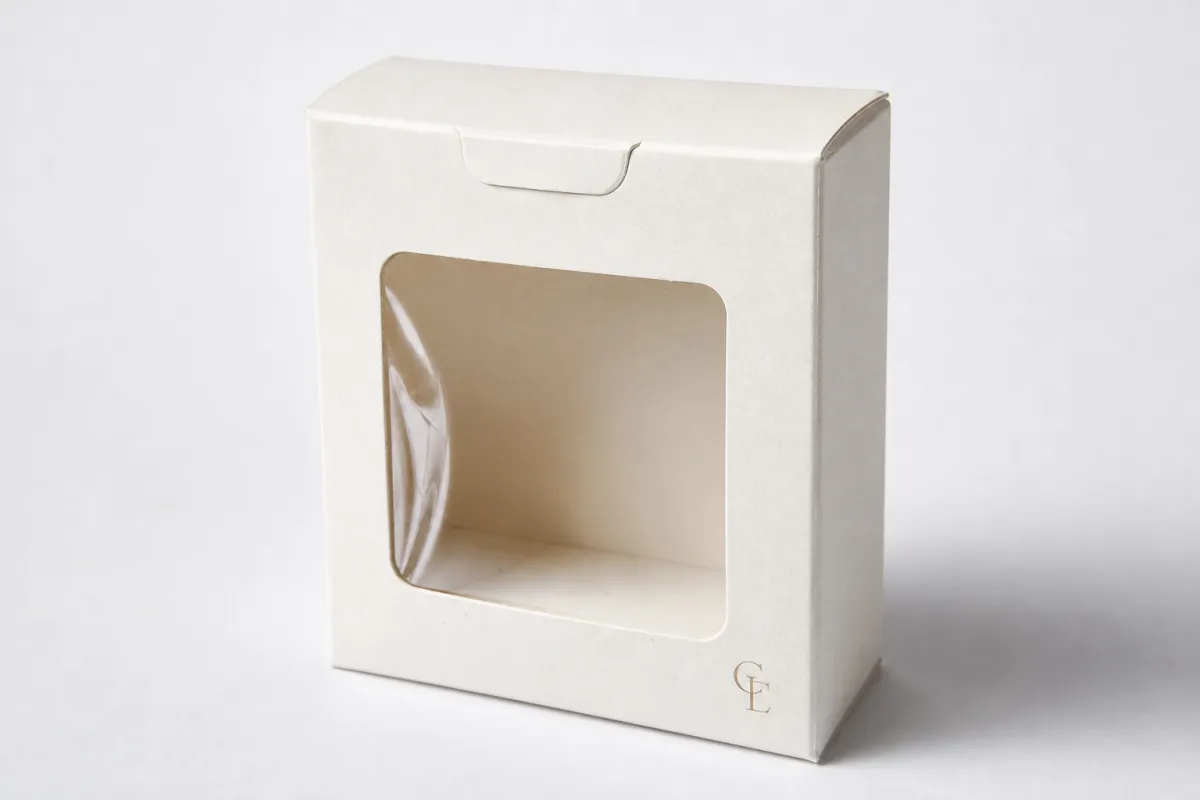
At the simplest level, custom folding cartons with window patch are paperboard cartons with a die-cut opening and a transparent film attached to the inside of the board. The carton folds flat for shipping, then is formed, filled, and closed as part of the normal packing process. The patch keeps the opening clean, safe, and visually controlled.
That structure sounds modest, but it solves several retail problems at once. Shoppers can see color, texture, size, fill level, or shape. Buyers can verify that the product matches the label. The carton can still hold strong graphics, product claims, and regulatory copy without surrendering all of its surface area. In practice, custom folding cartons with window patch often blend visibility and package branding better than a fully open display tray.
Where does this format show up most often? Bakery items with tidy presentation. Beauty items that benefit from a visible bottle silhouette or color cue. Small toys that need an instant visual signal. Accessory kits, candles, supplements, and gift sets. The common thread is straightforward: the product has something worth seeing, and the carton should frame that feature rather than hide it.
The patch itself is doing more than looking clean. It helps keep the cutout from becoming a weak point, which matters during carton erection and shipping. Without that film layer, the opening can snag, flex, or split if the board is thin, the window is large, or the carton is moving quickly on a high-speed line. That is why custom folding cartons with window patch are usually engineered as a structure, not treated as an afterthought.
For teams planning retail packaging, alignment is the real test. The board, film, adhesive, cutout shape, and product position all need to work together. If one piece is off, the carton can look smart on screen and awkward in the hand. When the structure is right, custom folding cartons with window patch can feel premium without turning expensive in ways that do not help the shelf story.
How Custom Folding Cartons with Window Patch Work
The construction process for custom folding cartons with window patch is simple in theory, yet every step affects the final result. First, the board is printed and finished. Then the blank is die-cut with the window opening. After that, a transparent film is applied to the inside face of the board, usually with an adhesive selected for bond strength, line speed, and the product environment. The sheet is then converted into folded cartons and glued or sealed as specified.
The patch is usually placed on the inside for a practical reason: it preserves the outside surface so the graphics stay clean and consistent while the clear film still gives the shopper the view-through they need. It also protects the design language of the carton. The exterior can carry typography, a logo lockup, and graphics that support product packaging and branded packaging goals, while the interior film quietly handles the structural work.
Placement is critical. The film has to cover the cutout fully, with enough overlap on all sides to create a dependable bond. Too little overlap and the patch can lift, wrinkle, or fail during folding. Too much overlap and you may interfere with scores, tabs, or glued areas. For custom folding cartons with window patch, patch size is one of those small decisions that can separate a clean production run from an irritating one.
Adhesive choice deserves attention too. A food-related carton may need low-odor behavior and materials that suit the product environment. A cosmetic carton may care more about optical clarity and scuff resistance. A retail carton running fast on an automatic pack line may need a bond that sets quickly and stays stable over long runs. There is no single answer for every custom folding cartons with window patch order because the fill process and storage conditions shape the best material stack.
The carton style changes the patching approach as well. A tuck-end carton may tolerate one window shape, while an auto-lock bottom or specialty folding style may need different patch geometry so the opening does not interfere with structural folds. A large display window might also call for heavier board, tighter score control, or a different panel layout. The right structure keeps custom folding cartons with window patch looking clean while still folding and gluing the way production requires.
One detail buyers often underestimate is the tradeoff between visibility and strength. A larger window shows more product, yet it can reduce rigidity in the face panel. A smaller window keeps the panel stronger, but the shopper may not see enough to feel confident. The best custom folding cartons with window patch projects are usually the ones where the visible area is planned as part of the whole carton, not cut into it as a last-minute fix.
Design Factors That Shape the Carton
Board selection comes first. Paperboard caliper, stiffness, fold memory, printability, and crack resistance all shape how well custom folding cartons with window patch behave in real production. A lighter board may work for a small cosmetic item, but a heavier product or a carton with a large window often benefits from a stiffer sheet that can hold the face panel shape and protect the opening area. For many retail packaging jobs, 250gsm to 400gsm paperboard is common, though the actual choice depends on weight, shipping method, and shelf requirements.
Window shape is the next major decision. Straight rectangles are easy to read and usually economical to tool. Circles and ovals soften the visual feel. Custom silhouettes can echo the product itself, which helps package branding because the opening becomes part of the identity instead of a random cutout. A bottle-shaped window, for instance, can feel more deliberate than a generic square if the item behind it has a distinct profile. Complex shapes, though, usually increase tooling complexity and can make custom folding cartons with window patch more expensive to produce.
Film choice matters just as much. PET is often chosen for clarity and stiffness. PP can fit certain applications where flex and processing behavior are a better match. Some buyers ask for compostable-looking or bio-based alternatives, but the material choice should be based on performance first, not marketing language. If the film scratches easily, clouds under handling, or refuses to bond cleanly, shelf appeal disappears quickly. With custom folding cartons with window patch, clarity is not the only metric; scuff resistance and sealability matter too.
Artwork and layout
Good packaging design does not simply add a hole to the artwork. It frames the window so it feels deliberate. Logos, copy blocks, ingredient text, and regulatory information need to sit around the opening in a way that keeps the front panel balanced. Strong graphics lose impact when the window is dropped into the layout too late. That is one reason many teams build custom folding cartons with window patch around the dieline early instead of trying to rescue the design after approval. In the last packaging review I sat through, the most expensive mistake was not the print color; it was a logo that landed half a centimeter too low and fought with the cutout. Small miss, big headache.
Finishes and surface feel
Matte coating, soft-touch lamination, aqueous coating, foil stamping, and spot UV all change how the carton feels in the hand and how the eye lands on the window. A matte face with a clear patch can feel restrained and premium. A soft-touch finish can create a more cosmetic, giftable mood. Foil and spot UV can help a logo stand out, but they also raise the budget. For custom folding cartons with window patch, the finish should support the visible product, not fight it.
Product placement behind the window
Visibility only works if the product is positioned well. The item may need to sit centered, angled, nested, or stacked depending on the cutout shape. If the product floats around in the carton, the view through the patch can look sloppy, and the shopper may read that as lower quality. A tight fit is not always the goal, but controlled presentation usually is. This is one of the quieter strengths of custom folding cartons with window patch: they let the fill look organized without requiring a full display tray.
For teams comparing materials and compliance requirements, it can help to review industry references such as the ISTA testing framework for distribution performance and the FSC system for responsible fiber sourcing. Those resources are not carton design manuals, yet they give useful context when you are trying to match custom folding cartons with window patch to shipping, sustainability, and sourcing expectations.
Custom Folding Cartons with Window Patch: Process and Timeline
The production path for custom folding cartons with window patch usually starts with discovery. That means reviewing product dimensions, weight, retail channel, target quantity, print coverage, and the level of shelf impact the brand needs. From there, the structural concept is built, the dieline is created, and the artwork team begins fitting graphics around the cutout. If the carton is straightforward, this stage moves quickly. If the product has unusual geometry or the window must align precisely with a label or component, the work slows down for good reason.
Sampling is where the design becomes real. A structural prototype checks fit, folding behavior, and whether the window size feels right in the hand. A print proof checks color and copy. A patch sample checks adhesion, clarity, and visual overlap around the cutout. On some jobs, the sample stage is short and clean; on others, it takes a few passes to get the board, patch, and artwork all working together. That is normal, and it is usually far less costly to correct the issue at sample stage than after the full run begins.
For a standard straight window with common board and straightforward graphics, the project may move from proof approval to finished goods in roughly 12 to 15 business days, sometimes faster if the schedule is open and materials are in stock. A more custom structure, specialty coating, foil, embossing, or unusual film selection can push that out. In my experience, custom folding cartons with window patch rarely run slow because of one major choice; they run slow because several small choices add up. It is kind of like building a house: one crooked board does not sink the project, but five of them will.
That is where coordination matters. The packaging schedule has to match the filling operation, the launch date, and the inventory arrival date. A carton that arrives too early can tie up storage space. A carton that arrives too late can delay shipping or force a fallback package. A good production plan for custom folding cartons with window patch keeps artwork, sampling, manufacturing, and freight moving in the same direction so nobody is guessing in the final week.
A useful way to think about the timeline is this: the more the project depends on engineering, the more time it needs before approval. A simple print-only carton can be fast. A carton that must control product visibility, stack neatly, and run on a machine line is a different matter. The extra checking is not bureaucracy; it is what keeps custom folding cartons with window patch from becoming a shelf problem or a packing-line headache.
Cost, Pricing, MOQ, and Quote Basics
Cost for custom folding cartons with window patch comes from a few predictable places: paperboard grade, window size, film type, adhesive selection, print colors, coatings, finishing, tooling, and total quantity. The more complex the structure, the more moving parts need to line up in manufacturing. Even a carton that looks simple at first glance may need extra setup if the window is large, the patch is precise, or the finish includes foil or a specialty coating.
As a rough planning range, smaller-volume runs of custom folding cartons with window patch can land in the neighborhood of $0.18 to $0.35 per unit at around 5,000 pieces, depending on print coverage, board, and finish. Higher quantities may reduce the unit price, while custom shapes, premium coatings, or heavy graphics can push it upward. That is not a promise, just a practical buying range that helps judge whether a quote is in the right ballpark.
Minimum order quantity is tied to setup economics. A die, a patching setup, and a converting run all carry labor and calibration costs, so a very small order can end up expensive per unit. Many buyers find that 2,500 to 5,000 pieces is a more efficient starting point for custom folding cartons with window patch, though some suppliers will support smaller sample or pilot orders when the project needs it. If a vendor quotes a very low MOQ, ask whether tooling, setup, or freight is being handled differently.
| Option | Typical Unit Impact at 5,000 Pieces | Best Use Case | Notes |
|---|---|---|---|
| Straight rectangular window with PET patch | Baseline to +$0.03-$0.07 | Clean retail packaging with fast turnaround | Usually the easiest structure to run and the easiest to keep aligned |
| Custom-shaped window with PET patch | +$0.05-$0.12 | Package branding that needs a distinctive shelf story | Tooling and patch alignment are more demanding |
| Large window with heavier board | +$0.04-$0.10 | Products that need more visibility and stronger face-panel support | Board stiffness helps offset the bigger opening |
| Foil, spot UV, or specialty coating plus patch | +$0.06-$0.18 | Premium shelf presentation and branded packaging | Finish choices can raise both setup time and cost |
When a quote comes back, compare more than the unit price. Check tooling, proofing, freight, and any extra setup charges. Ask what board is being proposed, what film is being used, whether the adhesive is suitable for the product environment, and whether the vendor expects the job to run on standard equipment or needs a special process. A cheap quote for custom folding cartons with window patch is not always a good quote if it leaves out critical pieces and creates surprises later.
It also helps to send complete specifications the first time. Finished dimensions, product weight, board preference, window shape, print coverage, coating choice, quantity, shipping location, and any compliance needs should all be included. If the item is food-related, cosmetic, or sensitive to odor and dust, say so plainly. Good quoting depends on accurate inputs, and custom folding cartons with window patch are too detail-sensitive to spec loosely.
Common Mistakes to Avoid With Window Patches
One of the most common mistakes is making the window too large. A big opening can look dramatic in a mockup, but it can also weaken the face panel and reduce stack strength. On shelf, a flimsy carton often looks cheaper than a tighter, more controlled design. For custom folding cartons with window patch, the goal is to reveal enough of the product to create trust without sacrificing the carton’s structure.
Another issue is poor product positioning. If the item sits too low, too high, or angled awkwardly behind the window, the shopper sees clutter instead of clarity. The carton may still function, but the premium feeling drops fast. A thoughtful pack-out plan matters just as much as the board spec, especially for custom folding cartons with window patch used in retail packaging where presentation is part of the sale.
Film selection is another place where teams can get burned. A patch that looks fine on a sample bench may scuff too easily in shipping, haze under temperature swings, or pick up static in a way that attracts dust. The product and the distribution route need to guide the film choice. The clear panel on custom folding cartons with window patch should stay clear, or it stops doing its job.
Adhesive and seal problems are easy to miss until they become expensive. Patch lift, wrinkling, or contamination at the bond line can create a messy appearance and even interfere with machine performance. If the adhesive is not matched to the board, film, and production speed, the result can be inconsistent bonding across the run. That is one of the most practical reasons to insist on sampling for custom folding cartons with window patch before production is released.
Artwork mistakes happen more often than people admit. A designer who builds the layout without placing the window early may accidentally hide key text, crop a logo, or leave a strange visual gap in the face panel. By the time the problem is noticed, the file may already be approved. Good packaging design treats the window as part of the composition, not as an afterthought. That is especially true for custom folding cartons with window patch that need to support both branding and product visibility.
Test-fit oversight can wreck an otherwise solid concept. A carton can look perfect on a screen and still crack at the score, pop open at the tuck, or jam on the line when the actual board is folded under real conditions. A structural sample helps catch that before it turns into a production issue. In other words, custom folding cartons with window patch need real-world testing, not just visual approval.
Expert Tips and Next Steps for Your Order
Start with the product, not the carton. That sounds obvious, but it is where good decisions begin. Measure the item carefully, note any fragile points, decide what should be visible, and think about how the product will be handled during filling and shipping. Once the product behavior is clear, custom folding cartons with window patch become much easier to specify because the design can support the actual use case instead of guessing at it.
Request a physical sample or prototype whenever the shape is unusual, the finish is delicate, or the presentation needs to feel exact. A sample answers questions that a render cannot, including how the board folds, how the film reflects light, how the product sits inside the opening, and whether the face panel still feels strong enough to hold up on shelf. For custom folding cartons with window patch, this step often saves more time than it costs.
Keep the window purposeful. Frame the part of the product that makes a shopper want to pick it up: the color of a cosmetic item, the texture of a bakery product, the silhouette of a toy, or the clean labeling on a wellness product. A window that shows empty space, dust, or an awkward edge works against the carton. The best custom folding cartons with window patch feel like the product and the structure were designed together from the start.
Ask direct questions about board strength, film clarity, adhesive compatibility, and line-speed suitability before you commit. If the supplier cannot explain how the patch will perform during folding and shipping, that is a useful signal. You want a packaging partner who can talk plainly about the physical behavior of the carton, not just the graphics. That level of detail is what separates polished custom folding cartons with window patch from cartons that only look good in a presentation.
Review the carton from three angles: shelf impact, shipping performance, and packing efficiency. Shelf impact tells you whether the window earns attention. Shipping performance tells you whether the carton survives movement, stacking, and handling. Packing efficiency tells you whether the carton works with your labor and equipment. If all three line up, custom folding cartons with window patch can deliver strong value without creating avoidable friction later.
To move from concept to production with fewer surprises, gather the finished dimensions, target quantity, artwork files, desired finish, product weight, and any special handling notes, then compare sample options and quote details side by side. That is usually the cleanest path to custom folding cartons with window patch that look good, pack well, and support the product from the first inspection through the last case pack.
What products are best for custom folding cartons with window patch?
Products with a strong visual selling point usually benefit most, such as baked goods, cosmetics, toys, candles, supplements, and gift items. The window should reveal something useful, like color, shape, texture, or fill level, without exposing the product to unnecessary handling. That is where custom folding cartons with window patch often outperform a solid carton.
Do custom folding cartons with window patch cost more than solid cartons?
Usually yes, because the patch adds a material cost and another converting step during manufacturing. The difference depends on film type, window size, quantity, board grade, and finishing choices, so a quote should compare all production variables rather than only the printed carton price. For many buyers, custom folding cartons with window patch still make sense because the shelf lift can justify the added expense.
How long does production usually take for a window patch carton?
Timing depends on whether the structure is standard or fully custom, how quickly artwork and samples are approved, and how complex the finishing is. A clear spec sheet and fast sample feedback usually shorten the schedule more than any single manufacturing choice. In practice, custom folding cartons with window patch move fastest when the carton design is finalized early.
What should I include when requesting a quote for custom folding cartons with window patch?
Include finished dimensions, product weight, board preference, window shape, quantity, coatings, print coverage, and shipping location. If the product is fragile or food-related, note handling and compliance needs so the quote reflects the right materials and the right level of attention. The more complete the brief, the more accurately custom folding cartons with window patch can be priced and planned.
Can a window patch be used for food or cosmetic packaging?
Yes, but the film, adhesive, and overall construction need to match the product type and regulatory expectations. For food or personal care items, ask about odor, migration, barrier needs, and whether the design should support shelf life or tamper awareness. With the right specification, custom folding cartons with window patch can work very well in both categories.
The practical rule I use is simple: if the product needs to be seen, the window should be sized to reveal the selling point, but not so large that the carton loses its spine. Build the structure around the product, test the sample in real hands, and make sure the patch, board, and artwork are all telling the same story. That is the difference between a box that merely contains something and custom folding cartons with window patch that actually help sell it.

