Buyer Fit Snapshot
| Best fit | Custom Folding Cartons with Foil Stamping projects where brand print, material claims, artwork control, MOQ, and repeat-order consistency need to be specified before quoting. |
|---|---|
| Quote inputs | Share finished size, material target, print colors, finish, packing count, annual reorder estimate, ship-to region, and any compliance wording. |
| Proofing check | Approve dieline scale, logo placement, barcode or warning zones, color tolerance, closure strength, and carton packing before bulk production. |
| Main risk | Vague material claims, crowded artwork, missing packing details, or unclear freight terms can make a low unit price expensive after revisions. |
Fast answer: Custom Folding Cartons with Foil Stamping: Cost, Process should be specified like a repeatable production item. The safest quote records material, print method, finish, artwork proof, packing count, and reorder notes in one written spec.
Production checks before approval
Compare the actual filled-product size with the drawing, then confirm tolerance on folds, seals, hang holes, label areas, and retail display edges. Reserve space for logos, QR codes, warning copy, and material claims before decorative graphics fill the panel.
Quote comparison points
Review material grade, print process, finish, sampling route, tooling charges, carton quantity, and freight assumptions side by side. A quote is only useful when the supplier can repeat the same color, closure quality, and packing count on the next order.
The shine rarely destroys the budget by itself. With Custom Folding Cartons with foil stamping, the expensive part is usually hiding in setup time, tooling, and the waste that comes with dialing in the press. Buyers who judge the job from a mockup alone often miss the real cost drivers. That is the trap. A carton that looks simple on screen can turn into a much more demanding spec once production starts.
I have sat in enough press checks to know this firsthand. The carton that looks calm and minimal on a monitor can suddenly become fussy once the foil plate meets real board, real humidity, and a real deadline. That is why Custom Folding Cartons with foil stamping need to be evaluated as a production system, not as a pretty surface treatment. A good quote starts with that mindset. A bad one starts with wishful thinking.
Custom Folding Cartons with foil stamping work because they broadcast value fast. A metallic logo, a sharp rule line, or a clean seal mark can do its job before the shopper reads a single sentence. Beauty brands know it. Retail packaging teams know it. Gift set buyers know it too. That is why custom folding cartons with foil stamping show up so often in skincare, fragrance, confectionery, supplements, candles, and premium food packaging. The finish has to support the product, not smother it. A disciplined foil area usually wins over a box covered in decoration.
Foil stamping gets mixed up with metallic ink and lamination all the time. The three finishes look related from a distance, then diverge the moment they hit the press. Metallic ink is still ink, even when it sparkles. Lamination changes the surface feel and adds protection, but it does not create the same crisp flash of metal. Foil stamping uses heat and pressure to transfer a film, which gives you a sharper edge and a brighter reflection. If you are comparing custom folding cartons with foil stamping to custom printed boxes that only mimic a metallic look, the cost and the result can land in very different places.
Custom Folding Cartons with Foil Stamping: What They Are
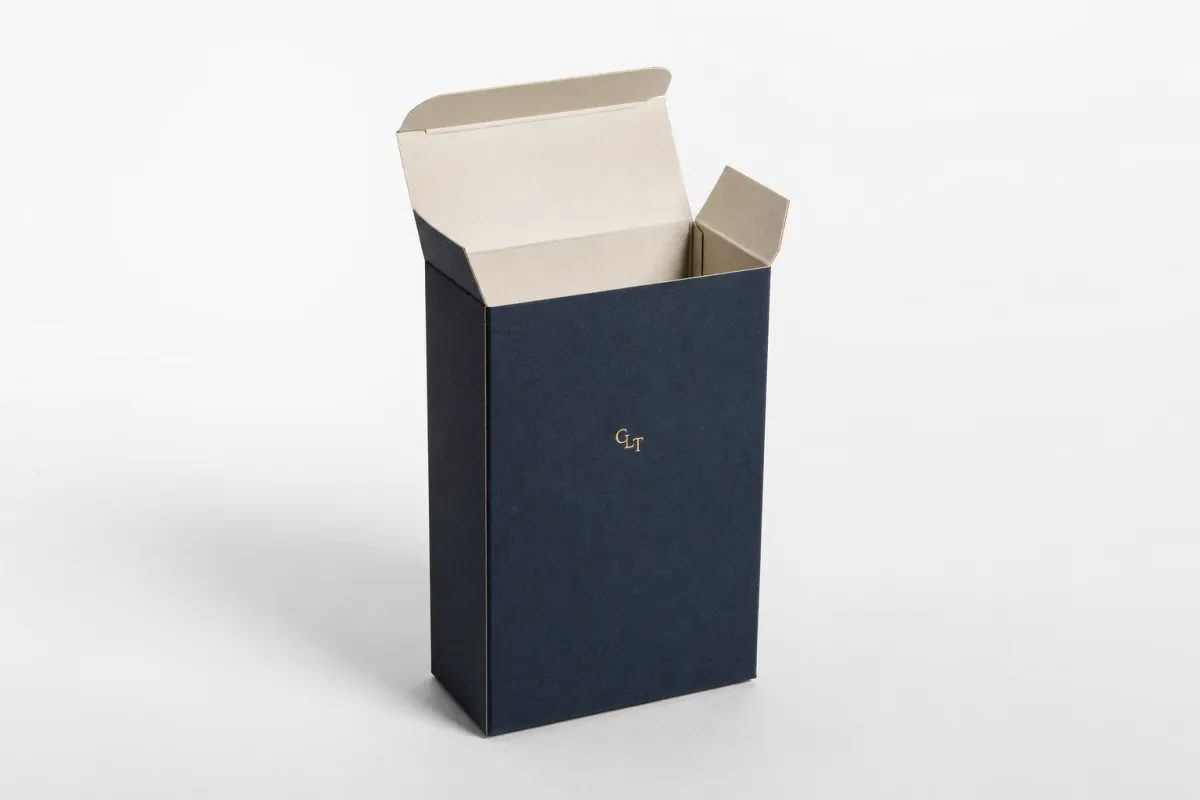
Custom folding cartons with foil stamping are paperboard cartons that get printed, die cut, folded, and glued, then finished with a metallic or pigmented foil applied under heat and pressure. The foil usually lands on the part of the package that needs to be noticed first: a brand mark, a border, a product title, a seal, or a small highlight. The box does not need to turn into a mirror to feel premium. Over-foiling usually makes a design look busy, and busy is the enemy of expensive.
From a packaging buyer's point of view, the appeal is immediate. Custom folding cartons with foil stamping can sharpen the brand signal without changing the underlying carton structure. That is why they are common in skincare, fragrance, confectionery, supplements, candles, and presentation boxes for gift sets. In retail packaging, attention is measured in seconds, sometimes less. A foil accent can buy those seconds before the customer looks away.
Three finishes get confused constantly. Foil stamping uses heat and a foil layer to create a reflective or colored effect. Metallic ink is still part of the print layer, so it behaves more like ink than metal. Lamination is a film, usually matte or gloss, that changes surface feel and protection. If the goal is a crisp highlight on custom folding cartons with foil stamping, foil is usually the strongest answer. It catches the light differently and keeps the edge cleaner than printed imitation.
The best results usually come from restraint. A logo, a small corner accent, a seal mark, or a narrow band can look expensive very quickly. Full-panel foil can work too, but it changes the production risk and the cost structure. Most brands are not trying to shout from every face of the carton. They want controlled emphasis. That is where custom folding cartons with foil stamping tend to earn their keep.
Structure still matters. Tuck-end cartons, auto-lock bottoms, window patch cartons, and insert-ready folding cartons each react differently once foil enters the spec. A design that looks elegant in a file can become awkward on press if the structure and finish were not planned together. Good packaging does not bolt foil onto the art at the end. It builds the carton and the finish in the same conversation.
One practical example: a small cosmetics brand once sent me a box concept with foil wrapped around nearly every panel, plus a tight window cutout and a matte soft-touch coat. On paper, it sounded luxe. On press, it was a headache waiting to happen. The better answer was a single foil logo on the front panel and a clean reverse side. Less drama, better shelf read, lower spoilage. That kind of tradeoff shows up all the time in custom folding cartons with foil stamping.
How Custom Folding Cartons with Foil Stamping Work
The production sequence is mostly mechanical, which is part of the appeal. For custom folding cartons with foil stamping, the process usually starts with the brief and the dieline. The artwork is built to the final carton size, with bleed, folds, glue flaps, and foil zones placed in the correct spots. Tooling comes next. That can include a cutting die for the carton shape and a stamping die or plate for the foil. Press setup follows, then test pulls, foil transfer, folding, and gluing.
Heat and pressure do the actual work. The press pushes the foil onto the board so the film releases only in the stamped area. That means the substrate matters more than many buyers expect. Smooth coated paperboard usually gives a cleaner edge and sharper detail. Rough stock can look attractive in hand, but it can blur the foil and soften small type. With custom folding cartons with foil stamping, board selection is not background noise. It is one of the main quality decisions.
Common foil options include metallic gold, metallic silver, holographic foil, matte foil, pigment foil, and specialty colors. Gold and silver still dominate because they read as premium without confusing the design. Holographic foil can work for seasonal packaging, youth-focused brands, or limited editions, but it needs visual discipline. Put holographic foil on an already crowded carton and the result often slips from premium into clutter. I am not anti-shiny; I am anti-chaos.
Production has a few weak points. Crushed board can flatten detail. Weak adhesion can make the foil lift. Fine text can fill in if the plate, pressure, or stock is wrong. On coated stock, foil that looks perfect on a digital proof can still fail if the surface chemistry is not matched well. Experienced suppliers test these variables before full production. Less careful ones press ahead and hope the carton survives the shelf test. That is a gamble, not a process.
The visual difference is easy to describe. Flat print gives you color, typography, and structure. Add foil, and the eye gets a landing point. That is why custom folding cartons with foil stamping often feel more valuable than plain cartons, even when the structural box is identical. The customer reads “premium” faster. In packaging, that split-second judgment matters more than people like to admit.
Brands that want even more depth sometimes pair foil with embossing. The combination can look exceptional, especially on logos or seals, but it raises tooling and registration demands. Done well, it looks polished. Done poorly, it looks like a craft fair trying to dress up as luxury. The difference is usually in the spacing, not just the finish.
Custom Folding Cartons with Foil Stamping Cost, Pricing, and MOQ
Money is where custom folding cartons with foil stamping get misunderstood most often. Board grade, carton size, print colors, foil coverage, die complexity, and extras like embossing, spot UV, or window patching all affect the number. A plain carton with a small foil logo lives in a different cost universe than a premium sleeve with multiple foil panels and tight registration. The setup looks similar from the outside. The press knows better.
A tiny foil accent can still carry a setup fee that feels strangely large if the run is short. Buyers sometimes assume a small stamp should cost very little. The machine does not care how small the logo feels emotionally. It still needs calibration, plates, test sheets, and spoilage allowance. That is why custom folding cartons with foil stamping can seem expensive per unit at low quantities, even when the foil area itself is modest.
The pricing pattern is simple enough to say, less simple to ignore: unit cost drops as quantity rises, then the savings start flattening out once the design gets too demanding. Labor, spoilage, and finishing time can chew through the scale benefit faster than expected. A clean 5,000-unit run with a modest gold logo on 24pt SBS will not price like a 5,000-unit run with full-coverage foil, an auto-lock bottom, and a window insert. Those jobs are not cousins. They are different species.
Here is a practical comparison to help sort good quotes from decorative noise.
| Foil Coverage Style | Typical MOQ | Typical Unit Price Range | What Usually Drives the Cost |
|---|---|---|---|
| Small logo accent | 500-2,000 | $0.45-$1.10 | Setup, die cost, short-run spoilage |
| Medium foil area with print | 2,000-5,000 | $0.22-$0.55 | Board quality, foil area, print colors, folding complexity |
| Large foil panel or multi-area stamping | 5,000+ | $0.18-$0.42 | Coverage size, registration risk, press time, finishing steps |
Those figures are not promises. They are a filter. A supplier with a low MOQ can still be expensive if the setup costs stay fixed and the run is short. MOQ is not the same thing as value. You can order 1,000 cartons and pay a per-unit amount that feels almost theatrical, or you can spread the tooling over a larger run and make the quote behave more normally.
When comparing quotes for custom folding cartons with foil stamping, ask direct questions:
- What does the setup fee include?
- Are foil plates or dies one-time tooling costs?
- Does the quote include die cutting, folding, and gluing?
- Is proofing digital only, or does a physical sample cost extra?
- What board thickness and coating are included?
- How much freight or duty is hidden in the total?
That last question matters more than most people want to admit. A quote that looks lower on paper can turn out to be more expensive once freight, sample fees, or finishing upgrades appear. If your supplier also offers Custom Packaging Products, ask whether they can quote the carton and the insert together. One combined estimate usually tells the truth more clearly than two separate guesses.
For sustainable sourcing, ask whether the paperboard is FSC-certified. The FSC standard is not a style choice. It is a sourcing choice, and brands that make environmental claims need the paperwork to back them up. For shipping durability, some buyers also reference test methods aligned with ISTA distribution testing so product packaging can survive transit instead of just a photo shoot.
One tradeoff deserves attention. A design can become so intricate that custom folding cartons with foil stamping cost more than the market is willing to reward. Sometimes a smaller foil area delivers nearly all of the perceived value at a fraction of the cost. That is a smarter use of budget than flooding a carton with shine and hoping the premium feeling appears on its own.
Production Process and Timeline for Custom Folding Cartons with Foil Stamping
The production timeline follows a familiar sequence: brief, dieline, artwork prep, sample, approval, production, finishing, and shipping. For custom folding cartons with foil stamping, the shortest path is a clean file and a straightforward structure. The longest path includes revisions, missing dieline details, unclear foil placement, and slow sign-off. Packaging buyers rarely hear that part at the beginning, which is unfortunate because it matters so much more than the sales deck suggests.
Straightforward jobs can move quickly if the supplier already has the needed tooling or the carton size is standard. More complex work takes longer because foil registration has to be exact and the press setup needs verification. If the carton has fine type near the foil edge, or if a fold line runs close to the stamped area, expect more proofing. That is not a warning sign. That is the process protecting you from an expensive mistake.
In real terms, custom folding cartons with foil stamping often need more time for approval than buyers expect. A digital proof can look polished and still miss the actual foil brightness, board feel, or edge behavior. A physical sample is the real test. If the order matters, make room for one. A rushed approval can save a day and cost a reprint.
Rush orders create their own problems because foil jobs are sensitive to setup quality. When the schedule gets squeezed, approvals move faster, and faster approvals tend to invite defects. The supplier might still hit the ship date, but the cartons may not match the original intent. If the launch date is fixed, plan backward and leave buffer room. That sounds dull. It also prevents production panic.
A practical planning window for custom folding cartons with foil stamping is often 12-15 business days after proof approval for simple production, plus shipping time. Complex structures, multiple foil colors, heavy embossing, or larger volumes can stretch that further. Peak season can lengthen the queue even when the supplier is excellent.
Here is the timing in plain terms:
- Artwork and dieline check: 1-3 business days
- Proof or sample review: 2-5 business days
- Production and finishing: 7-15 business days
- Transit: depends on lane, service level, and customs if applicable
That is the working version, not the optimistic one. If the cartons need to land before a product launch, trade show, or seasonal shipment, give yourself more room than the quote suggests. Custom folding cartons with foil stamping punish optimism more reliably than they reward it.
One more point from the field: the fastest jobs are usually the ones where the art team, procurement team, and supplier agree on the foil scope before files are locked. If people are still debating whether the logo should be centered or offset after sampling has begun, the timeline is already slipping. That is not a packaging problem so much as a decision problem, but the carton pays for it all the same.
Key Factors That Affect Quality and Price
Board and coating choices are the first quality lever. Smooth coated stock usually gives sharper foil, cleaner edges, and a more consistent reflection. Rough or heavily textured board may look appealing in a tactile way, but it can soften the detail. If you are buying custom folding cartons with foil stamping, ask the supplier which substrate matches your design before you decide the artwork is final. The right board makes the foil easier to read. The wrong board makes everything work harder than it should.
Foil coverage is the second lever. A small logo in one corner is not the same as a wide foil band across the face panel. Coverage changes press time, spoilage risk, and the number of impressions required. Limited accents often deliver the best price-to-impact ratio. Large foil areas can look impressive, then become expensive in ways buyers did not plan for. That is why some of the strongest custom folding cartons with foil stamping are also the simplest.
Design complexity is the third lever, and it is where many projects create their own headaches. Fine lines, reversed text, tiny type, and tight registration all increase defect risk. If the foil must land exactly on a printed outline, the artwork has to be built for that reality from the start. A design that looks perfect on a screen can become a production problem on press. The screen flatters. The press reports back.
Structural choices matter too. Tuck-end cartons are usually easier to manage than more complex structures. Auto-lock bottoms improve convenience but can affect unit cost. Window patch cartons add another production step. Insert pockets, partition boards, and Custom Die Cutting all raise labor and tooling demand. If you are buying custom printed boxes for a premium product, the structure should support the product first and the finish second.
Supplier capability is the final major factor. Not every plant handles the same foil widths, foil colors, or fine-detail stamping with equal skill. Some are stronger in short-run beauty packaging. Others are better suited to larger retail packaging programs. Some can emboss beautifully and still struggle when foil and fold lines sit too close together. Ask for sample work that resembles your design, not just generic catalog pieces.
Here is the blunt version: custom folding cartons with foil stamping are not expensive because they are shiny. They become expensive when the specification asks too much from the machine, the board, or the schedule. That is where quality and price stop cooperating.
If you need a broader reference point for carton evaluation, the packaging industry resources at Packaging.org are useful for understanding material choices, carton structures, and print finishes. Not every buyer needs that level of detail, but it helps when the spec sheet has to be tighter than the sales sample.
Yes, custom folding cartons with foil stamping can be paired with embossing, debossing, or spot UV. The results can be strong. The quote can also rise faster than a rep can finish a sentence about premium packaging. Choose extra effects only when they improve the package, not because the sample board looked dramatic under showroom lighting.
In practice, the cleanest pricing often comes from sticking to one hero effect. Foil already does a lot. Add embossing only if the brand mark genuinely benefits from depth, and add spot UV only if it helps a key graphic separate from the background. Otherwise you are paying for three finishes to do one job, and that is kinda wasteful.
Common Mistakes When Ordering Custom Folding Cartons with Foil Stamping
The first mistake is treating foil like a decorative add-on at the end of the project. That is how people end up with tiny text, weak contrast, or a foil shape that fights the rest of the layout. Custom folding cartons with foil stamping should influence packaging design from the beginning. Plan the foil early and the carton feels deliberate. Add it late and the result often looks pasted on.
The second mistake is putting foil on top of a busy background and hoping it still stands out. Sometimes it does. Most of the time it does not. A foil accent needs visual breathing room. White space is not wasted space. It is the stage the finish stands on. Brands that understand that usually get stronger packaging design with less decoration.
The third mistake is skipping the physical sample. Digital artwork does not tell you how the foil catches light, whether the board crushes at a fold, or whether the logo feels sharp in hand. For custom folding cartons with foil stamping, one sample can prevent a very expensive mistake. A single extra proof is cheaper than a pallet of cartons that only looked right inside the design file.
The fourth mistake is comparing quotes without checking the spec. One supplier may quote 18pt board while another quotes 24pt. One may include die cutting, another may not. One may use standard foil, another may use a specialty film. Freight, sampling, and finishing may also sit outside the headline number. If the spec is not matched, the price comparison is fiction.
The fifth mistake is overdesigning the carton. If every panel demands attention, nothing feels premium anymore. Good custom folding cartons with foil stamping use restraint. A controlled logo hit, a border line, or a seal mark often creates more value than a box covered in effects. Luxury buyers rarely reward visual shouting. They respond to confidence and clarity.
The sixth mistake is forgetting the supply chain around the box. A foil carton that looks beautiful but ships crushed, scuffed, or delayed is not a win. A carton spec should consider palletization, shipping lane, and the way cartons are packed before they ever reach retail. Packaging is not a poster; it has to survive a rough trip.
“The cleanest carton is often the one that knows where to stop.”
That line applies to custom folding cartons with foil stamping more than most people think. A thoughtful layout with one or two strong focal points is usually better than a crowded box loaded with every finish a supplier can sell you. Less gimmick. More shelf presence. That is the formula worth keeping.
Expert Tips and Next Steps for a Better Quote
If you want better pricing on custom folding cartons with foil stamping, send a complete spec sheet from the start. Include dimensions, board type, print colors, foil area, quantity, target ship date, and whether inserts or window patching are needed. The clearer the brief, the fewer assumptions the supplier has to make. Most quote errors begin with assumptions that nobody challenged early enough.
Ask for two quote paths. One should be tuned for cost, using the simplest structure and the smallest foil area that still does the job. The other should be tuned for presentation, with the exact finish detail you want. Seeing the gap between those numbers makes the tradeoff plain. Sometimes the premium version is only a little higher. Sometimes it is not worth the extra spend. Either way, the choice becomes easier.
For a stronger carton, request a sample or pre-production proof if the foil sits near fine type, edges, folds, or other registration-sensitive art. Those are the places where finish quality becomes visible fast. If the design relies on embossing or a multi-step finish stack, do not approve from a screen alone. Custom folding cartons with foil stamping are physical products. They should be judged physically.
A smart strategy is to start with a small foil accent and expand only if the packaging genuinely needs more shine. Many brands assume more foil means more premium. That is not always true. A small, well-placed accent often carries more authority than a broad decorated field. In retail packaging, clarity and restraint tend to beat visual excess. The product has to earn the shelf space, not the effects.
As you compare suppliers, look for signs that they understand die cutting, fold behavior, and finishing order, not just print output. If a supplier can explain why one board stock improves foil clarity, or why a glue flap should stay clear of a stamped line, that is a good sign. If they only talk about shine, keep looking.
For brands that need broader packaging support, pairing the carton order with Custom Packaging Products can simplify sourcing. Cartons, inserts, sleeves, and accessory packaging can be lined up under one plan instead of stitched together from different vendors with mismatched assumptions. That usually saves time. In some cases, it saves money too.
Use custom folding cartons with foil stamping when the product needs a premium signal, the spec is clear, and the supplier is chosen for process competence rather than the lowest headline quote. That combination tends to hold up in real production. Not theory. Output.
My blunt advice is simple: get the structure right, keep the foil area intentional, and do not let a mockup bully you into a bad carton. Custom folding cartons with foil stamping can look excellent and still stay within budget if the spec is disciplined, the quantities are honest, and the finish is used with restraint. That is how premium packaging actually earns its place.
If you want the fastest path to a good result, pick one visual hero, confirm the board before artwork is final, and approve a physical sample before the run starts. That three-step habit saves more money than most last-minute negotiations ever will.
FAQs
Are custom folding cartons with foil stamping expensive for small runs?
Usually yes, because setup and tooling get spread across fewer units. A small foil area can still trigger the same basic press setup as a larger one. If the run is tiny, ask for a quote with reduced foil coverage or a simpler structure so the per-unit cost does not climb too quickly. In short runs, the real pain is usually fixed setup cost, not the foil itself.
What materials work best for custom folding cartons with foil stamping?
Smooth coated paperboard usually gives the cleanest foil edge. Heavier board can improve the premium feel, but too much texture can reduce detail. If you want a specific stock, confirm compatibility with the supplier before you approve the final carton spec. The best carton is the one that prints well, stamps cleanly, and folds without fighting back.
How long does custom folding cartons with foil stamping take to produce?
Simple jobs can move quickly if the artwork is ready and the supplier already has the right tooling. Sampling, approval, and finishing often take longer than buyers expect. Build in extra time for complex artwork, custom structures, or seasonal production pressure. A realistic timeline is usually safer than a heroic one.
Can foil stamping be combined with other finishes on folding cartons?
Yes. It is often paired with embossing, debossing, soft-touch coating, or spot UV. The combination can look strong, but each added finish can increase cost and risk. Ask for a sample or proof if the design depends on multiple effects working together. If the stack of finishes does not improve the message, trim it back.
What should I ask for before approving custom folding cartons with foil stamping?
Ask for board specs, foil type, MOQ, unit price tiers, and turnaround time. Request a dieline and a proof that shows foil placement clearly. If the job matters, ask for a physical sample so you can check registration and finish quality before full production. That one extra step can save you from a very awkward unpacking later.

