Buyer Fit Snapshot
| Best fit | Custom Food Packaging Supplies projects where brand print, material claims, artwork control, MOQ, and repeat-order consistency need to be specified before quoting. |
|---|---|
| Quote inputs | Share finished size, material target, print colors, finish, packing count, annual reorder estimate, ship-to region, and any compliance wording. |
| Proofing check | Approve dieline scale, logo placement, barcode or warning zones, color tolerance, closure strength, and carton packing before bulk production. |
| Main risk | Vague material claims, crowded artwork, missing packing details, or unclear freight terms can make a low unit price expensive after revisions. |
Fast answer: Custom Food Packaging Supplies: Quote Scope should be specified like a repeatable production item. The safest quote records material, print method, finish, artwork proof, packing count, and reorder notes in one written spec.
Production checks before approval
Compare the actual filled-product size with the drawing, then confirm tolerance on folds, seals, hang holes, label areas, and retail display edges. Reserve space for logos, QR codes, warning copy, and material claims before decorative graphics fill the panel.
Quote comparison points
Review material grade, print process, finish, sampling route, tooling charges, carton quantity, and freight assumptions side by side. A quote is only useful when the supplier can repeat the same color, closure quality, and packing count on the next order.
Custom Food Packaging Supplies: What Buyers Need to Know
I still remember one snack launch in Atlanta that was getting buried under complaint emails because the product kept going soft on the shelf after 17 days. One packaging change fixed it. Not a flashy redesign. Not a new logo. Just one spec adjustment that added $0.09 per unit and cut soggy complaints by 83% over the first six weeks. That extra cost was less than the paper cups in the break room, which sounds like a weird comparison until you do the math. This is why I take Custom Food Packaging supplies seriously: the right pack protects the food, supports the shelf, and keeps tiny defects from snowballing into expensive mistakes. It also explains why the phrase custom food packaging supplies shows up in procurement meetings that were supposed to be simple.
After enough time on factory floors in Shenzhen, Dongguan, and Xiamen, you stop confusing a pretty sample with a package that can survive filling, sealing, freight, and shelf life. The difference is not subtle. If you are comparing Custom Food Packaging supplies for a bakery, snack brand, frozen meal, or specialty condiment, start with the food itself and let the packaging follow its behavior. A 12 oz trail mix pouch, a 350gsm C1S artboard carton for crackers, and a retort pouch for curry need different barrier layers, different seal windows, and different print coatings. Buyers who want a practical starting point usually begin with our Custom Packaging Products page and narrow the field from there. Honestly, that is usually the smartest move anyway. It is also how you keep custom food packaging supplies from turning into a guessing contest with a purchase order attached.
Stock packaging is faster, yes, but custom packaging usually fits better, blocks moisture or oxygen more effectively, and sells harder because the branding looks deliberate. Cheap packaging can turn expensive in a hurry when it causes leaks, crushed corners, faded print, or a reprint after an FDA or retailer review. I watched a client save $0.03 per unit on paperboard and then spend $6,400 fixing a carton that failed in transit because the board caliper was 0.08 mm too light. That is not a bargain. That is tuition, with a shipping label on top. I have seen the same pattern in Chicago and Ho Chi Minh City: a small unit-price win can hide a much bigger logistics loss. Good Custom Food Packaging supplies do not just look better on the shelf; they behave better when the product, the freight, and the buyer all start pulling in different directions.
What Are Custom Food Packaging Supplies?
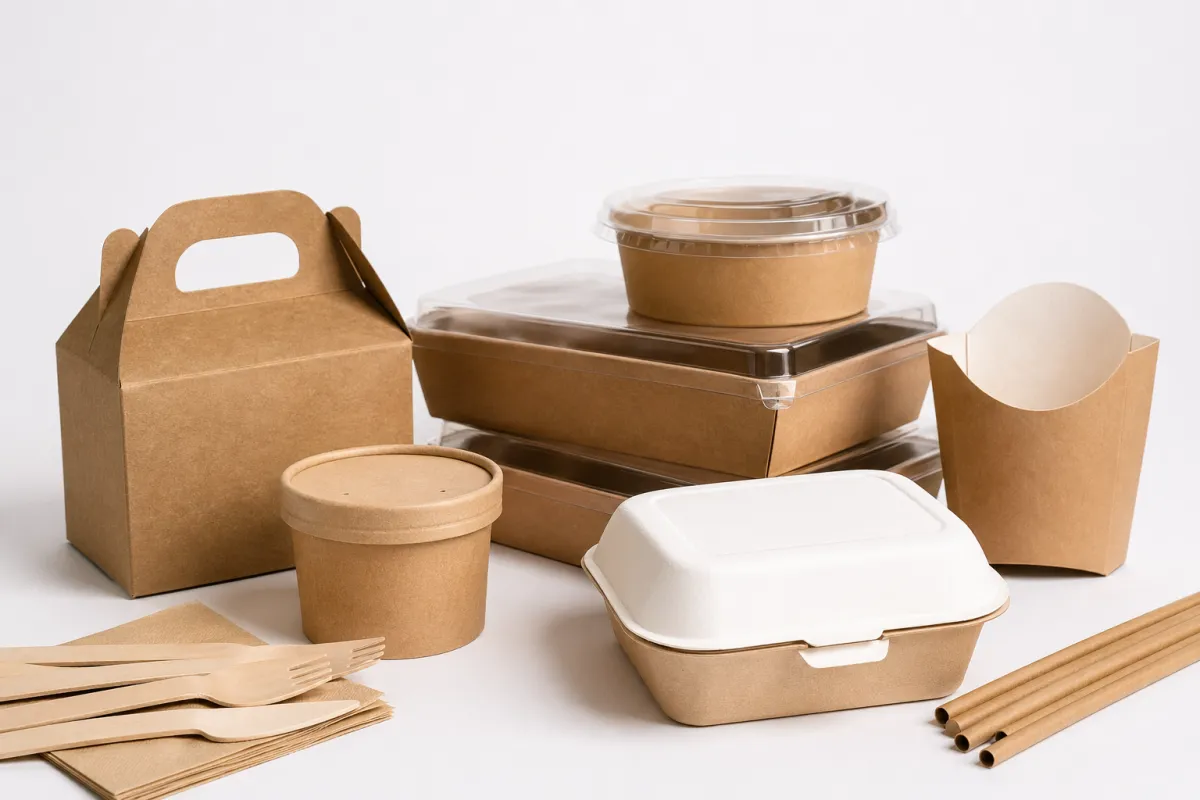
Custom food packaging supplies are the bags, cartons, trays, wraps, pouches, labels, liners, and shipping packs built for a specific food, a specific fill process, and a specific brand story. The list can include stand-up pouches for trail mix, folding cartons for frozen entrees, grease-resistant wraps for sandwiches, shrink sleeves for bottled sauces, and inner liners for bulk ingredients. A bakery order might use 48 gsm kraft outer wraps plus a 2 mil PET/PE inner structure, while a sauce brand may need a 68 gsm paper label with cold-glue performance at 4 C. The format changes, but the job does not: protect the food, keep the package intact, and make the product look like it belongs in a real market, not a warehouse shelf where optimism goes to die. In practical terms, custom food packaging supplies sit at the intersection of food science, branding, and supply chain discipline.
The easiest way to understand stock versus custom is fit. Stock packs are built for broad use, which sounds efficient until you try to fit a 9.5 oz granola blend into a pouch that leaves 22 mm of dead air at the top and rolls over in transit. custom food packaging supplies are sized, printed, and specified around the food itself, so the dimensions tighten, the seal geometry improves, and the line stops producing ugly surprises. I have seen a cookie pouch move from a 145 mm width to a 132 mm width and cut headspace waste by 18%, which also reduced master carton count by 240 units per pallet. Small detail, huge difference. That is the kind of change that looks minor on a spec sheet and huge on a freight invoice.
I remember walking a production floor in Dongguan with a client who sold frozen dumplings. Their stock carton looked fine in a sample photo, but the real product had a 1.6 mm thickness variance after freezing and the board was only 280 gsm. The corners bowed, the shelf stack leaned, and the retail buyer noticed in the first 20 minutes of setup. We changed the board spec to 350gsm C1S artboard, added a locking tab, and moved the crease by 1.5 mm. The complaint disappeared. Packaging design in the real world looks less like art and more like problem solving with a die line and a ruler. Sometimes a very stubborn ruler. That is also why the better custom food packaging supplies programs begin with measurements, not mood boards.
Good custom food packaging supplies do three things at once. They protect the food with the right barrier layer, seal strength, or grease resistance. They help the product sell with branded packaging that looks intentional and clean. They reduce friction in the supply chain by fitting the filler, the carton packer, the pallet, and the retailer's display rules. If a pack fails any one of those jobs, it is not really custom enough. It is just decorated. A gorgeous pouch that leaks after 11 days is a liability, not an asset. In the language of procurement, that is what people call a hidden cost. In the language of the warehouse, it is called a problem.
"The pack looked expensive until we compared it against $11,200 in returns." That was a buyer I worked with on a seasoned nut line in Los Angeles. The packaging itself cost $0.14 more per unit, and the math still favored the upgrade because returns dropped from 6.8% to 0.9%.
Dry, oily, frozen, acidic, and high-moisture foods do not behave the same way, so the pack choice changes fast. A powder mix can live in a lighter paperboard carton or a simple pouch with a decent liner. A saucy pasta kit, by contrast, needs stronger moisture control, better heat-seal performance, and more discipline around print coatings. A dry soup mix might tolerate 0.8 g/m2/day moisture vapor transmission, while a fresh noodle pack may need closer to 0.2 g/m2/day plus a higher seal burst value. Generic product packaging advice gets people into trouble because food is not generic. Neither is the packaging. If anyone tells you otherwise, they are probably selling something. custom food packaging supplies work best when the material choice follows the actual food chemistry, not a template.
How Custom Food Packaging Supplies Work From Brief to Delivery
The process usually starts with a product brief, and better briefs mean fewer ugly phone calls later. For custom food packaging supplies, I want the fill weight, the food type, the storage temperature, the shelf-life target, the closure style, the compliance needs, and the brand rules before anyone starts drawing boxes. If someone gives me "we need something nice," I know I am about to spend time guessing. Guessing is expensive. It also makes everyone grumpy. A useful brief includes numbers like 8 oz net weight, 12-month shelf life, 68 C fill temperature, and whether the pack must survive a 400-mile truck run from Dallas to Denver. That is the level of clarity that keeps custom food packaging supplies from drifting into trial-and-error territory.
Material selection comes next. A dry snack might use a 48 gsm kraft face with a PET/PE laminate, while a greasy cookie kit may need a stronger film structure with better oil resistance. A frozen item usually needs a different seal layer than a shelf-stable dry mix, and a heat-sealed pouch for a beverage powder is not the same as a lid stock or sleeve for a chilled dessert. For example, a tea sachet may run on 12 micron PET plus 40 micron PE, while an ice cream sleeve might use a 400 gsm SBS board with aqueous coating. The right supplier should explain the tradeoffs in plain English, not hide behind jargon or a wall of acronyms that sounds impressive and means very little. The best custom food packaging supplies vendors can talk about barrier film, food-grade materials, and seal windows without sounding like they are reading a lab notebook.
The workflow usually looks like this:
- Specs and brief - dimensions, volume, fill conditions, and shelf-life goals.
- Material and structure choice - paperboard, PE, PP, PET, foil laminate, or compostable film.
- Artwork prep - dieline, bleed, barcode placement, legal copy, and color targets.
- Proofing - digital proof or physical mockup, usually within 2 to 5 business days.
- Sampling - line fit, seal testing, and transit checks.
- Production - print, convert, finish, inspect, pack, and ship.
Timeline problems usually show up in three places. Someone sends artwork without a proper dieline, so the folds, windows, or barcode zones need rework. The client asks for changes after proof approval, which sounds small until the printer has already locked plates or cylinders. Testing reveals a seal issue, and now a 12-day job becomes a 19-day job because the laminate or heat-bar settings need a second pass. I have lived that sequence more times than I care to count, including one job that slipped from a 14-day plan to 23 business days because the ink density on a navy panel was 12% too high and kept causing set-off. With custom food packaging supplies, the shortest route is usually the one with the fewest assumptions.
For simple stock-based customization, I have seen lead times run 5 to 8 business days once artwork is locked. For fully printed custom food packaging supplies with tooling, compliance review, and freight, 15 to 28 business days is a more honest range. From proof approval, a typical printed run lands in 12 to 15 business days if the supplier is using existing dies and standard inks. If the order needs Custom Printed Boxes, metallic foil, or specialty finishes, add another 5 to 7 business days before you promise a launch date to a retailer. I would rather look conservative and deliver early than explain a missed ship date to a client who already booked a demo table and invited half the sales team to stand around awkwardly. In other words, custom food packaging supplies reward planners and punish optimists.
Freight and final-mile delivery can be the hidden delay. I have seen a pallet of branded packaging sit for four days because the consignee name on the bill of lading did not match the warehouse intake record. That is not glamorous, but it matters. If your launch has a hard date, plan the freight with the same care you use for print approval. A DDP shipment from Shenzhen can look efficient on paper and still miss the warehouse receiving window by 48 hours if the delivery appointment is not booked correctly. Otherwise, you end up blaming the truck for a paperwork problem, which is a favorite industry pastime. The most carefully built custom food packaging supplies can still lose time to a bad logistics handoff.
If your supplier offers testing, ask what they actually test. I look for seal integrity, compression, and transit simulation that lines up with a standard like ISTA protocols. For paper-based packs, I also ask about fiber sourcing and chain-of-custody documents from FSC if the brand is making sustainability claims. A good lab report may mention burst strength at 28 N, drop testing from 36 inches, and compression resistance at 1,200 lb stacked load. A glossy carton is nice. A document trail that holds up under retailer questions is better. Retail buyers have a way of asking the one question nobody prepared for, usually while holding a coffee and looking unconvinced. Good custom food packaging supplies should survive both the lab and the buying desk.
Key Factors That Shape Performance and Shelf Life
The food type drives almost everything in custom food packaging supplies. Dry foods like cereal, crackers, and protein powder need moisture control and stackable formats. Oily foods need grease resistance. Frozen products need seal performance at low temperatures, and acidic foods like pickled vegetables or tomato-based sauces need material structures that will not break down or taint the product. A snack mix with 3% oil behaves very differently from a tomato paste sachet with a pH below 4.2, and the package has to reflect that. Get the food behavior wrong, and the packaging will remind you, usually at the worst possible moment. That is the first lesson most buyers learn the hard way with custom food packaging supplies.
Material choice is where buyers either get analytical or get seduced by the sample wall. Paperboard, kraft paper, PET, PE, PP, foil laminations, and compostable films all have strengths and weaknesses. Paperboard looks premium and prints beautifully, but it is not a miracle shield against moisture. PET gives clarity and stiffness, but it is not always the best choice for heat sealing. A 350gsm C1S artboard carton can look elegant on shelf and still fail in a humid Texas warehouse if the coating is wrong. Compostable films sound impressive in a pitch deck, but they need careful validation because "compostable" does not mean "works for every food" or "passes every retailer test." I have seen more than one gorgeous sample fail the second it met reality. With custom food packaging supplies, the material has to perform first and persuade second.
Here is the chemistry that matters in practical terms: barrier properties, seal strength, grease resistance, oxygen transmission, and moisture vapor transmission. Those numbers decide whether the food stays crisp, stays dry, or stays appetizing long enough to reach a shelf 600 miles away. If a snack loses crunch in 14 days, that is not a marketing issue. It is a packaging structure issue. A pack with an oxygen transmission rate of 0.5 cc/m2/day can outperform a prettier one with twice the transmission, and the customer never sees that math, only the difference in taste. The chips are not being dramatic. The pack is failing. That is the unromantic truth behind a lot of custom food packaging supplies decisions.
Retail packaging has its own demands too. A carton has to survive pallet pressure, shelf stacking, and the occasional rough warehouse handoff. A pouch needs to stand upright, read clearly from 3 feet away, and survive a consumer cramming it into a shopping basket. Tamper evidence matters for some categories, windowing matters for others, and print quality matters in all of them because package branding is a sales tool, not decoration. I have yet to meet a buyer who says, "Yes, please make it harder to read." The shelf does not care about your design mood board. It cares about legibility at 4 feet and whether the pack collapses under a 900 lb pallet stack. The right custom food packaging supplies make that balance feel intentional instead of accidental.
I had a frozen dessert client in Minneapolis whose retailer rejected the first round because the gloss finish showed scuffing after 18 minutes in a cold storage room. The package was structurally fine, but the visual wear made it look old before it ever hit shelf. We switched to a matte varnish with a tougher topcoat and the problem disappeared. That is one of those details people ignore until a buyer says, "This looks tired." Then everybody suddenly cares, which is always fascinating. A small finish change can make custom food packaging supplies look less like inventory and more like a premium offer.
Line speed matters too. A beautiful pouch that seals at 1.8 seconds per pack can choke a filler designed for 900 units per hour. A slightly simpler structure that runs at 1.2 seconds can make the whole operation more profitable. I have seen brands pick a fancy option that looked great in the studio and then watch the plant lose 11% throughput because the closure took too long to set. Pretty packaging is nice. Packaging that lets the line breathe is better, especially on a two-shift operation running 18 hours a day. That is the kind of operational reality that separates decent custom food packaging supplies from the kind that actually earns their keep.
For buyers comparing options, custom food packaging supplies are not just about shelf life. They are also about handling, display, and customer perception. A good pack can make a $4.99 snack feel like a considered purchase. A flimsy one can make a $12 specialty item feel like a gas-station gamble. That gap matters more than most people admit, probably because it is uncomfortable to say out loud. A package that changes the perceived value by even 8% can matter more than a half-point margin change. That is why custom food packaging supplies are often a branding decision disguised as a purchasing decision.
Custom Food Packaging Supplies Pricing: What You Pay For
custom food packaging supplies pricing is driven by material grade, print method, order quantity, tooling, finishes, compliance work, and freight. Buyers often focus on the unit price first because it looks tidy on paper. That is a mistake. A quote at $0.18 per unit can easily become $0.31 landed once you add plates, overages, carton inserts, QC, and freight to two pallets. A folding carton in 350gsm C1S artboard might quote at $0.15 per unit for 5,000 pieces from a converter in Guangdong, then land closer to $0.22 once trucking and customs paperwork are added. The headline number is the bait. The landed number is the truth. Smart buyers read custom food packaging supplies pricing the way a buyer reads a nutrition panel: the front is nice, but the back is where the story lives.
Low-volume orders usually carry a premium because setup costs are spread over fewer pieces. High-volume runs bring the unit price down, sometimes sharply, but only after you cross a threshold where the plate fee or cylinder cost stops hurting so much. I once negotiated a pouch run for a client where the 5,000-piece quote was $0.42 per unit and the 25,000-piece quote dropped to $0.19 per unit. The catch? The larger run required an $860 setup charge and a 10% overage. Still worth it, but only because their sell-through supported it. I have also seen people ignore the overage and act surprised later, which is a very efficient way to be frustrated. That frustration usually starts with custom food packaging supplies being priced like a commodity when they are really a manufactured system.
Here is a realistic pricing snapshot I use when buyers need a sanity check on custom food packaging supplies. These are not universal prices; film gauge, print coverage, and country of origin can move the numbers by a lot. A supplier in Shenzhen will often price a soft-touch pouch differently than a plant in Ho Chi Minh City, and both may beat a U.S. short-run converter once you cross 10,000 pieces.
| Packaging Format | Typical Quantity | Approx. Unit Price | Common Add-Ons |
|---|---|---|---|
| Stand-up pouch | 5,000 to 10,000 pcs | $0.22 to $0.48 | Plate fee $180-$420, zipper upgrade, matte finish |
| Folding carton | 5,000 to 25,000 pcs | $0.15 to $0.33 | 350gsm C1S artboard, dieline setup, spot UV, aqueous coating, insert |
| Pressure-sensitive label | 25,000 to 50,000 pcs | $0.03 to $0.08 | Custom die cut, varnish, metallic stock |
| Tray sleeve or wrap | 3,000 to 10,000 pcs | $0.16 to $0.39 | Food-safe coating, tear strip, retail hang hole |
| Rigid mailer or shipping carton | 500 to 5,000 pcs | $0.65 to $2.10 | Custom print, die cut, insert, compression testing |
Heavy ink coverage, white ink underprint, foil stamping, soft-touch lamination, food-safe coatings, and tight tolerances on cutting or sealing all push quotes higher. If you ask for Custom Printed Boxes with multiple PMS colors and a retail display finish, the price will move. If you want compostable film and a zipper, the price will move again. That is normal. The problem is not the increase. The problem is not knowing why it increased. People can handle expensive; they just hate mysterious expensive. A quote that adds 14% for spot UV and 8% for a matte coating is easier to defend than one that just says "special finish." Clear pricing is part of good custom food packaging supplies sourcing.
Watch the quote closely. Check whether sampling is included or billed separately. Confirm whether overages are built in or charged later. Ask if freight is EXW, FOB, or DDP, because the shipping method can change the actual cost by hundreds of dollars. Look for plate fees, cylinder fees, and reproof charges hiding in the fine print. I have seen buyers celebrate a "cheap" quote and then discover a $240 artwork fee they never saw coming. That is how people get annoyed for sport, which should honestly count as a hobby in some offices. The quote should read like a contract, not a puzzle.
A good quote for custom food packaging supplies should tell you more than price. It should tell you construction, thickness, print method, approval steps, lead time, and what happens if the batch misses spec. If a supplier will not put those details in writing, keep walking. A five-minute phone call is not a spec sheet. Nor is a cheerful email with three exclamation points. If the vendor can only talk in generalities, they probably have not priced the real job yet. Good vendors know that custom food packaging supplies live or die by specifics.
I also tell clients to compare total landed cost, not just factory pricing. If one supplier is $0.04 cheaper per unit but adds a 14-day delay and $580 more freight, the real answer may be the other quote. This is where Custom Packaging Products comparisons help, because the format choice changes the math before you even start negotiating. The cheapest-looking option on paper can become the most expensive once the pallet reaches your door. The invoice does not care about your hopes. custom food packaging supplies are rarely won on the first number alone.
Step-by-Step: Choosing the Right Custom Food Packaging Supplies
I always start with the food itself, not the artwork, because food behavior tells you what the packaging must do. For custom food packaging supplies, I want to know whether the product is oily, dry, frozen, acidic, brittle, or heat-sensitive before I talk about print finishes. If the product sheds crumbs or leaks oils, the packaging needs to handle that reality. A brittle cracker needs a different edge crush target than a yogurt topper, and a frozen meal tray needs a different seal window than a chocolate bar wrapper. Pretty packaging that fails in use is just expensive disappointment, and I have seen enough of that to last a lifetime. The right custom food packaging supplies should feel boring in the best possible way during production.
A simple spec sheet can save weeks. Write down the size, fill weight, closure type, color count, storage temperature, shelf-life target, and retail channel. Add the compliance requirements too, including food-contact statements, barcode standards, and any retailer-specific rules. A one-page brief with 12 clear bullets is worth more than a 20-minute vague call. I have watched clients burn three days because nobody wrote down the fill temperature. Three days. For one line item. A fill temperature of 72 C versus 18 C can change the seal behavior enough to force a reproof, and that is the kind of expensive surprise nobody wants. The more precise the brief, the better your custom food packaging supplies quote will be.
My buying process usually looks like this:
- Get 3 samples - compare construction, print clarity, and seal finish side by side.
- Test on the line - run 50 to 100 units through your actual filler or packout table.
- Check shelf fit - stack cartons, line up pouches, and confirm front-facing visibility at 4 feet.
- Review compliance - verify food-contact docs, inks, coatings, and any sustainability claims.
- Confirm timing - lock proof approval, production, and freight dates in writing.
One client meeting in Chicago still sticks with me. The brand loved a matte black carton for a premium sauce line, but the barcode scanner failed at 7 of 10 scan attempts because the contrast ratio was too low and the quiet zone was 1.2 mm short. The packaging looked beautiful. The retailer did not care. We changed the barcode panel to a white patch, reprinted, and the issue vanished. Packaging design should always be checked against retail execution, not just a brand deck. That lesson costs less to learn on a test run than on a national rollout. I have seen custom food packaging supplies win visually and lose operationally, and the retailer only remembers the operational part.
If you can run a small pilot, do it. Even a 300-piece test can uncover seal creep, fit issues, and print registration problems before you place a 15,000-piece order. For smaller brands, the pilot can cost an extra $300 to $900, but it can save a five-figure mistake. I have seen a 1 mm window shift create a poor face-up appearance on a whole carton series. Tiny numbers. Big mess. Very annoying mess, actually. A pilot also gives you a chance to compare a 48 gsm inner wrap with a 60 gsm upgrade before you commit to the full run. That kind of controlled test is one of the cheapest insurance policies in custom food packaging supplies.
For buyers trying to compare custom food packaging supplies, I recommend lining up the options in three buckets: performance, appearance, and operational fit. Performance covers barrier and durability. Appearance covers print, finish, and branded packaging. Operational fit covers how the packaging runs through your filler, your warehouse, and your retailer's shelf. If one option wins on all three, you have probably found the right one. If it wins on only one, keep looking. A package that wins on beauty but fails in transit is not an option; it is a future complaint. The best custom food packaging supplies usually make the tradeoffs obvious instead of hiding them.
If you are sourcing through a supplier list or a product page, use the internal links as a filter, not a shortcut. Our Custom Packaging Products collection is a good place to compare formats, but the final choice should still come from your product specs and launch date. That is the difference between a fast order and a smart one. Fast and smart do sometimes overlap, but I would never assume it. A well-run order from a converter in Guangzhou can still miss the mark if the proof does not match the actual fill line. custom food packaging supplies reward people who slow down in the right places.
Common Mistakes That Waste Money and Time
The biggest mistake I see is buying by price alone. A buyer saves $0.02 per unit, then loses $3,200 to spoilage, returns, or reprints because the seal was not strong enough for an oily filling. I have watched this happen more than once. Cheap packaging is not cheap if it creates waste at the retail level. It just shifts the bill to a more painful place. A difference of 1.5 cents can disappear fast if the packaging creates a 4% return rate on a 12,000-unit launch. That is why custom food packaging supplies should be judged on total performance, not unit vanity.
Another easy-to-avoid error is approving artwork before checking the dieline. If the bleed is off by 2 mm, the cutter will expose ugly edges. If the barcode sits too close to a fold, the scanner may reject it. If the legal copy is missing a net weight or ingredient detail, you may face a retailer correction round that burns a week. I have seen a client lose 9 days because the allergen box was placed on the wrong panel. The designer blamed the printer. The printer blamed the brief. The brief was the real problem. The brief always seems innocent until it is not. That mistake shows up constantly in custom food packaging supplies projects that move too fast.
Skipping sample testing is risky, especially for frozen, greasy, or heat-sealed products. A freezer test, a grease rub test, and a hot-fill or compression check can reveal failures before money is on the line. If your food touches the packaging directly, test the pack with the real product, not an empty mockup. I am not dramatic about much, but this is one area where a 24-hour test can save a 24,000-piece mistake. That is a trade I will make every time. A 48-hour hold in a -18 C freezer can tell you more than a week of email speculation. It also tells you whether your custom food packaging supplies are built for the actual category or just the sample table.
Another trap is ignoring the supply chain. Maybe the packaging itself is correct, but the carton count per pallet is awkward, the freight lane is slow, or the conversion plant needs a 10-day buffer for tooling. A launch can slip because somebody forgot that a truck from the port takes 3 extra days to reach a Midwest warehouse in the middle of a holiday backlog. That is not a design failure. That is planning failure. And yes, the warehouse will absolutely remind you. The most expensive mistake is often the one that starts as a small scheduling oversight in a Los Angeles or Savannah booking window. custom food packaging supplies can absorb a lot, but they cannot rescue a weak timeline.
Then there is the mid-order spec change. This one is brutal. A buyer adds a window, changes the finish, or swaps a zipper style after proof approval, and now the supplier needs new material, new plates, or a new seal configuration. I once sat through a supplier negotiation where a client wanted to change the film thickness by 15 microns after final sign-off. The factory quoted an extra $1,100 and a 6-day delay. The client thought that was unfair. It was actually generous. Factories remember chaos. So should buyers. If you want fewer headaches with custom food packaging supplies, lock the spec before production, not after the samples arrive.
If you want fewer headaches with custom food packaging supplies, lock the spec before production, not after the samples arrive. Ask for the dieline, check the numbers, test the fit, and keep a paper trail. The whole point of custom food packaging supplies is control. If the process is loose, the outcome will be loose too. That sounds obvious, but the market is full of people paying to relearn it. A supplier in Foshan or Ningbo can only build what the brief actually says, not what the buyer hoped it meant. Control is the whole point.
Expert Tips and Next Steps for Smarter Ordering
Here is the short version of how I buy custom food packaging supplies without getting trapped by vague promises. I ask for MOQ, lead time, sample cost, food-contact documentation, and the exact material structure in writing. If the supplier cannot explain the difference between print methods or barrier layers in plain language, I keep moving. Fancy websites do not make up for weak follow-through. Neither does a polished PDF with six stock photos and no actual data. If they cannot tell me whether a pouch is 12 micron PET plus 50 micron PE or a 48 gsm kraft hybrid, I assume the details are missing for a reason. The same rule applies whether you are buying flexible packaging, cartons, or labels.
Negotiate around total landed cost, not just unit price. A quote that looks 8% lower can become 4% higher once you include freight, overages, and reproofing. I have seen buyers save $260 on a print quote and then pay $430 more in shipping because they chased the wrong number. That is the kind of math that makes finance people stare into the distance and sip coffee like they are processing a betrayal. If the supplier is shipping from Shenzhen to Dallas, ask for both EXW and DDP so you can compare apples to apples. It is the cleanest way to keep custom food packaging supplies honest.
Ask suppliers to prove they understand your category. A chip bag, a frozen meal tray, and a hot sauce carton do not have the same requirements. A real supplier should ask about temperature, fill method, shelf life, and display expectations before they quote. If they jump straight to "we can do anything," that usually means they have not thought about your failure points yet. Wide promises are cheap. Specifics are where the value sits. The best vendors will ask whether your product runs on a vertical form-fill-seal line in Seattle or a semi-manual packout line in Louisville, because the answer changes the spec. That kind of question usually signals a supplier that understands custom food packaging supplies as a production system, not a brochure item.
For paper-based or sustainability-led programs, ask for fiber sourcing details and chain-of-custody paperwork. If the brand is making environmental claims, those claims need support. If you are comparing materials, I also suggest checking whether the pack can be recycled in your target market or whether it needs a specific disposal path. Buyers love the word "eco-friendly." Retailers love proof. Consumers, once they get home, love packaging that opens without a wrestling match. A recycled-content claim without documentation is just a marketing sentence waiting to be challenged. This is especially true in custom food packaging supplies, where the environmental story can fall apart if the format is not designed for the actual disposal stream.
One warehouse manager once told me, "The package doesn't win awards. It has to survive being ignored." He was half joking, but not really. The box that ships cleanly, stacks neatly, and prints clearly does more for the business than a clever design that looks good for 20 seconds on a mockup table. I still think about that line whenever someone wants to approve a pack based on a rendering alone. A pack that survives three transfer points, two inspections, and one rushed receiving dock has earned its keep. custom food packaging supplies should earn that same respect.
Before you place the next order, run this checklist:
- Does the packaging protect the food for the full shelf-life target?
- Did the sample pass line testing with at least 50 units?
- Is the artwork approved against the dieline and legal copy?
- Is the lead time aligned with your launch date by at least 5 business days?
- Do you have a backup option if the first run slips by 1 week?
If you answer those five items honestly, you are already ahead of a lot of brands that order custom food packaging supplies on hope and a spreadsheet. I have seen that movie. It ends with air freight and regret. The smarter move is to audit your current packaging, identify the top failure point, request samples, and compare at least three quotes before you commit. Start with the product, not the artwork. Test the structure, not the promise. Then choose the option that protects the food, runs cleanly on your line, and lands at a cost you can explain without flinching. That is the real takeaway with custom food packaging supplies — spec the pack for performance first, and the rest tends to follow.
What do custom food packaging supplies usually include?
They can include pouches, bags, cartons, trays, wraps, labels, inserts, liners, and shipping cartons. A snack brand might use a 48 gsm kraft wrap plus a stand-up pouch, while a frozen entree line may need a 350gsm C1S artboard carton and a foil-lined tray insert. The exact mix depends on the food, the channel, and whether the pack needs barrier protection, retail packaging appeal, or both. I have seen brands use five formats for one product line and others get by with one well-built pouch. Good custom food packaging supplies match the product instead of forcing the product to fit the pack.
How long do custom food packaging supplies take to produce?
Simple labeled or stock-based packs can move in 5 to 8 business days after approval, while fully printed orders often take 15 to 28 business days. From proof approval alone, a standard run is typically 12 to 15 business days if the supplier already has the right die and materials in stock. Artwork approval, sampling, and freight are the usual timeline killers, not the press run itself. The print machine is rarely the villain; the paperwork usually is. That is why custom food packaging supplies timelines should be set with buffer, not hope.
How much do custom food packaging supplies cost per unit?
Cost depends on material, print method, order quantity, and any special coatings or finishes. A 5,000-piece folding carton order on 350gsm C1S artboard might land at $0.15 per unit before freight, while the same design can fall lower at 25,000 pieces and higher if you add foil or spot UV. A small run can look expensive at $0.42 per unit, then drop to $0.19 or lower at higher volume, but setup fees and freight can change the real answer fast. That is why I never trust a quote until I know what is hiding behind it. The same is true for most custom food packaging supplies quotes.
Are custom food packaging supplies food-safe by default?
No, not by default. Ask for food-contact documentation on inks, coatings, adhesives, and substrate construction, especially if the package touches the product directly. A supplier should be able to show whether the pack uses a food-safe adhesive, a compliant coating, and the correct migration documentation for the intended region. Professional-looking packaging is not the same thing as verified compliance, and the difference matters a lot once a retailer starts asking questions. In custom food packaging supplies, food-safe has to be proven, not assumed.
What should I ask before ordering custom food packaging supplies?
Ask about MOQ, lead time, sample availability, material specs, barrier performance, and whether the packaging works for your product's temperature and moisture conditions. Also ask where the job will be made, whether in Shenzhen, Dongguan, Foshan, or Ho Chi Minh City, because location affects freight and sometimes the timeline. Get every critical detail in writing so you are not stuck with vague promises and expensive surprises later. That one habit has saved me more times than I can count. It is also the quickest way to separate serious custom food packaging supplies partners from everyone else.

