What Custom Front Adhesive Stickers Are and When They Make Sense
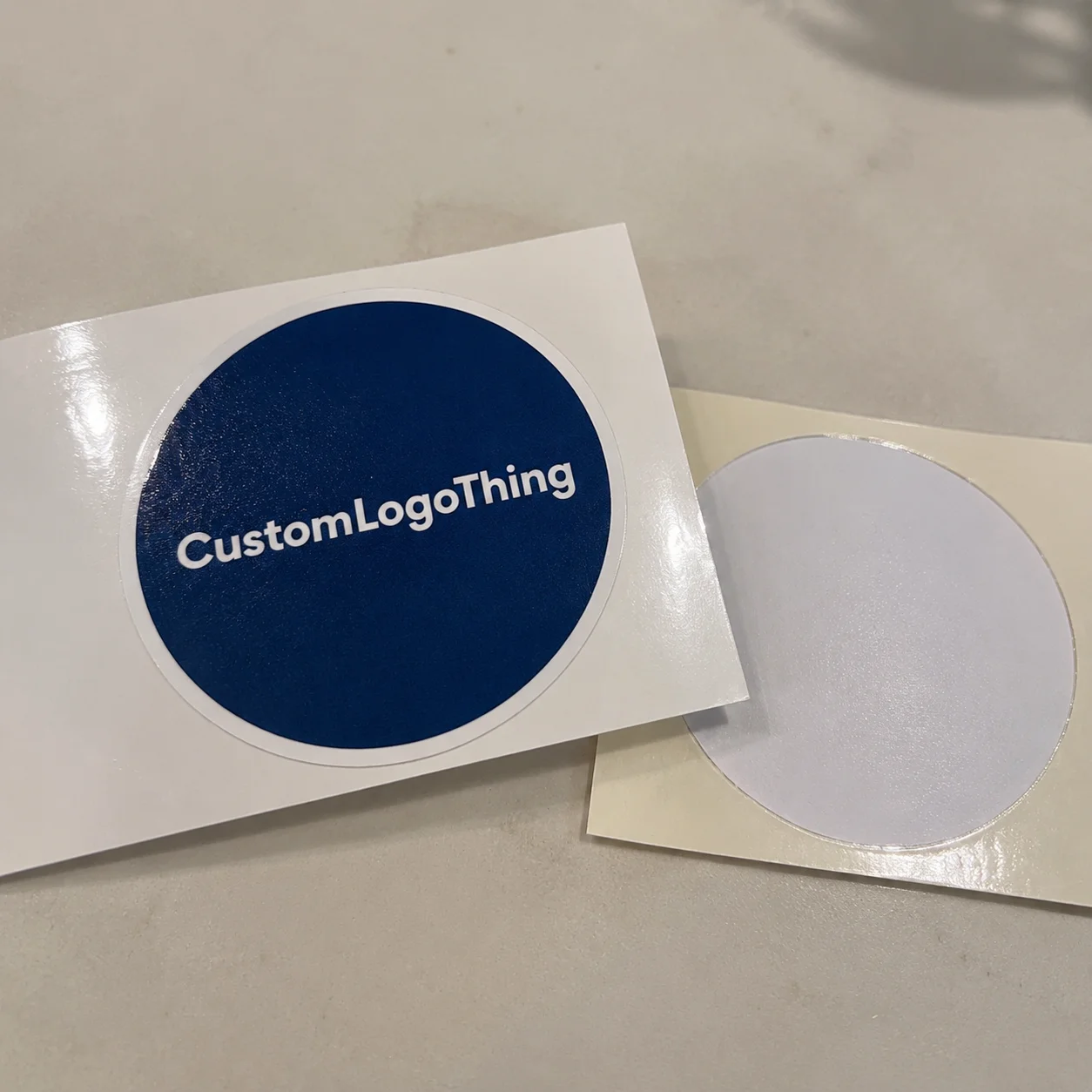
A shop owner wants the logo, hours, and a QR code on the inside of a glass door. Customers still need to read it from the sidewalk. That is where custom front adhesive stickers make sense: the printed message faces outward, while the decal sits safely behind the glass.
These stickers are built with adhesive on the printed face, not on the back. They apply to the inside surface of glass, acrylic, PET panels, refrigerator doors, display cases, or other clear surfaces. From outside, the design reads normally. From inside, you see the adhesive side, backing layer, or a less polished reverse view depending on the construction.
The useful part is not complicated. Glass protects the print. Rain, street dust, fingers, light abrasion, and most cleaning contact hit the window first instead of the ink. Not magic. Just better placement. For a storefront campaign, that can mean the difference between “still clean after a month” and “why does this already look tired?”
Common uses include retail hours, salon window graphics, QR code decals, office door branding, display case labels, car window permits, safety notices, membership decals, event signage, and short-run promotional signs. They also help when a business wants window graphics to match retail packaging, custom labels, hang tags, or other branded materials without paying for a full exterior sign system.
They are not the same as standard back adhesive stickers. A normal sticker applies to the outside of glass, so the print is exposed to weather and cleaning. Static clings use no adhesive and are easy to remove, but they can curl, fall, or lose grip on dusty glass. “Window decal” is too vague to quote safely. Adhesive direction matters. Treat it like a spec, not a footnote.
How Front-Facing Adhesive Works on Glass and Clear Surfaces
The layer stack usually looks like this: release liner, front-facing adhesive, printed film, ink, and sometimes white ink or laminate. On clear designs, the printer may reverse-print the artwork, add white ink behind selected areas, then finish the decal so it reads correctly after indoor application.
Reverse printing is the step buyers often miss. Artwork is mirrored during production. It may look backward in the file, but it reads correctly through the glass. If the proof does not show viewing direction, ask for a corrected proof. Guessing at orientation is how a perfectly paid invoice becomes a perfectly useless sticker.
White ink deserves more attention than it usually gets. Clear vinyl with only CMYK ink can look weak because light passes through the print. Bright daylight, reflections, tinted glass, and busy street backgrounds all reduce contrast. A spot white layer behind the logo, text, QR code, or key graphic makes colors stronger and improves readability. A full white flood coat creates a solid background, closer to a white sticker, while still allowing inside-glass application.
Surface compatibility depends on cleanliness and surface energy. Clean glass, acrylic, PET panels, display cases, and smooth plastic surfaces usually work well. Textured plastic, dusty glass, oily surfaces, silicone residue, anti-graffiti coatings, and some low-energy plastics can cause poor bond or edge lift. For high-visibility jobs, clean the area with residue-free glass cleaner or isopropyl alcohol, then let it dry fully before installation.
Removable adhesive is best for seasonal campaigns, pop-up events, rented retail spaces, and short promotions that run from a weekend to a few months. Permanent adhesive makes more sense for long-term branding, compliance labels, office doors, and decals that need to resist picking. Choose wrong and the sticker will punish you later. Removable adhesive on a five-year safety label may peel too soon. Permanent adhesive on a two-week sale can turn removal into a scraping session nobody wanted.
Inside-glass installation reduces weather exposure, but it does not remove every stress. Sunlight still passes through the glass. Heat can soften adhesive. Cleaning sprays can creep under edges if staff soak the window. For longer runs, ask whether the film has UV resistance, whether the adhesive is rated for glass, and whether the ink system is suitable for the expected lifespan.
Key Specs That Decide Durability, Clarity, and Stick Quality
Material choice controls appearance, stability, and price. Clear vinyl gives a see-through look and works well for minimal logos, small graphics, membership decals, and simple QR code labels. White vinyl gives stronger color and better contrast, but the background is visible. Polyester has better dimensional stability, which helps on small labels, electronics panels, or long-term indoor glass applications. Static cling is the no-adhesive option for very temporary placements, but it is less reliable on curved glass, cold surfaces, or dusty windows.
Adhesive strength should match the job. Low-tack removable adhesive is friendly for seasonal sale windows, temporary campaigns, and retail displays that change often. Medium-tack adhesive is the workhorse for storefront decals and office glass. Strong permanent adhesive is better for long-term service labels, security markings, or vehicle glass applications where peeling resistance matters. Ask for the adhesive type in plain language, not just “premium adhesive,” which is supplier poetry and not a spec.
Opacity and color control are where many window decals win or lose. Spot white keeps clear areas transparent while strengthening selected artwork. Double-hit printing can increase ink density for richer color. A full white flood coat blocks transparency and improves readability, especially for black text, QR codes, and bright logos. The tradeoff is cost and less of that clean clear-background look.
Finish matters too. Gloss makes retail graphics look punchier and works well for colorful promotional decals. Matte reduces glare, which helps on office doors or windows hit by direct lighting. Laminate adds scratch resistance and can help when the inside of the glass is cleaned often. For many indoor decals, laminate is optional. For display cases, doors near handles, or pieces that staff wipe daily, it is cheap insurance.
Size and shape need real thought. QR codes should usually be at least 1 inch square for close-range scanning, but 1.5 to 2 inches is safer for storefront use. Leave quiet space around the code, use strong contrast, and test it through glass. Large window graphics need installation planning because bubbles, crooked alignment, and trapped dust become painfully obvious at 18 by 24 inches and up.
Rounded corners resist peeling better than sharp corners. Kiss-cut sheets are easier when staff need to apply many small decals. Individually die-cut decals look cleaner for handouts, resale, membership kits, or packaged inserts. If the sticker supports product packaging or a broader brand rollout, match the finish and color target to the other printed materials so the window graphic does not look like the cousin nobody invited.
Pricing, MOQ, and Unit Cost: What Actually Moves the Quote
Pricing for custom front adhesive stickers depends on size, material, ink coverage, white ink layers, adhesive type, finish, cut complexity, order quantity, proofing requirements, and packing. Boring list. Also the list that decides whether the quote lands at a few cents or several dollars per piece.
| Sticker Type | Typical Use | Common Quantity | Rough Unit Range | Main Cost Driver |
|---|---|---|---|---|
| Small clear front adhesive decal | Membership decals, small QR codes, door marks | 500-5,000 pieces | $0.08-$0.35 | White ink and cut shape |
| Medium storefront window sticker | Hours, promos, salon or retail logos | 100-1,000 pieces | $0.35-$1.50 | Size, ink coverage, adhesive |
| Large layered window graphic | Campaign signage, display windows | 25-250 pieces | $2.00-$8.00+ | Material area and installation tolerance |
| Static cling alternative | Short-term indoor promotions | 250-2,500 pieces | $0.15-$1.25 | Thickness, size, print coverage |
Those ranges are realistic buying ranges, not universal law. A 2 by 2 inch clear decal with one white layer at 5,000 pieces may sit near the low end. A 6 by 8 inch reverse-printed decal with spot white, Custom Die Cutting, individual bagging, and split shipping will not. Funny how adding six requirements changes the price. Wild concept.
MOQ depends on the production method. Digital printing can support low quantities, sometimes 50 to 100 pieces, but the unit cost is higher because setup, proofing, material staging, calibration, and waste are spread across fewer stickers. At 500, 1,000, or 5,000 pieces, the per-unit price usually drops. Larger runs also make sense if the decal is part of a product packaging rollout, trade show kit, store launch, or multi-location promotion.
Sneaky cost drivers include custom shapes, full-bleed white ink, multiple artwork versions, rush production, individual poly bagging, barcode labels, roll versus sheet format, and split shipping. Color matching adds cost too, especially if the sticker has to match a brand orange or deep navy across Custom Printed Boxes, signage, hang tags, and other package branding materials.
To request a clean quote, provide the size, quantity, shape, material preference, indoor glass application, expected lifespan, artwork file, and whether the design must read from outside. If you need FSC-certified paper components for backing cards or broader retail packaging, ask early; the Forest Stewardship Council explains chain-of-custody basics, and suppliers need those requirements before quoting. For packaged kits or bundled display materials, ISTA protocols may matter if shipping performance has to be tested.
Do not compare quotes only by unit price. A cheaper sticker that curls, looks transparent, or produces a QR code nobody can scan is not a bargain. It is a tiny branded failure, and it will sit on your front door greeting customers like a bad decision with adhesive.
Process and Timeline From Artwork to Finished Stickers
The ordering process should be boring in the best possible way. Define the application, choose the material and adhesive, submit artwork, review a proof, approve production, print, cut, pack, and ship. If any of those steps sound optional, that is usually where problems start.
- Define the application: inside glass, read from outside, temporary or long-term, flat or curved surface.
- Choose specs: clear or white film, removable or permanent adhesive, spot white or flood white, gloss or matte finish.
- Submit artwork: vector logo files are best; raster images should usually be 300 DPI at final size.
- Review proof: check size, orientation, mirrored art, white ink placement, bleed, and cut line.
- Approve production: after approval, changes can mean restart fees or delays.
- Print and finish: production includes print passes, curing or drying, cutting, quality control, packing, and shipping.
Artwork prep deserves attention. Front adhesive stickers often require mirrored artwork, white ink callouts, safe margins, bleed, vector logos, and high-resolution images when photos are involved. A typical bleed is 0.0625 to 0.125 inch, depending on the supplier and cut method. Safe margins of at least 0.0625 inch help keep text, borders, and QR codes away from the cut edge.
Digital proofs show layout, size, cut line, viewing direction, and orientation. They do not always show true transparency, adhesive feel, or exact color density. Physical samples are better when color, white ink opacity, material clarity, or adhesive strength matters. If the sticker will sit on premium retail glass or a customer-facing door, a sample is not overkill. It is the cheap version of finding the problem.
Timeline varies by complexity. Simple digital orders may ship in 5 to 8 business days after proof approval. Custom die cuts, white ink testing, color matching, sampling, or larger runs often land closer to 10 to 18 business days. Rush production may be possible, but physics remains annoyingly undefeated. Ink still needs to cure. Material still needs to be cut. Shipping carriers still behave like shipping carriers.
Quality control should include more than counting pieces. Check orientation, adhesive side, color density, white ink registration, cut alignment, edge cleanliness, liner release, and visible scratches or dust trapped in the build. For roll labels, unwind direction may matter. For sheets, kiss-cut spacing affects how easily staff can peel and apply each decal. For individually cut pieces, packing can matter if corners get bent in transit.
Buyers can prevent delays by approving proofs quickly, sending usable files, specifying inside-glass application, confirming the design should face outward, and avoiding size changes after approval. If the order connects to broader Custom Packaging Products or launch kits, build in a few extra business days so stickers, inserts, and cartons arrive together instead of turning fulfillment into a scavenger hunt.
Practical callout: Ask your supplier to label the proof with “adhesive side,” “viewed from outside,” and “white ink layer.” Three labels can prevent three very expensive assumptions.
Common Mistakes That Make Window Stickers Look Cheap
The first mistake is ordering standard back adhesive stickers when the decal needs to be applied inside glass and read from outside. Adhesive direction is the whole point. If it is wrong, customers may see adhesive haze, backward artwork, or nothing useful at all.
The second mistake is skipping white ink on clear material. Without white backing, colors can look pale against reflections, daylight, or a busy street. Black text may still work if it is large enough, but brand colors often suffer. Clear does not automatically mean premium. Sometimes it means “why does my logo look like weak tea?”
The third mistake is making QR codes too small, low contrast, or too close to the edge. Test scanning at the actual viewing distance through glass. For storefronts, 1.5 inches square is often safer than 1 inch, especially when people scan from outside while reflections are present. Leave quiet space around the code and avoid placing it over transparent areas with changing backgrounds.
The fourth mistake is choosing permanent adhesive for short campaigns. Removal can become slow, messy, and expensive after the promotion ends. If the decal is for a weekend event, seasonal sale, landlord-sensitive retail space, or temporary display, removable adhesive usually makes more sense.
The fifth mistake is ignoring installation conditions. Dust, cleaner residue, cold glass, humidity, and rushed application create bubbles, edge lift, and crooked placement. Apply decals at moderate room temperature when possible, often around 60-80°F. Use a squeegee for larger pieces. Start from one edge, not the center, unless the installer has a specific wet-apply method and knows what they are doing.
The sixth mistake is overloading small stickers with text. Window decals work best when the message is readable from a few feet away. Hours, logo, URL, QR code, and one short line can work. Seven service categories, three phone numbers, and a paragraph of fine print will not. Save the tiny details for brochures, Custom Labels & Tags, product inserts, or staff handouts.
Next Steps Before You Order Window-Facing Stickers
Start with the glass, not the artwork. Measure the usable area, check whether door handles or frames interrupt the space, and decide the viewing direction. If the sticker applies inside and reads outside, say that in the first message to your supplier. Do not make them decode your intention from a screenshot. They are printers, not detectives.
- Measure the width and height of the available glass area.
- Confirm whether the decal applies inside glass and faces outward.
- Choose temporary, removable, medium-tack, or permanent adhesive.
- Photograph the installation surface if coating, tint, curve, or texture may affect adhesion.
- Decide whether the background should be clear, white, spot white, or fully backed with white ink.
- Send final artwork, desired delivery date, packing needs, and quantity in one complete request.
Test readability before spending money. Print the design on paper at actual size and tape it behind glass. Step outside. Stand where customers will stand. Try scanning the QR code. Check glare during the day if the window faces direct sun. Not glamorous. Very effective.
Decide the white ink strategy before asking for pricing. Clear background with spot white looks clean and modern, but it requires a proper white layer. White vinyl gives stronger color and often costs less than complex clear-plus-white construction. Full white backing improves readability but reduces transparency. Each option has a job. Pick the one that matches the viewing condition, not the one that sounds fanciest.
A strong quote request includes size, quantity, shape, material, adhesive type, indoor glass application, expected lifespan, artwork, cut style, packaging needs, and delivery timing. If the sticker is part of a larger packaging design system, mention the related colors and materials. Matching a window decal to custom printed boxes, hang tags, and retail packaging is easier before production than after everyone starts arguing over which red is “the real red.”
For high-visibility retail glass, vehicle windows, or customer-facing doors, order a small test run or sample first. Before full production, request a proof that shows adhesive side, viewing direction, mirrored artwork, cut line, and white ink placement. Custom front adhesive stickers are not complicated, but they are specific. Get those specs right, and the decal looks clean, reads correctly, and survives real use without wasting budget on the wrong build.
FAQ
What are custom front adhesive stickers used for?
They are used when a sticker needs to apply to the inside of glass but read clearly from the outside. Common uses include storefront hours, retail promos, QR codes, membership decals, vehicle window labels, office door signs, and display case branding. The glass helps protect the printed surface from weather, fingerprints, and casual scratching.
Are front adhesive window stickers removable?
They can be removable or permanent depending on the adhesive specified during ordering. Removable adhesive is better for seasonal promotions, temporary retail campaigns, event signage, and rental spaces. Permanent adhesive is better for long-term branding, safety labels, and applications where peeling resistance matters more than easy removal.
Do custom front adhesive decals need white ink?
Clear front adhesive decals often need white ink if the design must look bold and readable on glass. Without white ink, colors may appear translucent, especially in bright sunlight or against a busy background. White ink can sit behind specific artwork areas or cover the full design area as a flood layer.
How long does production take for front adhesive stickers?
Simple digital sticker orders can often ship within 5 to 8 business days after artwork and proof approval. Custom shapes, white ink, sampling, large quantities, color matching, or special packing can add time, often pushing production closer to 10 to 18 business days. The fastest way to avoid delays is to submit print-ready artwork and clearly state that the sticker applies inside glass and reads from outside.
How much do custom front adhesive window stickers cost?
Cost depends on sticker size, quantity, material, adhesive type, white ink, finish, cut shape, and packaging needs. Small simple decals can be very economical at volume, while large window graphics or layered white ink designs cost more per unit. For an accurate quote, provide size, quantity, artwork, application surface, expected lifespan, and whether the design must face outward through glass.