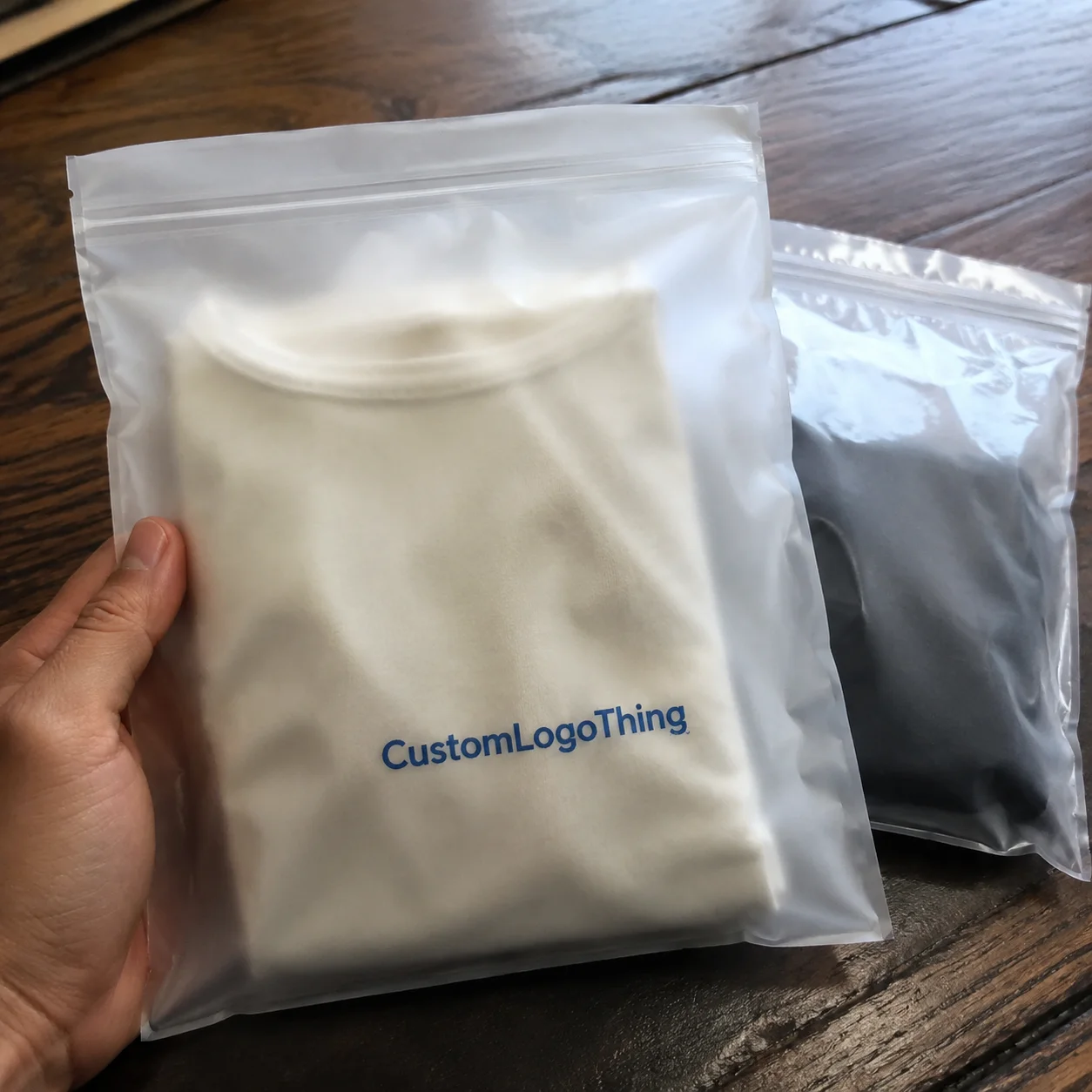
Custom frosted Zip Lock Bags occupy a useful middle ground in packaging. They soften the look of a product, carry branding cleanly, and still leave enough visibility to build trust at a glance. That combination is why they turn up in retail packaging, apparel, accessory kits, sample packs, and organized storage formats where the bag itself becomes part of the presentation.
Buyer interest usually starts with the product, not the artwork. The practical questions are more basic: how much protection is needed, how often will the bag be opened, how visible should the contents be, and how much weight will the bag need to carry without looking flimsy? Film thickness, zipper style, print coverage, and size all shape the answer.
Why custom frosted zip lock bags stand out on crowded shelves
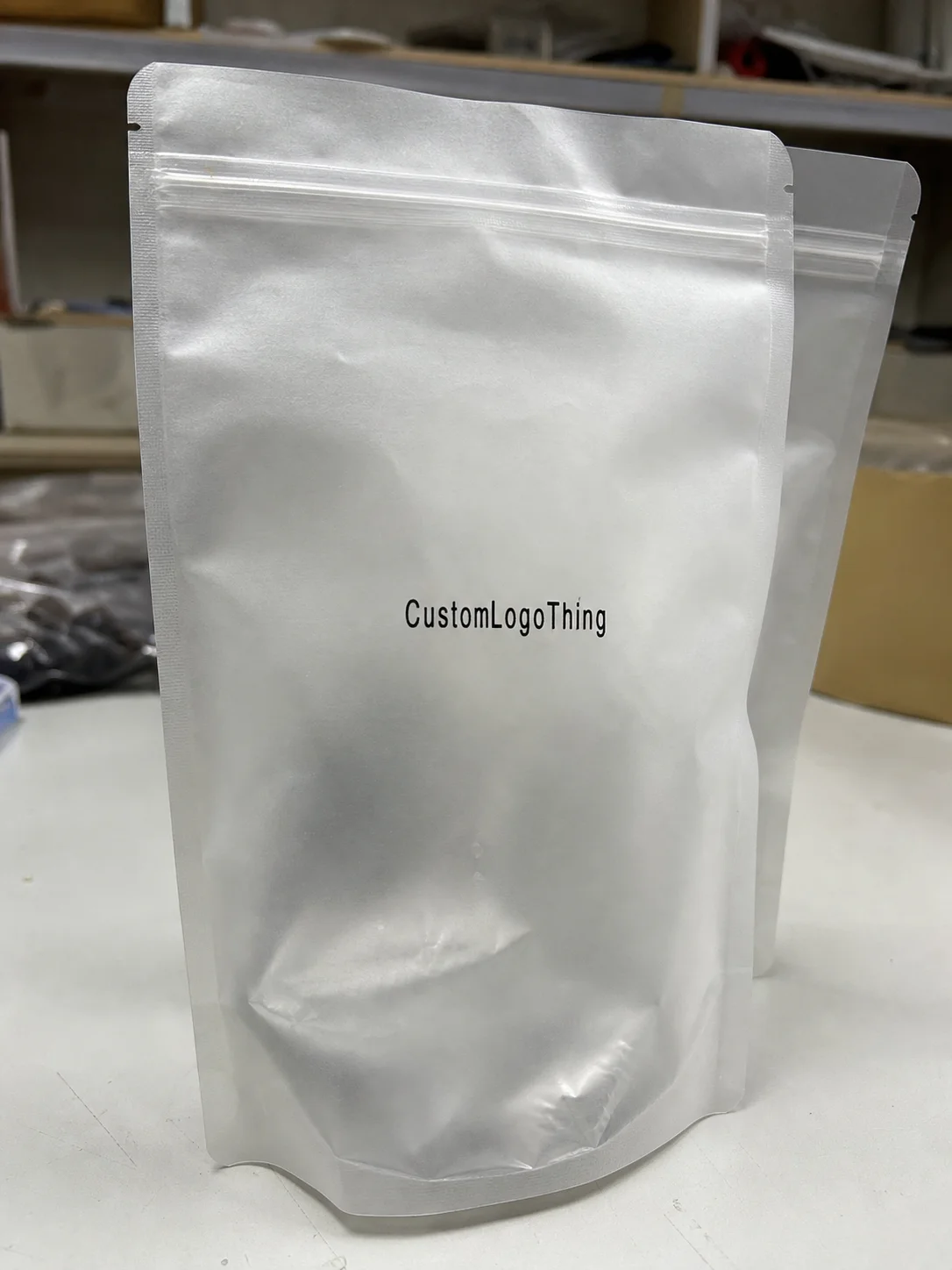
Frosted film changes the visual temperature of a package. It diffuses light, reduces glare, and gives the bag a softer, more controlled appearance that often reads as premium without looking ornate. On shelf, that matters. Packaging is judged in seconds, and texture does a surprising amount of work before a shopper reads a single line of copy.
Custom frosted zip lock bags are used across several categories for the same reason: they look polished while still being practical. Apparel brands use them for folded garments, socks, and accessories. Small retailers use them for jewelry, travel items, refills, and bundle sets. Teams also use them for sample kits and event giveaways where the packaging must look neat, carry a logo clearly, and survive more than one open-close cycle.
The right question is not whether the bag looks attractive in a mockup. It is whether the bag does three jobs at once: protect the product, present the brand, and remain easy to use. A bag that frustrates customers tends to be remembered for the wrong reason, even if the print looks sharp.
Compared with custom printed boxes or plain clear pouches, Frosted Zipper Bags often win on flexibility. Boxes create structure, but they add bulk and usually cost more to ship. Clear pouches give more visibility, yet they can look generic and show fingerprints more easily. A frosted bag sits between those two extremes and can be the better fit when the product does not need rigid packaging.
There is also a branding advantage that gets underestimated. A frosted surface creates a calmer backdrop for logos and product names, especially when the artwork uses contrast well. The finish feels deliberate. That can make even a simple package look more considered, which is often the whole point of branded packaging.
How the frosted finish and zipper closure actually work
Custom frosted zip lock bags are usually made from a plastic film formulated or treated to produce a milky, diffused appearance. Instead of reflecting light like a glossy pouch, the surface scatters it. That softens shine, reduces visual noise, and gives printed graphics a cleaner stage.
The zipper closure is the functional part customers actually touch. A good one should align cleanly, close without catching, and reopen without feeling loose after repeated use. That seems minor until you handle a run of bags with inconsistent zippers; then it becomes the first thing everyone notices. A bag may look premium in a photo and still feel disappointing in the hand if the closure is rough or unreliable.
One common misconception needs clearing up: frosted appearance is not the same as barrier performance. A bag can look refined and still offer only basic protection against dust, fingerprints, and minor abrasion. It does not automatically mean airtight, moisture-resistant, odor-blocking, or food-safe. Those properties depend on the film structure, seal quality, and intended application. If the product is sensitive, ask for the exact material spec instead of assuming the finish tells the whole story.
Printing also behaves differently on frosted surfaces than on clear ones. Dark colors usually read well. White ink often becomes the best option for logos because it creates contrast without relying on the background. Pale tints, thin strokes, and delicate scripts can disappear faster than buyers expect. If the logo matters, the artwork has to be designed for the material, not merely placed on top of it.
“A frosted bag can look premium on day one, but the real test is how it behaves after repeated opening, handling, and shipping—not just how it looks in a proof.”
Key factors that affect performance, branding, and durability
If you are comparing custom frosted zip lock bags, start with usable interior dimensions rather than the outside measurement on a quote sheet. Seams, zipper placement, and any gusset or fold reduce actual packing space. That gap sounds small on paper and becomes obvious in production, especially for folded apparel, boxed samples, or bundled accessories.
Thickness is the next major decision. A thinner film lowers material cost and may be perfectly adequate for light items. A heavier-gauge bag usually feels more substantial, resists wrinkling better, and holds up more confidently through transit. There is rarely a single “best” thickness. The sensible choice depends on product weight, expected reuse, and how rough the shipping path will be.
Branding changes the cost and the visual result at the same time. A single-color logo on frosted film is a very different job from a full-front print with multiple colors, fine text, and tight registration. Fine lines and low-contrast shades can fade visually against the frosted background. Packaging artwork should be evaluated under that condition early, not after the artwork has already been approved in a design file.
Durability is more than film gauge. Buyers should ask about zipper smoothness, seal strength, scuff resistance, and run-to-run consistency. A bag that looks attractive can still disappoint if the zipper drags, the seal line weakens, or the surface marks too easily during packing and freight. For products that are handled often, those details matter as much as the print.
Sustainability claims need a careful read. Some polyethylene-based structures may be recyclable depending on inks, closures, and local recycling systems, but not every pouch that “sounds recyclable” actually is in practice. Mixed materials can complicate end-of-life handling. For broader context on packaging materials and waste reduction, industry and public resources such as PMMI’s packaging resources and the EPA’s recycling guidance at epa.gov are useful starting points.
| Spec choice | Typical effect | Buyer tradeoff |
|---|---|---|
| Light-gauge frosted film | Lowers material cost, feels lighter | Less structure, more wrinkle risk |
| Medium-gauge film | Balanced hand feel and durability | Moderate cost, often the safest default |
| Heavy-gauge film | More premium feel, better abrasion resistance | Higher unit price and sometimes longer lead time |
| Minimal logo print | Lower decoration cost | Cleaner look, but less shelf impact |
| Full-coverage print | Stronger visual branding | Higher setup and ink cost, more proofing attention |
Custom frosted zip lock bags pricing: what drives unit cost and MOQ
The price of custom frosted zip lock bags usually moves with four main variables: size, film thickness, print complexity, and order quantity. Larger bags use more material. Thicker bags use more resin. More complex printing requires more setup and more careful inspection. Smaller orders spread those fixed costs across fewer units, which raises the unit price.
MOQ, or minimum order quantity, is the smallest run a supplier will produce economically. A low MOQ can be useful for testing a design or launching a limited program, but it does not remove setup charges. It simply distributes them over fewer pieces. That is why a 1,000-piece order often costs more per unit than a 5,000-piece order even when the spec is unchanged.
For a practical reference point, a simple mid-size frosted zipper bag may fall in the lower per-unit range on larger runs, while a heavier-gauge bag with white ink and fuller graphics can move higher, especially on small quantities. A realistic working range for simpler builds is often around $0.18-$0.28 per unit at 5,000 pieces, with more complex constructions pricing above that. Exact numbers depend on size, print coverage, zipper type, and the supplier’s production method.
These are the variables that usually move the quote the most:
- Bag size — bigger dimensions use more film.
- Film thickness — heavier gauge feels better but costs more.
- Print count — more colors mean more setup and more inspection.
- Special finishes — white ink, matte effects, or premium artwork handling can add cost.
- Quantity — higher volume usually lowers the unit price.
The cheapest quote is not always the cheapest total cost. If the zipper fails, if the artwork prints too faintly, or if the bag fits poorly and forces repacking, the actual cost shows up later in labor, wasted stock, and customer complaints. That holds true across packaging categories, whether you are buying bags or custom printed boxes.
Ask for pricing based on the finished size, final artwork, and intended use. Rough estimates help at the beginning, but they are not enough for a purchase decision.
Production steps, timeline, and lead time from artwork to delivery
The production path for custom frosted zip lock bags is simple on paper and more conditional in practice. It begins with a brief or spec confirmation: size, quantity, material thickness, zipper style, and print layout. Once those details are fixed, artwork can be reviewed for resolution, color count, safe area, and any elements that may disappear on the frosted surface.
Proofing usually takes longer than buyers expect. It is also where many avoidable problems get caught. Logo size may need adjustment. Colors may need more contrast. Thin type may need to be simplified. Those are small changes, but they matter because packaging errors tend to scale across the whole order.
A typical workflow looks like this:
- Confirm size, quantity, and bag style.
- Review artwork and print requirements.
- Approve digital or physical proof.
- Prepare film and printing plates or digital setup.
- Print, convert, seal, and inspect.
- Package for shipment and arrange transit.
Lead time depends on the order and the calendar. Simpler runs can sometimes move in roughly 12 to 15 business days after proof approval. More complex orders may take longer, and shipping time adds another layer. If the artwork is not final, expect revisions. If the order is large, expect a longer queue. If the factory is busy, the schedule moves again.
Planning backward from a launch date or stock threshold matters more than most buyers admit. Build room for revisions, transit, and a reorder buffer. Waiting until inventory is low often forces rush charges, and rush orders rarely improve packaging quality.
For buyers comparing packaging against transit demands, external references such as the ISTA shipping test standards can be useful, especially if the bagged product will move through a demanding distribution chain.
Step-by-step: how to choose the right frosted zipper bag spec
Start with the product itself. Measure the actual item, not the marketing dimension, and include inserts, hang tags, bundles, or folded edges that have to fit inside. A bag that looks close enough on a spreadsheet can turn awkward the moment packing begins.
Then define the presentation goal. Do you want maximum visibility, a softer premium look, or a stronger brand mark? The answer changes the spec. A highly visible bag may need more transparency and less print coverage. A more premium presentation may rely on white ink, restrained artwork, and stronger contrast. That is the practical side of packaging design: making the visual choice serve the product.
Next, choose thickness and closure type based on use. If the customer will reuse the bag frequently, a more confident zipper action and sturdier film are usually worth the extra cost. If the item is light and moves through the chain once, a simpler build may be enough.
Artwork comes after that. Make sure the file has the correct bleed, safe area, and logo contrast for a frosted background. Thin scripts and pale pastel colors often print weaker than expected. If the brand depends on a very specific shade, ask for a proof that reflects actual print behavior rather than assuming the screen version will match.
Finally, request a proof, verify dimensions and print placement, and approve production only after the details are checked. That may sound cautious. It is also how buyers avoid expensive surprises.
- Measure the product accurately.
- Define the presentation goal.
- Match thickness and zipper style to use.
- Build the artwork for the frosted surface.
- Check the proof line by line.
Common mistakes buyers make with custom frosted zipper packaging
Buying by outside dimension alone is one of the most common errors. A bag can look large enough on paper and still be too tight once seams, zipper placement, and gusset structure are taken into account. That problem usually shows up after packing has already started, which is the most expensive time to discover it.
Artwork that fades into the frosted finish is another frequent issue. Low-contrast logos, thin strokes, and pale colors may look elegant in a mockup, but they can disappear in the finished print. If the logo is critical to the packaging, it needs enough contrast to survive real lighting conditions.
Lead time gets underestimated often. Buyers sometimes assume that once artwork is sent, the bags are basically already moving. They are not. Proofs, revisions, production queue time, and freight all affect delivery. If a launch date is fixed, the schedule should include a cushion rather than a wish.
Price-only decisions can backfire too. A flimsy zipper or overly thin film can hurt the customer experience even if the quote looks attractive. Skipping the sample or proof check creates a different problem: size or print issues get discovered after the full run, when the fix is far more expensive.
The strongest packaging buyers ask difficult questions before production begins. That habit saves money later.
Expert tips and next steps before you place an order
Before requesting a quote for custom frosted zip lock bags, gather three things: exact product dimensions, artwork files, and the intended use case. Those details allow a supplier to recommend a more realistic spec and provide pricing that is actually useful.
Ask directly about film thickness, zipper type, and print placement. A supplier can usually tell you whether a lighter gauge is enough or whether the product would benefit from a sturdier build. That kind of guidance is far more practical than choosing from a catalog image and hoping the result works.
When samples are available, compare them under real lighting. Hold them in your hand. Open and close the zipper several times. Check whether the logo is readable from a normal viewing distance. Those checks reveal more than a digital proof ever can.
Plan a modest inventory buffer if the bag is tied to a retail launch or seasonal program. Running short and rushing a reorder usually costs more than carrying a little extra stock. Once the final spec is approved, keep it as the master reference so repeat orders stay consistent.
For buyers managing a broader packaging program, it helps to keep bag specifications and artwork references organized alongside other branded items and Custom Packaging Products. That keeps version control cleaner when the same packaging is reordered months later.
Used well, custom frosted zip lock bags can protect the product, sharpen the presentation, and keep the buying process simple. Focus on the product, the handling conditions, and the final visual goal, and the packaging usually ends up feeling polished from the first shipment onward.
What are custom frosted zip lock bags used for most often?
They are commonly used for retail presentation, branded product packaging, sample kits, accessories, apparel, and organized storage. The frosted finish gives a cleaner premium look while the zip closure adds convenience for repeat opening and closing.
Are custom frosted zipper bags good for product protection?
They offer basic physical protection from dust, handling, and minor surface scuffs. For moisture, odor, or barrier-sensitive products, the exact film structure and closure performance should be confirmed before ordering.
What affects the cost of custom frosted zip lock bags the most?
The biggest pricing drivers are bag size, film thickness, print complexity, and order quantity. MOQ and setup charges can raise unit cost on smaller orders, while larger runs usually lower the per-bag price.
How long does production usually take for frosted zip lock bags?
Lead time depends on proof approval speed, artwork readiness, order size, and current production schedule. Shipping method also affects delivery timing, so it is smart to plan extra time before a launch or restock date.
What should I send to get an accurate quote for custom frosted zip lock bags?
Provide the finished bag size, estimated quantity, artwork file, closure preference, and any special requirements such as white ink or extra thickness. The more exact the specification, the easier it is to get realistic pricing and avoid revisions later.