If you are sourcing clear zip lock Bags with Logo private label, the bag is doing more work than many buyers expect. A clean zipper line, the right film clarity, and a logo placed with intent can make the same product feel retail-ready instead of generic, and that difference shows quickly once the item is in a buyer’s hand or under store lighting.
From a packaging buyer’s point of view, the bag is not just a container. It shapes presentation, protection, and brand recognition at the same time, and with clear packaging the contents are part of the design whether you planned for that or not. That creates opportunity, but it also leaves less room for sloppy spec decisions.
What Clear Zip Lock Bags Do for Private Label Brands
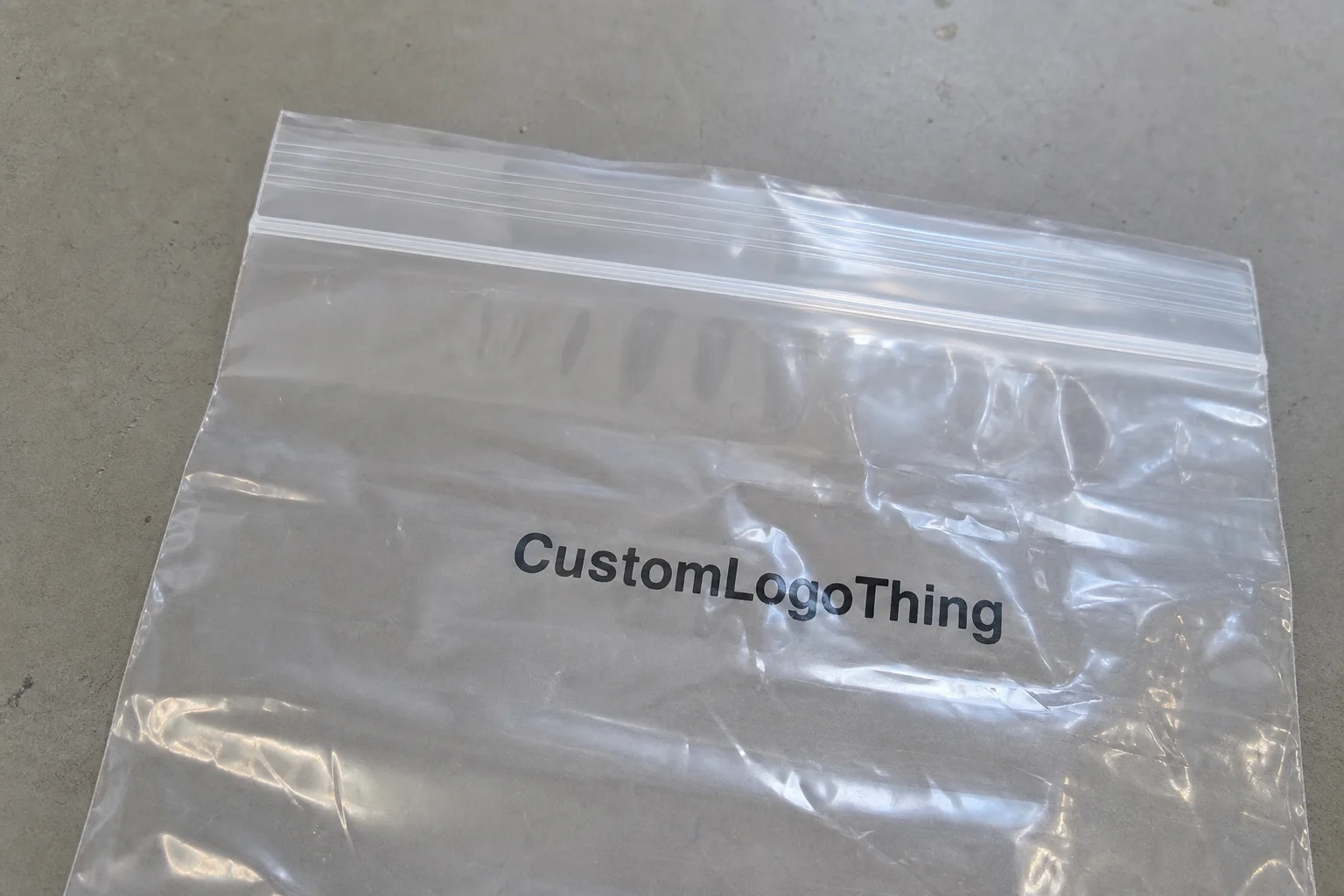
A clear zip lock bag is a transparent flexible pouch or bag made from packaging film, usually polyethylene or a comparable material, with a reclosable zipper closure built into the top. For private label use, the bag may carry a printed logo, a product description, a barcode, or a branded insert card so the package feels owned by the brand instead of looking like a generic supply item.
That distinction matters because transparent packaging creates a very immediate shelf impression. If the seal is crooked, the film is hazy, or the print is badly placed, the product can look cheap even when the item inside is perfectly good. Strong clarity, consistent zipper action, and a well-positioned logo can do the opposite: they make lightweight products, sample packs, accessory kits, refill items, and promotional goods feel considered.
Brands use clear zip lock Bags with Logo private label for a few practical reasons:
- Product visibility so the buyer can see the contents immediately.
- Retail presentation that reads cleaner than an unmarked stock pouch.
- Unitization for bundled parts, kits, or small add-ons.
- Tamper awareness because any opened zipper is easy to spot.
- Reclosability for customers who open, use, and store the item again.
There is also a real difference between stock zipper bags and custom private label packaging. Stock bags are fine when the priority is basic containment, but once shelf appeal, recurring brand identity, or retail differentiation matters, the bag specification starts becoming part of the selling strategy. That is usually where branded pouches and Custom Zip Lock bags earn their place.
In practice, the strongest use cases are products that are light to medium weight, need visibility, and benefit from a clean resealable format. Think accessory packs, refill items, promotional giveaways, parts sets, craft supplies, or small consumer goods that need to look organized rather than thrown together.
How Branding and the Zip Closure Work Together
The construction of the bag shapes how the branding reads. Film thickness, seal width, zipper profile, and the amount of flat print area all influence the final look and the way the package performs in handling, shipping, and display.
On clear film, branding methods usually fall into a few common paths. Some jobs use direct surface printing, often flexographic printing for larger runs. Others use pressure-sensitive labels or printed insert cards when the film itself is too clear, too small, or too variable for efficient direct print setup. For certain simple applications, a well-designed label can be a smarter choice than forcing full coverage print where it does not belong.
Transparency changes the branding strategy in a practical way. Because the product is visible, the logo, typography, and supporting text need stronger contrast and smarter placement than they would on an opaque pouch. A tiny logo near the bottom edge can disappear once the bag is filled, while a centered mark with enough white space usually stays readable after the product is inside.
The zipper closure matters just as much. A good zipper should feel consistent when opened and closed, and it should not require wrestling to get a clean seal. Depending on the product, a single-track zipper may be enough, while some applications benefit from a double-track feel for a more secure reclosure. Film gauge and seal integrity also affect whether the bag feels crisp or flimsy in hand, which is why buyers should think about closure performance and print together instead of treating them as separate decisions.
Private label packaging works best when the bag style stays consistent across product lines. A unified film clarity, zipper feel, and logo treatment help a brand look organized, even if the contents vary. That consistency is one reason many buyers eventually standardize their Custom Printed Zipper bags rather than sourcing a different stock package for every SKU.
“The cleanest bag specs are the ones where the print, film, and zipper all serve the product instead of competing with it.”
Cost, Pricing, MOQ, and What Changes the Quote
Pricing for clear zip lock bags with logo private label usually comes down to a small set of variables that all move the quote in different directions. The biggest ones are bag size, film gauge, print complexity, number of colors, how many sides get printed, zipper style, and total quantity ordered.
MOQ, or minimum order quantity, has a direct effect on unit cost because setup costs do not disappear just because the run is small. Plate charges, print setup, proofing, and production changeovers all need to be absorbed into the order, so a 5,000-piece run will usually carry a higher per-unit cost than 20,000 pieces, even if the bag itself is simple.
For a rough sense of how cost can move, plain Clear Zipper Bags may land lower than branded private label versions, especially when the print is simple and the quantity is healthy. Once you add multiple print colors, a custom insert, or features such as a hang hole or tear notch, the price starts climbing because more materials and more production steps are involved.
| Bag Option | Typical Order Size | General Unit Cost Range | What Drives the Difference |
|---|---|---|---|
| Plain clear zipper bag | 5,000+ | $0.04-$0.10 | Simple film, basic zipper, no print setup |
| Printed private label zipper bag | 5,000+ | $0.10-$0.28 | Artwork prep, plates, print colors, closer spec control |
| Thicker or feature-added bag | 10,000+ | $0.18-$0.40 | Heavier film, hang hole, tear notch, or stronger zipper |
Those are broad ranges, not promises. A smaller run with a complex design can price above those bands, and a larger run with simple artwork can land below them. Accuracy depends heavily on finished dimensions, artwork readiness, and whether the bag needs specialty features like rounded corners or a retail hang hole. Shipping weight can also rise once film thickness increases, especially on larger bags.
One of the most common buyer mistakes is asking for a quote before the dimensions are locked. A bag that fits loosely can look wasteful, while one that is too tight can stress the zipper and slow packing. A good quote is tied to the actual product size, not just a rough idea of the package.
For related brand presentation items, many teams also compare packaging with Custom Labels & Tags to see whether direct bag printing or a separate label system gives them a better mix of cost and flexibility.
Process and Timeline: From Artwork to Production Steps
Once a buyer sends a request for clear zip lock bags with logo private label, the production process usually follows a predictable order. The supplier confirms the size, material, zipper style, print method, and artwork requirements, then prepares proofs or mockups for approval before any real production starts.
The workflow generally looks like this:
- Confirm product dimensions and packaging target.
- Review artwork and placement.
- Prepare a proof or mockup.
- Approve color, layout, and copy.
- Create tooling or printing plates if needed.
- Run the print job and convert the bags.
- Inspect and pack finished product.
The slowest part is often not the machine time. It is usually artwork cleanup, color matching, and waiting for approval. Clear film is less forgiving than many buyers expect, because registration and contrast issues show up quickly once the package is filled and held under bright light. A logo that looks fine on a computer screen can read very differently on transparent packaging, which is why a pre-production sample or proof is valuable.
For simple runs with ready-to-print artwork, lead time might sit around 12-15 business days after proof approval. More customized orders, larger quantities, or bags with added features often need longer, especially if tooling is required or if the line is already booked. If the order needs unusual sizing, a complex multi-color print, or specialty finishing, the timeline usually stretches rather than shrinks.
Material availability can also shift schedules. A plant can have the artwork approved and still wait on the right film gauge, zipper profile, or packaging-grade resin. That is not unusual; it is simply the reality of production planning. Buyers who leave enough time for proofing, correction, and the actual run usually avoid the expensive scramble that comes from trying to rush a custom package through the line.
For broader packaging standards and testing references, organizations like the ISTA and EPA are useful benchmarks when you are thinking about shipment durability and material responsibility.
Key Spec Decisions Before You Order
If you want the package to look polished, a few specs need to be locked down early. Start with dimensions, film thickness, zipper type, print area, and whether you want a glossy or matte finish. Even on clear packaging, finish affects how reflections hit the bag under retail lighting, and that can change how easy the logo is to read.
Product weight and shape matter more than many teams expect. A small, dense item can behave very differently from a larger lightweight kit. If the bag is oversized, the contents may shift around and create a sloppy look. If it is too snug, the zipper can feel forced and the seal line can get stressed during packing or repeated opening. That is especially true for retail-ready zipper bags that need to look good straight out of the shipper.
Use environment is another practical filter. Moisture exposure, dust, repeated opening, or handling on a retail floor can all change what “good enough” means for the film and closure. A bag for sample distribution does not need the same finish tolerance as a bag that will be opened and reclosed by a customer many times.
Compliance can also shape the design. If the private label bag has to support barcodes, warning text, lot numbers, ingredient panels, or other product information, that content needs to be placed carefully so it remains readable once the bag is filled. Clear film can make small text look sharper or harder depending on what sits behind it, so artwork should be tested against the actual product rather than judged in isolation.
Before you commit, ask whether the logo will still read clearly when the bag is full. A transparent package changes the way black, white, and spot colors behave. A strong white underprint may improve visibility, while a minimalist one-color logo may look cleaner on some products than on others. There is no single right answer; it depends on the product, the shelf, and the brand position.
For buyers who want to maintain brand consistency across multiple SKUs, a spec sheet is a small thing that saves a lot of trouble. Once the bag size, zipper style, film gauge, and print rules are documented, reorders become easier and the package stays consistent from batch to batch.
Common Mistakes That Raise Cost or Hurt Shelf Appeal
One of the easiest mistakes is choosing the bag size before the final product dimensions are actually confirmed. That sounds minor, but it is one of the fastest ways to create waste or a stressed zipper line. The package should fit the product with enough room to pack efficiently, but not so much room that the bag looks empty and inflated.
Another common issue is placing important text in areas that become hard to read once the bag is filled. On clear film, reflective glare, the product color, and the shape of the contents can all interfere with visibility. A logo that looked sharp in the proof may become less legible on the shelf if it sits over a busy or uneven background.
Timing errors cause headaches too. If the buyer leaves no room for proofing, corrections, and approval loops, the job often gets pushed into rush territory. That can add cost and shorten the window for quality checks. Many decent packaging plans get damaged more by schedule pressure than by the packaging spec itself.
There is also a practical packaging mistake that people often overlook: not testing the zipper with the actual contents. A sharp-edged item, a heavier fill, or a bulky insert can interfere with closure performance. What looks fine with an empty sample may not behave the same way once the real product is inside.
And the lowest quote is not always the best buy. If the film feels flimsy, the zipper lacks consistency, or the print looks washed out, the package can undercut the brand position you are trying to build. A slightly better spec often pays for itself in fewer packing issues, fewer complaints, and a better first impression.
Expert Tips for a Cleaner, More Retail-Ready Result
If you want the package to look cleaner on shelf, design for contrast first and decoration second. The logo should remain readable against the contents, not just on a white artboard. That usually means testing a few placements and comparing how each one reads with the real product inside.
Whenever possible, request a mockup on clear film. A screen preview can hide color problems that show up immediately in physical form. Transparent packaging is unforgiving in a useful way: it reveals layout issues quickly. That is why a print proof for clear zip lock bags with logo private label is not a formality; it is a quality check.
Film gauge should match handling conditions. A lighter gauge can work well for sample bags and low-stress items, but a heavier gauge often feels better for products that are shipped, stacked, or opened multiple times. The goal is not to overbuild every bag. It is to choose the thickness that gives the right balance of flexibility, feel, and protection.
If the bags will be filled manually, think about pack-out early. Easy-open zippers, predictable dimensions, and a clean top seal can save time on the line. That matters more than many teams realize, especially on repetitive hand-filling jobs where small improvements add up over thousands of pieces.
Finally, keep one repeatable private label spec sheet for future orders. Include dimensions, gauge, zipper style, print area, finish, and artwork rules. That document becomes the baseline for reorders and helps keep your clear zip lock bags with logo private label looking consistent across seasons and product batches.
For teams that care about sustainable sourcing, FSC-certified paper inserts or packaging components may also be part of the broader conversation, and the FSC site is a good place to understand those standards better.
Next Steps for a Better Private Label Bag Spec
The cleanest way to get a useful quote is to send a simple spec sheet instead of a loose idea. Include the finished dimensions, product weight, zipper preference, film thickness target, print needs, and expected quantity. If you already have photos of the filled product, send those too. They help the supplier judge fit, fullness, and how much visible space the logo will really have.
Artwork should be in a usable format, and any barcode, compliance, or placement requirement should be flagged early. That keeps the proof process focused and reduces the chance of last-minute corrections. If you are comparing options, ask for pricing at a few quantities so you can see where MOQ starts to improve unit cost. Sometimes the jump from one volume band to the next makes a bigger difference than buyers expect.
Use the final approved spec as the reordering standard. That is the easiest way to keep your branded zipper bags consistent over time, avoid unnecessary variation, and make sure each batch matches the last one closely enough to support the same retail presentation.
Built carefully, clear zip lock bags with logo private label can do a lot of quiet but important work: showing the product, reinforcing the brand, and giving the customer a package that feels deliberate from the first look to the last reclose.
How do clear zip lock bags with logo private label differ from plain stock bags?
Custom private label bags are built around brand visibility, consistent presentation, and better shelf impact than plain stock packaging. They are usually ordered to specific dimensions and print requirements instead of being selected from a generic inventory item.
What affects the price of clear zip lock bags with logo private label most?
The biggest cost drivers are size, film thickness, print complexity, number of colors, and order quantity. Smaller orders usually cost more per bag because setup and production overhead are spread across fewer units.
How long does production usually take for custom clear zipper bags?
Timeline depends on artwork approval, tooling needs, print method, and order size. The fastest jobs are usually those with ready-to-print artwork and simple specs; custom sizes or complex print jobs take longer.
Can I print a logo clearly on transparent zip lock bags?
Yes, but the design should be built for contrast because the product inside can affect how the logo reads. Many buyers use strong logo placement, limited colors, or inserts to improve visibility on clear film.
What should I send when requesting a quote for private label zipper bags?
Send dimensions, product weight, desired film thickness, zipper style, print area, artwork files, and target quantity. Including photos of the filled product helps the supplier recommend the right size and avoid fit issues.


