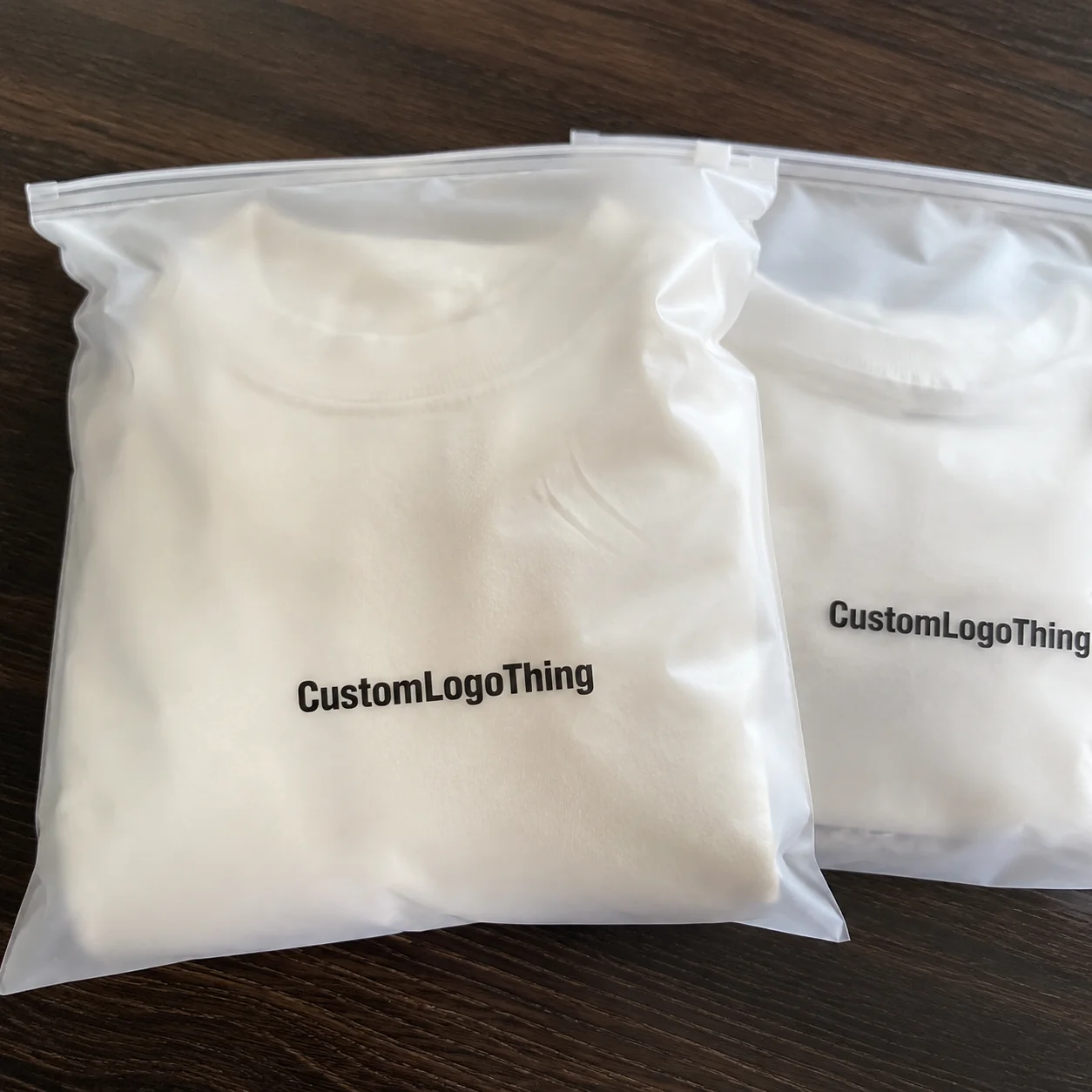
Two cookie brands can use nearly identical recipes, yet one looks more expensive before the customer even breaks the seal. That is the quiet commercial power of custom Frosted Zipper Bags for bakery brands: the matte haze softens glare, hides minor handling marks, and frames the bake like a small boutique display case instead of a loose snack in plastic.
Bakery packaging is judged fast. On a retail shelf, at a farmers market table, or in an online listing thumbnail, shoppers cannot smell the brown butter, feel the snap of the biscotti, or taste the caramelized edge. They read freshness visually. Texture, color, portion size, label clarity, and closure quality all become proxies for whether the product is worth $6.99 or $12.99.
What Custom Frosted Zipper Bags for Bakery Brands Actually Do
Custom Frosted Zipper Bags for bakery brands are resealable plastic pouches with a translucent matte finish, printed branding, and a press-to-close zipper. They are commonly used for cookies, biscotti, granola clusters, mini pastries, brownie bites, confectionery-style bakery items, and dry mixes. The best versions are not just attractive bags. They solve several practical problems at once: presentation, resealing, controlled product visibility, portion size, and post-opening storage.
Frosted film sits in a useful middle ground. Clear film shows everything, including crumbs, scuffs, condensation marks, and awkward product stacking. Metallized film protects well but hides the product, which can reduce impulse appeal for colorful bakery items. Kraft-look packaging gives a natural cue, though it often needs a window if the product’s texture is the selling point. Frosted plastic reduces visual noise while still letting shoppers see enough cookie edge, chocolate drizzle, granola color, or powdered sugar to feel confident.
That matters because bakery is sensory, but the buying decision often starts with sight. A shopper looking at four bags of shortbread may not know your butter quality. They can see whether the pouch stands straight, whether the label looks considered, and whether the zipper suggests the product will survive a few openings at home.
Packaging reality check: resealability does not magically extend shelf life, but it can improve the customer’s experience after opening. That experience is part of perceived freshness.
Use these pouches for dry or semi-dry products first. Crisp cookies, granola, biscotti, nut-and-bakery snack blends, coated bites, and dry mixes usually make sense. Hot-filled items, very oily pastries, high-moisture cakes, refrigerated products, or recipes needing aggressive oxygen and moisture control may require upgraded film structures, trays, inserts, or a different packaging format altogether.
How Frosted Zipper Bakery Pouches Work From Film to Seal
A frosted bakery pouch is more engineered than it looks. A typical structure includes an outer printable layer, a frosted or matte finish, heat-sealed side edges, a zipper track, and either a flat bottom, bottom gusset, or side gusset depending on capacity. Add-ons may include a tear notch, hang hole, rounded corners, or a clear window-style area if the artwork is designed to reveal more product.
The frosted effect is usually achieved through film selection, surface treatment, or a matte coating. It is not simply “cloudy plastic.” Good frosted packaging controls translucency so the pouch looks intentional rather than fogged. Too much haze can make the product look distant; too little, and the bag behaves like ordinary clear film with a soft finish.
The zipper track deserves more attention than it usually gets. Press-to-close zippers help customers reseal cookies and snacks after opening, which can reduce staling compared with a one-time tear-open package. For crunchy bakery goods, moisture barrier often matters more than oxygen barrier. A cookie that absorbs humidity can lose its snap quickly, even if oxidation is not the main failure point. Softer items may need a different balance, particularly if aroma retention, fat migration, or sugar bloom is a concern.
Format changes the buying signal. Stand-up pouches create shelf presence and are often used for 6-ounce to 16-ounce retail packs. Flat zipper bags cost less, pack efficiently in mailers, and work well for smaller portions, sample packs, or subscription boxes. Side-gusset bags handle larger volumes, but they require more careful artwork planning because panels fold, expand, and distort graphics once filled.
The tension is simple: visibility sells, protection preserves. More window area can move product faster, especially for visually appealing bakes. Weak barrier choices, however, can shorten the best-eating window if the film structure is wrong. Artwork must also leave room for nutrition facts, ingredients, allergen statements, net weight, barcode quiet zones, lot coding, and best-by labels. On frosted surfaces, barcode readability should be checked before committing to a full run.
Key Specs Bakery Brands Should Decide Before Ordering
Start with the product, not the bag catalog. A 4-ounce cookie pouch, a 12-ounce granola bag, and a two-pack brownie pouch may share the same brand identity, but their dimensions should not be guessed from weight alone. Cookies create stacked height. Biscotti can puncture corners. Brownie bites may need extra headspace to avoid smearing the inside film.
Useful starting specs include filled product weight, maximum product height, target shelf life, selling environment, and filling method. Hand-filled bakery pouches often need more generous openings than machine-filled pouches. If staff are filling 500 bags before a weekend market, an opening that is 10 mm too narrow becomes a labor problem, not just a packaging detail.
Bag style comes next: stand-up pouch or flat bag, bottom gusset width, zipper placement, top seal area, tear notch, hang hole, rounded corners, and whether the bag must fit shelves, shipping boxes, or display baskets. A pouch that looks excellent standing alone may waste space in a 12-pack shipper. Retail packaging has to behave in groups.
Film thickness affects both feel and cost. Many snack-style zipper pouches fall somewhere around 3 mil to 5 mil total thickness, though actual structures vary. Thicker film can feel more premium and resist puncture better, but it raises material cost and may complicate recyclability claims depending on the layers and resin mix. If sustainability messaging matters, ask early. The EPA’s recycling guidance is a useful reminder that consumer recycling claims need to be practical, local, and specific.
Artwork needs its own discipline. Frosted plastic softens colors, so high-contrast logos, bold typography, and controlled ink coverage usually perform better than pale beige-on-cream branding. Light colors can disappear against shortbread, flour dust, or pale pastry. Tiny ingredient copy is another common failure. If your pouch is 5 inches wide, the nutrition panel cannot be treated like a poster reduced to miniature scale.
- Required label areas: ingredients, allergens, net weight, business address, and nutrition facts where required.
- Retail mechanics: barcode quiet zones, hang hole clearance, best-by coding space, and batch sticker placement.
- Food-contact check: confirm the inner film layer is approved for direct contact with dry or semi-dry baked goods.
- Fit test: pack real product, not tissue paper. One extra millimeter of cookie height can affect zipper closure.
If you already use Custom Packaging Products such as labels, sleeves, or custom printed boxes, keep the design system consistent. Frosted pouches should feel like part of the same package branding family, not a separate experiment.
Pricing, MOQ, and Unit Cost: What Drives the Quote
Pricing depends less on the phrase “custom bag” and more on measurable variables: size, film structure, thickness, order quantity, print method, number of colors, finish, zipper type, and add-ons. A small flat pouch with one-color print is not in the same cost category as a stand-up frosted pouch with full-color artwork, spot gloss, upgraded barrier, tear notch, and hang hole.
MOQ is where bakery buyers often get surprised. Low minimums are useful for seasonal flavors and startup runs, but unit cost rises because setup, prepress, plates or digital preparation, and machine time are spread across fewer bags. Higher-volume runs generally reduce unit cost, though they also tie up cash and storage space.
| Option | Typical Use | Cost Pattern | Buyer Watchout |
|---|---|---|---|
| Digital printed frosted zipper pouch | Short runs, seasonal SKUs, frequent artwork changes | Often higher unit cost at low quantities, lower setup burden | Color matching can vary by film and finish; proof carefully |
| Plate-based printing | Core SKUs and higher-volume bakery lines | Setup costs upfront, better unit economics at scale | Artwork changes after plate creation can become expensive |
| Standard frosted stock film | Most dry bakery goods with moderate shelf-life needs | Usually more efficient than custom material structures | Confirm barrier level and food-contact suitability |
| Upgraded barrier frosted pouch | Aroma-sensitive, crisp, or longer shelf-life products | Higher material cost, sometimes higher MOQ | Do shelf-life testing with the real recipe |
As a practical range, small custom zipper pouch programs can land anywhere from roughly $0.18 to $0.65 per unit depending on quantity, size, print coverage, film, and freight. Very short runs, specialty finishes, or unusual barrier structures can go higher. Larger repeat orders may come down meaningfully, but only if the specs remain stable.
Calculate the cost per filled product, not just the cost per empty pouch. If a $0.32 pouch helps support a $9.99 retail price for premium cookies, keeps the display cleaner, and improves repeat use after opening, it may outperform a $0.19 pouch that looks flimsy or fails to reseal well. Not always. Margin math depends on product price, spoilage, labor, freight, and sales velocity.
Before requesting a quote for custom Frosted Zipper Bags for bakery brands, prepare dimensions, target quantity, product weight, artwork status, filling method, shelf-life goal, delivery location, and retail compliance requirements. Then compare quotes on equal terms. Lowest unit price is not useful if one quote includes thinner film, weaker zipper quality, excluded freight, or no prepress support.
Process and Timeline From Sample Bag to Finished Run
The ordering path is usually predictable: product measurement, packaging recommendation, quote, artwork template, proofing, sample or mockup review, production approval, manufacturing, quality check, and shipment. The delays rarely come from only one place. More often, five small decisions each add two days.
The timeline starts before production. Missing nutrition panels, undecided flavor names, unclear dimensions, late barcode files, or artwork that ignores seal areas can add more delay than printing. A bakery brand trying to launch three flavors at once should approve one master dieline first, then adapt artwork by SKU. That keeps the zipper, gusset, barcode, and label zones consistent.
During sampling, test the pouch like a buyer and like an operations manager. Fill it with real product. Open and close the zipper 10 times. Check whether crumbs enter the seal zone. Stand it upright under store lighting and natural market light. Lay it flat in a shipping box. Read the ingredient panel from arm’s length. Scan the barcode if possible. If you sell online, photograph the pouch against the same background used for your product listings.
Quality control should not stop at print color. Check zipper alignment, top seal width, side seal consistency, gusset expansion, tear notch placement, scuffing, odor, and whether the finished bag matches the approved dimensions. A small amount of production tolerance is normal in flexible packaging, but the tolerance needs to be acceptable for the way the pouch is filled and displayed.
Typical lead time depends on order quantity, print method, custom film requirements, production capacity, holiday demand, freight method, and proof approval speed. A straightforward reorder can be much faster than a first run, while a new structure with custom film and multiple SKUs needs more breathing room. Launches, subscription box deadlines, retail buyer meetings, and holiday flavors should be planned with buffer because packaging delays can freeze inventory decisions.
Rush orders are possible in some cases, but speed narrows choices. Faster timelines usually favor standard film, fewer SKUs, finalized artwork, and simple finishes. Late copy changes are expensive in time even if they seem small. One allergen line added after proof approval can reopen the file, the proof, and the schedule.
For larger distribution, transport testing may also matter. The International Safe Transit Association publishes package testing procedures used across the shipping industry. A frosted pouch may be the primary package, but the master carton, dividers, and shipper still decide whether fragile bakes arrive intact.
Common Mistakes That Make Bakery Zipper Bags Underperform
The biggest mistake is choosing bag size by estimated product weight instead of actual product geometry. Weight does not reveal air gaps, stack height, brittle edges, or breakage risk. Five ounces of flat cookies and five ounces of chunky granola behave nothing alike inside a pouch.
Artwork is the second trap. Frosted film rewards contrast. Low-contrast beige logos, tiny ingredient copy, delicate photography, and pale flavor labels often fade into the product behind them. Too much transparent space can also backfire if the product settles unevenly or crumbs collect in the bottom corners.
The zipper zone is another quiet failure point. If fill levels crowd the zipper, customers struggle to reseal the bag. If labels or artwork sit too close to the track, the top of the pouch looks visually cramped. A clean zipper area makes the package feel easier to use, which matters after the first opening.
Barrier mismatch may be the most expensive mistake because it is not obvious on day one. A pouch can look beautiful in photos and still let crisp products soften too quickly or let aromatic products fade. Film structure should be selected for the recipe, not only for appearance. Moisture, fat, sugar coatings, inclusions, and storage temperature all influence performance.
Seal contamination deserves a blunt mention. Crumbs, sugar crystals, oils, seeds, and toppings can interfere with clean sealing or zipper function. Bakery teams should think about filling workflow: scoop size, funnel use, cooling time, crumb control, and whether staff can fill at speed without dusting the seal area.
Startups also tend to over-customize too early. Six pouch sizes, eight flavor artworks, metallic ink, and specialty matte effects may look impressive, but packaging inventory becomes dead cash if sell-through is unproven. A phased program is safer: one core size, one or two best-selling SKUs, then expansion once reorder timing is clear.
Retail compliance errors create avoidable friction. Missing allergen callouts, weak barcode placement, no clear best-by coding area, or net weight printed in the wrong hierarchy can slow retail acceptance. If your bakery brand is moving from markets to stores, check label requirements before printing thousands of bags.
Most packaging failures are not dramatic defects. They are small mismatches between product behavior, customer handling, and bag specification. That is why frosted bakery zipper pouches should be treated as a spec-driven purchase, not just a design choice.
Next Steps: Build a Bakery Bag Spec You Can Actually Order
A good bakery bag brief is short, specific, and testable. Before contacting a supplier, gather product dimensions, filled weight, target shelf life, desired order quantity, number of SKUs, artwork files, retail requirements, shipping deadline, and any sustainability preference. If you have past packaging data, include it: current bag size, spoilage issues, customer complaints, or sell-through notes.
Rank three priorities in order. Freshness protection. Visual appeal. Unit cost. Sustainability preference. Shelf presence. Speed to market. You can want all six, but the quote improves when the supplier knows which tradeoffs are acceptable. Many brands lose time by asking for premium, low-cost, low-MOQ, fast, highly sustainable, full-color packaging without ranking the constraints.
Test two or three bag sizes with real product. Photograph each pouch upright, flat, in a shipping carton, and under the lighting where it will be sold. If the pouch will sit near custom printed boxes or other branded packaging, compare them side by side. Package branding should feel intentional across the full product line.
Request a dieline early and design around the mechanics. The zipper, seals, gusset folds, barcode, tear notch, hang hole, and coding space are not decorative obstacles; they are the working parts of the package. Treating the pouch like a blank poster leads to crowded copy and awkward production compromises.
A phased ordering strategy usually protects cash. Start with a core size and best-selling flavor, then expand into seasonal designs after you understand sell-through and reorder timing. If you want examples of how packaging choices affect presentation and brand consistency, review the Case Studies before building your own brief.
When contacting a packaging supplier, ask for custom frosted zipper bags for bakery brands, then attach dimensions, quantity, artwork status, product details, target shelf life, and delivery deadline. The right pouch is not the fanciest one; it is the one that protects the bake, sells the texture, and can be reordered without drama.
FAQ
Are custom frosted zipper pouches safe for direct bakery food contact?
They can be safe when made with food-contact-approved inner film layers. Ask the supplier to confirm that the inside layer is suitable for direct contact with dry or semi-dry baked goods. Do not assume every decorative frosted plastic bag is designed for food contact.
What bakery products work best in frosted resealable zipper bags?
They are a strong fit for cookies, biscotti, granola, brownie bites, candy-coated bakery items, and dry mixes. Very oily, hot-filled, frozen, refrigerated, or high-moisture products may need a different film structure or packaging format. Testing matters because texture and shelf-life goals vary by recipe.
How much do custom frosted zipper bags for bakeries usually cost?
Unit cost depends on size, thickness, quantity, print method, zipper type, finish, freight, and barrier requirements. Higher quantities usually reduce unit cost, while short runs, specialty finishes, and multiple SKUs can raise it. Request quotes using the same specifications so comparisons are based on equal film, print, and freight assumptions.
What is the typical lead time for custom frosted bakery zipper bags?
Lead time varies based on artwork readiness, print method, order size, custom materials, proof approval speed, and shipping distance. Sampling and artwork revisions often add time before production begins. Brands launching seasonal bakery products should build in extra buffer for proofing, testing, and freight.
Can frosted zipper bags be printed with full-color bakery branding?
Yes, many frosted zipper bags can support full-color logos, flavor names, illustrations, barcodes, and required label information. Designs should use strong contrast because the frosted background softens colors compared with glossy white film. Ask for a proof or sample to check legibility before approving a full production run.