Most Food Brands Overpay Because the Bag Looks Simple
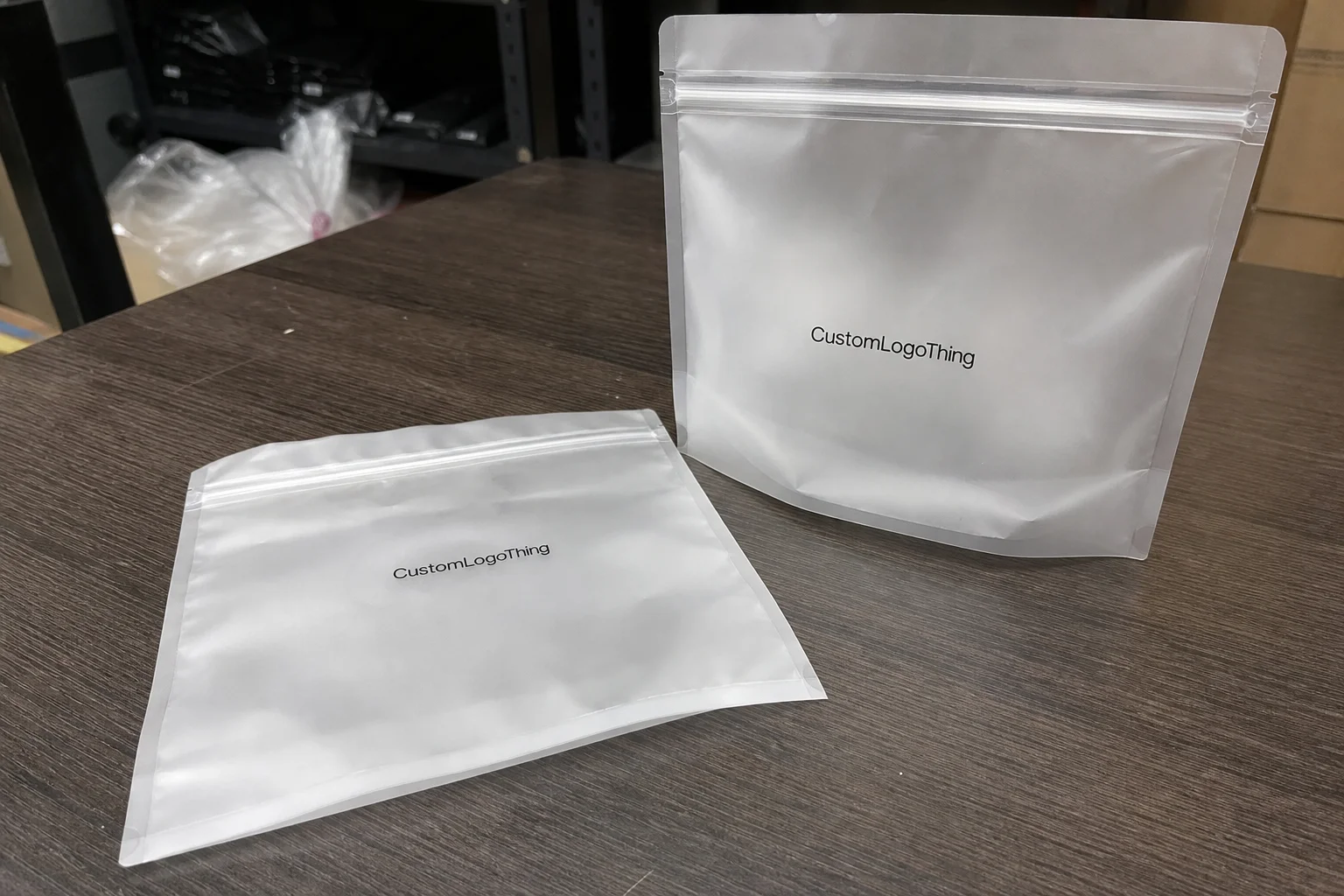
Frosted Zipper Bags Unit Cost for food sounds straightforward until film thickness, zipper quality, printing, size, barrier needs, and MOQ start pulling the quote in different directions. A “simple frosted bag” can turn into five very different prices, and that does not automatically mean one supplier is guessing or padding the job.
A snack brand, candy company, coffee sampler, supplement startup, pet treat line, or frozen food brand often starts with the same request: a clean matte bag with a resealable zipper and a logo. That is a useful starting point. It is not yet a production specification.
The quote changes quickly once the bag needs direct food contact, a bottom gusset, full-color print, a hang hole, a tear notch, high moisture barrier, a degassing valve, freezer tolerance, or enough seal strength to survive filling and shipping. Those features are not cosmetic afterthoughts. They affect material selection, machine setup, waste allowance, inspection time, and freight weight.
Frosted plastic bags are not one product category with one price. The matte effect may come from the film itself, a surface treatment, or a laminated structure. A basic frosted PE zipper bag is not the same product as a PET/PE laminated stand-up pouch with white ink backing and upgraded moisture barrier. They may look similar in a product photo. They will not protect, print, seal, or price the same way.
For many food buyers, Frosted Zipper Bags are a practical middle option. They give the package a softer, more premium appearance without moving into rigid jars, tins, cartons, or complicated display kits. They ship flat, store efficiently, and work well for short runs, flavor testing, and repeat programs where the same size can carry several SKUs.
Hard truth: the cheapest bag is often the one that makes the product look like a sample pack from a trade show. Fine if that is the goal. Usually it is not.
The useful way to price these bags is to separate appearance from performance. The frosted finish helps the shelf presentation. The material structure, closure, seals, and print method decide whether the bag can do the real work.
What Frosted Zipper Bags Actually Do for Food Packaging
Frosted zipper bags are flexible plastic bags or pouches with a translucent matte appearance and a resealable zipper closure. The product inside remains partly visible, but the finish softens glare and gives the pack a cleaner retail look. That balance is why they are common for dried fruit, nuts, candy, granola, cookies, tea, coffee samples, spices, powdered mixes, gummies, pet treats, and some frozen items when the film structure is chosen correctly.
Buyers usually choose them for five practical reasons: partial product visibility, a premium matte texture, tidy shelf presentation, lightweight shipping, and reusable closure. The zipper is especially useful for foods consumed over several servings because it gives the customer a reasonable way to close the package after opening.
They work well when the food benefits from being seen but still needs branded space. Colorful candy, textured granola, tea blends, spice mixes, and pet treats can all look stronger in a frosted pouch than in a fully clear bag with a label applied by hand. The product remains part of the presentation, but the packaging feels more intentional.
They are not automatically right for every food. Oily products can stain, migrate, or attack the wrong film. Strong-aroma products may need barrier layers to prevent flavor loss or odor transfer. Liquids require a different engineering conversation. Heavy powders can stress zippers, corners, and heat seals. Frozen foods need materials that can tolerate low-temperature storage without cracking, curling, or losing seal strength.
Style also affects price. A flat zipper bag is usually the simplest and least expensive structure. A stand-up pouch costs more because the bottom gusset uses additional film and converting steps, but it presents better on the shelf. A side-gusset format may suit larger fills or bulkier products, though it adds more material and production complexity.
Retail display details belong in the quote from the start. Hang holes, euro slots, tear notches, rounded corners, bottom gussets, case pack requirements, seal width, zipper placement, and print coverage all affect usability and cost per piece. Treating those features as late-stage add-ons is a reliable way to invite rework.
Food-Safe Specs That Change Performance and Price
The core specification variables are material structure, thickness, bag size, zipper type, seal strength, gusset style, finish, print method, and barrier level. Change one or two and the unit cost can move. Change five and the supplier is no longer quoting the same bag.
Material structures buyers should understand
Common materials include PE, PP, PET/PE laminated structures, and recyclable mono-material options where available. PE is flexible and widely used in zipper bags. PP can offer better stiffness or clarity in some formats. PET/PE laminations are common for printed food pouches because PET provides structure and a strong print surface while PE supports heat sealing.
For moisture, oxygen, aroma, or grease control, a higher-barrier structure may be needed. Coffee, spices, supplements, powdered mixes, and premium snacks often require more protection than a basic frosted poly bag can provide. If the product loses quality from humidity, oxidation, light exposure, or aroma transfer, say so during quoting. Guessing at the barrier requirement is how a good-looking package turns into stale inventory.
Food brands should also ask what documentation is available for food-contact materials. In the U.S., suppliers commonly refer to FDA food-contact suitability for the relevant material, while broader packaging validation may reference ASTM methods or ISTA transport testing. For transport performance, the International Safe Transit Association is a useful reference. For recovery, waste, and sustainable packaging considerations, the EPA packaging materials guidance is also worth reviewing.
Thickness, zipper, and closure details
Thin bags can be suitable for small dry snacks, candy samples, and lightweight inserts. Heavier gauges are usually better for dense, sharp, or premium products. Many flexible food bags fall around 2.5 mil to 5 mil equivalent thickness, depending on the material structure, but laminated pouches are often specified by layer construction or total microns rather than a single mil number.
Zipper choice matters more than most buyers expect. A standard press-to-close zipper works for many dry snacks. A stronger resealable zipper may be better for heavier fills or repeated opening. Child-resistant zippers can be required in regulated categories. Slider zippers are possible in some applications, though they add cost and may be unnecessary for smaller food pouches.
Seal strength is the quiet detail that decides whether the bag behaves during filling and distribution. A pouch that looks good but fails during heat sealing, freezing, carton packing, or shipment is not affordable. It is branded scrap.
Printing and artwork realities
Print options include one-color logo printing, spot color printing, full-color process print, white ink backing, and mixed matte/gloss effects. Frosted translucent film can mute colors, especially pale tones. Dark logos, strong typography, and high-contrast artwork usually reproduce better on this style of packaging.
White ink backing is often used behind artwork on translucent film when the brand needs color to appear more solid. Without it, colors may look softer or slightly washed out because the product and film tone influence the final appearance. That can be attractive if designed intentionally; it can also look underprinted if no one planned for it.
Registration tolerance deserves attention. Tiny borders, hairline text, and design elements that must land perfectly against a zipper or gusset increase production risk. Flexible film moves. It stretches under tension. Heat changes behavior during sealing and converting. Good dielines reduce surprises, but they do not suspend physics.
Add-ons should be selected for a reason. Tear notches improve opening. Hang holes and euro slots support peg display. Rounded corners can improve handling and appearance. Degassing valves may be needed for coffee. Bottom gussets improve shelf presence. Each feature affects tooling, setup, converting time, or material use, so each one belongs in the price conversation.
Frosted Zipper Bags Unit Cost for Food: What Moves the Quote
Frosted Zipper Bags Unit Cost for food depends on order volume, bag dimensions, material structure, film thickness, print complexity, zipper type, finishing details, and freight. A 3-inch by 5-inch candy bag and an 8-inch by 12-inch stand-up pouch for granola are not minor variations of the same item. They are different packages with different material consumption, print layouts, and converting requirements.
Small custom runs usually carry a higher cost per piece because setup, proofing, press time, waste, and machine adjustment are spread across fewer bags. Larger orders can lower unit cost, but they increase inventory risk. Packaging math is always a tradeoff between price efficiency and flexibility.
For very small tests, stock frosted zipper bags with labels can be the cheapest path upfront. A brand may use blank bags and apply labels for a market test, event, pop-up sale, or early product validation. Fully custom Printed Frosted Zipper Bags usually become more efficient once quantities rise because the decoration is built into the package instead of added by hand or with a label applicator.
| Option | Typical use | Common quantity range | Cost profile | Tradeoff |
|---|---|---|---|---|
| Stock frosted zipper bag + label | Samples, farmers markets, early tests | 100-2,500 pieces | Lower setup cost, higher labor per unit | Less premium; label edges show |
| Digitally printed custom frosted bag | Controlled launches, short retail runs | 1,000-10,000 pieces | Moderate setup, flexible artwork | May cost more per bag than long-run print |
| Flexographic or gravure printed pouch | Repeat programs, larger retail volumes | 10,000-50,000+ pieces | Better bulk pricing at scale | Higher setup charges and longer planning |
| Laminated high-barrier frosted pouch | Coffee, spices, supplements, premium snacks | 5,000-50,000+ pieces | Higher material and converting cost | Better product protection and shelf appeal |
Exact pricing depends on the approved specs, but practical range framing helps. Small stock bag projects with labels may land around $0.20-$0.75 per finished bag before labor becomes a serious factor. Short-run custom printed pouches often land around $0.35-$1.50+ per unit depending on size, print method, and material. Larger repeat orders can move lower, sometimes into the $0.12-$0.45 range for simpler structures at volume. Specialty barrier films, valves, thick structures, complex shapes, and small runs push higher.
MOQ is the lever buyers challenge most. Lower MOQ helps with testing, but every bag costs more. Higher MOQ lowers unit cost, but it can leave cartons of packaging sitting after an ingredient change, label update, formula adjustment, or retailer requirement. If the finished product has a six-month shelf life, buying two years of bags to save four cents each may not be the smartest win.
Quote drivers include custom size tooling, full-color print, white ink, specialty barrier film, thicker material, gusseted construction, zipper upgrades, rush production, freight, and inspection requirements. Tooling fees and setup charges may be listed separately or built into the unit price. Ask how the quote is structured so the comparison is clean.
Compare total landed cost, not only the lowest per-bag number. Total cost includes the product, setup charges, artwork or dieline work, proof fees, shipping, taxes or duties if applicable, and over/under tolerance. Also confirm whether food-contact suitable material is included. Comparing a thin non-barrier bag against a laminated frosted food pouch is not comparison shopping; it is a spreadsheet pretending two different products are equal.
MOQ Ranges and Order Quantities That Make Sense
Most food brands fall into one of three buying paths: stock frosted bags plus labels for very small tests, custom Printed Frosted Zipper Bags for launch quantities, or larger custom runs for repeat retail programs with predictable usage.
MOQ changes by print method and structure. Digital printing can support smaller runs because it avoids some plate costs and handles versioning more easily. Flexographic and gravure production usually reward larger quantities because plates, cylinders, ink preparation, machine setup, calibration, and press time need enough volume to make financial sense.
For a prototype or pilot run, hundreds to a few thousand pieces may be realistic if stock bags and labels are acceptable. For a first commercial custom order, 2,500-10,000 pieces is common across many flexible packaging projects, although the exact number depends on supplier capability, bag size, and material. For repeat replenishment, 10,000-50,000+ pieces may unlock better bulk pricing.
Size grouping helps. If four flavors can use one shared bag size, the brand usually gains buying power and simplifies inventory. If every flavor has a different width, height, gusset, zipper, and fill weight, complexity multiplies. Sometimes separate sizes are necessary. Often they are branding preference dressed up as packaging strategy.
Versioning affects cost as well. Multiple flavors, net weights, languages, nutrition panels, barcode positions, allergen statements, and retailer compliance marks may require separate artwork setups or print runs. Confirm legal and compliance copy before production. Reprinting because the net weight, barcode, or allergen statement changed is an expensive way to learn packaging discipline.
Estimate monthly bag usage before choosing MOQ. The basic formula is projected monthly units sold, plus samples, damage allowance, filling waste, and safety stock. If projected sales are 1,500 units per month and production takes 4-7 weeks after proof approval, the reorder point should be set well before the final case is opened.
A practical path is to start with a controlled test quantity when demand is uncertain, prove sell-through, then optimize the second run. The second order is often where better forecasts, cleaner artwork, and refined material specs produce real savings without overcommitting inventory.
Process and Timeline from Artwork to Finished Bags
Flexible packaging production follows a sequence for a reason. Skip steps and problems usually appear later, often after filling dates, retailer deadlines, or launch plans are already in motion.
- Confirm bag style, width, height, gusset, zipper, and thickness target.
- Review food-contact requirements, storage temperature, fill weight, and shelf-life concerns.
- Prepare or confirm the dieline.
- Finalize artwork, nutrition panel, barcode, ingredients, and compliance text.
- Approve the digital proof or pre-production sample.
- Source film or produce the required material structure.
- Print, dry or cure inks, laminate if required, and convert into bags.
- Inspect seals, zipper function, print placement, dimensions, and count.
- Pack, carton, palletize if needed, and ship.
Before quoting, buyers should have the basics ready: bag width, bag height, bottom gusset if needed, quantity, artwork file, food type, fill weight, storage conditions, zipper preference, delivery location, and required documentation. If the exact thickness is unknown, say so. A packaging supplier can suggest a starting point based on product weight, storage, and handling.
Proofing options vary. A digital proof checks layout, text, color callouts, barcode placement, and dieline fit. A pre-production sample can help confirm color, material feel, frosting level, zipper performance, and how the product looks through the film. A production sample may be useful for larger orders, higher-risk structures, or retail programs where approval chains are stricter.
Quality-control checks should include dimensions, seal integrity, zipper alignment, zipper open-and-close feel, print registration, ink rub resistance where relevant, gusset formation, and carton count. For food packaging, contamination control and material traceability also matter. For programs with demanding shipping conditions, pack-out or transit testing may be needed before full rollout.
Timelines depend on the production path. Stock frosted bags with labels may ship in a few business days to two weeks if inventory and artwork are ready. Custom digitally printed bags often take a few weeks after proof approval. Fully custom laminated printed bags can take 4-8+ weeks depending on material sourcing, print method, curing, converting, inspection, and freight. International freight or pallet shipment can add time, especially when customs paperwork or port congestion enters the picture.
Common delays are predictable: incomplete artwork, missing nutrition panels, unclear fill weight, undecided zipper style, late proof approval, and bag size changes after dieline approval. Changing size after artwork approval is not a small edit. It can affect tooling, print layout, material use, zipper placement, and carton pack.
Rush orders may be possible, but food-safe material sourcing and ink curing cannot always be compressed without consequences. Faster production may increase freight cost, reduce sampling options, or limit available materials. If there is a launch date, work backward from filling, shipping, retailer delivery, and internal quality checks. Reorder points should be based on usage rate plus production lead time, not optimism.
How to Request a Quote Without Wasting a Week
A good quote request does not need to be elaborate. It needs to be complete enough for the supplier to price the actual bag instead of offering a vague estimate that changes once production details appear.
Use this checklist before asking Custom Logo Things for pricing:
- Bag size: width, height, and bottom gusset if needed.
- Bag style: flat zipper bag, stand-up pouch, or side-gusset bag.
- Quantity: ask for two or three breaks, such as 2,500, 5,000, and 10,000 pieces.
- Food type: dry snack, candy, coffee, tea, spice, powder, frozen item, pet treat, or another product.
- Fill weight: ounces, grams, or pounds per bag.
- Storage conditions: room temperature, refrigerated, frozen, humid, or high-heat handling.
- Barrier needs: moisture, oxygen, aroma, grease, light, or basic protection.
- Print: one-color logo, spot colors, full-color process, white ink backing, or label only.
- Finish: frosted, matte, soft-touch look, clear window, or mixed finish.
- Closure: standard zipper, stronger zipper, child-resistant zipper, or slider if applicable.
- Retail features: hang hole, euro slot, tear notch, rounded corners, degassing valve, or case pack.
- Delivery: zip code or postal code, required delivery window, and freight preferences.
Send artwork as AI, editable PDF, EPS, or another high-resolution vector format when possible. Screenshots from a website are not production artwork. If only a logo file is available, send it, but say whether layout support, dieline setup, or print-ready preparation is needed.
Ask for a budget quote and a production-ready quote if specs are still being refined. A budget quote helps compare directionally. A production-ready quote locks down material, dimensions, print, MOQ, proofing, tolerances, and delivery. They serve different purposes. A rough estimate should not be treated like a purchase order.
Custom Logo Things can help narrow specifications, suggest food packaging materials, and avoid overbuilding the bag when a simpler structure will do the job. Not every food product needs a premium laminated pouch with every feature added. Some do. Many simply need the right size, reliable zipper, suitable food-contact film, clean print, and sensible reorder planning.
Use plain decision rules. Choose stock plus label for tiny tests. Choose custom digital print for controlled launches with multiple flavors or uncertain demand. Choose larger custom print runs for recurring sales volume, stable artwork, and better cost per piece. If retail display matters, price the full feature set before approving the cheapest option.
For accurate pricing, include the details that determine frosted zipper bags unit cost for food: size, quantity, food type, print method, barrier needs, zipper style, and delivery location. A photo can start the conversation, but the final quote should be built from specifications.
FAQ
What is a realistic frosted zipper bag unit cost for food packaging?
Unit cost depends on size, material, print method, thickness, zipper type, finishing features, and quantity. As a broad reference, small stock bag projects with labels may fall around $0.20-$0.75 per finished bag, while short-run custom printed pouches may land around $0.35-$1.50+ per unit. Larger repeat orders can price lower for simpler structures. Always compare total landed cost, including setup, proofing, shipping, and any tooling charges.
What MOQ should I expect for custom frosted zipper food bags?
MOQ varies by print method, material structure, and bag size. Stock frosted bags with labels can support smaller tests, sometimes in the hundreds. Fully custom printed frosted zipper bags usually require higher quantities, especially for laminated structures or specialty barrier films. If several flavors can share one bag size, MOQ and inventory planning usually become easier to manage.
Are frosted zipper bags safe for direct food contact?
They can be, but only when made with food-contact suitable materials. The supplier needs to know the food type, storage conditions, fill weight, and whether the product touches the bag directly. Dry snacks, candy, tea, spices, and similar products often work well with the right structure. Oily, wet, frozen, heavy, or high-aroma foods may need upgraded film, stronger seals, or additional barrier layers.
Do frosted zipper bags cost more than clear zipper bags?
Often they do, especially if the frosted appearance comes from specialty film, surface treatment, or laminated construction. The difference may be small for basic stock bags and larger for fully custom printed food pouches. Frosted bags can improve perceived value for premium snacks, confections, teas, coffee samples, and specialty foods, but clear bags or labeled stock bags may be better for early budget testing.
How long does production take for custom frosted zipper bags for food?
Stock frosted bags with labels may be ready in a few business days to two weeks when inventory and artwork are available. Custom digitally printed bags often take a few weeks after proof approval. Fully custom laminated printed bags commonly take 4-8+ weeks, depending on material sourcing, printing, curing, converting, inspection, and freight. Fast proof approval and complete artwork are the simplest ways to avoid preventable delays.


