The Frosted Zipper Bags unit cost for pet treat brands is easy to misread if you look only at the invoice. Packaging affects shelf appeal, freshness, handling, and how often a customer finishes the bag and buys again. A slightly higher-cost pouch can still improve the economics if it protects the product better and supports a stronger shelf price.
For pet treats, the product type matters. Biscuits, training treats, soft chews, and jerky all behave differently in transit and on shelf. Some need stronger seals. Some need better puncture resistance. Some need a finish that looks premium without making the product look hidden.
The useful test is simple: how the bag fills, seals, ships, displays, and reopens at home. That sequence matters more than the mockup alone. For broader context on how packaging choices affect production and presentation, the packaging case studies are a practical reference point.
Why frosted zipper bags can lift pet treat margins without changing the recipe
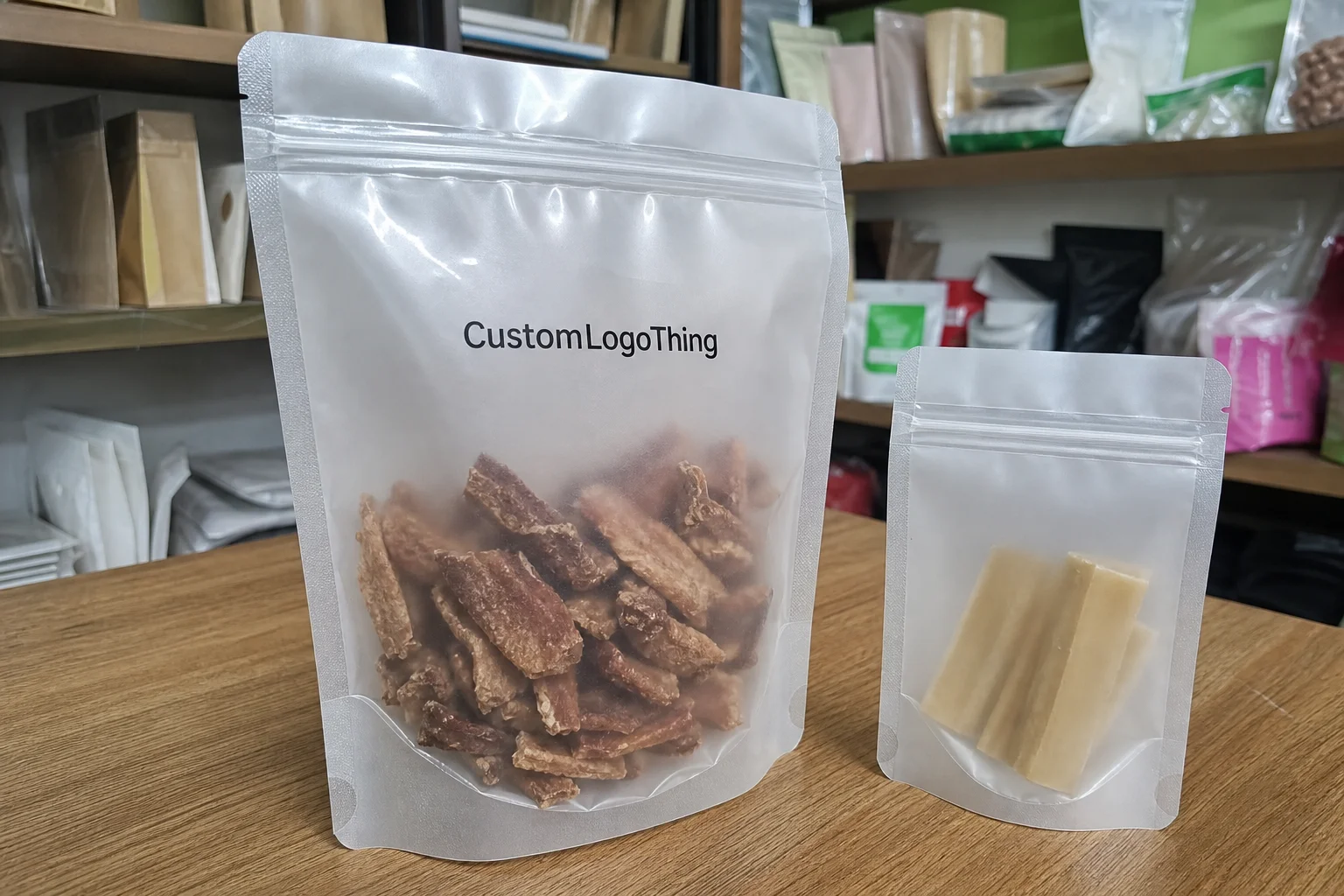
A frosted zipper pouch changes the buying signal before a shopper reads the label. The finish softens transparency enough to feel deliberate, but it still lets the product show through. That balance works well for pet treats, where shoppers often want visibility without seeing every crumb, scuff, or uneven edge.
There is also a handling advantage. Frosted film tends to hide wear better than high-gloss clear film, especially during warehouse movement, pallet transfers, and retail stocking. It will still show fingerprints, but it usually hides scuffs and transfer marks more effectively.
The zipper matters just as much as the finish. A bag that opens cleanly and closes reliably supports repeat use. If the closure feels weak or awkward after a few openings, the package loses value even if the product inside is fine. That is why the Frosted Zipper Bags unit cost for pet treat brands should be judged against performance, not just price.
A treat bag does not need to be dramatic. It has to look credible, protect the product, and hold up after repeated handling.
The package is part of the product system. Barrier, closure, seal integrity, and distribution performance all interact. If one piece is off, the savings can disappear later as damage, returns, or weak sell-through. For brands that want to verify shipping performance before scaling a pouch format, the ISTA standards are a useful reference.
Bag construction details that matter for treats, freshness, and handling
Most Frosted Zipper Bags for Pet treats use a layered film structure with a heat-sealed body and a zipper at the top. Beyond that basic setup, the details matter more than buyers expect. A flat pouch can work for lighter treat lines. A stand-up pouch or gusseted format usually makes more sense for heavier fills, stronger shelf presence, and better stacking behavior.
The contents should drive the structure. Dry biscuits are easier to package than oily chews. Soft treats can need stronger seals and a film that resists puncture. Irregular shapes add another variable because they can press against the zipper area during filling or shipping. If the headspace is wrong, the pouch can look overstuffed or underfilled, and both versions create problems.
Zipper choice changes the user experience. Standard press-to-close zippers are common and economical. Higher-grip versions improve repeated opening and closing, though they usually add cost. Child-resistant features are possible in some programs, but they add complexity, extra testing, and higher setup charges. Not every treat line needs that level of closure performance.
- Seal strength: critical for freshness, leak resistance, and odor control.
- Film thickness: affects puncture resistance, stiffness, and shelf stability.
- Closure type: standard zipper, higher-grip zipper, or specialty closure depending on usage.
- Format: flat pouch, gusseted pouch, or stand-up pouch based on fill weight and display needs.
- Surface finish: frosted, matte, or frost-plus-window depending on how much product visibility you want.
Size, barrier, print, and finish specifications to lock in before quoting
Size is the first specification to settle. Fill weight alone is not enough, because density changes the pouch geometry. Twelve ounces of airy biscuits occupy a different volume than twelve ounces of dense chews. If the bag is too tight, the zipper line is stressed. If it is too loose, the pouch looks underfilled and the shelf impact weakens.
Barrier comes next. Many treat products need only standard moisture protection, but oily formulas and longer distribution cycles can require stronger film structures. Buyers often compare PET, PE, and laminate combinations, then choose the lightest structure that still protects flavor, texture, and odor.
Print should be defined before quoting, not after. A one-color front panel is a different job from a full-color pouch with ingredient copy, nutrition facts, barcode, and regulatory text on the back. Coverage, ink count, and panel complexity all influence setup and production. If the artwork is still changing, the quote is only a rough estimate.
Finish decisions can also move cost and lead time. A matte frost tends to feel softer and more premium than a semi-gloss surface. A window can help shoppers see the product, but it may reduce the premium effect if it is too large. Tear notches, hang holes, and retailer-specific carton packing requirements should also be listed early.
- Dimensions: confirm width, height, and gusset depth, not just fill weight.
- Barrier: match the film to the treat texture and expected shelf life.
- Print count: count colors, side panels, and back-panel copy requirements.
- Finish: decide between frosted, matte, windowed, or mixed effects.
- Retail handling: note hang holes, tear notches, and case-pack requirements early.
If the package will move through retail or e-commerce channels, the outer carton and master shipper matter too. A good packaging spec should consider how cartons stack, how much compression the bags can tolerate, and whether the bag will still present cleanly after parcel sorting. For brands using certified paperboard or printed paper components, the FSC reference is useful for material sourcing questions.
Unit cost, MOQ, and quote drivers for pet treat packaging
The biggest drivers behind the Frosted Zipper Bags unit cost for pet treat brands are usually bag size, film thickness, zipper type, print coverage, and whether the job is stock-style or fully custom. A small unprinted pouch may cost very little per unit. A larger Custom Printed Stand-up pouch with a specialty zipper and high-barrier film can land in a different pricing band.
MOQ is where many buyers first feel the economics. Setup charges, tooling, and print preparation are spread across the order, so a small run can carry a high per-piece cost. Larger runs usually improve the pricing curve, although not always in a straight line. Sometimes the jump to the next quantity band is where the real savings sit, because fixed costs get diluted faster than material cost rises.
Land cost is the number that matters for margin planning. Factory price is only one part of it. Freight, carton count, pallet configuration, duties, and inland delivery can move the final figure enough to change the business case. Comparing only the factory quote is a common mistake.
Here is a practical cost frame for pet treat brands comparing common pouch options.
| Option | Typical MOQ | Typical unit cost range | Best fit |
|---|---|---|---|
| Stock-style frosted pouch with basic zipper | 1,000-3,000 units | $0.18-$0.32 per unit | Early-stage launches, test markets, faster decisions |
| Semi-custom printed pouch | 3,000-10,000 units | $0.22-$0.42 per unit | Growing brands that need branded shelf impact |
| Fully custom high-barrier pouch with specialty zipper | 10,000+ units | $0.30-$0.60+ per unit | Retail programs, repeat orders, and longer distribution chains |
Those ranges are directional, not a promise. A lighter pouch with simple print can come in below the low end. A larger format with heavy ink coverage, a custom zipper, or a specialty finish can go above the top end. The better question is not “What is the cheapest bag?” It is “What is the best cost per piece for the margin I need to hold?”
That distinction matters because packaging can support sell-through. A bag that costs a few cents more but improves appearance, reduces damage, and supports a stronger shelf price may produce a better gross margin than the cheapest quote in the stack.
Production steps, proofing, and lead time from artwork to shipment
The cleanest packaging orders follow a clear sequence: requirements review, dieline confirmation, artwork setup, proof approval, production, inspection, packing, and shipment booking. When any step is vague, lead time stretches. The risk is not only delay. It is also rework, because one unclear detail at the start can trigger multiple revisions later.
Most delays come from predictable issues. Artwork arrives without final barcode placement or without fully resolved copy. A buyer changes the size after proofing has already started. The team has not settled on a frosted-only finish versus frosted with a window. Each issue is manageable on its own, but together they can push the schedule and increase waste.
Lead time depends on quantity, print complexity, and whether the pouch structure is already proven or newly developed. A standard order with clean artwork can move more quickly than a job that needs custom sizing, zipper selection, and several proof rounds. In many packaging programs, a straightforward order may ship in roughly 12 to 15 business days after proof approval.
- Approve the dieline first: do not build final art against a guessed template.
- Confirm all copy: barcode, ingredients, net weight, and compliance text should be final.
- Define the finish: frosted, matte, or windowed needs to be settled early.
- Confirm packout: carton count, master case size, and pallet plan affect shipping and storage.
For brands that sell into both retail and parcel channels, packaging validation should happen before the order scales. The goal is not over-engineering. It is making sure the pouch survives the handling it will actually see. Structured testing is cheaper than replacing damaged inventory after launch.
What makes a packaging supplier easier to work with on repeat treat orders
Repeat orders expose the real quality of a supplier. The zipper feel should stay consistent from run to run. The frosted finish should not shift noticeably. The print should stay close to the approved color target within the normal limits of production. If those basics drift too much, the brand spends time managing inconsistency instead of scaling volume.
As a pet treat line grows, the supplier should be able to translate product needs into a spec that works in storage, shipping, and retail. That means speaking plainly about seal strength, print tolerance, carton packout, and reorder planning. Sales language is cheap. Clear spec handling is useful.
At Custom Logo Things, the practical value is in direct answers: what structure fits the treat, what MOQ makes sense, what kind of bulk pricing is realistic, and where the tradeoffs sit between cost and presentation. If a supplier cannot explain setup charges, tooling fees, and revision costs clearly, the quote is not complete enough to trust.
The better suppliers also think beyond the pouch itself. They ask whether the order needs master cartons for pallet stability, whether warehouse space is limited, and whether seasonal demand will require staggered reorders. Those questions save time because they surface constraints before production begins. If you want a cleaner way to compare packaging approaches, the case studies page shows how structure, print, and lead time affect the final result.
The best supplier is usually the one that makes the repeat order boring in the right way: same spec, same look, same zipper feel, and no surprises on the invoice.
What to send next so the quote is accurate the first time
If you want a usable quote, send the core specs together. Bag size, fill weight, quantity, print count, zipper preference, and finish choice should all be in the first message. That reduces back-and-forth and helps the supplier price the actual structure instead of guessing from partial information.
Product behavior matters too. A dry biscuit, oily chew, brittle training treat, soft snack, or irregularly shaped bite may need a different film or seal spec. The more crumbly or oily the product is, the more the packaging has to be treated as a protective system rather than a printed shell.
Artwork status is another place where time gets lost. If you already have a dieline, send it. If you have compliance text, barcode data, or panel copy, include that as well. And if the order is shipping to a specific destination, say so early so freight can be estimated instead of guessed.
A buyer who compares the final offer on both unit cost and lead time usually gets a better result than the buyer who focuses on one number alone. Before placing the order, confirm the full spec, payment terms, packing details, and delivery timing tied to the Frosted Zipper Bags Unit Cost for pet treat brands.
What affects frosted zipper bags unit cost for pet treat brands the most?
Bag size, film thickness, zipper style, and print coverage usually have the biggest effect. MOQ matters too, because setup costs spread more efficiently on larger runs. Freight and carton configuration can change landed cost even if the factory price looks stable.
Do frosted zipper bags work better than clear bags for pet treats?
They often look more premium on shelf because the finish softens what is inside without hiding the product completely. The frosted surface can also reduce the appearance of scuffs and handling wear. They are a strong choice when the brand wants a cleaner retail look.
What MOQ should a pet treat brand expect for custom frosted zipper bags?
MOQ depends on print method, structure, and bag size, so there is no single number that fits every program. Smaller quantities are possible in many cases, but the unit price is usually higher. If a brand plans to reorder regularly, a larger first run often improves long-term economics.
How long does production usually take after artwork approval?
Lead time depends on order size, print complexity, and whether the spec is standard or newly developed. A clean proof approval usually keeps the job moving faster than last-minute artwork changes. Freight time should be confirmed separately because transit time can matter as much as production time.
What information should I send to get a fast quote?
Send bag size, fill weight, quantity, print details, zipper preference, and finish choice. Include product type, compliance copy, and shipping destination so the pricing is realistic. If you already have a dieline or artwork file, that can shorten the quoting and proofing process.


