Buyer Fit Snapshot
| Best fit | Custom Full Color Printed Boxes projects where brand print, material claims, artwork control, MOQ, and repeat-order consistency need to be specified before quoting. |
|---|---|
| Quote inputs | Share finished size, material target, print colors, finish, packing count, annual reorder estimate, ship-to region, and any compliance wording. |
| Proofing check | Approve dieline scale, logo placement, barcode or warning zones, color tolerance, closure strength, and carton packing before bulk production. |
| Main risk | Vague material claims, crowded artwork, missing packing details, or unclear freight terms can make a low unit price expensive after revisions. |
Fast answer: Custom Full Color Printed Boxes: Quote Scope, Sample Proof, MOQ, and Lead Time should be specified like a repeatable production item. The safest quote records material, print method, finish, artwork proof, packing count, and reorder notes in one written spec.
Production checks before approval
Compare the actual filled-product size with the drawing, then confirm tolerance on folds, seals, hang holes, label areas, and retail display edges. Reserve space for logos, QR codes, warning copy, and material claims before decorative graphics fill the panel.
Quote comparison points
Review material grade, print process, finish, sampling route, tooling charges, carton quantity, and freight assumptions side by side. A quote is only useful when the supplier can repeat the same color, closure quality, and packing count on the next order.
Custom Full Color Printed Boxes: A Practical Guide
Custom full color printed boxes do a lot of jobs at once. They protect the product, carry the brand, and tell buyers what they are looking at before the box even opens. Three seconds is usually enough. Maybe less. That is the annoying part, honestly. People judge fast, and the box gets the blame or the credit whether it deserves it or not.
What Custom Full Color Printed Boxes Actually Do
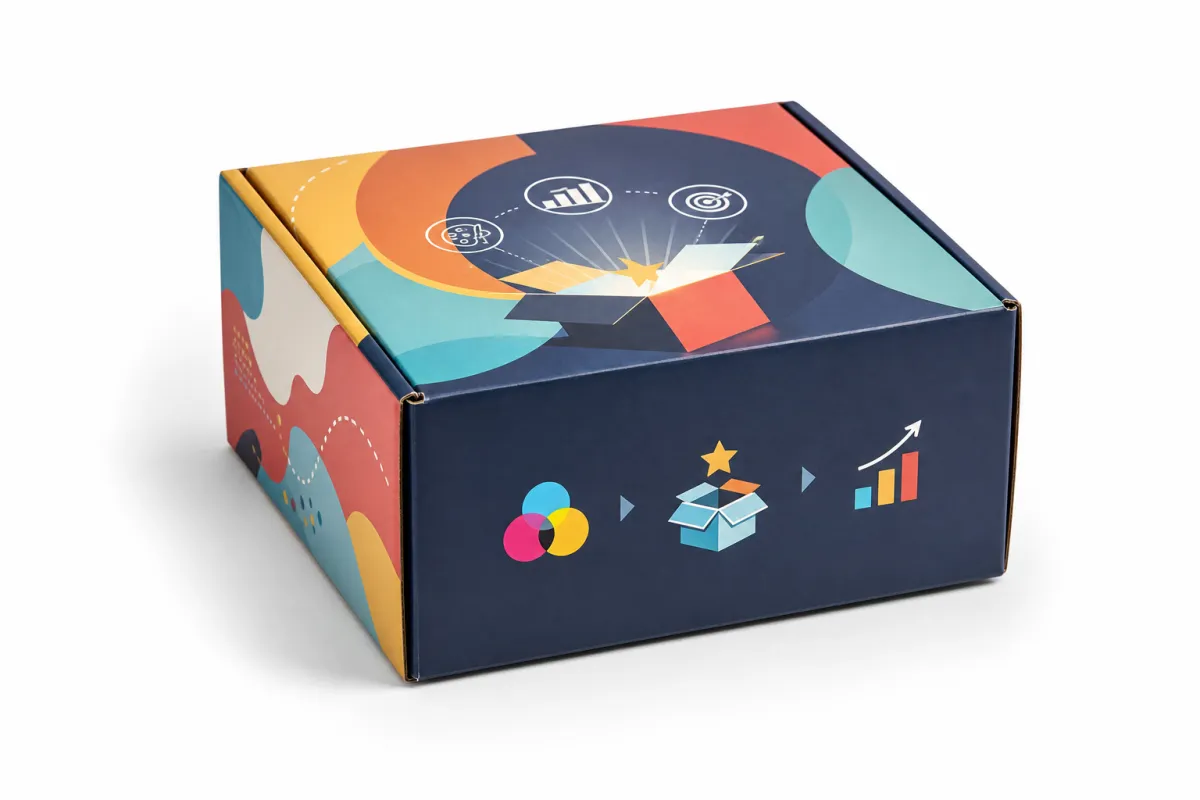
Custom full color printed boxes protect the item, communicate the brand, and set expectations before a customer touches the product. Those three jobs are linked. Buyers do not usually separate structure from appearance in their heads. They see one package and make a quick call about quality. A rigid carton with good print says one thing. A plain shipper says another. Same product. Different story.
Most of the time, these are folding cartons, mailer boxes, Rigid Setup Boxes, sleeves, or other structures printed in full color across the visible panels. The artwork can include logos, ingredients, barcodes, handling marks, legal text, or product claims. That is why custom full color printed boxes show up so often in retail packaging. They let a brand control the shelf message instead of hoping a blank carton does the work.
Color does more than decorate a surface. It organizes attention. A tight palette can make a small item feel premium and giftable. Strong contrast can help a crowded shelf read faster. I have watched custom full color printed boxes change how a skincare line was perceived just by cleaning up the spacing, tightening the typography, and stopping the layout from trying too hard. The box was not more complex. It was just better edited.
Put a plain shipper next to a one-color box and custom full color printed boxes with coated artwork and a clean interior. The first says, "we shipped this." The second says, "we branded this." The third says, "we planned this." That difference matters during the unboxing experience, because the customer is not only opening a product. They are deciding whether the purchase feels worth repeating.
“A box is not just a container. It is a sales surface, a protection system, and a signal about how carefully the brand handles details.”
That is the practical case for custom full color printed boxes. The right carton can reduce confusion, support retail compliance, and make a product easier to sell through fast-moving channels where people scan first and think later. The wrong carton does the opposite. Weak contrast, poor legibility, and a structure that feels flimsy are expensive ways to create doubt.
Most buyers narrow the decision quickly once they get past the first round of browsing. Print method. Material. Finish. Quantity. Timeline. Once those are set, custom full color printed boxes get easier to price and a lot easier to compare against the actual route to market.
How Custom Full Color Printed Boxes Are Made
The production path for custom full color printed boxes looks simple on paper. It rarely feels simple in practice. The process usually starts with a quote request, then moves into dimensions, material selection, dieline creation, artwork setup, proofing, printing, finishing, cutting, folding, and final pack-out. Skip one step or rush the wrong one, and the mistake usually shows up later when it is expensive and inconvenient.
File prep matters more than many first-time buyers expect. Resolution has to hold up in print. Bleed needs to extend beyond the trim line. Safe zones should keep text away from folds and knife edges. RGB artwork can look bright on a screen and still print badly if it is not converted correctly. With custom full color printed boxes, small setup errors are harder to hide because the whole package surface is part of the brand. A barcode that sits too close to a fold line can also become unreadable, and that is the kind of dumb problem nobody wants to pay for twice.
Digital and offset printing are the two methods most brands compare first. Digital usually fits shorter runs, frequent SKU changes, and timelines where speed matters more than press efficiency. Offset tends to make more sense at larger volumes because setup cost spreads across more units and color control can be tighter once the press is dialed in. If the artwork changes often, digital keeps the process less painful. If the design stays steady and the run is large, offset usually wins on unit economics for custom full color printed boxes.
Structural engineering is the part people forget until the sample lands on the desk. Great print does not matter much if the carton cannot survive stacking, parcel movement, shelf handling, or a return trip. Caliper, board strength, fold memory, glue area, and insert design all affect whether the box protects the product or just photographs well. Grain direction matters too. If the board fights the fold, the corners crack sooner. For shipping validation, many teams line up testing with ISTA protocols such as parcel drop and vibration methods, especially when custom full color printed boxes are going into e-commerce or distributor networks.
Proofing is the quality gate. A hard proof or prototype can catch color drift, barcode issues, copy placement errors, and surface problems before the full run starts. That step is not glamorous. It is also cheaper than reprinting 4,000 cartons because a compliance line sat too close to a fold. For custom full color printed boxes, proofing is where the design stops being theory and becomes production. I trust a good proof more than a polished mockup every single time.
- Artwork review confirms bleed, margins, and color build.
- Dieline review confirms the carton folds the way the product needs.
- Proof approval confirms the box looks and reads correctly before volume production.
- Final inspection confirms the finished custom full color printed boxes match the approved sample.
If you are still deciding on format, the cleanest way to compare structures is to review the full range of Custom Packaging Products and check where the product weight, shelf placement, and shipping path actually fit. That one pass usually makes it obvious whether you need a folding carton, a mailer, or a more rigid presentation box.
What Changes the Cost of Custom Full Color Printed Boxes
The price of custom full color printed boxes is not just about ink coverage. Quantity usually drives the biggest shift because setup work gets spread across more units as the run grows. After that, board stock, box style, print method, finishing, and tooling all matter. If a buyer only asks, "What is the unit price?" they are usually missing the part where the real budget gets decided.
As a rough planning range, a small folding carton run might land around $0.18-$0.45 per unit at higher volumes, while a premium mailer or specialty structural box can climb much higher depending on board, print coverage, and finishing. Rigid presentation boxes often move into a different range altogether, sometimes $2.00-$6.00 or more per unit once wraps, inserts, and handwork are included. Those are broad ranges, not quotes, and they will move with region, supplier capacity, and spec detail. Still, they are useful because they reflect how custom full color printed boxes behave in the real market.
| Option | Typical Run | Rough Unit Cost | Best Fit | Main Cost Driver |
|---|---|---|---|---|
| Digital folding carton | 250-2,500 pieces | $0.30-$0.95 | Short runs, seasonal SKUs, fast changes | Lower setup, higher per-unit print cost |
| Offset folding carton | 2,500-25,000+ pieces | $0.12-$0.40 | Stable artwork, larger volumes | Higher setup, lower unit cost at scale |
| Mailer box | 500-10,000 pieces | $0.55-$1.60 | E-commerce, subscription kits, unboxing | Board weight, print coverage, dimensional size |
| Rigid setup box | 300-5,000 pieces | $2.00-$6.50 | Premium gifts, luxury retail, presentations | Labor, board wrap, inserts, specialty finishing |
Special finishes can change the economics faster than many buyers expect. Foil stamping, embossing, spot UV, soft-touch lamination, and window patches each add material or labor cost. In some jobs, a coating or laminate costs more than the extra ink coverage. That is why custom full color printed boxes with complex finishing often price closer to a premium carton than a simple printed shell, even when the artwork looks nearly the same on screen.
Hidden cost also matters. Shipping, storage, sample rounds, artwork corrections, and rush fees can move the real total more than the quoted unit price does. A project that looks cheaper per box can still cost more overall if the file needs three rounds of revisions, the schedule is compressed, or the carton has to ship twice. From a buyer's point of view, the cheapest quote is only the best quote if it survives the full process for custom full color printed boxes.
Ask suppliers for pricing at two or three quantity tiers. The breakpoints matter. A run of 2,000 may not be much cheaper per unit than 1,500, but 5,000 can change the math entirely because press setup, die-cut tooling, and finishing setup are now spread much wider. That is usually the point where buyers start seeing the cost structure behind custom full color printed boxes instead of treating every quote like a flat number.
Browse the custom packaging catalog before you commit to a structure. A quick comparison can show whether the design should stay in a simpler carton style or move up to a more premium build. That is often more useful than polishing artwork before the packaging plan is settled.
Materials, Finishes, and Box Styles That Change Performance
Material choice is where custom full color printed boxes either fit the product environment or fail it. SBS board is popular for crisp retail graphics because it offers a smooth print surface and clean edges. Kraft board brings a natural look that supports eco-minded branding, while corrugated board handles parcel abuse and heavier loads better. Rigid board creates a premium feel, but it also raises cost and usually asks for more handling.
Custom full color printed boxes also react differently to finishes. Aqueous coating gives basic protection without making the surface feel overly slick. Matte lamination cuts glare and makes a carton feel more restrained. Gloss lamination deepens contrast and pushes color harder. Soft-touch lamination gives a velvety surface that signals luxury very quickly. Spot UV and foil are accent tools, not rescue tools. They work best when they direct attention instead of covering every inch.
Start with the product environment. A bottle that sits on a shelf has different needs than a subscription kit that rides through a parcel network. A display carton may need shelf presence and a careful opening moment. A mailer may need stronger corners, more crush resistance, and a surface that can take scuffs. Custom full color printed boxes should follow the product's route, not just the mood board.
Sustainability matters, but the details have to be honest. Recyclable fiberboard, lighter board choices, and lower-ink design strategies can reduce environmental impact without flattening the brand. The FSC certification system is widely recognized for responsible fiber sourcing, and it is one of the cleaner signals a brand can use when sourcing needs to be visible. Heavy laminate or mixed-material windows can reduce recyclability, so custom full color printed boxes should be evaluated as a full assembly, not just a printed face.
Here is the simple rule: choose the material based on the product's physical reality first, then choose the finish based on the brand story. A beautiful box that crushes in transit is a bad trade. A sturdy box that looks flat on shelf is not much better. The sweet spot for custom full color printed boxes is where protection, presentation, and budget still make sense together.
- SBS suits clean retail graphics and high-detail images.
- Kraft suits natural, earthy, or less processed brand cues.
- Corrugated suits shipping strength and e-commerce handling.
- Rigid board suits premium gifting and presentation.
One practical note: the same artwork can feel completely different depending on the substrate. A deep black on SBS may look rich and sharp, while the same black on kraft can soften and warm because of the base tone. That is why mockups can fool buyers. Custom full color printed boxes need to be judged on the actual board or a close production sample whenever color matters.
Ordering Timeline: From Dieline to Delivery for Custom Full Color Printed Boxes
Most delays start before the press gets involved. The timeline for custom full color printed boxes usually begins with a quote, then moves into dimensions, material selection, structural review, and artwork prep. If those basics are not settled early, every later step starts wobbling. A buyer may think the project is "in design," but the supplier may still be waiting for usable specs.
Timing depends on complexity. A simple digital run with a standard structure may move through proof approval and production in roughly 10-15 business days after artwork is finalized. Offset work, specialty finishing, or custom tooling can push the schedule closer to 15-25 business days, sometimes longer if the box needs a structural sample first. For custom full color printed boxes, the fastest path is usually the one with the fewest surprises. That is not exciting, but it is true.
Some bottlenecks repeat on almost every project. Late artwork changes are the big one. Missing barcode requirements show up a lot too. Slow proof approvals quietly eat a week. If the packaging design changes after the dieline is approved, the schedule resets more than people expect. Custom full color printed boxes do not usually miss launch because the press was slow. They miss it because one decision arrived late.
A milestone-based schedule keeps everyone honest. I prefer treating each phase as a gate with a deadline attached, not as a soft suggestion.
- Concept approval
- Dieline and structure approval
- Artwork submission
- Prepress review
- Proof approval
- Production
- Finishing and inspection
- Packing and shipment
Working backward from launch is the cleanest way to avoid rush fees. If retail set dates, distributor receiving windows, or e-commerce launch events are fixed, the box order has to be locked earlier than most teams think. Custom full color printed boxes are not a same-week decision unless the structure is simple and the print method allows it. Even then, a few days of buffer can save the whole campaign.
There is also a strategic reason to build time into the schedule. The sample stage is where a buyer learns whether the carton opens the way the customer expects, whether the print reads clearly at arm's length, and whether the box feels too flimsy or too heavy. That is not just production discipline. It is also better package branding because the box is being tested against the customer experience, not just the file on screen.
If your team is comparing packaging formats while the clock is running, use a focused shortlist instead of a long open-ended search. A practical review of Custom Packaging Products can cut the decision tree down fast, which matters when the order for custom full color printed boxes has to be placed before the next production window closes.
Common Mistakes That Hurt Color, Budget, or Quality
The most expensive mistake is designing the box around appearance only. A carton can look excellent in a mockup and still fail if the structure cannot survive stacking, shipping, or repeated handling. Custom full color printed boxes need to perform as packaging first and visual branding second. If the build is wrong, the print will not rescue it.
Color expectation drift causes plenty of pain too. A designer working in RGB on a calibrated monitor is not looking at the same output environment as a printer running CMYK on a chosen board. That gap creates expensive surprises. Screen brightness, unapproved proofs, and uncalibrated displays can all make custom full color printed boxes arrive with a different tone than the brand expected. The fix is boring, but it works: proof early and review color on the real substrate whenever possible.
Overprinting is quieter, but it still hurts. Too much visual noise can bury the brand hierarchy, especially if compliance copy, ingredient lists, or barcodes are fighting with decorative elements. I have seen custom full color printed boxes become harder to shop because the front panel tried to say twelve things at once. Clarity sells faster than clutter. On shelf, in a mailer, and in a warehouse.
Vague specs create quote drift. If the dimensions, board type, quantity, finish, and usage environment are not defined, suppliers can only guess. Guessing leads to pricing that changes later, and later pricing leads to schedule risk. When buyers provide complete information up front, custom full color printed boxes become easier to quote and much easier to produce without rework.
“The cheapest box is not the least expensive box if it triggers reprints, returns, or damage claims.”
Rush work creates its own chain reaction. Compressed timelines usually reduce the number of proofs, limit material choices, and force the team to accept more risk. That is not always wrong. Sometimes the launch date is fixed and there is no alternative. It should be a deliberate tradeoff, though, not an accident. If the shipment has to be validated for distribution, ask whether the pack-out should also be tested against ISTA or related ASTM methods before custom full color printed boxes go live in the market.
- Do not approve a box without checking shelf readability and transit durability.
- Do not rely on screen color alone when the print surface matters.
- Do not let vague specs drive the quote.
- Do not compress proofing so much that the first sample becomes the real test.
Expert Tips and Next Steps for Better Custom Full Color Printed Boxes
Start with the product, not the artwork. Weight, fragility, shelf position, shipping method, and brand tier all shape the right packaging choice. A 2-ounce skincare jar and a 3-pound supplement kit do not need the same structure, even if both end up in custom full color printed boxes. The box should fit the product's reality, not force the product into a generic package plan.
A solid packaging brief includes dimensions, target quantity, artwork files, color references, compliance copy, and at least one sample of the product if the item has an odd shape or fragile closure. That brief saves time because it cuts down back-and-forth. It also improves package branding because the design team and production team are solving the same problem instead of guessing at different ones. When the brief is complete, custom full color printed boxes are far more likely to match the intent behind them.
Ask for a prepress review and a physical or digital proof before the run begins. Then compare the sample against the customer experience you actually want. Does the front panel communicate the main promise in two seconds? Does the opening feel premium or clumsy? Does the finish support the product category? Those questions matter more than asking whether the design looks "nice." Custom full color printed boxes should be judged by how they work in the market, not just by how they look on a laptop.
A simple cost test can reveal the best production window quickly. Ask how the price shifts at two or three quantities, then compare that with your sales forecast and launch timing. Often the answer exposes a sweet spot where custom full color printed boxes are cheap enough per unit to justify a stronger finish, or where a slightly larger run saves enough to offset storage. That comparison is more honest than chasing the lowest nominal quote.
If you want to narrow the field, compare two box styles, one board option, and one finish before adding anything fancier. That short list keeps the project grounded. It also makes vendor conversations sharper because the supplier can quote reality instead of a moving target. For brands that need to move quickly, this is usually the fastest route to better custom full color printed boxes without losing control of cost or timing.
The practical takeaway is simple: lock the dimensions, choose the board for the product's actual route, ask for a proof on the real substrate, and compare quantity tiers before you approve the run. If those four steps are handled in order, custom full color printed boxes stop being a guessing game and start doing real work for the brand.
What are custom full color printed boxes used for in packaging?
They combine branding, protection, and product information in one package. That makes them useful for retail display, e-commerce shipping, subscription kits, and premium presentation packaging, especially when the box needs to create a stronger first impression than plain printed boxes can deliver.
How long do custom full color printed boxes usually take to produce?
Short digital runs may move faster than offset or specialty finishing jobs. Artwork approval, dieline changes, and proof revisions are usually the biggest timeline variables, so planning backward from the launch date is the safest way to avoid rush fees or missed delivery windows.
What affects the price of custom full color printed boxes the most?
Quantity, material, print coverage, and finishing choices usually matter more than the ink alone. Custom tooling, inserts, specialty effects, shipping, sampling, and rush production can all change the real total cost, which is why a unit quote should never be viewed in isolation.
Which material is best for custom full color printed boxes?
SBS often gives the cleanest print surface for retail presentation. Kraft can support a natural or eco-minded look, while corrugated is better for shipping strength. The best material depends on product weight, transit conditions, and the visual tone the brand wants customers to feel.
Can custom full color printed boxes be recyclable?
Yes, many can be made with recyclable board and coatings that support responsible disposal. Decorative effects like heavy lamination or mixed materials can reduce recyclability, so the build matters. Ask the supplier to match sustainability goals with the required print quality and protection level.
Custom full color printed boxes work best when the structure, substrate, finish, and timeline are chosen in the right order. Get that sequence right, and custom full color printed boxes stop being a cost center and start becoming a sales tool, a protection layer, and a clearer expression of the brand all at once.

