Tea Shop Paper Bags Bulk Order: What You Actually Get
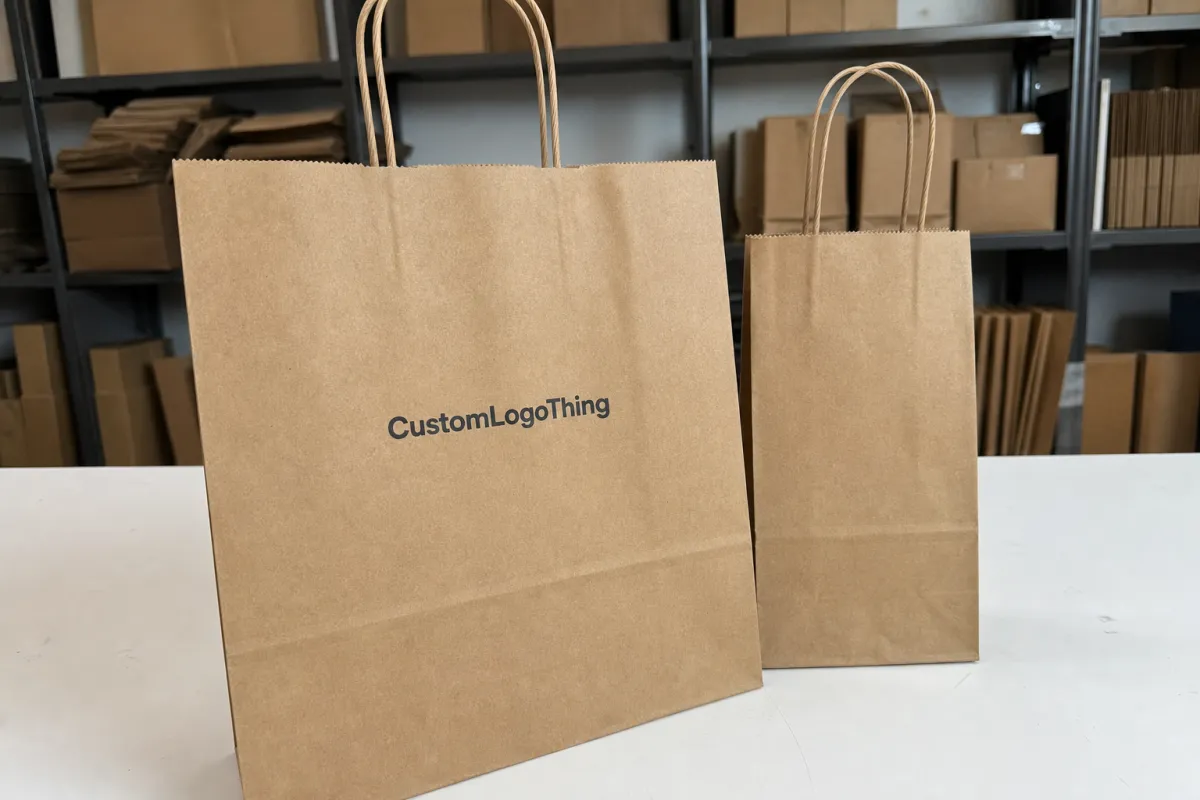
Most tea is not let down by the tea itself. It is let down by weak retail packaging that creases, tears, or makes a carefully chosen tin look like an afterthought. A tea shop Paper Bags Bulk Order is a practical packaging decision first: the bag has to carry loose leaf pouches, boxed tea, gift sets, samplers, mugs, infusers, honey jars, and subscription pickup orders without looking strained by the time the customer reaches the door.
Cute helps. Strong matters more. If a customer buys a $22 oolong tin, a ceramic infuser, and a sample pouch, the bag should not sag like a wet napkin before they get to the sidewalk.
Good branded bags do a few quiet jobs at once. They make small purchases feel giftable, give premium tea the visual weight it deserves, and keep the shop name moving through the street instead of disappearing inside a blank brown sack. Nothing mystical there. Just useful retail packaging doing its work.
This applies to independent tea shops, specialty grocers, wellness boutiques, cafe-tea hybrids, Hotel Gift Shops, subscription brands, event vendors, and market sellers. The same bag might carry one sampler at checkout on Monday, a boxed holiday set on Thursday, and a farmers market bundle on Saturday. That is why structure matters as much as print.
Bulk ordering also solves the dull problems that become expensive later: lower unit cost, steadier color, better stock planning, seasonal packaging control, and fewer panic orders during the holiday rush. It keeps staff from improvising with random sizes because the “nice bags” ran out again. Always memorable. Rarely professional.
Before asking for pricing, lock the basics: bag size, paper weight, handle style, print method, order quantity, artwork status, delivery address, and deadline. Miss one, and the quote becomes a guess with a tidy subject line.
Bag Styles That Work for Tea Retail, Gifts, and Pickup Orders
Tea packaging creates odd shapes. Boxes stack neatly until a customer adds a round tin. Glass jars bring weight. Mugs need space and padding. Gift sets want a flat, stable base. A printed paper bag has to match the real product mix, not just the brand mood board.
| Bag Style | Best Use | Typical Strength | Tradeoff |
|---|---|---|---|
| Flat merchandise bag | Sachets, samples, receipt-and-sample handoff | Light duty | Low cost, but poor for bulky tea boxes |
| SOS block-bottom bag | Boxed tea, pantry goods, small tins | Medium duty | Practical, but less polished than rope-handle bags |
| Twisted-handle kraft bag | Daily retail checkout and cafe pickup | Medium to strong | Economical, but not luxury-looking |
| Rope-handle laminated bag | Gift sets, premium tea collections, events | Strong | Higher unit cost and usually higher MOQ |
Flat bags are useful for single pouches, sachets, small samples, and receipt packets. They are not meant for anything rigid or heavy. Mid-size kraft bags handle two to four tea boxes well if the gusset is wide enough. Wide-gusset bags are better for tins, jars, candles, honey, or add-on products that do not stack cleanly. Reinforced shopping bags are the safer choice for multiple boxed items or prepared gift sets.
Handle choice affects cost, strength, recyclability, and the feel of the bag in the customer’s hand. Twisted paper handles are economical and widely used for everyday retail. Flat paper handles feel tidy and practical, especially for cafe pickup and lighter orders. Cotton or rope handles give a more finished gift presentation, but they cost more and may complicate recycling depending on how the bag is built. Die-cut handles look sharp on boutique bags, though they are not ideal for heavy tins because pressure concentrates around the cutout.
Kraft versus white paper is not only an aesthetic decision. Kraft supports organic, apothecary, loose leaf, and earthy tea brands, and it can make one-color printing look grounded and intentional. White paper gives brighter color, cleaner contrast, and a more boutique presentation. If your logo relies on pale green, coral, gold, or light blue, kraft will mute it. That may be exactly the mood you want. Or it may make the color look tired.
Finishes change the first impression quickly. Matte lamination feels soft and premium. Gloss lamination brightens color and sharpens contrast. Uncoated kraft looks natural and simple, but it will not behave like a coated luxury bag. Spot UV and foil can be excellent for gift-focused tea collections, seasonal sets, and premium blends, provided the bag is not being used as the daily workhorse for every checkout order.
Do not choose a tiny bag just because the unit price is attractive. If staff have to wedge a tea tin sideways, the bag is wrong.
Specifications to Lock Before You Ask for a Quote
A quote needs facts, not a general idea of “something nice.” For a useful tea shop paper Bags Bulk Order, send bag width, height, gusset depth, paper GSM, handle type, print colors, finish, quantity, shipping destination, and deadline. If you already know the packed carton requirements or need cartons labeled a certain way for storage, include that too.
Start size planning with real products on a table. A small 5 x 3 x 8 inch bag can work for sachets, small boxed tea, and samples. A medium 8 x 4 x 10 inch bag often fits boxed tea, a small tin, or a few retail add-ons. A larger 10 x 5 x 13 inch bag is better for gift sets, multiple items, mugs, and heavier bundles. These are starting points, not sacred measurements.
Paper weight matters. For light merchandise bags, 120-150 GSM is common. For stronger retail bags, 160-200 GSM is a better range. Premium shopping bags, heavier tea tins, and gift packaging often move into 210-250 GSM or reinforced board. Rope handles, lamination, base cards, and turned tops can improve the finished structure, but they also raise the unit cost. Materials are annoyingly real like that.
Gusset depth is the detail buyers forget. Tea boxes are bulky. Tins do not flex. Gift sets need bottom stability. A narrow bag looks cheaper the second it starts bulging. If your best-selling tin is 3 inches wide, do not approve a 2.5-inch gusset and hope physics becomes generous.
Artwork and Print Files
Clean artwork prevents avoidable production trouble. Send a vector logo in AI, EPS, SVG, or press-ready PDF format. Include Pantone or CMYK color references if brand color consistency matters. Add bleed allowance, safe zones, and high-resolution files for patterns, illustrations, QR codes, or full-panel graphics.
For QR codes, keep the printed code large enough to scan after paper texture, ink spread, and lamination are considered. Tiny QR codes under 0.75 inch wide on textured kraft can pass a perfect office test and fail near a dim checkout counter. A small disappointment, repeated many times.
If the bag has front and back artwork, confirm which side faces the customer most often. Many tea shops put the logo on one side and product language, steeping notes, or a short brand message on the other. That can work well, but only if the design has enough breathing room and the copy is not trying to do the work of a brochure.
Tea-Specific Add-Ons
Tea brands sometimes benefit from inside printing with steeping instructions, Custom Hang Tags, ribbon closure, window cutouts for gift packaging, or seasonal sleeve compatibility. Inside printing can feel premium, but it adds setup and production cost. Use it where customers will actually read it: gift bags, subscription pickup bags, and premium collections.
Compliance depends on product contact. If the bag only touches primary food packaging, such as sealed tea boxes or pouches, standard retail bag specs are usually enough. If loose tea goes directly into the bag, food-safe material requirements need a separate discussion. Paper source may also matter for brand positioning; buyers who want responsibly sourced paper can review FSC information at FSC.
Pricing, MOQ, and Unit Cost for Bulk Paper Bags
Pricing depends on quantity, size, paper GSM, print coverage, handle type, finish, freight, and whether custom tooling is needed. Anyone offering one universal number without specs is guessing. It may sound convenient, but it will not help with a real purchase order.
Custom Printed Paper Bags often start around 500-1,000 pieces for simpler styles. Premium laminated bags, foil stamping, embossing, custom structures, or specialty handles may require 1,000-3,000 pieces or more. A one-color kraft checkout bag has a very different cost profile from a full-color laminated boutique bag with rope handles and foil.
| Order Type | Typical MOQ | Relative Unit Cost | Best For |
|---|---|---|---|
| One-color kraft bag | 500-1,000 pieces | Lower | Daily checkout, market events, simple branding |
| Full-color white paper bag | 1,000+ pieces | Medium | Boutique retail, colorful logos, seasonal artwork |
| Laminated rope-handle bag | 1,000-3,000+ pieces | Higher | Gift sets, premium tea, hotel retail |
| Foil or embossed luxury bag | 1,000-3,000+ pieces | Highest | Limited collections, corporate gifts, flagship packaging |
Unit cost improves as quantity increases because setup costs spread across more bags. Bigger is not automatically smarter. Heavy paper, full-coverage ink, rope handles, lamination, foil, embossing, and air freight can raise the finished cost quickly. Small kraft printed bags are usually the most cost-efficient. Luxury boutique bags cost more because materials, finishing, and labor are not imaginary.
Expect quote line items such as tooling or plate charges if applicable, proofing, production, cartons, freight, duties if importing, and optional rush fees. Freight deserves more attention than many buyers give it. Paper bags are bulky, so shipping can sting even when the unit price looks friendly.
For planning, order enough for 3-6 months of normal sales plus known seasonal spikes. Tea shops often see higher volume around holidays, gift box launches, farmers markets, subscription pickups, wellness events, and corporate gifting. Running out of bags one week before a gift promotion is a very preventable headache.
A practical cost-control approach is to choose one standard bag size for daily retail and one upgraded gift bag for premium purchases. Five similar sizes can create storage clutter while staff keep grabbing the wrong carton. If you are building a repeat packaging program, Custom Logo Things can support quantity planning through Wholesale Programs.
Process and Timeline From Artwork to Delivery
The process should be pleasantly uneventful: send specs and artwork, confirm the recommended structure, receive a quote, approve the dieline, review the digital proof, approve a sample if needed, start production, inspect, pack, and ship.
Artwork review timing depends on complexity. Simple logo placement can be checked quickly. Full-panel patterns, metallic finishes, exact color matching, or inside printing need more review time. If your brand green must stay consistent across paper bags, tea tins, labels, and boxes, say that before proof approval rather than after the first production run.
Typical timing looks like this. Digital proofing may take 1-3 business days after usable artwork arrives. Pre-production sampling may take 5-10 business days. Bulk production commonly takes 15-30 business days after final approval, depending on quantity, finish, and production load. Shipping time comes after that.
Domestic freight may take several days. Ocean freight takes longer but can save money on bulky cartons. Air shipping is faster, although it can be painfully expensive for paper bags because dimensional weight matters. A 10,000-piece order can occupy more carton space than buyers expect, especially with rigid handles or reinforced structures.
Delays usually come from unclear artwork, changing the bag size after proofing, late sample approval, custom paper sourcing, holiday congestion, and pretending tomorrow is a reasonable deadline for 10,000 printed bags. It is not. Start quoting at least 6-8 weeks before a major promotion or holiday retail season if you want choices instead of emergency pricing.
Rush orders may be possible for standard materials and simple printing. Custom finishes and large quantities still need production time. A bag with foil, matte lamination, inside print, rope handles, and a custom size cannot be treated like a same-day flyer.
For durability expectations, many packaging buyers borrow transport-testing logic from organizations such as ISTA. Retail shopping bags are not shipping cartons, but the habit is useful: test the packed product, not just the empty package. Put the actual tin, mug, box, and jar inside, then carry it the way a customer would.
Common Buying Mistakes Tea Shops Can Avoid
Do not choose bags by photo alone. A bag can look elegant online and still be too thin, too narrow, too glossy, or too weak for the products it needs to carry. Ask for specs. Better yet, test a blank sample.
The weight mistake is common. Tea tins, glass jars, honey, mugs, infusers, candles, and boxed gift sets are heavier than sachets. If your shop sells add-ons, the bag needs to hold the actual basket, not just one tea box. A daily checkout bag that works for two pouches may fail with one mug and three tins.
Size mismatch is the next trap. Buyers often order by height and forget gusset depth. The result technically fits, but it looks strained and cheap. Customers notice. Staff notice even faster because they are the ones fighting the bag every day.
Color disappointment also happens. Kraft paper darkens ink and softens bright colors. White paper gives cleaner color accuracy. Matte lamination can slightly mute color, while gloss makes it pop. Decide this before artwork approval, not after delivery when the cartons are stacked in the back room.
Over-customization can waste money. Foil, embossing, ribbon, custom handles, and inside printing can look excellent, but not every daily retail bag needs to behave like a wedding invitation. Spend on strength first. Spend on finish where it affects perceived value.
Storage is not glamorous, so people ignore it. Paper bags take carton space. A bulk order saves money, but check storage capacity before ordering a heroic quantity you will trip over for eight months. If your stockroom is already packed with tea tins, mailer boxes, labels, and cafe supplies, be honest about the available space.
Another quiet problem is staff workflow. If bags are difficult to open, hard to separate, or too similar in size, checkout slows down. A beautiful packaging program still has to work during a Saturday rush. Label cartons clearly, keep daily bags near the register, and reserve premium gift bags for purchases that justify them.
Before approving final dimensions, put real products into a blank sample or size mockup. Test one box. Test four boxes. Test a tin, a mug, and a gift card. Carry it by the handle for a few minutes. A bulk bag order should survive the real basket, not just the quote sheet.
How to Keep Repeat Orders Consistent
Repeat bag orders are easier when the original specifications are documented cleanly. Save the bag dimensions, paper GSM, handle type, print method, finish, color references, dieline, proof, carton count, and any approved production notes. Without those details, a reorder can drift in small ways that become visible at checkout.
Consistency matters most in three areas: structure, print, and fit. The structure should carry the same product mix without handle failures or bottom sag. The print should match the approved color range as closely as the material allows. The fit should stay comfortable for your core products, especially boxed tea, tins, jars, and gift add-ons.
For a repeat program, it often makes sense to keep the proven bag structure and adjust artwork for seasonal campaigns. A winter gift bag, spring tea launch, and anniversary promotion can share the same base dimensions while changing color, pattern, or messaging. That approach protects fit and strength while still giving the brand room to refresh.
Custom options may include kraft paper, white paper, laminated finishes, uncoated stocks, rope handles, twisted handles, foil stamping, embossing, spot UV, full-color print, inside print, and custom carton packing where available. Not every option belongs on every bag. A simple kraft twisted-handle bag may be the right answer for daily checkout, while a laminated rope-handle version makes sense for premium gift sets.
Quality control should focus on structure, handle attachment, print alignment, color consistency, carton packing, and production checks before bulk shipping. A pretty print does not help if the handle pulls loose under the weight of three tins. The bag is a carrying tool first and an advertisement second.
For a more accurate recommendation, send current bag photos, product dimensions, target quantity, logo files, and the delivery address. That gives enough context to price a realistic tea Shop Paper Bags bulk order instead of relying on a vague catalog answer. If you have general ordering questions, the FAQ is a useful place to start.
Before You Place the Bulk Bag Order
Start with a simple pre-quote checklist. Choose 1-2 target bag sizes. List the products each bag must carry. Decide kraft or white paper. Pick a handle style. Estimate monthly usage. Set the delivery deadline. That covers most of the details that prevent expensive mistakes.
- Bag sizes: test small, medium, and gift-set dimensions with real products before approval.
- Paper choice: use kraft for natural texture and white paper for cleaner color accuracy.
- Handle style: choose twisted or flat paper for daily use, rope or cotton for premium packaging.
- Quantity breaks: request pricing at 1,000, 3,000, and 5,000 pieces when storage allows.
- Deadline: include the target in-hand date, not just the event date.
Gather artwork assets before production discussions get serious. Send the vector logo, brand colors, fonts if needed, pattern files, QR codes, social handles, and packaging notes such as recycling marks or store locations. If steeping instructions or care notes need to print inside the bag, include that early.
Create a usage plan. Daily checkout bags, premium gift bags, seasonal bags, and event bags should be separated by purpose. Otherwise, the order becomes an expensive pile of almost-right packaging. One strong daily bag and one upgraded gift bag usually beats six versions nobody can find during a rush.
For a fast quote, send bag size, paper preference, handle type, print colors, finish, quantity breaks, shipping address, and target in-hand date. Ask for a dieline proof. For new structures or premium finishes, consider a sample before mass production. Sampling adds time, but it is cheaper than discovering that your most popular tin does not sit flat.
The strongest order is the one that has already been tested in miniature: product fit confirmed, paper weight chosen, artwork checked, MOQ understood, freight planned, and timing realistic. Do that work before production starts, and the cartons that arrive later are much less likely to surprise you.
FAQ
What is the usual MOQ for custom tea shop paper bags?
Many custom printed paper bag orders start around 500-1,000 pieces for standard styles. Premium laminated bags, foil stamping, embossing, or custom structures may need 1,000-3,000 pieces or more. MOQ depends on size, material, print method, finish, and setup requirements.
How much does a tea shop paper bags bulk order cost?
Cost depends on bag size, paper GSM, order quantity, handle type, print coverage, finish, and shipping method. Simple kraft bags with one-color printing cost less than full-color laminated boutique bags. Ask for quantity breaks such as 1,000, 3,000, and 5,000 pieces to see where the unit cost improves.
Which paper bag size is best for tea boxes and tins?
Small bags work for sachets, samples, and single boxes, while medium gusseted bags fit multiple boxed teas. Tea tins, jars, mugs, and gift sets need wider gussets and stronger paper. The safest method is to test real products in a blank sample before approving bulk production.
How long does custom printed tea shop bag production take?
Digital proofing often takes 1-3 business days after artwork is received. Sampling may take 5-10 business days if a physical sample is requested. Bulk production commonly takes 15-30 business days after final approval, with shipping time added separately.
Can I print my tea shop logo, QR code, and care instructions on the bags?
Yes, logos, QR codes, store details, product messages, and steeping instructions can usually be printed. Vector artwork is best for clean logo printing and accurate scaling. Inside printing, foil, spot UV, and full-panel artwork may be available depending on the bag style and MOQ.
