Buyer Fit Snapshot
| Best fit | Custom Gloss Laminated Boxes projects where brand print, material claims, artwork control, MOQ, and repeat-order consistency need to be specified before quoting. |
|---|---|
| Quote inputs | Share finished size, material target, print colors, finish, packing count, annual reorder estimate, ship-to region, and any compliance wording. |
| Proofing check | Approve dieline scale, logo placement, barcode or warning zones, color tolerance, closure strength, and carton packing before bulk production. |
| Main risk | Vague material claims, crowded artwork, missing packing details, or unclear freight terms can make a low unit price expensive after revisions. |
Fast answer: Custom Gloss Laminated Boxes: Benefits, Cost, Process should be specified like a repeatable production item. The safest quote records material, print method, finish, artwork proof, packing count, and reorder notes in one written spec.
Production checks before approval
Compare the actual filled-product size with the drawing, then confirm tolerance on folds, seals, hang holes, label areas, and retail display edges. Reserve space for logos, QR codes, warning copy, and material claims before decorative graphics fill the panel.
Quote comparison points
Review material grade, print process, finish, sampling route, tooling charges, carton quantity, and freight assumptions side by side. A quote is only useful when the supplier can repeat the same color, closure quality, and packing count on the next order.
Custom Gloss Laminated boxes can change the first judgment a shopper makes before they even touch the product. That shine is not there just to look pretty. It signals care, control, and a brand that bothered to finish the job properly. For packaging teams, that matters. The box is often the first physical proof of quality, and it can push a product toward premium or dump it into the same visual bucket as everything else on the shelf. If you are comparing structures for branded packaging, the finish deserves the same attention as the artwork. A clean spec sheet, a solid dieline, and a look at Custom Packaging Products that fit the product line make the conversation a lot easier.
Custom gloss laminated boxes sit right between packaging design, product protection, and package branding. Beauty brands use them because the shine makes color feel sharper. Fragrance and gift packaging use them because the box itself needs presence. Subscription kits and retail packaging lean on gloss when the unboxing moment needs to do some heavy lifting. Custom Printed Boxes sold through e-commerce get the same benefit. The camera likes gloss. So does a shelf light. The catch is simple: shiny packaging does not rescue a weak structure. The board, print, and finish need to pull in the same direction, or the whole thing looks like a costume.
What Are Custom Gloss Laminated Boxes?
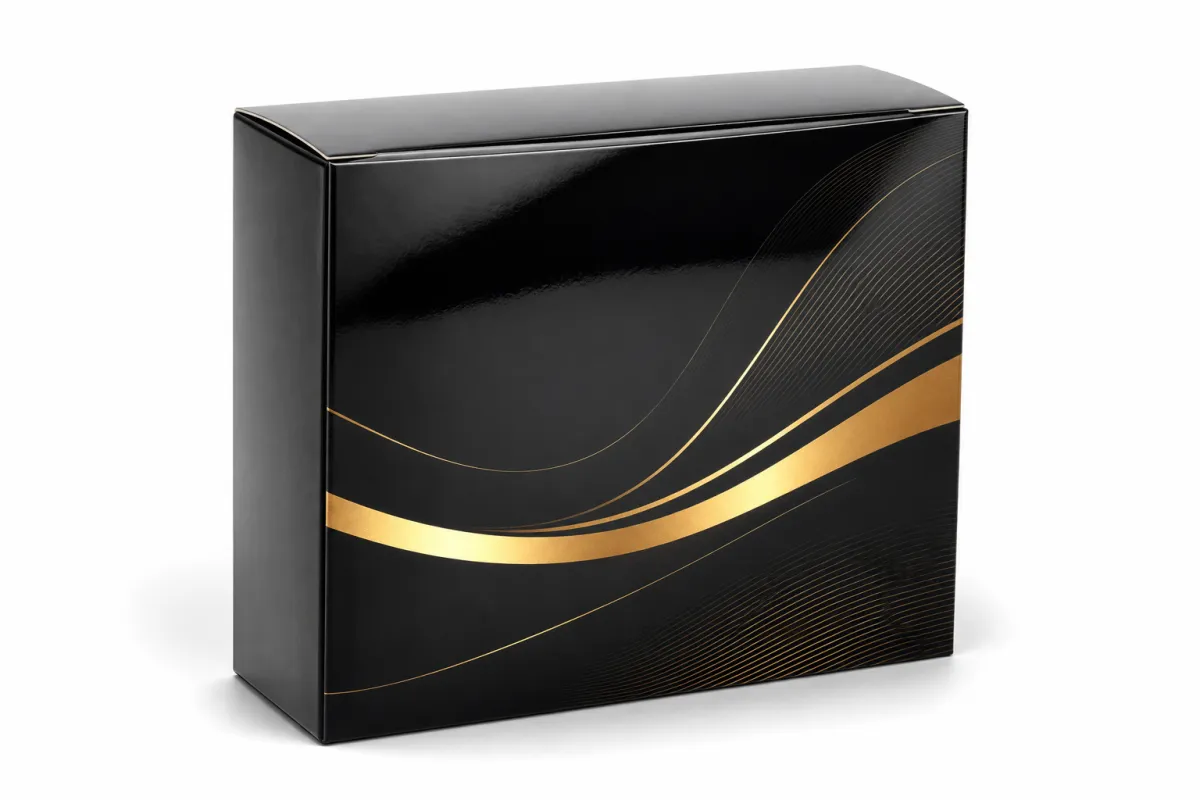
Custom gloss laminated boxes are paperboard boxes covered with a thin clear film over the printed surface. That film creates the reflective finish people notice under store lighting, in product photos, and in a stack of competing cartons. The base can be folding carton board, rigid board, or another paperboard format, depending on whether the box needs to be light, structural, or presentation-heavy. The gloss layer also helps protect the print from scuffs, handling marks, and a bit of moisture exposure.
Think of the process in two steps. Printing lays down the color. Lamination protects it and changes how the light hits it. With custom gloss laminated boxes, colors usually read brighter, darks look deeper, and the whole surface feels more alive. That is why beauty, gift, and retail brands pick gloss when they want a polished, lively look instead of something quiet and muted. I have seen a plain carton jump from "fine" to "shop that" with nothing more than a cleaner finish and better art placement.
Gloss behaves differently from matte, aqueous coating, and uncoated board. Matte cuts down reflection and gives a calmer surface. Aqueous coating is thinner and often used for basic protection with a softer appearance. Uncoated board gives a paper-first look, but it shows wear faster and does not hold color the same way. Custom gloss laminated boxes usually cost a bit more than a simple coating, yet the shelf impact can be stronger. For a lot of brands, that trade is easy to justify. For others, it is not. If the brand voice is quiet, glossy packaging can feel off by a mile.
There is a practical business case here. Custom gloss laminated boxes can lift perceived value without changing the product inside. That makes them useful for launches, retail rebrands, seasonal campaigns, and anything that needs a better first impression. They are not the right answer for every line. Fingerprints, glare, or a subdued brand tone can make gloss a bad fit. Still, for many custom printed boxes, gloss is the fastest way to signal care and commercial intent without overcomplicating the build. That part is pretty hard to ignore.
From a buyer's point of view, good packaging should support the product instead of fighting it. Custom gloss laminated boxes do that well when the structure is disciplined and the graphics are clean. The result feels premium without turning into a design exercise that needs a hard hat. And yes, that little bit of shine can feel almost unfair in a crowded aisle. That is kind of the point.
How Custom Gloss Laminated Boxes Are Made
The production flow starts with measurements, not artwork. The product has to fit the structure. The structure has to fit the board. The board has to work with the print method. That is why the first step is usually a dieline. The dieline shows folds, panels, tabs, glue areas, and safe zones so the designer knows where text and graphics can live without getting chopped up or distorted.
- Measure the product. Height, width, depth, weight, and fragility all matter, especially if the box will travel through parcel networks or sit on a retail shelf for weeks.
- Build or confirm the dieline. This keeps the packaging design aligned with the actual structure before the artwork gets locked.
- Prepare artwork. Print-ready files should include bleed, safe margins, correct color values, and images at proper resolution.
- Print the board. Digital, offset, and flexographic methods are all possible depending on run length and detail requirements.
- Apply gloss lamination. A clear film is bonded to the printed sheet using heat, pressure, or adhesive systems designed for the board.
- Die-cut and crease. The sheets are cut to shape, scored for folding, and checked so panels align cleanly.
- Fold, glue, and finish. The box is assembled, packed flat or built out, then prepared for shipment.
The gloss film is the part people notice, even if they do not know why. It sits on top of the print and changes the way light moves across the surface. Under retail lighting, custom gloss laminated boxes can look more energetic than uncoated packaging because the highlights are sharper. On product photos, they can make color feel richer and more saturated. The downside shows up fast if the layout leans on tiny text or delicate contrast. Bright shine and tiny gray type are not natural friends.
Material choices shape the final result more than most buyers expect. Board thickness affects rigidity. Print method affects color accuracy and cost. Adhesive choice affects how the film behaves under temperature changes and handling. Coverage matters too. Some custom gloss laminated boxes get full-surface gloss. Others use spot effects or selective finishing to control cost and direct attention. The right call depends on the product, the channel, and what the box needs to do in the real world. Short version: finish is not a decoration step. It is part of the system.
Timeline is where good plans and bad guesses split apart. Dieline approval can take a day or two. Artwork corrections can take longer if the brand team is juggling legal copy, barcodes, and multiple SKUs. Sample review catches the mistakes that are easy to miss on a screen. Printing, lamination, cutting, and packing add more time. For standard custom gloss laminated boxes, a realistic production window is often 12-18 business days after proof approval, plus freight. Complex structures or large quantities can stretch that out.
Late-stage changes are the usual troublemaker. A logo shift, a finish request, or a structural tweak after the proof stage can push the whole order back. Clean communication keeps that from turning into a mess. If the box has to hit a launch date, build the schedule backward from shipping, not forward from the quote. That tiny habit saves a lot of pain.
For repeat runs, keep a reference sample on file. It gives the team a visual benchmark when reorders happen months later. It also keeps custom gloss laminated boxes from drifting away from the original package branding because somebody decided to "tweak" things without checking the old sample first. That usually ends badly. I have seen a reorder lose its edge because one person changed the black from deep rich to slightly flat and nobody caught it until the boxes were stacked under warehouse lights.
Cost Factors for Custom Gloss Laminated Boxes
Pricing for custom gloss laminated boxes comes down to a handful of predictable variables. Box size is the first one. Bigger boxes use more board and more ink. Board grade comes next. Thicker or stronger stock raises material cost, but it can reduce damage and returns. Print coverage matters too, because heavy ink coverage and rich black areas need more controlled production. There is no magic trick hiding in the quote. It is mostly math, material, and setup.
Quantity is the biggest lever. Setup costs are fixed or semi-fixed, so a short run of custom gloss laminated boxes can look expensive per unit. A larger run spreads those costs across more pieces, which usually pulls the unit price down. That is why a 500-piece order and a 5,000-piece order can feel like different universes. The unit number tells part of the story. Setup charges do the real damage on small runs.
Here is a useful comparison of common finish choices and what they usually do to budget and feel.
| Finish | Visual effect | Typical added cost on medium runs | Best use case | Trade-off |
|---|---|---|---|---|
| Gloss lamination | Bright, reflective, color-forward | $0.03-$0.09 per unit | Cosmetics, gifts, retail display | Can create glare under strong light |
| Matte lamination | Soft, low-reflection, understated | $0.04-$0.10 per unit | Minimalist brands, premium gifting | Less color pop than gloss |
| Soft-touch lamination | Velvety, tactile, premium | $0.06-$0.14 per unit | Luxury product packaging | Usually costs more and can show wear differently |
| Aqueous coating | Light protection, subtle sheen | $0.01-$0.04 per unit | High-volume custom printed boxes | Less protection than full lamination |
The table is a guide, not a law. Real quotes move with quantity, board thickness, size, and freight. Even so, it gives a useful frame. Custom gloss laminated boxes usually land in the middle of the value conversation: more expensive than simple coating, less expensive than some specialty finishes, and much stronger visually than a basic carton.
Special cuts and extras move the quote too. Magnetic closures, window patches, inserts, foil, embossing, and unusual locking tabs all add labor or tooling. If the box is built for e-commerce, shipping performance can change the cost as well. Stronger board, tighter tolerances, and better inserts may raise the unit price but cut down on damage claims later. The cheapest quote often becomes the most expensive decision after the returns start showing up.
Budget check: if a custom gloss laminated box reduces damage, lowers returns, and helps the product sell through faster, the higher print and finishing spend may earn its keep. If the box is only there to look shiny and the product does not need that support, the premium gets harder to defend.
Material sourcing can matter here too. If a buyer wants paperboard with FSC chain-of-custody, that needs to be specified early because it affects available grades and documentation. For sourcing standards and sustainability references, the FSC site is a solid place to start. That does not make a box sustainable by default, but it does give procurement teams a cleaner paper trail.
Standardize wherever you can. Reuse box sizes across related SKUs. Keep the structure simple. Stop changing artwork after proof approval. Compare quotes on the same spec, not on a vague description that leaves everyone guessing. A lower quote on thinner stock or a softer film is not a fair comparison to a stronger build. If you are comparing vendors, make them quote the same reality, not three different fantasies.
For brands expanding a line, it can help to review a broader range of custom packaging products before locking in one finish. A different structure or closure can deliver the same shelf impact at a better total cost. Sometimes the fix is not a different coating. Sometimes it is a different box style.
Step-by-Step Ordering Process for Custom Gloss Laminated Boxes
Ordering custom gloss laminated boxes gets much easier once the work is broken into decision points. Most problems come from rushing the wrong step, not from the finish itself. If the product spec is clear, the order usually moves. If the team is guessing on dimensions, usage, or sales channel, delays pile up fast.
- Define the product. Start with exact dimensions, weight, fragility, and the environment the box will face. A shelf carton does not need the same structure as a mailer.
- Choose the structure. Tuck end, sleeve, rigid setup, or folding carton all create different cost and presentation profiles.
- Request the dieline first. This prevents expensive artwork changes after the creative work is already done.
- Build the artwork around the layout. Keep text away from folds, seams, and critical cut lines.
- Confirm gloss coverage. Decide whether the finish should cover the full box or only selected panels.
- Review a proof or sample. Check size, color, finish, and assembly before approving the full run.
- Lock the production window. Make sure the schedule includes printing, lamination, die-cutting, packing, and transit time.
Package branding gets sharper at this stage. A box that looks right on a screen may not read the same in hand. Gloss intensifies color, but it also exposes design weaknesses. Thin fonts, low-contrast copy, and crowded layouts often look better in a mockup than on the finished carton. Good packaging design respects the physical object, not just the artwork file. It also knows where to leave some air so the design can breathe.
Proofing is the checkpoint that saves money. Digital proofs help with layout and copy, but they do not fully show the final finish. If the order matters, ask for a press proof or a production sample. That matters even more when custom gloss laminated boxes need to match a precise brand color or sit inside a wider retail packaging system. A screen can lie. Paper usually does not.
For transit testing, especially on e-commerce or subscription programs, it helps to think beyond appearance. The ISTA testing framework is a practical benchmark when a package has to survive drops, vibration, and distribution handling. Not every order needs a formal lab test. The thinking behind one is still useful. A box that looks perfect on a desk and falls apart in a delivery network is a bad packaging decision dressed up as good design.
Lead times depend on order size and complexity, but a realistic planning window often looks like this: one to three days for dieline and artwork alignment, one to two days for proof review, about a week for print and finishing on standard runs, then shipping time on top. Add more time if you need inserts, multi-part structures, or special inspection steps. Custom gloss laminated boxes are not slow by nature, but they do reward planning.
Common Mistakes With Custom Gloss Laminated Boxes
The biggest mistake is designing for shine and forgetting the box has to work. Custom gloss laminated boxes can look strong in a mockup, but if the board is too light or the structure is weak, crushed corners will wreck the premium effect in transit. That kind of failure is not cosmetic. It turns into returns, repacking labor, and annoyed customers. Pretty packaging that collapses is just expensive disappointment.
Glare is another trap. A very glossy surface can make copy harder to read under bright retail lights or on product photos shot with direct flash. If the layout already uses small type, the shine can fight the content. Typography matters a lot here. Headlines should be clear, high-contrast, and placed where light will not wash them out. The finish should support the message, not compete with it.
Barcode placement is easy to overlook and expensive to fix. If the code crosses a fold or sits too close to a seam, scanners may have trouble reading it. The same goes for regulatory copy, ingredient lists, and compliance marks. Those elements need safe placement. Custom gloss laminated boxes should be built around those requirements instead of pretending they will sort themselves out later. The warehouse is not gonna forgive a bad barcode.
Skipping samples on unusual sizes is risky. Small structural issues, like a lid that sits too tight or a panel that bows, are much cheaper to catch on one sample than on a full production run. If the product is fragile, heavy, or irregular, sampling is not optional. It is basic risk control.
Storage and assembly are another place where things go sideways. Some custom gloss laminated boxes arrive flat, others need more manual work. If the warehouse team has limited space or tight labor, the box choice can slow fulfillment. A beautiful package that clogs the packing line is not efficient retail packaging. It is just pretty trouble.
For e-commerce shipments, think about the full route, not just the shelf moment. If the box has to survive parcel handling, combine a structure review with a transit test plan. Even informal drop and vibration testing often exposes weak glue joints or bad board choices before the full run ships.
One more miss shows up all the time: the finish will not rescue weak artwork. Custom gloss laminated boxes look best when the graphics are simple enough to breathe. Overcrowded layouts, too many badge shapes, and cluttered claims make the box feel noisy, not premium. Visual restraint tends to age better anyway. That part does not change much, no matter how much people want it to.
Expert Tips to Get Better Custom Gloss Laminated Boxes
Start with hierarchy. Decide what the shopper should notice first, second, and third. On custom gloss laminated boxes, the gloss will naturally pull attention toward bright areas and edges, so the layout should account for that. Put the strongest brand mark where the eye lands quickly. Keep secondary copy compact. Leave some breathing room around the important message. Crowding never looked expensive.
Use type that can survive reflection. Heavy contrast helps. Thin gray text on a glossy field is asking for trouble, especially in retail packaging with overhead LEDs. If the copy has to be small, test it in a real photo, not just in a design file. The gap between screen perception and physical perception can be brutal.
Think about lighting before approving the finish. A box that looks ideal under soft office light may read differently in a store, on a warehouse pallet, or in a creator's smartphone video. Test custom gloss laminated boxes in the environment that matters most. If the product is sold through content creators, the camera matters as much as the shelf. If it is sold in a boutique, the fixture lighting matters more.
Save extra effects for places where they actually earn space. Foil, embossing, windows, and spot UV can work beautifully with gloss, but too many effects can flatten the impact. Strong package branding usually comes from a clear system, not from stacking every finish the supplier offers. One or two accents often look more expensive than five fighting for attention.
If a box only looks premium from six feet away, it is not finished yet. It also has to read well at arm's length, scan cleanly, pack efficiently, and survive the route to the customer.
Ask for a sample whenever color accuracy matters. That is especially true for beauty lines, brand refreshes, and repeat-order programs. A sample shows whether the gloss deepens the color as expected or pushes it into a different tone. That matters when the box has to match bottles, labels, or another line of custom printed boxes already in the market.
Choose materials that match the product's life cycle. A gift item may justify a more dramatic shine. A subscription item may need quicker assembly and lower pack-out friction. A high-volume line may need a finish that balances price and consistency. That is where custom gloss laminated boxes stop being a style choice and start behaving like a system decision. That is the real work, and it is usually where the smart money lands.
If you want a broader view of formats and finishes, a quick look at Custom Packaging Products can help compare structures before you commit. Sometimes the better answer is not a different finish. Sometimes it is a different box style with the same visual goal.
Next Steps for Custom Gloss Laminated Boxes
Before requesting quotes, build a short decision checklist. What are the product dimensions? How many units do you need? Is the box meant for shelf display, shipping, or both? What is the budget ceiling? What is the delivery deadline? Those five answers make quotes on custom gloss laminated boxes much easier to compare.
Then gather three things: a dieline-ready spec sheet, one or two finish samples, and a few reference images that show the look you want. That might include competitors, existing branded packaging, or even packaging from other categories that uses the right level of shine. This is not about copying. It is about turning a visual target into a production brief someone can actually use.
When comparing vendors, look past the lowest quote. Ask how they handle sample review, how they communicate file issues, and whether they can repeat the same result on reorder. Consistency matters more than a tiny savings if the box is part of a larger launch or if the line will be reordered every quarter. A cheap first run can become an expensive second run if the finish shifts.
It also helps to ask for tiered pricing at several quantities. That shows where the break points are and whether a slightly larger order gives better unit economics. If the jump from 1,000 to 2,500 pieces barely changes the unit cost, you may be able to save on future reprints. If the cost curve is steep, start smaller and protect cash flow.
For brands expanding into new categories, custom gloss laminated boxes can become the visual anchor that holds the line together. The shine helps on shelf. The lamination helps in handling. The structure helps in transit. The production plan keeps the whole thing from turning into a guessing game. That is why the finish deserves more attention than a casual spec note.
My advice is simple: test once, inspect carefully, then scale with confidence. If custom gloss laminated boxes look right under your real lighting, hold up in your actual handling flow, and fit your budget, they can be a strong packaging choice for years, not just for one launch.
And if the sample does not hold up, change it before the full run. It is always cheaper to refine custom gloss laminated boxes at the proof stage than to discover the problem after thousands of units are printed and packed. That is the cleanest takeaway here: lock the structure, verify the finish, and do not approve anything you have not seen in the light it will actually live in.
Are custom gloss laminated boxes better than matte laminated boxes for retail display?
They are better when the goal is brightness, richer color, and stronger shelf pop. Matte usually fits better when the brand wants a quieter, more restrained feel. The right choice depends on store lighting, photography needs, and how the product packaging should feel at first glance.
How much do custom gloss laminated boxes usually cost per unit?
Cost depends on size, board grade, print coverage, quantity, inserts, and any special die-cut features. On medium runs, gloss often adds a modest finishing charge, but setup costs matter most on short runs. The best way to compare is to request tiered quotes for the same spec and the same quantity.
How long does production take for custom gloss laminated boxes?
Lead time usually includes dieline creation, proofing, printing, lamination, cutting, assembly, and shipping. Artwork changes and sample revisions are the most common delay points. If you approve files early and keep the structure simple, the order usually moves faster.
Can custom gloss laminated boxes be recycled?
Recyclability depends on the board type, the lamination film, and local recycling rules. Paperboard cores may be accepted in some programs, but mixed-material constructions are harder to process. If sustainability is a priority, ask for a material spec and verify disposal guidance before ordering.
What products work best in custom gloss laminated boxes?
They work well for cosmetics, fragrance, retail gifts, electronics accessories, and subscription items that need shelf impact. They are especially useful when color clarity and a polished first impression matter more than a soft tactile feel. If glare or fingerprints would hurt the customer experience, another finish may be a better fit.

