Buyer Fit Snapshot
| Best fit | Custom Gloss Laminated Cartons for Stronger Branding projects where brand print, material claims, artwork control, MOQ, and repeat-order consistency need to be specified before quoting. |
|---|---|
| Quote inputs | Share finished size, material target, print colors, finish, packing count, annual reorder estimate, ship-to region, and any compliance wording. |
| Proofing check | Approve dieline scale, logo placement, barcode or warning zones, color tolerance, closure strength, and carton packing before bulk production. |
| Main risk | Vague material claims, crowded artwork, missing packing details, or unclear freight terms can make a low unit price expensive after revisions. |
Fast answer: Custom Gloss Laminated Cartons for Stronger Branding should be specified like a repeatable production item. The safest quote records material, print method, finish, artwork proof, packing count, and reorder notes in one written spec.
Production checks before approval
Compare the actual filled-product size with the drawing, then confirm tolerance on folds, seals, hang holes, label areas, and retail display edges. Reserve space for logos, QR codes, warning copy, and material claims before decorative graphics fill the panel.
Quote comparison points
Review material grade, print process, finish, sampling route, tooling charges, carton quantity, and freight assumptions side by side. A quote is only useful when the supplier can repeat the same color, closure quality, and packing count on the next order.
Custom Gloss Laminated Cartons for Stronger Branding
Custom gloss laminated cartons can look fairly ordinary on a screen and then feel unexpectedly polished under retail lighting, because the glossy surface catches highlights, deepens printed color, and gives the carton a more deliberate finish instead of a flat one. That small shift in surface response does a lot of work in packaging. A logo stands out faster, photography gets more depth, and a shelf-facing panel reads with more clarity from a distance.
At a practical level, custom gloss laminated cartons are a straightforward build with a pretty noticeable payoff. Printed Paperboard Cartons are finished with a clear glossy film on the outside, adding shine, resisting scuffs, and sharpening the contrast between ink and stock. For cosmetics, supplements, specialty foods, or giftable products, that finish can shape both perception and day-to-day handling, which is why it deserves the same attention as structure, copy, and print quality. If you want a broader view of formats and finishes, our Custom Packaging Products page is a good starting point.
What Custom Gloss Laminated Cartons Actually Do
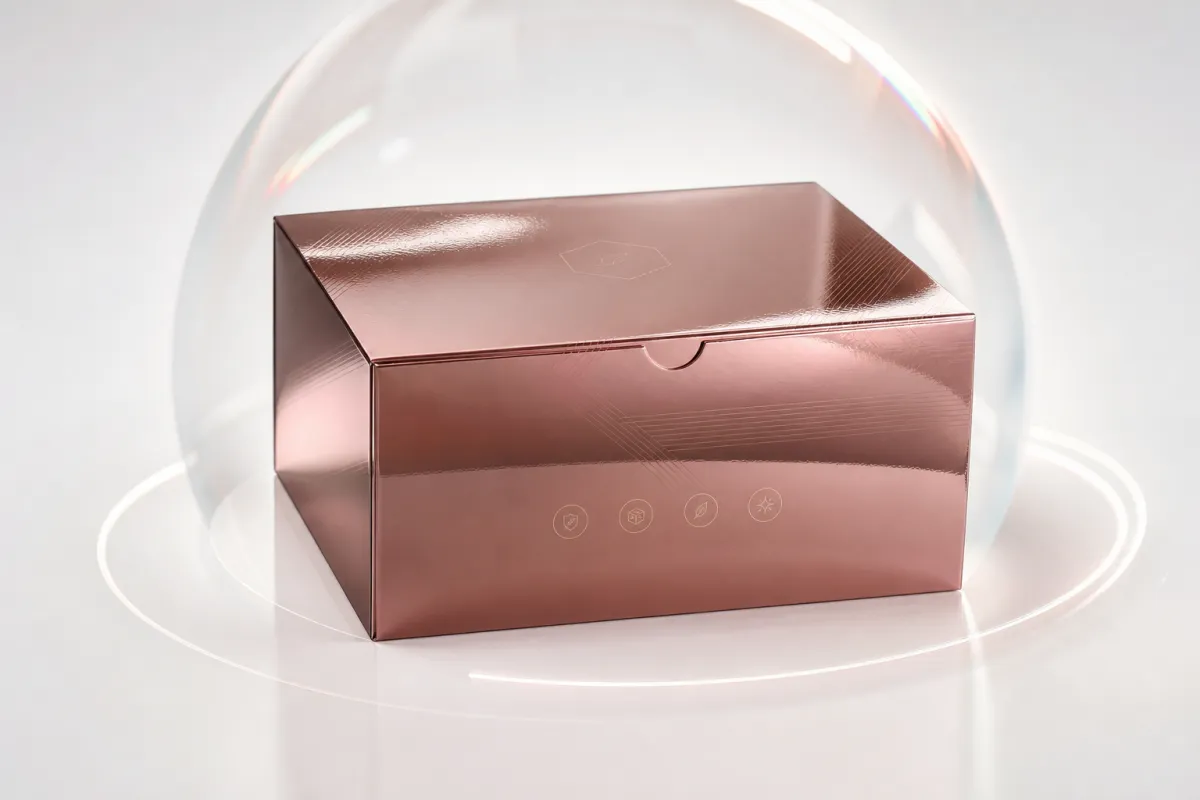
A carton can seem quiet and restrained in a proof, then come alive in a store under bright lights or in front of a sunlit window. That is a major reason custom gloss laminated cartons keep showing up in branded packaging: the finish creates a clean reflective surface that makes saturated colors feel denser, tightens the look of typography, and gives foil accents or metallic details more presence. A shopper who picks up the box also feels that smoother, more controlled surface, which can suggest care and quality before the product is even opened.
Custom gloss laminated cartons are usually Printed Folding Cartons or rigid-style cartons that receive a transparent glossy film on the outside. The laminate is doing more than adding shine. It helps protect the print from abrasion, lowers the chance of scuffing during packing and shipping, and gives the package a more polished retail appearance. For brands that depend on package branding, that mix of shelf impact and surface protection is often enough to make gloss the preferred choice over a basic coated stock.
The effect is not only visual. Gloss tends to make reds, blues, blacks, and other deep tones feel richer, which helps cosmetics, supplement jars, grooming kits, fragrance boxes, and specialty food cartons read well from across a shelf. A flat carton can still be well designed, but custom gloss laminated cartons often make the same layout feel more intentional and more upscale because the surface becomes part of the brand message. That quiet advantage matters more than people expect: the carton starts selling the product before a customer ever reads the back panel.
Clear expectations help here. The laminate improves appearance and surface durability, yet it is not a structural layer and it is not a waterproof barrier. A glossy film will help with light rubbing, shelf wear, and the occasional fingerprint, but cartons that face moisture, condensation, or rough transit still need the right board, internal protection, and shipping plan. Custom gloss laminated cartons work best as a premium retail packaging finish, not as a replacement for proper package engineering.
“A good gloss finish should make the carton look better, not harder to read. If it starts fighting the typography or throwing glare into key panels, the finish is doing too much work.”
I have seen more than a few packaging comps look great in a design review and then get awkward once we put them under real lighting. That is usually where the glossy surface either helps the layout or exposes it. If the carton needs to sit on a crowded shelf, travel through distribution, and still look sharp when the last unit is picked up, custom gloss laminated cartons can be a strong fit, but only when the entire build supports the finish.
- Best fit: shelf-facing cartons that need bright color and a strong first impression.
- Less ideal: packs that need low glare for dense legal text or tiny ingredient panels.
- Common use cases: cosmetics, supplements, gift sets, specialty foods, and branded retail packaging.
How Custom Gloss Laminated Cartons Are Made
The production path for custom gloss laminated cartons usually starts well before the press run. Artwork needs to be checked against the dieline, copy has to fit the folds and glue tabs, and the print file should already account for the way gloss can change the look of dark solids, gradients, and fine text. When prepress catches a problem early, the rest of the job moves more smoothly; when it does not, the laminate stage can lock in issues that would have been easier to fix on screen. Packaging design and production planning need to stay in the same conversation from the beginning.
Once the file is approved, the board is printed, usually on SBS, C1S, C2S, or a similar folding-carton stock in a thickness chosen for the product weight and shelf feel. After printing, a thin clear film is bonded to the outside with heat and pressure or a pressure-sensitive adhesive system, depending on the production setup. That bond creates the glossy layer you see and feel. On custom gloss laminated cartons, the film sits above the ink, which is why the colors can look deeper and more saturated than they did at the raw print stage.
After lamination, the sheets move to die cutting, scoring, folding, and gluing. Those steps need to be lined up carefully so the laminate does not crack on the scores and the folds stay crisp. The carton is then packed flat for shipment or assembled depending on the structure and the buyer’s requirements. Rigid-style presentations change some of the details, yet the basic sequence stays the same: print first, laminate after, then convert the structure into a retail-ready package.
That workflow is a large part of why custom gloss laminated cartons often feel more premium than a simple coated box. The laminate layer usually feels more substantial than varnish or aqueous coating, so it tends to hold up better against handling and gives a brighter surface response. Coatings still make sense for many projects, especially where cost, recyclability, or glare control matter more than high shine, but lamination usually wins when the goal is visible shelf presence and a tougher printed surface.
The visual effect is strongest on high-contrast graphics. Photographic artwork, bright gradients, and foil accents tend to pop under gloss, while small text can become harder to read if the layout is already crowded. That is why the decision should not come from a marketing mood board alone. Custom gloss laminated cartons work best when art direction, board selection, and conversion method all support the same result. A carton that looks luxurious in the proof but fails on the line is still a bad carton, no matter how bright the finish looks.
It helps to think in terms of end use rather than finish alone. If the pack will be handled often, stacked, and displayed, custom gloss laminated cartons make a strong case. If the product is light, short-lived, or meant to feel natural and soft, an uncoated premium stock or matte finish may suit it better. The finish should serve the product, not overpower it.
Key Factors That Shape Custom Gloss Laminated Cartons
Board selection is one of the first decisions that shapes custom gloss laminated cartons. A smoother sheet usually gives the film a cleaner laydown, while a rougher surface can telegraph texture through the laminate or make the final carton feel less refined. Thickness matters as well. A 14pt or 16pt folding carton may work well for lightweight products, while heavier items often need 18pt, 24pt, or another stiffer board so the box keeps its shape in retail packaging and during pack-out.
Artwork and print chemistry matter just as much. Deep blacks, fine lines, skin tones, metallic details, and pale tints all react differently under gloss. Rich blacks can look luxurious, but if the print is not calibrated carefully, the laminate may reveal banding or uneven coverage that was hard to spot before finishing. Busy layouts can also become harder to manage because a glossy surface pulls the eye around the panel. Good packaging design accounts for that movement instead of fighting it. If you want a carton to feel premium, custom gloss laminated cartons need art files built for that shine, not just adapted to it.
The product category changes the spec too. Cartons for cosmetics or gift sets often accept more visual drama, while supplement cartons may need a calmer layout with enough clear space for dosage panels, caution statements, and barcodes. Specialty foods can sit somewhere in between, depending on whether the pack is meant for retail display or secondary containment. In all of those cases, custom gloss laminated cartons can work, but the handling environment sets the real requirements. If the carton is going to be touched by shoppers, stacked by staff, and shipped through distribution, the finish needs to support that path.
There is also a compliance layer that should stay visible from the beginning. Ingredient panels, warning copy, net contents, QR codes, and regulatory text need to stay readable after lamination. Gloss should not turn a required information area into a reflective problem spot. The best results usually come from planning the information hierarchy early, leaving enough quiet space for text, and avoiding low-contrast type on the most reflective parts of the carton. If a label team is already working with strict content rules, custom gloss laminated cartons should be reviewed as both a branding tool and a functional information carrier.
Sustainability conversations are more nuanced than many buyers expect. Some gloss films and multi-layer builds are harder to sort in local recycling streams than a simple coated carton, while some paperboard choices may carry FSC certification or other sourcing claims that matter to your brand. If fiber sourcing is part of your packaging story, the Forest Stewardship Council is a useful reference point. If you are balancing premium appearance with end-of-life concerns, ask your supplier exactly what the stack-up is: board type, laminate film, adhesive, and any additional finish layers. Custom gloss laminated cartons can still fit a responsible sourcing strategy, but the details need to be clear.
From a buyer’s point of view, the biggest mistakes happen when teams choose the finish first and the product requirements second. A better path starts with the carton’s job, then moves to the finish. A premium retail box that must catch light and survive handling is a strong candidate. A plain shipping insert or a low-glare information-heavy box may not be.
For transit-heavy programs, package performance testing is worth discussing early. If the carton is part of a shipment system, the protocols from the International Safe Transit Association give buyers a disciplined way to talk about drop, vibration, and distribution stress. That kind of testing does not replace solid carton design, but it helps confirm that the finish and structure are working in the real world rather than only on a mockup table.
- Board smoothness: smoother sheets usually give a cleaner gloss laydown.
- Copy density: legal text needs enough contrast and quiet space.
- Handling: high-touch cartons benefit more from scuff resistance.
- Sourcing: FSC, recycled content, and film choice should be reviewed together.
Custom Gloss Laminated Cartons Cost and Pricing Drivers
Pricing for custom gloss laminated cartons usually comes down to a few predictable variables, and the more precise you are about them, the easier it is to compare quotes in a meaningful way. Size is a major factor, because larger cartons use more board, more ink, and more film. Board grade matters too, since a heavier stock costs more and may require more careful conversion. Print complexity affects both press time and waste. Add special finishes like foil stamping or embossing, and the cost rises again because those steps add tooling, setup, and labor. For most buyers, the real question is not just what the carton costs, but what the whole package of quality, timing, and finish is worth to the product.
Short runs almost always cost more per carton. That is not a sales line; it is simply how production works. Setup time, color calibration, die creation, finishing, inspection, and packing are spread across fewer units, so the unit price climbs. A straightforward run of custom gloss laminated cartons at 5,000 pieces might land in a range such as $0.22 to $0.60 per unit, depending on size, board, print coverage, and finish complexity. Larger runs can come down meaningfully, while very small runs often move up quickly because the fixed setup costs stop being hidden in volume. Those are not absolute numbers, but they are useful for budget planning.
Hidden costs are where buyers get surprised. Revision rounds can add time and prepress work. Proofing may require extra freight if a physical sample is needed quickly. Tooling changes can create charges if the dieline is revised after the cutter is already made. Rush fees can appear when the schedule tightens. Even the simple question of how the cartons will be packed for shipment can change the final number. Custom gloss laminated cartons are not expensive only because of the finish; they become expensive when the project lacks clean approvals or late-stage clarity.
Comparing quotes works best when you line up like-for-like details. One supplier may quote a lower price but omit lamination thickness, while another may include a sturdier board, better registration, and tighter finishing tolerances. Look at unit price, tooling, lead time, proof method, and final finish quality together. That is the only way to know whether the deal is actually better. If you are also sourcing other branded packaging pieces, it can help to review your carton spec next to your broader custom printed boxes needs so the finish strategy stays consistent across the line.
| Option | Visual Result | Typical Cost Impact | Best Use Case |
|---|---|---|---|
| Gloss lamination only | Bright shine, stronger color pop, clear surface protection | Baseline for premium carton finishing | Retail packaging that needs shelf presence and scuff resistance |
| Gloss lamination + foil | High contrast and strong focal points | Higher, due to extra tooling and a second finish step | Gift sets, cosmetics, and luxury presentation packs |
| Gloss lamination + embossing | Tactile depth with reflective highlights | Higher, especially on intricate dies | Package branding where touch and light both matter |
| Matte lamination | Soft, low-glare, understated look | Similar or slightly different depending on supplier and film | Products with heavy copy, premium restraint, or glare concerns |
That table is a reminder that finish should be chosen for function as much as style. A shopper standing three feet from a shelf is reacting to speed, contrast, and clarity. A buyer at a desk is reacting to cost, print quality, and brand fit. Custom gloss laminated cartons can satisfy both sides when the structure is planned carefully, but a quieter finish can sometimes be the smarter commercial decision if the product itself does not benefit from extra shine.
Budgeting also benefits from honesty about tradeoffs. If lamination reduces scuffing and keeps the box saleable longer, it may lower the chance of reprints or damaged inventory. That does not make gloss free, of course, but it can offset some upfront cost in premium retail packaging. For high-visibility launches, that protection can be worth more than the few cents saved by choosing a lighter finish.
Custom Gloss Laminated Cartons Process and Timeline
A clean timeline for custom gloss laminated cartons usually starts with structural review, because the carton has to fit the product before anyone worries about reflection or shine. After that, artwork is checked, proofs are prepared, and the customer signs off on color, copy, and layout. Once approval is in hand, production moves through printing, lamination, die cutting, folding, gluing, and final packing. On a straightforward job, many teams can expect roughly 12 to 15 business days from proof approval to shipment, though the actual schedule depends on quantity, finish complexity, and the supplier’s workload.
Delays usually come from predictable places. Missing dielines slow down artwork setup. Barcode changes can force a fresh proof. Copy edits that arrive after prepress may require a full recalculation of layout. A carton that looked fine on screen can also reveal a fold issue once the first printed sample comes off the line. With custom gloss laminated cartons, late changes are especially frustrating because the laminate is one of the final stages. Once that film is bonded, corrections are no longer simple.
Prepress checks save real time. The file should already account for bleeds, safe zones, score lines, and fold direction. Image resolution needs to be high enough to survive the print process. Type should be large enough to hold up after gloss is added. If your packaging design includes a barcode, a QR code, or compliance text, those elements should be checked against both size and contrast. The more careful this step is, the less chance there is of rework in production.
The best launch planning works backward from the shelf date. If a product is scheduled for retail release on a fixed date, the sample needs to be approved early enough for production, packing, and freight. That may mean starting the carton conversation weeks before the product fills, not after. Custom gloss laminated cartons reward that kind of planning because the finish is part of the visual system, not an afterthought. When the carton has to support a launch, every day saved in approvals is a day that can protect the rollout.
It also helps to know where quality checks sit in the process. A good supplier will inspect registration, gloss consistency, glue performance, fold memory, and carton squareness before the order ships. If you are buying carton packaging at scale, ask how those checks are documented. If the job involves a higher-value product or repeated handling in stores, that extra process discipline matters. A beautiful carton that opens badly or tears at the score is not premium, no matter how shiny it looks in photos.
One practical way to stay on schedule is to keep the spec sheet complete from the start. Size, board, finish, quantity, artwork, and any compliance text should be locked before quoting if possible. The more moving parts the project has, the more custom gloss laminated cartons behave like a controlled production job rather than a simple print order. That is not a bad thing. It just means the team has to respect the sequence.
Common Mistakes With Custom Gloss Laminated Cartons
One of the most common mistakes is choosing gloss because it looks impressive in a mockup, without checking whether the actual product environment supports it. A carton that lives under bright store lights, in a dry room, and on a clean shelf may suit gloss very well. A carton that gets handled constantly, packed into tight cases, or placed near reflective lighting may need a different finish or a more restrained art layout. Custom gloss laminated cartons are not a universal answer, and that is part of their value; the finish should solve a problem, not create one.
Another frequent issue is artwork that becomes too busy once the gloss layer is added. Tiny legal text, thin white type on dark solids, and crowded front panels can become harder to manage when the surface reflects light. A screen mockup rarely shows that effect honestly. Physical samples do. So do print proofs viewed under lighting similar to the sales floor. If a carton needs to carry a lot of information, the safest approach is to reserve the gloss for hero panels and keep the dense copy areas calmer. That kind of packaging design discipline pays off later.
Some teams specify too many finishes at once. They add gloss, foil, embossing, spot effects, and textured touches, then wonder why the unit cost climbed faster than expected. A carton does not need every possible enhancement to feel premium. Often, custom gloss laminated cartons work best when the shine itself carries most of the visual weight and the artwork is strong enough to do the rest. If every panel is shouting, the brand message gets muddled.
Skipping measurement checks is another costly mistake. Even a well-printed carton can fail if the product tolerances were not confirmed before the dieline was approved. Insert fit, bottle shoulder height, cap clearance, and internal movement all matter. If the carton is too loose, it feels cheap. If it is too tight, the product scuffs or the box bulges. Custom gloss laminated cartons should be measured against the actual filled item, not just a CAD drawing. That is especially true for custom printed boxes meant to travel in a retail supply chain.
“The finish should support the carton structure, not compensate for a bad structure. If the fit is off, gloss can make the problem look more expensive.”
Sample review matters more than many buyers expect. Digital images are useful, but they do not show glare, finger marks, or the way a glossy surface changes perceived color. A carton that looks lively on a monitor can feel too reflective in person, especially if the brand language is minimal or the typography is already very fine. For custom gloss laminated cartons, a physical sample is often the difference between a cautious yes and an expensive do-over.
There is also a sustainability mistake that comes up often: assuming that all glossy boxes are the same from an end-of-life point of view. They are not. The board, the laminate film, the adhesive, and any added features all affect recyclability and local sorting behavior. If your team cares about that story, ask for the stack-up early and discuss alternatives before the order is locked. In many cases, a slightly different finish can preserve the visual identity while making the pack easier to explain to customers.
Finally, some buyers approve too quickly because the first proof looks close enough. That is understandable, but it can be risky. A proof is not a finished carton. The laminate, folding, and gluing all introduce real-world variables. The safest path is to review a printed sample, confirm that the color still feels right, and verify that the carton opens, folds, and displays the way the product needs it to. Custom gloss laminated cartons reward that extra attention with a better final result.
Expert Tips and Next Steps for Custom Gloss Laminated Cartons
Start with the product’s real job. Does the carton need to sell on a crowded shelf, protect a delicate item, travel in secondary packaging, or support repeated handling in stores? That answer tells you whether custom gloss laminated cartons are a strong fit or whether another finish would serve you better. Gloss is most persuasive when visual impact and scuff resistance matter at the same time. If glare control or a softer, quieter look is more important, matte or a lighter coating may be the better path.
Request physical samples whenever possible. A sample lets you compare gloss level, image clarity, fold performance, and how the finish reacts to fingerprints or overhead lighting. That one step often prevents the kind of disappointment that shows up only after the cartons are packed and distributed. For custom gloss laminated cartons, a sample is not a luxury item; it is part of responsible buying. Even a simple pre-production sample can reveal issues that a screen proof will never show.
Prepare a tight spec sheet before you ask for a quote. Size, board preference, quantity, target budget, artwork files, barcode requirements, and any compliance language should all be set as clearly as possible. If you are comparing branded packaging across product lines, keeping that data consistent makes it easier to plan future orders and preserve a stable look. A good supplier can still help refine the spec, but the first draft should not be vague.
Here is a simple decision tree I use when teams are weighing custom gloss laminated cartons against other finishes:
- If the carton must catch attention fast, gloss is worth serious consideration.
- If the layout is text-heavy or glare-sensitive, test matte or a lower-sheen coating.
- If the product ships through rough distribution, ask for scuff resistance and transit expectations up front.
- If sustainability messaging is part of the brand story, review board sourcing and film choice before approval.
That logic sounds plain, but it keeps the buying process grounded. Too many packaging decisions get made from a design render alone, then the production team has to rescue the result later. Custom gloss laminated cartons work best when marketing, operations, and print production are all looking at the same spec and asking the same question: what does the carton need to do after it is printed?
If you are still narrowing down options, compare the gloss path against matte, aqueous coating, and uncoated premium board on one page. That comparison usually makes the choice obvious. In some cases, the higher shine of custom gloss laminated cartons wins because the product needs shelf energy. In other cases, a softer finish wins because the brand voice is calmer, the copy is denser, or the product will be handled in ways that punish glare. Good packaging is not about choosing the most expensive surface; it is about Choosing the Right one.
The next practical step is simple: confirm your carton dimensions, gather dieline-ready artwork, and ask for a sample or quote that reflects your actual print coverage and finish preferences. If you already know the product, the timeline, and the retail environment, it becomes much easier to judge whether custom gloss laminated cartons will help your launch or just add cost. For many products, the finish is the difference between a box that exists and a box that sells. For others, it is simply the wrong tool. That honesty is useful, and it saves money.
When you are ready to move from concept to production, review your carton against the broader packaging program as well. A single box rarely lives alone; it sits alongside inserts, labels, shipper cases, and display materials. Keeping those elements aligned gives your package branding a more disciplined look and helps the whole line feel intentional. If the carton is the face of the product, custom gloss laminated cartons can make that face sharper, brighter, and more memorable, provided the spec is built with real use in mind.
Custom gloss laminated cartons are worth the investment when the goal is stronger shelf presence, better scuff resistance, and a more polished retail feel. They are not the right answer for every product, but when the art, board, and timeline are lined up correctly, custom gloss laminated cartons can do a lot of quiet brand work without making the pack feel overdone.
Are custom gloss laminated cartons better than matte cartons for retail shelves?
Gloss usually gives stronger color pop, sharper contrast, and a more eye-catching look under bright retail lighting, which is why custom gloss laminated cartons are often chosen for products that need fast shelf recognition. Matte can feel softer and more restrained, so the better choice depends on the brand personality and how much glare the display environment creates. If the goal is premium shine and visual energy, gloss often wins; if readability and low reflection matter more, matte may be the safer choice.
How much do custom gloss laminated cartons usually cost?
Pricing depends on size, quantity, board stock, print complexity, and the exact laminate system used. Short runs usually cost more per carton because setup and finishing time are spread across fewer units, while larger orders can bring the unit price down. For many mid-range jobs, custom gloss laminated cartons may land roughly in the $0.22 to $0.60 per unit range, but the best quote comparison always looks at tooling, proofing, freight, and lead time together.
Do custom gloss laminated cartons protect the print from scratches?
Yes, the laminate adds a protective layer that helps reduce scuffs, rub marks, and general handling wear. It improves durability, but it is not a substitute for waterproof packaging or heavy-duty shipping protection. For products that move through many hands or sit on display for a while, custom gloss laminated cartons can meaningfully extend the visual life of the printed surface.
What is the typical process and timeline for custom gloss laminated cartons?
The process usually includes artwork review, proofing, printing, lamination, die cutting, folding, gluing, and shipping. A straightforward job can often move from proof approval to shipment in about 12 to 15 business days, although quantity and finish complexity can change that. Clean files, fast approvals, and accurate barcode and dieline checks help keep custom gloss laminated cartons on schedule.
Can custom gloss laminated cartons still be recyclable?
Sometimes, but recyclability depends on the board, the laminate film, local recycling rules, and any extra finish layers. If sustainability is a priority, ask for the exact material stack-up and compare it with coating-based alternatives before production starts. A packaging supplier can help balance shelf appeal, durability, and end-of-life expectations so the carton supports both the brand story and the practical recycling conversation.

