Buyer Fit Snapshot
| Best fit | Custom Grocery Paper Bags Supplier projects where brand print, material claims, artwork control, MOQ, and repeat-order consistency need to be specified before quoting. |
|---|---|
| Quote inputs | Share finished size, material target, print colors, finish, packing count, annual reorder estimate, ship-to region, and any compliance wording. |
| Proofing check | Approve dieline scale, logo placement, barcode or warning zones, color tolerance, closure strength, and carton packing before bulk production. |
| Main risk | Vague material claims, crowded artwork, missing packing details, or unclear freight terms can make a low unit price expensive after revisions. |
Fast answer: Custom Grocery Paper Bags Supplier: Film, Print, MOQ, and Carton Packing should be specified like a repeatable production item. The safest quote records material, print method, finish, artwork proof, packing count, and reorder notes in one written spec.
Production checks before approval
Compare the actual filled-product size with the drawing, then confirm tolerance on folds, seals, hang holes, label areas, and retail display edges. Reserve space for logos, QR codes, warning copy, and material claims before decorative graphics fill the panel.
Quote comparison points
Review material grade, print process, finish, sampling route, tooling charges, carton quantity, and freight assumptions side by side. A quote is only useful when the supplier can repeat the same color, closure quality, and packing count on the next order.
If you are looking for a custom grocery paper bags supplier, start with the bag itself, not the logo. I have seen plenty of orders where the artwork was beautiful, the paper looked fine on a screen, and the first real test still ended with a torn handle in the parking lot. Grocery bags live a harder life than most people expect. They hold milk, produce, boxed goods, frozen items, and the occasional overloaded impulse purchase, so the spec has to match the job. That is where a capable custom grocery paper bags supplier earns trust.
These bags are more than carry-out packaging. They are branded packaging, yes, but they are also a moving stress test. The bag goes from the checkout counter to a cart, then to a trunk, then to a kitchen counter, and sometimes to a second use if the construction is decent. Every one of those moments tells the customer something about the store. A plain bag usually disappears into the background. A branded one gets judged immediately, and sometimes unfairly, which is just part of the deal.
From a buyer's standpoint, the goal is not to chase the lowest quote or the prettiest mockup. The real task is to find a custom grocery paper bags supplier that can balance strength, print quality, consistency, and cost without turning every reorder into a fresh round of confusion. That means paying attention to paper weight, handle construction, glue lines, gusset depth, reinforcement, and freight before approving anything. If the quote does not make those things clear, it is not a useful quote.
"A bag that saves two cents and fails in the parking lot costs a lot more than two cents."
That is the lens for everything that follows. If a supplier understands basket weight, storage conditions, checkout flow, and the way a real grocery order behaves once it leaves the register, you are already ahead of a lot of procurement teams that start and end with a logo file.
Why a custom grocery paper bags supplier matters
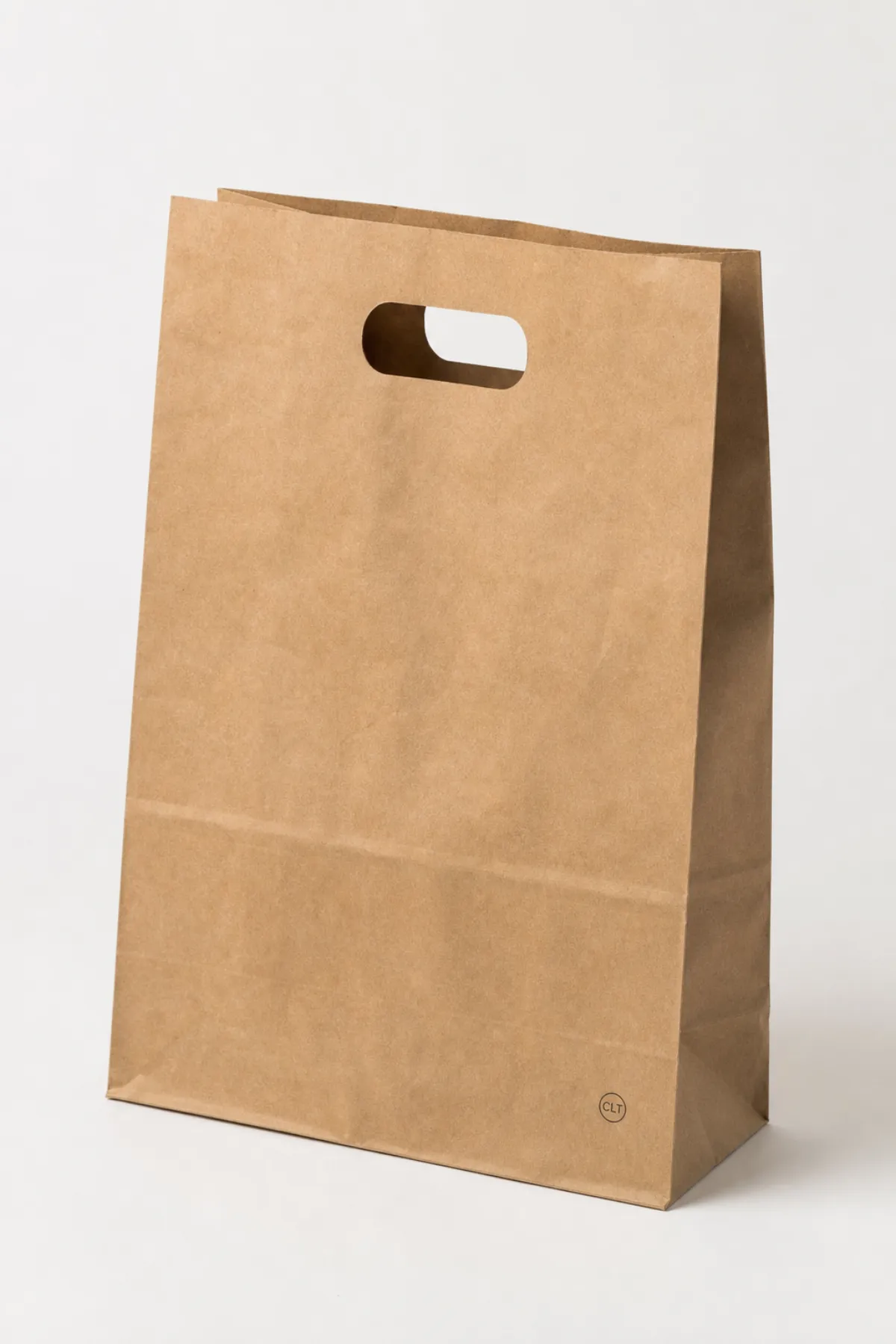
The uncomfortable truth is that most grocery bag failures come from spec choices, not from paper as a category. A paper bag can be perfectly fine for bakery items and still be the wrong choice for mixed groceries. A handle that is a little too light, a glue line that gives way under load, or paper that is slightly under the needed weight can make a custom grocery paper bags supplier look careless even when the print work is excellent.
That matters because grocery bags do more than hold product packaging. They carry the store's image into a car, onto a kitchen counter, into an office, and sometimes onto social media when something fails at the wrong moment. A plain bag gets ignored. A branded one gets noticed, then judged. That is the reality of package branding, whether we like it or not.
Good grocery bags also need to survive ordinary abuse. Think about a checkout order with a gallon of milk, a sack of apples, a carton of eggs, and two cans. A bag that looks premium on the counter can still fold awkwardly at the bottom or stretch near the handle once the load goes in. A capable custom grocery paper bags supplier should talk about load capacity in plain language, not hide behind vague claims like "strong enough."
In practice, the best supplier acts more like a performance partner than a print shop with a paper catalog. They should ask about average basket weight, whether bottled drinks are common, whether the bags sit in a damp stockroom, and how often you reorder. Those details change the recommendation. A thoughtful custom grocery paper bags supplier will push back if the requested spec is too light for the actual use, and that pushback is usually a good sign.
There is also a cost angle that buyers sometimes miss. If you under-spec the bag, you save a little on paper but invite damage, returns, or customer irritation. If you over-spec it, you burn margin on a bag that is stronger than the job requires. The better custom grocery paper bags supplier knows where the middle ground sits. That is why supplier selection matters more than many people think.
One more point: grocery bags are often reused. That sounds good, but it also means the bag has to survive not only the first trip home, but a second and sometimes a third use. If the logo still looks crisp after repeated handling, that becomes extra brand exposure. If the handle gives out early, the bag becomes a reminder that the store cut corners. A good supplier helps you avoid that kind of very public mistake.
How a custom grocery paper bags supplier works
The usual workflow starts with a brief. You send dimensions, paper preference, handle style, print coverage, quantity, delivery location, and the intended use. A solid custom grocery paper bags supplier should turn that into a real spec sheet, not just a casual quote. If the quote leaves out paper weight, handle construction, or finish details, you are not comparing finished options. You are comparing guesses.
Most orders move through the same sequence: bag size, paper type, handle style, print area, artwork, quote, proof, production, inspection, packing, shipment. The order matters. A supplier that skips the proof step or rushes straight into production is asking for a headache later. The best custom grocery paper bags supplier will treat proof approval as a control point, not a box to tick and forget.
There are three common business models here. A manufacturer controls converting and often printing, so they usually have the most direct control over quality and lead time. A broker sources from multiple plants and can help with quoting, but quality depends on the factory behind the scenes. A trading company sits somewhere in the middle and may work well for simpler jobs, though the buyer should still ask who actually runs the production line. If you want consistent results from a custom grocery paper bags supplier, you need to know who is physically making the bag.
Construction choices are where the real differences show up. Kraft paper is still the standard for grocery use because it handles weight well and gives a natural retail look. Coated paper can sharpen print, but it is not right for every grocery application. Flat handles are usually the lower-cost option. Twisted handles tend to feel sturdier in the hand and look more finished. Reinforced mouths and bottoms help with heavier loads. Gusset depth changes how the bag opens and how square it sits when packed. Matte or glossy finish changes both appearance and handling. A good custom grocery paper bags supplier should explain those tradeoffs without pretending there is one perfect answer.
Printing method matters more than many buyers expect. Some suppliers print before converting the bag, while others print after. That changes color consistency, registration, and sometimes minimum order size. Large solid ink areas can change how the paper feels and may show scuffing sooner than a simple logo mark. If your brand uses a lot of black coverage or a deep color field, ask the custom grocery paper bags supplier how they handle rub resistance and color control. That question saves a lot of headache.
The right partner should also help with packaging design. That does not mean making the bag flashy for no reason. It means placing the logo where it can actually be seen, choosing a print area that fits the dieline, and making sure the bag still functions when fully loaded. Good package branding is usually simpler than people expect. It is clean, readable, and hard to ruin.
If sustainability claims matter, ask for the exact paper source and finish details. Some bags are recyclable in most curbside systems; others are affected by coatings, laminations, or handle materials. For a general recycling reference, the EPA has public guidance at epa.gov/recycle. If you need certified forest content or chain-of-custody claims, check the standards at fsc.org. A responsible custom grocery paper bags supplier should be able to tell you what the bag is actually made of, not just repeat a green-sounding sentence.
Custom grocery paper bags supplier pricing: what drives cost
Pricing is where bad quotes go to breed confusion. The lowest number on the page is often missing something. A proper custom grocery paper bags supplier should be able to explain cost in terms of paper grade, bag size, handle type, print colors, reinforcement, finish, and freight. If they cannot break it down, they are either hiding something or have not thought the job through.
Paper grade is a major lever. Lighter kraft paper costs less, but it may be wrong for heavier retail packaging use. Heavier paper or specialty stock raises cost, especially when paired with a reinforced mouth or base. Handle style changes pricing too. Flat handles are usually the lower-cost option. Twisted handles and die-cut features often add cost because they require different converting steps. A good custom grocery paper bags supplier will show those differences instead of pretending everything is magic.
Print coverage matters more than the logo itself. One-color logo printing on a natural kraft bag is a different job from full-bleed art with multiple spot colors and tight registration. More colors usually mean more setup, more production control, and more room for waste. That is why the same bag can be quoted in very different ranges depending on artwork. If your brand wants a bold package branding look, expect to pay for it.
Minimum order quantity is not random. It is how the factory spreads setup, plates, material cut loss, and machine changeovers across the run. Lower quantities usually mean higher unit cost. The opposite is true as volume rises: unit pricing tends to drop, then flatten once the run gets large enough. A sensible custom grocery paper bags supplier should quote tiered pricing so you can see where the break points actually are.
Here is a practical pricing snapshot for common grocery bag setups. These are broad ranges, not promises, because art coverage, size, and shipping can change the math quickly.
| Bag option | Typical use | Common cost driver | Indicative unit range | Strength note |
|---|---|---|---|---|
| Simple kraft bag with flat handles | Light grocery, bakery, takeout | Paper weight and size | $0.12-$0.22 | Fine for lighter loads |
| Twisted handle printed bag | Mixed groceries, retail packaging | Print colors and handle construction | $0.20-$0.38 | Better hand feel and load support |
| Reinforced grocery paper bag | Heavier baskets, bottles, pantry goods | Reinforced mouth/base and heavier paper | $0.30-$0.55 | Better for weight and repeat use |
| Premium printed bag with special finish | Brand-forward product packaging | Coating, finish, and art coverage | $0.40-$0.70+ | Looks strong; verify actual carry performance |
Freight can erase a bargain faster than a torn handle. A low unit price from a custom grocery paper bags supplier means very little if the shipping method is expensive, slow, or poorly packed. Ask for landed cost whenever possible. That means unit price plus packaging, freight, sample charges, plate fees, and any other fee that will show up before the bags reach your dock. Otherwise the quote is fantasy with a logo on top.
Buyers should also ask for pricing at multiple volumes. A quote for 5,000 pieces tells you something, but a quote for 10,000 and 25,000 pieces tells you more. Sometimes the gap is meaningful. Sometimes it barely moves. That is useful data. A solid custom grocery paper bags supplier will not get defensive when asked for tiered pricing. They know serious buyers compare numbers, not adjectives.
One more practical note: sample costs matter. Some suppliers charge for physical samples, dielines, or artwork revisions. That is not automatically a bad sign. It can simply mean they are treating the process seriously. What matters is transparency. If you are working with a custom grocery paper bags supplier, ask what is included in the quote and what is not. The cleanest invoice is usually the one with fewer surprises later.
Process and timeline: what to expect from order to delivery
A realistic timeline starts with the brief, not with the factory. If the spec is unclear, every later step gets slower. A good custom grocery paper bags supplier will ask questions early so the order does not drift into revision hell. That is not a sales trick. It is how you avoid paying for preventable mistakes.
The first step is inquiry and spec confirmation. Then comes the quote, then artwork review, then a proof or sample. For simple bags, proof approval can move quickly. For more complex print or reinforcement, the review cycle can take longer because the supplier has to confirm dieline fit, color placement, and any special finishes. After approval, production begins. Then quality inspection, packing, and shipment follow. A dependable custom grocery paper bags supplier will give you separate timelines for approval, manufacturing, and transit.
As a rough guide, production often takes around 12 to 20 business days after proof approval for straightforward orders. Complex artwork, thicker paper, special handles, or custom tooling can add days. Shipping is its own story. Domestic freight is one thing. Overseas transit is another. Holidays, port congestion, and factory schedule changes can stretch delivery. That is why asking for a date without asking what the date includes is a rookie move. A custom grocery paper bags supplier should state whether the number is a production completion date or a dock arrival date.
Bag complexity changes lead time in predictable ways. More colors add setup. Reinforced structures add labor. Special coatings add drying or curing time. Larger sizes may reduce the number of bags per carton and change packing efficiency. If you need a rush order, ask early whether it is actually possible. Some suppliers say yes to everything until the invoice is paid. A better custom grocery paper bags supplier tells you the truth before you are committed.
Quality control should not be a mystery. Ask whether the factory checks dimensions, print alignment, handle adhesion, and carton counts. If your store depends on regular replenishment, ask how they pack cartons, how many bags per carton, and whether cartons are moisture-protected. Grocery bags that arrive bent, damp, or short-counted are not a bargain. They are a nuisance with a freight bill attached.
For bigger programs, ask about transit testing and load testing. ISTA distribution test methods are useful when you want to know how a package holds up through shipping and handling. You do not need to become a standards specialist to benefit from the idea: the bag should be tested the way it will actually move. A good custom grocery paper bags supplier will understand that a bag can pass a visual check and still fail in handling if the construction is weak.
Common mistakes when choosing a supplier
The biggest mistake is choosing on price alone. Every buyer knows this, and somehow half of them still do it. The cheapest custom grocery paper bags supplier is often the one that reduced paper weight, skipped reinforcement, or quietly padded freight later. A lower quote can be real. It can also be a trap with prettier typography.
Another common mistake is vague specification. If you cannot state exact dimensions, handle style, paper weight, print colors, and finish, the supplier will fill in the blanks for you. That sounds convenient until the final bags do not fit the checkout basket or the logo sits awkwardly on the panel. Good packaging design is not decoration first. It is fit, structure, and print placement working together. A custom grocery paper bags supplier can only build on the spec you give them.
Artwork mistakes are painfully common. Low-resolution logos, missing bleed, tiny text, and incorrect color expectations can all wreck a run. Brown kraft is not a magic canvas. It changes contrast. White ink on kraft behaves differently from black ink on white paper. A reliable custom grocery paper bags supplier should flag those problems before production, but buyers should not assume the file will save itself.
There is also a compliance blind spot. Grocery bags may touch packaged food, and in some cases they are used close to unpackaged items. That means ink, glue, coating, and paper source all matter. If you are making sustainability claims, recycling claims, or forest-content claims, ask for documentation. Do not guess. Do not let a designer invent wording because it sounds nice. A trustworthy custom grocery paper bags supplier should be ready to discuss the actual construction and any claim support.
Here are a few warning signs that a supplier may not be the right fit:
- They quote without asking for dimensions, handle type, or print count.
- They avoid giving a spec sheet or dieline.
- They cannot explain what changes the unit price.
- They promise a delivery date without separating production and transit.
- They treat samples as a waste of time instead of a control step.
Honestly, if a custom grocery paper bags supplier acts annoyed by normal procurement questions, that is useful information. It means your repeat orders will probably be annoying too.
Expert tips for buying grocery paper bags that perform
Start with the load, not the logo. A bag for bakery rolls is a different animal from a bag that needs to handle bottled drinks, dairy, and pantry items. The right custom grocery paper bags supplier will ask what the bags actually carry. That question matters because a bag that works beautifully for one store can be wrong for another store with a heavier basket mix.
Ask for samples filled with real products. Empty bags are polite liars. They stand up nicely, flatten well, and do not reveal anything useful. Put in a carton of soup, a bottle, and a bag of produce. Then watch what happens at the handle and the bottom seam. That is how a custom grocery paper bags supplier earns trust. Not with adjectives. With loaded samples.
Request a dieline, a print proof, and a clear spec sheet before production. This is boring paperwork, which is exactly why it saves money. A dieline shows where the print sits, where folds land, and where the structure changes. A proof catches artwork mistakes. A spec sheet locks down the exact paper and construction. If your custom grocery paper bags supplier cannot provide those basics, you are carrying more risk than you should.
Build a reorder plan once the bag works. Lock the approved spec. Save the artwork files. Keep a small safety stock if the bag is a core part of your retail packaging operation. Then reorder before you hit zero. Repeat approvals waste time and create variation. A mature custom grocery paper bags supplier should help you set up a stable program, not force you to relearn the same bag every cycle.
Do not overcomplicate the design. A sharp logo, a readable line of copy, and a sensible bag color usually outperform busy artwork. Grocery bags are not Custom Printed Boxes, and they do not need to carry the entire brand story on one panel. The best package branding is often the most disciplined. Clean layout. Good contrast. Enough structure to hold real groceries. That is it.
Here is a useful internal starting point if you are planning a broader packaging program: our Custom Packaging Products page can help you compare formats and see how grocery bags fit alongside other branded packaging options.
One more practical habit: ask the custom grocery paper bags supplier to confirm carton counts, carton dimensions, and palletization if you are ordering at scale. That affects storage and receiving. A perfect bag that arrives in sloppy cartons is still a warehouse problem. And warehouses are famously patient. Not.
Next steps for choosing the right supplier
Before you request quotes, run a quick internal audit. Measure the bags you currently use. Note the failure points. Estimate the average carry weight. List the print goals. Decide whether sustainability claims need to be printed or simply supported. A careful custom grocery paper bags supplier can only help if the buyer knows what problem is being solved.
Then prepare a quote request that includes exact dimensions, paper weight or target gsm, handle style, print colors, quantity, finish, and delivery location. Include artwork if you have it. Include brand standards if color matters. If the bags will be used for heavier groceries, say so directly. The more specific you are, the less the supplier has to guess. A good custom grocery paper bags supplier will appreciate that because precise briefs usually lead to cleaner production.
Get at least three comparable quotes. Compare the same spec side by side. Check unit cost at multiple volumes, MOQ, Lead Time, sample quality, and communication speed. Price matters. So does response quality. If a supplier is slow or vague before the order, they usually stay slow or vague after the order. A dependable custom grocery paper bags supplier should feel easy to work with, but not sloppy.
The goal is not to buy the cheapest bag or the flashiest one. The goal is to find a custom grocery paper bags supplier that can deliver consistent quality, predictable pricing, and a repeatable ordering process without drama. That is what keeps grocery packaging useful instead of annoying. And honestly, that is a pretty good standard.
Once you have the right spec locked in, the bags become one of the easier parts of your retail packaging program. That is the payoff: fewer surprises, better shelf-to-carry experience, and branded packaging that does its job without making your team chase replacements every month. A good custom grocery paper bags supplier is not just another vendor. It is the difference between a bag that works and a bag that becomes a complaint.
How do I compare custom grocery paper bags supplier quotes?
Compare the same spec side by side: size, paper weight, handle type, print colors, and finish. Then check hidden costs like plates, tooling, samples, freight, and rush fees. A useful custom grocery paper bags supplier will also give unit cost at multiple quantities so you can see where the price break actually starts.
What MOQ should I expect from a custom grocery paper bags supplier?
MOQ depends on bag size, print method, and construction complexity, not just the supplier's mood. Simple kraft bags usually allow lower minimums than fully printed or reinforced bags. Ask for tiered pricing and MOQ options before you commit to a design, because that gives you room to compare realistic programs.
Are custom grocery paper bags supplier options recyclable?
Most paper bags are recyclable, but coatings, laminations, and handle materials can affect that claim. If you want a recyclable message on the bag, confirm the exact material mix with the supplier first. Use inks and finishes that support your sustainability claim instead of fighting it. A careful custom grocery paper bags supplier should be able to explain the construction clearly.
How long does a custom grocery paper bags supplier usually take?
Timeline depends on proof approval, production complexity, and shipping method. Sample and artwork review are usually faster than full production, but delays happen when specs are vague. Ask for separate timelines for approval, manufacturing, and delivery so there are no fantasy dates attached to the order.
What should I send to get an accurate quote from a supplier?
Send bag dimensions, paper weight, handle style, print colors, quantity, and delivery location. Include artwork files and any brand standards for color, logo placement, or sustainability claims. Tell the supplier how the bags will be used so they can recommend the right strength level. That is the fastest path to a quote that is actually useful.
If you want the shortest possible path to a useful order, do this first: measure the bag you already trust, write down the heaviest typical basket, decide whether the bag needs flat or twisted handles, and ask each custom grocery paper bags supplier for a landed-cost quote built on the same spec. That one habit cuts through most of the noise and gets you to the right bag faster.

