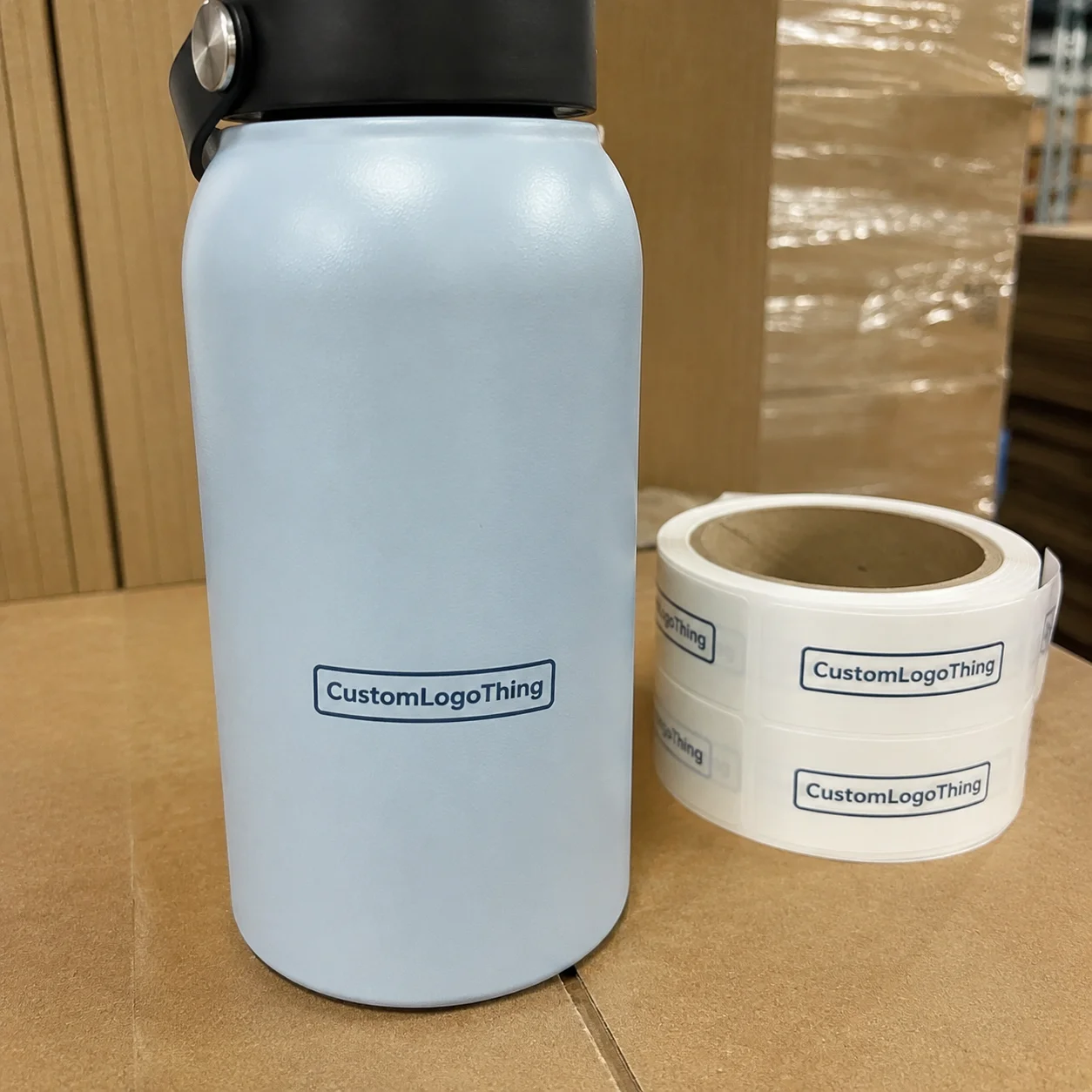
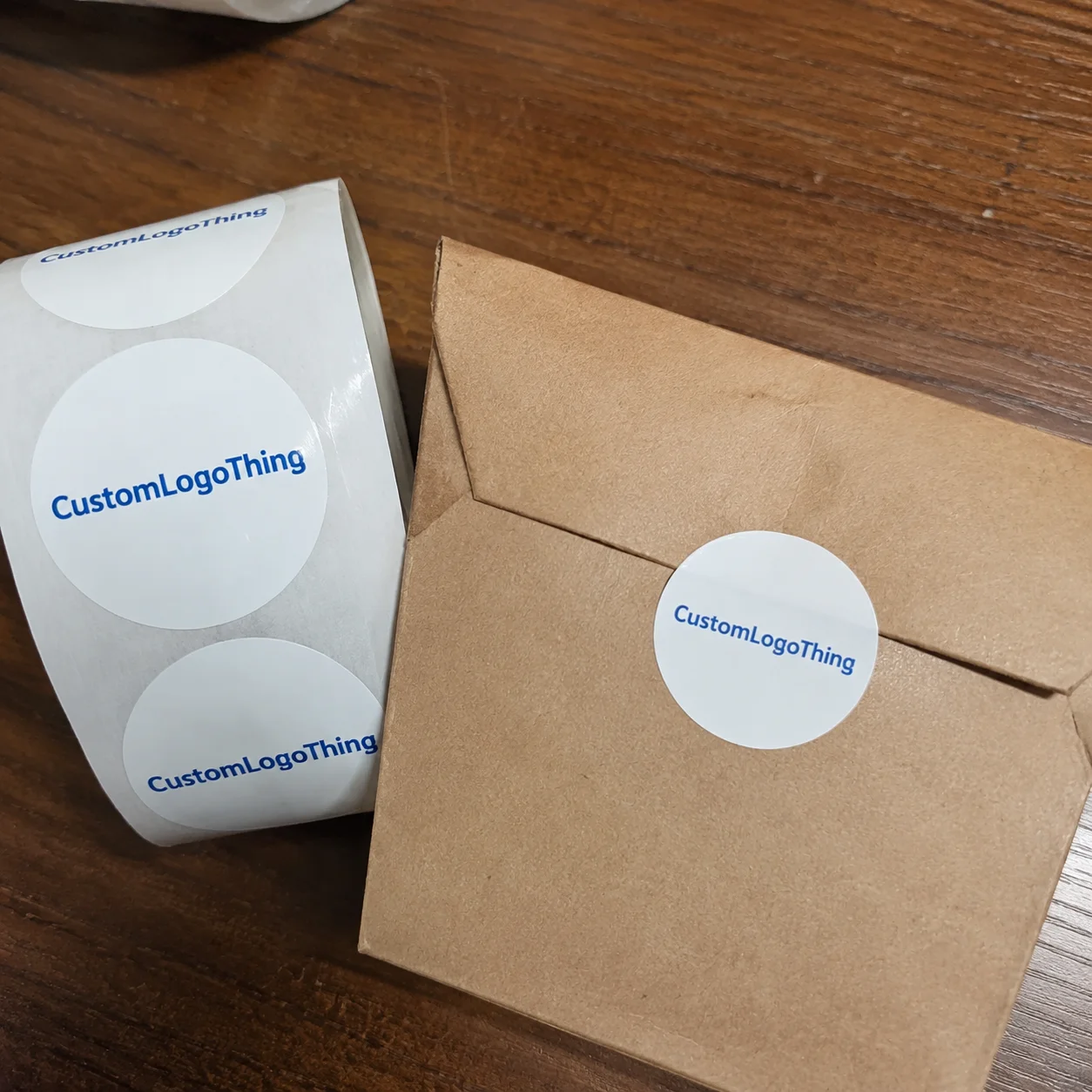
A shopper gives a shampoo bottle maybe three seconds before their hand moves on. That is the small window where custom hair product labels have to signal salon-grade, natural, luxury, curl-focused, barber-pro, or budget-friendly before anyone reads the ingredient panel.
Hair care packaging has a harder job than many people expect. The label is not just decoration. It carries brand color, product name, formula callouts, net contents, directions, warnings, barcode, and batch information while the container gets squeezed, wiped, splashed, shipped in cartons, and stored in warm bathrooms or busy salons. A label that looks polished on screen can fail quickly if the material, adhesive, ink, and finish are not chosen for the actual bottle and formula.
Here is the practical split: a decorative sticker is made to look nice under light use; a production-ready label is engineered around the container, product chemistry, filling process, retail setting, and application method. That difference matters on squeeze bottles, jars, pumps, droppers, tubes, and small sample packs. It also matters if the product sits beside premium retail packaging or ships with related Custom Packaging Products such as cartons, mailers, inserts, or display sets.
What custom hair product labels do in crowded beauty aisles
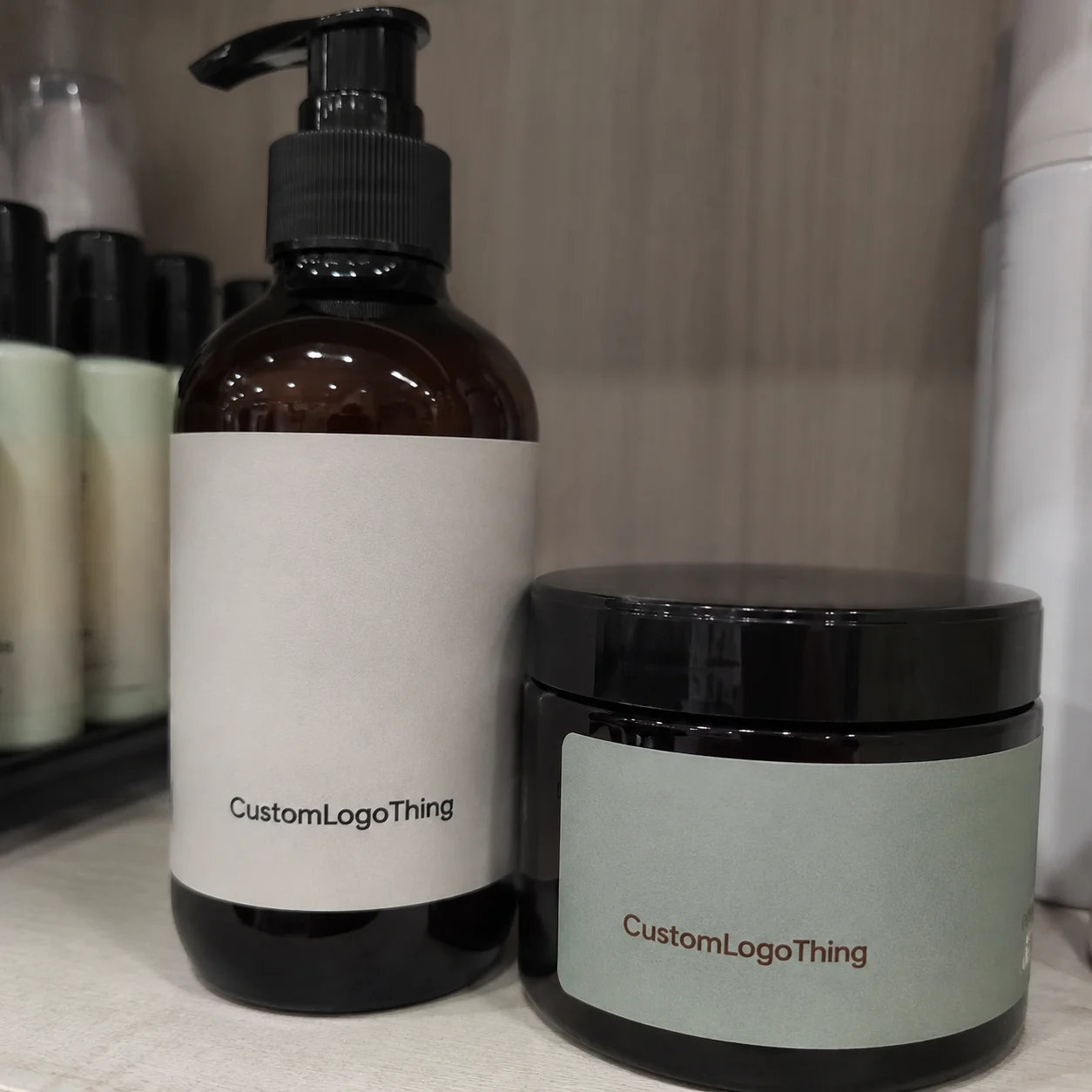
Beauty shelves are dense. A 2-ounce edge control jar, an 8-ounce conditioner, and a 16-ounce salon backbar bottle compete in different ways, but the label still has to create instant recognition. From a packaging buyer’s view, the front panel should answer four questions fast: who made it, what it is, who it is for, and why it deserves attention.
For hair products, that usually means strict hierarchy. The brand name needs to stay visible from 3 to 6 feet away. The product type should be readable at arm’s length. Formula claims such as “sulfate-free,” “for coils and curls,” “color-safe,” or “extra hold” should support the sale without crowding the main panel. Small labels punish indecision. If every claim gets the same type size, nothing wins.
Labels also carry trust. Ingredients, directions, warnings, net contents, manufacturer information, barcode placement, and lot coding all need room. Requirements vary by product type and selling market, so brands should confirm cosmetic labeling obligations with the relevant regulatory source or counsel. A label supplier can help with space, structure, and print feasibility, but compliance review belongs with the brand and its advisors.
Packaging floor reality: the best label design is not only attractive on day one. It still reads cleanly after filling, capping, case packing, shipping vibration, oily hands, wet counters, and repeated use.
That is why Custom Labels & Tags should be specified as part of the full packaging system, not treated as a last-minute sticker order. Materials, adhesive, print method, and finish all affect how the final item feels in the customer’s hand.
How label construction holds up on bottles and jars
A label looks thin, but it is a layered component. The basic construction includes the face stock, adhesive, release liner, ink system, and protective finish. Change one layer and the whole performance can shift. Many label failures start with a mismatch: the artwork is fine, but the face stock is wrong for the bottle, or the adhesive cannot grip the surface energy of the plastic.
Paper labels can work well for dry retail shelves, secondary cartons, sample packets, or products where a natural textured look matters more than water resistance. A common paper face might be a coated white paper in the 60 to 80 lb range, often paired with gloss or matte varnish. Standard paper is usually the most economical choice. It is not the safest first pick for shower products, oily serums, or jars handled with wet hands unless it has a protective laminate and the exposure is modest.
Film labels are the workhorse for many hair care lines. White BOPP, clear BOPP, and metallized BOPP are popular because they resist moisture better than paper and keep print looking crisp. A 2.0 to 2.6 mil BOPP label with permanent acrylic adhesive and gloss or matte lamination is common for shampoos, conditioners, leave-in sprays, beard oils, and styling creams. Vinyl-like films may be used for more demanding flexibility, outdoor exposure, or unusual shapes, though they cost more and may be excessive for standard beauty items.
Finishes change both performance and perception. Gloss makes colors pop and can feel clean and commercial. Matte softens glare and often suits natural or salon-grade positioning. Soft-touch laminate feels premium, but it can show oil marks on some darker designs, so testing is smart. Clear labels create a “no-label” effect on transparent bottles, but they often need white ink under key graphics so the design does not disappear against amber oil, tinted PET, or colored formulas.
- Gloss film: strong color, easy wipe-down, good for high-visibility retail packaging.
- Matte film: lower glare, refined look, useful for clean beauty and salon lines.
- Clear film: minimal appearance, best with white ink support behind logos and text.
- Textured paper: tactile, boutique feel, better for dry-use products or outer cartons.
Shape matters too. Cylindrical bottles can handle wrap labels, but tapered bottles create alignment problems if the dieline is not adjusted. Narrow neck labels need enough radius tolerance to avoid lifting at the edges. Squeeze tubes need flexible material and an adhesive that stays down as the tube flexes. A label that is too tall on a curved shoulder will wrinkle no matter how strong the artwork looks.
Key material, adhesive, and design factors
Good label specifications start with the container, not the graphic file. Is the bottle PET, HDPE, glass, aluminum, or a coated plastic jar? Is the product a thin shampoo, a thick hair mask, an oil-based serum, a waxy pomade, or an alcohol-containing scalp treatment? Will it sit in a shower, a salon station, a warehouse, or an e-commerce box moving through parcel networks?
Glass usually gives adhesive a clean, high-energy surface, though condensation and cold-fill conditions can still cause trouble. PET bottles tend to label well, especially if the surface is clean and smooth. HDPE can be trickier because it has lower surface energy, and many squeezable bottles flex enough to encourage edge lift. Coated jars vary. Some look smooth but carry release agents or surface treatments that interfere with adhesion.
Adhesive choice should match those realities. A general permanent acrylic adhesive may be fine for dry shampoo bottles or retail-only jars. For oily formulas, humid storage, or shower exposure, ask about water-resistant or oil-resistant adhesive options and test them on the actual filled container. Some formulas migrate through closures or leave residue near the cap; that residue can soften ink, dull a finish, or loosen edges.
Print setup has its own tradeoffs. Full-color digital printing is efficient for short runs, multiple SKUs, and seasonal launches because plates are not usually required. Flexographic printing can be more economical at larger volumes and gives strong spot-color control. White ink matters on clear or metallic stocks. Metallic accents can lift package branding nicely, but tiny silver text on a reflective background often becomes hard to read under store lighting.
| Label option | Best use | Typical strength | Watch point |
|---|---|---|---|
| White BOPP with gloss laminate | Shampoo, conditioner, sprays | Water resistance and bright color | Can look too shiny for some premium lines |
| Clear BOPP with white ink | Serums, oils, transparent bottles | Clean no-label appearance | Needs opacity testing over colored formulas |
| Textured paper with matte finish | Dry shelves, gift sets, boutique jars | Natural tactile feel | Lower moisture resistance without protection |
| Metallized film | Premium stylers, salon products | Strong shelf impact | Highly reflective areas can reduce readability |
Design needs regulatory breathing room. Ingredients, directions, warnings, net contents, barcode, QR code, and batch code zones should be built into the layout early. A UPC barcode generally needs a clean quiet zone, solid contrast, and enough size to scan reliably. Tiny type may pass on a proof PDF and fail badly on a curved 4-ounce bottle.
Process and timeline for getting labels approved and produced
A clean order starts with dimensions. Measure the label panel width, height, wrap area, shoulder curve, and any recessed area on the bottle or jar. If the container has a taper, take measurements at the top, center, and bottom of the intended label area. For machine-applied labels, orientation, unwind direction, roll core size, and gap between labels matter as much as the artwork.
The typical workflow is direct but detail-heavy: select or create a dieline, prepare artwork with bleed and safe zones, submit print-ready files, receive a digital proof, approve or revise, print, laminate or varnish, die-cut, rewind or sheet, inspect, pack, and ship. For most labels, artwork should be supplied as vector PDF, AI, or EPS where possible, with fonts outlined and images at 300 dpi at final size. Bleed is often 0.0625 to 0.125 inch, depending on the printer and die-cut tolerance.
Simple reorders can often move in 5 to 8 business days after proof approval, especially if the same material and die are already set up. New custom hair product labels usually need more time, commonly 10 to 15 business days after final proof approval for standard film or paper constructions. Specialty stocks, foil effects, spot UV, embossing, complex shapes, or sample approvals can push production beyond that. Shipping time is separate.
What slows jobs down? Missing logos. Low-resolution screenshots. Late ingredient changes. A bottle size change after the dieline is built. Compliance edits after proofing. Delayed approval. None of those are rare, but each one can move the schedule by a day or more. The most efficient buyers gather final copy, container dimensions, barcode files, and SKU counts before asking for the production proof.
For higher-volume programs, ask how labels will be packed. Rolls should match the application method. Sheets may be fine for small hand-applied batches. Machine labeling may require a specific outside roll diameter, a 3-inch core, left-edge or right-edge leading orientation, and consistent rewind direction. If labels arrive wound the wrong way, the filling line may stop before the first bottle is labeled.
Cost, pricing, MOQ, and quote factors to compare
Pricing depends on quantity, size, material, print coverage, finishing, die shape, SKU count, and whether the job is a short digital run or production-scale print. As a practical range, a simple 2 x 4 inch white BOPP label might land around $0.18 to $0.35 per label at 5,000 pieces, depending on coverage, finish, and setup. At 500 pieces, the same label can cost much more per unit because setup, proofing, and handling are spread across fewer labels.
Minimum order quantity is not only a supplier rule; it affects setup efficiency. If you have six SKUs at 250 labels each, digital printing may be the sensible route because it handles versioning well. If you need 50,000 labels for one shampoo SKU, flexographic production may bring the unit cost down once plates, press setup, and material utilization are factored in. Ask for pricing at two or three quantity breaks, such as 1,000, 5,000, and 10,000 labels, so you can see where the curve improves.
Compare quotes line by line. One quote may include artwork check, digital proof, laminate, die-cutting, and freight. Another may list those as separate charges. Reprint policy matters too. If the supplier prints from approved artwork and the approved copy contains a typo, that is usually on the buyer. If the print color is outside tolerance or the die cut shifts beyond agreed standards, that is a different issue.
| Quote factor | Lower-cost direction | Higher-cost direction | Buyer tip |
|---|---|---|---|
| Quantity | Higher volume per SKU | Very small batches | Request multiple quantity breaks |
| Material | Standard paper or white BOPP | Textured, metallic, specialty films | Match material to exposure risk |
| Finish | Standard varnish | Soft-touch, foil, spot UV | Use premium effects where they improve clarity or sales |
| Shape | Rectangle or standard radius corners | Intricate die-cut shapes | Avoid fragile points that lift or tear |
The cheapest label is not always the best value. If adhesive fails, print scuffs, or labels slow down filling, the real cost shows up in labor, waste, returns, and brand damage. Buyers should judge custom hair product labels the same way they judge caps, bottles, and closures: by how well they perform through the whole chain, not only by the first unit price on the quote.
Common mistakes that cause label failures on hair care packaging
The most common failure is choosing a material that does not match the formula. Hair oils, leave-in treatments, curl creams, waxes, gels, and pomades all create different exposure conditions. Oil can creep under an edge or stain unprotected paper. Water can soften fibers and encourage wrinkling. Frequent hand contact can rub down unprotected ink.
Curved containers create another trap. A flat dieline wrapped around a small-radius bottle can distort logos and make straight lines look bowed. If a label wraps too far around the side, the most valuable copy may disappear from the shopper’s front view. On a tapered bottle, even a small measurement miss can produce a “smile” or “frown” effect where the label edge looks crooked.
Design mistakes are just as common as material mistakes. Overcrowding the front panel weakens the whole package branding system. Low-contrast type can vanish on amber bottles, smoky jars, or pastel backgrounds. Fine reverse text may plug up during printing. A beautiful script font may be unreadable at 6-point size. Small labels need discipline.
- Wrong surface assumption: approving labels before testing on PET, HDPE, glass, or coated plastic.
- Weak hierarchy: making product name, claims, fragrance, and directions compete equally.
- Poor barcode zone: placing the UPC over a curve, seam, texture, or low-contrast background.
- No fill-condition testing: ignoring cold fill, warm fill, oily residue, or post-fill wipe-down.
- Late compliance edits: forcing ingredients and warnings into a layout that was never sized for them.
For shipping validation, brands with heavier retail sets or e-commerce bundles can review test concepts from organizations such as ISTA, especially if labels, bottles, caps, and cartons are all part of one packed system. The label itself may not be the only weak point, but scuffed or lifting labels are often the first visible sign that the system needs adjustment.
Practical tips for a cleaner order and better shelf appeal
Order a physical sample whenever the label has to sell a premium product or survive moisture. A digital proof confirms spelling, layout, and color direction, but it cannot fully show adhesive behavior, opacity, glare, hand feel, or edge lift. For a new bottle shape, apply a sample label, let it sit 24 to 72 hours, then squeeze, wipe, chill, warm, and handle it the way a customer would.
Design for application. Hand-applied labels should have enough stiffness to peel cleanly from the liner, and the shape should not include tiny points that tear or fold. Machine-applied rolls need consistent spacing and orientation. If the front and back labels are separate, make sure operators can tell them apart quickly. A small visual cue on the liner or carton label can reduce mix-ups during a busy run.
Build a flexible label system if you plan to expand. Shampoos, conditioners, masks, serums, scalp oils, edge controls, mousses, and stylers may all need different containers, but the brand should still feel connected. Use consistent logo placement, color bands, type hierarchy, and claim zones. That approach supports packaging design across the line and helps future SKUs move faster because the layout rules are already established.
Think about the rest of the branded packaging as well. If labels sit next to cartons, inserts, wraps, or Custom Printed Boxes, the colors and finishes should not fight each other. A matte label on a high-gloss carton can work if it is intentional. A soft-touch black label beside a bright white mailer may look sharp, but only if scuff resistance has been considered.
There are useful sustainability questions here too. FSC-certified paper may be right for some secondary packaging and dry-use labels, while film labels may be the better performance choice for wet-use products. The Forest Stewardship Council offers helpful background on responsible fiber sourcing. Sustainability claims should be specific and supportable, not decorative language added after the artwork is finished.
Next steps for ordering the right label spec
Start with a simple spec sheet. It does not have to be fancy. Include bottle or jar photos, exact container material, product fill volume, label panel measurements, desired quantity by SKU, finish preference, exposure concerns, barcode file, and all copy that must appear on the label. If the product will sit in a shower, say so. If it contains oil, say so. If labels will be applied by hand for the first run and by machine later, say that too.
Then compare two or three label options using the same criteria. For example, ask for white BOPP with gloss laminate, white BOPP with matte laminate, and textured paper with protective varnish if those choices Fit Your Brand direction. Compare appearance, unit cost, total order cost, lead time, durability, and application method. A slightly higher unit price may be easy to justify if it reduces rejects or keeps the label looking cleaner through consumer use.
Before approval, request a proof that shows the label on the actual container shape or at least on a scaled dieline with safe zones, bleed, and curvature considered. Confirm front-facing copy, ingredient placement, warnings, net contents, barcode location, and batch code area. Read every word out loud. It sounds basic, but it catches surprising errors, especially on multi-SKU product lines where only one fragrance, hold level, or formula claim changes.
For the final check, look at size, wording, placement, color, and roll direction one last time. Once production starts, small errors become expensive. A misspelled ingredient, a barcode placed over a tight curve, or a front label that is 0.125 inch too wide can turn into wasted labels, delayed launches, or rework on the filling floor.
Custom hair product labels work best when the artwork, material, adhesive, finish, and application method are planned together from the start. Treat the label like a functional packaging component, not an afterthought. It should earn attention, survive real use, and help the customer trust the product before the cap ever opens.
FAQ
What material works best for custom hair product labels on oily formulas?
Film-based materials such as BOPP usually hold up better than standard paper when oils, moisture, or frequent handling are part of the use case. A strong adhesive and protective finish matter just as much as the face stock because edge curl, smudging, and staining often start where oil or water finds a weak point.
How do I choose the right size for hair product bottle labels?
Measure the flat panel width, curved wrap area, label height, and any shoulder or taper changes before setting the dieline. Test the size on a physical bottle so the branding stays readable, the label does not wrinkle, and the edges do not overlap seams or tight curves.
What affects the price of custom hair product labels the most?
Quantity, material, finish, die-cut complexity, and print setup usually drive the quote. Special features such as white ink, metallic detail, soft-touch laminate, custom shapes, or multiple SKU versions can increase cost, but they may be worthwhile if they improve shelf impact and brand clarity.
How long does production usually take for hair care labels?
Simple reorder jobs can often move faster because artwork, material, and die setup are already confirmed. New artwork, compliance edits, specialty materials, custom finishing, or sample approval can add time, so many brands plan around 10 to 15 business days after final proof approval for standard new runs.
What should I send for the most accurate label quote?
Send container dimensions, bottle or jar photos, artwork files, quantity by SKU, target material, finish preference, and any water or oil resistance requirements. Photos help the supplier judge curvature, label placement, and application needs more accurately than dimensions alone.