Buyer Fit Snapshot
| Best fit | Custom Hand Sanitizer Packaging Boxes projects where brand print, material claims, artwork control, MOQ, and repeat-order consistency need to be specified before quoting. |
|---|---|
| Quote inputs | Share finished size, material target, print colors, finish, packing count, annual reorder estimate, ship-to region, and any compliance wording. |
| Proofing check | Approve dieline scale, logo placement, barcode or warning zones, color tolerance, closure strength, and carton packing before bulk production. |
| Main risk | Vague material claims, crowded artwork, missing packing details, or unclear freight terms can make a low unit price expensive after revisions. |
Fast answer: Custom Hand Sanitizer Packaging Boxes: What Matters Most should be specified like a repeatable production item. The safest quote records material, print method, finish, artwork proof, packing count, and reorder notes in one written spec.
Production checks before approval
Compare the actual filled-product size with the drawing, then confirm tolerance on folds, seals, hang holes, label areas, and retail display edges. Reserve space for logos, QR codes, warning copy, and material claims before decorative graphics fill the panel.
Quote comparison points
Review material grade, print process, finish, sampling route, tooling charges, carton quantity, and freight assumptions side by side. A quote is only useful when the supplier can repeat the same color, closure quality, and packing count on the next order.
Custom Hand Sanitizer Packaging Boxes: What Matters Most
A sanitizer bottle can look plain in a shipping case and surprisingly polished on a shelf. Custom hand sanitizer packaging boxes control that shift. They shape whether the product reads clinical, budget-friendly, premium, or gift-ready, and that judgment often happens before anyone even lifts the bottle out of the carton. The formula inside may stay the same, yet the outer packaging changes how the product feels in the hand and how the brand is remembered afterward.
That is why custom hand sanitizer packaging boxes are more than a shell around a container. They protect the bottle, carry the brand message, and give the product a clean place to sit in retail, e-commerce, or promotional settings. If you are comparing packaging options for a launch, the box should be treated as a core product decision, not a decorative extra that gets sorted out whenever there is time left over.
Brands, distributors, and private label buyers usually need Packaging That Works across a few different settings. A pharmacy shelf asks for quick readability. An online order asks for transit strength. A corporate gift set asks for a cleaner presentation. An office giveaway asks for compactness and easy handling. Custom hand sanitizer packaging boxes handle those different demands by controlling fit, structure, cost, and visual tone without turning the project into a pile of disconnected decisions.
Why custom hand sanitizer packaging boxes stand out
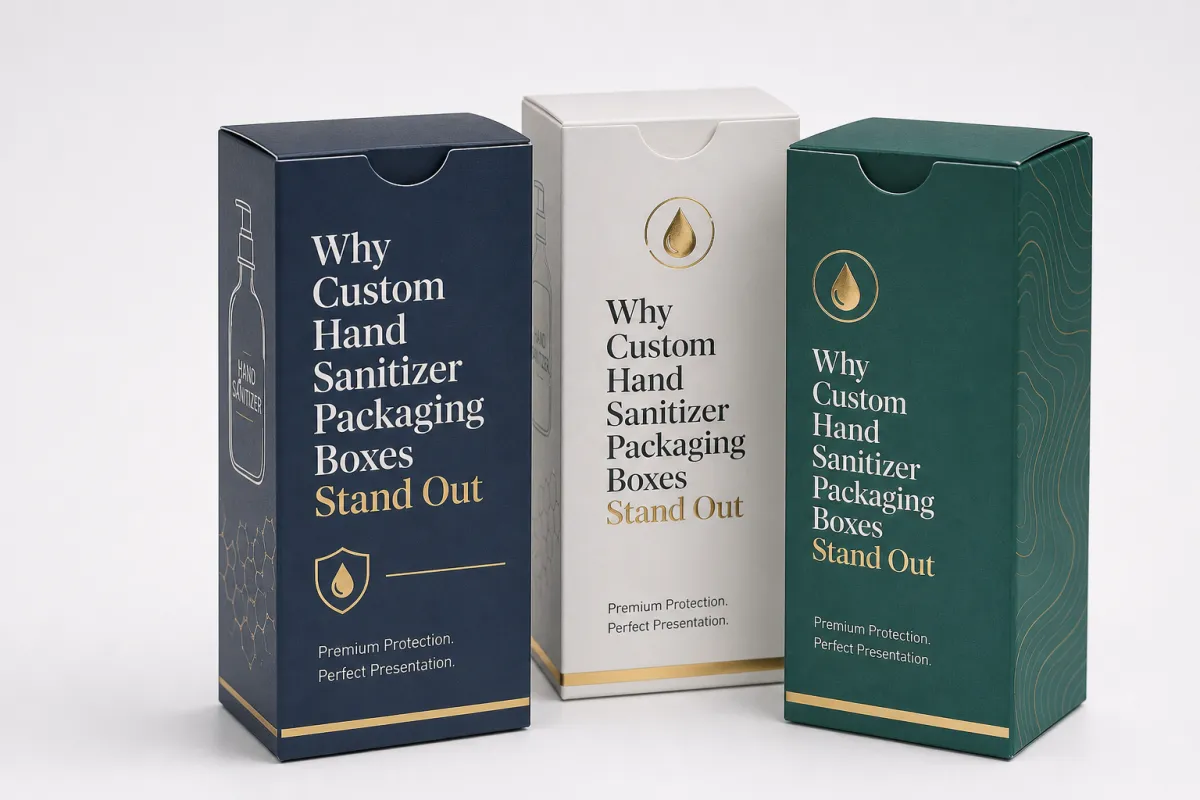
Two sanitizer products can share the same ingredients and bottle size, yet one looks trustworthy and the other looks forgettable. Custom hand sanitizer packaging boxes create that gap. They are the first surface a buyer reads, and in retail settings, that first read can shape the sale before the product has a chance to explain itself.
From a packaging buyer's perspective, the box has several jobs that all matter at once. It needs to protect the bottle. It needs to make the item easy to identify. It needs to help the product sell quickly without looking cheap or rushed. When custom hand sanitizer packaging boxes miss one of those jobs, the whole package starts to feel off in a way that is hard to ignore.
- Protection: keep the bottle from scuffing, denting, leaking, or shifting during storage and transit.
- Identification: make the brand, size, scent, and formula easy to recognize at a glance.
- Conversion: create enough trust and clarity for the product to earn a place in the cart or checkout order.
The simplest carton often does better than the most decorated one. A bad structure cannot be rescued by foil, gloss, or a pile of extra effects. A proper fit, clear print, and the right material can make even modest custom hand sanitizer packaging boxes look disciplined and credible. That kind of clarity usually beats a crowded design trying too hard to be noticed.
These boxes show up in several channels, and each channel has its own practical demands. Retail shelves want a tidy face-out display. Pharmacy counters need readable copy and a clean hierarchy. E-commerce needs rigidity that can survive handling. Promo kits need something better than a loose bottle tossed into a mailer. Travel packs and office giveaways need custom printed boxes that feel deliberate instead of generic. In healthcare or institutional settings, custom hand sanitizer packaging boxes may also need more space for instructions, warnings, or traceability details.
I have seen packaging teams spend too much time polishing color and finishing details while ignoring the carton size, and the result was always the same: a box that looked fine on a screen and felt wrong in the hand. The bottle rattled, the cap brushed the top flap, or the side panels bulged just enough to make the whole thing look tired. That kind of mistake is common, and it is also avoidable if the structure gets handled early.
If the carton is part of a wider launch, it helps to look at the full packaging system before artwork begins. One structure may suit retail packaging, while another works better for bundled sets or shipping. A broader Custom Packaging Products catalog makes that comparison easier because structure, finish, and budget can be lined up early instead of being sorted out after the design has already drifted.
What makes custom hand sanitizer packaging boxes stand out is how much they do inside a small footprint. They have to tell a story fast, hold the bottle securely, and fit the channel without confusion. When those parts line up, the box feels calm and confident. When they do not, the package starts to look hurried, and hurried packaging usually signals a brand that skipped the planning stage.
How custom hand sanitizer packaging boxes work
The process starts with the bottle itself, not the artwork. Measure the filled bottle, not the empty container. Cap height matters. Label thickness matters. Shrink bands matter. A 60 mL bottle with an 18 mm cap should be sized around the finished object, not around an ideal shape on a spreadsheet that ignores the real-world dimensions.
Once the measurements are confirmed, the carton structure comes into view. Tuck-end cartons are common because they are economical, easy to fold, and familiar on retail shelves. Sleeve boxes work well when the brand wants a cleaner reveal. Auto-bottom cartons help when packing speed matters and the bottle needs a little more support. Rigid boxes are usually saved for premium sets, gifting, or higher-end branded packaging where the box itself carries part of the value.
Structure affects function more than many buyers expect. A snug carton keeps the bottle from sliding, which reduces scuffing and corner wear. A loose carton may look fine on screen, then arrive with the bottle knocking around inside. Inserts, partitions, and internal sizing are what keep custom hand sanitizer packaging boxes behaving the way they should. A difference of a few millimeters can separate a clean unboxing from a box that sounds damaged before anyone opens it.
Printing and finishing shape the way the box feels in use. Matte lamination creates a calmer, more clinical impression. Gloss coating adds shine and brightness. Spot UV can pull attention to a logo or product name. Foil adds contrast, though it should be used with restraint unless the brand is clearly going for a gift or lifestyle angle. Embossing and soft-touch finishes can make the box feel more refined, but they also add cost and can complicate recycling choices. There is no shortcut around the tradeoffs.
The opening experience matters too. A box that tears badly, closes poorly, or opens in a clumsy way feels cheap no matter how polished the print looks. Good custom hand sanitizer packaging boxes open with control and close with confidence. That matters for product packaging that sits on counters, ships through fulfillment, or gets handled more than once.
“A sanitizer carton that fits properly and reads clearly will beat a crowded design with expensive finishes and a bad opening experience. Every time.”
Transit testing deserves a place in the process, even if it feels unglamorous. The International Safe Transit Association publishes test methods that help packaging teams think through drops, vibration, and warehouse handling. That is useful for custom hand sanitizer packaging boxes because a good shelf appearance means very little if the carton arrives crushed or split open.
At this stage, the goal is not to make the box look premium in theory. The goal is to make custom hand sanitizer packaging boxes perform in real conditions. A simple box can feel premium when the fit is tight, the type is clean, and the materials are chosen with discipline. An expensive-looking box can still feel careless if the structure and artwork are working against each other.
Key factors in custom hand sanitizer packaging boxes
Board stock is one of the first decisions that affects both price and performance. SBS and C1S are common for retail cartons because they print sharply and hold fine detail well. Corrugated board makes more sense when the bottle needs stronger shipping protection. Rigid board is a better fit for gift sets or premium promotional packaging. Each choice changes the way custom hand sanitizer packaging boxes feel in the hand, and each one lands in a different price range.
For a standard retail sanitizer carton, 14pt to 18pt paperboard is often enough when the bottle is light and the shipping route is short. Glass bottles or packs that need a sturdier feel may call for thicker board. Overbuilding is not a virtue, though. Heavier board raises material cost, freight cost, and folding labor without always giving much back in practical value.
Sizing matters just as much. One common mistake is designing around the bottle body and forgetting the cap, label seam, or tamper band. The internal dimensions of custom hand sanitizer packaging boxes should allow just enough space to prevent scuffing, but not so much space that the bottle rattles. Travel sizes expose movement faster than larger cartons, so tighter tolerances matter even more there. A two-millimeter miss can create a noisy, annoying box.
Branding choices should reflect the market, not whatever happens to look good on a mood board that day. A medical-style sanitizer box usually calls for strong contrast, clear typography, and a straightforward information hierarchy. A lifestyle version can use warmer color palettes, scent names, or softer graphics. Gift-driven custom hand sanitizer packaging boxes can take on more ornament, though only when the product can justify the extra finish work. Branded packaging should match the channel instead of fighting it.
Compliance space cannot be squeezed in later as an afterthought. Depending on the market, you may need room for ingredients, warnings, directions, barcode placement, lot or batch coding, distributor details, and product identifiers. That copy needs to stay readable and properly spaced. A crowded carton is not information-rich. It is just hard to read. Good packaging design makes room for the required text before it starts decorating the rest of the box.
Sustainability choices are more practical than the slogans suggest. Recycled content, FSC-certified paper, water-based coatings, and simpler finishing can all reduce the environmental footprint of custom hand sanitizer packaging boxes. The Forest Stewardship Council is a useful reference when certified fiber sourcing matters. Still, a greener material is not automatically the best choice if it weakens print quality or durability. The right answer depends on the route, the retail channel, and the order volume.
Custom hand sanitizer packaging boxes also need to fit the pricing reality of the brand. A soft-touch carton with foil and embossing can look excellent in a limited run, yet feel excessive for a commodity sanitizer sold through mass retail. A bare-bones carton can weaken the product's value if the item is intended for corporate gifting or premium travel kits. The best choice is the one that matches the buyer's expectation without wasting money on decoration that does not earn its keep.
If you are developing a family of products, consistency matters more than a single perfect carton. Similar type, color, and layout logic across custom hand sanitizer packaging boxes and other Custom Packaging Products can make the line feel organized and intentional. Buyers notice that kind of consistency, even when they do not talk about it directly.
Custom hand sanitizer packaging boxes: cost and pricing
Pricing depends mostly on structure, board stock, print coverage, and order quantity. Artwork rarely Drives the Quote unless the design requires unusual setup or special handling. The expensive part usually comes from combining custom sizing, special finishing, and a small run. Custom hand sanitizer packaging boxes become far more economical once the order volume rises and the setup costs are spread over more units.
For a simple folding carton, a small order can look more expensive than expected because prepress, dielines, and proofing are fixed costs. A 250-piece run may feel awkwardly high because the setup charges have very few boxes to ride on. By the time the order reaches 1,000 or 5,000 pieces, the unit price usually becomes much easier to justify. Quoting several quantities at once makes those break points easier to compare.
Here is a practical comparison. These are rough ranges rather than promises, since the exact box style, print coverage, and finish all affect the final number.
| Box style | Best use | Typical protection | Approx. unit cost at 1,000 | Approx. unit cost at 5,000 |
|---|---|---|---|---|
| Tuck-end paperboard carton | Retail shelves, pharmacy displays | Light to moderate | $0.20-$0.45 | $0.11-$0.24 |
| Sleeve box | Promo kits, travel sets | Light | $0.16-$0.34 | $0.09-$0.18 |
| Auto-bottom carton | E-commerce, faster packing lines | Moderate | $0.28-$0.58 | $0.18-$0.35 |
| Rigid presentation box | Gift sets, premium branded packaging | High | $1.20-$2.50 | $0.85-$1.80 |
The table points to a simple truth: the lowest-looking box is not always the cheapest purchase. If flimsy custom hand sanitizer packaging boxes dent, warp, print poorly, or arrive with fit problems, the so-called savings fade quickly. Replacements, damaged inventory, and a weaker shelf impression often cost more than a better carton would have cost in the first place.
Setup charges can surprise first-time buyers. Dieline creation, proofing, plate or setup fees, and sample production can make the first order feel heavier than expected. That is normal. It does not mean the project is overpriced. It means the fixed costs need to be absorbed somewhere. Asking for pricing at 250, 500, 1,000, and 5,000 units usually gives a much clearer picture of where the cost curve starts to flatten.
There is also a middle ground between cheap and excessive. A clean structure, one or two ink colors, and a modest matte coating can keep custom hand sanitizer packaging boxes looking professional without pushing the job into premium territory. That is often the best fit for private label buyers and healthcare suppliers who want the box to feel trustworthy more than flashy.
For brands that need broader packaging options, comparing sanitizer cartons with related mailers or display boxes can reveal where the budget actually belongs. Our Custom Packaging Products page is useful for that kind of comparison because it keeps structure choices in one place instead of scattering them across a stack of unrelated quotes.
One more point deserves attention: low unit price does not automatically mean good value. A carton that is 12 cents cheaper but slows packing, fails transit, or prints with weak color may become the more expensive option by the time it reaches the warehouse. Custom hand sanitizer packaging boxes should be judged by total cost, not only by the biggest number on the quote sheet.
Process and timeline for custom hand sanitizer packaging boxes
The cleanest workflow starts with a brief that includes bottle dimensions, fill size, cap style, label height, target quantity, required copy, and finish preferences. Leave out any of those details and the quote will be rougher than necessary. The best custom hand sanitizer packaging boxes projects move faster because the real facts are in front of everyone early.
After the brief, the vendor usually builds or confirms a dieline. That flat template shows fold lines, glue areas, bleed, and safety zones. Artwork is placed on the dieline, then a proof is checked for spacing, readability, and fit. A physical sample or structural prototype should follow before the full run gets approved. Screen proofs are useful, though they never catch every issue. Boxes behave in three dimensions, which is inconvenient and useful at the same time.
For simple folding cartons, a production window of around 10 to 15 business days after approval is common. More complex jobs that involve foil, embossing, inserts, or rigid construction usually need 3 to 5 weeks. That is not a delay. That is the actual timeline. Custom hand sanitizer packaging boxes with multiple processes need more handling, more checks, and more assembly time.
Delays usually come from three places: incomplete measurements, late artwork changes, and unclear compliance copy. Each one pauses production while the missing detail gets hunted down. Keeping the bottle spec final, locking copy before layout begins, and approving the sample against the actual filled bottle helps the timeline stay on track. Packaging work does not reward guesswork.
Shipping should be planned at the same time as production, not after the boxes are finished. Flat-packed cartons usually reduce freight cost and storage space. If the order needs to be collated, bundled, or delivered to a fulfillment center, extra time has to be built in for transit and receiving. A job can finish on schedule and still miss launch if logistics were treated as a side note.
For brands shipping through retail or wholesale channels, transit testing is worth the effort. The ISTA methods at ista.org are a strong reference for drop and vibration expectations. That does not mean every sanitizer carton needs full lab testing. It does mean a pretty box should never be assumed ready for distribution just because it folds neatly on a desk.
Here is the practical order of operations that keeps custom hand sanitizer packaging boxes moving:
- Measure the filled bottle and confirm the target pack size.
- Choose the structure and board stock.
- Approve the dieline and copy block.
- Check a prototype or sample against the actual product.
- Sign off on print, finish, and quantity.
- Run production and confirm shipping details early.
The sequence sounds basic because it is basic. That is a good thing. Fast packaging projects usually belong to teams that work with complete information instead of trying to fill in the gaps later. Custom hand sanitizer packaging boxes respond well to clarity and badly to assumptions.
Common mistakes with custom hand sanitizer packaging boxes
The most common sizing mistake is designing around the bottle shape on paper instead of the real filled product. The cap ends up taller than the sketch suggested. The label wrap is thicker than expected. The tamper band adds friction. Then the carton fits too tight or too loose, and custom hand sanitizer packaging boxes that looked perfect in a render become a problem on the line.
Overdesign is another easy trap. Too many foils, too many textures, too many colors, too many effects. The result can make a simple sanitizer feel awkwardly expensive, as if the box is trying to justify itself. A clean layout with strong contrast and a sharp logo often works better than a design that shouts for attention. Good package branding does not need to raise its voice.
Weak board stock is the quiet failure point. Thin board warps, corners crush, and print registration drifts more easily than buyers expect. That does not only affect appearance. It changes how long the carton stays usable while it sits in storage. If the box has to wait before use, poor board choice can become a hidden cost. Custom hand sanitizer packaging boxes should survive handling without looking tired after a single move.
Compliance space gets overlooked all the time. Barcode, warnings, ingredients, directions, lot code, distributor information, and size callouts all need room. If that copy gets squeezed into the bottom margin after the artwork is already complete, the design becomes crowded and difficult to read. Good packaging design plans the information hierarchy first, then shapes the artwork around it.
Logistics mistakes can be just as painful. Some brands underorder because they are nervous about inventory. Others overorder because the per-unit price looked too attractive to resist. Both choices can cause problems. A huge carton order can trap cash in stock before the launch has stabilized. A small order can trigger a reorder gap and interrupt momentum. Custom hand sanitizer packaging boxes need a forecast, not just a preferred sample.
Another common miss is forgetting how the box stacks in master cartons or display trays. A carton may look perfect on its own and still crush under weight or create awkward pallet patterns when packed by the hundred. Retail packaging should be thought through from shelf to shipment. Otherwise, the box wins the mockup and loses the warehouse.
A box is also a signal. If the carton feels flimsy, the sanitizer feels inexpensive. If the carton is clean, well proportioned, and easy to read, the product feels more trustworthy. That is the hidden value of custom hand sanitizer packaging boxes. They protect the bottle, yes, but they also shape how serious the product appears to the buyer.
“The ugliest packaging problem is the one that shows up after launch. A bad fit, weak board, or crowded label panel will cost more than a better spec ever would.”
Expert tips and next steps for custom hand sanitizer packaging boxes
Test at least two or three material options with the actual bottle in hand. Paperboard may be enough. Corrugated may be safer. Rigid board may be excessive. The right choice usually becomes obvious once the product sits inside the sample. That small test removes a lot of guesswork from custom hand sanitizer packaging boxes.
Approve a physical sample or structural prototype whenever the run matters. A screen proof can confirm artwork placement, but it cannot show how the cap clears the top flap, how the bottle sits in the cavity, or whether the carton opens awkwardly. Those are fit issues, and fit issues only become visible when the box exists in real life. Predictable, even if annoying.
Create a packaging spec sheet before design starts. Include bottle dimensions, label height, required copy, finish preferences, target quantity, and reorder schedule. A clear spec sheet makes custom hand sanitizer packaging boxes easier to quote, easier to build, and easier to reorder without reopening the same details every time.
Match the box to the use case. Retail display, promo giveaway, e-commerce shipping, and premium gifting do not need the same structure or finish level. A simple carton can be ideal for a pharmacy shelf, while a rigid box makes more sense for a gift pack. This is one of those places where cost control and brand presentation can support each other instead of competing.
If you are building a broader product line, keep the visual system consistent. That does not mean every carton has to look identical. It means the type, logo placement, and color logic should feel related. That is how branded packaging starts to look like a system instead of a pile of disconnected items. The same logic helps custom hand sanitizer packaging boxes sit naturally beside other Custom Packaging Products without looking like they came from three different companies.
For eco-conscious programs, ask what actually matters to your channel. FSC-certified paper can support sourcing goals. Simplified inks can help. Aqueous coatings may be a better fit than film-heavy finishes in some cases. None of that should outrank fit, print clarity, or shelf durability. Sustainable custom hand sanitizer packaging boxes are only useful when they still do the job well.
Here is the short version of the smartest next move:
- Measure the bottle and cap accurately.
- Choose the box style based on channel, not just taste.
- Request pricing at multiple quantities.
- Approve a sample against the real bottle.
- Lock production before launch dates get too close.
Handle those five steps well and custom hand sanitizer packaging boxes become far less risky. That is usually the difference between a clean launch and a frustrating one. The box should support the product, not become the reason the product slips behind schedule.
For buyers comparing formats, the safest path is usually the simplest one that still fits the brand. A clean carton, clear copy, proper fit, and realistic production schedule will beat flashy packaging that causes problems later. That is the real lesson with custom hand sanitizer packaging boxes: good packaging is controlled, not loud. It still has to look good, but the real work happens in the fit, the structure, and the way the carton behaves once it leaves the design file.
Custom hand sanitizer packaging boxes work best when they are sized correctly, printed clearly, and priced for the channel they serve. Start with the bottle, keep the structure honest, and choose finishes that earn their place. The box will do what it is supposed to do: protect the product, support the brand, and help the sanitizer sell without wasting money on gimmicks.
What materials work best for custom hand sanitizer packaging boxes?
SBS or C1S works well for retail cartons because it prints cleanly and stays affordable. Corrugated or rigid board makes more sense when the bottle is heavier, shipping risk is higher, or the brand needs a more premium feel. The material should be chosen for protection first, then finished only as far as the budget and design actually justify.
How much do custom hand sanitizer packaging boxes cost per unit?
Price depends on quantity, material, box style, and finish complexity more than on the artwork itself. Small runs cost more per unit because setup and proofing are spread over fewer boxes. Ask for pricing at multiple volumes so you can see the point where larger orders become much cheaper.
How long does production usually take for custom hand sanitizer packaging boxes?
Simple folding cartons can often be produced in about 10 to 15 business days after approval. Boxes with special finishes, inserts, or rigid construction usually need more time, often 3 to 5 weeks. Artwork changes and sample revisions are the most common reasons a schedule slips.
Can custom hand sanitizer packaging boxes include compliance and barcode information?
Yes, and they should. Sanitizer packaging often needs ingredients, directions, warnings, barcode placement, and sometimes lot or batch identification. Build that text into the layout early so the design does not become crowded or unreadable.
What size should custom hand sanitizer packaging boxes be for travel bottles?
Measure the filled bottle, not just the container body, because cap height and label thickness affect fit. Travel sizes usually need tighter tolerances to stop movement and prevent rattling inside the box. A prototype test is the fastest way to catch fit issues before full production.

