What Bakery Buyers Learn From the Unit Cost
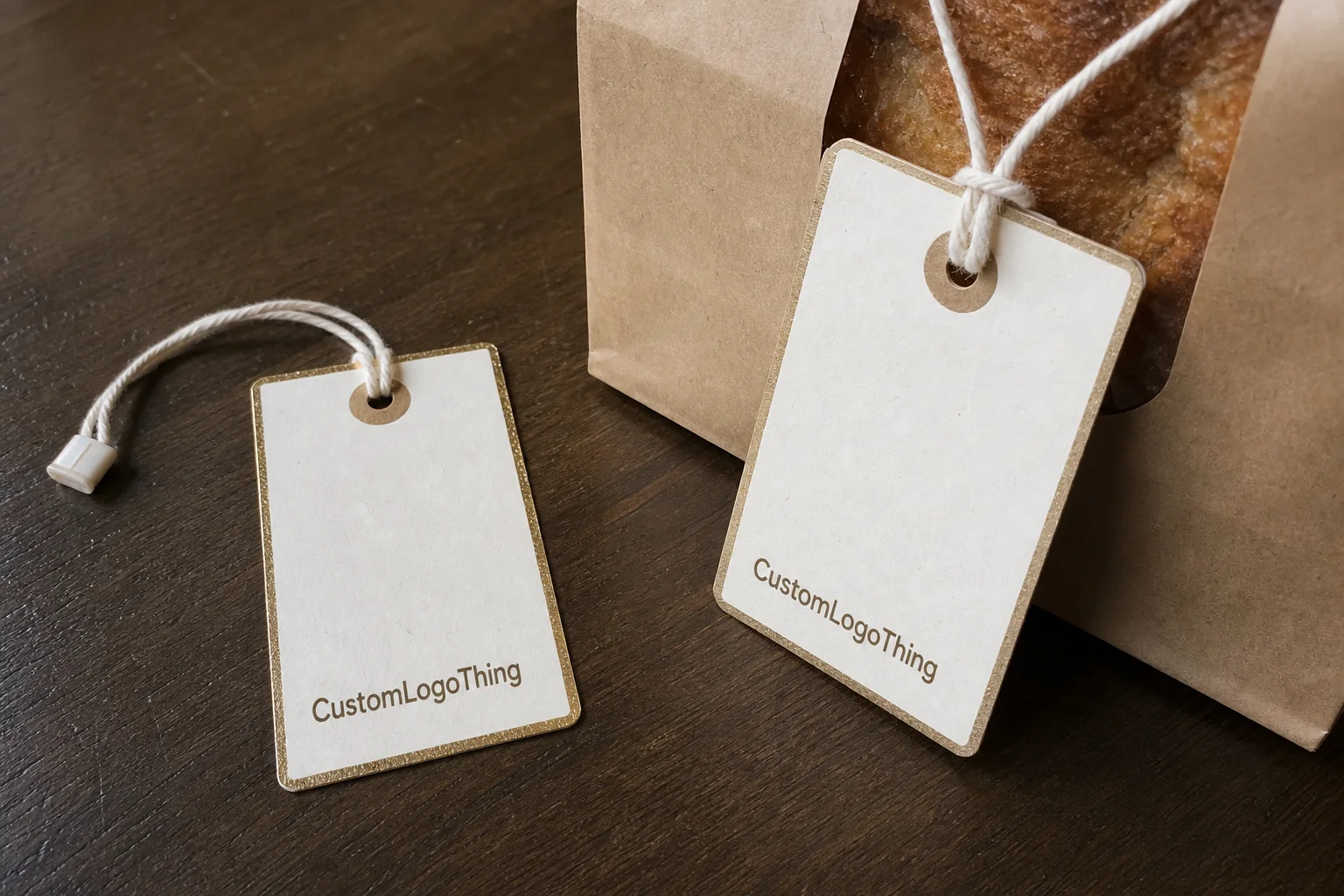
Printed Hang Tags for bakery packaging Unit Cost Breakdown is not just a print quote question. It is a finished-cost question. The cheapest tag on paper can become the most expensive option if it curls in a refrigerated case, slows down pack-out, or forces a reprint after the proof looked fine but the shop floor reality did not. Bakery packaging lives close to moisture, handling, dusting sugar, grease, and constant restocking, so the tag has to do more than look good in a mockup.
From a packaging buyer’s point of view, the tag is part of the sale. It carries brand cues, product name, flavor, allergen notes, pricing, and sometimes a promotion or seasonal story, all while staying readable at the counter or shelf. That is why buyers should compare unit cost the same way they compare Custom Packaging Products or other product packaging purchases: by looking at the full working spec, not just the headline price.
A low per-tag price only matters if the tag still prints cleanly, stays flat, and survives the handling and humidity a bakery actually sees.
That is the practical lens here. Printed Hang Tags for bakery packaging unit cost breakdown should help you see where money goes in setup, stock, print coverage, finishing, and freight, so you can make a clean apples-to-apples comparison. Once that is clear, it becomes easier to choose a tag that supports package branding instead of creating hidden costs downstream.
There is also a quiet operational angle. A bakery team can move through hundreds of items in a morning, and a tag that is awkward to punch, string, or read slows the whole line. That does not show up in the quote, but it shows up in labor. For small bakeries and multi-store programs alike, the real question is whether the tag saves time after delivery or consumes it.
Material and Finish Choices That Hold Up in Bakeries
Material choice drives a surprising amount of the final number. Standard coated cardstock usually gives a clean retail look and good ink holdout, while uncoated stock feels more natural and can be a better fit for artisan bread, rustic pastry lines, or brands that want a softer visual tone. Heavier boards add stiffness and help the tag hang straight, but they also increase material spend and can raise die-cutting and packing costs.
For most bakery hang tags, the practical sweet spot is a stock that prints sharply, resists scuffing, and does not absorb moisture too quickly. A 14pt to 18pt board is common, depending on tag size and how much handling it will get. If the tag will sit near chilled display cases, a matte or satin aqueous coating often makes more sense than a bare, unprotected surface. Soft-touch lamination can look premium, but it is usually a better fit for high-end gift packaging than for a tag that gets touched constantly by staff and shoppers.
Finish selection should follow use case, not preference alone. Aqueous coating gives reasonable protection and helps keep costs controlled. Lamination adds more durability and a more finished feel, but it also adds a process step and can slow production. If sustainability is part of the brief, ask for paper options that align with FSC certification, then confirm whether the coating or adhesive system affects recyclability in the local stream.
Attachment details matter just as much as the board. Pre-punched holes, rounded corners, twine or elastic stringing, and reinforcement around the hole all change the price. A reinforced hole may add a little cost, but it can prevent tearing in fast-moving bakery environments where tags are adjusted, rotated, or removed during replenishment.
There is a tradeoff that shows up in real production: the more premium the surface, the less forgiving the job becomes. High-gloss and soft-touch finishes can reveal scuffs, fingerprints, or pressure marks if the tags are stacked loosely or moved through the line too fast. A modest finish with better handling discipline often outperforms a premium finish that arrives damaged.
- Coated cardstock works well when you want sharper color and moderate protection.
- Uncoated stock suits a natural, handcrafted look and is easier to write on by hand.
- Thicker board improves stiffness for premium retail packaging and frequent handling.
- Matte or satin aqueous coating is usually the most practical finish for humidity and scuff resistance.
Specs That Protect Readability, Branding, and Handling
Before a quote goes out, lock the specs that actually control production. Size, shape, stock thickness, print sides, finish, hole placement, and any variable-data fields should be set early, because each one changes tooling, setup, or run time. A simple rectangular tag often costs less than a custom die-cut shape, and the functional difference is usually smaller than buyers expect.
Legibility matters more than decoration. If the tag needs to carry price, flavor, ingredient notes, reheating instructions, or a limited-time offer, the layout should support fast reading from arm’s length. Clear contrast, short lines of copy, and enough white space around the core message are all part of good packaging design. In bakery settings, the tag is often read while a customer is moving, so small type and thin fonts can work against conversion.
Here is the practical checklist I would use before approving artwork:
- Finished size and bleed dimensions.
- Single- or double-sided print.
- Paper or board selection.
- Coating or lamination.
- Hole diameter and exact placement.
- Any serial numbers, barcodes, flavor codes, or variable copy.
Common mistakes are easy to spot after the fact. Undersized type makes the tag harder to scan at the shelf. Crowded layouts look busy and reduce the brand’s perceived quality. Decorative shapes can add die-cut cost without improving the sale. If the goal is retail packaging that supports quick decisions, the cleanest layout often performs better than the most elaborate one.
For buyers coordinating tags with branded packaging, the tag should match the rest of the system: carton style, label tone, ink density, and visual hierarchy. That is where custom printed boxes, labels, and hang tags work best as one retail package family instead of separate pieces that feel unrelated.
A useful rule: if a spec does not help the shopper read, trust, or choose faster, it probably does not deserve extra spend. That keeps the conversation grounded and stops artwork changes from turning into avoidable production costs.
Printed Hang Tags for Bakery Packaging Unit Cost Breakdown
Here is where the real quote starts to make sense. Printed Hang Tags for bakery packaging unit cost breakdown usually includes setup, printing, finishing, die cutting, packing, and freight. A vendor can quote a low print price and still be expensive if the setup fees are high, the finish adds a second process, or the shipping carton count is inefficient for your receiving dock.
For a standard run, the biggest cost drivers are usually size, stock, color count, print coverage, and quantity. A one-color tag on common board will often price much lower than a full-bleed, full-color tag with a specialty finish. Double-sided printing also matters because it increases ink coverage and press time, especially if the back carries ingredients, barcode data, or seasonal copy.
A practical way to compare options is to look at the full landed unit cost rather than the quote headline. The table below gives a realistic buying framework for bakery hang tags.
| Spec | Typical MOQ | Estimated Unit Cost at 5,000 | Best Use |
|---|---|---|---|
| 1-color print, 14pt coated cardstock, single-sided | 1,000-2,000 | $0.10-$0.18 | Simple bakery branding, price tags, basic product identifiers |
| Full-color print, 16pt board, single-sided aqueous coating | 2,000-3,000 | $0.16-$0.28 | Retail packaging with stronger shelf impact and cleaner branding |
| Full-color print, double-sided, matte or satin finish | 3,000-5,000 | $0.22-$0.38 | Tags with ingredients, promos, or more detailed product packaging copy |
| Special shape, reinforced hole, premium finish | 5,000+ | $0.30-$0.55 | High-visibility branded packaging and seasonal bakery launches |
MOQ changes with the print method and finishing complexity. A standard rectangular tag on common stock can often run at a lower minimum, while a custom die-cut shape or specialty coating usually needs a larger order to absorb setup. That is why the printed Hang Tags for Bakery Packaging unit cost breakdown has to be reviewed alongside the quantity you actually plan to use, not a theoretical “best price” quantity that sits above your real demand.
There is one more factor buyers often miss: waste allowance. If your artwork has delicate registration, dark solid coverage, or variable numbering, a little spoilage has to be priced in. A quote that looks lower on paper but leaves no room for make-ready waste is not necessarily the better deal.
Another way to read the quote is by separating fixed and variable costs. Fixed costs include prepress, plate or file setup, and dieline prep. Variable costs include board, ink, coating, punching, stringing, and freight. Once you know which part of the quote moves with quantity, it becomes easier to test scenarios. A run of 2,000 may look expensive per unit, yet a run of 5,000 can lower the unit price sharply if the artwork is stable and the stock is standard.
For buyers managing margin tightly, that spread matters. A difference of five or ten cents per tag sounds small until it multiplies across multiple SKUs, weekly restocks, and seasonal launches. In bakery packaging, small costs compound fast.
Process, Proofing, and Turnaround for Bakery Orders
The order flow is straightforward, but delays usually come from small misses. A clean job starts with spec review, then artwork checking, then a digital proof, approval, production, finishing, packing, and shipment. If a dieline is incomplete, image resolution is weak, or the copy is not final, the proof cycle slows immediately.
- Confirm size, stock, finish, and attachment method.
- Review artwork for bleed, safe area, and readability.
- Approve a digital proof with exact copy.
- Move to press, finish, punch, and pack.
- Plan freight separately from manufacturing time.
For simple jobs, proofing may take a day or two, and production can often land in the 7-12 business day range after approval. More complex runs with specialty finishes, custom die cuts, or double-sided variable copy may need 12-18 business days or longer, depending on the plant load and the destination. Shipping time is a separate line item and should be planned with the bakery launch date, not after the order is already in motion.
Repeat orders can move faster when the buyer keeps the same size, stock, and finish. That reduces setup time and lowers the chance of mismatch between current and previous runs. If tags need to ship with other retail packaging components, some buyers also ask for transit protection aligned with ISTA handling methods so cartons arrive in saleable condition.
From a workflow standpoint, the most efficient orders are the ones with clean artwork and no last-minute copy changes. A late correction forces a new proof, resets approval timing, and can affect the whole launch schedule. That is especially true for bakery promotions tied to weekends, holidays, or seasonal menus where timing is tied directly to sell-through.
QC checks deserve a line of their own. Buyers should ask how the supplier verifies hole position, color consistency, trim accuracy, and carton count. A batch that is technically printed can still be unworkable if the punch is off-center or the tags stick together after packing. Those are the kinds of defects that create labor costs later.
What to Compare Before You Approve the Quote
Vendor comparison should stay grounded in what is actually included. Does the quote show every cost element? Is the stock clearly named? Are finishing steps listed separately? Can the supplier confirm availability before you commit? Those details matter more than a low headline number, because missing information tends to reappear later as a change order or a delay.
It also helps to compare proof quality and consistency. One vendor may offer a slightly higher unit price but provide better color control, cleaner folding or punching, and a clearer approval process. If the job needs to support custom printed boxes, labels, and hang tags as a coordinated package branding system, consistency across all components can matter more than a small per-piece difference.
A strong packaging partner should be able to handle both test runs and replenishment orders. That flexibility matters in bakery programs where one flavor may need a short seasonal run and another may need a steady restock over months. The best suppliers do not push the most expensive spec by default; they help buyers choose the least expensive option that still holds up in real use.
- Ask what is included in setup, punching, finishing, and packing.
- Check whether the quoted stock is standard or special order.
- Confirm the expected color match process for repeat orders.
- Request a realistic lead time, not only a best-case estimate.
- Verify whether freight is prepaid, added later, or billed separately.
For buyers comparing Custom Labels & Tags with hang tags, the same discipline applies. The question is not only which unit price looks best; it is which spec gives the most reliable result with the fewest surprises. That is especially true in bakery channels, where margins are often tight and the packaging has to carry its weight immediately.
Two quotes that differ by only a few cents can still be miles apart in total value. One may include cleaner finishing, better board consistency, and fewer setup assumptions. The other may look cheaper until a rush replacement or a mismatched finish shows up on the receiving dock.
Next Steps to Lock Artwork, Specs, and Reorder Plan
Before requesting a quote, prepare a finished size, estimated quantity, stock preference, print sides, finish, attachment style, and any variable copy. That gives the supplier enough detail to price accurately and reduces the chance of a quote that looks fine but does not match the actual job. If your brand needs a premium surface, say so early; if the tag only needs to read clearly and survive handling, that should be part of the brief too.
Ask for three things in writing: a proof schedule, a production timeline, and a clear explanation of what changes the unit cost. That may seem basic, but it is the fastest way to keep the printed hang tags for bakery packaging unit cost breakdown aligned with the final budget. If the quote changes because of stock upgrades, revised artwork, or more aggressive finishing, you want to see those shifts before approval, not after production starts.
Reorder planning matters as much as the first order. Keeping the same size, board, finish, and attachment method preserves color consistency and protects margin over time. It also makes future production easier to schedule, which matters if the tags are part of a larger rollout across retail packaging, labels, and display materials.
For bakery buyers, the smartest move is usually a spec that prints cleanly, reads fast, and holds up in real handling conditions. That is the balance behind the best printed hang tags for bakery packaging unit cost breakdown: not the lowest possible quote, but the one that stays stable from proof to shelf and from first run to reorder.
If a launch depends on the tag being right the first time, simplicity is often the best economics. Standard board, controlled color coverage, and a finish that matches the environment usually beat a complicated build that looks better in a mockup but costs more to make and manage.
What changes printed hang tags for bakery packaging unit cost the most?
Size, stock thickness, print coverage, finishing, and total quantity usually drive the biggest swings in price. Complex shapes, specialty coatings, and double-sided printing raise setup and production cost. The lowest unit price is not always the best value if it causes waste or reprints.
What MOQ is typical for custom bakery hang tags?
MOQ depends on print method, size, and finishing, but smaller runs usually cost more per tag. Standard shapes and common stocks often allow lower minimums than custom die-cut or specialty finishes. Repeat orders may qualify for smoother scheduling because the setup is already established.
Which material works best for bakery hang tags in humid cases?
A coated cardstock or heavier board usually performs well when the tag needs stiffness and scuff resistance. If moisture exposure is high, a protective finish helps maintain print quality and readability. The right choice depends on how the tag will be handled, stored, and displayed.
How long does production take after proof approval?
Lead time depends on order size, finishing, and current production load. Simple jobs move faster when artwork is final and the proof is approved without revisions. Shipping time is separate from manufacturing time and should be planned into the launch schedule.
How can I lower cost without making the tag look cheap?
Use a standard size, limit color complexity, and avoid unnecessary special finishes. Keep the layout clean so the tag prints efficiently and reads clearly at a glance. Ask for the full unit cost breakdown so you can cut cost in the least visible places first.
Should bakery tags include allergen or ingredient details?
If the tag is the primary consumer-facing piece at the shelf, clear allergen or ingredient information is often worth the extra space and print cost. That may push you toward double-sided printing, but it can also reduce confusion and support compliance. The decision depends on how much information the rest of the packaging already carries.