For candle brands, custom Hang Tags for Candle brands unit cost breakdown is not a spreadsheet exercise. It is the practical test of whether a tag earns its spot on the product or just adds friction to the packaging budget. A good tag can make a straightforward jar feel giftable, explain the scent in a few seconds, and carry brand cues that the vessel label cannot fit.
Buyers usually look past the print quote first. They inspect stock, finish, stringing, minimum order quantity, and how the tag fits into the wider product packaging and retail packaging plan. That is sensible. A small hang tag can do more for perceived value than a larger label if the rest of the line is controlled and the design does not compete with the jar itself.
For broader examples of how packaging choices affect presentation across formats, see the Case Studies, review Custom Labels & Tags, or compare Custom Packaging Products for multi-item programs.
Why a Candle Hang Tag Can Carry More Selling Power Than the Jar
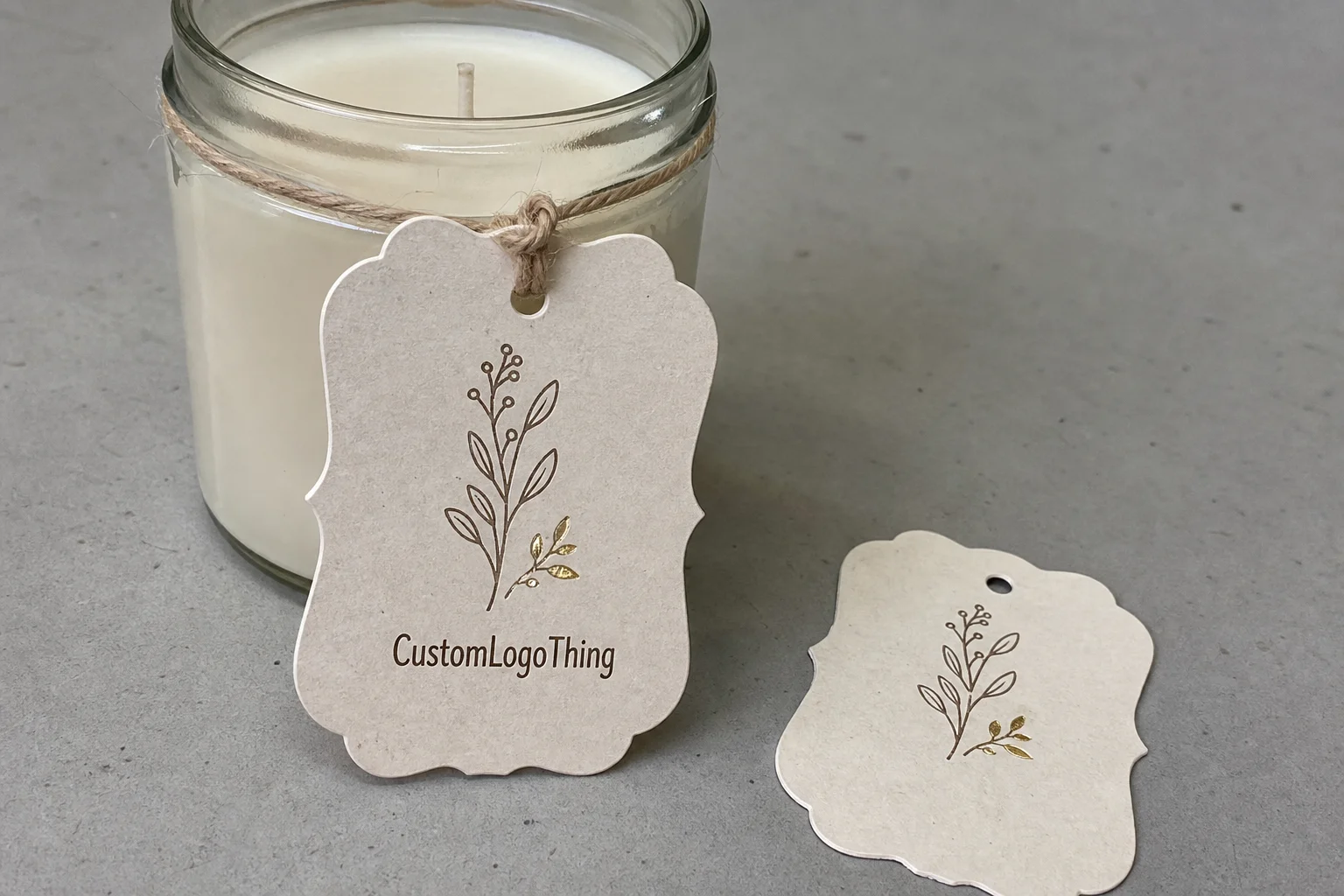
A candle jar has limited real estate. Once the front label holds the scent name, brand, size, and safety text, there is not much room left. The hang tag becomes the flexible surface where the brand can explain more without making the vessel look crowded. That space often carries fragrance notes, wax type, burn time, care instructions, and a short brand statement.
Shoppers do read that information. Not always all of it, but enough to change the purchase decision. A tag that names the fragrance family and gives a believable burn-time estimate can make the product feel more finished. If the brand uses soy, coconut, paraffin, or a blend, stating it plainly helps remove guesswork. The same applies to candle care language: a few clean lines beat a dense block of copy every time.
Hang tags also solve a design problem. Oversized jar labels can flatten the visual weight of a vessel and make the line feel less premium. A tag lets the glass stay clean while still giving the buyer a place to read. That matters in boutique settings, gift sets, and subscription boxes, where the customer often handles the product before buying.
For wholesale programs, tags also make version control easier. A brand can keep one core jar label and adjust the tag for seasonal editions, retail partners, or special bundles. That flexibility is often cheaper than creating separate custom printed boxes for every SKU, and easier to keep consistent across a growing line.
From a packaging buyer’s point of view, the best hang tag is the one that helps the candle sell without making the product feel overloaded.
Materials, Shapes, and Finishes That Match Candle Packaging
Stock choice drives both appearance and unit cost. Uncoated paper creates a softer, more tactile feel and suits candle brands that want an earthy or artisan tone. Coated stock gives sharper color, cleaner small type, and better image reproduction. Heavier board adds stiffness and a more giftable presentation, which is useful for premium ranges and holiday collections.
There is no default best choice. A 14pt or 16pt board may be enough for a simple tag that will be handled briefly. A thicker stock makes sense if the tag needs to hang straight, survive shipping vibration, or carry more information. If the candle is sold in a luxury setting, the tag should feel substantial in the hand. If it is a high-volume scent line, production efficiency matters more than tactile drama.
Shape changes how the tag reads at shelf distance. A rectangle is fast to produce and efficient to trim. Rounded corners soften the look. Die-cut silhouettes can echo the flame, the vessel shape, or a brand icon, but they require additional tooling and more setup time. If the tag’s job is mostly informational, a standard shape is usually the better cost decision. If shelf impact matters and the brand has enough volume to justify the tooling, a custom silhouette can be worth it.
Finishes should be chosen with restraint. Spot UV can isolate a logo or scent mark. Foil can lift a single focal point. Embossing adds touchable depth. Soft-touch lamination changes the feel more than most buyers expect, but it also introduces another step in production. Each finish adds labor, waste risk, or setup cost. For candle packaging, one clean finish usually does more than three competing effects.
Stringing and attachment matter too. Cotton cord reads natural and sits well with uncoated paper. Elastic loops move faster in assembly. Satin ribbon can look elegant, but it changes the way the tag hangs and may twist on a narrow neck. Hole placement, hole size, and the distance from trim edge affect durability. A tag that is too close to the edge can tear during packing or in transit, especially on rougher paper stocks.
For paper responsibility and sourcing references, buyers often check FSC for chain-of-custody information and packaging.org for general packaging terminology and education.
Copy, Size, and Compliance Details That Keep Tags Retail-Ready
Size should serve readability first. For most candle hang tags, a practical range is about 2 x 3 inches to 2.5 x 4 inches. Smaller can work for very minimal copy. Larger is useful for gift sets, bundles, or products that carry more safety text. A tag that is too small pushes type down to a size customers cannot read at arm’s length. A tag that is too large can dominate the jar and make the line look less disciplined.
The copy has to be compressed with intent. Typical content includes scent notes, wax type, burn time, care instructions, a short brand statement, and sometimes a barcode or SKU block. If the candle is going into specialty retail, there may also be warning text or other compliance language that must stay legible. That means the layout needs to be designed around the information first, not decorated first and edited later.
Retail-ready packaging also has to survive real handling. If the tag will travel with the candle through warehouse picking, carton sorting, and shelf display, the type cannot live too close to the trim. Bleed, safe zone, and punch placement matter. A proof may look clean on screen and still fail in production if the copy sits in the wrong place or the finish makes a small font harder to read.
Common mistakes show up fast in candle tag work:
- Placing text too close to the hole punch or trim edge.
- Using body copy that becomes unreadable after cutting.
- Running multiple scent versions without a standard layout system.
- Leaving no margin for proof review or production tolerance.
There is also a brand logic issue. If the jar label is already bold and typographic, the hang tag should not fight it. If the candle line is minimal, the tag can carry a little more editorial copy. The best result is a system, not a set of disconnected parts.
Custom Hang Tags for Candle Brands Unit Cost Breakdown
The clearest way to read Custom Hang Tags for candle brands unit cost breakdown is to separate the quote into parts: stock, print method, size, finish, setup, proofing, and any manual assembly such as stringing or kitting. Once those pieces are visible, the number stops feeling arbitrary. Without that split, buyers tend to compare only the unit price and miss the real cost drivers.
These ranges are typical market bands, not fixed quotes. Final pricing depends on artwork coverage, finishing complexity, order structure, and how the tags are packed for shipment.
| Order Profile | Typical Unit Cost | Best Fit | Common Tradeoff |
|---|---|---|---|
| 250-500 pcs, simple one-color or four-color print | $0.70-$1.40 each | Launch tests, small seasonal runs, sample retail sets | Setup and proofing make the first order expensive per piece |
| 1,000-2,500 pcs, standard stock, clean die-cut | $0.24-$0.58 each | Core candle lines with repeat orders | Basic finishes are affordable; heavy embellishment raises cost fast |
| 5,000+ pcs, standardized size and artwork | $0.10-$0.26 each | Wholesale programs, multi-store retail packaging, high-volume DTC | Lower unit cost, but inventory risk rises if SKUs change often |
The biggest cost levers are predictable. Heavier board costs more than thin paper. Full-bleed color costs more than a restrained one- or two-color design. Foil, embossing, and soft-touch lamination all add steps. If the order needs several versions for different scents, the price rises because each version usually needs its own setup and proof attention.
Setup charges are where small orders get expensive. Prepress work, file preparation, die confirmation, and proof review are spread across fewer pieces, so the unit cost climbs quickly at low volumes. Once the run gets larger, those fixed costs dilute. That is why a jump from 500 to 2,500 pieces can cut the per-unit number sharply even when the design stays unchanged.
There are practical ways to keep the number sane. Standardize the tag structure across scents. Keep one size, one stock, and one hole location, then change only the copy block or fragrance panel. Remove finishing that does not add selling value. A clean print on a solid board usually beats a crowded design with too many effects. For candle lines that will reorder, simplicity tends to win on both cost and consistency.
One more point matters in real buying: the lowest unit price is not always the lowest total spend. If a quote leaves out stringing, pack-out, or carton labeling, the apparent savings can disappear during receiving. A slightly higher price can still be the better number if it reduces labor, short counts, or rework later.
Bottom line: the best Custom Hang Tags for Candle brands unit cost breakdown is the one that balances appearance, durability, and repeatable production without adding wasted steps.
Process and Timeline: Proofs, Approval, and Production Flow
A clean order usually moves through quote request, artwork review, digital proof, approval, production, finishing, and packing. If the files are complete, the process is predictable. If the artwork is missing bleed, the dieline is unclear, or the scent variants are not labeled cleanly, the schedule slows down immediately.
The proof stage deserves real attention. A digital proof should show size, cutline, hole position, color intent, and any special finish areas. Buyers should check every line of text, especially burn-time details and warning copy. A small mistake on a tag becomes a larger issue once a full batch is printed and assembled.
Typical lead time usually has two parts. Proofing can take one to three business days if the file is ready and approvals move quickly. Production for standard candle tags often runs about 7 to 12 business days after approval. Finishing and manual assembly add time if the order is more complex. Rush work is possible in some cases, but it usually reduces finish choices or limits stock options.
Packaging transit matters as much as print quality. If tags are shipping to a fulfillment center or co-packer, they need to be packed to avoid corner crush and scuffing. Buyers with strict receiving standards should ask how cartons are counted, labeled, and bundled. For distribution stress, the basic guidance from ISTA is useful as a reference point.
The fastest orders are the ones with a disciplined spec sheet. The slowest are the ones that change after proof approval. That pattern shows up in hang tags, label programs, and larger retail packaging orders alike.
Pricing, MOQ, and Quote Variables Buyers Should Compare
MOQ should be read as a production threshold, not a challenge. A supplier may set a minimum based on setup time, sheet size, finishing steps, or the way the order is packed. A low MOQ can help a new candle line test the market, but a tiny order is not always the best value if the brand already knows it will reorder.
To compare quotes properly, buyers need more than the unit price. Two quotes can look close while assuming very different things about proof charges, shipping, inspection, and assembly. One supplier may include stringing and basic pack-out. Another may quote only the printed pieces and bill attachment separately. That difference changes the true cost.
Use this checklist when comparing options:
- Stock weight and paper finish.
- Print method and color count.
- Die-cut or standard trim.
- Foil, embossing, spot UV, or lamination.
- Proofing fee and revision policy.
- Assembly, stringing, or kitting.
- Shipping method and carton configuration.
Order structure changes the quote fast. A single-SKU run is simpler than a multi-SKU scent program. Seasonal sets can be efficient if the artwork template stays the same and only the fragrance copy changes. If the buyer needs matching hang tags, labels, and box inserts, the pricing may improve when the items are ordered together as part of a coordinated package branding program.
This is the part many candle brands miss. A cheaper unit price is not always the lower total spend if the order creates extra handling later. A slightly higher tag price can be the better purchase if it reduces receiving issues, short counts, or rework on the production floor.
What to Send for an Accurate Candle Tag Quote and First Run
If you want a usable estimate, send the basics upfront: finished size, quantity by scent, preferred stock, finish level, artwork files, ship-to location, and the date you need the product in hand. That is enough for a meaningful quote. Anything less usually creates another round of questions and slows down the first run.
A useful spec sheet should also say how the tag will be used. Will it hang on a jar neck, wrap a ribbon, sit inside a box, or attach to a bundle? That detail affects hole placement, string choice, and how durable the board needs to be. It also helps the supplier suggest a practical format instead of guessing.
For brands managing several SKUs, it helps to standardize the decision sequence:
- Choose one tag size.
- Confirm the stock and finish.
- Lock the copy blocks for each scent.
- Approve the proof without late text changes.
- Set carton and receiving rules before shipment.
That sequence keeps the first production run controlled and makes the next one faster. It also makes it easier to compare candle hang tags against the rest of the product packaging system, including labels, inserts, and supporting retail packaging pieces.
If the brief is complete, the quote becomes useful instead of vague. If the artwork is organized before production starts, the buyer is far more likely to get a clean result that fits the brand and the budget. For a practical estimate, gather the specs and request Custom Hang Tags for candle brands unit cost breakdown with the exact scent count, size, and finish you plan to run.
Frequently Asked Questions
How do custom hang tags for candle brands affect unit cost on small orders?
Small runs usually carry a higher unit cost because setup, proofing, and finishing are spread across fewer pieces. Simple stocks and fewer finishing steps help keep the first order workable without weakening the presentation.
What stock works best for candle hang tags that need a premium feel?
Heavier uncoated or lightly coated board usually gives the best balance of texture, print clarity, and durability. Premium finishes should support the brand story, not exist just to add cost.
Can candle hang tags include safety or burn instructions?
Yes. Many brands use the tag for burn time, warning text, and care instructions when label space is limited. The layout has to stay readable at the final trim size, so copy density matters as much as the design.
What slows down turnaround on candle tag production?
Late artwork changes, missing dielines, and unclear finishing specs are the most common causes of delay. Approval speed matters because production cannot begin until the proof is confirmed.
What should I prepare before requesting a quote for custom candle hang tags?
Have quantity, size, stock preference, finish choice, artwork files, and delivery deadline ready before you ask for pricing. A clean spec sheet makes the quote more accurate and reduces back-and-forth during the first run.


