Buyer Fit Snapshot
| Best fit | Custom Hang Tags with Logo Design projects where brand print, material claims, artwork control, MOQ, and repeat-order consistency need to be specified before quoting. |
|---|---|
| Quote inputs | Share finished size, material target, print colors, finish, packing count, annual reorder estimate, ship-to region, and any compliance wording. |
| Proofing check | Approve dieline scale, logo placement, barcode or warning zones, color tolerance, closure strength, and carton packing before bulk production. |
| Main risk | Vague material claims, crowded artwork, missing packing details, or unclear freight terms can make a low unit price expensive after revisions. |
Fast answer: Custom Hang Tags with Logo Design: Quote Scope, Sample Proof, MOQ, and Lead Time should be specified like a repeatable production item. The safest quote records material, print method, finish, artwork proof, packing count, and reorder notes in one written spec.
Production checks before approval
Compare the actual filled-product size with the drawing, then confirm tolerance on folds, seals, hang holes, label areas, and retail display edges. Reserve space for logos, QR codes, warning copy, and material claims before decorative graphics fill the panel.
Quote comparison points
Review material grade, print process, finish, sampling route, tooling charges, carton quantity, and freight assumptions side by side. A quote is only useful when the supplier can repeat the same color, closure quality, and packing count on the next order.
Custom Hang Tags With Logo Design: How to Get It Right
Custom Hang Tags with logo design can make a product feel finished, considered, and worth the price. They can also do the opposite with almost no effort at all. A tag that looks thin, rushed, or oddly proportioned has a way of making the rest of the product look uncertain. That tiny rectangle carries more visual weight than most buyers expect, which is funny until you are the one approving the print run.
Apparel, candles, jewelry, gifts, and specialty retail all depend on custom Hang Tags with Logo design in a space measured in inches, not feet. The tag carries the logo, but it also shapes first impressions, organizes product data, and hints at quality before a shopper ever handles the item. That is why strong tags are part of branded packaging, part of package branding, and part of the retail experience long before anyone calls them “just a hang tag.”
If you are planning custom hang tags with logo design for a launch, a rebrand, or a seasonal collection, the aim is plain: make the tag help the sale instead of merely occupying space. Materials, pricing, file prep, timing, and approval all matter. So do the mistakes that make a nice product look far cheaper than it should.
What Custom Hang Tags With Logo Design Actually Do
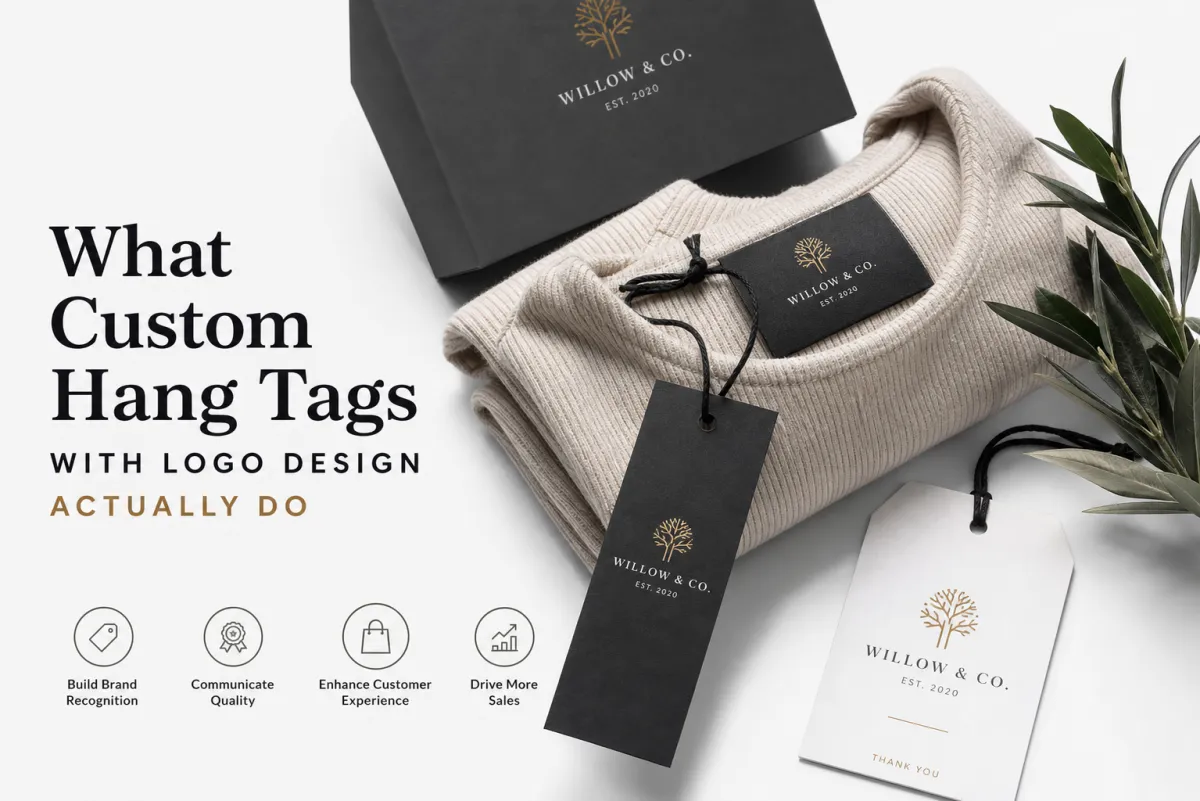
A hang tag is usually a printed label attached to a product with string, twine, ribbon, a plastic fastener, or a staple. On apparel, it may sit near the neck, sleeve, or waistband. On a candle, it may wrap around the neck or rest against the vessel. On jewelry, it often holds the brand mark, price, and a small product note. In gift and specialty retail, it can carry story, care, material, and SKU details without crowding the item itself.
The reason custom hang tags with logo design matter is simple: perception changes fast. A clean tag on thick stock can make a modest product feel intentionally made. A flimsy tag with weak print can do the reverse. Same item. Different read. Retail is full of those tiny reversals, and packaging often decides which one wins.
Good custom hang tags with logo design do more than show a logo. They can communicate:
- Brand identity through color, typography, paper choice, and finish.
- Pricing logic by matching the product’s shelf position and value.
- Product details such as size, material, scent, origin, or care instructions.
- Sales support by answering one or two common shopper questions immediately.
That final point gets overlooked. People often treat a hang tag as decoration. It can be decorative, sure. It can also function like a miniature sales associate. It gives a shopper a reason to trust the product, and trust matters in retail packaging as much as it does in broader product packaging systems.
"A tag should do one job clearly, not seven jobs badly. If it tries to become a billboard, a manual, and a mood board at once, it usually fails all three."
Strong custom hang tags with logo design begin with intent. What should the shopper learn in three seconds? What should they feel in that same span? What should the tag leave unsaid because the product already communicates it better? Those questions are sharper than asking how much copy can fit onto a small card before it starts reading like paperwork.
For brands building a wider system, hang tags should match the rest of the packaging architecture. If you already use Custom Labels & Tags or are expanding into Custom Packaging Products, the tag should feel like it belongs in the same family as the box, insert card, and label set. Otherwise the brand starts speaking in different accents.
Simple products benefit most from a well-made tag. A plain sweater, candle, or gift item can feel noticeably more premium once the stock, typography, and finishing have been chosen with care. That is not a trick. It is just packaging doing its job with discipline, and honestly, that discipline is where a lot of brands either look expensive or look kinda lost.
How Do Custom Hang Tags With Logo Design Help a Product Sell?
They work because they collapse several decisions into one small surface. A shopper sees the logo, reads the product cue, and makes a quick judgment about quality. That judgment is fast. Often, it is faster than the brand expects. In a crowded aisle, custom hang tags with logo design can be the difference between a product that gets picked up and one that gets passed over.
Think of the tag as a bridge between branding and proof. The logo says who made it. The paper, print quality, and finish hint at how seriously the brand takes the product. The copy explains what the item is, while the structure signals whether the brand understands retail packaging or just hopes for the best. That combination matters because buyers rarely separate aesthetics from value. They read them together.
I have watched plenty of launches where a modest material upgrade changed the conversation on the sales floor. A thicker tag, better spacing, and a cleaner print finish can raise perceived value without changing the product itself. A weak tag can pull in the opposite direction. Same garment, same candle, same accessory. Different story, and sometimes that story is all the buyer has to go on.
That is why custom hang tags with logo design should not be treated as an afterthought. A stronger tag can lift the perceived value of a $20 item almost as much as a more expensive material upgrade. A weak one can drag down an otherwise excellent product. Same price. Same formula. Very different shelf story.
How the Custom Hang Tags With Logo Design Process Works
The process usually starts with a brief. Not a novel. A brief. The buyer defines the product, retail channel, quantity, copy, and the visual tone the tag should support. For custom hang tags with logo design, that brief should also cover tag size, punch requirements, attachment method, and any compliance or care language that must appear on the piece.
From there, the vendor or designer builds the spec. That usually includes stock type, thickness, print method, finish, cut shape, and attachment style. A simple rounded-corner card on 16pt stock is a different job from a die-cut tag with foil, embossing, and a custom silhouette. More options mean more decisions, and more decisions demand production thinking instead of mood-board thinking.
Proofing comes next. A digital proof shows layout, copy placement, and general balance. It is fast and useful. It is still a screen, though. It cannot show how matte stock softens a color, how foil catches light, or how a deep black behaves on uncoated kraft. A physical sample costs more and takes longer, yet it becomes worth the delay when color matching, texture, or premium finishing really matters.
For custom hang tags with logo design, timing depends on complexity. A straightforward printed tag can often move from proof approval to production in about 5-8 business days. Add a custom shape, foil, embossing, or specialty stock, and the window often stretches to 10-15 business days or longer. Sampling can add another 3-7 days. The press run is rarely the real bottleneck. Missing files are. Last-minute copy changes are. Approvals that stall for two days can do more damage than the entire print run.
Good buyers show up with a complete package, not a half-formed idea and a deadline that has already turned hostile. Before requesting a quote for custom hang tags with logo design, have these ready:
- Final or near-final logo files in vector format.
- Exact tag dimensions or a target size range.
- Quantity by SKU or style.
- Paper or board preference, if any.
- Finish preference, such as matte, gloss, foil, or soft-touch.
- Attachment method, including string, ribbon, or punch style.
- Any barcodes, care symbols, claims, or legal text.
If the project belongs to a wider launch, align it with the rest of the package branding. The tag should not argue with the box, label, or insert card. It should reinforce the same visual logic, especially if the brand also uses custom printed boxes or multi-piece retail packaging sets.
Paper sourcing deserves attention too. If sustainability is part of the brand promise, ask about FSC-certified paperboard. The FSC system is a familiar reference point for responsible paper sourcing. If the product line includes shipping stress or bundled retail kits, the ISTA test methods help frame how packaging performs in transit. Tags are small, but they still sit inside a larger packaging system with real constraints.
Key Design Factors That Change the Look and Feel
Most of the visual result comes from a handful of decisions made early. Stock weight, texture, size, shape, hole placement, print side, and finish all affect how custom hang tags with logo design read on a shelf or in a hand. None of those decisions is glamorous. Every one of them matters.
Stock weight is usually where people try to save a little and accidentally lose a lot. Thin stock curls, bends, and feels temporary. For retail, 14pt to 18pt cover stock or roughly 300-400gsm is common. Heavier stocks feel more deliberate, especially for apparel, candles, and jewelry. Luxury and gift lines often justify a thicker or textured board because the tag contributes directly to the perceived value of the product.
Texture changes the story as well. Smooth coated stocks keep color crisp and suit bold logos. Uncoated or cotton stocks feel warmer and can read as quieter, more expensive, and more refined. Kraft stock works beautifully for natural, handmade, or eco-minded brands, but only if the design respects the paper. Put a glossy, high-contrast logo on rough kraft and you may get charm. Put a pale serif on it and you may get a tag that looks like it lost a fight with the background.
Size and shape control legibility. A tag that is too small forces the logo and supporting copy into a cramped block. A tag that is too large can hang awkwardly and feel disconnected from the product. Custom die-cuts can help, yet the shape should support the brand instead of trying to steal attention. Clean rectangles, rounded corners, arches, circles, and simple notch cuts are usually easier to produce and easier to read than shapes that seem clever for their own sake.
Typography deserves more respect than it often gets. Small-format design punishes bad type choices quickly. Thin fonts disappear. Tight tracking gets muddy. Crowded layouts make the tag look hurried. For custom hang tags with logo design, the hierarchy should be obvious: logo first, key product detail second, support copy only if it has earned its spot.
Color management is another quiet problem. A logo that looks perfect on screen may shift once it hits press if the file is built in RGB, the blacks are too flat, or the background sits too close to the logo color. Use CMYK files, high-resolution imagery, and outlined fonts. If exact brand color matters, ask for a printed proof or sample before approving the run. That matters even more in branded packaging where the same color shows up on boxes, labels, and inserts.
Finishes change the tone fast:
- Matte feels modern, understated, and easy to read.
- Gloss adds shine and can lift certain colors, though glare can fight readability.
- Foil works best as an accent, not as a blanket of sparkle.
- Embossing adds tactile interest and a premium feel when the layout has enough room to breathe.
- Soft-touch can feel expensive, but it does not suit every brand or every budget.
- Spot UV creates contrast, especially when used sparingly on logos or key shapes.
The practical rule is blunt: choose one or two effects that serve the brand story. Do not stack every premium option just because the sample looks exciting under showroom lights. A cleaner tag with better spacing and a stronger board usually beats a crowded one loaded with finishes and no restraint. That is boring advice, maybe, but it saves money and it prints better.
Custom Hang Tags With Logo Design: Cost, Pricing, and Order Size
Price depends on quantity, stock, print colors, finish, shape, and attachment method. That is the short version. The longer version is that custom hang tags with logo design become cheaper per unit as setup costs spread across more pieces, while certain upgrades raise cost quickly no matter how many pieces you order.
Small runs usually cost more per piece. That is not a mystery; it is the math of print production. If you order 250 tags with a special shape and foil, the unit cost can feel stubborn. If you order 5,000 simple tags, the math usually turns friendlier. The catch is inventory. Ordering more only makes sense if the design and product line are stable enough to justify the extra stock sitting on the shelf.
Here is a practical ballpark for custom hang tags with logo design. These are ranges, not promises. Final numbers change with stock, finish, and vendor pricing, and a quote that looks unusually low usually hides something in the spec.
| Order Size | Basic Printed Tag | Mid-Tier Tag With Finish | Premium Tag With Specialty Effects |
|---|---|---|---|
| 250-500 pieces | $0.65-$1.80 each | $1.10-$2.50 each | $2.25-$4.50 each |
| 1,000 pieces | $0.22-$0.65 each | $0.45-$1.20 each | $1.20-$2.80 each |
| 5,000 pieces | $0.09-$0.28 each | $0.18-$0.55 each | $0.55-$1.40 each |
The space between "basic" and "premium" is where many buyers make the wrong assumption. A low unit price can look attractive until the stock feels weak, the print shifts, or the attachment fails. Then the cheapest option becomes the one making the brand look tired. That is a costly kind of savings, and it shows up fast once the tags hit the floor.
A small increase in stock quality often does more for perception than a much larger spend on flashy effects. For custom hang tags with logo design, thicker board, cleaner spacing, and a confident matte finish frequently deliver more value than foil used only because foil sounds premium. If the brand sells candles or apparel in a higher-end retail setting, that difference can matter the moment the customer picks up the piece.
Ask for an all-in quote. Not a quote that hides setup, punching, stringing, or shipping. A fair comparison should include the same size, stock, print method, finish, hole placement, and attachment style across vendors. Otherwise the numbers look comparable until they are not.
Brands with several SKUs often save money by standardizing. Reuse one or two tag sizes, keep the punch position consistent, and mirror the artwork structure across colorways or scent variations. That keeps custom hang tags with logo design efficient without making every SKU look copied. Consistency matters. So does avoiding a line that feels mechanical.
Budget-friendly choices usually look like this: a simple rectangular tag, 14pt-16pt stock, one-sided print, one finish, standard round hole, and basic string. Premium choices usually add thicker stock, soft-touch or specialty paper, foil, embossing, a die-cut shape, and matched attachment detail. The right option depends on how the product is priced and where it is sold. A $12 accessory does not need the same treatment as a $120 gift set. The market still acts surprised by that, which is its own kind of commentary.
Step-by-Step Guide to Ordering and Approving Tags
Start with the product, not the artwork. Define what the tag needs to do on the shelf, in the hand, and at checkout. Is it selling apparel, candle fragrance, jewelry material, or gift set value? Is the tag only branding, or does it need care instructions, sizing, origin information, or a barcode? For custom hang tags with logo design, the tag should solve a retail problem. Otherwise it becomes a small piece of board with a logo on it, which is a low bar pretending to be strategy.
Build the spec sheet next. Keep it specific:
- Tag size and shape.
- Quantity by design or SKU.
- Paper or board choice.
- Single-sided or double-sided print.
- Finish, such as matte, gloss, foil, or embossing.
- Hole location and attachment style.
- Any legal, care, or barcode content.
Artwork preparation matters just as much. For custom hang tags with logo design, send vector files whenever possible. Use outlined fonts, CMYK color mode, and a safe area that keeps text away from the trim. A bleed of 0.125 inch is standard for many print jobs. Tiny details can change the final result more than people expect. A logo placed too near the edge can look cramped after trimming. Small type near a punch hole can become unreadable the moment the string is installed.
The proof review should be deliberate. Do not skim it while answering email or chasing lunch. Check the copy line by line. Check the logo size. Check spelling. Check the hole position. Check the back side if there is one. Check the finish callout. The fastest way to waste money on custom hang tags with logo design is to approve a proof that seems "close enough" and only notice the mistake when 2,000 pieces are already packed. If the proof feels slightly off, it is probably off enough to matter.
A careful proof checklist usually covers:
- Brand details: logo, colors, fonts, and spelling.
- Production details: size, bleed, trim, hole punch, finish.
- Content details: SKU, care text, materials, barcode, warnings.
- Shipping details: quantity, carton count, destination, timing.
Production and shipping need a little buffer. If the launch date matters, allow time for revisions, sample approval, and freight. The most painful delays usually come from avoidable friction: missing art files, unclear specs, or a buyer changing copy after proof approval. None of that is mysterious. It is just expensive, and yes, it is the kind of thing that makes everyone involved slightly grumpy.
If the tag sits beside custom printed boxes or a full retail set, approve the pieces together. That keeps the shade of black, the paper feel, and the overall package branding aligned. A strong tag can still look misplaced if the box and label system tell a different visual story.
Common Mistakes That Make Hang Tags Look Cheap
Overstuffing the tag is the most common mistake. Designers and buyers sometimes try to fit a product description, a brand mission statement, a legal block, a price, a barcode, and a decorative pattern onto a small piece of board. The result is crowded, hard to scan, and usually less persuasive than a much simpler layout. The logo shrinks. The margins collapse. The tag starts looking stressed.
For custom hang tags with logo design, space is not wasted. Space is what gives the piece confidence. Clean margins, clear hierarchy, and a strong logo size usually beat dense layouts every time. If the brand story is long, move it to the box insert, website, or product page. The tag should not carry the entire marketing department on its back.
Bad file setup causes trouble too. Low-resolution logos blur. RGB color can shift on press. Fonts that were never outlined can reflow. Fine lines can disappear after trimming. People often act surprised when the print output matches the file they sent. The press is not guessing. It is reproducing exactly what it receives.
Weak contrast also hurts. Pale text on textured stock, dark text on a nearly black background, or a logo that sits too close to the background shade can make the tag hard to read. In custom hang tags with logo design, the logo needs enough contrast to survive real retail conditions: overhead light, movement, glare, and a shopper who is already deciding whether to pick up the item.
Finish choice can flatten the design if it fights the concept. Heavy gloss on a natural, handmade brand can feel off. A thick soft-touch finish on a rugged product line can feel overbuilt. Spot UV used everywhere usually looks less premium, not more. The finish should support the message, not drown it in effects.
The hidden cost trap shows up often. Some buyers chase the lowest unit price, then discover weak stock, inconsistent cutting, or surprise setup fees. By the time all the extras are counted, the "cheap" option is the expensive one. That happens regularly in custom hang tags with logo design, especially when the quote comparison was built on mismatched specs.
Inconsistency can weaken a product line as well. One SKU has a thick matte tag. Another uses a shiny lightweight version. A third shifts the hole placement and logo scale. The range starts looking disorganized even if the products themselves are excellent. Strong retail packaging systems rely on repeatable standards. Without them, the shelf turns into a visual argument.
The tag should also stay connected to the rest of the brand system. If the label, box, and tag do not share a clear visual logic, the package feels pieced together. That hurts package branding more than most teams realize. Custom hang tags with logo design should make the product feel deliberate, not assembled by committee under fluorescent lights.
Expert Tips and Next Steps for Better Custom Hang Tags With Logo Design
Smart brands build a small tag system instead of reinventing the wheel for every SKU. One or two standard sizes, one punch position, and one or two paper families can cover a lot of product lines without turning the process into a circus. That keeps custom hang tags with logo design efficient and makes reorders easier to manage.
Use the tag to answer one useful question. Not five. One. Is this wool? Is this hand-poured? Is this item made for sensitive skin? Is it a limited batch? The best custom hang tags with logo design give the shopper a reason to trust the product faster. That matters more than filling the space with brand poetry nobody reads while standing in an aisle.
If the brand is moving upmarket, invest first in structure: stronger typography, better spacing, thicker stock, and a cleaner finish. Those choices often do more than an expensive decorative effect. A well-composed tag on good stock can make the rest of the product packaging feel sharper, even before the box system or inserts change. That is one reason thoughtful custom hang tags with logo design belongs in the same planning conversation as custom printed boxes and other branded packaging pieces.
There is a sustainability angle too, and it matters more than many brands admit. FSC-certified stock, less wasteful sizing, and reusable layouts can improve a packaging program without pretending every tag is an environmental miracle. Ask for recycled or FSC-certified board when the brand story supports it. Do not slap an eco claim on weak production and call it virtue. Shoppers notice the mismatch fast.
Before you place an order, run this checklist:
- Audit current packaging for weak points.
- Define the tag's job in one sentence.
- Choose the tag size and shape before designing.
- Collect artwork, copy, and barcode data.
- Request quotes with matching specs from each vendor.
- Ask if a printed sample is worth it for your finish or color target.
- Approve only after checking the proof line by line.
If you are building a new line or refreshing a stale one, start with the basics and scale with intent. A strong tag does not need to shout. It needs to fit the product, support the price, and feel consistent with the rest of the system. That is the real job of custom hang tags with logo design.
Keep the layout clean, Choose the Right stock, verify the proof, and do not let the tag act like a substitute for good brand discipline. Before you send anything to print, check the logo scale, the contrast, and the exact copy one more time. If those three things are right, custom hang tags with logo design usually do their job without drama. If they are wrong, the whole package starts whispering the wrong message.
What should custom hang tags with logo design include?
At minimum, include the logo, product name, and any information the buyer needs before purchase. For apparel or regulated products, add size, material, care instructions, barcode, or compliance text as needed. Keep the layout simple enough that the message is readable at arm's length.
How long does custom hang tags with logo design usually take?
Simple printed tags can move quickly once artwork is approved. Specialty finishes, custom shapes, and sample approvals add time. The slowest part is usually proofing and revisions, not the press run.
What affects the price of custom hang tags with logo design the most?
Quantity, material, print colors, finishes, and shape changes drive most of the cost. Small runs usually cost more per piece because setup is spread over fewer tags. Premium effects like foil or embossing raise cost faster than a simple stock upgrade.
Do custom hang tags with logo design need a sample before printing?
A sample is smart when color matching or finish quality matters to the brand. It is also worth it when the tag has a complex shape, multiple print areas, or very small text. If the design is simple and the vendor has solid proofing, a digital proof may be enough.
How do I make custom hang tags with logo design look more premium without overspending?
Use better spacing, stronger typography, and a clean stock before chasing expensive effects. Choose one high-impact finish instead of stacking every upgrade onto one tag. Make sure the logo is large enough to read and the tag matches the rest of the packaging system.

