Buyer Fit Snapshot
| Best fit | Custom Jewelry Boxes with Foil projects where brand print, material claims, artwork control, MOQ, and repeat-order consistency need to be specified before quoting. |
|---|---|
| Quote inputs | Share finished size, material target, print colors, finish, packing count, annual reorder estimate, ship-to region, and any compliance wording. |
| Proofing check | Approve dieline scale, logo placement, barcode or warning zones, color tolerance, closure strength, and carton packing before bulk production. |
| Main risk | Vague material claims, crowded artwork, missing packing details, or unclear freight terms can make a low unit price expensive after revisions. |
Fast answer: Custom Jewelry Boxes with Foil: Board, Finish, Dieline, and Unit Cost should be specified like a repeatable production item. The safest quote records material, print method, finish, artwork proof, packing count, and reorder notes in one written spec.
Production checks before approval
Compare the actual filled-product size with the drawing, then confirm tolerance on folds, seals, hang holes, label areas, and retail display edges. Reserve space for logos, QR codes, warning copy, and material claims before decorative graphics fill the panel.
Quote comparison points
Review material grade, print process, finish, sampling route, tooling charges, carton quantity, and freight assumptions side by side. A quote is only useful when the supplier can repeat the same color, closure quality, and packing count on the next order.
Custom Jewelry Boxes with foil can do a surprising amount of selling before the jewelry is even visible. A ring, pendant, or bracelet feels more gift-worthy the moment the lid lifts and the logo catches the light. That is the real strength of foil in small-format packaging: it adds presence without crowding the surface with extra color, heavy graphics, or visual noise.
For packaging buyers, that matters because jewelry rarely wins on size. It wins on perceived value, presentation, and trust. A crisp foil mark on a rigid box or paper-wrapped carton can turn branded packaging from forgettable to deliberate. In retail, that shift often separates "looks fine" from "I want to keep this box."
Foil should not be treated like decoration for the sake of decoration. Good package branding uses it to direct the eye, anchor the logo, and help the box photograph well in retail displays, on a sales counter, or inside a short unboxing clip. Poor foil work looks like someone added shine and stopped thinking halfway through.
Brands planning a launch, refreshing retail packaging, or comparing Custom Packaging Products for a premium line should pay close attention to foil. It can lift the perceived finish level quickly, but only when structure, artwork, and material all support the same result.
Foil is not magic. It only looks premium when the artwork is clean, the substrate is right, and the brand knows where to stop.
Why custom jewelry boxes with foil grab attention fast
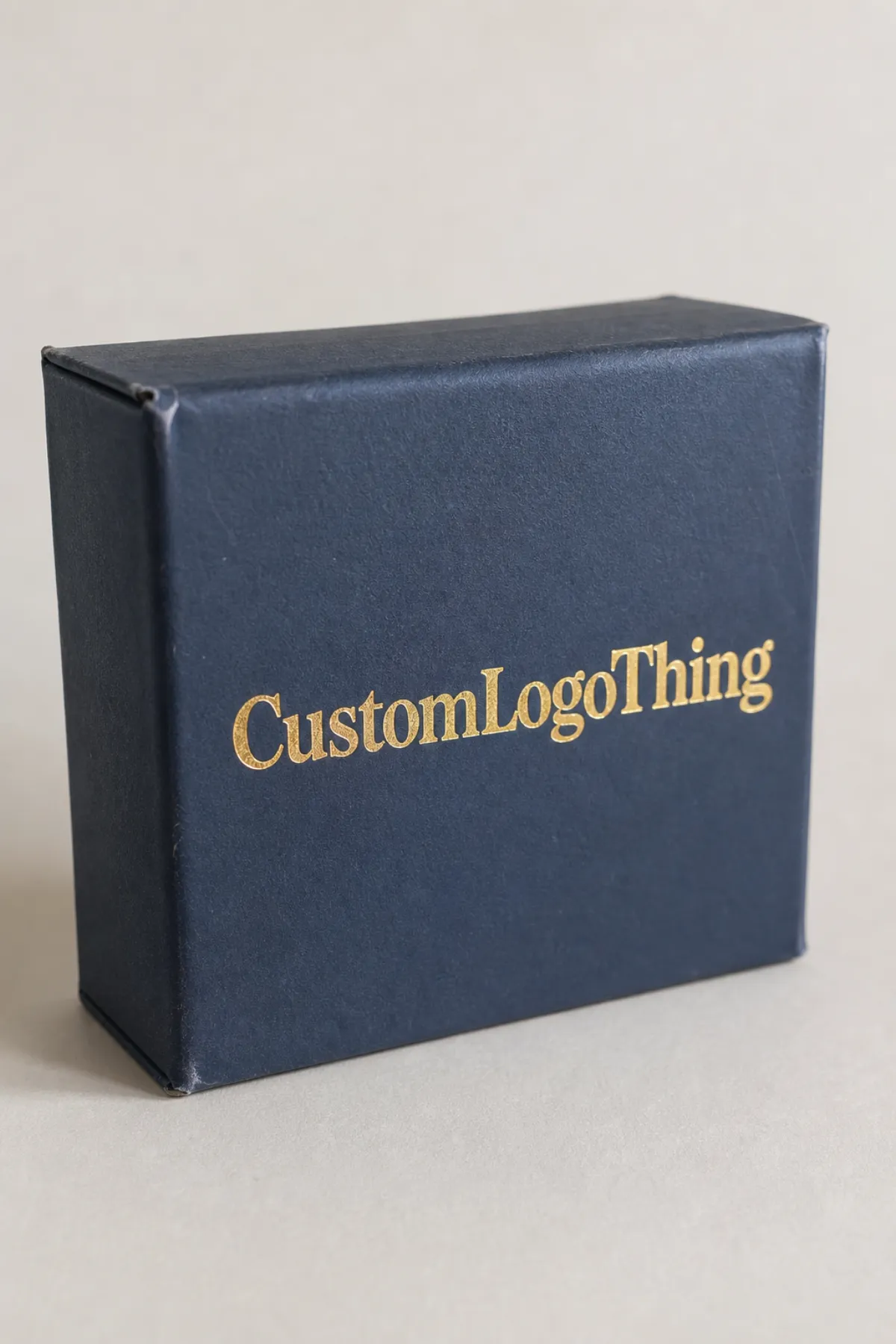
Jewelry packaging gives you a very small canvas. That limitation helps. A ring box, necklace box, or compact two-piece rigid box does not need a full mural of graphics to do its job. It needs one strong signal. Foil gives that signal a flash of clarity that plain ink often cannot match, especially under store lighting or in a photo where the box has only a second to make an impression.
Shoppers scan quickly. That is how most buying decisions begin. A metallic logo reads faster than a flat dark logo on a dark box, and it reads faster than a busy pattern that needs explanation. The eye lingers on contrast, and foil reflects light in a way that makes the brand mark stand out even when the rest of the box stays restrained.
That is why custom jewelry boxes with foil make so much sense for small products. The product may be tiny, yet the packaging can still feel substantial. The goal is not to shout. The goal is to create a clean impression of value. Jewelry buyers often expect care, precision, and a little ceremony when they open the box. Foil supports that expectation without making the box oversized or theatrical.
Plain print can work. Full-color graphics can work too. Both, though, have limits. If the brand already uses strong photography, decorative patterning, or a busy palette, adding another layer can muddy the message. Foil often does more with less. One logo, one line border, or one monogram in metallic finish can carry the same weight as several extra colors.
The unboxing angle matters as well. A foil-stamped logo can look expensive on camera because the shine shifts with movement. That helps on product pages, in social content, and in gift purchases where the first reveal carries real emotional weight. If the box is part of the product experience rather than just the shipping shell, foil earns its place.
There is also a practical retail effect. In a display case full of white cards, tissue wrap, and standard folding cartons, a foil-marked jewelry box catches the eye from a few feet away. That does not guarantee a sale, but it does increase the odds that the package gets handled rather than ignored. For small brands, that extra handling matters.
How foil stamping works on jewelry packaging
Foil stamping sounds elaborate, but the process is direct. Heat and pressure transfer a thin metallic film from a carrier sheet onto the box surface. A metal die presses the foil into the substrate, and only the design area releases the foil layer. The result is a sharp, reflective mark sitting on top of the material rather than soaking into it like ink.
The setup depends on a few variables: the die, the foil film, the pressure, the temperature, and the substrate. Change any one of them, and the final effect changes too. Too much heat can blur detail or flatten delicate textures. Too little pressure can leave gaps or patchy coverage. A weak substrate can cause poor adhesion or inconsistent shine. A supplier asking for your board spec is not being difficult; they are trying to avoid a bad run.
On jewelry boxes, foil usually goes on the logo, a monogram, a border line, a short brand name, or a small icon. It can also work on pattern details if the artwork stays clean and not too fine. Keeping foil to a controlled area usually gives the best result. One focal point reads more expensive than a box that looks like it wandered through a metallic confetti storm.
A few foil methods are worth separating:
- Hot foil stamping uses heat and pressure, and it remains the classic choice for rigid boxes and paper-wrapped surfaces.
- Cold foil transfers metallic effects with adhesive and printing, which appears more often in certain print runs than in rigid jewelry packaging.
- Digital foil effects mimic metallic shine without traditional stamping, but the finish is not identical and the hand feel can differ.
For most Custom Printed Boxes in jewelry, hot foil still leads because it gives a crisp edge and a premium tactile feel. It also pairs well with embossing, debossing, soft-touch lamination, textured wrap, and other branded packaging finishes.
Material choice affects the outcome more than many buyers expect. Rigid board with a wrapped paper surface usually handles foil well. Coated papers can also perform nicely if the surface is smooth enough. Some specialty papers work beautifully, while rough or fibrous stocks can break up fine detail. Deep embossing can also fight with foil; the more dramatic the texture, the more carefully the artwork has to be set up. Tiny serif fonts and hairline rules are where many projects start to wobble.
Most foil issues are not really foil issues. They are design issues that show up during production. A logo that looks elegant at 600 pixels wide can become fragile once it is translated to a lid, especially if the box is only 3 to 4 inches across. That is why factories ask for vector files and why a production team may suggest simplifying a mark that looked perfect in a brand deck.
For transit-sensitive orders, thinking beyond appearance is smart. If the box will ship inside another carton, ask whether the structure has a testing reference or a history of surviving distribution. Standards and test profiles from organizations like ISTA help separate decorative packaging from packaging that survives handling without crushed corners, rubbed foil, or loose lids. If sustainability is part of the brief, paper sourcing from FSC-certified material streams is a practical starting point, though certification alone does not guarantee premium print performance.
Cost, pricing, and MOQ for custom jewelry boxes with foil
Price for custom jewelry boxes with foil depends on far more than the foil itself. The final number is shaped by the box structure, board thickness, wrap paper, foil coverage, number of foil colors, insert type, closure style, and whether embossing or extra finishing is involved. In simple terms, every nice feature tends to add cost. That part never surprises the factory.
Setup cost matters a lot on smaller runs. Foil stamping often needs tooling, so a tiny order can look expensive per box even if the material is modest. Once the quantity rises, the setup gets spread across more units and the unit cost drops. That drop usually tells the real story, not the headline quote.
MOQ is where buyers often get caught off guard. A low minimum sounds friendly, and sometimes it is the right choice for a test launch or seasonal collection. Yet the unit price frequently improves enough at the next quantity step that the smaller order is not the smartest one. If you expect to reorder, ask for two or three quantity breaks. Otherwise, you are making decisions with half the picture missing.
There is another detail that rarely gets discussed in early calls: die storage and retooling. Some suppliers keep your foil die on file for repeat orders. Others treat the second run like a fresh setup. That difference can change the economics of a reorder more than the foil color itself. Ask before you compare quotes.
| Box Type | Typical MOQ | Approx. Unit Cost Range | Best Use |
|---|---|---|---|
| Simple paperboard carton with one foil logo | 1,000-3,000 units | $0.45-$1.10 | Lightweight jewelry sets, budget-conscious retail packaging, mail-ready inner boxes |
| Rigid two-piece box with wrapped paper and foil stamp | 300-1,000 units | $1.60-$4.25 | Gift boxes, premium branded packaging, elevated shelf presentation |
| Drawer box or magnetic closure box with foil and insert | 500-2,000 units | $2.20-$6.50 | Higher-end launches, influencer kits, luxury product packaging |
| Fully custom structure with multiple finishes | 1,000+ units | $3.50-$8.50+ | Flagship collections, luxury retail packaging, repeatable brand programs |
Those ranges are planning figures, not promises. A 500-unit rigid box with a simple gold foil mark can land in a very different range than a 2,000-unit magnetic box with custom insert foam, soft-touch lamination, and tight color matching. The quote only makes sense when the specs are real.
Hidden costs deserve attention too. Buyers often overlook custom inserts, magnetic closures, special paper wraps, proofing, rush fees, and freight. If the shipment goes by air, the number can rise quickly. If it goes by sea, timing slows down, but the freight math may be kinder on larger runs. Neither option is perfect. Both are tradeoffs, and the right one depends on launch timing.
Paper market swings matter as well. Board, wrap paper, and specialty finishes can move with pulp pricing, seasonal demand, and freight conditions. A quote from three months ago may no longer be valid. That does not mean the supplier is being vague. It usually means the raw material market changed under everyone.
When comparing suppliers, ask for quotes using the same box dimensions, same foil placement, same insert, and same finish. Otherwise you are comparing apples to oranges, and somehow paying mango prices.
A practical starting point is to build the request around the exact structure you want. If you need help understanding how different forms affect pricing, the custom packaging products page is a useful reference before you send a spec to production.
Production steps and timeline for custom jewelry boxes with foil
A clean production process saves more money than a late apology ever will. The workflow usually begins with artwork approval, then moves into tooling, material prep, foil stamping, assembly, inspection, packing, and shipment. The exact order can vary by factory, but the logic stays the same: get the files right first so the machine operator does not have to guess.
Artwork prep is where many delays start. Foil needs vector files, clean line weights, and a dieline that shows exactly where the stamp sits. If the design includes embossing, printed text, or multiple finishes, those should be separated clearly. Tiny text is not a brave choice. It is usually a risky one. In practical terms, a foil line below about 0.25 mm can become difficult, especially on textured or wrapped surfaces, though the safe minimum depends on the die maker and the substrate.
The proof stage is the next checkpoint. This is where scale, placement, foil color, and logo readability get confirmed. I would always ask for a proof that shows the stamp relative to the box size rather than floating on a white page. A logo that feels bold on screen can shrink into almost nothing once it lands on an actual lid.
After approval, the factory typically creates or confirms tooling, prepares the wrap material, stamps the foil, allows the finish to stabilize, then assembles the box and adds the insert if needed. A solid inspection step catches dust, edge lifting, crushed corners, color mismatch, and misaligned foil. If the box uses a magnetic closure or drawer fit, the team should also check that the lid and drawer action feel consistent across the run. Jewelry packaging should open cleanly. If it sticks, rattles, or feels uneven, the premium effect drops immediately.
Typical timing depends on complexity:
- Simple foil logo on a standard box: often 10-15 business days after proof approval.
- Rigid box with custom insert and one finish: often 15-25 business days.
- Complex build with multiple finishes or special paper: often 20-35 business days or more.
Sampling usually adds another 3-7 business days, and unusual structures or revisions can stretch that window further. Shipping time is a separate issue. Domestic freight behaves differently from international freight, customs clearance, and peak-season congestion. A schedule that looks clean on paper can still slip because a truck missed a dock window or because everyone in the industry tried to move packaging during the same week.
Building buffer into the schedule is the safe move. If the launch date matters, do not approve artwork late and then expect production to catch up by force of will. That approach has never been reliable.
Key factors that decide the final look and feel
Finish comes first. Matte paper wrap, soft-touch lamination, gloss coating, and textured specialty papers all change the way foil reads. On matte stock, foil tends to stand out sharply. On soft-touch, the contrast can feel more luxurious because the background absorbs light while the foil catches it. On gloss, the look becomes brighter and more reflective, which suits some brands and overwhelms others.
Foil color deserves more attention than it usually gets. Gold and silver remain the safest choices because they read as classic and premium. Rose gold works well when the brand wants something warmer and a little softer. Black foil can be excellent on pale backgrounds where a subtle shine is enough. Holographic foil is far more specific; it can fit fashion-forward packaging, but it can also make jewelry boxes feel trend-driven instead of timeless. That may be exactly right, or it may date the design fast.
Typography carries more weight than many buyers expect. Bold marks stamp more cleanly. Tiny scripts do not always survive production well. Serif fonts with delicate hairlines can lose sharpness, especially on textured wrap or when the foil area is small. If a logo contains very fine details, ask for a test impression or a sample run. It is better to discover that the elegant line weight is too fragile before the full order is moving.
Box structure changes the experience too. A rigid lid-and-base box feels traditional and stable. A drawer box gives a reveal moment that works beautifully for rings and chains. A magnetic closure box feels more modern and is easy to open in retail or gift settings. None of these is automatically better. Each one supports a different brand personality and a different packaging use case.
The interior matters just as much as the exterior. Foam inserts, molded trays, satin ribbon lifts, or paperboard cradles can make the outside foil feel intentional rather than ornamental. If the inside looks cheap, the shiny logo outside cannot fully carry the package. The whole box needs to tell the same story.
Packaging design and package branding meet common sense here. The box should not shout luxury in one place and budget in another. Jewelry buyers notice mismatches. They may not describe the mismatch in the same words, but they notice it. A smart spec keeps the exterior, insert, and closure aligned with the product value and the sales channel.
Consistency becomes the quiet win for brands building a repeatable line. The same foil color, the same logo placement, the same box proportions, and the same insert logic make a collection feel organized. That matters even more if the same packaging has to work across retail packaging, e-commerce, and gift channels.
Lighting is another variable that gets underestimated. A gold foil that looks rich under a warm boutique light can read flatter under office LEDs or a white photography tent. That is why review samples should be checked in the actual environment, not just on a desktop screen. A box does not live on a screen. It lives in a hand, under a lamp, and sometimes on a doorstep.
Common mistakes that make foil look cheap
The first mistake is overdesign. Too many finishes, too many colors, too many visual tricks. The box starts looking like it is trying to win a contest no one entered. Foil works best when it has room to breathe. One strong metallic mark usually beats three competing effects.
The second mistake is weak artwork. Low-resolution files, fuzzy outlines, and tiny text can turn a nice concept into a disappointing print run. Foil stamping prefers clean geometry. If the logo uses thin lines or overcomplicated internal details, ask whether it can be simplified for packaging use. That is not betraying the brand. It is making the brand usable on a real surface.
Color contrast also causes trouble. Gold foil on a warm champagne box can disappear. Silver foil on a bright white box can feel underwhelming if the rest of the design is also quiet. The goal is not just metallic shine. The goal is visible brand recognition. Test the foil color against the actual box background, not against a digital mockup that looks beautiful for all the wrong reasons.
Skipping samples is another classic error. On-screen mockups cannot tell you how the foil behaves at an angle, how the texture feels in hand, or whether the emboss depth works with the closure. A sample shows what the computer hides. Sometimes it shows a lot. That is cheaper than discovering the problem after 2,000 boxes have already been packed.
Tolerance issues can also wreck the effect. If the foil lands too close to an edge, fold, or lid seam, even a tiny shift becomes obvious. If corners crush in transit, the premium feel disappears fast. A jewelry box is small, so the eye notices anything off-center much faster than it would on a larger carton.
The cheapest quote can backfire too. A low number means little if the supplier cannot hold alignment, misses the proof detail, or delivers boxes that need rework. One bad run can erase the savings from the first order and consume the schedule with maximum irritation. Buyers remember that lesson quickly.
Another common failure is treating foil as a substitute for design thinking. A weak logo does not become strong because it shines. A crowded layout does not become elegant because it reflects light. Foil can improve a package, but it cannot rescue a confused one.
To keep the foil from looking cheap, ask a few direct questions before placing the order:
- What is the minimum line weight the factory recommends for foil?
- Can they show a similar sample on the same paper or wrap finish?
- How do they handle alignment on lids, drawer faces, or curved surfaces?
- What happens if the first proof does not match the approved artwork?
Expert tips and next steps before you request a quote
Better quotes start with better information. A one-page spec sheet usually gets farther than a long email thread with half the details missing. Include box size, structure, material, foil location, foil color, finish, insert type, target quantity, and whether you need matching inner packaging or shipping cartons. The cleaner the brief, the cleaner the quote.
Ask for a physical sample or a close match from a previous job. That is the fastest way to judge shine, texture, board stiffness, lid fit, and general build quality. A mockup on a screen can make almost anything look premium. A box in hand tells the truth without any marketing voice attached.
Choose one focal point. That is the easiest way to make custom jewelry boxes with foil feel premium rather than cluttered. A centered logo, a top-lid monogram, or a small foil border usually does more than foiling the entire package. Jewelry already carries enough visual refinement in the product itself. The box should support that, not compete with it.
Compare suppliers on more than price. Look at proofing speed, communication quality, sample consistency, finish options, and how they handle repeat orders. A slightly higher quote can be the better deal if the supplier is reliable and the output stays consistent from one reorder to the next. That matters a great deal for branded packaging programs that run across multiple collections.
Before you request pricing, lock these decisions first:
- Choose the box structure: rigid lid-and-base, drawer, or magnetic closure.
- Confirm the foil color: gold, silver, rose gold, black, or a more specific shade.
- Decide the foil placement: logo only, logo plus border, or a small detail area.
- Set the quantity range: test order, first launch, or repeat production run.
- Prepare the artwork: vector files, dieline, and notes for embossing or print.
- Ask for timing: proof, sample, production, and freight all need separate windows.
If your brand is still shaping the rest of the line, browsing Custom Packaging Products can help you compare structure and finish options before locking the spec. Guessing first and budgeting later is a fast route to disappointment.
The most practical takeaway is simple: decide the structure first, keep foil to one deliberate focal point, and approve a real sample before production. Used that way, foil does what it should do. It sharpens the brand mark, makes the box feel intentional, and gives jewelry packaging the quiet authority that buyers tend to remember.
Used well, foil is not just decoration. It is a branding tool that makes small products feel cared for, keeps the logo readable, and supports the story the box tells before the jewelry ever comes out. Plan the structure, artwork, and finish with discipline, and custom jewelry boxes with foil can deliver exactly what buyers want: a package that feels intentional, clean, and worth keeping.
Are custom jewelry boxes with foil worth it for small brands?
Yes, if the packaging is part of the product experience rather than just the shipping shell. Foil gives a small logo or brand name more visual weight without forcing a complicated print setup. The strongest value usually comes from placing foil on one high-impact area instead of covering every side of the box. For a brand testing a first run of 300 to 500 units, that focused approach is usually safer than trying to make the whole box do too much.
What is the usual MOQ for custom jewelry boxes with foil?
MOQ depends on structure, material, and whether the supplier already has tooling or needs a new die. Rigid boxes with foil usually need higher minimums than simple paperboard cartons. Ask for pricing at several quantities so you can see where the unit cost becomes practical instead of guessing from a single number. If a supplier gives only one number, ask for a second and third break; that often reveals whether the project is truly efficient at scale.
How long do custom jewelry boxes with foil take to produce?
Simple runs move faster; custom structures, inserts, and multiple finishes add time. Artwork approval and sampling are often the biggest schedule variables, not the stamping itself. Build in extra time for shipping, seasonal delays, and revisions after the first proof so the launch does not get squeezed at the last minute. A realistic schedule is usually more valuable than an optimistic one that leaves no room for correction.
Which foil color works best for jewelry packaging?
Gold and silver remain the safest choices because they read as classic and premium. Rose gold or black foil can work well if the brand wants something less expected. The best foil color depends on the box background, logo style, and how much contrast you need for the mark to read cleanly. If the packaging will appear in photos, check the color under the same lighting used for product shots.
What files do I need for custom jewelry boxes with foil?
Send vector artwork whenever possible so the foil edges stay clean at production scale. Separate the foil area from printed artwork if the design uses multiple finishes. Include dielines, size specs, and notes about embossing or special placement so the quote is accurate for custom jewelry boxes with foil. If your logo has very fine strokes, ask the factory for a minimum line-width recommendation before you finalize the files.

