Buyer Fit Snapshot
| Best fit | Custom Jewelry Boxes Bulk Order projects where brand print, material claims, artwork control, MOQ, and repeat-order consistency need to be specified before quoting. |
|---|---|
| Quote inputs | Share finished size, material target, print colors, finish, packing count, annual reorder estimate, ship-to region, and any compliance wording. |
| Proofing check | Approve dieline scale, logo placement, barcode or warning zones, color tolerance, closure strength, and carton packing before bulk production. |
| Main risk | Vague material claims, crowded artwork, missing packing details, or unclear freight terms can make a low unit price expensive after revisions. |
Fast answer: Custom Jewelry Boxes Bulk Order: Board, Finish, Dieline, and Unit Cost should be specified like a repeatable production item. The safest quote records material, print method, finish, artwork proof, packing count, and reorder notes in one written spec.
Production checks before approval
Compare the actual filled-product size with the drawing, then confirm tolerance on folds, seals, hang holes, label areas, and retail display edges. Reserve space for logos, QR codes, warning copy, and material claims before decorative graphics fill the panel.
Quote comparison points
Review material grade, print process, finish, sampling route, tooling charges, carton quantity, and freight assumptions side by side. A quote is only useful when the supplier can repeat the same color, closure quality, and packing count on the next order.
For a Custom Jewelry Boxes bulk order, the box is part of the product, not a side note. I’ve watched otherwise excellent jewelry lose perceived value the second it was lifted from a flimsy tray or a lid that didn’t close with confidence. A ring can be cut cleanly, a pendant can be finished beautifully, and a weak box still drags the whole presentation down before anyone even touches the stone. Packaging does not merely contain jewelry. It sets the price expectation.
That reaction is fast and mostly unconscious. A customer sees a thin carton, a loose insert, or a lid that snaps too hard and the brand suddenly feels cheaper than it may actually be. In custom jewelry boxes bulk order planning, that matters because jewelry is emotional while the buying decision is usually rational, sometimes both in the same breath. The box has to protect the piece, present it properly, and keep unit cost sane at scale. That’s the whole balancing act, really.
The buying sequence is simpler than most teams expect. Start with protection, move to presentation, and only then decide how the box should look on a shelf, in a mailer, or in a customer’s hand. When those three layers work together, the unboxing feels intentional instead of accidental. That is the difference between packaging that supports the sale and packaging that just sits there.
Custom Jewelry Boxes Bulk Order: Why First Impressions Fail
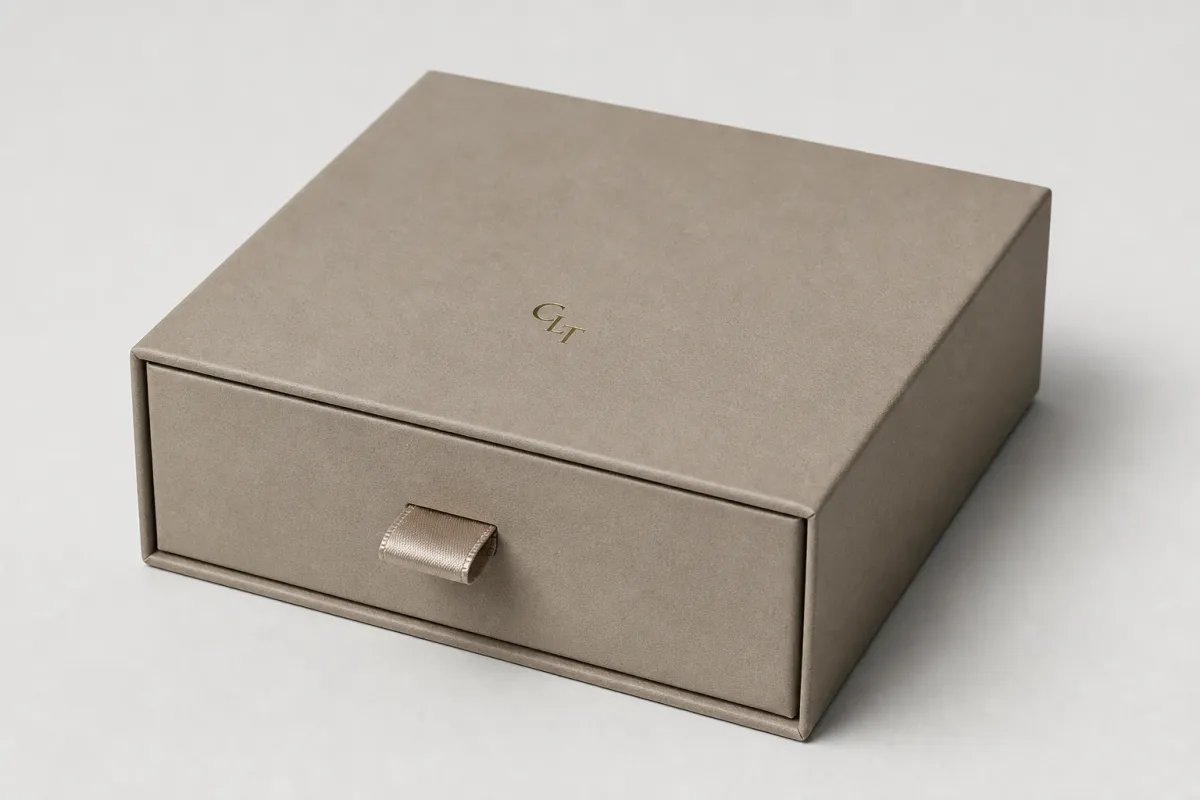
Most packaging mistakes begin before a sample is even made. Buyers get pulled toward foil, embossing, and specialty wraps, then forget the structural basics that keep a custom jewelry boxes bulk order from turning into an expensive headache. The box has to match the product. The insert has to stop movement. The exterior has to reinforce the brand instead of fighting it.
Picture the customer opening the package. A ring rolling inside the tray reads as bargain stock. A chain tangled against the lid makes the brand look inattentive. Earrings rattling during transit can make even a well-made piece feel less valuable. I’ve seen a retailer reject a whole run because the tray fit was off by just a couple of millimeters; the boxes technically “worked,” but the jewelry looked abandoned inside them. That kind of failure is tiny on paper and obvious in real life.
Packaging is visual, but it is also mechanical and tactile. The customer notices all three whether they can name them or not.
In practice, a strong custom jewelry boxes bulk order should do four jobs:
- Improve the unboxing so the product feels worth the price.
- Reduce damage from transport, compression, and abrasion.
- Reinforce the brand with consistent logo placement, color, and finish.
- Keep unit cost under control once the order moves into real volume.
The last point is where good ideas often die. A prototype can look gorgeous at 50 pieces and fail at 5,000 once freight, labor, and reorder math show up. A custom jewelry boxes bulk order has to survive the spreadsheet, the shipping quote, and the production line. Pretty packaging that cannot scale is just a short-lived victory with a high invoice.
Good packaging does not shout. It signals quality quickly, then gets out of the way. That is what a serious custom jewelry boxes bulk order should do.
Retail packaging comes down to the details people only notice when they go wrong: how the box closes, how the insert holds the item, and how well the finish survives handling. A jewelry box will be opened, shut, stacked, shipped, photographed, and displayed. Sloppy construction shows up in every one of those moments. Customers may not describe it in technical terms, but they absolutely feel it.
Custom Jewelry Boxes Bulk Order: Product Types That Sell the Brand
No single format works for every custom jewelry boxes bulk order. The right structure depends on the jewelry type, the price point, and the sales channel. Direct-to-consumer brands need a box that photographs well and feels elevated in the hand. Wholesalers care more about packing efficiency and stackability. Boutique retailers want shelf presence, because the package is part of the pitch.
Buyers usually compare rigid boxes, folding cartons, drawer boxes, magnetic closure boxes, and kraft presentation boxes. Each has its own price band, print behavior, and tactile character. Custom printed boxes can look sharp in any category, but the structure sets the first expectation. A glossy carton and a wrapped rigid box may carry the same logo, yet they do not tell the same story.
| Box Style | Best For | Typical MOQ | Typical Unit Cost | Buyer Takeaway |
|---|---|---|---|---|
| Rigid magnetic box | Luxury rings, gift sets, premium launches | 500-1,000 pcs | $1.20-$3.80 | Premium feel, heavier shipping, strong package branding |
| Drawer box | Earrings, necklaces, giftable sets | 500-1,000 pcs | $0.95-$2.80 | Nice reveal, good for retail packaging, slightly more assembly |
| Folding carton | Volume SKUs, entry-price jewelry, e-commerce | 1,000-5,000 pcs | $0.18-$0.60 | Lowest freight weight, good print surface, less premium feel |
| Kraft presentation box | Eco positioning, handmade lines, minimalist brands | 1,000-3,000 pcs | $0.25-$0.85 | Natural look, flexible branding, usually fewer finish options |
| Magnetic closure box with sleeve | Higher-end collections, gift sets, launches | 500-1,000 pcs | $1.40-$4.20 | Strong reveal, more material layers, sharper shelf impact |
Rings usually fit best in compact rigid boxes with a snug insert, because the center stays fixed and the item does not knock around. Necklaces need a taller insert or a necklace card that keeps the chain under control. Earrings, especially gift sets, often benefit from a drawer box or small magnetic box because the form feels more deliberate without adding unnecessary bulk. A too-large box can be almost as awkward as a too-small one; the item starts to look adrift, and the whole impression gets weird.
Luxury brands often choose heavier board, wrapped rigid structures, and restrained artwork. Higher-volume sellers may prefer lighter cartons, clear color blocking, and a tighter print budget. Both approaches are valid. The error is forcing a packaging model that belongs to a different sales strategy. A custom jewelry boxes bulk order for a boutique launch should not look like warehouse stock, and a fast-moving SKU should not carry the cost structure of a limited edition.
Retail buyers also need packaging that stacks cleanly, ships without drama, and photographs without crushed corners or awkward shadows. That means the box has to work as product packaging, display, freight protection, and photo prop at the same time. One small box, four jobs. The decision matters because the consequences travel through every channel.
Materials, Inserts, and Finishes That Change the Feel
Material choice decides whether a budget stays intact or quietly slips away. In a custom jewelry boxes bulk order, the exterior might be the first thing people remember, but the board and insert determine how the box performs after handling, shipping, and storage. Cheap materials announce themselves fast. No specialist tool is needed.
Rigid boxes usually rely on greyboard or chipboard between 1.5 mm and 2.5 mm, wrapped in printed paper, specialty paper, or textured stock. Folding cartons typically use paperboard in the 250 gsm to 400 gsm range, depending on size and the level of stiffness the box needs. Kraft board works well for cleaner product packaging, especially for brands that want a quieter, more natural look. If the box has to survive repeated opening and closing, that thickness choice matters more than many buyers expect.
Inside the box, inserts do the heavy lifting. EVA foam gives a crisp fit and a precise cutout for rings or pendants. Flocked inserts feel more luxurious and help prevent scratching, although they raise the cost. Paperboard inserts are cheaper and easier to recycle, but they do not always feel as elevated. A custom die-cut hold works for unusual shapes, yet it depends on exact measurements. Guessing here gets expensive very quickly, and the jewelry is usually the first thing to expose the error.
Surface finish changes the perception almost as much as structure does:
- Matte lamination for a clean, modern look with reduced glare.
- Soft-touch lamination for a velvety feel that pushes perceived value upward.
- Foil stamping for logos that need bright contrast or metallic emphasis.
- Embossing or debossing for tactile branding without heavy ink coverage.
- Spot UV for controlled shine on logos or pattern details.
- Textured paper wrap for a more artisanal or luxury presentation.
The tradeoff is straightforward: the more complex the finish stack, the higher the cost, the longer the setup, and the greater the risk of waste if the artwork is not finalized early. A custom jewelry boxes bulk order with soft-touch, foil, and embossing will feel richer than a plain printed carton. It will also take more time to approve and more money to produce. That is not a flaw in the system. It is the system.
Buyers often overlook a few details until they are already frustrated:
- Color consistency across reorders and between paper lots.
- Logo placement relative to the lid edge and sleeve seam.
- Closure strength so magnets or tuck flaps do not feel weak.
- Edge wrap quality on rigid boxes, especially at corners.
- Handling feel after the box has been opened and closed several times.
If your brand sells through retail, the box will be handled by staff, customers, and sometimes return desks. Finish selection should support all of those touchpoints. A good custom jewelry boxes bulk order should look polished on day one and still look respectable after repeated handling. That sounds obvious because it is. The surprising part is how often it gets missed.
For sustainability-minded buyers, ask about FSC-certified paper options through FSC and check whether the structure can be simplified without hurting performance. Eco claims are easy; the paper trail is what matters. If the packaging needs to survive shipment, transit testing references from ISTA are far more useful than guesswork. A greener spec that fails in transit is not sustainable at all, it just moves the waste somewhere else.
Custom Jewelry Boxes Bulk Order: Pricing, MOQ, and Quote Inputs
Price in a custom jewelry boxes bulk order is driven first by structure, then decoration, then quantity. Buyers often ask for the best price without sending enough detail to compare anything useful. That is how quotes become noise. If one vendor is pricing a rigid box with foam and foil while another is pricing a plain paper carton with no insert, the numbers do not tell the same story.
The major cost drivers are easy to map:
- Box structure - rigid, folding, drawer, magnetic, or sleeve style.
- Board thickness - thinner paperboard costs less than wrapped rigid board.
- Insert type - EVA, paperboard, flocked, or custom cut foam.
- Print method - digital, offset, screen, foil, or mixed decoration.
- Finish complexity - matte, soft-touch, embossing, spot UV, or specialty wrap.
- Assembly labor - nested parts, sleeves, trays, and hand finishing raise cost.
MOQ is not a single universal number. That would be convenient, which is usually a clue that the answer is oversimplified. Minimums shift with box style, size, decoration method, and the amount of setup the line requires. A simple folding carton may start around 1,000 pieces, while a premium rigid build may sit around 500 to 1,000 pieces depending on the factory and configuration. Add multiple sizes or color variants, and the minimum usually rises unless the run can be consolidated.
For a useful quote, send these details up front:
- Exact outer dimensions or a reference sample.
- Order quantity by style and size.
- Box style and insert preference.
- Artwork files and logo format.
- Finish requests, including foil or lamination.
- Delivery destination and deadline.
That final point affects the landed cost more than many buyers expect. Freight can shift the total price almost as much as the box itself. A custom jewelry boxes bulk order sent by air looks simple until the shipping bill arrives. Ocean freight lowers transport cost per unit, but the clock gets longer. There is always a tradeoff somewhere in the chain, and the cheapest box can become the priciest one once it crosses an ocean.
Here is a practical way to compare quotes without getting trapped by the lowest headline price:
- Confirm the same dimensions across every vendor.
- Check whether the quote includes the insert or only the shell.
- Ask if the price includes printing, lamination, and foil.
- Verify whether sampling is included or billed separately.
- Look for hidden charges like color matching, tooling, or packing fees.
A low quote with weak materials is not a savings. It is a postponed problem. For a serious custom jewelry boxes bulk order, the smarter question is not who is cheapest. It is who can build the spec consistently, within tolerances that make sense, at a price that still works after freight, spoilage, and reorders are counted. That is the real buying test.
Process, Timeline, and Lead Time for Bulk Production
A custom jewelry boxes bulk order follows a fairly predictable path. Buyers who understand the sequence avoid most delays. Buyers who do not end up chasing revisions, color corrections, and last-minute changes that suddenly become expensive once production starts.
The usual flow looks like this:
- Brief and quote - share specs, quantity, and target budget.
- Dieline confirmation - lock the box size and structural layout.
- Proof or sample - review artwork, finish, and insert fit.
- Material approval - confirm board, wrap, and color direction.
- Mass production - printing, cutting, wrapping, assembly.
- Inspection - check build quality, fit, and appearance.
- Packing and shipping - carton packing, palletizing, transit.
Lead time depends on structure and approval speed. A clean custom jewelry boxes bulk order with standard printing and no structural changes may move through sampling and production faster than a highly finished rigid box with foil and specialty inserts. As a working range, proofing or sampling often takes about 5-10 business days once the brief is clear. Mass production often lands around 12-20 business days after approval for straightforward builds, while more complex work can take longer. Shipping runs on its own clock, and that part can be the sneaky one.
What speeds the job up?
- Clean artwork files in vector format.
- One final size instead of three possible sizes.
- Fast proof approval without endless re-lists of edits.
- Standard finishes instead of stacking every effect available.
- Accurate product dimensions so the insert fits correctly the first time.
What slows it down?
- Color changes after proof approval.
- Insert revisions because the jewelry measurements were approximate.
- Last-minute logo updates or file swaps.
- Holiday congestion in freight or customs handling.
- Overcomplicated packaging design that needs repeated adjustment.
If the order will ship retail-ready, ask about transit protection and carton strength. Some brands use simple drop expectations; others ask for packaging to be assessed against ISTA-style transit conditions or ASTM D4169-type testing language. That does not mean every custom jewelry boxes bulk order needs a full lab program. It does mean the box should be designed with shipping in mind, not just a clean shelf photo.
One more practical detail: seasonal launches need calendar cushion. Holiday freight congestion is real, and it does not care about your campaign date. A few extra days of margin costs less than rushing a reprint because a shipment arrived too late to support the launch window. I’ve seen a strong campaign underperform simply because the packaging showed up after the product announcement. The jewelry was ready; the story was late. That mismatch is costly in a way spreadsheets do not always catch.
Why Choose Us for Custom Jewelry Boxes Bulk Order
At Custom Logo Things, the value is consistency rather than spectacle. A good custom jewelry boxes bulk order should arrive with stable color, clean structure, and Inserts That Actually fit the jewelry. That sounds basic because it should be basic.
Most buyers want a packaging partner who keeps the run predictable and the surprises minimal. The order should not change personality halfway through production. The logo should sit where it was approved. The closure should feel the same from one box to the next. The packaging should protect the jewelry and still reinforce the brand. That is the job.
We focus on the parts that matter in repeat ordering:
- Repeatable color matching so reorders stay aligned with the first run.
- Practical structure advice for rings, necklaces, earrings, and sets.
- Insert guidance so the box holds the item without crushing it.
- Clear communication around artwork, revisions, and production steps.
- Packaging checks that catch obvious fit or finish issues before shipment.
That matters most for brands balancing branded packaging with freight efficiency. A luxury box is the right answer when the margin supports it. A lighter build is smarter when volume matters more than heft. The point is not to spend as much as possible. The point is to choose the box that matches the sales channel, the jewelry category, and the cost target.
If you are comparing structures, our Custom Packaging Products page is the easiest place to start. If you buy packaging on a recurring basis, our Wholesale Programs are built for ongoing runs rather than one-off guesses. And if you want a quick answer on common production questions, the FAQ covers the basics without the usual sales fog.
We also know that packaging buyers do not need a lecture. They need a sensible recommendation. Sometimes the right answer is a rigid box with foil. Sometimes it is a simple printed carton with a clean insert. Sometimes the smartest move is to trim finish complexity and put the money into better board or a tighter fit. That is not glamorous, but it is how a custom jewelry boxes bulk order stays profitable.
From a package branding point of view, the best supplier is the one that can tell you where extra spend will actually show up. If the soft-touch finish changes the hand feel, good. If the fifth decoration step only adds cost, skip it. Straight talk saves money and protects margin, which is a lot more useful than pretty language.
Frequently Asked Questions
What is the usual MOQ for a custom jewelry boxes bulk order?
MOQ depends on the box structure and decoration method, so rigid boxes, folding cartons, and custom inserts rarely share the same minimum. Simple printed boxes can start lower than premium wrapped rigid boxes because the setup and labor are lighter. If you need multiple colors or sizes, expect a higher minimum per variant unless the factory can combine them into one production run. The exact number is best treated as a quote-specific detail, not a fixed rule.
How much does a custom jewelry boxes bulk order cost per unit?
Unit cost is driven by size, board thickness, insert type, print coverage, and finishing, not just the outer box shape. Plain cartons usually stay cheaper, while Rigid Boxes with Foil, embossing, or soft-touch finish move into a higher range quickly. The cleanest way to compare pricing is to ask for the same spec across every quote so the numbers are actually usable. Otherwise, you are comparing apples to a velvet-lined orange.
What details do you need for a fast bulk order quote?
Provide exact dimensions, quantity, box style, insert preference, logo artwork, and your target delivery date. Add finish requests up front, because matte lamination, foil, and spot UV can change both cost and lead time. If you are unsure on structure, send a reference photo or existing box sample so the factory can quote the closest build. A clear brief saves more time than another round of back-and-f
Related Articles

How Much Are Custom Stickers Before You Order?
Jun 26, 2026

Order Very Small Custom Stickers That Actually Read
Jun 26, 2026