A custom Knit Hats With Logo bulk order looks simple until the quote comes back with six variables nobody mentioned in the first email. Logo method, yarn weight, cuff style, packing setup, quantity breaks, and freight can all move the final unit cost.
That does not mean the order has to be painful. It means the specs need to be clean before production starts.
Bulk logo beanies work because people actually wear them. They keep heads warm, show the brand in public, and usually outlive the sad pen that dies in a desk drawer after two days. Low bar. Still useful.
Custom Knit Hats With Logo Bulk Order: What Buyers Usually Miss
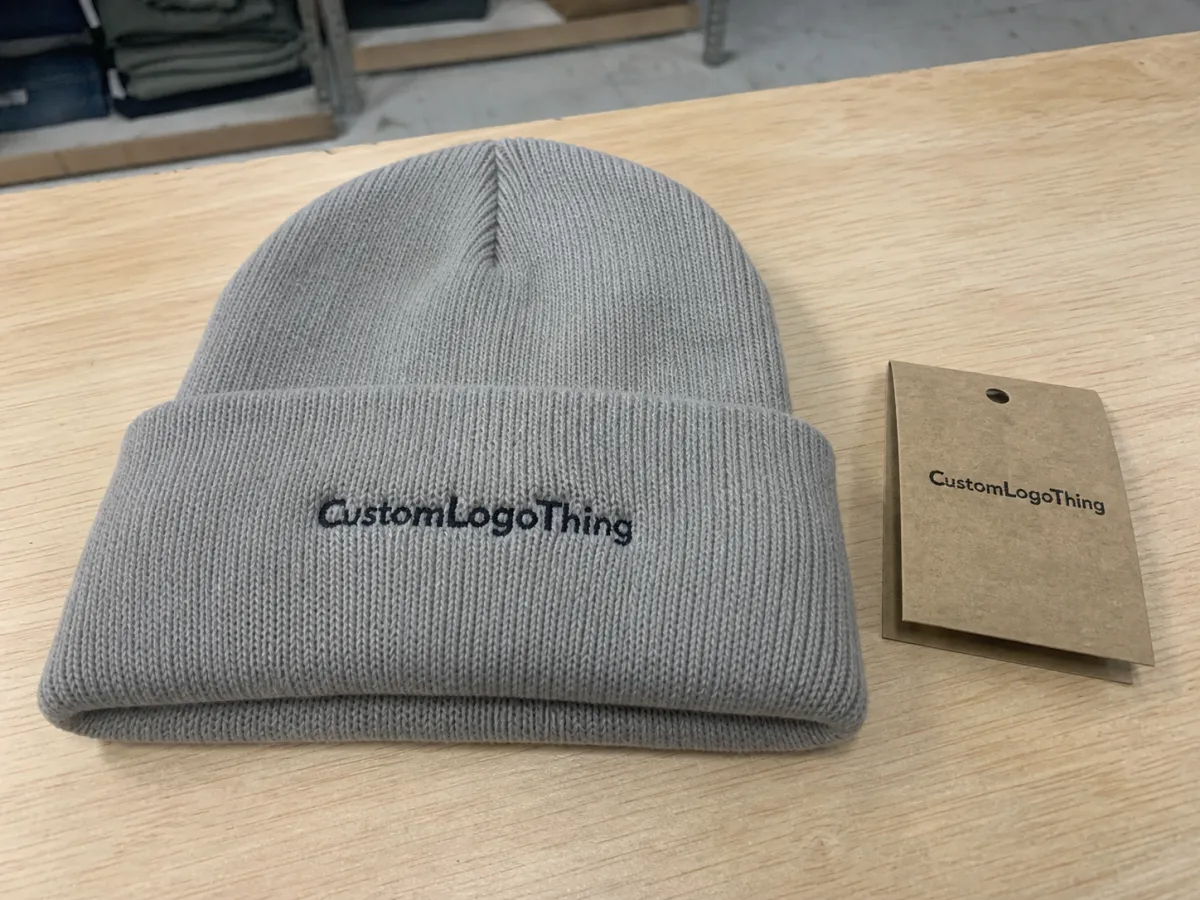
Most buyers start with the same question: “How much for 500 beanies with our logo?” Fair question. Incomplete question.
A bulk order can mean a stock acrylic cuffed beanie with one embroidered logo. It can also mean a custom-dyed jacquard knit hat with a woven patch, hang tag, UPC sticker, individual bag, and split shipping to eight locations. Those are not the same product. They should not be quoted like they are.
The best use cases are easy to spot: employee winter gear, retail merch, event giveaways, outdoor brand drops, brewery merch, campus shops, construction crews, delivery teams, resorts, and nonprofit fundraising. If the audience will wear a beanie in public, the branding gets repeat exposure without begging for attention.
Cheap generic beanies can work for one-day handouts. They usually show their limits fast. The cuff collapses. The embroidery puckers. The yarn stretches out after two wears. Colors look close enough until they sit beside the actual brand color and suddenly the navy looks like it had a rough weekend.
A properly specified knit hat has better stretch recovery, cleaner logo placement, more consistent color matching, and packaging that does not look like someone stuffed it into a carton during lunch. That matters if your team is handing hats to employees, selling them in a shop, or shipping them to multiple locations.
Buying rule: if the hats need to represent the brand for more than one afternoon, do not shop by unit price alone. Match the beanie style, logo method, material, and packaging to the way the hats will actually be used.
By the time a quote is ready, you should know the style, logo method, material, quantity break, lead time, packing plan, and delivery terms. Vague merch promises are cute. They are not a purchasing strategy.
Beanie Styles That Work Best for Bulk Logo Orders
The safest bulk option is usually the cuffed beanie. The cuff gives a stable logo area, fits a wide range of head sizes, and works across workwear, retail, and event merchandise. For many logo beanie programs, that is enough reason to start there.
Uncuffed beanies are cleaner and more minimal, but logo placement can be trickier because the fabric stretches directly over the head. Pom beanies add a winter-retail look and work well for schools, resorts, sports groups, and seasonal merch. Fisherman beanies sit higher and feel more fashion-driven, though not everyone loves the shorter fit. Slouch beanies have a relaxed look, but they can turn sloppy if the knit weight is too thin.
Rib-knit beanies add texture and stretch. Fully custom jacquard knit hats build the logo or pattern into the hat itself, which is useful for all-over designs, tone-on-tone branding, or a coordinated retail drop. They also need cleaner artwork and tighter planning. Funny how that works.
| Logo Method | Best For | Tradeoff | Typical Buyer Use |
|---|---|---|---|
| Embroidery | Simple logos, text, clean icons | Can pucker if oversized or too dense | Staff gear, giveaways, tradeshow merch |
| Woven Patch | Fine detail and retail presentation | Adds patch setup and sewing cost | Brand merch, campus stores, outdoor goods |
| Leatherette Patch | Premium rustic or lifestyle branding | Limited color range and less fine detail | Breweries, resorts, workwear, gift shops |
| PVC Patch | Bold dimensional logos | Usually higher setup cost and thicker feel | Outdoor brands, crews, tactical-style merch |
| Jacquard Knit-In Logo | Integrated patterns and large marks | Higher MOQ and longer sampling cycle | Retail drops, team collections, brand launches |
Embroidery is the practical choice for clean text and simple marks. Patches feel more retail-ready and can carry more perceived value. Jacquard works better when the logo needs to be part of the knit structure instead of sitting on top of it.
Specify fit early. Adult one-size is common, but youth sizing, stretch level, cuff height, seam placement, double-layer warmth, and helmet compatibility can matter. If the hats need to fit under hoods or hard hats, say that before anyone quotes a chunky pom beanie.
Tiny text, thin lines, gradients, and overly detailed mascot artwork do not magically become beautiful on knit fabric. Simplify the logo or expect a muddy result.
Logo, Yarn, Color, and Packaging Specifications to Confirm
A strong spec sheet beats a long email chain. For a custom Knit Hats with Logo bulk order, confirm the beanie style, material, yarn weight, knit pattern, logo method, logo size, logo placement, color count, quantity, packaging type, and delivery destination before treating production pricing as final.
Acrylic is the common budget-friendly choice because it gives warmth, color consistency, and decent durability at scale. It is not luxury, and it should not be sold as luxury, but it does the job for many staff, event, and giveaway programs.
Wool blends feel more premium and can justify a higher retail price, but care requirements and hand feel should be checked before a full run. Recycled yarns can support sustainability goals, especially when paired with recycled paper bands or certified paper hang tags. Performance blends may add softness, stretch, moisture control, or a smoother hand, depending on the fiber mix.
Color choices affect both cost and timing. Stock beanie colors are faster and cheaper because the base goods already exist. Custom-dyed yarn improves brand control but usually increases MOQ, lead time, and sampling cost. If your brand blue must match a Pantone reference within a tight tolerance, say so early. “Close enough” means different things to different people, and procurement teams learn that lesson the expensive way.
Logo placement also needs a decision, not a shrug. Front cuff center is the standard. Side cuff gives a subtler retail feel. A woven label on the seam works for minimalist branding. A patch on the cuff adds structure. All-over knit patterns or retail tag branding can push the product from giveaway into merch line territory.
Packaging is not decoration. It controls handling time. Bulk cartons are fine for employee distribution or simple event giveaways. Individual poly bags, recycled paper bands, hang tags, UPC stickers, size labels, carton marks, and kitting with other cold-weather items add cost, but they also reduce sorting, dust, snagging, and receiving-room complaints.
Anyone who has unpacked 2,000 loose hats from weak cartons knows exactly why that matters.
If the hats will be sold, connect the beanie specs with the rest of your Custom Packaging Products. Retail packaging, custom printed boxes, hang tags, and package branding should not look like four different departments made four separate decisions.
Pricing, MOQ, and Unit Cost Drivers for Logo Beanies
Pricing depends on quantity, style, material, logo method, number of logo locations, color complexity, packaging, sampling, and shipping terms. That is the honest answer. Anyone giving one flat number without those details is guessing or hiding assumptions.
Lower MOQs may work for embroidered stock beanies because the blank product is already available and the decoration step is straightforward. Fully custom knit designs, custom-dyed yarn, jacquard patterns, specialty patches, and retail packaging usually require higher minimums because more setup work is involved.
Typical unit cost logic is simple: higher quantities spread setup, digitizing, patch mold, sampling, and production preparation costs across more units. So the per-hat price drops as quantity rises. A stock acrylic cuffed beanie with embroidery can price very differently at 144, 500, and 2,000 units, even if the logo stays the same size.
Budget buyers usually start with stock acrylic beanies and embroidery. That is often the most economical path. Premium buyers may choose a custom knit pattern, woven or leatherette patch, retail hang tag, and individual packing. The second route costs more, but it also looks far less disposable.
| Order Type | Common MOQ Range | Relative Cost | Best Fit |
|---|---|---|---|
| Stock cuffed beanie with embroidery | Lower to mid-range minimums | $ | Employee gear, giveaways, fast programs |
| Stock beanie with woven or leatherette patch | Mid-range minimums | $$ | Retail merch, premium staff gifts |
| Custom-dyed beanie with logo | Higher minimums | $$$ | Strict brand color programs |
| Jacquard knit custom hat | Higher minimums | $$$ | All-over designs, brand collections |
| Retail-ready packed beanie program | Mid to higher minimums | $$-$$$$ | Stores, distributors, ecommerce kits |
Hidden cost areas are usually not glamorous. Artwork cleanup. Embroidery digitizing. Custom patch setup. Pantone matching. Pre-production samples. Rush freight. Carton labeling. Split shipments. These line items are not scams; they are production realities. The problem is surprise, not the charge itself.
For an accurate quote, send a quantity range, logo file, desired beanie style, target in-hand date, packaging needs, delivery ZIP or port, and the intended use. A resale program should be quoted differently from hats ordered for a warehouse safety meeting. Same general shape, different expectations.
Process and Timeline From Artwork to Delivered Knit Hats
The normal production path is quote review, artwork check, material and style confirmation, digital proof, sample or pre-production approval, bulk production, quality control, packing, shipping, and delivery. Skip steps and you may save two days now, then lose three weeks fixing a problem later. Great bargain.
Stock beanies with embroidery usually move faster because the base product already exists. The production team needs to confirm inventory, digitize the logo if needed, approve thread colors, run the decoration, inspect, pack, and ship.
Custom yarn colors, jacquard patterns, patches, retail packaging, and large-volume orders add time because more suppliers and approvals are involved. A woven patch may need artwork conversion. A leatherette patch may need a die. A custom jacquard knit may need sampling before the bulk yarn and pattern are locked.
Build in approval time. Buyers often lose more days waiting for internal sign-off than the factory loses making the hats. Shocking, I know.
If three departments need to approve logo size, legal copy, packaging design, or carton labeling, put that into the schedule instead of pretending everyone will answer in 12 minutes.
Proofing confirms logo size, placement, thread or patch color, artwork simplification, and beanie color before production. For larger or retail-facing orders, a pre-production sample can prevent expensive surprises. Digital proofs are useful, but they are not the same as seeing stitch density, patch edge quality, or yarn color in hand.
Ask for current lead times during quoting and confirm the in-hand date in writing. Decide early if speed or lower freight cost matters more. Air freight can rescue a deadline, but it can also make a cheap hat program suddenly not cheap. For packaging logistics, the International Safe Transit Association offers useful testing context for packed goods moving through distribution systems.
Quality Checks That Prevent Cheap-Looking Branded Beanies
Quality control starts before the first bulk hat is made. Check knit consistency, stretch recovery, logo alignment, embroidery density, patch adhesion or stitching, cuff height, seam placement, color accuracy, loose threads, and packing count. None of that sounds exciting. All of it matters.
Logo size has to match the fabric. Oversized embroidery can make the cuff stiff, puckered, and uncomfortable. Undersized logos can disappear once the hat stretches on someone’s head. A 2.5-inch-wide embroidered mark might work beautifully on one cuff style and look cramped on another with a shorter fold.
Artwork quality is another early filter. Vector files are preferred for embroidery, woven patches, PVC patches, and clean production proofs. High-resolution raster files may work for some patch types. Blurry screenshots should be treated as a cry for help, not production art.
Sampling depends on risk. Digital proofs are fine for layout approval on simple orders. Pre-production samples are better when the order is large, retail-facing, or using a new patch, yarn, or custom knit pattern. If the hats are part of a paid merch drop, the sample cost is usually cheaper than angry returns.
Compliance details should not be left to the final week. Fiber content labels, country-of-origin labels, care labels, child sizing considerations, and retail barcode requirements may apply. If sustainability claims are part of the program, use supportable language and verify the material source. The Forest Stewardship Council is also useful when paper bands, hang tags, or cartons need certified paper sourcing.
Quality control is cost control. Catching a crooked patch or wrong cuff height before production is cheaper than replacing thousands of hats after an event date has already passed. That is not pessimism. That is math.
Bulk Beanie Order Support: What Should Be Included
A serious bulk beanie order needs more than a pretty mockup. The process should include sourcing, artwork review, production planning, packaging coordination, and shipping discipline. The goal is not hats that look good on a screen. The goal is hats that arrive correctly counted, cleanly branded, packed for the intended use, and ready to hand out or sell.
Buyers should not have to guess whether embroidery, a woven patch, a leatherette patch, or a jacquard knit logo is the smarter choice. The quote process should make that clear by comparing budget, artwork detail, quantity, timeline, and end use.
Useful support can include proofing, sample guidance, carton labeling, individual packing, retail-ready presentation, and shipping coordination for one destination or multiple destinations. That matters for procurement teams, marketing managers, merch buyers, HR teams, event planners, distributors, and brand owners who need consistency across a real bulk order.
The same production mindset applies across branded packaging, product packaging, and apparel-adjacent merch. If the beanie is being sold or shipped as part of a kit, the packaging design should support the product instead of fighting it. For repeat orders and larger-volume planning, review the Wholesale Programs.
Here is the grounded standard: better specifications, cleaner communication, and fewer surprises. Hype does not count cartons, approve stitch files, or fix a missed event deadline.
Next Steps Before You Request a Quote
Before asking for pricing, choose the beanie style, pick a logo method, decide on a quantity range, gather artwork, define packaging needs, confirm delivery location, and set the in-hand date. That single checklist can save two or three rounds of vague quoting.
- Style: cuffed, uncuffed, pom, fisherman, slouch, rib-knit, or fully custom jacquard.
- Logo method: embroidery, woven patch, leatherette patch, PVC patch, label, or knit-in design.
- Quantity: ask for two or three breaks, such as 250, 500, and 1,000 units, if budget is still moving.
- Artwork: send vector files when possible, plus brand color references and placement notes.
- Packaging: choose bulk cartons, individual bags, paper bands, hang tags, UPC stickers, or kitting.
- Delivery: provide the destination ZIP or port, target in-hand date, and split-shipment needs.
If you are unsure, ask for good, better, and best quote scenarios. Stock versus custom. Embroidery versus patch. Standard packing versus retail-ready packaging. A smart comparison makes the tradeoffs visible instead of burying them in a single tempting number.
Evaluate quotes beyond the lowest unit price. Compare material, logo method, logo size, packaging, setup charges, sample terms, freight assumptions, and delivery timeline. A cheaper quote that excludes freight, samples, or carton labeling may not be cheaper once the order gets real.
If you still have production questions, the FAQ page can help with common ordering details. But for a live quote, send the facts first: quantity, logo, target date, packaging requirements, and delivery location.
If you are ready for a custom knit hats with logo bulk order, clear specs are the fastest path to clean pricing and fewer revisions. Clear pricing beats vague merch promises every time.
FAQ
What is the typical MOQ for custom logo knit hats in bulk?
MOQ depends on the style and branding method. Stock beanies with embroidery usually have lower minimums, while custom knit patterns, custom yarn colors, and specialty patches usually require higher quantities. Request pricing at a few quantity breaks so you can see where the unit cost improves.
How long does a bulk order of custom beanies with logo usually take?
Timeline depends on whether you choose stock beanies or fully custom knit hats. Stock styles with embroidery are usually faster. Custom yarn, jacquard designs, patches, sampling, and retail packaging add time. Confirm the in-hand date before production starts, especially for events, seasonal launches, or employee distribution.
Which logo method is best for a custom knit hats with logo bulk order?
Embroidery works well for simple logos and clean text. Woven or leatherette patches give a more retail-ready look. Jacquard knit logos work best when the design is part of the knit structure. The right choice depends on logo detail, budget, quantity, and whether the hats are giveaways, staff gear, or resale merch.
Can I get individual packaging for bulk custom beanies?
Yes. Common options include individual poly bags, recycled paper bands, hang tags, UPC stickers, size labels, and carton labeling. Individual packaging adds cost but saves labor when hats are being resold, shipped to multiple sites, or included in kits.
What artwork do I need for custom knit beanies with a logo?
Vector artwork is best, especially for embroidery, woven patches, and clean production proofs. High-resolution files may work for some applications, but low-quality screenshots should be redrawn. Send brand colors, desired logo size, placement notes, and examples of previous merchandise to speed up quoting and proofing.


