Knit Hats With Logo Unit Cost Breakdown for Buyers
Knit Hats with Logo Unit Cost Breakdown: What Sets the Price
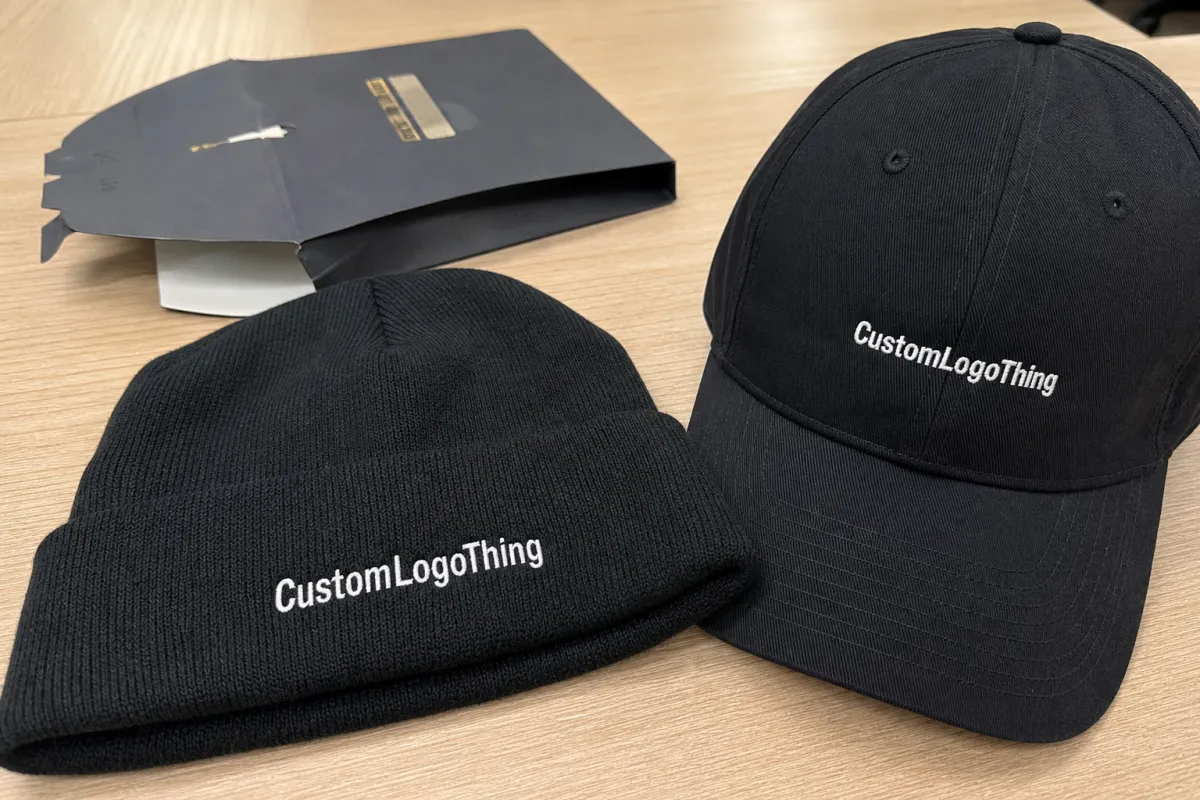
The surprise for many buyers is simple: the logo can change the finished price as much as the hat itself. A useful Knit Hats With Logo unit cost breakdown has to include the blank beanie, decoration method, setup work, packing, freight, and finishing. Treating every knit hat as the same item with a logo slapped on the front is how quotes get messy.
A stock acrylic cuffed beanie with a small woven label may sit in one price range. The same hat with dense front embroidery or a debossed leatherette patch can land higher because the machine time, handling, materials, and inspection points are different. Not glamorous. Just production math.
The main cost buckets usually include knit construction, yarn type, logo method, stitch count or patch type, setup charges, digitizing, quantity breaks, packing, shipping destination, and private-label finishing. Custom yarn color, jacquard knit-in artwork, hang tags, belly bands, individual bags, size stickers, and special carton labels all add cost somewhere. Sometimes it shows up as a line item. Sometimes it is built into the unit price.
Quantity helps, but it does not perform magic. Unit cost usually drops as order size rises because fixed setup and machine preparation spread across more hats. It does not drop in a clean straight line. Yarn, labor, decoration time, inspection, folding, bagging, cartons, and freight still exist on every finished beanie, whether the order is 144 pieces or 5,000.
Buyer callout: A beanie is not a disposable handout if it is built well. It gets worn, washed, photographed, borrowed, lost in someone’s car, found again, and kept through cold seasons. The wrong build looks cheap fast. The right one stays in circulation.
Beanie Materials, Knit Styles, and Logo Methods That Change the Quote
Material sets the base price. Acrylic is common because it holds color well, stretches reliably, and works for employee gifts, school programs, event merchandise, and broad cold-weather giveaways. Recycled polyester blends can suit sustainability-minded programs, especially when paired with recycled packaging or FSC-certified paper hang tags from sources aligned with FSC standards. Cotton blends feel softer and more breathable, though stretch recovery may be weaker. Wool blends add warmth and a more premium hand, but they raise cost and bring care-label considerations.
Construction changes the quote before decoration even starts. A standard cuffed beanie gives a clean logo zone and usually works well with embroidery, woven labels, and patches. An uncuffed skull cap has a closer fit and less folded fabric. Fisherman-style short cuffs look good for retail, brewery, and outdoor merchandise, but the logo area is shallow, often around 1.25 to 1.75 inches tall. Pom beanies add yarn, assembly, and packing volume. Slouch beanies need more material and shaping. Double-layer winter knits feel warmer and heavier, which buyers like, but the base price climbs because there is more yarn and more sewing work.
Decoration drives the quote in visible ways. Direct embroidery gives a classic stitched look and is often cost-effective for clean logos with moderate detail. Woven labels handle fine lines, small text, and multi-color artwork better than embroidery in many cases. Faux leather and genuine leather patches create a retail finish, especially for outdoor brands, breweries, trades, and premium employee kits. PVC and rubber patches suit workwear, ski events, and gear-adjacent programs. Jacquard knit-in logos feel integrated rather than applied, but they usually require higher MOQ and longer production planning.
Logo size, color count, thread density, patch dimensions, backing material, and placement all affect production speed. Ribbed knit stretches when worn, so a tiny wordmark can look clean on a flat proof and distorted once the cuff wraps around a forehead. That is why price should be tied to wearability, not just decoration style.
- Employee winter kits: acrylic cuffed beanie with embroidery or woven patch.
- Construction crews: warm double-layer knit with durable embroidery or PVC patch.
- Brewery merch: fisherman cuff with woven label or leatherette patch.
- University stores: cuffed or pom beanie with embroidery, woven label, or jacquard design.
- Retail resale: premium rib knit, clean patch finish, hang tag, and consistent carton packing.
Specifications Buyers Should Confirm Before Requesting a Beanie Quote
Clear specifications save money. They also stop the quoting process from turning into a long email thread with too many assumptions. Before requesting pricing, gather the target quantity, delivery location, true in-hands date, preferred beanie style, yarn or material preference, logo file, decoration method if known, logo color count, logo location, and packing needs.
Fit deserves more attention than it usually gets. One-size adult beanies work for broad programs, but youth sizes, oversized slouch fits, short fisherman cuffs, and extra-deep winter styles behave differently on the head. A 2.5-inch embroidered logo may look balanced on a standard cuff, crowded on a fisherman cuff, and too low on an uncuffed skull cap.
Artwork quality affects both cost and outcome. Vector files such as AI, EPS, or clean PDF files are best for woven labels, patches, and print-based components. High-resolution PNG files can help with visual proofs, but embroidery still needs digitizing. That means the art has to become stitch paths, thread direction, density, trims, and underlay. This is why setup or digitizing charges appear on many quotes.
Color control has limits on soft goods. Stock yarn colors are not Pantone paper chips. Thread can be matched closely, but sheen and texture change the finished appearance. Leatherette patch shades vary by material lot. Woven labels can hold more detail than embroidery, though very tiny text can still fill in. A serious quote should flag these limits before production, not after cartons arrive.
Finishing details influence the final cost per piece. Loose bulk cartons are simplest. Individual polybags, recycled bags, belly bands, hang tags, size stickers, carton labels, inner packs of 12 or 24, or kitting with gloves and scarves all add handling. For retail or fulfillment programs, that extra organization may be worth the cost because receiving, sorting, and distribution become cleaner.
The fastest way to improve quote accuracy is to define the use case. A giveaway for a one-day outdoor event does not need the same build as retail merchandise. A warehouse crew may need warmth and durability over fine logo detail. A campus store may care more about fold height, color consistency, and hang-tag presentation. Different jobs. Different specs. Different cost structure.
Pricing, MOQ, and Quantity Breaks for Custom Knit Beanies
MOQ depends on the build. Decorated stock beanies usually have lower minimums because the body already exists and production only needs decoration, finishing, and packing. Fully Custom Knit Hats with custom yarn colors, jacquard logos, private labels, or special trim require higher quantities because yarn sourcing, machine setup, and production planning need enough volume to make sense.
Small runs absorb setup heavily. Mid-size runs often create the best balance between flexibility and better pricing. Larger runs can lower decoration and handling cost per piece, but only to a point. The material still has to be purchased. The logo still has to be applied. Every hat still needs inspection. Cartons still take space in transit. Anyone promising that 10,000 pieces makes quality control free is being cute.
| Option | Typical Use | Common MOQ Range | Cost Behavior |
|---|---|---|---|
| Stock acrylic cuffed beanie with embroidery | Employee gifts, events, school programs | 72-144 pieces | Often the most flexible path; digitizing and stitch count affect unit cost. |
| Stock beanie with woven label | Fine logos, retail-style merch, fundraisers | 144-250 pieces | Label setup spreads better at higher quantity; good for detail and small text. |
| Beanie with leatherette or rubber patch | Outdoor, brewery, workwear, premium gifts | 144-300 pieces | Patch material, tooling fees, sew-down time, and size influence price. |
| Fully custom knit or jacquard logo beanie | Retail programs, private label, brand stores | 500-1,000+ pieces | Higher planning cost, stronger brand integration, longer lead time. |
Line items on a quote may include the beanie unit price, decoration charge, digitizing or setup, label or patch setup, proofing, packing, freight, rush fees, and special compliance or labeling requirements. If the beanie is part of a gift kit, there may also be assembly, insert card, carton marking, split shipping, or distribution fees.
Price ranges vary by supplier, season, labor market, shipping method, and material availability, but the pattern is predictable. Basic stock acrylic beanies with one-location embroidery usually price lower than patch programs. Patch programs usually price lower than fully custom jacquard or private-label builds. Rush production, air freight, retail packaging, and small quantities push the number up quickly.
The cheapest unit is not always the best buy. A thin knit that stretches out after three wears, embroidery that puckers on rib fabric, or a patch that curls at the corners can make a low price look expensive later. A better comparison is often good-better-best: stock acrylic with embroidery, the same body with a woven patch, and a premium double-layer knit with a leatherette patch. That makes the knit hats with logo Unit Cost Breakdown easier for procurement, marketing, and operations to evaluate together.
Production Steps and Timeline from Artwork to Delivery
The production path is straightforward, but every step protects the finished result. A typical order moves through quote confirmation, artwork review, digitizing or patch proof, virtual mockup, sample or pre-production approval when needed, material allocation, decoration, trimming, inspection, packing, carton labeling, and shipment.
Timing depends on availability and complexity. Stock beanies with embroidery usually move faster than custom-dyed yarn or jacquard programs. A simple embroidered logo on an in-stock cuffed beanie may be planned in a shorter window after proof approval. Custom patches, retail packing, overseas production, large quantities, or peak cold-weather demand can add days or weeks. The exact schedule depends on quantity, decoration method, supplier capacity, and approval speed.
Buyer approvals matter more than buyers want them to. Check logo scale on the cuff. Confirm thread colors or patch shades. Review placement from the front and side. Read spellings carefully. Confirm brand marks, tag language, carton labels, and packing instructions before the run begins. One missed letter on a woven label can affect every piece. Production will faithfully repeat the mistake. Machines are rude like that.
Rush orders are possible in some cases, but there are limits. Schedules can sometimes be compressed by choosing in-stock colors, simplifying decoration, reducing packaging complexity, or shipping partial quantities. Physical decoration and inspection still require time. Skipping inspection to save a day is rarely a smart trade, especially on knit goods where distortion, puckering, and placement issues can hide until the hat is folded or worn.
Work backward from the in-hands date, not just the event date. If hats need to reach regional offices, sales reps, campus stores, ski teams, or warehouse locations, allow cushion for receiving, internal sorting, weather delays, and kit assembly. For shipping performance and transit planning, standards from groups such as ISTA are useful reminders that packing and transport conditions affect how goods arrive, not only how they leave production.
Quality Checks That Protect Logo Appearance and Wearability
Knit hats need specific quality control because the surface is stretchy, curved, and textured. A logo that looks centered on a flat table can shift once the cuff is folded or worn. Rib tension, seam position, cuff height, and decoration weight all affect appearance.
For embroidery, inspection should cover stitch clarity, registration, thread tension, backing comfort, loose threads, puckering, and readability. Dense embroidery on a soft rib knit needs careful tension control. Too much density can make the front panel stiff. Too little density can let the yarn show through the logo. Neither looks intentional.
For patches and labels, the inspection points are different. Check edge stitching, adhesive or sew-down strength, clean corners, material consistency, logo alignment, and resistance to curling or lifting after handling. Leatherette patches should be checked for clean burn or deboss detail. Woven labels should be checked for frayed edges, straight placement, and color accuracy.
Comfort checks matter because the hat touches skin. Feel the inside backing. Check seam bulk. Stretch the cuff and watch recovery. Look for scratchy yarn, tight pressure, or a patch that makes the front of the beanie sit oddly. A warm hat that people avoid wearing has poor real-world value, even if the initial unit cost looked attractive.
Dimensional checks also help. Measure cuff height, body length, pom placement, patch position, and folded presentation against the approved spec. A small variation may be acceptable on soft knit goods. A logo that drifts half an inch across a run is not. For retail programs, carton consistency matters too because mixed fold styles and random packing create extra work on the receiving side.
Clear specifications reduce expensive corrections. Remakes, missed event dates, and last-minute freight upgrades often cost more than choosing the right construction at the quote stage. That is one reason a detailed cost breakdown is practical rather than administrative paperwork.
How Custom Logo Things Helps Buyers Compare Real Options
Custom Logo Things helps buyers compare materials, decoration methods, packaging, and quantity breaks without forcing every program into one beanie style. Some orders need the lowest practical cost per piece. Others need a retail finish, a warmer knit, private-label trim, or packing that supports direct distribution.
The team can help translate a logo into the right production format. That may mean embroidery digitizing direction, simplified stitch areas, patch sizing, woven label selection, or placement recommendations for cuffed and uncuffed styles. A tall vertical logo may need a different treatment than a horizontal wordmark. A detailed crest may be better as a woven patch than direct embroidery.
Technical quoting support is useful when artwork looks good on a screen but carries production risk. Tiny text, thin outlines, gradients, distressed textures, and heavy color counts can raise costs or reduce clarity. The better answer may be a simplified embroidery file, a woven label, or a patch that holds the detail without overloading the knit surface.
Packaging support can be built into the quote as well. Buyers may need individual bags, belly bands, hang tags, retail packs, carton marks, inner quantities, or distribution-friendly packing. Those details should be priced before approval because they affect labor, materials, carton count, and sometimes freight.
A useful quote makes tradeoffs visible. It should show where the buyer can save money, where premium details improve perceived value, and where timeline choices increase production risk. That is the difference between a loose estimate and a quote that purchasing, marketing, and operations can all use.
Next Steps to Get an Accurate Custom Beanie Quote
To get a clean quote, send the logo file, target quantity, preferred beanie style, desired decoration method if known, delivery location, in-hands date, packaging requirements, and any brand color standards. If you have an existing beanie you like, include photos or links. References clarify cuff height, knit texture, yarn weight, patch size, and overall retail feel faster than written notes alone.
- Send vector artwork if available, or the highest-resolution logo file you have.
- Share the quantity you are considering, such as 144, 250, 500, or 1,000 pieces.
- Confirm the desired style: cuffed, uncuffed, fisherman, pom, slouch, or double-layer knit.
- List packing needs, including bulk cartons, individual bags, hang tags, or retail bands.
- Provide the delivery ZIP code or shipping destination and the true in-hands date.
If budget and presentation are both active concerns, request a side-by-side quote. Compare embroidery versus woven patch, 250 versus 500 units, or stock acrylic versus premium recycled knit. Those comparisons show how MOQ, setup charges, decoration choices, and packaging requirements affect the finished number.
After the request, the usual flow is artwork review, confirmation of feasible decoration, quote preparation, proofing, approval, production scheduling, quality check, packing, and shipment. The more complete the starting information, the fewer assumptions need to be built into the price.
A reliable knit hats with logo Unit Cost Breakdown starts with accurate specs, a realistic delivery date, and a decoration choice that matches both the budget and how the hats will actually be worn.
FAQ
What is included in a knit hats with logo unit cost breakdown?
A proper breakdown usually includes the beanie body, logo decoration, setup or digitizing, patch or label preparation if needed, packing, freight, and any rush, sample, or special labeling charges. The most useful quotes separate fixed costs from per-unit costs so buyers can see why larger quantities often reduce the unit cost.
What MOQ should I expect for knit hats with a logo?
MOQ depends on the build. Decorated stock beanies often have lower minimums, while fully custom knit styles, custom yarn colors, jacquard logos, and private-label programs usually require higher quantities. If the budget is tight or the deadline is close, choosing an in-stock beanie color with embroidery or a standard patch is usually the most flexible path.
Which logo method is most cost-effective for custom beanies?
Direct embroidery is often cost-effective for clean, simple logos with moderate detail, while woven labels can be better for small text or fine artwork. Leatherette, PVC, rubber, and woven patches may cost more than basic embroidery, but they can raise perceived value for retail, outdoor, or premium employee gift programs.
How does quantity change the unit cost for logo beanies?
Higher quantities spread setup, digitizing, proofing, and production preparation across more units, which usually lowers the finished unit cost. Material, decoration time, inspection, packing, and freight still remain part of every hat, so the price reduction has limits even at larger volumes.
How long does production take for knit hats with logos?
Lead time depends on stock availability, decoration method, proof approval speed, order quantity, packing complexity, and whether the program is domestic, imported, or fully custom. Buyers should build in extra time before the actual event or distribution date for receiving, internal sorting, weather delays, and any kitting or fulfillment work.


