Plan Your Knit Hats With Logo Production Timeline Early
A beanie looks simple until the delivery date starts breathing down your neck. The Knit Hats with Logo production timeline is not one neat block of factory time. It is a chain of decisions: yarn, construction, logo method, proofing, sample approval, bulk production, finishing, packing, and freight. Miss one link and the whole schedule gets annoying fast.
Why the Knit Hats With Logo Production Timeline Matters Before You Order
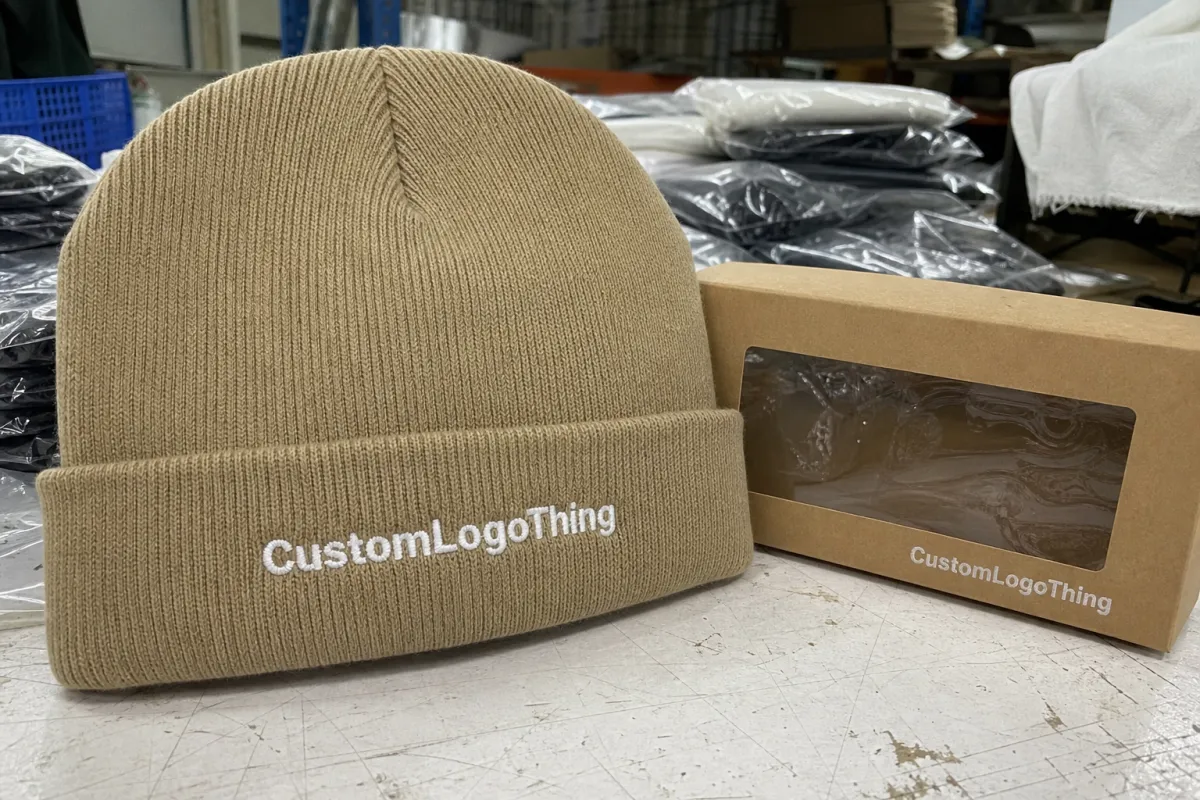
Most buyers start thinking about timing after the launch date is already fixed. The hats might be for employee winter kits, a ski trip, a company store refresh, a merch drop, a cold-weather promotion, or a retail delivery window. I get the assumption. A knit hat feels basic, so people expect it to move like a printed flyer or a stock giveaway.
That is not how production works.
The timeline includes artwork review, digitizing, proof creation, proof revisions, possible pre-production samples, queue time, material allocation, quality checks, labeling, polybagging, carton packing, and shipping transit. If the order ships to multiple locations, add another layer. If it has retail packing, add more checks. If it needs a knit-in logo, stop pretending it is a last-minute item.
The cleanest orders are planned backward from the true in-hands date. Not the event start date. Not the day the warehouse hopes to begin sorting. The real date is the day finished cartons need to be received, counted, inspected, and ready to use. For events, a few business days of cushion is not luxury. It is basic self-defense against freight delays, receiving dock schedules, address corrections, and the random chaos that somehow always appears on Thursday afternoon.
Custom logo beanies also do not all follow the same production path. A cuffed acrylic beanie with flat embroidery moves differently than a jacquard knit pom beanie, a faux leather patch beanie, or a recycled yarn cap with a woven label and hangtag. The product photo may look similar online. The production calendar will not.
Practical rule: if the hat has custom yarn, a knit-in logo, a patch component, retail labeling, or a physical sample, confirm the schedule from the full specification. Do not borrow a generic lead time from a different beanie.
How Custom Logo Beanies Move From Idea to Finished Goods
Most logo beanie orders fall into three production paths. The fastest is usually a stock beanie decorated with embroidery or a patch. The middle path is semi-custom: available yarn colors, standard silhouettes, and some flexibility on trims, labels, or packaging. The most involved path is a fully custom knit hat made to specification, with custom colors, knit patterns, pom-poms, labels, and retail packing.
Artwork has to be translated for the decoration method. Embroidery requires digitizing, which turns the logo into stitch paths and thread colors. Woven patches need thread mapping, border choices, backing decisions, and often a merrowed or heat-cut edge. Faux leather patches need debossing, embossing, or laser settings. Jacquard logos must be simplified into knit structures because yarn cannot reproduce every tiny outline, gradient, or hairline detail that looks fine on a screen.
This is where buyers get surprised. A logo can be technically “approved” by a brand team and still be wrong for knit goods. Tiny taglines, thin circles, soft shadows, and six-color icons may need adjustment. Better to learn that during proofing than after 1,000 hats are sitting in cartons.
A digital proof confirms size, placement, color callouts, and layout. A physical sample confirms what the proof cannot: hand feel, stretch, logo legibility, cuff height, patch placement, and the general retail look of the hat. For a repeat order using the same logo and same beanie, a digital proof may be enough. For a new premium program, a sample is often cheap insurance.
After approval, production follows a basic sequence. Materials are reserved. Hats are either knit to order or pulled from available inventory. Decoration is applied. Loose threads are trimmed. Hats may be steamed or shaped, depending on construction. Then they move through inspection before packing.
Small changes can create real timing issues. Changing thread color before proof approval is usually manageable. Changing from embroidery to a woven patch after approval may restart setup. Adjusting a jacquard logo can require another sample round. Switching yarn because the first choice is unavailable can affect shade, stretch, and hand feel. None of that is dramatic. It is just production reality.
Production Steps That Affect Lead Time Most
The Knit Hats with Logo production timeline is easier to manage when you break it into stages: artwork review, proof creation, proof approval, sample making when requested, bulk material preparation, knitting or blank allocation, logo application, finishing, quality control, packing, and shipping. Each stage may be short. Together, they create the real schedule.
Artwork review can move quickly if the buyer sends usable files. Vector art such as AI, EPS, or clean PDF files gives the production team a better starting point than a small PNG pulled from a slide deck. Pantone references help when brand colors matter. Placement instructions help too. “Front cuff, centered, 2.25 inches wide” is useful. “Put the logo on the front” is not a spec. It is a wish.
Proofing is another common pinch point. A proof may be ready quickly, then sit for three days because five people need to comment. The factory clock usually starts after proof approval, not when the first quote was requested. If timing is tight, assign one person to approve the artwork and one person to approve shipping details. Group feedback before sending revisions. Production teams are not mind readers, despite everyone acting like they should be.
Sampling is often the biggest variable. A physical sample may add several business days or more, depending on decoration method and freight. Still, it can prevent larger problems. If the beanie is for retail resale, premium gifting, influencer kits, or a brand launch, seeing the logo scale and material feel before bulk work begins is usually worth the time.
Decoration method changes the pace. Direct embroidery is generally more straightforward, especially on a stock cuffed beanie. Jacquard knitting builds the design into the hat itself, so logo decisions affect the knitting program. Patches add a separate component step because the patch must be produced, inspected, and attached. Mixed decoration methods, such as a woven label plus embroidery, require more coordination and more inspection points.
Seasonality matters. Beanie demand rises before cold-weather campaigns, holiday gifting, resort deliveries, outdoor events, and winter retail programs. During those windows, yarn availability, embroidery capacity, and freight lanes can tighten. A schedule that feels comfortable in a slower month can feel very different in peak demand.
Do not estimate timing from a product photo. Confirm it after the supplier understands the style, quantity, decoration method, sample needs, packaging, delivery location, and approval process. That is the only way to get a realistic production schedule.
Key Specs That Change Turnaround on Logo Knit Hats
Material choice is one of the first timing levers. Acrylic yarn is common because it is warm, durable, cost-efficient, and widely available. Wool blends can feel more premium but may require closer attention to shrinkage, hand feel, and care labeling. Cotton blends breathe well but do not always recover like acrylic after stretching. Recycled yarns and performance fibers can be good choices, though availability, certification claims, and documentation may add time.
Construction affects turnaround too. A cuffed rib knit beanie is usually more straightforward than a slouch fit, double-layer construction, fleece-lined hat, ear-cover style, or pom-pom beanie. A pom adds a component. Fleece lining adds sewing and inspection. A double-layer hat may feel more substantial, but it uses more material and may need more finishing time.
Logo complexity deserves a blunt conversation. Tiny text, gradients, thin outlines, and multi-color marks can look sharp in a brand file but lose clarity on knit goods. Embroidery has thread density limits. Jacquard knitting has yarn and stitch limits. Woven patches handle fine detail better than embroidery in some cases, but very small type still needs room. A logo that reads clearly from 3 to 5 feet away is usually better than one that only looks perfect under a magnifier.
Placement choices change setup and inspection. Front cuff embroidery is common and efficient. A side cuff patch can look more retail-oriented but requires consistent placement. A woven label at the seam uses a different sewing operation. An all-over jacquard pattern affects the entire knit program. Inside label branding is subtle, but it still requires label production and attachment.
Packaging can add more time than buyers expect. Individual polybags, belly bands, hangtags, retail barcodes, size stickers, carton marks, insert cards, and kitting with scarves or gloves all need to be specified and checked. If retail packaging is involved, it may also need barcode verification, carton labeling, and routing compliance. For packaging standards and distribution testing, resources from ISTA are useful because they explain how packaged goods are evaluated for shipment stress.
| Beanie Option | Typical Use | Common Price Range | Timeline Impact |
|---|---|---|---|
| Stock cuff beanie with embroidery | Employee gear, event giveaways, school spirit wear | $6.50-$12.00 per unit at mid-size quantities | Usually fastest if colors and inventory are available |
| Stock beanie with woven or faux leather patch | Retail merch, premium gifts, outdoor brands | $8.00-$15.50 per unit depending on patch size and material | Patch production adds a component step |
| Jacquard knit logo beanie | Brand launches, team programs, resort merchandise | $9.50-$18.00 per unit depending on yarn, colors, and quantity | Logo is built into the knit, so sampling and approval matter |
| Fully custom beanie with labels and retail packing | Retail resale, subscription kits, premium campaigns | $12.00-$24.00+ per unit depending on specs | Longest path because trims, packaging, and QC are more detailed |
Cost, MOQ, and Quote Details Buyers Should Confirm
Pricing is shaped by quantity, beanie style, yarn type, logo method, number of logo colors, stitch count, patch complexity, sampling, packaging, and shipping method. A basic embroidered acrylic cuff beanie at 250 pieces will not price like a custom jacquard pom beanie with a woven label, belly band, and retail barcode at 2,500 pieces.
MOQ means minimum order quantity. It exists because setup, machine scheduling, material handling, proofing, and finishing take labor whether the order is small or large. A supplier may be able to decorate a lower quantity of stock beanies, while a fully custom knit order often needs a higher minimum because yarn preparation and knitting setup must be spread across enough units.
Unit cost and total landed cost are not the same thing. A low unit price can become less attractive if rush freight, split shipments, special packaging, or rework is needed to hit a tight deadline. Saving $1.00 per hat on 500 pieces does not help much if expedited freight adds $700 and still leaves no receiving cushion. Math remains rude.
Give the quoting team the real details early: target quantity, desired in-hands date, delivery ZIP or country, logo file, preferred beanie style, decoration method, packaging needs, and sample requirement. If you are not sure which decoration method is best, say that. A useful quote can compare options without locking you into one path too soon.
Common add-on costs are not automatically “hidden fees.” Digitizing, sample charges, patch setup, Custom Woven Labels, hangtags, special cartons, rush handling, and expedited shipping are real labor or material items. The key is to get them listed before approval so the budget and the timeline match the same specification.
Ask for good-better-best options if both budget and timing matter. A stock beanie with embroidery may solve the event deadline. A patch beanie may give a more premium look. A fully custom knit option may fit the brand best for retail. All three can be valid. They just do not cost the same or move at the same speed.
Step-by-Step Planning Guide for a Smooth Beanie Order
- Set the in-hands date first. Measure every production choice against when the hats must actually arrive, not just when the event begins.
- Choose the use case. Employee winter gear, donor gifts, resort merch, school spirit wear, outdoor staff uniforms, and onboarding kits all have different quality and packaging needs.
- Prepare usable artwork. Send vector files, approved colors, clear space rules, and notes on whether the logo can be simplified for embroidery, patching, or knit-in production.
- Decide on proof versus sample. A digital proof may be enough for a repeat order. A physical sample helps confirm texture, color, logo scale, stretch, and perceived value.
- Approve carefully. Production normally follows the approved proof, so check size, spelling, thread color, cuff position, label details, quantity, and packing notes.
- Confirm shipping and receiving. Orders going to multiple locations, fulfillment centers, retail accounts, or strict event windows need clean routing information early.
The best planning habit is simple: build a buffer. Even a 3 to 5 business day cushion can protect the order from a late proof approval, a carton relabeling request, a weather delay, or a receiving dock issue. If the program has no flexibility, say so at the start. That helps the supplier steer you toward the safest production path.
Also decide who gets approval authority. Too many approvers can slow a beanie order down, especially when marketing, purchasing, HR, and events all want to weigh in. Clear ownership keeps the schedule moving. Consensus is lovely. Cartons do not ship on consensus.
Common Mistakes That Delay Custom Knit Hat Orders
Unclear artwork is the first delay in many custom knit hat projects. A blurry PNG, an unapproved logo color, or a mark copied from a slide deck can create days of avoidable back-and-forth. If the brand has multiple versions of the logo, identify the exact one approved for merchandise.
Changing decoration methods midstream is another common problem. Embroidery digitizing, woven patch production, leather patch tooling, and jacquard knitting each require different setup work. A buyer may think of them as small logo choices. The production floor treats them as different routes.
Proofs deserve careful attention. Check logo orientation, cuff height, thread or patch color, spelling, placement, quantity, and packaging notes before approval. Once bulk production starts, correcting a small oversight can be expensive or impossible within the same schedule.
Freight time is often underestimated, especially with bulky winter goods. Beanies compress better than rigid products, but cartons still take real space. Split shipments, international delivery, fulfillment center appointments, and warehouse redistribution can add several days. If goods need to pass through a central warehouse before being sent to field teams, include that internal handling time.
Samples are sometimes treated as automatic delays. Half true. A sample adds time, but it can also stop a full production run from missing the mark. For a new logo beanie program, especially one with a patch, jacquard pattern, specialty yarn, or retail packaging, sampling is risk control rather than red tape.
The seasonal mistake is waiting until the cold-weather buying rush has started. During peak beanie demand, production calendars fill, popular yarn colors get tighter, and decoration capacity becomes more valuable. If your campaign depends on winter weather, start the conversation before everyone else is trying to buy the same black cuff beanie.
What to Confirm Before You Request a Beanie Quote
Before requesting a quote, gather the basics in one place: target quantity, in-hands date, delivery locations, logo file, desired style, preferred decoration, packaging needs, and intended use. A hat for retail resale needs different treatment than a one-day event giveaway. A premium donor gift may justify a sample and custom packaging. A staff uniform piece may put durability and repeat ordering ahead of special trims.
Choose two acceptable style directions if you can. For example, compare an embroidered cuff beanie with a woven patch beanie, or ask for a stock option beside a fully custom knit option. That gives the manufacturer room to compare timing and price without starting from a blank page.
Decide what matters most if tradeoffs are needed. Fastest delivery, lowest unit cost, premium feel, exact brand color, eco-conscious material, retail-ready packaging, and maximum logo visibility do not always point to the same specification. If sustainability is a priority, ask about recycled yarns, packaging reduction, and fiber claims. For broader packaging guidance, the EPA Sustainable Materials Management resources are a good reference point.
Review the quote with timing in mind, not just price. Look for production time, sample time, transit time, payment terms, proof approval requirements, freight assumptions, and what happens if artwork changes after approval. If the quote says “production after proof approval,” remember that slow internal approval can push the ship date.
Ask direct questions. What is the realistic ship date after proof approval? What could delay the order? Are the materials in stock? Which decoration method protects logo clarity best? Can the order still hit the date if a physical sample is required? Those answers make the knit hats with logo production timeline much easier to manage.
Clean specs, a firm delivery goal, and prompt approvals do more for timing than any rush label on a purchase order. Plan early, keep the design practical, and treat the production schedule as part of the product decision. Not as cleanup work for later.
FAQ
How long does a custom knit hat with logo order usually take?
A simple decorated stock beanie usually moves faster than a fully custom knit hat, but the actual schedule depends on artwork readiness, proof approval, decoration method, order size, packaging, and shipping distance. Ask for production time and transit time separately. A hat can be finished on schedule and still miss an event if freight was not planned correctly.
What affects the knit beanie logo production timeline the most?
The biggest factors are sample requirements, decoration method, logo complexity, yarn availability, production capacity, packaging needs, and buyer approval speed. Physical samples, custom yarn colors, jacquard logos, specialty patches, and retail packaging usually add more time than straightforward embroidery on an available beanie.
Can I rush knit hats with a logo for an event?
Rush orders may be possible when the beanie style is in stock, the logo is production-ready, the decoration method is straightforward, and the delivery location can support faster freight. The safest rush approach is to simplify the specification: use available colors, limit decoration complexity, approve proofs immediately, and skip custom packaging unless it is essential.
Does a sample add too much time to a logo beanie order?
A sample adds time, but it can be useful when logo legibility, yarn feel, patch quality, retail appearance, or color accuracy matters. For repeat orders or very simple stock beanies, a digital proof may be enough. New premium programs often benefit from seeing and touching a sample before bulk production.
What should I send to get an accurate quote and lead time for logo knit hats?
Send the target quantity, in-hands date, delivery address or region, logo file, beanie style preference, decoration method, packaging requirements, and any brand color standards. If timing is tight, also tell the supplier what can flex: quantity, color, logo method, packaging, or shipping budget.


