A merch buyer needs 500 caps for a launch. The risky part is not usually the cap price. It is approving the wrong structure, decoration method, or delivery window, then discovering the problem after sampling. A custom five panel Caps Bulk Order can cover staff uniforms, retail merch, event giveaways, and influencer seeding in one consistent run, but only if the brief is tight before production starts.
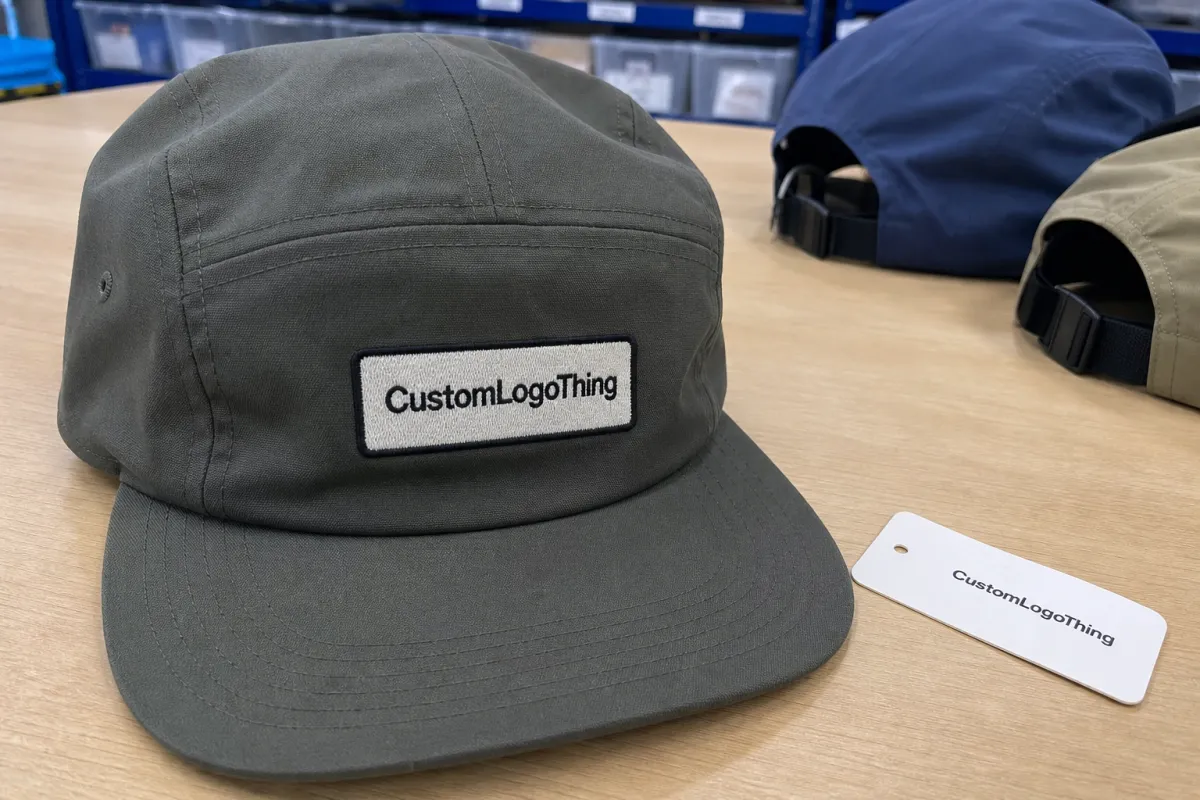
Five Panel Caps work because the front panel is uninterrupted. No center seam cuts through the logo. The print or patch area is cleaner. Product photos look sharper. Compared with many six panel caps, that single front face can make a 2.25-inch woven patch or a 3-inch wordmark look planned instead of squeezed into leftover space.
They are not the answer for every program. Trucker caps offer ventilation and a taller profile. Dad hats feel softer, lower, and more casual. Five Panel Caps sit in the useful middle: streetwear enough for merch, practical enough for outdoor programs, and polished enough for lifestyle retail.
Bulk ordering can reduce per-unit handling, setup, and freight waste. That does not mean a larger order is automatically cheap. Fabric, decoration, quantity, color count, labels, packaging, inspection, and shipping method all move the number. Chasing the lowest quote before defining the cap is how buyers end up paying twice.
The Quiet Math Behind Ordering Five Panel Caps at Scale
Factory pricing is built from repeatable work. A supplier still has to review artwork, digitize embroidery, source trims, cut fabric, set up machines, decorate panels, shape caps, inspect cartons, and prepare shipping documents. Those steps exist whether the order is 300 units or 3,000 units. Higher volume spreads that work across more caps.
That is the clean version. The messier version is where buyers lose margin.
A logo that needs redrawing may add days. Custom-dyed cotton twill can push the minimum order quantity higher. A private-label woven label can affect both lead time and unit cost. Individual poly bags, recycled sleeves, or retail hang tags can change carton size, freight, and warehouse handling. None of those details is exotic. They are normal. They just need to be named before the quote is treated as real.
From a packaging buyer's point of view, caps behave like wearable product packaging. They carry the brand in public, get photographed, sit beside apparel, and often ship with Custom Packaging Products such as mailer boxes, hang tags, stickers, or retail inserts. If the cap looks cheap, the brand signal weakens before anyone reads the campaign copy.
Factory pricing improves when the brief is specific. Vague requests get padded quotes, extra assumptions, or preventable sampling loops.
The practical aim is simple: define the structure, decoration, packaging, quantity, and deadline before requesting numbers. That gives the sales team enough information to quote accurately. It also gives the buyer a fair way to compare options instead of staring at three quotes that are not actually quoting the same cap.
Where Five Panel Caps Create the Most Brand Value
Five panel caps are strongest when the front graphic matters. Logo patches, woven labels, flat embroidery, puff embroidery, heat transfers, screen prints, and minimalist wordmarks all benefit from a broad front face. A six panel cap can still work well, but the center seam can limit fine artwork or force the design higher than planned.
High-fit categories are easy to spot: apparel drops, brewery merchandise, outdoor brands, music events, corporate retreats, sports clubs, tourism retail, coffee chains, and subscription box add-ons. The common thread is visibility. Caps travel farther than leaflets, paper bags, or single-use event materials.
Structure changes the message. A structured five panel with a flat visor reads more retail-ready and streetwear-adjacent. An unstructured camp-style cap in nylon feels more independent, relaxed, or outdoor-oriented. Corduroy adds seasonal texture. Recycled polyester can support sustainability positioning, but claims need documentation. Vague green language on a product tag is not a strategy. It is a liability with better typography.
Fit gets underestimated all the time. People keep wearable items when the shape is credible and the decoration looks deliberate. Low-quality giveaways become office clutter or dead inventory. Branded apparel often has a longer use cycle than paper-based event materials, so durability and decoration quality are part of ROI, not decoration trivia.
If the cap needs to photograph well, work across genders, move from staff use to resale, and extend packaging design beyond custom printed boxes, a five panel build deserves serious consideration. The product is small. The visibility is not.
Product Details Buyers Should Lock Before Quoting
Start with construction. Choose structured or unstructured crown, flat or slightly curved visor, low-profile or mid-profile fit, and soft camp cap or more rigid streetwear silhouette. A low-profile unstructured cap may feel approachable for staff uniforms. A structured mid-profile cap can better support a bold front patch for retail sale.
Fabric has real consequences. Cotton twill is a dependable everyday choice. Canvas gives heavier texture and a more substantial hand feel. Nylon works for outdoor events, festivals, and travel because it is light and can dry faster. Polyester blends suit performance programs. Corduroy can make a seasonal drop feel warmer and more retail-driven. Recycled fabrics may support sustainability goals, but buyers should ask for certificates if that claim appears on packaging, product pages, or retail tags.
Closures shape both cost and perception. Plastic snapbacks are adjustable, familiar, and efficient. Strapbacks feel more premium. Metal buckles create a cleaner retail finish. Elastic closures simplify sizing but reduce adjustability, which can matter for mixed-audience events, staff programs, or resale orders where one bad fit can turn into a customer service problem.
Decoration deserves its own decision, not a casual note at the end of the email. Embroidery adds texture and durability, especially for bold logos. Woven patches handle fine lines, small text, and multi-color artwork better than dense embroidery. Rubber patches create a technical outdoor look. Leather patches suggest premium retail, though material preferences and compliance requirements vary. Screen printing works for flatter graphics, while heat transfers can support complex color art if the surface and use case fit.
| Decoration Option | Best Use | Typical Cost Impact | Buyer Watchout |
|---|---|---|---|
| Flat embroidery | Bold logos, initials, simple marks | Lower to medium, depending on stitch count | Fine text can close up below practical size limits |
| 3D puff embroidery | Large lettering or streetwear-style logos | Medium to higher due to setup and stitch planning | Not ideal for thin lines, gradients, or detailed artwork |
| Woven patch | Fine detail, multiple colors, small type | Medium, plus patch application labor | Patch edge, backing, and placement must be approved |
| Rubber patch | Outdoor, technical, sport, or performance look | Medium to higher, often with mold or setup cost | MOQ may rise for custom shapes, colors, or molded detail |
| Screen print or transfer | Flat graphics, gradients, or complex color art | Variable by color count, size, and process | Surface compatibility and durability need review |
Labels and packaging add another layer. Inside woven labels, hang tags, UPC stickers, individual bags, recycled sleeves, barcode labels, and carton markings can all be built into the program. Retail packaging should be specified early because it affects unit cost, carton volume, receiving accuracy, and sometimes the production schedule.
Specs That Change Fit, Finish, and Factory Accuracy
A quote-ready brief should include cap style, crown height, panel structure, fabric weight, color, visor shape, closure type, decoration method, logo size, placement, label needs, packaging, quantity, and delivery location. Missing one of those details may seem minor. It rarely stays minor.
Color is a common trap. Pantone references or physical color standards matter if caps need to match apparel, retail displays, custom printed boxes, or other branded packaging from different suppliers. Fabric dye lots, thread shades, heat transfer inks, and patch yarns do not always match perfectly, so define the acceptable standard before production.
Artwork should be supplied as vector files whenever possible. AI, EPS, SVG, or production-ready PDF files are usually easier for embroidery digitizing, woven labels, patches, and screen printing. Raster files may need redraw work before sampling, especially if the logo has small lettering, thin outlines, distressed texture, or gradients.
Mockups can lie. A design that looks balanced on a flat digital cap may become too wide after panel sewing tension or too small for embroidery legibility. For many five panel caps, a front decoration width of roughly 2 to 4 inches is common, but the right size depends on cap profile, artwork shape, and method. A clean 2.5-inch woven patch can outperform a 4-inch embroidered logo that fights the crown shape.
- Fit: confirm low, mid, or higher profile before sampling.
- Fabric: specify cotton twill, canvas, nylon, polyester blend, corduroy, or recycled material.
- Decoration: define method, size, placement, color count, backing, and edge finish.
- Packaging: list hang tags, labels, bags, UPCs, carton marks, and retail handling needs.
- Delivery: provide address type, in-hands date, and any routing requirements.
Production tolerances are normal. Patch placement may vary slightly. Embroidery thread may not match the fabric reference exactly. Cap shape can shift within approved limits. Buyers should approve the standard sample carefully because that sample becomes the practical benchmark for the bulk run. If the sample has a slightly crooked label and nobody says anything, congratulations, that is now the standard.
Pricing, MOQ, and Unit Cost Drivers for a Custom Five Panel Caps Bulk Order
Pricing for a custom five panel Caps Bulk Order is built from several components: blank cap construction, fabric choice, decoration method, number of logo positions, artwork complexity, sample requirements, packaging, inspection, freight, duties, and order quantity. A single blended number hides too much. Ask for line items.
MOQ depends on how custom the order becomes. Existing fabric colors and simple front embroidery may support lower minimums. Custom-dyed fabric, special trims, multiple decorations, rubber patches, or private-label packaging often require higher production minimums because the supplier must source materials and set up dedicated production.
Decoration can move cost quickly. Flat embroidery may be efficient for a simple 5,000 to 8,000 stitch logo. Puff embroidery needs more planning and may not suit small details. Patches add material cost, application labor, and sometimes mold or weaving setup. A side hit, back embroidery, or inside label increases handling even if the artwork is small.
Typical landed costs vary too widely to promise one universal price. A basic existing-fabric cap with one logo position may land in a very different range from a retail-ready cap with custom labels, hang tags, individual packaging, and multi-location decoration. Small runs often feel expensive because setup work is concentrated. Larger runs can lower the unit cost, but only if the factory has capacity and materials are stable.
For planning, buyers should separate sample charges, setup charges, decoration cost, packaging cost, freight, and duties instead of treating the unit price as the whole story. A low cap price with vague freight is not a bargain. It is an unfinished quote wearing a nice outfit.
Ask direct cost questions: Are samples included? How many revisions are included? Is freight estimated or final? Are duties included? Are cartons labeled? Is individual packaging part of the quote? If the caps feed a retail or fulfillment program, align carton labels and barcode expectations with receiving rules. For broader fulfillment planning, Custom Logo Things can connect cap programs with Wholesale Programs for repeat buyers.
Industry standards can help frame risk. For shipping performance, many brands use test methods from organizations such as ISTA. For paper-based tags, sleeves, and cartons, buyers may ask about responsible fiber sourcing through groups such as FSC. Caps are textile goods, but their retail presentation still depends on packaging choices.
Process and Timeline From Artwork to Delivered Caps
The normal sequence is quote request, spec confirmation, artwork review, digital mockup, sample or pre-production proof, buyer approval, material sourcing, cutting, sewing, decoration, finishing, quality control, packing, and shipping. Skip a step and risk rises.
The longest delays usually happen before production starts. Missing logo files. Unclear color references. Late sample feedback. Changing a patch to embroidery after costing. Revising quantity after materials have been ordered. These problems are common, avoidable, and expensive in calendar days.
A digital proof can confirm placement and scale, but it cannot prove fabric feel, crown shape, embroidery density, patch edge quality, or closure performance. For a resale program or brand launch, a physical sample is usually worth the time. For a rush event giveaway, buyers may approve a digital proof only, but that choice should be deliberate. It is not the same level of protection.
Lead time depends on material availability, decoration complexity, order volume, factory capacity, shipping method, and destination. Simple repeat orders can move faster. Custom fabric, imported trims, complex embroidery, and retail packaging can add weeks. Build the schedule backward from the in-hands date with separate deadlines for artwork approval, sample approval, production completion, inspection, freight, and buffer time.
Buyers should also clarify what “delivered” means. Delivered to one office is different from split shipments to multiple event sites. A residential delivery address can create different carrier handling than a commercial dock. Fulfillment centers may require appointment windows, carton labels, ASNs, barcode formatting, or pallet specs. Those details are boring until they delay the shipment. Then they become extremely interesting.
Custom Logo Things works best as a process partner, not just a price sender. Clear checkpoints reduce surprises: confirm the brief, review the mockup, approve the sample standard, lock changes, inspect finished goods, and coordinate shipping documents. Speed matters. So does not shipping the wrong cap quickly.
Quality Checks That Prevent Expensive Bulk Order Mistakes
Bulk caps are judged by small repeatable details: panel symmetry, visor alignment, stitch consistency, closure strength, logo placement, thread color, patch edges, interior seams, and packaging presentation. A crooked patch on one cap is a defect. A crooked patch on 500 caps is a brand problem.
Before production, ask four blunt questions. Has the logo been tested at actual size? Are fine lines thick enough for the chosen decoration? Does the cap shape match the audience? Has the packaging been confirmed for the sales channel? Those questions prevent more rework than a long email chain about “premium quality.”
During and after production, inspection should cover material color verification, decoration approval, seam integrity, loose thread trimming, cap shape retention, labeling accuracy, and carton count reconciliation. If caps are going to retail, the packaging presentation matters as much as the decoration. Hang tags should face correctly. UPC stickers should scan. Carton marks should match the purchase order.
Do not over-optimize for the lowest quote. Saving $0.20 per unit on 1,000 caps looks good on a spreadsheet until the order arrives late, the logo is hard to read, or the closure feels weak. A cap is not just a textile item; it is wearable packaging for the brand. Every weak seam, frayed patch edge, or sloppy label becomes a visible quality signal.
For buyers who already manage product packaging, the same discipline applies here: define the standard, approve the proof, inspect against that standard, and document exceptions. Custom Logo Things coordinates cap specs, logo decoration, packaging requirements, and shipping documentation so the program has fewer loose ends.
Next Steps to Prepare a Quote-Ready Bulk Cap Brief
A strong brief is short, specific, and visual. Gather the target quantity, cap style reference, fabric preference, decoration method, logo files, color requirements, packaging needs, delivery address, and in-hands date before contacting the sales team. If budget is fixed, say so early. A supplier can often suggest substitutions that protect the look while reducing cost.
Send inspiration images with notes about what to copy and what to avoid. A reference cap can be interpreted several ways unless the buyer identifies crown height, visor shape, closure, fabric texture, and decoration priorities. “Like this” is not enough. “Low-profile unstructured nylon, slightly curved visor, black strapback, 2.5-inch woven patch, individual recycled sleeve” is far more useful.
For flexible budgets, request a good-better-best quote structure. One version can be optimized for lowest unit cost. One can focus on retail finish with upgraded labels, hang tags, and packaging. One can prioritize faster turnaround using existing materials and simpler decoration. That comparison turns price into a decision, not a guessing exercise.
- Submit the brief with quantity, artwork, cap reference, packaging needs, and delivery details.
- Request a line-item quote covering cap cost, decoration, sampling, packaging, freight, and setup charges.
- Review the digital proof for logo size, placement, color, and label details.
- Approve the physical sample or written production standard before bulk manufacturing.
- Lock changes before production begins to protect schedule and cost.
If you are unsure which decoration method fits your logo, Custom Logo Things can review the file, flag fine-detail risks, suggest alternatives, and identify MOQ constraints before the order is placed. The FAQ page can also help with common artwork, ordering, and delivery questions.
For a custom five panel Caps Bulk Order, the fastest path to an accurate quote is a clear spec brief, approved artwork, realistic deadline, and defined delivery plan. Send the details, ask for line-item pricing, review the proof carefully, approve the sample standard, and keep changes locked before bulk production begins. Not glamorous. Very effective.
FAQ
What is the usual MOQ for custom five panel caps in bulk?
MOQ depends on cap construction, fabric availability, decoration method, and packaging needs. Existing fabrics and simple embroidery may support lower minimums than custom-dyed fabric, private-label trims, or multi-location decoration. Ask for MOQ by option so you can compare basic, premium, and fully custom routes.
How do I get accurate pricing for a custom five panel cap order?
Provide quantity, fabric, cap profile, closure, logo files, decoration method, number of logo placements, packaging needs, delivery address, and target date. Request a line-item quote showing cap cost, decoration, sampling, packaging, freight, and setup charges. If budget is fixed, ask which spec changes will reduce unit cost without weakening the finished look.
Which decoration method works best for five panel caps?
Embroidery is strong for bold logos and durable everyday wear. Woven patches are better for fine detail, small text, and multi-color artwork. Rubber, leather, screen print, or heat transfer options can work when the brand needs a specific retail or technical look. The right choice depends on artwork size, fabric surface, budget, and how the cap will be used.
How long does a bulk five panel cap order take?
Timeline depends on sampling, artwork approval, material sourcing, decoration complexity, factory capacity, inspection, and shipping method. The biggest preventable delays are incomplete artwork, late feedback, changing specs after approval, and unclear delivery deadlines. Build the schedule backward from the in-hands date and include buffer time for sample review and freight.
Can I order custom five panel caps with retail packaging?
Yes. Bulk orders can include hang tags, inside labels, UPC stickers, individual bags, recycled sleeves, carton labels, and other retail-ready packaging. Packaging should be specified before quoting because it affects unit cost, packing labor, carton size, and freight. If the caps are going to retail or fulfillment centers, confirm barcode, carton, and labeling requirements early.


