Custom Knit Hats with Logo Factory Quote for Bulk Orders
A knit hat looks simple on a quote sheet until the real production details start to surface. Buyers searching for a Knit Hats With Logo factory quote are usually not trying to buy a generic winter cap; they need a repeatable branded product that can hold the same fit, color, logo position, packaging standard, and delivery schedule across 250, 1,000, 5,000, or more pieces.
That is where the difference between a quick price and a usable factory quote becomes clear. Yarn weight, cuff height, stitch density, logo method, backing, carton labeling, and freight terms can change both the finished beanie and the final landed cost. A quote that says only “acrylic beanie with logo” leaves too much room for later corrections.
What a Knit Hats With Logo Factory Quote Should Prove Before You Buy
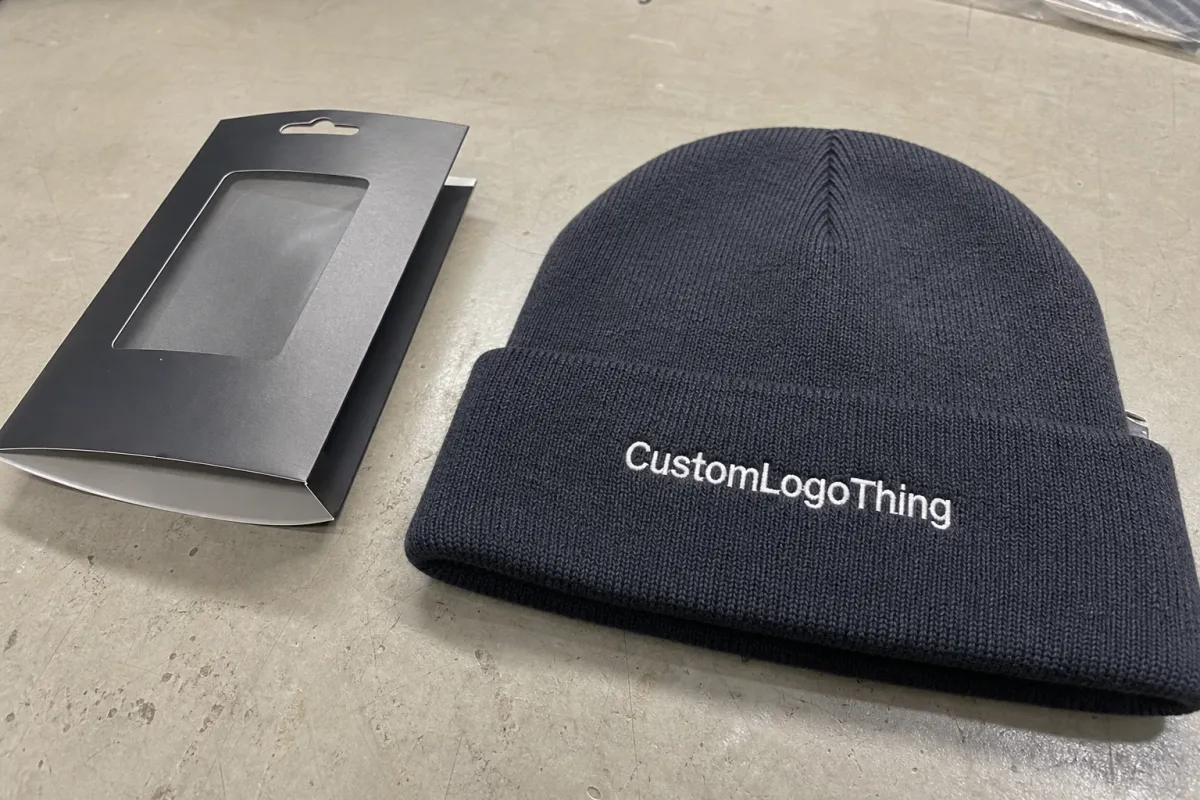
A useful quote should show that the factory understands the hat as a finished branded item, not just a knitted blank with decoration added at the end. Material should be named clearly: 100% acrylic, acrylic-spandex blend, cotton blend, wool blend, recycled polyester, or fleece-lined construction. If the visual texture matters, the knit gauge or rib structure should be identified as well.
Decoration needs the same level of clarity. The quote should include logo size, placement, color count, and method, whether the artwork will be direct embroidery, a woven label, a leatherette or rubber patch, chenille, or jacquard knit-in artwork. If embroidery is used, stitch count or an estimated stitch range helps explain the cost. If a patch is used, setup charges and attachment method should not be buried inside a vague unit price.
Good quoting separates the base hat from the add-ons. Embroidery digitizing, woven label setup, patch mold or die charges, hangtags, individual polybags, barcode stickers, master carton labels, and freight all affect the number a buyer sees. A lower unit price is only useful if the specifications match. If one quote includes proofing, individual packing, and freight while another leaves those out, the two numbers are not truly comparable.
The most reliable quote is not always the shortest one. It is the one that names the material, decoration, packing, lead time, and assumptions clearly enough that a purchase order can follow without reworking the product.
Custom Logo Things helps buyers move from a rough beanie idea to a production-ready specification by focusing on fit, durability, color control, decoration clarity, and dependable bulk output. A clean spec sheet, realistic timeline, and factory quote that names the cost drivers usually give a buyer enough information to make a confident decision without guessing what has been left out.
Product Details That Affect Fit, Warmth, and Brand Presentation
Beanie structure comes first. Common options include cuffed knit hats, slouch beanies, skull caps, pom beanies, rib-knit styles, jacquard knit patterns, and double-layer cold-weather constructions. A cuffed beanie remains the workhorse for bulk logo programs because the folded front creates a stable branding area, often around 2.25 to 3 inches tall after folding.
Acrylic yarn is popular for promotional and retail-style knit hats because it is soft enough for daily wear, accepts color well, and holds shape when knitted at the right tension. A typical 100% acrylic cuffed beanie can work well for employee uniforms, outdoor giveaways, school stores, winter fundraisers, and event merchandise. Cotton blends feel a little softer and less synthetic, though they may not recover as firmly after repeated wear. Wool blends add warmth and a more natural hand, but they raise cost and may require closer review of care labels and wearer sensitivity.
Recycled polyester blends can support sustainability programs, particularly when the buyer also wants paper hangtags or packaging materials sourced with recognized standards. For paper-based components, FSC principles are a useful reference point when discussing responsible sourcing, though certification claims should be confirmed for the specific material being used.
Cuff height deserves more attention than it usually receives. A taller cuff gives more room for embroidery or a patch, yet it can feel bulky on the forehead if the yarn is heavy or the rib structure is thick. A short cuff may wear neatly but limit logo height to roughly 1.25 to 1.75 inches. For construction crews, ski lodge shops, campus merch, or winter retail shelves, that difference changes how visible the logo is from several feet away.
Color should be handled in practical terms. Stock yarn colors are faster and usually less expensive because the yarn is already available in standard shades such as black, navy, charcoal, heather gray, red, royal, forest green, and cream. Custom-dyed yarn can match a brand color more closely, but it may require a higher MOQ, longer lead time, and an approved tolerance range. Screen color is not enough. Pantone references, yarn cards, thread charts, and physical samples reduce disappointment before bulk production begins.
Use case should guide the build. A giveaway hat may need a simple acrylic cuff and one-location embroidery. Retail merchandise may justify a woven patch, hangtag, barcode sticker, and cleaner folding. Outdoor crew uniforms may need fleece lining, darker colors, and cartons separated by department, size group, or delivery location. A good Knit Hats with Logo factory quote reflects the way the beanie will actually be used instead of treating every branded winter hat as the same product.
Logo Methods: Embroidery, Patches, Labels, and Knit-In Artwork
The right logo method depends on artwork detail, order size, budget, hat surface, and the desired brand feel. A simple wordmark can embroider cleanly on a cuff. A dense corporate mark with small lettering may look better as a woven label or patch. A bold two-color icon may work as jacquard knit-in artwork if the buyer wants the logo built into the hat body rather than attached later.
Direct embroidery is durable and familiar. It works well on cuffed acrylic beanies, especially with logos in the 2 to 3.5 inch width range. Cost is driven by stitch count, not only physical size. A filled emblem with 8,000 stitches takes more thread and machine time than a simple 3,000-stitch wordmark. Thread colors, backing, registration, and the stretch of the knit surface all affect clarity.
There is also a comfort factor. Dense embroidery can stiffen the front of a beanie, especially on a tall cuff where the logo sits directly against the forehead. That does not mean embroidery is a poor choice; it simply means the artwork should be digitized for knitwear rather than treated like a flat woven shirt or canvas bag.
Woven labels are strong for small text, fine lines, and retail-style presentation. A front woven label, side tab, or folded seam tag can hold detail that would break down in embroidery. For many wholesale knit hats, a woven label in the 1.5 x 2 inch range gives a clean branded look without making the forehead area too rigid.
Patches create structure on a flexible surface. Leatherette, rubber, PVC, chenille, and woven patches each have a different hand feel and visual weight. Leatherette often suits outdoor brands and corporate gifts. Rubber and PVC are useful for bold, weather-resistant marks. Chenille gives a varsity or campus-store look. Patch costs may include mold, die, or setup charges, so the quote should list them clearly rather than folding them into an unexplained unit price.
Jacquard knit-in logos are made during the knitting process. They are best for bold graphics, large lettering, stripes, and limited color changes. Fine outlines, gradients, and tiny registered marks are usually not a good fit. Jacquard tends to succeed when the artwork is designed for yarn from the beginning, not when a detailed print logo is forced into a knit structure.
Artwork review should happen before pricing is treated as final. Vector files such as AI, EPS, or clean PDF are preferred. Pantone references help guide thread, yarn, and patch color. Small lettering should be checked at actual size. A 0.25 inch line of text that looks readable on a monitor can become muddy on a ribbed cuff, so proof approval should happen before bulk production starts.
Specifications Buyers Should Confirm Before the Factory Prices the Order
An accurate quote starts with complete specifications. The buyer should confirm beanie style, yarn material, knit gauge, finished size, cuff height, color, logo method, logo size, logo location, number of colors, packaging, quantity, and delivery destination. Missing one of those details can change price or timing after approval.
Size and stretch matter more than many teams realize. A knit hat has to recover after wear and still sit comfortably without feeling loose, tight, or shallow. Finished height, crown shape, and cuff depth all affect fit. A common adult cuffed beanie may finish around 8.5 to 9 inches tall when folded, but the real measurement depends on yarn, rib pattern, and target fit.
Knit gauge affects the look and hand feel. A tighter gauge can appear cleaner and more retail-ready, especially with a smooth cuff and centered decoration. Chunkier rib knits feel warmer and more casual, but they can make small embroidery less crisp. Double-layer constructions provide more warmth and body, though they increase unit cost and packing volume.
Logo placement needs written control. On folded cuffs, the fold line, side seam, and embroidery frame all influence where the logo lands. A centered front logo may need a tolerance such as plus or minus 0.25 inch, depending on the production method and knit stretch. If the beanie has a seam, buyers should confirm whether the seam sits at the back, side, or another specified position.
Quality control should include yarn color review, logo proof, pre-production sample when needed, seam inspection, logo alignment, thread trimming, shape consistency, and carton count verification. For retail or regulated distribution, add fiber content labels, country-of-origin marking, hangtags, barcode stickers, or customer-specific carton labels. Shipping cartons may also need drop-test planning if finished goods move through parcel networks; the ISTA testing framework is a practical reference for distribution packaging expectations.
| Specification | Common Choice | Quote Impact |
|---|---|---|
| Yarn | 100% acrylic, cotton blend, wool blend, recycled polyester | Changes warmth, hand feel, MOQ, and unit cost |
| Decoration | Embroidery, woven label, patch, jacquard | Affects setup charges, clarity, and lead time |
| Packaging | Bulk pack, individual polybag, hangtag, barcode label | Adds labor, material cost, carton space, and packing time |
| Quantity | 250, 500, 1,000, 5,000 pieces | Spreads setup cost and usually improves unit pricing |
Pricing, MOQ, and Unit Cost Factors for Custom Beanies
Unit cost is driven by quantity, material, knit complexity, decoration method, logo size, number of thread or patch colors, packing requirements, sampling, and freight. A standard stock-color acrylic cuffed beanie with one-location embroidery will price very differently from a custom-dyed jacquard pom beanie with a woven patch, hangtag, individual bag, and retail carton labeling.
MOQ is practical, not mysterious. Stock-color beanies with standard embroidery or labels may allow lower minimums because the blank construction and yarn supply are already established. Fully custom yarn colors, jacquard patterns, specialty patches, custom pom colors, or retail packaging usually need higher production quantities. Depending on the build, the starting point may be 144 or 250 pieces for simpler work, while more custom programs may begin around 500, 1,000, or more pieces.
A professional factory quote should show the cost layers. Buyers should expect to see base hat production, logo setup or embroidery digitizing, patch mold or label setup if applicable, sample cost, packing materials, carton packing, and shipping. As a practical reference, simple embroidery setup may run around $35 to $75 on many projects, while custom patch setup can be higher if molds or specialty materials are involved. Unit pricing varies widely, but buyers often see meaningful movement between 250, 500, 1,000, and 5,000 pieces because fixed setup and scheduling costs spread across more hats.
Embroidery price often changes with stitch count. A 2.5 inch logo with dense fill may cost more than a 3.25 inch outline logo because the machine runs longer and uses more thread. More colors can add thread changes and handling time. Dense stitches on a stretchy cuff can also feel stiff, so the lowest decoration price is not automatically the most wearable choice.
Cost control does not have to weaken the product. Simplify tiny artwork. Use stock yarn colors when exact brand matching is not required. Choose one strong logo position instead of three small placements. Consolidate packaging if retail presentation is not needed. Order enough units to spread fixed charges. Ask for price breaks at low, middle, and high volume tiers so purchasing teams can see where the unit cost improves.
If the budget is still being shaped, it is often useful to request two versions through Contact Us: one economical stock-color embroidered beanie and one premium version with a patch, woven label, or custom knit detail. That comparison gives buyers a clearer path than asking for one vague price with no material, packaging, or decoration direction.
Process and Timeline From Artwork Review to Bulk Delivery
The production path should be orderly: inquiry, specification review, artwork check, quote, digital proof, sample approval if needed, deposit or purchase order, bulk knitting, decoration, finishing, inspection, packing, and shipment. Each step protects the next one. Skip artwork review and the logo may not price correctly. Skip packing details and the freight estimate may be wrong.
Timeline depends on complexity. A stock-color cuffed beanie with standard embroidery generally moves faster than a custom-dyed jacquard knit with a specialty patch. As a practical range, a straightforward bulk logo beanie order may often need about 10 to 15 business days after proof approval if materials and production capacity are available. More custom builds can move into 20 to 35 business days or longer, especially if sampling, custom yarn, or specialty decoration is required. Final timing should be confirmed on the quote because capacity changes by season.
Sampling has a real purpose. A pre-production sample helps confirm fit, yarn feel, cuff height, logo size, thread color, patch placement, and folding method before the full order is released. Sampling adds time and sometimes cost, but it reduces the risk of approving 2,000 pieces based only on a digital proof. For retail merch or premium gifts, one sample delay is usually better than a full run with the wrong cuff height or an overbuilt logo.
Approval bottlenecks are common. Missing Pantone references, low-resolution artwork, late packing instructions, or changes after proof approval can push out the lead time. Factory scheduling is also physical. Knitting machines, embroidery heads, patch application stations, finishing tables, and packing teams all need reserved production time. Accurate specifications help keep the schedule from slipping for avoidable reasons.
Seasonal orders need earlier planning. Winter promotions, outdoor employee uniform programs, ski shop merchandise, and holiday retail assortments all compete for yarn, machine capacity, and freight space. Quoting early gives the factory room to confirm stock yarn, sample if needed, and choose a shipping method that matches the delivery date instead of forcing expensive rush freight late in the process.
Factory Quote Mistakes That Create Expensive Surprises
The most expensive mistake is comparing quotes that do not include the same specifications. One factory may include embroidery setup, individual packing, master carton labels, and freight. Another may quote only the hat and decoration. The cheaper number may look attractive until the missing charges appear after approval.
Artwork mistakes are just as common. Small text, thin outlines, gradients, and detailed seals can break down on ribbed knit surfaces. Knit stretches. Embroidery pulls. Patches have minimum line widths. If a logo has legal text, fine details, or several small colors, the factory should flag that before production. A useful knit hats with logo factory quote may recommend changing the decoration method to protect the brand mark.
Color mismatch is another risk. Screen colors vary from monitor to monitor. Thread, yarn, woven labels, rubber, and leatherette do not reflect light the same way. Pantone references, physical yarn cards, thread charts, and sample review make the conversation more precise. Even then, color tolerances exist, especially with dyed yarn and mixed decoration materials.
Packaging omissions can create last-minute costs. Retail-ready beanies may need hangtags, size stickers, barcode labels, silica packets, individual polybags, master carton markings, or a specific folding method. Employee uniform orders may need cartons separated by department, location, or event date. Freight estimates also change when individual packaging increases carton volume.
The cheapest logo method is not always the best value. If decoration looks distorted, wears poorly, feels stiff on the forehead, or hides inside a cuff fold, the product will not represent the brand well. Buyers should ask for written confirmation of decoration tolerances, sample approval terms, overrun or underrun policy, payment terms, shipping method, and final delivery responsibility. Those details are not glamorous, but they prevent arguments after the goods are packed.
How to Request a Production-Ready Beanie Quote
Prepare the quote request before contacting the factory. Every answer does not need to be final, but the more complete the starting point, the faster the pricing becomes useful.
- Target quantity: include one number or ask for breaks at 250, 500, 1,000, and 5,000 pieces.
- Budget range: explain whether the order needs an economical giveaway build or a retail-quality merchandise item.
- Delivery date: provide the in-hands date, not only the event date.
- Beanie style: specify cuffed, slouch, pom, skull cap, rib-knit, jacquard, or fleece-lined.
- Artwork: send vector files when available, plus Pantone references if color is controlled.
- Packaging: note bulk pack, individual polybag, hangtag, barcode, carton labels, or retail folding.
Send the highest-quality artwork available. If the logo can be simplified for embroidery, say so. If brand rules require every detail, mention that too, because a patch or woven label may preserve detail better than stitches on a flexible cuff. Share the intended use as well. A giveaway beanie, retail merch item, outdoor crew uniform, and premium customer gift may require different yarn, decoration, and packaging choices.
Custom Logo Things can return a practical quote with recommended construction, decoration method, MOQ, unit pricing by quantity, setup charges, sample path, estimated production lead time, packing details, and freight options. If you want to compare build levels, ask through Contact Us for an economical option, a mid-range option, and a premium option so the purchasing decision is based on visible tradeoffs.
The fastest way to get an accurate knit hats with logo factory quote is to provide complete specifications up front, then let the factory flag the smartest cost, decoration, and timeline choices before production begins.
FAQ
What information do I need for a knit hats with logo factory quote?
Provide quantity, beanie style, yarn material or preferred feel, color, logo file, decoration method, logo placement, packaging needs, delivery deadline, and shipping destination. If the decoration method is not decided, send the artwork and intended use so the factory can recommend embroidery, patch, woven label, or jacquard knit-in branding.
How does MOQ affect the price of custom knit hats with logos?
Higher quantities usually lower the unit cost because setup, artwork preparation, machine scheduling, and packing labor are spread across more pieces. MOQ may be lower for stock-color beanies with standard embroidery and higher for custom yarn colors, jacquard patterns, specialty patches, or retail packaging.
Which logo method is best for bulk logo beanies?
Direct embroidery is durable and common for simple logos, woven labels are strong for fine detail, patches add structure and a retail feel, and jacquard knitting works best for bold artwork built into the hat. The right choice depends on logo detail, beanie surface, budget, quantity, and how premium the finished product needs to feel.
How long does production take after I approve the beanie quote?
Timeline depends on material availability, decoration method, sample approval, order quantity, and packing requirements. Stock yarn with standard embroidery is typically faster than custom-dyed yarn, jacquard knit artwork, or specialty patch production, so final lead time should be confirmed on the quote.
Can I get a sample before placing a bulk knit hat order?
Yes, a sample is recommended when fit, yarn feel, color, logo size, or decoration method needs to be confirmed before bulk production. Sampling can add time and cost, but it reduces the risk of approving a full run based only on a digital proof.


