Buyer Fit Snapshot
| Best fit | Custom Kraft Bags for Shipments projects where brand print, material claims, artwork control, MOQ, and repeat-order consistency need to be specified before quoting. |
|---|---|
| Quote inputs | Share finished size, material target, print colors, finish, packing count, annual reorder estimate, ship-to region, and any compliance wording. |
| Proofing check | Approve dieline scale, logo placement, barcode or warning zones, color tolerance, closure strength, and carton packing before bulk production. |
| Main risk | Vague material claims, crowded artwork, missing packing details, or unclear freight terms can make a low unit price expensive after revisions. |
Fast answer: Custom Kraft Bags for Shipments: Film, Print, MOQ, and Carton Packing should be specified like a repeatable production item. The safest quote records material, print method, finish, artwork proof, packing count, and reorder notes in one written spec.
Production checks before approval
Compare the actual filled-product size with the drawing, then confirm tolerance on folds, seals, hang holes, label areas, and retail display edges. Reserve space for logos, QR codes, warning copy, and material claims before decorative graphics fill the panel.
Quote comparison points
Review material grade, print process, finish, sampling route, tooling charges, carton quantity, and freight assumptions side by side. A quote is only useful when the supplier can repeat the same color, closure quality, and packing count on the next order.
Custom Kraft Bags for Shipments: Uses, Costs, and Specs That Actually Hold Up
Custom Kraft Bags for shipments sound simple. They are not. The usual failures come from a bad size call, the wrong closure, or someone guessing on weight instead of checking it. A bag that is 15 mm too shallow, or one that folds under corner pressure, can turn a clean pack-out into torn seams, crushed contents, and a repack job nobody wanted.
That is why these bags deserve more attention than they usually get. For a buyer comparing branded packaging options, they sit in a useful middle lane: more polished than a plain mailer, less rigid than a carton, and often cheaper than moving everything into custom printed boxes. Used well, they can support product packaging, retail packaging, and package branding at the same time. Used badly, they become a fragile shortcut with a logo on it.
What Custom Kraft Bags for Shipments Are
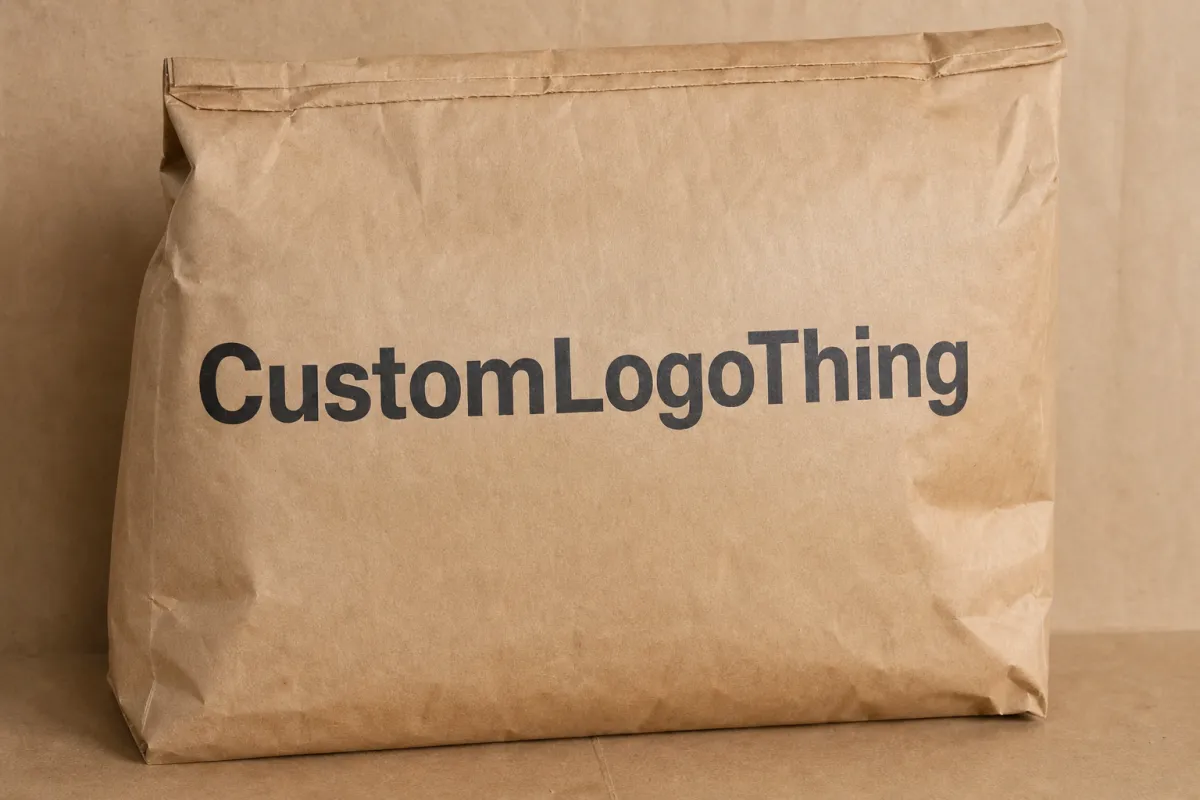
Custom kraft bags for shipments are paper-based bags built around a specific product, pack-out method, and shipping workflow. They can be printed with a logo, return address, handling notes, or a full brand layout, then made to a specific width, depth, closure style, and load limit. That is the difference from generic paper bags. A generic bag tries to fit many jobs. A custom bag is supposed to fit your job.
They also differ from mailers. A paper mailer is usually flatter, more standardized, and tuned for documents, apparel, or very low-profile items. Poly shipping formats bring moisture resistance and tear strength, but they do not deliver the same tactile feel, recycling story, or shelf appeal. Kraft bags sit between those options. They are often chosen for lightweight retail orders, document kits, samples, small parts, subscription inserts, and branded fulfillment where the opening moment matters almost as much as protection.
That middle position matters. From a packaging buyer's point of view, a kraft bag works best when the item needs to travel without looking industrial, and without paying for a full carton structure. A fragrance sample kit, folded garments, stationery sets, event collateral, or a small accessory bundle can all fit that profile. The bag also keeps the visual language simple. If the brand already uses Custom Packaging Products across its product line, a printed kraft bag can keep the pack-out consistent without forcing every shipment into a box.
There are limits. Kraft paper is not the right answer for moisture-heavy routes, sharp-edged metal parts, very heavy loads, or high-value contents that need rigid crush protection. A kraft bag can be strong for presentation and light-to-moderate handling, then fall apart fast against condensation, rough conveyor treatment, or a product with corners that punch outward during transit. The point is not to make the bag do everything. The point is to use it where paper still has room to work.
One practical rule helps here: if the item can move enough inside the bag to shift the stress point from the center to a seam or corner, the spec needs another look. Most damage starts with movement, not with the print.
How the Production Process and Timeline Work
The production path is straightforward, but every step can drag if the specification is fuzzy. It usually starts with a needs assessment: what is being packed, how much it weighs, whether it has corners or edges, and whether the bag is carrying the full transit load or just acting as an inner branded layer. After that comes size selection, material choice, print setup, proofing, production, quality checks, and shipment. Rush any one of those steps and the schedule usually pays for it later.
- Needs assessment: Confirm product dimensions, average weight, maximum weight, and any fragile or sharp features.
- Structure selection: Choose flat, gusseted, handled, or closure-specific construction based on the packing method.
- Artwork setup: Prepare files with correct bleed, logo placement, color targets, and safe zones that actually respect the trim.
- Proofing: Review digital or physical proofs to confirm print position, bag size, and material appearance.
- Production: Print, cut, fold, glue, finish, and inspect the order against the approved spec.
- Dispatch: Pack for freight, confirm carton counts, and account for the lead time from factory to warehouse.
Lead time depends on more than volume. Artwork readiness is one of the biggest variables. A print-ready file moves faster than a file that still needs color, trim, or logo adjustments. Bag construction matters too. A simple one-color kraft bag with standard dimensions usually moves more quickly than a gusseted build with reinforced handles, multiple print positions, or a special closure. Supplier workload, seasonality, freight distance, and whether the job needs sampling all affect the schedule as well.
As a practical planning range, a straightforward custom order often lands somewhere around 15-25 business days after proof approval, before transit time is added. A sample run can add 5-10 business days, and structural revisions can add more if the first test uncovers a fit issue. Rush production is possible in some programs, but faster service usually means fewer finish options, fewer print colors, or tighter minimums. That tradeoff is normal. Speed rarely shows up for free.
If a buyer wants to avoid bottlenecks, the best move is to approve the specs early and keep the internal decision chain short. The warehouse team, marketing team, and procurement lead should all sign off on the same size sheet. That sounds obvious. It still gets missed. Delayed signoff is one of the most common reasons launch dates slip. A bag cannot enter production until someone finally decides whether the opening should be 9 inches or 9.5 inches.
For teams that want a cleaner technical reference, the testing logic used in ISTA testing guidance can help even if the order is not going through a formal lab program. The point is simple: simulate handling, compression, and transit before the customer becomes the test case.
Key Factors That Affect Strength, Fit, and Performance
The biggest strength variable is the kraft grade itself. Paper density changes how the bag feels in hand, how it resists tearing, and how sharply it holds its shape. Lighter kraft can work for documents and low-mass kits, while heavier grades are better when the contents create point loads or when the bag needs to sit upright during packing. A buyer comparing material options should think about structure and perception at the same time. Heavier paper usually feels more premium, but it also adds cost and can change folding behavior on the line.
Construction details matter just as much. A flat bag is efficient and neat, but it offers less internal volume than a gusseted bag. A gusset adds expansion room, which can protect the product if the exact dimensions are not perfectly uniform. Handle style also changes performance. Twisted paper handles, rope handles, die-cut handles, and no-handle formats each affect load transfer differently. A glued seam that looks fine on a sample can still fail if the shipping lane stacks the bags under pressure. Closure choices matter too: tuck, adhesive strip, fold-over, or tape closure can each change how well the bag stays shut during transit.
Dimensions decide more than many buyers expect. A bag can look large enough on a drawing and still fail in use if the opening is too narrow, if the bottom depth is too shallow, or if the product shifts into a corner during movement. The better mindset is to test the actual loaded shape, not the abstract size. A rectangular kit and a product with rounded edges do not behave the same way inside paper. Even a few millimeters of extra clearance can change whether the bag packs cleanly or fights the packer every single time.
Print coverage and finish affect both branding and performance. Heavy ink coverage can increase visual impact, but it may also change drying time, scuff resistance, and the final feel of the stock. Coatings and finishes can improve abrasion resistance and help the bag arrive looking better, yet they can complicate recyclability claims or add cost. If the end goal is simple package branding, a restrained two-color layout on natural kraft often gives a cleaner result than forcing a glossy, high-coverage look onto paper that wants to stay matte and earthy.
Environmental and operational conditions matter too. Humidity can soften paper and reduce stiffness. Warehouse handling can bend gussets before the bag ever reaches the customer. Stack height in transit can flatten handles or stress the seams. Reuse is another factor. A well-built kraft bag may be reused by the end customer, which is a nice extra value, but only if the construction survives the first trip. That part is never guaranteed.
The same logic applies to sourcing. If a buyer needs paper from managed forests or wants to support a documented chain of custody, checking FSC claims early is smarter than trying to retrofit those requirements after artwork approval.
Custom Kraft Bags for Shipments: Cost and Pricing Factors
Pricing is driven by a few predictable levers. Size is one of them, because larger bags use more paper, more glue, and sometimes stronger handles. Material grade is another. A heavier kraft stock almost always costs more than a light one. Print colors matter too. One-color print is usually easier on setup and production than multi-color work, especially if the design wraps multiple panels. Side coverage matters as well: printing one face is cheaper than printing both sides, and full-bleed layouts usually cost more than a centered logo with open negative space.
MOQ, or minimum order quantity, shapes the quote more than many buyers expect. A lower quantity usually means a higher unit cost, even if the design is simple. That is because setup costs are spread across fewer pieces. A 5,000-piece run and a 25,000-piece run do not scale linearly; the larger order usually reduces the unit price because the supplier can absorb prepress, plate, and adjustment costs more efficiently. Buyers who only compare the per-unit number without checking the order threshold often miss the actual economic picture.
Quotes are usually built from a mix of line items. Tooling or setup charges may be one-time, proofing may be included or billed separately, and freight can swing the landed cost depending on distance and weight. If the order includes inserts, special closures, reinforced seams, or an unusual fold pattern, those extras can change the price more than the logo itself. That surprises people, because the artwork is visible while the construction detail stays hidden until the first packed order.
| Option | Typical Unit Range | Best For | Main Tradeoff |
|---|---|---|---|
| Plain kraft bag, no print | $0.12-$0.22 | Internal shipping, simple inserts, low-branding orders | Lowest branding value, limited presentation |
| One-color custom printed bag | $0.18-$0.32 | Light retail orders, samples, document kits | Moderate setup, print area must be planned carefully |
| Two-color gusseted bag with handles | $0.26-$0.45 | Branded fulfillment, apparel, accessory packs | Higher material and assembly cost |
| Special finish or reinforced build | $0.35-$0.70 | Premium product packaging, higher-touch retail packaging | More setup, more production complexity, often higher MOQ |
The cheapest bag is not always the best deal. A low unit price can turn expensive if it slows packing, causes seam failures, or raises return rates. That is why total landed cost matters more than the quote alone. Buyers should compare material cost, freight, labor, reject rate, and the downstream cost of damage or repacking. In a smaller order, freight alone can wipe out the difference between two paper grades. In a larger order, the unit price may look great while hidden handling costs quietly climb.
A useful way to evaluate a quote is to ask three questions: What is included, what is optional, and what changes most as volume rises? If the supplier cannot answer that clearly, the quote is probably too vague to support a real purchasing decision. For teams that source multiple formats, it can help to benchmark the bag against other Custom Packaging Products so the shipment format fits the broader packaging design rather than standing off on its own.
One more practical check: if the order is being compared against custom printed boxes, calculate not just print cost but also the labor difference. A bag can be faster to pack than a box, which may offset a higher unit price. If the bag needs hand-folding, taping, or extra inserts, the labor savings can disappear fast. Small differences per unit become real money at scale.
How to Specify the Right Bag Step by Step
The cleanest specification starts with the product, not the bag. List the item being packed, the average weight, the heaviest version in the lineup, and any sharp corners, fragile faces, or protruding pieces. Then measure the packed form, not just the naked product. A retail kit with tissue, inserts, or protective sleeves may need a very different bag than the same item by itself. That is one of those details that feels minor until a line operator tries to load the fiftieth unit and the bag starts splitting at the fold.
Next, choose the structure. Flat bags fit low-profile items and simplify stackability. Gusseted bags expand for variable contents. Handle styles matter if the bag will be carried by hand or passed directly to a customer. Closure method matters if the shipment needs tamper resistance or simply needs to stay shut while moving through a warehouse. A bag meant for branded fulfillment may need a cleaner presentation; a bag meant for internal shipment may need only enough branding to help with identification and sorting.
Build a spec sheet that is specific enough to keep everyone aligned. It should include exact measurements, material grade, print locations, number of colors, ink targets, finish requirements, quantity, target delivery date, and any handling or recycling notes. If the supplier is also providing artwork help, say so early. If the logo must sit a certain distance from the edge, write that down. If the brand color must stay within a tighter tolerance, say that too. Packaging design gets easier when the rules are visible instead of assumed.
Sample or prototype approval is the point where many expensive mistakes can still be prevented. A real sample lets the team confirm fit, closure behavior, shelf appearance, and line handling. The test should be a real pack-out, not a desk review. Use the actual product, the actual insert, and the actual packing motion. If the bag is meant to move through a warehouse, let it spend time in the warehouse. If the route is humid or rough, simulate that as closely as possible. For many buyers, this is the moment that reveals whether the spec is smart or just tidy.
Before full production, ask the simplest hard question: does the bag still work after the packer has handled it ten times in a row? That is usually where weak closures and awkward openings show up.
Approval should close the loop. Check fit, branding, handling workflow, and storage behavior before the order is released. A good signoff process includes procurement, operations, and whoever owns the customer-facing presentation. Once the team agrees, the order can move forward with far fewer surprises. If the internal review is rushed, the final shipment usually teaches the lesson the expensive way.
If the order is part of a larger launch, keep the bag spec in step with the rest of the package branding. A kraft bag can support the same visual language as inserts, labels, and shipping collateral, but only if the colors, logo placement, and tone are coordinated. Otherwise the result feels assembled instead of designed.
Common Mistakes to Avoid Before Ordering
The first mistake is choosing by appearance alone. A bag can look premium in a mockup and still fail in the real pack-out if the load is too heavy or the closure is too weak. That is especially true with paper, which can hide its limits until it meets pressure, humidity, or repeated handling.
The second mistake is vague sizing. “Medium” does not help production. Neither does “should fit most of the kits.” A few millimeters matter. Vague sizing leads to wasted paper, sloppy presentation, and avoidable shipping damage. It also makes reordering harder, because nobody remembers which loose interpretation was approved last time.
The third mistake is skipping sample tests. That is risky for any product, but especially risky when product shape changes with season, fill level, or packaging inserts. A bag that fits one version of the product may be too tight for another. Humidity can also change the way kraft behaves, which means a winter test and a summer test can produce different results.
The fourth mistake is underestimating print behavior on kraft stock. Low-contrast artwork, tiny type, crowded layouts, and colors that depend on a bright white background often look weaker on natural kraft. The paper itself has warmth and texture, which can be a strength, but it also shifts color perception. Branding should be designed with that in mind, not pasted on as if the stock were coated white board.
The fifth mistake is ignoring fulfillment speed. A beautiful bag can still be a bad operating choice if the opening is awkward, the bag cannot stack cleanly, or the closure slows the pack line. This is where retail packaging meets labor reality. A design that adds five seconds per unit may seem harmless until the order volume turns that into hours.
There is another trap: comparing only bag price and not the broader pack-out cost. If the bag removes the need for a heavier carton, then it may save money even at a higher unit price. If it adds inserts, manual taping, or extra damage risk, the savings can disappear. That is why buyers should think in total process terms rather than only in line-item terms.
Expert Tips for a Smarter Next Order
Start with a pilot run or a smaller batch if the bag is new to the workflow. A controlled trial gives you real data on fit, print quality, packing speed, and customer presentation. It also protects the budget from a large mis-specification. In packaging, small tests often save bigger mistakes later.
Compare at least three quotes against the same spec sheet. That sounds basic, but it is the only fair comparison. If one supplier quoted a heavier stock, a different closure, or a different freight assumption, the numbers are not directly comparable. Ask for the same dimensions, same print count, same finish, same quantity, and same delivery point. Then the pricing tells you something useful.
Ask the supplier about lead time, reprint policy, freight assumptions, and any charge tied to artwork changes or rush production. Those items can move the final cost more than buyers expect. A quote that looks low can become expensive if proof revisions are billed separately or if freight is estimated rather than fixed. Clear questions now are cheaper than corrections later.
Document the packing steps. Write down how many seconds the bag adds to the line, how often the team has to adjust the opening, whether the closure is easy to repeat, and whether the customer’s first impression matches the brand goal. That record is useful for the next order and even more useful if the team expands the format across multiple SKUs. Good packaging decisions are easier to repeat when the process is written down.
If you are weighing this format against other product packaging choices, remember the real job. The bag should protect, present, and move efficiently through the system. It should not fight the warehouse, distort the branding, or create an illusion of savings that disappears after damage and repacking. That balance is what makes custom kraft bags for shipments useful in the first place.
For the next order, the cleanest path is simple: gather product dimensions, confirm weight limits, request samples, compare landed cost, and run a controlled test order for custom kraft bags for shipments. If the bag survives packing, stacking, and transit without forcing extra labor, the spec is probably right. If it does not, change the structure before scaling up. That is the only shortcut worth trusting.
FAQ
What sizes work best for custom kraft bags for shipments?
Choose the bag around the actual product dimensions, not the outer carton or a rough estimate. Leave enough room for easy packing, but not so much that the item shifts during transit. It is smart to test with the heaviest and most awkward product in the lineup before finalizing the spec.
Are custom kraft bags for shipments strong enough for fragile items?
They can be, but only when the bag structure, closure, and load match the item correctly. Fragile products usually need internal protection such as padding, inserts, or a secondary inner package. If the item has sharp corners, heavy points, or high breakage risk, test carefully before rollout.
How long does it take to produce custom kraft bags for shipments?
Timing depends on artwork approval, bag complexity, quantity, and whether samples are required first. Simple orders move faster; custom sizes, special printing, or rush needs usually extend the schedule. Ask the supplier for a realistic timeline that includes proofing, production, and freight.
What affects the price of custom kraft bags for shipments the most?
Size, paper grade, print coverage, and order quantity are usually the biggest price levers. Setup charges, special finishes, and freight can change the final number more than buyers expect. A lower unit cost is not always the best deal if it increases damage, labor, or returns.
Can custom kraft bags for shipments support branding without raising costs too much?
Yes, simple print strategies often deliver strong branding without complex finishes or heavy ink coverage. A clean logo, one or two colors, and thoughtful placement can create a premium look efficiently. The key is to balance brand impact with production complexity and MOQ requirements.
Handled well, custom kraft bags for shipments become more than a paper purchase; they become a controlled part of product packaging, retail packaging, and package branding that supports the customer experience instead of complicating it. The actionable takeaway is straightforward: spec the bag from the product outward, test it in a real pack-out, and only scale once the structure, closure, and landed cost all hold up together.

