Buyer Fit Snapshot
| Best fit | Custom Kraft Bags with Window projects where brand print, material claims, artwork control, MOQ, and repeat-order consistency need to be specified before quoting. |
|---|---|
| Quote inputs | Share finished size, material target, print colors, finish, packing count, annual reorder estimate, ship-to region, and any compliance wording. |
| Proofing check | Approve dieline scale, logo placement, barcode or warning zones, color tolerance, closure strength, and carton packing before bulk production. |
| Main risk | Vague material claims, crowded artwork, missing packing details, or unclear freight terms can make a low unit price expensive after revisions. |
Fast answer: Custom Kraft Bags with Window: Film, Print, MOQ, and Carton Packing should be specified like a repeatable production item. The safest quote records material, print method, finish, artwork proof, packing count, and reorder notes in one written spec.
Production checks before approval
Compare the actual filled-product size with the drawing, then confirm tolerance on folds, seals, hang holes, label areas, and retail display edges. Reserve space for logos, QR codes, warning copy, and material claims before decorative graphics fill the panel.
Quote comparison points
Review material grade, print process, finish, sampling route, tooling charges, carton quantity, and freight assumptions side by side. A quote is only useful when the supplier can repeat the same color, closure quality, and packing count on the next order.
Custom Kraft Bags with window do one thing very well: they let the product speak before the shopper has time to second-guess it. The cookie is visible. The coffee is visible. The herbal blend, snack mix, and pet treat are visible too. That matters. A buyer standing in front of a shelf usually wants fast proof, not a brand manifesto wrapped in copy and gloss. A window gives that proof in about two seconds.
For packaging teams, the appeal is practical, not decorative. The window can raise shelf confidence, reduce friction at the point of sale, and keep the pack looking honest. It also tends to be cheaper and easier to ship than rigid formats. That does not make it universal. It just makes it useful in the right category, with the right structure, and with enough discipline to keep the design from collapsing into a busy mess.
Custom kraft bags with window: what they are and why they sell
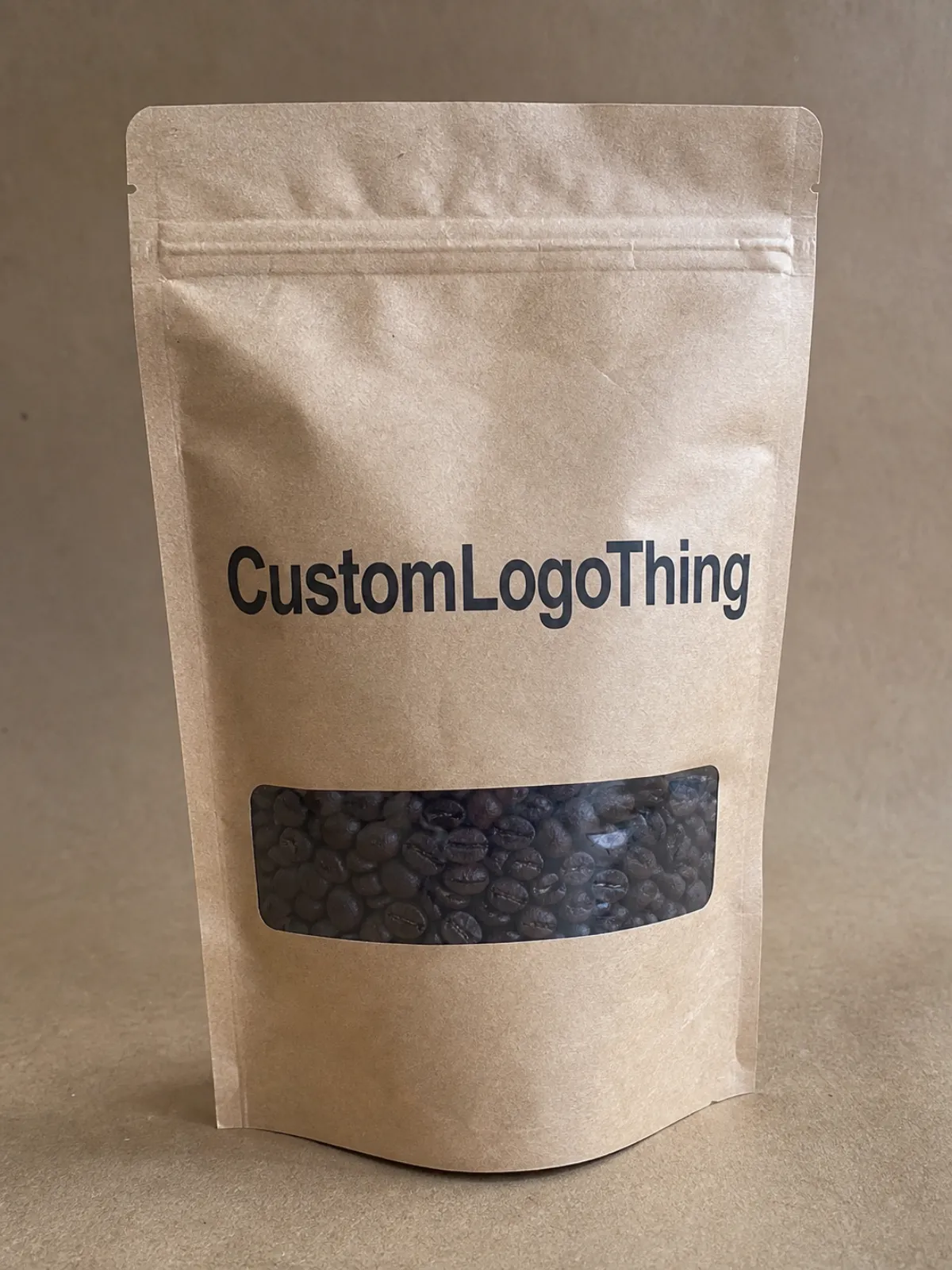
A custom kraft bag with window is a paper-based package made from kraft outer stock with a clear film section that reveals part of the product inside. The kraft gives the bag a natural, grounded look. The window gives the shopper something concrete to inspect. Together, they do a lot of the selling work that a fully opaque bag would push onto copy, graphics, and brand recognition.
This format shows up in bakery, coffee, tea, granola, candy, dried fruit, herbs, dry snacks, seeds, and pet treats because those categories benefit from visibility. A shopper can check roast color in coffee, texture in granola, and portion quality in bakery items without opening the pack. Even a simple trail mix looks more credible when the bag actually shows a full fill instead of a carefully cropped illusion.
The real value is speed. People do not want to decode packaging. They want two answers: what is this, and does it look worth the price? The window answers the second question quickly. It also helps when the product itself is the hero and the brand story is shorter than the marketing deck would like.
There is a tradeoff, of course. Show too much, and the bag can lose its premium feel if the product is inconsistent in color, shape, or fill level. A carefully sized window feels intentional. A huge one can make the bag look like it is apologizing for the rest of the design. That line matters more than most first-time buyers expect.
A window should sell the product, not swallow the brand. If the bag starts to read like a produce sack with branding, the design has gone off the rails.
For many brands, this format also beats rigid packaging on storage and freight. It folds flat, ships efficiently, and uses less material than a box-heavy presentation. Still, not every product belongs here. Items that need stack protection, stronger oxygen control, or a more rigid premium presentation may be better in another structure. Packaging should fit the product, not force the product to behave like a different category.
How custom kraft bags with window are built
The basic build has three pieces: kraft outer paper, a transparent window film, and a sealing or closure system. Some versions are very simple. Others add barrier layers to slow moisture loss, oxygen exposure, grease migration, and aroma escape. Dry, shelf-stable products can use a lighter build. Freshness-sensitive products need more engineering, which is where quotes usually start moving upward.
Common formats include flat pouches, stand-up pouches, side-gusset bags, and block-bottom bags. Flat pouches work for samples, lighter goods, and products that will be hung or stacked. Stand-up pouches are the shelf-friendly option and often include a zipper. Side-gusset bags are common for coffee and taller fills that need a cleaner vertical profile. Block-bottom bags cost more, but they sit with more structure and usually look more established on shelf.
Material choice changes both appearance and performance. Lighter kraft can feel economical, which is fine for value-driven bakery or snack programs. Heavier stock feels sturdier in hand and holds up better during handling. Printed coverage changes the tone too. A one-color mark on natural kraft reads clean and restrained. Heavy ink coverage pushes the bag toward a more graphic, retail-polished look and can reduce the paper texture that many brands are trying to preserve.
Window placement is not just a design choice. It affects branding space, product visibility, and how the bag behaves on shelf. Too low, and it can interfere with the bottom seal. Too high, and it may get buried under a zipper, fold, or shelf strip. A centered window is the safest route. An offset or custom shape can work, but only if the rest of the layout is disciplined enough to carry it.
Closures matter more than they get credit for. Heat sealing gives the strongest freshness lock for food applications. A zipper adds resealability, but it adds cost and thickness too. Tin ties work well for bakery and coffee items where quick opening matters. Fold-over tops are simple and inexpensive, but they are not a serious option for moisture-sensitive goods. If the product goes stale, a nice window will not fix it.
Window film is usually PET or BOPP in clear, matte, or frosted finishes, depending on the target look and production method. Clarity, scuff resistance, and sealability all matter. Matte or frosted films reduce glare and give the pack a quieter feel, but they also reduce the direct visibility that makes this format useful in the first place. If the sustainability story is important, ask for the full construction in writing. Mixed-material packaging is not automatically recyclable just because the outside looks like paper.
For food-contact applications, the supplier should be able to confirm which layers, inks, and adhesives are suitable for the intended use. That is not a courtesy. It is the baseline. If the bag will sit in a humid retail environment or travel long distances, ask whether the structure has been considered for that kind of stress. A pretty sample that fails in transit is still a failure.
Key factors that affect design, shelf appeal, and performance
Size comes first. Too much empty space makes the product look weak. Too little space makes the bag wrinkle, bulge, or fight the seal. The right spec is the one that matches the real filled product, not the optimistic version somebody drew during a meeting. Measure the packaged product, not the loose ingredients.
Window size comes next. A larger window shows more of the product, but it also cuts into branding area and can strip away the kraft character that makes the format attractive. A smaller window often feels more controlled and more premium, especially when the brand needs the front panel to do some work. If the product is the main reason someone buys, show more of it. If the brand story matters more, keep the window restrained.
Kraft stock has more influence than most buyers think. A lighter sheet can work for lower-cost items, while heavier stock adds perceived quality and improves handling. Recycled content can support a sustainability message, but only if the source and finish are genuine and documented. Brown paper alone is not a sustainability strategy. Buyers spot empty claims fast.
Window film choice changes the feel and the customer’s view of the product. Clear film is the straightest option. Frosted film softens glare and can make the package feel calmer, but it hides some of the product detail that makes the format effective. If a supplier suggests a compostable-looking film, ask for proof of the actual structure and claim scope. The wrong assumption here creates very public embarrassment later.
Branding space deserves more attention than it usually gets. The logo needs breathing room. The product name must be readable at arm’s length. Flavor, ingredient, and legal copy should not land inside the window or get squeezed into the seal area. If the pack needs nutrition facts or other regulated copy, build that in early. Nothing wastes time like redesigning artwork because someone treated compliance as an afterthought.
For multi-SKU lines, a consistent layout with controlled color changes usually works best. Keep the structure familiar, then shift flavor bands, accents, or secondary copy as needed. That gives the range a coherent shelf presence and makes future extensions easier. It also helps if the brand later adds custom printed boxes or other secondary packaging, because the visual system already exists instead of needing to be invented again.
One more detail that gets ignored until it becomes a problem: the product needs to look good through the window after packing, not just in a staged sample. Granola, for example, can settle differently than a powder blend. Coffee beans can create a better or worse fill line depending on bag shape. If the packed product looks uneven, the design should be adjusted around that reality rather than pretending the issue will disappear in production.
Custom kraft bags with window pricing, MOQ, and quote drivers
Pricing for Custom Kraft Bags with window usually depends on bag size, paper weight, print complexity, window size, closure type, and any barrier requirements. Add a zipper, specialty ink, food-safe adhesive, or a custom die-cut window, and the number climbs. Ask for a breakdown. Otherwise, you are comparing quotes that hide very different builds behind the same headline price.
Minimum order quantity matters because setup costs get spread across the run. Lower MOQ usually means higher unit price. Larger runs improve unit cost, but they also tie up cash and create storage pressure. For smaller and mid-sized brands, the question is rarely “What is the cheapest bag?” It is usually “What quantity can I actually move before the next reorder becomes a headache?” That is a purchasing decision, not a wish list.
Custom tooling, multi-step lamination, shaped windows, and specialty finishes add labor or setup time. A simple rectangular window is easier to produce than a custom shape that requires tighter alignment. A matte kraft bag with one-color print and a standard clear window will usually come in below a full-color, soft-touch, zipper-top pouch with a heavy barrier liner. None of that is mysterious. It just gets expensive when people stack options without checking what each one does to the run.
Compare landed cost, not just unit price. Freight, sampling, inspection, overage allowances, and taxes can change the real number a lot. A cheap-looking quote can turn into the expensive one once the bags have crossed a border and sat in a warehouse for two weeks. Packaging buyers get burned when they focus only on the bag and ignore the trip it takes to reach the dock.
| Bag style | Typical use | Indicative unit price at 5,000 pcs | Main tradeoff |
|---|---|---|---|
| Flat kraft pouch with small window | Tea, snacks, dry goods, samples | $0.18-$0.32 | Lowest cost, lighter shelf presence |
| Stand-up pouch with zipper and window | Coffee, granola, treats, specialty snacks | $0.28-$0.55 | Better shelf display, higher setup cost |
| Side-gusset bag with window | Coffee, bakery dry mixes, herbs | $0.22-$0.45 | Efficient filling, less front-face branding area |
| Block-bottom bag with large window | Premium retail food, gift items | $0.35-$0.70 | Stronger shelf impact, pricier construction |
If your supplier will not separate base bag cost, print cost, window cost, and setup fees, push for that detail. That breakdown helps with negotiation and with future reorders, because you can see what changed and why. It also makes comparison against Custom Packaging Products much less of a guessing game. Transparent pricing is not a luxury. It is how sane buying decisions get made.
For food packaging, ask whether the materials are food-contact suitable and whether the adhesive, ink, and film have the right documentation for your market. If the bag touches sustainability claims, confirm whether the paper is FSC-certified or otherwise verified. The FSC site is useful for understanding what that certification actually means instead of treating any kraft paper as automatically responsible. That is how you avoid awkward conversations later.
Production process, timeline, and lead time expectations
The process usually starts with a brief: product dimensions, fill weight, shelf goal, and any regulatory requirements. From there, the supplier confirms the dieline, checks the artwork, and sends a proof. That proof is not the final package. It is a checkpoint that shows the layout, dimensions, and structure before production money gets spent.
Delays happen in the same places over and over. Artwork revisions drag out. Product dimensions are vague. The chosen film is unavailable. Someone forgets to approve the proof. A quiet week in an inbox can turn into a launch delay nobody budgeted for. Packaging does not care about optimism. It waits for decisions.
Simple repeat orders can move faster, especially when the structure, paper, and print setup already exist. Fully custom builds take longer, and special films or windows add complexity. A practical lead time for a new custom run is often 15-30 business days after proof approval, with sample or prototype timing adding another 7-15 business days before that. Freight can add its own delay depending on route and service level.
Do not confuse sample time with production time. A prototype helps catch problems with visibility, seal strength, and how the filled bag actually stands or hangs. Production is a separate step, and it starts only after approvals are done. Brands that treat the sample like a shortcut usually learn the hard way that a nice proof and a ready-to-ship order are not the same thing.
If the package has to survive rough handling, ask whether it was tested against a relevant distribution method. The ISTA testing framework is a useful reference when packaging needs to handle drops, vibration, compression, and general shipping abuse. You do not need to become a lab tech. You do need to know whether the bag can survive the route it will actually take.
For products that rely on freshness, ask the supplier how the seal is verified and what tolerance they use for fill level and closure performance. A decorative bag can look fine in photos and still fail after a week in storage. Freshness claims are only useful if the structure supports them.
Step-by-step guide to ordering the right custom kraft bags with window
Start with the product as it actually ships. Measure the filled form, not the loose ingredients, and not the version sitting in a bowl on a studio table. Weight matters, but so do volume and shape. Powder behaves differently from beans. Loose granola behaves differently from rigid biscuits. That sounds obvious until somebody chooses a bag size off a mockup and then acts surprised when the pack looks half empty.
Next, choose the format around product behavior. Loose snacks usually do better in a stand-up pouch or block-bottom style because the bag needs to hold shape on shelf. Flat pouches work for samples, lighter goods, and items that will be hung or stacked. Side-gusset bags make sense for coffee and taller fills. The wrong format makes even a good product look slightly disorganized, which is a polite way of saying it looks cheap.
Now decide what the window needs to do. Does it need to show texture? Prove quantity? Reveal the actual color of the product? Or simply add visual interest without exposing everything? The answer affects size, placement, and film choice. A clear window on natural kraft can feel honest and tidy. A giant window on a crowded front panel can look like the design lost its nerve halfway through production.
Artwork should be built around the window, not dropped on top of it. Keep logos away from fold lines and seals. Put flavor names where the shopper can read them before the bag gets picked up. Leave space for legal copy if the product needs ingredients, nutrition, or origin information. Good packaging usually comes from restraint, not from filling every square inch with ink.
Then ask for a sample or prototype. Check the clarity of the film, the alignment of the window, the feel of the paper, the seal strength, and how the filled bag stands or hangs. If possible, place it in the real environment where it will be sold. Harsh retail lighting, stacked displays, and transit roughness reveal different flaws than a clean desk does. Packaging that only works in a photo shoot is decoration, not a product.
If the line needs more than one package format, compare the window bag against other Custom Packaging Products before you commit. Sometimes the bag is the right answer. Sometimes a carton or another pouch style protects the product better and costs less over time. The right choice is the one that supports sales without creating avoidable waste.
Before final approval, check the package from three angles: shelf, hand, and shipment. Shelf tells you whether the design reads fast enough. Hand tells you whether the material feels credible. Shipment tells you whether the structure survives normal abuse. That three-part check catches most of the problems people later call “surprises.” They are usually not surprises.
Common mistakes and expert tips for better results
The most common mistake is an oversized window. People assume more visibility always helps. It does not. If the window takes over the front face, the bag stops looking like branded packaging and starts looking like a cheap display sleeve. The window should support the sale, not erase the brand.
Weak contrast is another classic failure. Natural kraft is not white paper. Bright white print can disappear if the artwork is too thin, too small, or too close to the paper tone. If the logo needs to be seen from three feet away, test contrast early. Darker ink or bolder type usually beats delicate linework on kraft.
Ignoring product behavior wastes money fast. Oily products need the right barrier. Moisture-sensitive goods need protection from humidity. Aromatic products need a seal that keeps scent in, not a design that politely invites it out. A bag can look sharp and still fail the product if the contents stale before sell-through.
Here are a few practical moves that usually improve the result:
- Keep the design clean and let the kraft texture do some of the work.
- Use the window to show one strong proof point, not every detail of the product.
- Choose a bag size that fits the real fill, then confirm it with a sample.
- Ask for press-ready artwork that respects the dieline and seal areas.
- Test the bag under store lighting, not just on a bright monitor.
That last point matters more than people admit. Lighting changes everything. Window film can glare under cool LEDs. Kraft can read warmer or flatter depending on the fixture. Print can shift in readability once the bag sits next to competitors on a crowded shelf. Retail packaging lives in the real world, not in a design file.
One more thing: if your sustainability story is real, say exactly what is certified and what is not. If the paper is FSC-certified, say that. If the full package is not curbside recyclable because of mixed film, do not imply otherwise. Buyers are not naive. They appreciate straight talk, especially when the alternative is a tidy claim that falls apart under basic scrutiny.
A good supplier should also tell you where the package is most likely to fail. That might be the seal, the window edge, the zipper line, or the way the paper scuffs during transit. Honest feedback is useful. Sugarcoating is expensive.
Next steps for custom kraft bags with window
Before requesting quotes, gather three things: product dimensions, desired fill weight, and the one selling point the window has to highlight. That keeps the conversation grounded and prevents the usual round of guessing about bag size. Guessing is how packaging buys turn into long email chains with no useful answer in sight.
Then shortlist two or three structures and compare them on shelf presence, shipping efficiency, and branding space. A stand-up pouch may look stronger on shelf. A side-gusset bag may pack more efficiently. A block-bottom bag may create a more premium first impression. There is no universal winner. There is only the best fit for your product, your margin, and your sell-through expectations.
Ask for a detailed quote that separates unit price, print setup, window material, barrier layers, zipper or tin tie cost, and any special finishing fees. That makes the numbers easier to compare and much harder to hide. It also helps future reorders, because you know exactly what changed and why.
Before you commit, approve size, window placement, artwork, lead time, and sample quality. Check the bag in daylight, on shelf, and in hand. If anything feels off, fix it now. Production is not the time to discover that the logo sits too close to the seal or that the product looks cramped behind the film.
Used well, Custom Kraft Bags with window are not just attractive packaging. They are a sales tool, a merchandising tool, and a practical way to show buyers what they are actually getting. The clear takeaway is simple: choose the structure around the product, size the window around the selling point, and verify the sample against real shelf conditions before you approve production. That is the part that saves money later.
What products work best in custom kraft bags with window?
They work best for products where sight helps the sale: bakery items, coffee, tea, granola, candies, pet treats, herbs, seeds, and small gift goods. Use the window when texture, color, or portion size helps the customer judge quality faster than an opaque bag would.
How big should the window be on custom kraft bags with window?
Large enough to show the product clearly, but not so large that the bag loses its kraft identity or front-panel branding space. A good rule is simple: the window should support the brand, not take over the whole face. If the product starts to look exposed or visually cluttered, the window is too big.
Do custom kraft bags with window cost more than plain kraft bags?
Usually yes. The window adds material, sealing steps, and sometimes extra setup. The price increase often makes sense if the bag improves conversion, supports a higher shelf price, or makes the product feel more trustworthy. For low-margin goods, the added cost needs to be justified by real sales lift, not guesswork.
What affects turnaround time for custom kraft bags with window?
Artwork approval speed, sample needs, material availability, print complexity, and order quantity all affect lead time. Simple repeat orders move faster; fully custom builds with special films or unusual shapes take longer. Freight can add days or weeks depending on the route and service level.
Can custom kraft bags with window be food-safe and recyclable?
Yes, if the paper, ink, adhesive, and film are specified for the right use case and compliance needs. Recyclability depends on the full structure, so ask for a material breakdown instead of assuming every kraft bag is automatically recyclable. In many cases, the outside looks paper-based while the full package still uses mixed layers.

