Buyer Fit Snapshot
| Best fit | Custom Kraft Box Inserts Wholesale projects where brand print, material claims, artwork control, MOQ, and repeat-order consistency need to be specified before quoting. |
|---|---|
| Quote inputs | Share finished size, material target, print colors, finish, packing count, annual reorder estimate, ship-to region, and any compliance wording. |
| Proofing check | Approve dieline scale, logo placement, barcode or warning zones, color tolerance, closure strength, and carton packing before bulk production. |
| Main risk | Vague material claims, crowded artwork, missing packing details, or unclear freight terms can make a low unit price expensive after revisions. |
Fast answer: Custom Kraft Box Inserts Wholesale: Specs, Price & MOQ should be specified like a repeatable production item. The safest quote records material, print method, finish, artwork proof, packing count, and reorder notes in one written spec.
Production checks before approval
Compare the actual filled-product size with the drawing, then confirm tolerance on folds, seals, hang holes, label areas, and retail display edges. Reserve space for logos, QR codes, warning copy, and material claims before decorative graphics fill the panel.
Quote comparison points
Review material grade, print process, finish, sampling route, tooling charges, carton quantity, and freight assumptions side by side. A quote is only useful when the supplier can repeat the same color, closure quality, and packing count on the next order.
Custom Kraft Box Inserts Wholesale: Specs, Price & MOQ
Excerpt: Shopping for Custom Kraft Box inserts wholesale? Compare board types, fit options, minimums, pricing, and lead times so the first order lands right.
Custom Kraft Box Inserts Wholesale: Where Damage Starts
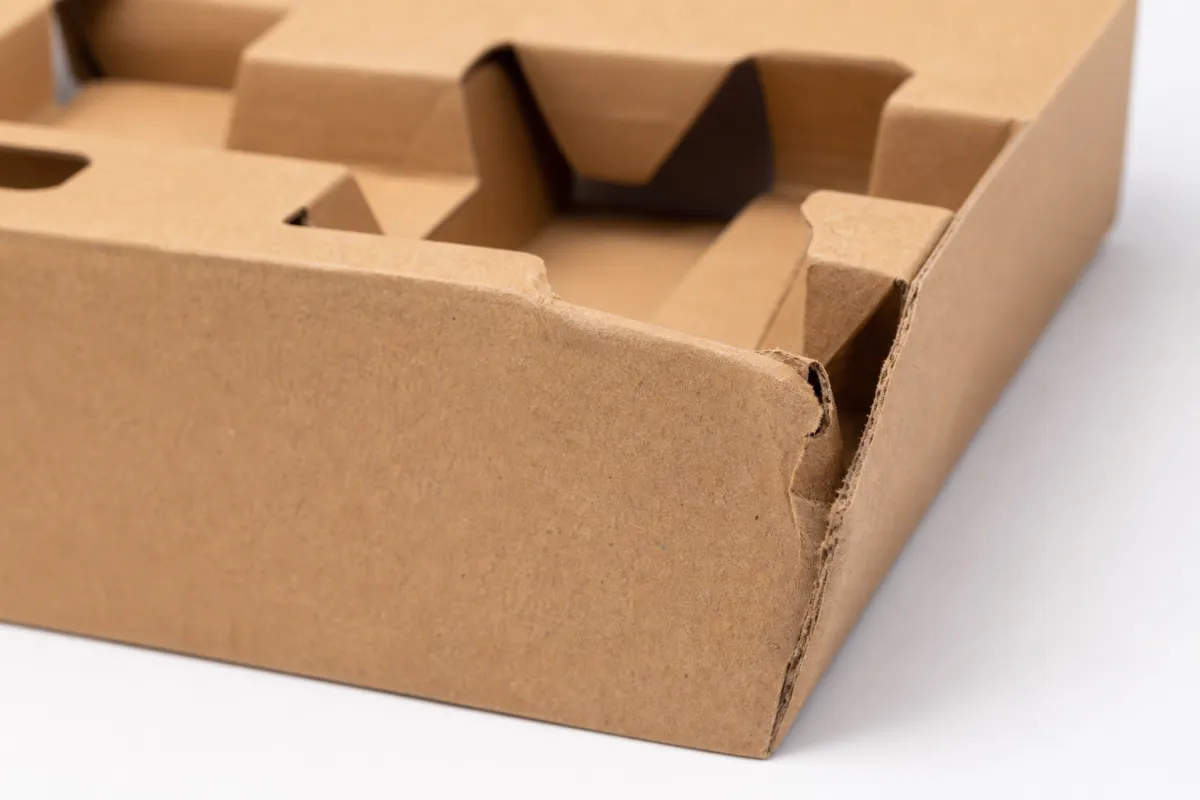
A carton can look sharp on the outside, the print can be crisp, and the unboxing can feel carefully considered right up until the product shifts a few millimeters in transit. That tiny bit of movement is usually where damage begins, which is why buyers often compare Custom Kraft Box inserts wholesale before they compare ribbon, foil, or the finish on the outer box. A well-built insert is usually the least expensive part of the package and the most unforgiving place to cut corners.
In production, inserts are doing three jobs at once. They stop movement, guide presentation, and reduce the need for loose fill, air pillows, and other packing materials that slow the line and look untidy once the box is opened. Brands shipping glass jars, cosmetics, candles, accessory kits, or small electronics usually feel the difference quickly. The right insert lowers breakage claims, keeps fill weights more predictable in fulfillment, and gives the packaging a cleaner, more disciplined look from warehouse to customer hands. I have watched teams spend weeks polishing the outer box artwork, then get blindsided by a flimsy tray that causes avoidable returns. It happens more often than people like to admit.
That is why custom kraft box inserts wholesale is more than a sourcing phrase. It is a decision about risk. The real question behind it is simple: how much movement can be removed without paying for structure the product does not need? The answer shifts with product weight, shipping route, and the role presentation plays in the sale. A 120 ml serum bottle needs a different level of restraint than a heavy candle tin, and a subscription kit does not call for the same cavity design as a shelf-ready retail set.
The commercial pattern is familiar. In many programs, the insert accounts for less than 10% of total packaging spend, yet it can drive a much larger share of returns, replacements, and repack labor if it is undersized or too light. That pattern shows up again and again in packaging reviews: the outer custom printed boxes get approved first, then the insert is squeezed in after budget has already tightened. The order should be reversed. The insert deserves the same engineering discipline as the carton because packaging only performs as well as the weakest control point inside it.
Wholesale buyers also gain speed when the insert is right. Packers do not have to improvise with void fill or guess at how much padding to use. The product sits square in the cavity, which matters for branded packaging and for pallet stacking that holds its shape in storage and transit. Direct-to-consumer programs benefit too, since a fitted kraft insert can reduce material use while still keeping the pack natural and on-brand. If the product can rattle, it is gonna show up later as a complaint, a return, or a damage claim.
Common failure points usually look like this:
- The pocket is 2 to 4 mm too wide, so the product rattles during vibration.
- The insert depth is too shallow, so tall items lift out of the cavity after a drop.
- The board is too light for the product weight, so the insert compresses under stacking pressure.
- The dieline was based on nominal dimensions instead of real measured product dimensions.
- The carton size changed late, but the insert did not, which throws off the whole fit.
That is why serious buyers order custom kraft box inserts wholesale with actual measurements, product photos, and a short note on how the item is handled in the warehouse. Those three inputs save more time than long email threads ever do. They also keep everyone honest about what the insert is supposed to do, which is usually half the battle.
Insert Types, Materials, and Product Fit
No single insert style fits every category. The right choice depends on how the product behaves inside the box, not just how it looks in a mockup. For custom kraft box inserts wholesale programs, the most common options are slotted inserts, layered pads, die-cut trays, partitioned dividers, and molded-look kraft constructions built from paperboard or corrugated stock. Each one handles weight, clearance, and movement in its own way.
Slotted inserts are simple and efficient. They usually work well for two- or four-piece packs where bottles, jars, tubes, or accessory items need separation without a lot of visual complexity. Layered pads fit thinner items or kits that need top and bottom compression more than sidewall restraint. Die-cut trays make sense when presentation matters, because they create a more finished reveal inside the carton. Partitioned dividers are the practical answer for multi-item sets, especially when each cavity needs to stay independent. Molded-look kraft structures, made from board rather than molded pulp, can produce a sculpted feel without drifting into foam territory.
Material choice changes the result as much as the geometry. Kraft linerboard, chipboard, and corrugated each bring a different balance of cost, crush resistance, and print friendliness. Kraft board is a natural fit for custom kraft box inserts wholesale because it gives a clean, earthy look that pairs well with branded packaging and restrained package graphics. Corrugated has the edge when vertical support and compression strength matter more than appearance. Chipboard often shows up in presentation-heavy retail packaging, especially when the insert is visible and the product weight stays light to medium. Foam can outperform the paper-based options for shock absorption, yet many buyers move away from foam because of recyclability goals, cost, or the look they want the package to carry.
That tradeoff matters. If the goal is a premium feel, a kraft insert inside custom printed boxes can look refined without turning the pack into something overbuilt. If the goal is transit protection for a heavy object, a stronger corrugated structure may be the better answer even when it is less elegant on the shelf. Honest packaging design matches material to risk instead of asking one construction to solve every problem. That is the part that gets skipped in rushed projects, and it usually comes back to bite somebody.
Fit strategy is usually the difference between a good insert and a frustrating one. Start with the product's true outside dimensions, not the catalog spec alone. Then add a controlled clearance allowance so the item loads without rubbing but does not wander in the cavity. For most rigid products, that clearance is often 1 to 3 mm per side. For softer or wrapped items, it may be a little more generous. If a product has a pump, cap, handle, cable, or angled shoulder, those features need to be measured too, because they change the center of mass and the way the item sits in the tray.
That is also where one insert family can support multiple SKUs. If two bottle sizes share the same neck diameter and similar height, a small dieline adjustment may let you cover both with one basic structure. In a wholesale program, that can cut tooling duplication and make inventory easier to manage. For buyers comparing custom kraft box inserts wholesale suppliers, the best answer is not always the prettiest drawing. It is the insert that can cover several product variants without adding needless cost.
Custom Kraft Box Inserts Wholesale: Specifications That Matter
Most problems with custom kraft box inserts wholesale orders trace back to missing specs. If the supplier does not know the board grade, the fold pattern, or the exact pocket size, the quote may look attractive while the finished insert still misses the mark. Buyers need to lock the technical details before asking for pricing, especially when the insert supports fragile or high-value products.
These are the details that matter most:
- Board thickness or flute grade: Common ranges include 16 pt to 24 pt chipboard, 1.5 mm to 3 mm greyboard, or E-flute and B-flute corrugated structures depending on the load.
- Insert depth: The cavity needs enough height to hold the product stable without making removal difficult.
- Pocket dimensions: Measure the product at its widest point, then add controlled clearance rather than guessing.
- Fold lines and score quality: Poor creasing can cause cracking on natural kraft surfaces and weak edges under stacking pressure.
- Tolerances: For a tight-fit insert, a 1 to 2 mm variance can matter. For a presentation tray, the tolerance window may be a little wider.
- Compression strength: This tells you whether the insert will hold shape when cartons are stacked in a warehouse or trailer.
- Print coverage: A natural kraft look may be enough, or you may want one-color branding, inside print, or a small message panel.
There is a practical reason to think about edge crush and crease quality early. Inserts are not only holding the product; they are also sitting inside a larger shipping system. If the master carton is compressed in storage, the insert has to resist that load long enough for the package to reach the customer in good shape. For that reason, serious buyers of custom kraft box inserts wholesale should ask how the insert behaves under top-load pressure, not just how it looks on a sample photo.
Print and finish should stay secondary unless they serve a real function. A natural kraft tone works well for eco-leaning product packaging and for brands that want the insert to feel honest and tactile. One-color branding can be enough if the insert is partially visible and you want the product name or cavity labels to show through. Full inside-and-outside print is possible, but it adds cost, can lengthen lead time, and does not always improve performance. If the insert will be recycled with the carton, ask whether coatings or adhesives will complicate the disposal stream. FSC-certified board can support sourcing claims in a clean, documented way, especially for brands that want traceability in their material sourcing.
Transit testing also belongs in the spec conversation. A package that passes a bench fit check may still fail after vibration, drop, or compression. For higher-risk items, ask whether the design is being checked against a recognized method such as ISTA test practices. That matters because a box that survives a short loading test is not necessarily ready for parcel networks, where repeated jolts and drops are normal. I have seen nice-looking samples sail through a desk check and then collapse under real carrier handling, which is why lab style tests are worth the trouble when the product value is high.
What should you send with the inquiry?
- Product dimensions, including the tallest and widest points.
- Photos of the product and any accessories, cables, or inserts already in use.
- The carton size or target internal box size.
- How many units go into each pack.
- Whether the priority is protection, presentation, or both.
- Any shipping concerns such as long-distance transit, retail shelf display, or subscription box packing speed.
The clearer the brief, the less guesswork in custom kraft box inserts wholesale quoting. Buyers who send a complete package usually get a faster, more accurate recommendation and fewer revision loops. That is not magic; it is just better input.
Custom Kraft Box Inserts Wholesale Pricing, MOQ, and Cost Drivers
Pricing for custom kraft box inserts wholesale usually comes down to five variables: material grade, structural complexity, pocket count, print coverage, and volume. That sounds straightforward until quotes arrive and one supplier has priced a simple single-layer tray while another has priced a reinforced two-piece insert with several score lines and a more expensive board. A quote only helps when everyone is pricing the same build.
For a small run, tooling and setup can dominate the cost. Once the order grows, the unit price usually drops because the cutting and make-ready work is spread across more pieces. A simple die-cut kraft insert may carry a lower MOQ than a highly customized divider set because there is less setup and fewer production risks. If the insert includes several pockets, tight registration, or print on both sides, the MOQ often rises. That is normal. It is not a sign that the supplier is padding the price; it usually reflects the labor, waste, and quality control the job requires.
Typical wholesale pricing varies quite a bit, and any range should be treated as planning guidance rather than a promise. Board market swings, freight, and regional labor can shift the final number pretty fast. As a rough starting point, simple kraft or chipboard inserts at around 5,000 pieces may land in the $0.18 to $0.30 range per unit, more complex die-cut trays may sit around $0.24 to $0.42, and partitioned or reinforced structures can run $0.32 to $0.58 or more. Heavy-duty corrugated inserts can cost higher still when the build needs extra crush resistance or a custom multi-piece assembly. At lower quantities, unit costs can climb 30% to 80% or more because setup costs stay similar while the run is shorter.
That is why the cheapest quote is not always the cheapest outcome. A lower-cost insert that allows the product to move can create damage claims, labor, and re-shipping costs that erase the savings fast. From a buyer's point of view, the real math is total landed packaging cost plus avoidable loss. If a $0.12 savings creates a 1% breakage spike, that saving disappears quickly. I know that sounds blunt, but packaging budgets tend to be a little too optimistic until the first return report lands.
Comparing quote types side by side helps more than comparing single prices.
| Insert Type | Best Use | Typical MOQ | Indicative Unit Price at 5,000 pcs | Notes |
|---|---|---|---|---|
| Slotted kraft insert | Bottles, jars, accessory kits | 1,000 to 3,000 pcs | $0.18 to $0.30 | Good balance of price, speed, and clean presentation |
| Die-cut tray | Cosmetics, gift sets, retail packaging | 1,500 to 5,000 pcs | $0.24 to $0.42 | Stronger visual finish; more complex cutting and fit control |
| Partitioned divider | Multi-item sets, glass, sampler packs | 2,000 to 5,000 pcs | $0.32 to $0.58 | Great for separation; cost rises with pocket count |
| Reinforced corrugated insert | Heavy products, fragile freight, stronger stacking | 2,500 to 10,000 pcs | $0.40 to $0.80 | More protection, more material, better top-load performance |
Use that table as a guide, not a contract. Real pricing for custom kraft box inserts wholesale depends on the exact board spec, die size, packing method, and whether the supplier is quoting flat-packed pieces or pre-assembled units. A quote that includes assembly may look expensive on paper but save real labor in fulfillment. A quote that excludes assembly may still be the right choice if the warehouse line can fold the insert quickly and consistently.
Quote comparison needs discipline too. Make sure every supplier is quoting the same internal box size, the same pocket clearance, the same print coverage, and the same packing configuration. If one supplier is quoting 3 mm board and another is quoting 2 mm board, the numbers are not comparable. That mistake is common, and it leads to false savings. For buyers sourcing custom kraft box inserts wholesale at scale, the quote should be read like a technical document, not a shopping cart total.
Order Process and Timeline From Quote to Delivery
A clear ordering process makes custom kraft box inserts wholesale much easier to manage. The strongest projects follow a predictable sequence: inquiry, spec review, structural recommendation, dieline or sample approval, production, quality check, and shipping. When one of those steps gets rushed, the delay usually shows up later in the schedule rather than at the moment it happened.
Here is the order flow most buyers should expect:
| Step | Typical Time | What Happens |
|---|---|---|
| Inquiry and spec review | 1 to 2 business days | Buyer sends dimensions, photos, quantity, and packaging goals. |
| Structural recommendation and quote | 1 to 3 business days | Supplier proposes board grade, cavity layout, and price tiers. |
| Dieline or prototype approval | 3 to 7 business days | Buyer checks fit, artwork placement, and fold logic. |
| Production | 7 to 15 business days | Sheets are cut, scored, printed if needed, and packed flat. |
| Quality check and shipment | 2 to 5 business days | Final inspection, carton packing, and dispatch to the destination. |
Simple inserts with no print and a straightforward layout often move faster. Custom structures, unusual board grades, or multiple sample revisions slow everything down. That is not a flaw in the process; it is how controlled packaging production works. For custom kraft box inserts wholesale, the biggest delays usually come from missing measurements, vague photos, or artwork that arrives late.
Orientation deserves attention too. If the insert has to sit a certain way inside the carton, such as for a bottle neck, a cable channel, or a printed panel, the supplier needs that information before production starts. An insert can match the dimensions and still function poorly if the cavities face the wrong direction. The same applies to multi-SKU programs. If one master insert is meant to fit several sizes, the approval sample should show that each size loads and removes cleanly. That point matters even more for custom kraft box inserts wholesale orders that support both retail display and ecommerce shipping.
What shortens the schedule?
- Sending exact product dimensions, not estimated dimensions.
- Providing clear product photos from the top, side, and bottom.
- Deciding on protection versus presentation early.
- Approving one sample quickly instead of resetting the brief multiple times.
- Confirming the carton size before asking for the final dieline.
For launch timelines that cannot slip, build in extra time for sample approval. If the insert is protecting glass, ceramics, or an expensive consumer device, a day spent validating fit is usually cheaper than a week spent replacing damaged stock. That is one of the most practical lessons in custom kraft box inserts wholesale: speed matters, but only after the structure is right.
Why Buyers Choose Us for Wholesale Kraft Inserts
Buyers do not need packaging hype. They need consistency, clear answers, and a quote that matches the delivered product. That is the service model most commercial teams value in custom kraft box inserts wholesale. If the dimensions are right, the lead time is realistic, and the supplier explains the tradeoffs without hiding behind jargon, the project becomes easier to manage from procurement through fulfillment.
Repeatability matters most. A first run can look great, but the second and third orders tell the real story. Good wholesale partners keep the dieline, board grade, and packing method controlled so reorder lots behave the same way. That consistency supports branded packaging programs, especially for products that ship every month or move through several channels at once. It also keeps package branding steady, because the insert still feels intentional on the tenth run, not just the first.
Quality control should be visible, not vague. Buyers should expect dieline checks before production, sample validation when the fit is uncertain, and packing cartons that arrive flat and ready to assemble without crushed corners. A supplier who understands product packaging will also tell you when an insert is being over-specified. That honesty matters. Sometimes a lighter board with better fit is the stronger answer. Sometimes a simple divider does more than a fancy tray. Those are the practical calls that protect budget without weakening the package.
For teams comparing vendors, the service question is simple: does the supplier help reduce risk, or just send a price? In custom kraft box inserts wholesale, a useful partner will explain how to reduce pocket count, simplify the score pattern, or standardize one insert across several SKUs. That can cut cost without changing the unboxing experience in any meaningful way.
Here is the kind of buyer checklist worth using:
- Does the supplier quote the same board grade every time?
- Can they explain how the insert supports the product during parcel transit?
- Do they share a realistic MOQ instead of a vague "low minimum" claim?
- Will they adjust the design if the first fit sample is too loose or too tight?
- Do they communicate whether the insert ships flat, pre-folded, or assembled?
If the answer is yes to most of those points, the vendor is probably worth keeping in the sourcing list. If not, the lowest quote may become the most expensive rework. That is why serious buyers treat custom kraft box inserts wholesale as a technical purchase, not a decorative one.
"If the product moves, the insert is under-specified."
That line sounds blunt because it usually is true. The best inserts are the ones you stop thinking about after approval because they simply work. They keep the product centered, the carton efficient, and the pack line calm. They also make warehouse teams happier, which never hurts.
For buyers who want to compare options or build a broader packaging program, our Wholesale Programs page and our Custom Packaging Products catalog are useful starting points. They help connect insert decisions with outer carton choices, which is where many product packaging programs gain or lose efficiency.
Next Steps: Lock Specs and Request a Quote
The quickest way to buy custom kraft box inserts wholesale with confidence is to stop guessing and send complete specs. Measure the product. Count the unit load. Photograph the packaging problem. Decide whether the priority is protection, presentation, or a balance of both. That sequence gives the supplier enough information to recommend the right board grade and layout without multiple rounds of correction.
If you want an accurate quote, send six things: product dimensions, quantity, target ship date, carton size, branding needs, and any special handling concerns. If you already have a sample from a previous run, include that too. A physical reference often exposes fit problems that drawings miss. For fragile items, ask for a fit sample before committing to the full run. One sample can show whether the pocket depth is correct, whether the sidewall restraint is strong enough, and whether the insert feels too stiff or too loose in real use.
From there, a simple path usually works best: request a sample, approve the dieline, then scale the order after the insert passes a practical transit test. That test does not need to be complicated. A controlled drop, a short vibration check, or even a warehouse handling review can tell you a lot. For programs built around retail packaging or ecommerce shipping, those early checks are cheap insurance. They protect the margin that would otherwise disappear in replacements.
At the sourcing level, custom kraft box inserts wholesale should be treated as an investment in fewer claims, cleaner fulfillment, and better package branding. The right insert does not need to be flashy. It needs to fit, hold, and repeat. The takeaway is straightforward: lock the real product dimensions, confirm the ship conditions, and insist on a sample before volume production if the item is fragile or heavy. That one habit prevents most of the pain people blame on "packaging" later on.
How do I measure for custom kraft box inserts wholesale?
Measure the product itself first, then add the clearance needed for easy loading and removal without rattling. Send outside dimensions, product photos, and any accessory pieces so the insert can be built around the full package, not just the main item. If you have more than one SKU, specify whether one insert should fit all sizes or whether each SKU needs its own pocket layout.
Are custom kraft box inserts wholesale suitable for fragile items?
Yes, when the insert is matched to product weight, shape, and shipping conditions; fit matters as much as material choice. For glass, ceramics, and sensitive electronics, ask for extra sidewall restraint, depth support, or a reinforced board option. If the item is heavy or unusually breakable, the final recommendation may shift from a simple kraft tray to a stronger corrugated structure.
What MOQ should I expect for custom kraft box inserts wholesale orders?
MOQ usually depends on the complexity of the dieline, the number of pockets, and whether the insert needs print or special finishing. Simpler, standard-size inserts often have lower entry quantities than highly customized designs with multiple folds or partitions. If you plan repeat orders, ask for pricing tiers so you can compare the first run against the cost of scaling production later.
How is pricing calculated for wholesale kraft box inserts?
Pricing typically reflects material grade, board thickness, cutting complexity, setup time, and total order quantity. Artwork, prototyping, and nonstandard sizes can add cost, while larger runs usually reduce the unit price. To compare quotes correctly, confirm that each supplier is quoting the same material, dimensions, and packing configuration.
What is the usual lead time for custom kraft box inserts wholesale?
Lead time varies by sample approval, production complexity, and order size, but clean specs usually move faster than incomplete ones. Proofing and sample checks should be built into the timeline if the insert is protecting fragile or high-value products. If your launch date is fixed, ask for the earliest approval deadline so production can start without avoidable delays.

