Buyer Fit Snapshot
| Best fit | Custom Kraft Carrier Bags Logo projects where brand print, material claims, artwork control, MOQ, and repeat-order consistency need to be specified before quoting. |
|---|---|
| Quote inputs | Share finished size, material target, print colors, finish, packing count, annual reorder estimate, ship-to region, and any compliance wording. |
| Proofing check | Approve dieline scale, logo placement, barcode or warning zones, color tolerance, closure strength, and carton packing before bulk production. |
| Main risk | Vague material claims, crowded artwork, missing packing details, or unclear freight terms can make a low unit price expensive after revisions. |
Fast answer: Custom Kraft Carrier Bags Logo: Film, Print, MOQ, and Carton Packing should be specified like a repeatable production item. The safest quote records material, print method, finish, artwork proof, packing count, and reorder notes in one written spec.
Production checks before approval
Compare the actual filled-product size with the drawing, then confirm tolerance on folds, seals, hang holes, label areas, and retail display edges. Reserve space for logos, QR codes, warning copy, and material claims before decorative graphics fill the panel.
Quote comparison points
Review material grade, print process, finish, sampling route, tooling charges, carton quantity, and freight assumptions side by side. A quote is only useful when the supplier can repeat the same color, closure quality, and packing count on the next order.
Custom kraft carrier bags logo decisions often look minor on a spec sheet, then take on a completely different weight once the bags leave the counter and start moving through trains, cars, offices, kitchens, and shop floors. That is the point where branding stops being theoretical and starts being judged in public.
I have watched plenty of buyers treat custom kraft carrier bags logo work like a last-mile detail, something to sort out after the boxes, labels, and product inserts are already approved. That habit usually creates a mess. Kraft paper is honest material. It shows pressure marks, it shows weak contrast, and it will absolutely expose artwork that only looked good on a backlit screen. A nice mockup can make almost anything look polished for five minutes, but the real bag has a much stricter opinion.
For brands that care about branded packaging, the bag is not a spare item. It is a moving impression point with a low cost per view, especially in retail packaging, takeaway, and boutique environments where customers actually carry it into the street. If you already invest in Custom Packaging Products, the bag should carry the same visual logic as your boxes, tissue, and labels. Without that connection, the package branding story starts to drift.
Why custom kraft carrier bags logo choices matter more than most brands think
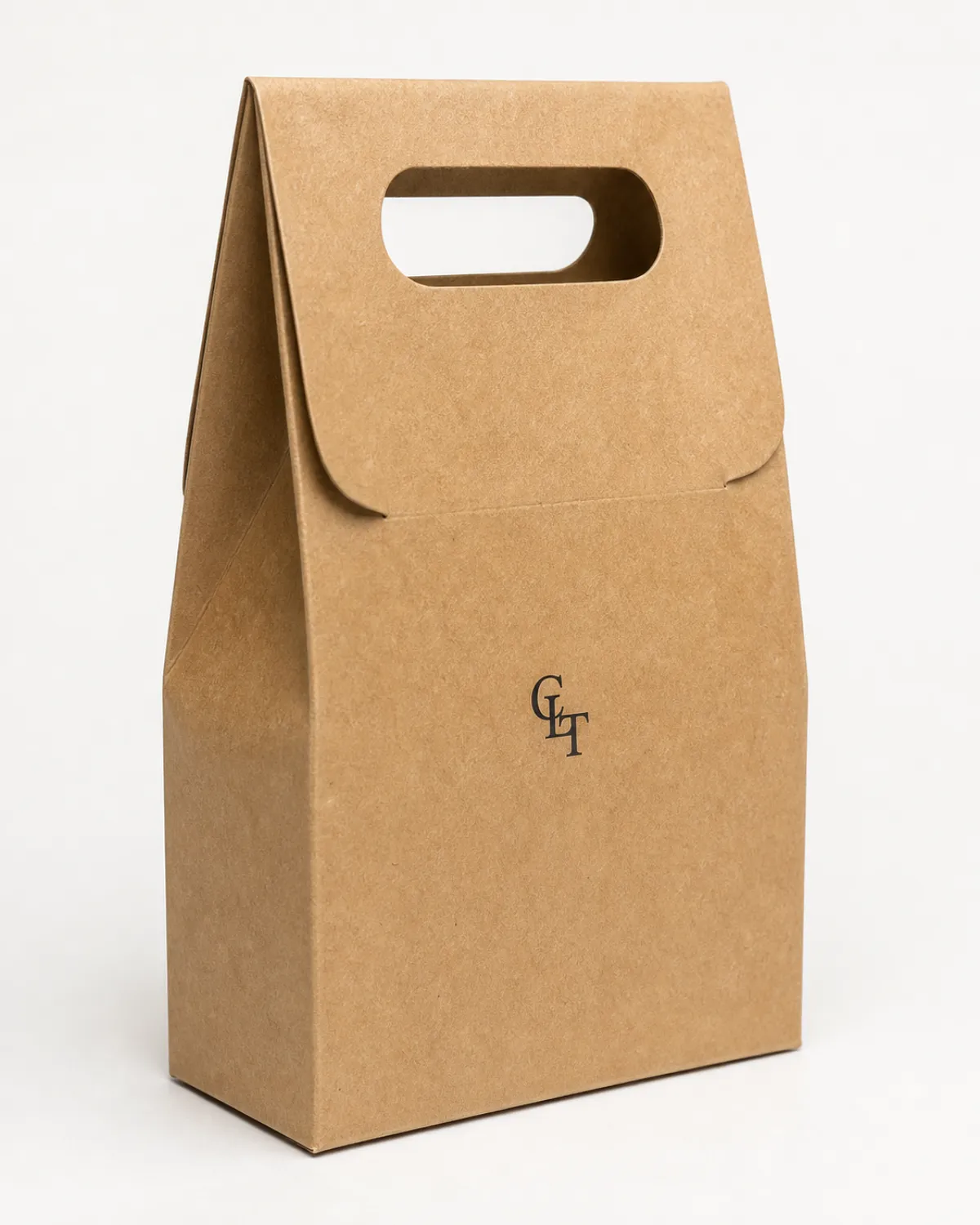
A custom kraft carrier bags logo seems simple because it is printed on paper, yet that simplicity is deceptive. Kraft bags are folded, handled, photographed, crumpled, and reused far more often than many buyers expect. One bag can generate dozens of impressions if the logo reads clearly, and one poor print can undermine a premium product before the customer even reaches home.
Three jobs happen at once. The bag carries the product, supports the sale, and signals what kind of brand you are building. A natural brown bag with a restrained one-color mark tells a different story from a white kraft bag with foil, tight typography, and a carefully centered logo lockup. Both can work. Both can fail if the design ignores the material.
I still see teams treat custom kraft carrier bags logo planning as a late-stage detail because the bag feels secondary to the product inside. That habit gets expensive quickly. Customers notice when the bag undercuts the price point or the care shown elsewhere in the package, even if they do not have the language to explain why it feels off.
The strongest custom kraft carrier bags logo choices are usually the simplest ones. Solid shapes. Clean spacing. Strong contrast. A print location that survives handles, folds, and gussets. Kraft paper does not forgive tiny detail, and it certainly does not care about a polished website mockup. If the logo works on the bag, it usually works in the broader packaging design system too.
Material shifts perception as much as the artwork does. Brown kraft often reads earthy, practical, and handmade. White kraft tends to feel sharper and more polished. Recycled content can strengthen the sustainability story, but only if the print quality remains crisp enough that the bag looks intentional rather than rough for the wrong reasons. Buyers sometimes chase a natural look and end up with something that feels underdeveloped. That is not authenticity. That is underplanning.
One thing I tell clients early is that the bag should feel like it came from the same brand family as the rest of the package, not like a separate purchase from a different department. If the box is refined but the bag feels flimsy or visually noisy, the customer reads that mismatch fast. Packaging is kind of unforgiving like that.
A good custom kraft carrier bags logo should look deliberate from arm's length and still make sense when the bag is folded into a drawer for reuse. If it only works inside a mockup, the job is not finished.
For brands that want the bag to support product packaging rather than compete with it, the test is straightforward: does the bag feel like it belongs to the same family as your Custom Printed Boxes, labels, and inserts? If it does not, the logo system needs another pass.
One more layer matters here. A custom kraft carrier bags logo is not just a visual asset. It is also a production decision. The printer, paper grade, handle style, and artwork structure all influence how customers read the brand. The smartest orders start with the intended use and work backward from that point, not from the artwork folder alone.
How custom kraft carrier bags logo printing works
Printing a custom kraft carrier bags logo starts with the bag, not the file. Size, paper weight, handle style, print area, and finish all shape what the logo can do safely. A 250 x 110 x 320 mm boutique bag offers a different canvas from a narrow takeaway carrier with twisted handles and a tight gusset. Smaller print areas call for stronger line weights and fewer moving parts.
One detail saves a lot of reprints: artwork can be technically correct and still look wrong on kraft. Thin serif fonts, gradients, and hairline details are the usual troublemakers. A custom kraft carrier bags logo should be checked at actual size on a full bag mockup, not only on a white screen. Screens flatter. Paper tells the truth.
The main decoration methods are easy enough to compare once the sales language is stripped away. Flexo suits repeat production and simpler artwork. Offset gives cleaner detail for more polished runs. Screen print handles bold coverage and strong lines well. Foil and hot stamp add a premium note, though they also add setup and cost. For many buyers, a well-executed one-color custom kraft carrier bags logo looks more expensive than a busy multicolor version that misses registration by a small margin.
Brown kraft and white kraft behave differently, and the difference matters more than people admit. On brown kraft, dark inks usually hold best, while light colors can disappear unless the supplier uses a strong white base or a very opaque ink system. On white kraft, smaller text and fine marks generally print more cleanly, which is why a custom kraft carrier bags logo with detailed typography often performs better on white stock.
Proofing is where good orders get protected. Ask for a digital proof that shows placement, dimensions, and color breakdown. If the logo sits too close to the fold, handle, or gusset, the print may distort during production or disappear in use. The cheapest mistake is the one caught before plates or screens are made.
There is also a little production reality that does not show up in neat supplier brochures: a logo that looks centered in artwork software may not feel centered after the bag is formed. Fold lines, glue zones, and handle placement all affect the visual balance. If the supplier does not talk through those relationships, they are probably not looking closely enough.
For buyers who want a cleaner production reference, the methods compare like this:
| Printing method | Best for | Typical look | Tradeoff |
|---|---|---|---|
| Flexo | Higher-volume, simple artwork | Clean, functional, efficient | Less detail flexibility |
| Offset | Sharper graphics and polished retail packaging | Better detail and smoother tones | Higher setup sensitivity |
| Screen print | Bold logos and strong ink coverage | Solid and tactile | Slower on complex multicolor work |
| Foil / hot stamp | Premium branding and boutique presentation | High contrast, reflective accent | Adds cost and setup steps |
Run size and artwork complexity usually matter more than ego. A custom kraft carrier bags logo with one bold mark and generous spacing often reads more premium than a crowded layout with three print colors and too much detail. That is not a theory. It is what tends to happen once the bags are actually printed.
Supplier conversations should be direct. Ask what they recommend for your exact quantity, then ask why. A solid printer will explain how the method affects registration tolerance, color consistency, and final appearance. That conversation is worth far more than a glossy brochure.
For broader material and recycling context, I also like to check packaging guidance from packaging.org and fiber sourcing standards from the Forest Stewardship Council. Those resources do not choose the bag for you, but they help frame the sustainability side without turning it into a slogan.
Custom kraft carrier bags logo cost, pricing, and MOQ
Pricing for a custom kraft carrier bags logo order comes down to factors buyers can control: size, paper thickness, print colors, handle style, and finish. Bigger bags use more material. Heavier paper costs more. Rope handles, reinforced tops, and special coatings all add cost quickly. If someone gives you a price without asking for dimensions, quantity, and artwork, they are guessing.
For planning purposes, a simple one-color run at a modest MOQ may sit in a very different range from a premium retail order. As a rough buyer's guide, smaller runs might fall around $0.28-$0.55 per bag, while larger runs can drop into roughly $0.12-$0.28 per bag, depending on spec. Add foil, extra colors, or heavy ink coverage, and the figure moves upward. Sometimes a lot. The custom kraft carrier bags logo is never only the logo; it is the sum of material, print, and setup.
MOQ matters because setup cost has to land somewhere. If a factory creates plates, adjusts the press, and runs a short batch, the unit price rises. That is why a lower MOQ usually means a higher per-bag cost. It is not a penalty. It is arithmetic. Buyers who need a very small batch should expect fewer finish options and less room for complex decoration.
There is a real tradeoff between visual ambition and budget control. A one-color custom kraft carrier bags logo usually gives the best balance of cost and reliability. Multi-color artwork can be beautiful, though it also raises registration risk, proofing time, and the chance that the bag looks slightly off on kraft stock. Foil can look sharp, but it tends to belong on smaller boutique runs where the premium feel justifies the added setup.
Before you ask for a quote, send the supplier a complete spec sheet. That is the fastest way to avoid a vague number that changes three times later.
- Bag dimensions: width, gusset, height
- Paper weight: for example 120gsm, 150gsm, or 170gsm kraft
- Handle type: twisted paper, flat paper, rope, or die-cut
- Print details: one color, two colors, Pantone targets, foil, or no finish
- Quantity: exact MOQ and target re-order volume
- Delivery location: shipping changes landed cost more than people like to admit
If you are comparing quotes, do not compare unit price alone. Compare paper weight, handle strength, print coverage, and packing method. A cheaper custom kraft carrier bags logo quote can become a poor deal if the bag buckles under normal use or the print arrives lighter than expected. Nobody wants to save two cents and lose the brand impression.
There is a reason many buyers pair bag orders with Custom Packaging Products from the same supplier. Coordinating the paper family, ink tone, and packaging design across bags and boxes usually creates a cleaner system. It can also reduce back-and-forth if the supplier already understands your visual standards.
One more pricing reality deserves attention. If your logo covers a large area with heavy ink, the bag may need better substrate quality to avoid wrinkling or show-through. That pushes the spec upward. The result is still a custom kraft carrier bags logo order, but it is no longer a bare-minimum pack. It becomes a branded packaging piece with genuine presentation value.
On the low end, some buyers only need bags for a market stall or a short promotional window, and that is fine. I just like to be honest that the cheapest version is usually the least forgiving one. If the bag is going to sit in front of customers all season, spending a little more on structure and print consistency is usually the smarter move.
Production process and timeline for custom kraft carrier bags logo orders
The production path for a custom kraft carrier bags logo order is simple on paper and mildly irritating in real life. It starts with an inquiry, moves through artwork checking, proof approval, sampling if needed, production, packing, and shipping. Each step can move quickly, but the whole chain is only as fast as the slowest approval.
Standard turnaround often lands in the 12-15 business day range after proof approval for a straightforward run, though larger or more complex orders can stretch longer. Rush orders are possible with some suppliers, but they usually cost more and leave less room for changes. If you want the custom kraft carrier bags logo to come out right, starting early is still the cleanest route.
Delays tend to happen in the same places every time. Artwork arrives in the wrong format. Color expectations were never set in Pantone terms. Proof revisions show up after the line is already scheduled. Shipping congestion also causes trouble, especially when the bags cross borders or move alongside other branded packaging items.
A strong pre-production checklist makes the process much calmer.
- Confirm bag size and paper weight.
- Lock the print method and number of colors.
- Send vector artwork, not a screenshot and a prayer.
- Approve the proof only after checking logo scale on the actual bag.
- Confirm carton packing, ship date, and delivery destination.
Placement causes the most technical trouble. A custom kraft carrier bags logo that looks centered in a file may shift once the bag is folded, glued, and formed. That is normal. It is also why proofing against the real dimensions matters. If the logo lands too high, the fold can interrupt it. Too low, and the bottom gusset starts fighting the brand mark.
If you need a better sense of shipping and carton handling, basic packaging distribution principles from ISTA are worth reviewing. Bags are not fragile like glass, but they still need sensible packing if you want the edges and handles to arrive in usable condition.
For buyers managing several categories at once, the cleanest workflow treats the bag as part of the full packaging schedule. That means planning the custom kraft carrier bags logo order alongside labels, boxes, and inserts instead of treating it as a late add-on. Late add-ons are where timelines go to die.
Key design and material factors that change the result
A custom kraft carrier bags logo lives or dies on legibility. That sounds obvious until someone sends a tiny gradient logo with six thin lines and expects it to read cleanly on brown kraft. It will not. Kraft paper rewards clarity. Strong shapes, readable spacing, and sensible contrast win every time.
Logo complexity is the first thing I check. Thin strokes can break. Small text can fill in. Gradients can flatten. If the mark contains intricate detail, the bag size has to support it. A large tote-style format can carry more information than a narrow boutique carrier. That is why the same custom kraft carrier bags logo may need a simplified version for the smallest bag in the range.
Contrast matters just as much. Dark ink on brown kraft is the safest route for most brands. White ink on brown kraft can work, but it usually needs a stronger printer and a better substrate. White kraft gives more freedom with fine detail, which helps when the brand identity relies on small type or a delicate symbol. In other words, the paper color is not only a background choice. It is part of the logo system.
Paper grade and recycled content shape the final perception too. A 120gsm bag with good structure can feel premium if the print is crisp and the handles are attached well. A weak 90gsm bag can feel flimsy even with perfect graphics. That is one of packaging design's less forgiving truths: customers touch the bag before they analyze the artwork.
Handle choice changes the whole top half of the bag. Twisted paper handles feel practical and cost-conscious. Rope handles can elevate the presentation. Die-cut handles work neatly for lighter retail packaging. The best custom kraft carrier bags logo designs account for the handle from the beginning so the top area does not become cluttered or visually unstable.
Finishing is where the bag leans casual or polished. Uncoated kraft feels natural and grounded. Matte finishes soften the appearance. Gloss and lamination add shine, though they can pull the bag away from the earthy feel some brands want. A premium custom kraft carrier bags logo does not need every finish available. It needs the right one.
One useful rule keeps the design honest: if the logo has to work from a distance, keep the lockup simple. If it has to work up close, make sure the line weights and spacing still hold after print. That balance separates retail packaging that feels deliberate from packaging that looks assembled by committee.
Brands often ask whether the bag should match the color language of custom printed boxes. My answer is yes, but not mechanically. The bag and the box should feel related, not identical. The same brand voice can live on different substrates if the custom kraft carrier bags logo uses a consistent type scale, margin system, and ink family.
For buyers who care about quality control, ask the supplier how they check print consistency across a run. Do they inspect only the first pieces, or do they sample through production? Do they reject folded bags with misaligned handles? Those questions may sound fussy, yet they protect your brand image. Packaging is cheap until you have to redo it.
Another factor worth watching is how the bag is stored before use. Kraft that sits in humid stockrooms can soften, and heavy cartons stacked badly can dent handles or edge folds. That is not glamorous, but it affects the finished impression just as much as the print itself. Real packaging work has a habit of being half design and half logistics.
Common mistakes with custom kraft carrier bags logo orders
The first mistake is designing for the screen instead of the bag. A custom kraft carrier bags logo behaves very differently on paper than on a bright digital canvas. A detailed logo can feel elegant on a website and weak on kraft because the paper absorbs some of the visual energy. If the artwork does not survive the move from screen to stock, simplify it.
The second mistake is crowding the bag with too much information. Social handles, taglines, phone numbers, QR codes, care text, recycling notes, and three icons all fight for space. On a kraft carrier bag, that usually reads as clutter. One strong logo does more work than six weak messages. Your bag is not a business card.
The third mistake is skipping proof review. This one gets expensive fast. A custom kraft carrier bags logo can shift in scale, placement, or color if the proof is not checked properly. If the file gets approved with the wrong Pantone, or the logo sits too close to a fold line, the issue may not show up until the cartons are already packed. Then the lesson costs real money.
The fourth mistake is ignoring real use. How will the bag be carried? What goes inside it? Will it sit upright in a boutique, or get tossed into a car after takeaway pickup? If the handle strength and bag depth do not match the product load, the branding does not matter because the bag fails its basic job. A custom kraft carrier bags logo only helps if the bag still works after the customer leaves.
The fifth mistake is choosing the wrong supplier for the order size. A supplier that is too small may be inconsistent on setup. A supplier that is too large may pad the quote for a job that does not need that overhead. The right partner understands whether your custom kraft carrier bags logo order is a boutique run, a retail replenishment order, or a larger branded packaging program.
One subtle trap is assuming recycled kraft automatically looks premium. It can. It also can look rough if the paper is too soft or the print is too faint. Sustainability is not a visual excuse. It still has to carry the brand clearly. Buyers who care about environmental claims should pair material choices with credible sourcing standards and real performance, not marketing gloss.
Another issue comes from overcomplicating the logo itself. A multicolor mark with tiny details may not hold across different bag sizes, especially if the same artwork is reused for boxes, tissue, and carrier bags without adjustment. Smart package branding adapts the asset to the substrate. Lazy branding just hopes the printer sorts it out.
If a supplier tells you every custom kraft carrier bags logo job is easy, they are probably not paying enough attention. The good ones ask annoying questions up front. That annoyance is useful. It is how you avoid reprints, delay, and the classic conversation about why the print looks lighter than the sample.
Expert tips and next steps for custom kraft carrier bags logo
Start with the bag size, then lock the print method, then refine the artwork. That sequence keeps a custom kraft carrier bags logo order grounded in production reality instead of brand fantasy. A lot of buyers do the reverse and then wonder why the logo needs to be resized, simplified, or moved after the proof comes back. The result is predictable, not surprising.
If the order matters, get a sample run or physical proof before you commit to a larger batch. A digital mockup helps, but it cannot show how the ink sits on brown kraft or whether the logo feels too small in the hand. For a brand that depends on retail packaging presentation, the sample stage is cheap insurance.
Here is the buyer checklist I would actually use for a custom kraft carrier bags logo order:
- Exact dimensions for each bag size
- Paper weight and surface color
- Handle type and reinforcement details
- Artwork files in vector format
- Pantone targets or approved color references
- Quantity, MOQ, and reorder expectation
- Delivery address and target date
- Storage conditions if the bags will sit in stock
That list sounds boring because it is. Boring is good. Boring means your custom kraft carrier bags logo order is less likely to turn into a reprint. Packaging teams with experience usually like boring specs because boring specs save money and protect timelines.
My practical recommendation is to compare three things before you sign off: print quality, landed Cost, and Turnaround. Not just one. A cheap quote that misses the deadline is not cheap. A beautiful quote that misses the spec is not beautiful. A fast quote that prints badly is simply a fast mistake.
If you want the order to support the rest of your branded packaging, keep the visual system tight. Use the same logo logic on bags, boxes, and inserts where it makes sense, then adjust the artwork for each surface. That is how you build package branding that feels consistent without becoming rigid.
Before you scale up, test the bag in real use. Put product inside. Carry it. Set it down. Check whether the logo still reads well at walking distance, on a desk, and in a car. That small test catches more problems than a round of email approvals ever will. For most brands, the final call on a custom kraft carrier bags logo should balance design judgment with actual customer behavior.
So yes, compare specs, ask for a quote, confirm turnaround, and test the sample before you place the larger order. That is the sane way to handle custom kraft carrier bags logo work, and it usually leads to better-looking bags with fewer surprises. A rare case where the simple path is also the better one. If the logo is clear, the paper suits the product, and the bag survives a full day of real use, you have probably made the right call.
What artwork file is best for a custom kraft carrier bags logo?
Vector files like AI, EPS, or PDF are the safest choice because they keep edges sharp at any size. If you only have a PNG or JPG, make sure it is high resolution and not stretched. Ask for a proof on the actual bag size so the custom kraft carrier bags logo does not look too small once printed.
How much does a custom kraft carrier bags logo usually cost?
Cost depends mostly on quantity, bag size, print colors, and whether the order uses a simple one-color print or a premium finish. Lower MOQ almost always means a higher unit price. The cheapest quote is not always the best deal if the bag size, paper weight, or print quality is off.
What is the MOQ for custom kraft carrier bags logo orders?
MOQ varies by supplier and print method, but many factories set it based on setup cost and production efficiency. Simple one-color runs usually allow lower minimums than complex multi-color jobs. If you need a very small batch, expect a higher unit cost and fewer customization options for the custom kraft carrier bags logo.
How long does the process take for custom kraft carrier bags logo production?
Typical timing includes proof approval, production, packing, and shipping, so lead time is more than just the print run. Artwork changes and color matching can add days if the files are not ready. Ask for both standard turnaround and rush options before you commit to a custom kraft carrier bags logo order.
Which printing method works best on kraft paper bags with a logo?
One-color flexo or screen printing often works best for clean, bold branding on kraft. Offset and foil can look more premium, but they usually raise cost and setup complexity. The best method depends on your quantity, artwork complexity, and how the bag will be used.

