Buyer Fit Snapshot
| Best fit | Custom Kraft Carton Boxes projects where brand print, material claims, artwork control, MOQ, and repeat-order consistency need to be specified before quoting. |
|---|---|
| Quote inputs | Share finished size, material target, print colors, finish, packing count, annual reorder estimate, ship-to region, and any compliance wording. |
| Proofing check | Approve dieline scale, logo placement, barcode or warning zones, color tolerance, closure strength, and carton packing before bulk production. |
| Main risk | Vague material claims, crowded artwork, missing packing details, or unclear freight terms can make a low unit price expensive after revisions. |
Fast answer: Custom Kraft Carton Boxes: Board, Finish, Dieline, and Unit Cost should be specified like a repeatable production item. The safest quote records material, print method, finish, artwork proof, packing count, and reorder notes in one written spec.
Production checks before approval
Compare the actual filled-product size with the drawing, then confirm tolerance on folds, seals, hang holes, label areas, and retail display edges. Reserve space for logos, QR codes, warning copy, and material claims before decorative graphics fill the panel.
Quote comparison points
Review material grade, print process, finish, sampling route, tooling charges, carton quantity, and freight assumptions side by side. A quote is only useful when the supplier can repeat the same color, closure quality, and packing count on the next order.
Custom kraft carton boxes may look plain at first glance, yet in shipping they are doing far more than holding a product in place. A carton that fits cleanly, stacks without drama, and survives a rough parcel route can lower freight waste, reduce damage claims, and still arrive looking composed when the customer opens it.
That is one reason custom kraft carton boxes matter so much in packaging work. They sit between product protection, retail presentation, and logistics, and the gap between a stock carton and a well-specified one often shows up in the warehouse long before it shows up in a customer review. When the dimensions are right, the board matches the load, and the closure suits the packing line, the box stops being a container and starts acting like a real operating tool.
People who buy packaging for a living usually do not discover that kraft works. They discover how much better custom kraft carton boxes perform when the structure is tuned to the item, the route, and the handling conditions. A small shift in flute profile, board grade, or inside dimension can change product movement, stacking strength, and shipping cost in ways that are easy to overlook on a spreadsheet and hard to ignore in transit.
The three decisions buyers tend to underestimate are carton size, board strength, and the way the box moves through the packing line and carrier network. Get those right, and custom kraft carton boxes can support efficiency on both sides of the order: the company spends less on preventable waste, and the customer gets a cleaner unboxing experience that still feels like branded packaging.
The practical goal is simple. Custom kraft carton boxes are not only about looking natural or eco-conscious. They are part of the shipping system, and the best spec usually balances cost, performance, and pack-out speed without letting one of those priorities overpower the others.
Custom Kraft Carton Boxes: Why They Often Do More Than Ship Product
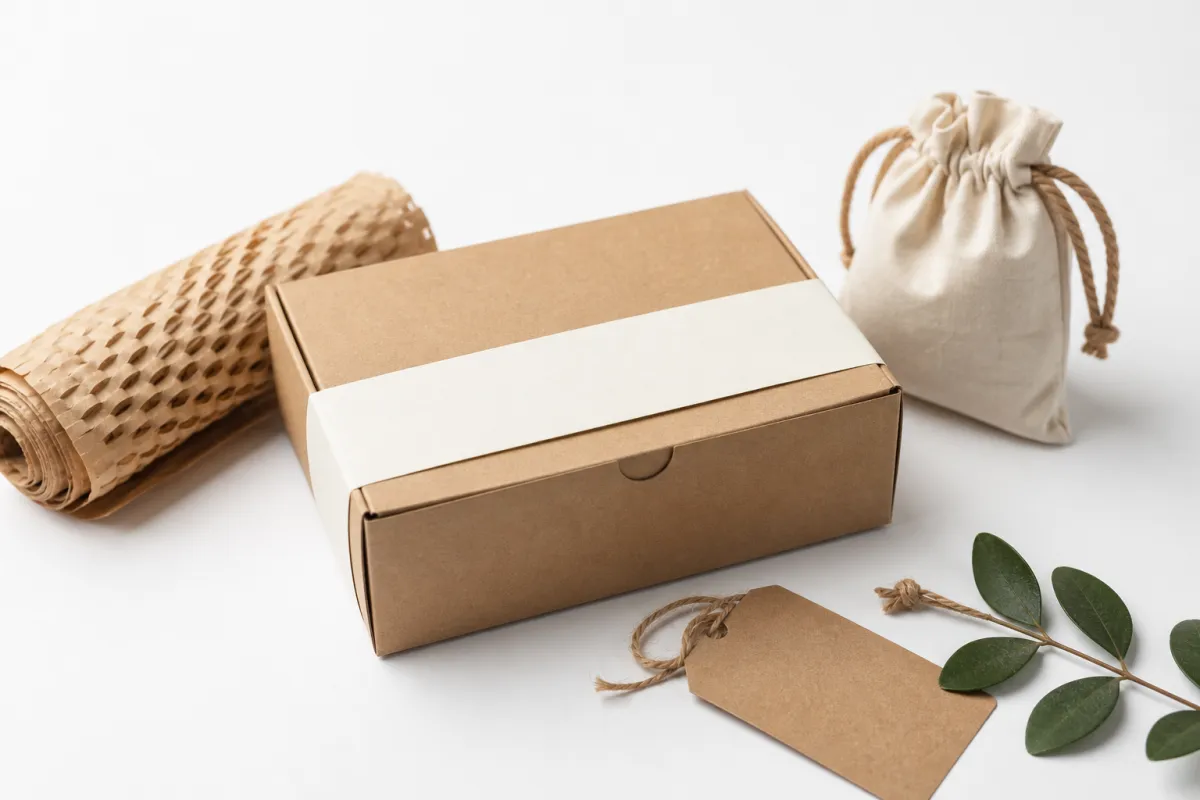
In plain terms, custom kraft carton boxes are cartons built to a specific size, strength, and print requirement for a particular product or shipping need. They may be corrugated cartons made from linerboard and fluting, or paperboard cartons used for lighter retail-ready packaging, but the shared idea is customization: the box is built around the item, not the other way around.
That sounds straightforward, and the effect is anything but small. A right-sized custom carton reduces void fill, keeps the product from shifting inside the shipper, and can improve dimensional weight efficiency when the exterior size is matched to the footprint of the item. In parcel shipping, half an inch of extra space can matter more than most teams expect, especially when the carrier charges by dimensional weight instead of actual weight.
Custom kraft carton boxes also send a signal. Kraft has a grounded, workmanlike look, and clean printing can make it feel deliberate and premium without turning it decorative. That suits brands that want package branding to feel honest and durable rather than glossy for its own sake. The material already implies utility; good print turns that into a visible identity.
Many buyers miss a simple point: kraft does not mean basic. The performance comes from the board structure, not the color of the paper. A properly specified corrugated carton with the right flute and closure can stand up to compression, puncture, vibration, and rough handling far better than a generic stock box that happens to be brown.
From a shipping perspective, custom kraft carton boxes often solve three problems at once. They protect the product, they support the packing operation, and they reduce avoidable shipping cost. That is a stronger outcome than buying a heavier box and hoping the extra material fixes everything.
A carton should earn its keep twice: once in the warehouse, where it has to pack quickly and stack well, and again in transit, where it has to survive the carrier network without creating waste, claims, or returns.
Most packaging teams eventually learn that a carton is not only a container, but also a logistics decision. Custom kraft carton boxes influence labor, freight, damage risk, storage density, and even the way a customer judges the product before it is opened. That is why they deserve the same scrutiny you would give to any other production component.
I have sat with operations managers who thought they had a product problem, only to find the real issue was a carton that was just a touch too large. The product rattled. The corners bruised. The tape split at the seam. That kind of failure is boring in the worst possible way, because it is avoidable. A better box would have fixed it, and probably saved a few headaches along the way.
If you are comparing options, keep the broader packaging system in view. A carton spec that works on paper but slows packing can cost more than a slightly stronger board. A box that looks polished but arrives crushed is not helping brand perception. For a wider view of formats and structural options, the Custom Packaging Products catalog is a useful reference point when you are comparing shipping cartons against other packaging styles.
How Do Custom Kraft Carton Boxes Improve Shipping and Logistics?
The short answer is fit, strength, and efficiency. Custom kraft carton boxes improve shipping and logistics by reducing movement inside the carton, matching the board to the route, and lowering the chance that the product will be damaged, overpacked, or billed at a higher dimensional weight tier.
The mechanics matter. Custom kraft carton boxes are built from linerboard and a fluted medium in corrugated applications, or from paperboard in lighter folding-carton applications, and those layers determine how the box behaves under load. Linerboard gives the surface strength, while the flute works like a shock absorber and spacing element between the liners. Together, they create a structure that is light for its strength, which is exactly why corrugated boxes are so common in shipping.
When a buyer asks for custom kraft carton boxes, the first question should be simple: what kind of stress will the box see? A box traveling by parcel service faces drops, corner impacts, vibration, and repeated handling. A palletized shipment sees more compression and stacking pressure than shock. Warehouse storage cartons, meanwhile, often need to hold shape across longer periods, especially if they are stacked several layers high. Different routes demand different specs.
That is why inside dimensions matter so much. A properly fitted box reduces product movement, lowers the need for void fill, and helps the contents stay centered during transport. If the item floats inside the carton, it has room to build momentum each time the box is dropped or tilted, and that creates damage that is frustrating precisely because it could have been avoided.
In the packing line, custom kraft carton boxes need to work with people and machines. If the box is hard to erect, awkward to load, or slow to seal, the cost shows up as wasted labor long before a damage-rate report tells the story. Good packaging design keeps the workflow clean: product goes in easily, the closure is consistent, and the box can move through palletizing without collapsing or bulging.
Carrier network behavior matters too. Parcel systems are rougher than many buyers expect. Boxes are sorted, dropped, pushed, and stacked quickly, which makes edge crush resistance and puncture performance practical issues rather than abstract test numbers. They are the difference between a successful delivery and a claim. For testing standards, the ISTA resource library is a solid place to start if you want your packaging tests to mirror real distribution hazards.
For sustainability discussions, custom kraft carton boxes offer another advantage: they can often be specified with recycled liners and efficient layouts while still delivering the strength the route requires. The U.S. EPA has useful background on recycling and materials management at EPA recycling guidance, and that matters because the best carton is not the heaviest one; it is the one that uses the least material needed for the actual shipping job.
That flow is the real use case. Product enters the carton, the carton is sealed, palletized or staged for parcel pickup, then it moves through a chain of people and machines before it reaches the end customer. Each step is a chance for the spec to prove itself, which is why custom kraft carton boxes should be chosen with the route in mind, not only with the product on the desk.
Key Factors That Affect Custom Kraft Carton Box Performance and Cost
Pricing is not random, and custom kraft carton boxes are a good example of how several inputs shape the final number. Board grade, carton size, print complexity, quantity, die cutting, finishing, and any special coatings all affect cost. If the order uses simple kraft with a single-color imprint and a standard closure, the economics look very different from a highly printed, custom-formed shipper with inserts and a specialty finish.
Board strength is one of the most important variables. Buyers often hear burst strength and edge crush strength, but those numbers are not interchangeable. Burst strength relates to puncture resistance, while edge crush strength is tied more closely to stacking performance. In practice, the box needs both. If the walls crush during pallet stacking, the load can fail from the top down; if puncture resistance is weak, corner impact during parcel handling can create tears and seam splits.
Flute profile matters too. A B-flute, C-flute, or E-flute carton will not behave the same way. Thicker flutes generally improve cushioning and compression in different ways, while thinner flutes can improve print quality and reduce bulk. Single-wall construction is often enough for lighter shipments, but heavier or more fragile products may call for double-wall board when the route is harsher or the stack height is taller.
Dimensions influence not only material usage but also freight cost. Oversized custom kraft carton boxes can trigger avoidable dimensional weight pricing, which is one of the easiest ways to spend more than necessary on shipping. A carton that is only slightly too large can increase void fill, create movement inside the box, and push the shipment into a higher billable weight tier. That is why right-sizing is usually the first lever worth pulling.
Quantity changes the economics quickly. Small runs usually cost more per unit because setup time, tooling, and press preparation are spread across fewer boxes. Larger runs lower the unit price, but only when the spec is stable enough to justify the volume. If artwork changes often or the design shifts with the season, it may be smarter to keep the structural carton consistent while adjusting printed components elsewhere. That is often a cleaner way to manage branded packaging without paying for repeated retooling.
Custom printed boxes can look inexpensive on the sample table and expensive at scale if the design is overcomplicated. Extra colors, heavier coverage, special coatings, and decorative finishes can increase production time and introduce variation. That does not mean the print should be stripped down; it means every added process should earn its place by improving durability, legibility, or brand value.
| Option | Typical Use | Relative Cost | Performance Notes |
|---|---|---|---|
| Single-wall kraft carton | Lighter parcel shipments, e-commerce, accessories | Lower | Good balance of cost and protection for many standard items |
| Double-wall kraft carton | Heavier products, stacked pallet loads, fragile goods | Higher | Better compression and puncture resistance, more board usage |
| Minimal-print custom carton | Operations-focused shipping with basic branding | Lower to medium | Usually faster to produce and more forgiving in handling |
| Full-coverage printed carton | Retail-ready presentation and stronger package branding | Medium to higher | Better visual impact, but more sensitive to setup and finish choices |
That table is not a quote, because actual pricing depends on the exact spec, order quantity, and shipping terms. Still, the pattern is familiar in procurement: the more structural support and print complexity you add, the more you pay up front. The tradeoff can still be smart if it reduces damage, saves labor, or improves retail packaging quality downstream.
There is also a sustainability angle that affects both perception and cost. Recycled kraft liners, lower ink coverage, and simpler structures can reduce material use. The FSC chain-of-custody system is one path brands use when they want documented fiber sourcing; more background is available at fsc.org. Whether that certification belongs in your project depends on market requirements, but it is a real spec consideration rather than a slogan.
One thing I have learned from packaging audits is that cost problems rarely come from a single line item. They build from small mismatches: a box that is a bit too large, a board grade that is slightly underpowered, a print design that adds setup time, a pallet pattern that wastes space. By themselves, those choices feel minor. Together, they are the difference between a carton that quietly performs and one that becomes an expense magnet.
Step-by-Step Process for Ordering Custom Kraft Carton Boxes
The order process moves more cleanly when the product is measured and described carefully before anyone talks about artwork. Start with length, width, height, and weight, then add fragility, stacking needs, and any sensitivity to humidity or temperature. If the item has sharp corners, a glossy finish, or a fragile insert, say so early. Those details change the way custom kraft carton boxes should be built.
Once the product is clear, translate it into the carton spec. Decide whether you need inside dimensions or an outside reference, because many packaging problems begin with that mix-up. Confirm the board grade, flute type, print area, sealing method, and whether inserts, partitions, or dunnage are required. The more specific the brief, the fewer revisions the supplier needs later.
Sampling is where the theory gets tested. Request dielines, physical samples, or prototypes and check the fit with the actual product, not a placeholder. Make sure the closure holds, the product does not move excessively, and the carton still stacks properly once packed. For custom kraft carton boxes, a good fit on paper is not enough; it has to work in the real warehouse, with the real labor rhythm, on the real pallet pattern.
Artwork and structural approval should happen together, not in isolation. Too many teams approve the print while the box is still untested, then discover the seam interferes with logo placement or the folds clip important text. That is avoidable, and it is one reason packaging design should be reviewed as a physical system rather than a graphic overlay.
A realistic production timeline usually includes several stages: design review, artwork setup, tooling, sample approval, manufacturing, and freight transit. Simple custom kraft carton boxes may move through those steps quickly, while full-color printed cartons or boxes with special finishes can take longer, especially if there are prototype revisions. It is usually wiser to build in time for a test run than to rush the first production batch and hope the fit is perfect.
Operations should be involved early. A carton that works beautifully for the product but slows down the packing line can create hidden labor cost. If warehouse staff has to fold flaps awkwardly, hunt for extra tape, or rework damaged cartons, the spec is not really successful. Good custom kraft carton boxes should make the line easier to run, not harder.
It also helps to set clear acceptance criteria before production starts. For some brands that means fit and compression only. For others it means drop performance, scuff resistance, or a specific print tolerance. A supplier can usually meet the target if the target is spelled out. If not, everyone ends up guessing, and guessing is a bad habit in packaging procurement.
What to confirm before approval
Before releasing an order, confirm the exact inside dimensions, board grade, print method, closure style, quantity, and target shipping method. If the carton will be used for both shipping and shelf presentation, check how it looks after handling and whether the print survives scuffing during transit. For many brands, custom kraft carton boxes also need to align with internal forecasting, so the pack size should match the expected monthly or quarterly demand rather than only the ideal-case sample.
Why testing saves money
Testing is not extra work; it is risk control. A short run of sample custom kraft carton boxes can expose a fit issue, a compression weakness, or a packing-line slowdown before the full order is printed. That matters because correcting a design after production starts is usually far more expensive than paying for a prototype and a few rounds of validation.
When the order reaches production, keep the communication loop open. Ask for approval points on dieline, mock-up, and final proof if the print matters to the brand. Custom kraft carton boxes are forgiving in some ways and unforgiving in others. Structural mistakes are expensive, and so are print mistakes when the boxes are already boxed, stacked, and ready to ship.
Common Mistakes When Choosing Custom Kraft Carton Boxes
The most frequent mistake is ordering by outside dimensions instead of inside dimensions. That sounds small, but it is the kind of detail that causes products not to fit as intended. Board thickness, flute profile, and folding allowances all affect usable interior space, which means a box that looks right on a drawing may be too tight or too loose once it is built. With custom kraft carton boxes, the measuring method needs to be explicit.
Another common problem is under-specifying board strength. A carton that seems fine for a short local shipment may fail when it faces longer transit routes, stacking pressure, or rough parcel handling. Crushed corners, split seams, and top-panel bowing are expensive because they trigger returns, replacements, and customer service workload. In many cases, the extra cost of a stronger board would have been cheaper than the damage downstream.
Oversizing is equally costly. If the carton is too large, the shipper must add more void fill, the product can move inside the box, and dimensional weight charges may rise. Worse, the package usually looks less polished. Custom kraft carton boxes should feel intentional, not improvised. A box that swallows a product rarely helps the brand impression, even if the kraft finish is attractive.
Print overreach can also create trouble. A box with too much ink coverage, too many color changes, or a finish that is not suited to the route can suffer from color variation, scuffing, or delayed production. Sometimes the best package branding choice is not the most elaborate one. A clean logo, a strong carton structure, and a readable message often do more for the buyer than a complicated visual system that is hard to keep consistent.
Process mistakes are just as common as spec mistakes. Teams sometimes skip real transit testing, approve artwork before structural fit, or ignore how the carton stacks on pallets. They may also forget that warehouse storage is part of the distribution chain. If custom kraft carton boxes sit in a humid staging area or stack under heavy load before shipment, that needs to be part of the design conversation from the start.
There is also a temptation to treat all shipping formats the same. Parcel, LTL, palletized freight, and long-term storage have different requirements, and a one-size-fits-all carton is often a compromise that satisfies nobody. A box that performs in one channel may underperform in another. That is why the most reliable packaging teams anchor the spec to the real route.
Honestly, many cost problems start here: a box gets approved because it looks acceptable in a meeting, not because it survives the system it will actually enter. Custom kraft carton boxes deserve more than a visual review. They need the kind of practical scrutiny that looks at impact, stacking, humidity, and labor all at once.
Expert Tips to Improve Protection, Printing, and Sustainability
Start with right-sizing. If the product footprint is stable, custom kraft carton boxes should be designed around that footprint first, and only then should the board strength be adjusted to match the shipping route. Too many teams do the reverse, selecting a heavy board as insurance even when the real problem is excess interior space. A smaller, better-fit carton often protects more effectively than a heavier box with empty air inside.
Use performance tests that mirror the actual route. Parcel drop tests, compression checks, vibration exposure, and humidity considerations should be chosen based on how the box is actually handled. A carton that passes a clean lab test but fails after a few hours in a damp staging area is still a bad carton. If the product is high-value or fragile, test more than one condition, not just the easiest one.
Printing should support durability, not fight it. On custom kraft carton boxes, a logo placed where it will be rubbed by tape or pallet wrap may not stay legible for long. Keep important graphics in zones that stay visible after handling, and choose coatings only when they help the use case. For high-volume orders, simpler print systems can reduce cost and improve consistency. For lower-volume launches, a restrained print layout may actually look more premium because it feels deliberate.
Sustainability is easiest to improve when the design is simple and honest. Recycled kraft liners, minimal ink coverage, and fewer inserts can all reduce material without weakening the structure. A lighter package is not automatically better, though. If removing material raises damage rates, the environmental benefit may disappear in returns, replacements, and extra shipments. The Best Custom Kraft carton boxes are the ones that use just enough material to do the job correctly.
Consider how the box communicates with the rest of the brand system. Product packaging, retail packaging, and shipping packaging do not have to be identical, but they should feel related. A box that is structurally efficient and visually coherent tells the customer the brand is paying attention. That matters because package branding is not only about aesthetics; it is also about trust, consistency, and how the product arrives after leaving the warehouse.
Collaboration helps a lot here. Packaging, operations, and procurement should review the same carton spec before final approval so that cost control, line efficiency, and brand standards are all represented. If only one department signs off, the others usually inherit the problems. Custom kraft carton boxes work best when the people who handle product, freight, and budget all get a say before the order is locked.
One more practical point: ask for a supplier quote that clearly identifies board grade, print method, tooling, lead time, and shipping assumptions. Apples-to-apples comparison gets messy when one vendor includes certain setup costs and another does not. If the quote language is vague, the unit price can look lower than it really is. That is a frequent issue in custom packaging purchasing, and it is worth slowing down long enough to avoid it.
If you need to choose between two specs, compare how each carton behaves in the hands of the people who pack and receive it. That is usually where the truth lives. A carton that saves two cents but costs five minutes in labor is not actually cheaper. The numbers have a funny habit of telling on themselves once you include the human side of the process.
What to Do Next With Custom Kraft Carton Boxes
The most useful next step is an audit. Look at the current carton, then ask where damage, waste, or labor friction is actually happening. Is the box too large? Is product moving inside it? Are corners crushed on arrival? Are packers using extra tape or too much void fill? Those answers tell you whether custom kraft carton boxes could reduce cost by improving fit, strength, or pack efficiency.
Before requesting a quote, gather the product dimensions, product weight, annual or monthly volume, shipping method, print requirements, and any known performance concerns. If the box needs to work across multiple channels, say so clearly. A carton intended for parcel shipment may need a different spec than one built for palletized freight, even if the product is exactly the same.
A simple test plan is usually worth the effort. Request samples, run a small transit trial, and ask warehouse staff what slows them down or makes them nervous about the spec. People who pack the product every day often notice issues that never show up in a spreadsheet. Their feedback can improve custom kraft carton boxes faster than another round of theoretical review.
When comparing quotes, do not look only at the unit price. Check the board grade, the print method, the tooling assumptions, the lead time, and whether the supplier is quoting the same dimensions and closure style across all options. If one quote uses a lighter board or excludes a finishing step that another quote includes, the lower number may not actually be the better value. For custom kraft carton boxes, the comparison only works when the spec is matched line by line.
It also helps to think of the carton as part of the shipping system, not a separate accessory. Custom kraft carton boxes can lower damage, reduce freight waste, and make packing more efficient, but only if the design reflects how the product actually moves. That is the real payoff: less guesswork, fewer surprises, and a package that does its job without drawing attention to itself for the wrong reasons.
When the spec is right, custom kraft carton boxes become one of those quiet packaging decisions that pays off every week. The carton fits, the product stays protected, the line runs better, and the customer receives something that feels considered rather than improvised. That is a solid result in any operation.
The clearest takeaway is this: start with fit, then test board strength against the actual route, and only then add print or finish details. If you do that, custom kraft carton boxes stop being a generic shipping item and start working like part of the product itself. That is the kind of packaging decision That Holds Up under pressure, which is exactly what a carton is supposed to do.
What are custom kraft carton boxes used for in shipping?
They are used to protect products in transit while fitting the item closely enough to reduce movement and void fill. They also help standardize packing, improve pallet efficiency, and create a more polished unboxing experience. They are useful for retail, e-commerce, subscription, industrial, and replacement-part shipments.
How do I choose the right board for custom kraft carton boxes?
Start with product weight, fragility, and shipping mode, then match that to the needed crush and puncture resistance. Single-wall board works for many lighter shipments, while heavier or more fragile items may need stronger construction. A sample test is the safest way to confirm the carton performs under real handling conditions.
How much do custom kraft carton boxes cost?
Pricing depends on board grade, size, print coverage, quantity, and whether tooling or custom dies are required. Larger quantities usually reduce the per-unit cost because setup time and tooling are spread across more boxes. Right-sizing can offset cost by lowering freight waste, void fill, and damage-related losses.
How long does it take to make custom kraft carton boxes?
Timeline usually depends on design approval, sampling, artwork setup, and production scheduling. Simple orders move faster than boxes that need custom print, special finishes, or multiple prototype rounds. It is smart to allow time for testing before committing to a full run.
Are custom kraft carton boxes recyclable?
Most kraft cartons are recyclable when they are not heavily contaminated with wax, plastic, or food residue. Recycled content and minimal coatings can improve sustainability while keeping the box practical for shipping. Local recycling rules vary, so it is worth confirming what your market accepts.

