Buyer Fit Snapshot
| Best fit | Printed Kraft Gift Bags with Logo projects where brand print, material claims, artwork control, MOQ, and repeat-order consistency need to be specified before quoting. |
|---|---|
| Quote inputs | Share finished size, material target, print colors, finish, packing count, annual reorder estimate, ship-to region, and any compliance wording. |
| Proofing check | Approve dieline scale, logo placement, barcode or warning zones, color tolerance, closure strength, and carton packing before bulk production. |
| Main risk | Vague material claims, crowded artwork, missing packing details, or unclear freight terms can make a low unit price expensive after revisions. |
Fast answer: Printed Kraft Gift Bags with Logo: Film, Print, MOQ, and Carton Packing should be specified like a repeatable production item. The safest quote records material, print method, finish, artwork proof, packing count, and reorder notes in one written spec.
Production checks before approval
Compare the actual filled-product size with the drawing, then confirm tolerance on folds, seals, hang holes, label areas, and retail display edges. Reserve space for logos, QR codes, warning copy, and material claims before decorative graphics fill the panel.
Quote comparison points
Review material grade, print process, finish, sampling route, tooling charges, carton quantity, and freight assumptions side by side. A quote is only useful when the supplier can repeat the same color, closure quality, and packing count on the next order.
Printed Kraft Gift Bags with logo do more than carry a purchase from one point to the next. They travel through stores, lobbies, parking lots, sidewalks, airports, and office receptions, carrying the brand with them. That repeated visibility is hard to replace with any other packaging format. A bag gets handled, noticed, folded, reused, and sometimes saved long after the product has been opened.
Kraft paper sends a message before the customer even reads the logo. It looks practical, familiar, and understated. Add the right print treatment, a handle that feels dependable, and a size that suits the product, and the bag stops feeling like a disposable afterthought. It becomes part of the brand system. That is the real value of printed kraft gift Bags with Logo: they turn an ordinary carry item into a visible extension of the business.
Buyers usually ask the right questions early, because the mockup only answers part of the brief. Will the paper hold shape under a full load? Will ink stay legible on an absorbent surface? Will the handle survive a longer carry? Can the factory deliver on time without forcing compromise elsewhere? Those are the questions that decide whether a bag works as a practical brand asset or simply fills a packaging need.
The sustainability conversation matters too, but it is often oversimplified. Kraft paper packaging can fit better with recycled content, fiber recovery, and straightforward disposal guidance than mixed-material packaging. That does not make every kraft bag environmentally superior. It still depends on the paper source, recycled content, coatings, inks, and local recycling rules. If environmental claims matter to your customers, references from the Forest Stewardship Council and the U.S. EPA recycling guidance are useful starting points.
The sections that follow cover materials, print methods, pricing, production timing, and the mistakes that most often show up in real purchase orders. The goal is not a prettier mockup. It is a bag that looks right, carries well, and performs in everyday use.
Why Printed Kraft Gift Bags With Logo Stand Out Fast
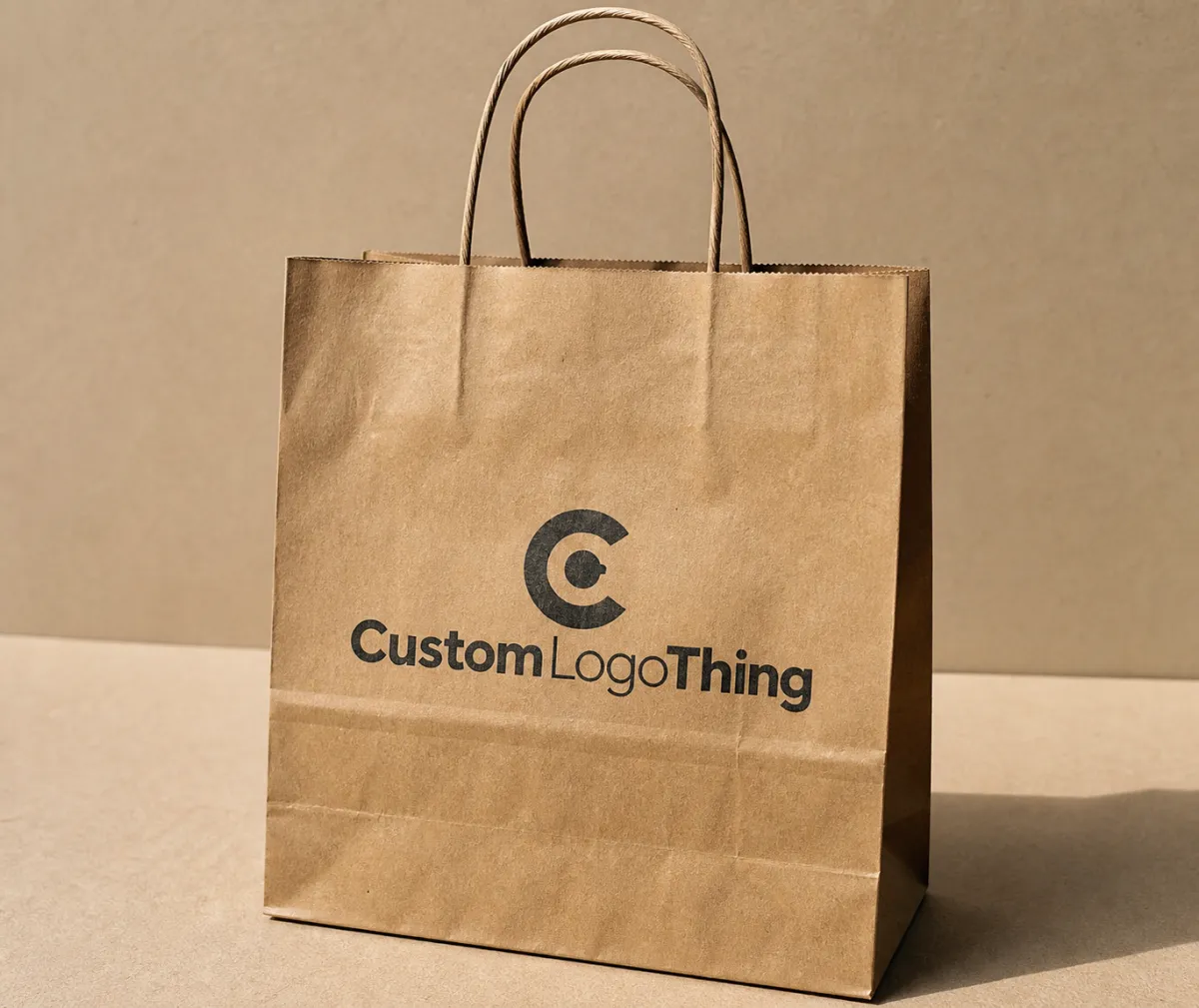
A kraft bag is often seen more times than the product inside it. That sounds obvious until you trace the full path. A candle or folded shirt may get one glance at checkout. The bag may get ten. It is lifted, placed on a counter, carried down a street, set on a seat, and picked up again. That repeated exposure is exactly why printed kraft gift bags with logo carry so much value in retail and gifting.
The effect is visual, but it is also tactile. Kraft has a texture people understand quickly. It feels grounded rather than staged. That matters when a brand wants to appear practical, thoughtful, or quietly premium without drifting into something stiff or overworked. Plain brown kraft and a printed logo are not interchangeable. One is a carrier. The other is a carrier with identity, structure, and recall built in. Rigid Gift Boxes sit higher up the packaging ladder, usually with thicker board, specialty coatings, and more assembly.
Kraft sits in the middle range many businesses actually need. It usually costs less than rigid packaging, weighs less, and is easier to store and ship. At the same time, it gives enough surface area for a logo, web address, seasonal design, or campaign message. Boutiques use it. Event teams use it. Hospitality groups use it. Gift-with-purchase programs use it because it looks intentional without becoming heavy or expensive.
Customers understand kraft almost instantly. No explanation is needed. A logo on kraft paper feels familiar in the hand, and familiarity tends to reduce friction. If the bag is sturdy, people reuse it. If the design is simple and well balanced, they keep it longer. That extra life can extend brand exposure without adding much complexity.
Packaging buyer’s reality: a beautiful bag that tears at the handle is remembered for the wrong reason. A bag that prints cleanly, carries well, and reaches the customer intact makes the whole brand look more disciplined.
Execution decides the outcome. A kraft bag can feel premium, plain, earthy, or rushed. The difference usually lives in the specification sheet, not the concept. That is why the best printed kraft gift bags with logo are treated as part of the packaging program, not as an afterthought.
How Printed Kraft Gift Bags With Logo Are Made
A kraft gift bag usually starts with a paper stock chosen for strength, appearance, and print behavior. The sheet is cut, folded into panels, reinforced at the bottom, and fitted with handles. Some handles are machine-attached, some are added during assembly, and some formats use a mix of automated and manual work. Printing may happen before or after certain assembly steps, depending on the plant and the print method.
Brown and white kraft are the most common bases. Brown kraft has a natural, recycled look that many brands use to signal warmth or simplicity. White kraft gives artwork a brighter foundation and usually improves color contrast. Brands that want an earthy or artisanal tone often stay with brown kraft. Brands that need a cleaner retail read, sharper typography, or brighter color usually move toward white kraft.
Print method changes the result as much as paper choice. Flexographic printing suits simple graphics, repeated artwork, and larger production runs. Offset printing offers more detail and stronger image quality, especially for artwork that depends on cleaner color relationships. Digital printing works well for smaller orders and changing designs. Screen printing can be effective for bold, limited-color artwork that needs heavier ink coverage.
Not every method behaves the same way on kraft. Brown kraft absorbs ink differently from coated stock, so the final look shifts. Fine lines can soften. Small reverse text can fill in. Light colors may disappear more than a buyer expects. Artwork that looks crisp on screen often needs adjustment once it meets an uncoated surface. That is not a defect; it is how the substrate behaves.
Ink choice matters for the same reason. Drying time, rub resistance, and color shift all shape the final outcome. A strong black mark usually holds up well. Thin gradients and very small typography can require testing. If the bag will be carried often, the print has to survive flexing, rubbing, and handling, not just sit cleanly on a flat proof.
The best production method depends on the business goal. A chain store may want a predictable flexographic run with strict brand control. A gift retailer with seasonal artwork may prefer short-run offset or digital. A luxury label using a simple mark on white kraft may care less about the number of colors and more about edge quality, handle attachment, and overall finish.
Key Factors That Affect the Final Look and Feel
Specification choices decide whether the bag feels right in the hand. Size, paper weight, handle type, gusset depth, print coverage, and finishing details all affect how the logo reads and how the bag performs. A mismatch in any one of them can leave you with a bag that technically works and still misses the point.
Size comes first. If the bag is too small, the product bulges, creases, or strains the seams. If it is too large, the contents slide around and the package looks wasteful. A candle, box, or apparel item needs width and gusset room for tissue, inserts, or a folded card. The right fit keeps the bag upright and easier to carry.
Paper weight affects both durability and perceived quality. Lighter kraft can work for favors or event handouts. Retail carry bags usually need more substance. Heavier paper feels stiffer, stands up better, and often signals more value. Heavier is not automatically better, though. If the contents are light, overly thick paper can make the bag feel mismatched. The smarter choice is the one that fits the load and use case.
Handle style changes the whole impression. Twisted paper handles are common, economical, and visually consistent with kraft. Flat paper handles can be practical for retail use and easy to store. Rope handles, usually in cotton, polyester, or paper-wrapped formats, lift the presentation and improve comfort for heavier contents. Ribbon-style handles feel more gift-oriented and usually belong in specialty packaging rather than everyday shopping bags.
Print coverage should be chosen with restraint. A centered logo often ages better than full-coverage graphics, especially on brown kraft. Repeat patterns can work, but the spacing has to be disciplined or the bag starts looking crowded. Large blocks of ink can flatten the natural texture that makes kraft attractive in the first place.
Finishing adds the last layer. Matte varnish can protect the print and improve rub resistance. Spot accents can draw attention to a mark or emblem. Embossing and foil create a more premium look, though they are usually better reserved for launch programs or special gifting rather than basic retail carry. Leaving the bag uncoated preserves the raw feel that many brands want when the message is earthy or understated.
A useful way to think about the spec is to ask what the customer should notice first: the product, the logo, the handle, or the material feel. That answer decides the bag.
| Option | Typical Look | Approx. Cost Impact | Best Use |
|---|---|---|---|
| Natural brown kraft, one-color logo | Simple, earthy, retail-friendly | Lower | Boutiques, favors, everyday takeaway |
| White kraft, two-color print | Cleaner contrast, brighter branding | Moderate | Gift shops, seasonal promotions, branded events |
| Heavier kraft with rope handles | More substantial, more premium in hand | Moderate to higher | Retail gifts, higher-value items, repeat carry use |
| Special finish or accent decoration | More polished, more distinctive | Higher | Launch programs, premium gifting, VIP packaging |
The table is a guide, not a rulebook. A restrained budget can still produce an excellent result if the logo and construction are right. A premium brand may accept a higher unit cost because the bag itself is part of the customer experience and not just a container.
Cost, Pricing, MOQ, and Quote Factors
Pricing for printed kraft gift bags with logo usually moves with the same set of variables: size, paper weight, print colors, handle style, finishing, quantity, and packaging configuration. Change two or three of those at once, and the quote can shift quickly. A clear spec sheet keeps the conversation focused.
Minimum order quantity, or MOQ, has one of the biggest effects on unit cost. Small runs usually cost more per bag because setup, proofing, plates or digital setup, assembly, and quality checks are spread across fewer pieces. Larger runs usually improve unit pricing, though they raise storage needs and cash tied up in inventory. The exact MOQ depends on the factory and the print process, but very small orders rarely enjoy the same pricing efficiency as mid-size or larger production runs.
Simple one-color kraft bags generally sit in a lower cost band than multi-color or specialty-finish versions. A standard retail kraft bag with a single-color logo may remain relatively affordable at volume, while a heavier bag with rope handles and premium decoration climbs quickly. Raw material costs, region, and freight all affect the final number, but the pattern stays stable: more structure, more print complexity, and more assembly time usually mean a higher unit cost.
It helps to separate the quote into clear parts. Factory pricing covers the bag itself. Tooling or setup covers the print preparation. Sampling is a separate step and may be credited later, depending on the supplier. Freight is often underestimated, even though bulky paper packaging can move the landed cost more than expected, especially with air shipment or a short delivery window.
Complete information improves the quote. A useful request includes:
- Bag dimensions: width, gusset, and height
- Paper type and weight
- Handle style and attachment preference
- Print method and number of ink colors
- Artwork files or a rough layout
- Quantity and acceptable overrun or underrun
- Delivery location and desired timing
- Any special finish, insert, or packaging requirement
Cost can often be controlled without cutting the quality that customers notice. Standard sizes usually cost less than custom dimensions. A tight color palette tends to be kinder to budget than full-coverage graphics. A clean logo mark often performs better on kraft than a detailed illustration packed with tiny text. In busy retail settings, it may be smarter to spend on paper quality and handle strength than on decorative extras that barely register once the bag is in use.
The best savings usually come from matching the spec to the actual job. A bag carrying light jewelry boxes does not need the same build as one carrying stacked candles or boxed apparel. Overspecifying packaging is expensive. Underspecifying it is worse, because the cost of a failed bag shows up in replacements, complaints, and a weaker customer impression.
Production Process, Timeline, and Lead Time
The production path usually starts with inquiry and quote review, then moves into artwork checks, proofing, sampling if needed, printing, assembly, quality control, and shipment. The sequence sounds tidy. The delays usually appear in the gaps where artwork is incomplete or approvals take too long.
A simple order can move faster when the design is straightforward and the material is standard. A one-color logo on a stock kraft bag usually progresses more quickly than a multi-color bag with custom handles or special finishes. Nonstandard paper, larger volumes, and decorative features naturally lengthen the schedule. That only becomes a problem when the bags are tied to a launch, holiday, or event date with no slack built in.
Lead time usually depends on four things: print complexity, material availability, order quantity, and approval speed. A clean dieline and final artwork help. Several rounds of revision slow everything down. The same thing happens when a buyer changes handle type, print coverage, or bag size after the proof is already underway.
Common causes of delay look familiar:
- Late artwork revisions after proof review
- Missing dielines or incorrect measurements
- Unclear Pantone or color expectations
- Approval delays from internal stakeholders
- Changes to print coverage or finish after sampling
- Freight booking that starts too late for the delivery window
Planning should account for proofing, production, freight, and a buffer for seasonal pressure. Holiday retail, trade shows, wedding seasons, and promotion windows compress schedules. If the bags have to arrive on a fixed date, the order should begin early enough that one correction does not become an emergency. Extra time is usually cheaper than rushed logistics.
Rush orders can happen, but they are safest with stock materials, simple artwork, and a factory calendar that still has room. Standard constructions and straightforward print reduce the number of places where delay can appear. Complexity is not the problem. Unplanned complexity is.
Useful rule of thumb: if the packaging supports a launch, it deserves the same planning discipline as the product itself. Artwork, proofing, and freight are not side notes.
When the timing is right, printed kraft gift bags with logo stop being a source of friction and start behaving like part of the launch rhythm. That difference shows up immediately in how organized the campaign feels.
Common Mistakes When Ordering Printed Kraft Gift Bags
One common mistake is approving artwork on a monitor and assuming the print will behave the same way on kraft. It will not. Brown kraft absorbs ink and adds warmth of its own, so colors shift, fine details soften, and low-contrast artwork can vanish more easily than expected. A logo that looks elegant in a PDF may print too faint if the surface works against it.
Paper grade gets misjudged too often. A bag may look handsome in a sample photo and still fail in actual use if the paper is too light for the product. Sharp corners, heavy glass, and stacked items place real stress on seams and bottom panels. If the bag is meant to be reused, handle attachment and board stiffness matter even more.
Oversized logos can also cause trouble. A large mark sounds bold, but on kraft it can crowd the design or make the bag feel heavy. Fine text can become harder to read. Pale colors can disappear against the brown base. Strong kraft bag design usually respects the material instead of fighting it.
Handle selection deserves more attention than it often gets. A beautiful printed bag with a weak handle is not a good packaging solution. If the handle tears, stretches too much, or feels awkward, the customer remembers that before the print. Matching handle style to load, carry distance, and retail setting matters more than many buyers expect.
Quantity planning causes another set of problems. Too few bags for a campaign means emergency reorders and higher unit cost. Too many bags tie up storage and cash. The right order size should follow actual demand rather than hope. Seasonal programs benefit from a demand check before the order is placed.
Some buyers also approve the mockup without thinking through the item inside the bag. Lightweight gifts and promotional handouts do not need the same reinforcement as boxed apparel or layered products. The best orders start with the item being packed and work outward from there.
Expert Tips and Practical Next Steps
Start with the product, not the artwork. Measure the item, note its weight, and think about how the customer will carry it. A good bag specification begins with dimensions that leave enough room for the product and enough strength for normal use. After that, print method, handle style, and finish become much easier to choose.
Ask for a paper sample or printed proof whenever color accuracy or texture matters. Kraft can behave in surprising ways under ink, and a physical sample tells you more than a screen ever will. If your brand relies on a specific Pantone target, make that clear early. If the artwork is simple, confirm whether one color is enough or whether a second color improves legibility.
Clean design tends to perform best on kraft. The paper already has texture and color, which means the strongest layouts usually use a clear logo, enough negative space, and a deliberate placement strategy. A bag does not need to be crowded to feel branded. Restraint often looks more confident.
Comparing a few specification combinations side by side can reveal useful tradeoffs. Standard handles versus rope handles. One-color print versus two-color print. Standard paper versus heavier stock. Sometimes one upgrade adds visible value for a modest price increase. Other upgrades add cost without changing customer perception much.
A simple action plan keeps the order moving:
- Measure the item that will go into the bag.
- Choose a size range that leaves room for tissue or inserts.
- Decide whether the brand voice is natural, premium, or promotional.
- Prepare artwork in the correct format before quoting.
- Confirm quantity, delivery window, and destination.
- Request a quote with the full specification instead of a partial guess.
If you are building a packaging program rather than a one-off order, think about consistency across sizes. A small, medium, and large family of bags can create a tidy shelf or counter presentation while keeping print setup familiar. That kind of consistency usually helps a brand more than inventing a different bag for every product category.
Keep the real use case in view. A well-specified kraft bag feels dependable in the hand, protects the product, and gives the customer a clean brand impression at the moment that matters. That is the value of printed kraft gift Bags with Logo: they make everyday packaging feel organized, thoughtful, and ready for use.
For brands that need packaging to work hard without becoming overcomplicated, printed kraft gift bags with logo remain one of the most practical choices in the category. When the paper weight, print method, handle style, and timing all line up, the bag does exactly what it should: carry the product, carry the brand, and carry the customer experience forward.
The most reliable next step is simple: define the item first, then match the bag to the load, the carry distance, and the print surface. Once those three pieces are clear, the rest of the spec becomes much easier to approve, and the finished bag is far more likely to perform in the real world.
FAQs
What size printed kraft gift bags with logo should I choose?
Start with the item dimensions, then add room for tissue, inserts, and comfortable packing. The width and gusset should keep the product from bulging or stressing the side seams, and the height should leave enough paper above the contents so the bag still looks neat. If you sell several product sizes, a consistent family of bag sizes usually works better than forcing every item into one format.
Which paper weight is best for kraft gift bags with logo?
Lighter paper can work for favors, light gift items, or low-load handouts, but retail products and repeat carry use usually need a sturdier sheet. The right paper weight depends on the actual load, not just the visual impression of the product. If the bag will be reused often, a heavier stock usually gives a better impression and holds its shape more reliably.
What print method works best for printed kraft gift bags with logo?
Simple one-color or two-color logos often do well with economical print methods and can look very clean on kraft paper. Digital printing is useful for smaller quantities or more detailed artwork, while flexographic and offset methods are often better for larger runs or highly repeatable output. The best method depends on quantity, design detail, and whether the bag is brown kraft or white kraft.
What MOQ should I expect for custom printed kraft gift bags with logo?
MOQ varies by factory, construction, and print process, so there is no single standard number. Smaller quantities usually cost more per bag because the setup work is spread across fewer pieces. If you need a test run, ask whether the supplier offers a sample quantity, a short run, or a standard production minimum that fits your campaign.
How can I lower the cost of printed kraft gift bags with logo without hurting quality?
Use a standard size, keep the artwork focused, and choose a handle and finish that support the actual use case instead of adding decoration that does not change the customer experience. A one-color logo on a well-chosen kraft bag can look polished and intentional. Ordering in a volume that makes setup efficient also helps keep the landed cost under control.


