Buyer Fit Snapshot
| Best fit | Custom Kraft Hang Tags for Sustainable Packaging projects where brand print, material claims, artwork control, MOQ, and repeat-order consistency need to be specified before quoting. |
|---|---|
| Quote inputs | Share finished size, material target, print colors, finish, packing count, annual reorder estimate, ship-to region, and any compliance wording. |
| Proofing check | Approve dieline scale, logo placement, barcode or warning zones, color tolerance, closure strength, and carton packing before bulk production. |
| Main risk | Vague material claims, crowded artwork, missing packing details, or unclear freight terms can make a low unit price expensive after revisions. |
Fast answer: Custom Kraft Hang Tags for Sustainable Packaging: Material, Adhesive, Artwork, and MOQ should be specified like a repeatable production item. The safest quote records material, print method, finish, artwork proof, packing count, and reorder notes in one written spec.
Production checks before approval
Compare the actual filled-product size with the drawing, then confirm tolerance on folds, seals, hang holes, label areas, and retail display edges. Reserve space for logos, QR codes, warning copy, and material claims before decorative graphics fill the panel.
Quote comparison points
Review material grade, print process, finish, sampling route, tooling charges, carton quantity, and freight assumptions side by side. A quote is only useful when the supplier can repeat the same color, closure quality, and packing count on the next order.
Custom Kraft Hang Tags for Sustainable Packaging are small pieces of print that can change the way a product is judged in the first three seconds. Shoppers pick them up, scan them, and form an impression before they have fully processed the logo or read the copy. I have watched buyers do this on crowded retail floors and in quiet boutique shops alike. Texture, weight, and print clarity do a surprising amount of persuasion, and a good tag makes that persuasion feel effortless.
That is why custom kraft hang tags show up so often on apparel, candles, bath products, baked goods, gift items, and other retail goods that depend on a clean first impression. Kraft paper has a natural grain, a muted brown tone, and a straightforward personality that suits recycled, handmade, and minimal packaging styles. It signals restraint rather than flash. Still, the tag cannot just look nice. It has to handle print contrast, hole placement, durability, and finish in a way that supports the product instead of fighting it. For brands building coordinated packaging, the tag often works alongside labels, cartons, inserts, and even Custom Packaging Products so the shelf presentation feels connected rather than assembled in pieces. Done well, custom kraft hang tags can lift perceived value without adding much material.
That balance is the whole job. Custom kraft hang tags should look natural, hold up in use, and still communicate the practical details buyers need. The sections below break down how they are made, what affects cost, how to Choose the Right stock and finish, and which mistakes usually cause trouble before a job reaches press.
Why Custom Kraft Hang Tags Stand Out
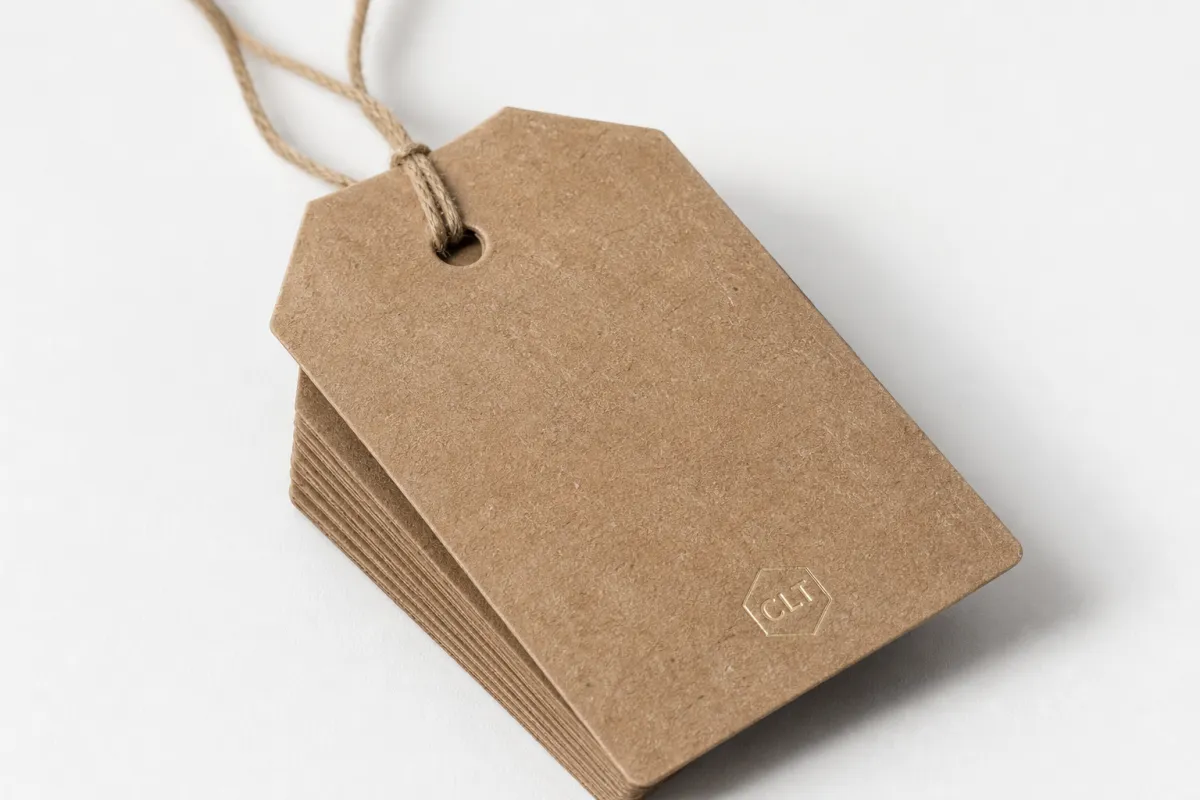
Custom kraft hang tags stand out because they sit at a useful intersection of function and feeling. They are small enough to stay economical, yet visible enough to carry brand voice, product details, and pricing cues that shoppers can register quickly. On an apparel rack, they can suggest craftsmanship. On a candle shelf, they can support a calm, earthy packaging style. On gift sets, they can make a product feel ready to give instead of merely ready to ship.
Kraft paper brings its own visual language. The surface is usually uncoated or lightly finished, so the fibers remain visible and the stock color becomes part of the design. That natural look suits brands that want to communicate recycled content, lower embellishment, or a less glossy retail presentation. It is not proof of anything by itself, though. The paper source, ink system, adhesives, and shipping distance all matter. A tag made from recycled kraft with restrained ink coverage can align nicely with a brand story, but the claim still has to be specific and accurate.
From a packaging buyer’s point of view, custom kraft hang tags are also flexible. They fit apparel, bottles, neck-tie products, candles, soaps, stationery, baked goods, and artisan retail items. They can carry size, color, material, care instructions, batch details, barcode space, or a short origin story. That makes them useful in product packaging where the main box is doing one job and the tag has to finish the conversation. If your line already uses Custom Printed Boxes, the tag can echo the same typography and icon system so the full set feels linked.
A good kraft tag usually works best when it looks calm rather than busy. A single strong logo, a clear product name, and one or two useful details often read better than a crowded layout with too many messages fighting for attention. In retail packaging, clarity travels farther than decoration, especially when the tag is seen for only a second or two.
Plain kraft stock with strong contrast often reads more premium than an overworked design on a coated surface, because the paper texture itself is doing part of the storytelling.
How Custom Kraft Hang Tags Are Made
The production flow for custom kraft hang tags is simple on paper, but the details matter. It usually starts with stock selection, because the paper choice affects stiffness, print behavior, and how the final tag feels in the hand. A lighter kraft stock may be fine for a small boutique tag, while a heavier sheet is better for retail packaging that gets handled a lot or needs to hang cleanly without curling. Grain direction matters too; if the grain fights the hang direction, the tag can curl or twist in a way that looks sloppy.
Artwork setup comes next. This is where the dieline matters, because the file needs exact trim size, bleed, hole position, and safe areas for text and logos. Custom kraft hang tags often need a bit more margin than coated stocks because the paper texture can make fine edge details feel softer. Once the artwork is approved, the print method is selected. Simple black or dark ink on natural kraft is usually the easiest route, and it often gives a crisp, grounded look. Multi-color work can still look good, but the printer has to account for how the stock absorbs ink and whether the colors need extra density to stay readable.
After printing, the sheets move through cutting and punching. Straight-cut rectangles are common, but rounded corners can make custom kraft hang tags feel less rigid and can help reduce edge wear. Hole punching is usually placed near the top center or top left, depending on string direction and display style. Fold-over tags are useful when the brand needs more room for care instructions, material origin, or a QR code that leads to product details. Multi-layer constructions are less common, but they can be valuable for premium retail packaging or for seasonal collections that need extra messaging without making the front look crowded.
Finishing comes last. Some brands stay with raw uncoated kraft because the natural texture is the point. Others add a light aqueous coating, a matte treatment, or a specialty embellishment on select details. The key is to remember that every finish changes the look and handling. A heavy coating can mute the handmade feel, while a subtle finish can protect the print and improve durability without flattening the paper character too much. For custom kraft hang tags, the most useful finish is often the one that protects the message without hiding the material.
Proofing deserves more respect than it usually gets. Digital proofs help confirm layout, spelling, and size relationships, but they also reveal whether the tag feels balanced or crowded. A production sample can catch die-line issues, off-center holes, weak contrast, and color shifts before a full run is made. That matters even more on uncoated kraft, where printed colors usually look quieter than they do on a bright white sheet. If the tag is part of a wider branded packaging system, it is smart to proof it against the label, carton, or insert artwork at the same time.
For teams comparing options, a good place to start is the tag itself, then look at how it fits the rest of the product packaging. If the tag needs to coordinate with Custom Labels & Tags, the paper tone and typography should feel related, not accidentally mismatched. That is how package branding starts to feel deliberate instead of stitched together from separate orders.
Custom Kraft Hang Tags Cost and Pricing Factors
Custom kraft hang tags are usually priced by a mix of quantity, size, paper weight, print method, and finishing. The bigger the run, the lower the unit cost tends to be, because setup is spread over more pieces. That is one of the basic truths of print work. A 1,000-piece order may look affordable on the quote page, but the per-unit number usually drops sharply at 5,000 or 10,000 pieces because press setup, die cutting, and proofing costs do not change much from one run to the next.
Paper weight is a major driver. A 14pt kraft tag is often more economical than an 18pt or 20pt sheet, but the heavier stock usually feels better in hand and resists bending more effectively. That matters if the tag hangs from apparel, ships in bulk cartons, or gets touched repeatedly in retail packaging. Print complexity matters too. One-color artwork on natural kraft is usually the most budget-friendly route. Two-color work adds another pass or another setup. Full-color art, heavy ink coverage, white underprint, foil accents, or unusual die shapes all add cost because they increase handling time and make registration more exacting.
There is a practical way to think about pricing. For custom kraft hang tags, a simple black-ink tag on uncoated kraft stock might land around $0.10-$0.16 per unit at 5,000 pieces. A two-color front-and-back tag often sits closer to $0.16-$0.28 per unit. A specialty shape, thick stock, or premium finish can move into the $0.30-$0.55 range, depending on the layout and press work. Smaller quantities usually cost more per tag, even if the total invoice is lower, because the fixed setup cost gets divided across fewer pieces. I have seen a 500-piece rush order come out pricier per unit than a much larger run with cleaner specs; the material hardly changed, but the setup math did.
These figures are directional, not a promise. Vendors, region, freight, finishing choices, and current paper availability can move pricing around pretty fast. That is normal.
| Option | Typical Use | Approx. Unit Cost at 5,000 | What Drives the Price |
|---|---|---|---|
| 14pt uncoated kraft, one-color print | Apparel, simple retail packaging, basic brand ID | $0.10-$0.16 | Simple setup, low ink coverage, standard hole punch |
| 18pt recycled kraft, two-color print | Gift goods, candles, boutique product packaging | $0.16-$0.28 | Extra print pass, heavier stock, tighter registration |
| Die-cut custom shape with finish | Premium branded packaging, seasonal launches | $0.30-$0.55 | Custom tooling, finishing, added handling |
The headline price is not the whole story. A quote should show whether setup fees are included, whether proofs are charged separately, what packing method is used, and how shipping is handled. Some suppliers bundle these costs neatly. Others separate them, which can make one quote look cheaper until the final total appears. If two vendors both say they can make custom kraft hang tags, ask whether the price includes die creation, digital proofing, trimming, and carton packing. Also ask if the quote assumes flat shipping or if freight is added after production. That is the kind of detail that keeps a buying decision honest.
It also helps to compare the quote against the broader packaging design plan. If you are already buying labels, inserts, or boxes, the tag should not be priced in isolation. A tag that saves $40 on paper but forces a redesign of the hang string or barcode placement can cost more in staff time than it saves in materials. In real production, small format items like custom kraft hang tags are cheapest when the design is clean, the dieline is accurate, and the order is structured around standard tooling.
For brands that want a wider view of their supply chain, the material source can matter just as much as unit price. If a project needs FSC-certified paper, for example, it is worth checking the supplier’s chain-of-custody claim directly through the FSC organization. If a tag shipment is part of a larger retail rollout and the cartons will travel long distances, it can also make sense to think about distribution handling and carton strength in the same planning session. The ISTA testing standards are useful for that broader conversation, especially when the packaging program includes multiple components that have to arrive intact and in sequence.
Bottom line: custom kraft hang tags get expensive fastest when the art is complicated, the quantity is small, or the specs are vague. They stay manageable when the order is precise, the stock choice is sensible, and the buyer knows which features actually support the brand story.
Choosing the Right Stock, Size, and Finish
The Best Custom Kraft hang tags start with the right stock. In practice, paper weight changes more than people expect. A 12pt kraft tag can feel light and flexible, which may be fine for a small accessory or a delicate handmade product. A 14pt or 16pt tag usually gives a more dependable hang. An 18pt stock feels sturdy, resists bending, and tends to sit better on premium apparel or higher-value retail packaging. If the tag needs to survive shipping, store handling, and repeated touching, the heavier sheet often earns its place.
Size should follow content, not habit. Too many brands default to one shape because that is what they have seen before. That is a mistake. Custom kraft hang tags should match the amount of information the buyer actually needs. A small tag might work for a logo, price, and one line of copy. A larger fold-over tag is better if you need care instructions, origin details, or space for a QR code. For a minimalist brand, a 2 x 3.5 inch tag can be enough. For a product with regulatory text or multilingual content, 3 x 4.5 inches or a fold-over format may be the smarter choice.
Finish choices can support the design story or fight it. Uncoated kraft keeps the natural texture front and center. A matte finish can smooth the surface just enough to make fine text read more cleanly while keeping the look understated. Soft-touch is less common on pure kraft, but a similar muted feel can be created with the right stock and light coating. Recycled texture works well for brands that want the paper grain to show through, while spot embellishments are best used sparingly. A tiny foil mark or varnish accent can add contrast, but too much embellishment starts to pull the tag away from its natural character.
There are also small structural details that matter a lot in real use. Rounded corners help reduce edge damage. Reinforced holes can keep the tag from tearing, especially on heavier apparel or products that are handled in-store. A paper eyelet or folded reinforcement is often a better sustainability choice than a plastic reinforcement patch. Tear resistance matters too. If a tag is meant to hang through distribution, the hole needs to be placed with enough paper above it so the weight is supported properly. That is why custom kraft hang tags should be designed with both aesthetics and mechanics in mind.
For buyers building a full presentation system, the tag should not be designed as a one-off afterthought. It should sit comfortably beside labels, cartons, inserts, and other packaging design elements. If you are already browsing Custom Packaging Products, use the same eye for scale, contrast, and tactile feel across the set. That is how product packaging starts to look coordinated rather than assembled from separate vendor choices.
Custom Kraft Hang Tags Production Process and Timeline
A typical project for custom kraft hang tags moves through a fairly predictable sequence. First comes the quote and spec review. Then the artwork is submitted, the dieline is checked, the proof is generated, and revisions are handled if needed. After proof approval, the job enters production, which usually includes printing, cutting, punching, and any finishing steps. Once everything is packed and checked, the order ships. That sounds simple, but the timing can stretch if the specifications are unclear or if the artwork needs more than one revision.
The biggest timeline delays are usually preventable. Missing dieline dimensions can stop the proof stage. Color questions can slow production if the artwork uses brand colors that need a specific match. Custom shapes, reinforced holes, multi-layer constructions, and specialty finishes take longer because they add tooling or extra handling. Even a straightforward run of custom kraft hang tags can get delayed if the file is built without bleed or if text is too close to the trim edge. Those are small mistakes on screen and expensive ones on press.
Lead time also changes with order size. A simple 2,500-piece run can move faster than a 20,000-piece run, especially if the stock is standard and the print method is simple. A basic one-color job on kraft stock can often move through the shop in about 12-15 business days after proof approval, while more customized jobs may need 18-25 business days or longer. If you need folding, special die cutting, or multiple print passes, add buffer time. That is not pessimism. It is a realistic reading of how production floors work when jobs pass through several checkpoints.
Artwork approval is another place where projects either stay on track or drift. The proof should confirm the final trim size, hole position, line weight, color balance, and the way type sits against the kraft background. On natural paper, ultra-thin fonts can disappear faster than expected, especially if the ink coverage is light. If the brand uses a serif or script style, check legibility at actual size, not just zoomed in on a screen. For custom kraft hang tags, the proof is not a formality. It is the last chance to protect both the brand and the production budget.
A practical planning tip is to work backward from launch. If the retail rollout or photo shoot is fixed, leave time for proof review, production, shipping, and a small cushion for weather or transit issues. That cushion matters even more if the hang tags have to arrive with other components, such as sleeves, inserts, or Custom Labels & Tags. Coordinating those pieces early keeps the packaging program from turning into a rush job at the finish line.
Here is a useful rule of thumb: the more custom the tag, the more valuable a proof becomes. A standard kraft tag with a single logo might only need a digital proof. A fold-over tag with several colors, small type, and hole reinforcement should probably get a closer inspection, and in some cases a sample or press proof is worth the extra time. That is especially true if the order is tied to a seasonal launch, because a few days of delay can ripple through the whole product packaging schedule.
If the order is part of a larger brand refresh, the production window should also account for alignment with other materials. Custom kraft hang tags may be one item in the mix, but their print timing can affect the launch of the rest of the branded packaging. Keep the schedule grounded in actual lead times, not optimism. That simple habit saves a lot of last-minute pressure.
Common Mistakes to Avoid with Kraft Hang Tags
One of the easiest mistakes to make with custom kraft hang tags is putting too much on them. People try to squeeze in the logo, tagline, product story, care instructions, QR code, social handles, legal copy, and a decorative border all at once. The result is usually cluttered. On kraft stock, where the paper already has texture and visual presence, dense text can look even busier than it does on coated paper. A cleaner layout almost always reads better from shelf distance.
Another common problem is choosing the wrong size. A tag that is too small forces text into a tight, hard-to-read layout. A tag that is too large can overwhelm delicate packaging or make the product feel less refined. Custom kraft hang tags should fit the item and the brand voice. A hand-poured candle may need a different proportion than a denim jacket or a gift box. If the tag is meant for retail packaging, test the scale against the actual product mockup before you approve the dieline.
Hole placement is easy to overlook, but it affects everything. If the hole sits too close to the edge, the tag can tear. If it sits too low, the tag may hang awkwardly or cover other information. String choice matters too. Twine, cotton cord, elastic loops, and paper ties all change the final presentation. A rough twine can support a natural look, while a neat cotton loop may suit a more polished package branding style. The wrong string can make a beautiful tag feel like an afterthought.
Paper thickness deserves more attention than it usually gets. Too thin, and the tag curls or bends during packing. Too thick, and it may not fold well or may feel out of proportion on a light product. The better choice depends on the product and the display method. For instance, a 16pt or 18pt sheet works well for apparel and premium gifts, but a lighter sheet may be enough for small artisan items or low-weight hanging applications.
There is also a sustainability mistake that shows up often: vague green language. Saying a tag is “eco-friendly” without specifying recycled content, FSC sourcing, or the print and coating choices does not help a buyer make a real decision. Better language is more exact. Say what the stock is, whether the paper is certified, and whether the finish adds anything that affects recyclability. If the claim cannot be defended, it should not be printed. That is true for custom kraft hang tags and for any other piece of product packaging.
A final pitfall is ignoring how the tag interacts with the rest of the system. The best custom kraft hang tags are rarely isolated. They sit alongside labels, cartons, inserts, and other branded packaging pieces. If the tag uses a different tone of kraft, a different logo weight, or a completely different font family, the package can feel disjointed. The fix is simple: build the tag as part of the full packaging design, not as a separate accessory.
Expert Tips and Next Steps for Custom Kraft Hang Tags
Here is the shortest honest advice I can give: design custom kraft hang tags around the paper, not against it. Kraft stock wants strong contrast, clean type, and a layout that leaves room for the surface to breathe. A black or deep brown logo, a restrained line of copy, and one useful detail often look more confident than a crowded, high-color design. The natural texture is part of the value. Let it show.
If you are testing a new product line, a seasonal collection, or a packaging refresh, start with a small sample batch of custom kraft hang tags before placing a larger run. That gives you a chance to judge color, stiffness, hole durability, and readability in real light. A sample often reveals small issues that are easy to miss on screen, such as text weight that looks perfect digitally but prints too softly on uncoated kraft. For brands that care about consistency across custom printed boxes, inserts, and tags, that sample can protect the whole launch.
A practical planning checklist helps a lot here. Before you request a quote, confirm the tag size, quantity, stock weight, finish, hole style, string preference, shipping destination, and any brand rules for fonts or colors. If the project has to coordinate with Custom Packaging Products, make sure the team is using the same logo files and color references across all materials. That way the final product packaging feels like one system instead of several disconnected orders.
If the project needs sustainability language, write it carefully. Say whether the stock is recycled, FSC-certified, or left uncoated. Be clear about whether the finish is minimal, matte, or specialty. Specificity builds trust. It also makes future reorder decisions easier, because the exact spec is already documented. In that sense, custom kraft hang tags are not just a print item. They become part of a repeatable packaging standard.
My practical recommendation is to compare quotes on the same basis every time: same size, same stock weight, same print count, same finish, same hole placement, and the same shipping assumptions. That is the cleanest way to judge whether one supplier is truly more economical than another. Once the specs are aligned, custom kraft hang tags are usually a straightforward buying decision, especially when the design is focused and the production window is realistic.
For brands building a more complete retail presence, that discipline pays off beyond the tag itself. A neat hang tag, well-matched labels, and consistent cartons can make the whole line feel more credible. That is the quiet advantage of custom kraft hang tags: they are small, but they help the entire package read as intentional. When the specs are right, the artwork is clean, and the proof is checked carefully, custom kraft hang tags deliver a lot of branding value for a modest amount of material.
Frequently Asked Questions
What are custom kraft hang tags used for?
Custom kraft hang tags are used to identify a product and carry branding, price, size, care, or origin details. They also help create a natural, handmade, or sustainability-focused presentation, which is why they work so well for apparel, candles, bath goods, food gifts, and artisan retail items. In many product packaging setups, they act as the final touch that pulls the label, box, and printed message together.
Are custom kraft hang tags eco-friendly?
Kraft paper is often chosen for its recycled content or lower-embellishment look, which can reduce material intensity compared with heavier coated alternatives. The final footprint depends on the paper source, coatings, inks, adhesives, and shipping distance. A truly eco-focused tag should be paired with accurate material claims and minimal waste in production, not just broad green language. Custom kraft hang tags can support that goal when the spec is kept simple and honest.
What should I print on custom kraft hang tags?
At minimum, print the brand name, product name, and any required size or care details. Many brands also add a short story, material note, origin line, or QR code that points to product information. The layout should stay clean so the natural kraft texture still reads as part of the design. For custom kraft hang tags, less clutter usually means better shelf readability.
How long do custom kraft hang tags take to produce?
Timeline depends on quantity, print complexity, finishing, and how quickly artwork is approved. Simple orders move faster than custom shapes, specialty finishes, or projects with multiple proof rounds. A realistic schedule should include time for quoting, proofing, production, packing, and shipping. For many custom kraft hang tags projects, a simple run can move in about 12-15 business days after proof approval, while more complex work needs more buffer.
How do I get an accurate quote for custom kraft hang tags?
Provide the size, quantity, paper preference, print colors, finishing needs, hole style, and shipping destination. Share final artwork or a clear dieline so production can estimate setup and material usage correctly. Ask what is included in the quote so you can compare unit cost, setup, and shipping across suppliers. The more exact the spec, the more reliable the quote for custom kraft hang tags will be.
Custom kraft hang tags are one of those packaging details that reward careful planning. Choose the Right stock, keep the artwork disciplined, price the job on full spec rather than guesswork, and you end up with a tag that supports the whole brand story without creating unnecessary waste. The practical takeaway is simple: lock the size, stock weight, print count, finish, and hole placement before you compare quotes, because those five decisions shape cost, appearance, and durability more than anything else. For brands that want the packaging to feel honest and well considered, that is usually where the good results start.

