Buyer Fit Snapshot
| Best fit | Pallet Boxes Manufacturer projects where brand print, material claims, artwork control, MOQ, and repeat-order consistency need to be specified before quoting. |
|---|---|
| Quote inputs | Share finished size, material target, print colors, finish, packing count, annual reorder estimate, ship-to region, and any compliance wording. |
| Proofing check | Approve dieline scale, logo placement, barcode or warning zones, color tolerance, closure strength, and carton packing before bulk production. |
| Main risk | Vague material claims, crowded artwork, missing packing details, or unclear freight terms can make a low unit price expensive after revisions. |
Fast answer: Pallet Boxes Manufacturer: Board, Finish, Dieline, and Unit Cost should be specified like a repeatable production item. The safest quote records material, print method, finish, artwork proof, packing count, and reorder notes in one written spec.
Production checks before approval
Compare the actual filled-product size with the drawing, then confirm tolerance on folds, seals, hang holes, label areas, and retail display edges. Reserve space for logos, QR codes, warning copy, and material claims before decorative graphics fill the panel.
Quote comparison points
Review material grade, print process, finish, sampling route, tooling charges, carton quantity, and freight assumptions side by side. A quote is only useful when the supplier can repeat the same color, closure quality, and packing count on the next order.
The cheapest-looking pallet box can become the most expensive line on the shipment once you count crushed corners, rework, and replacement freight. A buyer searching for a pallet boxes manufacturer should start with a harder question than unit price: what load is this box expected to survive, and how rough is the route going to be?
A pallet box is not just a larger carton with a louder name. It is a shipping structure built to move as one unit on a pallet, resist stacking pressure, and keep heavy or awkward products from turning into damaged inventory halfway through the trip. For buyers comparing Custom Packaging Products, that distinction matters far more than a tidy quote sheet. The box has to fit the product, the pallet footprint, the warehouse, and the freight lane. Miss one of those, and the savings disappear fast.
From a packaging buyer’s point of view, the right supplier is not only cutting corrugated board. A capable pallet boxes manufacturer is matching structure to weight, handling, humidity, stacking, and budget. That sounds basic. It gets ignored constantly, which is how expensive surprises happen.
Pallet Boxes Manufacturer Basics: Why Big Loads Fail Small Thinking
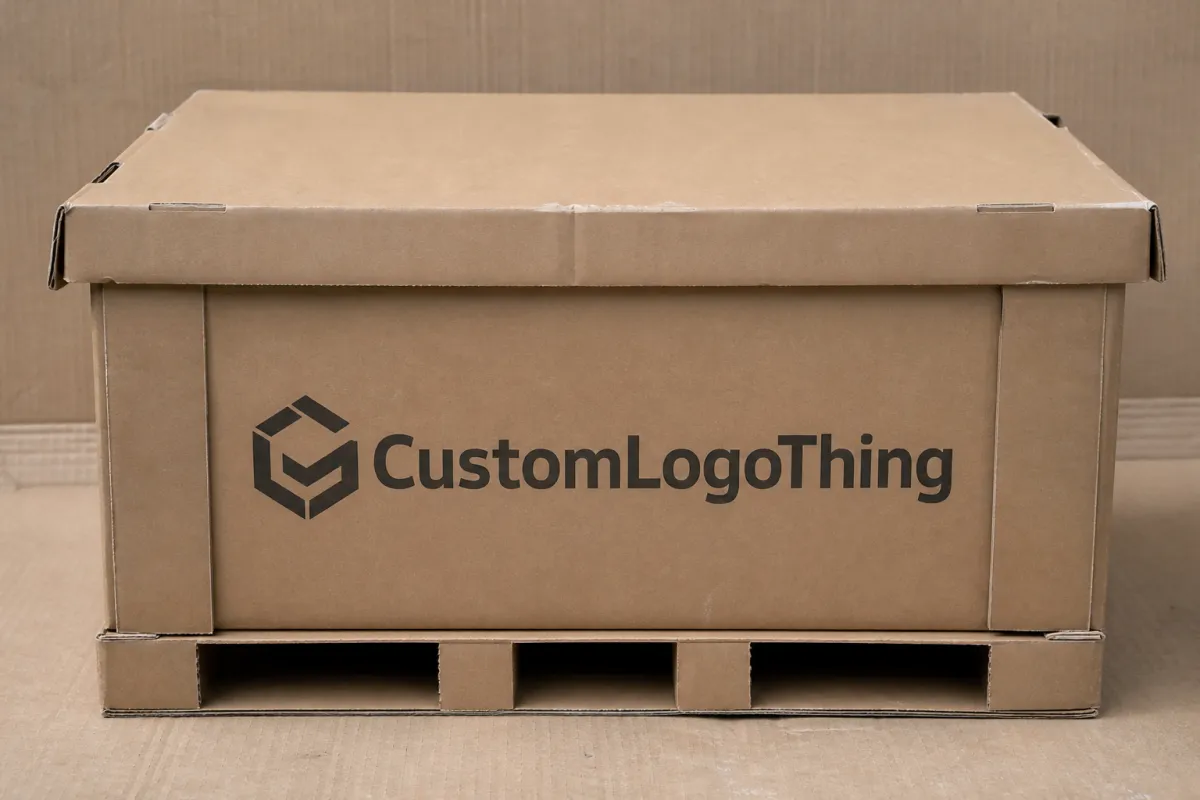
Pallet boxes show up when regular shipping cartons stop making sense. Heavy parts, retail bundles, mixed SKU sets, export freight, fragile assemblies, and warehouse storage all push buyers toward a stronger outer layer. A normal carton may protect one item. A pallet box protects the whole load as a single handling unit. That shift changes the design math.
The first bad assumption is treating a bigger carton like the same thing in a larger size. It is not. A pallet box has to deal with compression from above, abrasion from forklifts, vibration in transit, and the messy reality of being handled by people who are not reading your spec sheet. Some loads sit in a dry warehouse for a week. Others spend 30 days in transit and then get stacked again at the destination. Same box, different stress, different outcome.
That is why the role of a pallet boxes manufacturer sits at the intersection of engineering, logistics, and reality. A serious supplier should ask about product weight, pallet size, stack height, shipping method, and storage conditions before quoting. If those questions never come up, the quote is probably for board, not for protection.
The right box is the one that survives your worst handling day, not the one that looks cheapest on a spreadsheet.
If your operation needs special dimensions or branded outer packaging, it helps to compare the pallet box with the rest of your packaging stack. A strong outer shipper is only one piece of the system. For a wider look at structural options, branded cartons, and related packaging formats, see About Custom Logo Things and the broader Custom Packaging Products catalog.
There is also a labor angle that gets overlooked. Pallet boxes are often chosen because they reduce handling steps. Instead of moving six or ten smaller cases, a warehouse team moves one unit. That can cut labor, but only if the box itself holds together. Save $0.40 on the carton and spend $12 on rework, pallet rebuilds, and customer service. That is not savings. That is a hidden fee wearing a smile.
In distribution centers with high turnover, even a small failure rate becomes expensive fast. A one-in-fifty damage event can look minor on paper and still trigger claims, missed ship dates, and awkward calls with customers who expected a full pallet. Those are the costs a unit price cannot see.
How a pallet boxes manufacturer designs the box around the load
Design starts with the load, not the artwork. A pallet boxes manufacturer should build the box around a few hard facts: product dimensions, gross weight, pallet footprint, target stack height, transit route, and handling method. Those numbers decide nearly everything else.
A 40 lb load that ships once on domestic ground freight does not need the same construction as an 800 lb mixed-part pallet that will sit in a humid warehouse and then move again. That sounds obvious. Still, a surprising number of quotes jump straight to board price and ignore the load profile. Then everyone acts shocked when the bottoms cave in.
Material choice is usually the biggest structural decision. Single-wall board can work for lighter palletized loads or internal movement. Double-wall is a common step up for heavier cases, taller stacks, and export shipments. Triple-wall is the heavy-duty end of the range, especially when the pallet box needs to carry serious weight or sit for long periods in storage. In practice, you are not just buying “stronger cardboard.” You are buying more crush resistance, more stiffness, and more margin against rough handling.
- Single-wall works for lighter loads, modest stacks, and cost-sensitive programs.
- Double-wall is the usual middle ground for heavier products, longer routes, and stronger compression performance.
- Triple-wall makes sense for export freight, bulky industrial goods, or loads that would flatten weaker board.
- Reinforced corners, pads, and inserts help when the product shifts or when the weight concentrates in a few points.
- Lids, sleeves, and die-cut tops improve closure and handling, but only if they fit the load pattern.
Structure matters as much as board grade. A regular slotted container is simple and often affordable, but a die-cut pallet box can offer a cleaner fit and better closure. Wrap-around styles can save board and improve pallet efficiency. Internal partitions can keep parts from smashing together. If the contents are irregular, a custom insert may cost more upfront and save a lot later.
Moisture resistance deserves more attention than it usually gets. Wax replacement coatings, moisture-resistant board, and tighter closures can help, but none of them are magic. If the box is traveling through humid storage or export lanes, ask for a structure that holds compression after moisture exposure, not just in a dry sample room.
Ventilation can matter too, especially for agricultural goods, certain food-related products, or loads that need air movement to avoid condensation. Closure method matters just as much. Tape, staples, glue, straps, and locking tabs each come with tradeoffs in speed, security, and line efficiency. A box that takes too long to close can cost more in labor than it saves in board.
For stronger programs, ask what test basis the supplier used. Compression strength, burst strength, and edge crush are not the same thing. ASTM D642 measures compression. Other performance tests may follow ISTA distribution methods, and those are worth understanding before you lock in a run. The International Safe Transit Association has useful guidance on packaging test standards at ista.org.
There is a practical buyer lesson hidden in that test language. A board grade printed on a quote is only meaningful if it connects to a real shipping condition. A lab number without a route profile can make a box look stronger than it really is. Conversely, a modest-looking specification may be perfectly adequate if the pallet is wrapped well, the warehouse is dry, and the freight lane is controlled.
Process and Lead Time: From Brief to Sample to Bulk Run
A good job follows a clean path: intake brief, spec review, structural design, sample or prototype, approval, then bulk production. That sounds tidy because it should be. The companies that rush this process tend to pay for it later in revisions, delayed launches, or boxes that do not fit the real load.
The fastest way to move is to send complete information at the beginning. Exact product dimensions help. So does gross weight per case, pallet size, print requirements, shipping method, warehouse conditions, and any compliance or export needs. If you know the stack height or the number of units per pallet, include that too. A supplier cannot design around missing numbers without making assumptions, and assumptions are where bad packaging starts.
Timing depends on complexity. A plain structural sample can often be turned around in a few business days. A printed prototype, especially one with custom inserts or special board grades, may take longer. Bulk production commonly lands in the range of 12 to 20 business days after approval, though larger or more complicated jobs can stretch beyond that. Last-minute artwork changes, new dimensions, or a switch in flute combination can add days fast.
Milestone communication is the part buyers should insist on. A proper pallet boxes manufacturer should be able to say when the spec review is done, when the sample is in motion, when approval is needed, and when production starts. “Soon” is not a date. “Almost ready” is not a plan. Vague updates usually mean the schedule is already wobbling.
If you are comparing packaging partners, ask whether they can support sample review and design clarification before the order is placed. That is often where the difference shows up between a factory that only sells board and one that actually understands packaged goods. If you want a general sense of the company behind the work, the About Custom Logo Things page is a good place to start.
One practical tip: do not approve a pallet box based on renderings alone. A flat drawing can hide all sorts of fit problems. Request a physical mockup or sample whenever the load is heavy, irregular, or high value. Paper is patient. Freight is not.
Buyers with seasonal demand should also ask how the supplier handles schedule shifts. A product launch moved up by two weeks or a promotion that doubles the forecast can strain even a good factory. Knowing the supplier’s real lead-time flexibility before you place the order is often more valuable than shaving a few cents off the carton cost.
Cost, Pricing, MOQ, and Quote Drivers You Need to Know
Pricing for pallet boxes is shaped by a handful of obvious factors and a few less visible ones. Board grade, dimensions, print coverage, finishing, tooling, and quantity all matter. Freight, pallet efficiency, storage space, and damage risk matter too, even if they never appear on the quote sheet.
MOQ, or minimum order quantity, is the smallest run a supplier will accept at a workable price. That number can be low for simple, unprinted structures and much higher for fully custom or Printed Pallet Boxes. A nominal MOQ may look friendly, but the economics can still push you toward a larger buy. Setup time, die cost, and board usage have to make sense somewhere. If your demand is small, staged ordering or stock-sized customization may be smarter than forcing a giant run.
For a rough buying frame, these ranges are common for Custom Corrugated Pallet Boxes at moderate order volumes, though size and region change everything:
| Construction | Typical Use | Approx. Unit Price | Main Advantage | Main Tradeoff |
|---|---|---|---|---|
| Single-wall | Lighter palletized goods, internal transfer, lower stack loads | $2.00-$5.00 | Lower material cost, lighter weight | Less compression margin |
| Double-wall | Heavier products, export freight, mixed handling environments | $4.00-$9.00 | Better stack strength and durability | Higher board and freight cost |
| Triple-wall | Heavy industrial loads, long storage, demanding export lanes | $7.00-$15.00+ | Strong compression and protection | More expensive, bulkier, less forgiving on lead time |
Those numbers are not a promise. They are a buying range. A full-size pallet box with heavy print coverage, inserts, special coatings, or oversized dimensions can land above them quickly. A simple unprinted structural box may come in below them at higher volumes. The trick is to compare quote assumptions, not just headline prices.
Ask each pallet boxes manufacturer to quote the same spec set. Board grade, flute combination, print colors, coating, tooling, quantity, and freight assumptions should all be spelled out. If one supplier includes palletizing and another does not, the lower quote is not lower. It is incomplete.
Tooling can move the number too. Large die-cut pallet boxes may require cutting dies or special setup. Depending on size and complexity, tooling can add a few hundred dollars or more to the first run. That cost should be spread over the run size, not buried. A cheap first quote with expensive tooling hidden in the footnotes is not cheap. It is bait.
For brands that care about sourcing, board choice can also affect the sustainability story. If that matters to your customer or retailer, ask about certified fiber and chain-of-custody documentation. FSC certification details are available at fsc.org.
One more pricing trap deserves attention: freight class and shipping method can change the real cost more than the carton itself. A heavier or larger pallet box may be cheaper to buy and more expensive to move. That tradeoff is especially visible in export programs, where every extra inch of cube or kilogram can affect the final landed number.
Key Factors That Decide Strength, Stackability, and Damage Rates
Strength is not one number. It is a set of performance conditions. A pallet box can have enough board strength and still fail because the load is uneven, the stack pattern is sloppy, or the warehouse environment is wet. Buyers need to think in systems, not just in carton specs.
Compression strength is the big one for stacking. If a box sits under six layers of product, the bottom unit is carrying the weight of everything above it. A 35 lb case on the bottom of a six-high pallet is not just holding 35 lb. It may be facing 175 lb plus vibration, creep, and handling shock. That is where board crush, poor closure, or weak corners show up.
Burst strength tells part of the story, but not all of it. Edge crush and compression resistance often matter more in palletized shipping because the load is vertical, not just puncture-related. A box with good burst numbers can still stack badly if the board structure is wrong. Test method matters. Ask whether the supplier is thinking about ASTM D642, ASTM D4169, or another relevant protocol, not just quoting a nice-sounding grade.
Moisture can reduce corrugated performance faster than people expect. Humidity, condensation, and temperature swings can soften board, loosen adhesives, and reduce stiffness. For export lanes or long dwell times, a box that is “strong enough” in a dry sample room may be borderline in the real world. That is not a packaging opinion. That is a supply chain fact.
Stack pattern is another hidden variable. A clean column stack usually performs better than a mixed pattern with gaps and overhang. Pallet overhang is especially bad because it concentrates stress at the edges and invites crush damage during forklift movement. Center of gravity matters too. Heavy items placed too high can make the whole pallet unstable. People love saying the box failed. Often the load arrangement did.
Handling realities matter as much as lab numbers. Forklifts, conveyors, manual loading, dock drops, and mixed freight all change what “strong enough” means. If the pallet box will be picked up by hand, dragged, or squeezed against other freight, the design needs to account for abrasion and corner wear. If the load is going by ocean freight, compression recovery and moisture behavior need more attention. If the box will sit in a warehouse for weeks, creep becomes part of the problem.
Here is a simple rule: if the product is valuable, heavy, or difficult to replace, design the box for more abuse than you think it needs. Packaging margins are cheaper than replacement margins. That is not a philosophical point. It is a freight invoice point.
For buyers managing multi-site distribution, consistency matters too. A pallet box that performs well at one plant can still underperform at another if the sealing line, wrapping pattern, or pallet quality changes. Supplier approval should include the way the box is actually used, not just the way it looks in a sample room.
Common Mistakes When Ordering Pallet Boxes
The first mistake is measuring only the product and forgetting the pallet, clearance, and warehouse reality. A box that fits the product on paper can still fail because it does not fit the pallet pattern, lid closure, or stack height. Then you spend time redesigning around a problem that should have been caught in the brief.
The second mistake is comparing quotes without checking the construction. Two cartons can look similar and behave very differently. One may be double-wall with stronger board and a better closure; the other may be a lighter structure with lower compression resistance. If the quotes do not list the same board grade, print coverage, and freight assumption, you are not comparing the same item. You are comparing a number.
Skipping samples is another classic. A design can look fine in CAD and still fail when it meets a real pallet jack, a real stack, or a real sealing line. Sample approval is the time to check fit, closure, corner strength, and loading speed. If the box needs to be folded by hand with a prayer and three extra tape passes, that problem should be caught before bulk production.
Another common miss is vague communication about artwork and load assumptions. If the supplier gets fuzzy logos, incomplete dielines, or a product weight range instead of a fixed number, the final box can drift away from the original goal. The same goes for acceptable damage tolerance. If you never defined whether a 1% loss rate is fine or unacceptable, you are inviting a disagreement later.
A lot of buyers also underestimate storage cost. Bigger pallet boxes can stack well, but they still eat floor space. If your warehouse charges by pallet position, a box that arrives too early or too large can quietly add cost every week it sits there. The right answer is not always the strongest box. Sometimes it is the right balance of strength, size, and inventory turnover.
Do not assume the cheapest supplier has included everything. Freight, inserts, tooling, and palletizing can turn a low quote into an expensive one very quickly. Ask for the full landed picture. If the supplier is evasive about assumptions, that is usually not a good sign. It is the invoice wearing a fake mustache.
There is also a process mistake that shows up often in procurement teams: approving a sample that was never tested under actual warehouse conditions. If your team seals boxes with a specific tape, straps pallets a certain way, or stores finished goods in a humid building, the sample needs to reflect that reality. Otherwise the approval only proves the sample was okay in a different environment.
Expert Tips and Next Steps Before You Place the Order
Before you request quotes, gather the basics in one place: product dimensions, gross weight per case, pallet size, target stack height, shipping method, monthly volume, and print requirements. If the load has unusual fragility, temperature sensitivity, or export exposure, write that down too. Clean inputs lead to cleaner quotes. That should be obvious, but it is still the best place to start.
Then ask for a sample, a stack test, or a freight mockup. A sample is not just a formality. It is the only way to see whether the design closes properly, handles well, and protects the load under real conditions. If you can simulate pallet stacking or route vibration before mass production, do it. That can save far more than the sample cost.
Compare at least three suppliers, but compare the same spec. If one pallet boxes manufacturer quoted triple-wall board and another quoted double-wall without saying so, the lower price is meaningless. Ask them to confirm whether the quote includes tooling, freight, palletizing, and any print setup. Then compare landed cost, not just carton cost.
There is also a bigger buying lesson here. The best pallet box is not always the heaviest one. It is the one that protects the product, fits the operation, and keeps the total cost under control. That means the board, closure, size, and timing all have to match the route. If one of those is off, the box becomes a problem instead of a solution.
My final practical checklist is simple:
- Lock the product dimensions and weight before quoting.
- Confirm pallet footprint, stack height, and handling method.
- Ask for board grade, flute structure, and closure method in writing.
- Request a sample or prototype before full production.
- Compare landed cost, not just unit price.
- Check whether the supplier understands compression, moisture, and transit testing.
If you follow those steps, the buying decision gets a lot easier. The right pallet boxes manufacturer will give you a spec that matches the load, not a generic carton dressed up as a custom solution. That is the difference between a box that ships product and a box that creates work. Choose the one that protects the shipment, fits your operation, and keeps the numbers honest when you order from a pallet boxes manufacturer.
One final filter helps separate the serious supplier from the one selling cardboard by the pound: ask what would make them recommend a different structure. A trustworthy pallet boxes manufacturer should be willing to say, “You do not need triple-wall here,” or “This pallet pattern needs stronger corners,” even if that answer trims the sale. That kind of honesty is usually the best signal that the box will work once it leaves the factory.
Frequently Asked Questions
What should I send a pallet boxes manufacturer for an accurate quote?
Send exact product dimensions, gross weight, pallet size, target box style, print needs, and expected order quantity. Include shipping method, warehouse conditions, and any stack height or export requirements. The more complete the brief, the less likely you are to get a quote that looks good and fails in the real world.
How do I compare pallet boxes manufacturer quotes without falling for a low unit price?
Compare board grade, print coverage, tooling, freight, and MOQ alongside the unit price. Ask each supplier to quote the same specs so you are not comparing different box constructions. Look at total landed cost and damage risk, not just the headline number.
What is a normal MOQ from a pallet boxes manufacturer?
MOQ varies by material, print complexity, and whether custom tooling is needed. Simple custom runs may start lower, while fully customized or Printed Pallet Boxes often need larger volumes to make sense. If your usage is small, ask about grouped production, stock sizes, or staged ordering.
How long does a pallet boxes manufacturer usually need for samples and production?
Sample timing depends on complexity, but simple prototypes are usually faster than full production. Bulk runs take longer when there is custom printing, special board grades, or inserts. Ask for both sample lead time and production lead time up front so your launch plan is not wishful thinking.
Which box material is best for heavy pallet shipments?
Double-wall or triple-wall board is often the better choice for heavier loads, but the right option depends on stacking, humidity, and shipping route. A stronger board is not always the answer if the pallet pattern or closure method is weak. Ask the supplier to match the material to the actual load, not just to the product weight on a spreadsheet.
Should I choose printed or unprinted pallet boxes?
Choose printed boxes if the outer package needs branding, handling instructions, or traceability marks. Unprinted boxes are usually simpler and can reduce cost and lead time. If the box will spend most of its life in storage or export transit, print should support function first and branding second.
How much does humidity affect corrugated pallet boxes?
Quite a lot. Corrugated board can lose strength as humidity rises, especially during long storage or export routes with condensation risk. If your goods move through wet docks, unconditioned warehouses, or ocean freight, ask for moisture-resistant construction and test assumptions that reflect the real route.
Is triple-wall always better than double-wall?
No. Triple-wall offers more protection in many heavy-load situations, but it also adds cost, bulk, and sometimes extra handling difficulty. For some loads, a well-designed double-wall box with the right closure and pallet pattern performs better overall than a heavier box that was chosen only because it sounds stronger.