Order Custom Kraft Paper Shopping Bags for Pet Treat Shops when the bag needs to do more than carry a purchase. In a pet treat shop, the bag has to protect mixed items at the counter, stay upright long enough to pack quickly, and leave the customer with a clean final impression. If the bag feels flimsy or awkward, the checkout experience drops in value even when the products are good.
Pet treat shops usually sell a mix of light and moderately heavy items in one visit: biscuits, chews, jars, and small add-ons. That means bag selection has to account for more than one product size. Custom kraft Paper Shopping Bags for pet treat shops need enough structure to handle that mix without stretching, tipping, or losing shape before the customer reaches the door.
Why Pet Treat Shops Need Better Paper Bags at the Counter
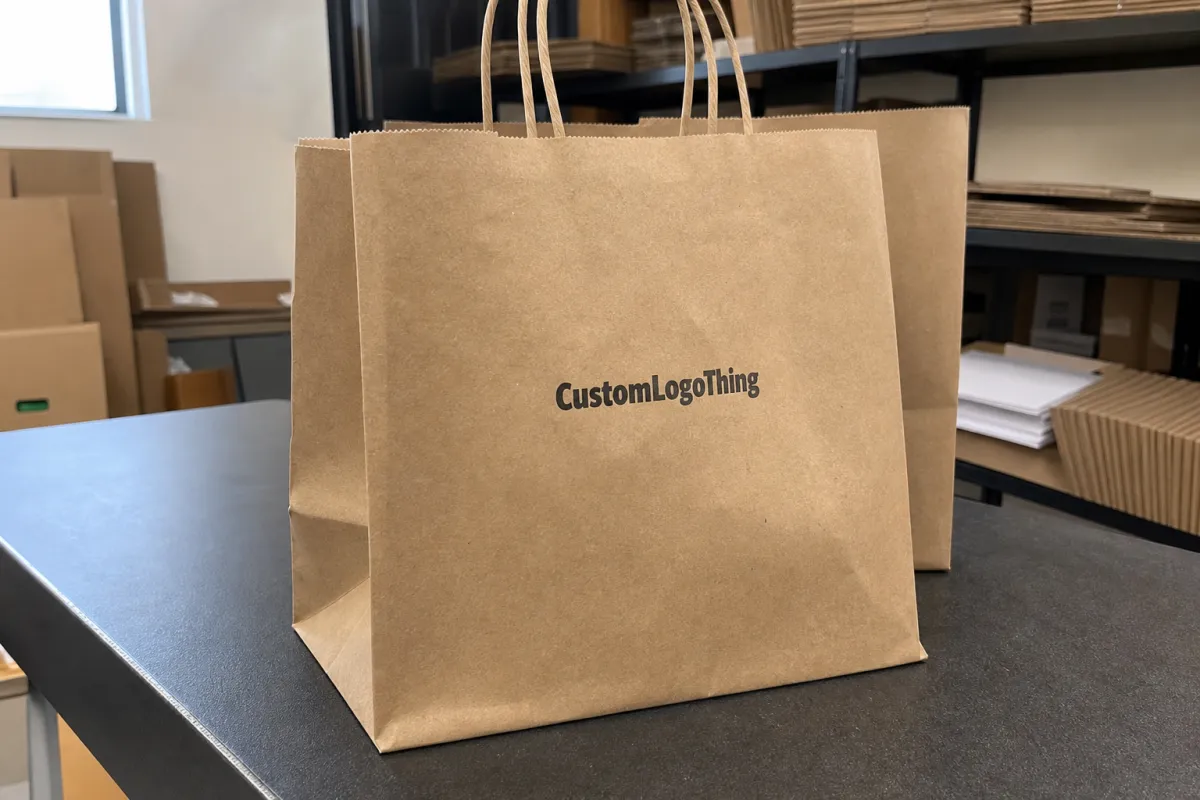
The counter is where the bag proves its value. It has to open fast, accept a mixed order, and still look neat when the customer leaves. If the bag collapses while staff are loading it or feels weak in the hand, the whole transaction feels less polished than it should.
Kraft paper fits this category well because it already signals a natural, practical retail style. For pet treat shops, that visual tone usually feels more appropriate than glossy packaging. It suggests honesty, care, and a lower-key premium look without needing heavy decoration.
A well-chosen bag also supports impulse purchases. When a customer adds one more treat or a small accessory at checkout, the packaging needs to handle the extra weight without changing the look of the order. A bag that stands upright and keeps its shape can make a small purchase feel complete.
For shops comparing shopping bags with boxes or other Custom Packaging Products, the useful question is not whether kraft looks nice. It is whether the bag can handle daily use, standard carry distances, and repeat handling without replacement issues or awkward counter work. Packaging only appears inexpensive when it fails often.
A retail bag earns its place when it carries well, prints cleanly, and stays neat after packing, folding, and a full day of customer handling.
How Kraft Bags Handle Treat Weight, Grease, and Branding
The structure of a kraft bag is simple, but the details determine whether it works in practice. Paper weight affects stiffness. Handle attachment affects load capacity. Print surface affects whether the logo reads clearly. When those parts are balanced, the bag can support normal retail loads without feeling soft or overworked.
Pet treat purchases can be heavier than they first appear. A small bag of biscuits may be light, but a jar, a gift bundle, or a two-item order can stress the gusset and the handle area. Bags should be tested with the actual purchase mix rather than with an empty sample or a light filler load.
Grease and crumbs matter too. Even when the product is wrapped inside another package, the outer bag still gets handled with oily fingers, brushed against loose crumbs, and exposed to humidity during transport. A tighter fiber structure and a restrained finish help the bag keep its shape and keep print from looking worn too quickly.
Branding works best when it stays simple. Unbleached kraft generally favors strong contrast, one-color logos, and clean typography. Thin lines, pale inks, and detailed illustrations can disappear into the paper texture. That does not mean the artwork has to be plain; it means the design should respect what kraft prints well.
If the shop wants to support a sustainability message, materials and sourcing should be reviewed with the rest of the package system. Certifications such as FSC can matter, but they should sit alongside the structure, print quality, and storage plan. A bag is only part of the story.
One important limitation: kraft paper is not a moisture barrier. If the product line includes oily treats, crumbly treats, or anything that needs longer shelf protection, the inner wrap must do the real product-protection work. The shopping bag is for carrying and presentation, not for replacing primary packaging.
Sizing, Paper Weight, Handles, and Finish Choices
Size selection is one of the easiest places to make a costly mistake. Buyers often size a bag around the biggest item they sell, then find it awkward for the more common smaller orders. A better starting point is the checkout mix: one pouch, one small box, a bundled order, or two items packed together. That is the format the bag will see most often.
Width, gusset depth, and height all matter at the same time. Too little width crowds the top opening. Too shallow a gusset makes the bag less stable on the counter. Too much height creates empty space that looks wasteful. A bag that can stand on its own is easier to load, easier to hand over, and less likely to wrinkle before the customer leaves.
Paper weight should match the load, not just the budget. Light kraft can work for simple carryouts, but heavier stock is usually better when customers buy several items at once or carry the order for a longer distance. Many retail programs sit in the 120 to 180 gsm range, while heavier gift-oriented builds may move above that depending on the handle style and reinforcement.
Handle selection affects comfort and cost. Twisted paper handles are familiar and usually print well. Flat handles can feel better on heavier loads. Die-cut handles create a cleaner minimal look, but they generally suit lighter carryouts unless the bag is reinforced. For pet treat shops, handle strength matters because the customer often notices it the moment the bag is lifted.
Finish should usually stay restrained. Uncoated kraft keeps the texture visible and often gives good print contrast. A light coating can improve rub resistance and offer some moisture tolerance, but heavy gloss usually works against the natural look that makes kraft attractive in the first place. A matte finish often reads as more premium in this category.
Not every kraft bag needs to look rustic. The better choice is the one that folds cleanly, prints sharply, and still matches the shop’s price point. Natural does not have to mean low-end.
Here is a practical comparison that helps narrow the decision:
| Bag Style | Typical Use | Strength Profile | Indicative Price Range |
|---|---|---|---|
| Light kraft with twisted handles | Single treat pouch, small add-on items | Best for lighter carryouts and short distances | $0.18-$0.28 per unit at 5,000 pcs |
| Medium kraft with reinforced handles | Mixed treat orders, small boxed products | Balanced for daily retail use | $0.24-$0.38 per unit at 5,000 pcs |
| Heavier kraft with premium finish | Gift bundles, fuller purchases, seasonal sets | Better for repeated handling and heavier loads | $0.32-$0.55 per unit at 5,000 pcs |
Those numbers are directional only. Paper source, print count, size, handle attachment, and carton pack-out all change the quote. Still, the ranges help show how structure affects budget.
Production Steps and Turnaround From Artwork to Delivery
The ordering process is usually straightforward when the artwork and specs are ready. Start with bag size, paper weight, handle type, and print area. Then provide logo files, review the proof, approve any sample if needed, and move into production. Clean setup matters more than most buyers expect because it reduces back-and-forth later.
File quality is a common source of delay. Low-resolution artwork, missing font files, unclear dimensions, or late design changes can all slow the job. For seasonal launches or holiday inventory, artwork review should be part of the timeline from the start. Once the press setup is fixed, revisions become slower and more expensive.
Proofing often takes one to two business days if the files are complete. Production commonly falls into a 12 to 18 business day window after approval, though custom structures, larger orders, or busy seasons can extend that. Shipping time should be counted separately, especially when the bags must arrive before a store opening or promotion.
Shipping should also be considered at the carton level. The bags themselves are not usually tested like corrugated cartons, but the master cartons still need to survive transit. Standards such as ISTA are useful for thinking about packed-carton handling, and broader guidance from Packaging Institute resources can help buyers review storage, handling, and material selection. A good bag still needs a decent shipper.
Repeat orders are faster because the size and print setup are already established. That is useful for pet shops with recurring weekend traffic, subscription add-ons, and seasonal gift programs. Once the format is approved, the reorder cycle becomes much easier to manage.
Cost, MOQ, and Quote Factors That Shape the Budget
Quote math becomes easier when the bag is treated as a system rather than a single line item. Price depends on size, paper weight, handle style, print complexity, finish, and quantity. In some cases, a larger one-color bag is cheaper than a smaller two-color version because the latter needs more setup or finishing work.
MOQ changes the economics quickly. Small runs usually cost more per bag, but they can still be the right choice if the shop is testing a new logo, opening a new location, or preparing for a short seasonal run. A pet treat shop does not need warehouse-level volume just to look professional.
There are simple ways to keep cost under control without weakening the bag. Use one or two ink colors. Choose a standard handle style. Avoid unusual shapes unless the product mix truly requires them. Standardize sizes where possible so one bag can serve more than one purchase pattern.
When comparing suppliers, ask what the quote includes. Check whether proofing, setup, packing, and shipping are included. Ask if plate or tooling charges are separate. Confirm whether print pricing is for one side or both. A low quote that leaves out one of those items is not really a lower cost.
For shops also sourcing custom printed boxes or corrugated cartons, it helps to compare the full packaging budget rather than judging the bag alone. The right decision is the one that supports the store’s actual volume, product mix, and brand position without creating hidden costs later.
A useful rule is simple: if the bag is meant to signal a premium product line, do not cut the structure so far that the first customer to carry it notices weakness. Saving a few cents per unit is not helpful if the bag looks tired before the sale is complete.
Common Mistakes That Lead to Weak Bags or Messy Branding
A common mistake is sizing the bag only around the largest product. That usually creates a format that feels oversized for everyday purchases and wastes material. A bag that swallows a small treat pouch does not look premium; it looks mismatched.
Another mistake is choosing paper weight by feel alone. A bag may seem fine when empty and still fail once a customer adds a denser item. The best check is a physical carry test using the real product mix. Lift it by the handles, watch the gusset, and look at the top fold and attachment points.
Artwork issues often show up in predictable places. Small type placed too close to a fold disappears. Pale logos lose contrast on brown kraft. Busy graphics near the handle area get interrupted by the fold and the grip. If the design depends on delicate details, it may need simplification before print.
Another problem is assuming that a nice-looking bag is automatically strong. It is not. A bag can print cleanly and still fail if the handle reinforcement is weak or the gusset depth is wrong for the load. Good packaging balances appearance and performance.
Over-customization can create trouble too. Unique shapes, multiple ink colors, specialty coatings, and custom handle options can push lead times and cost higher than expected. For a category that already has a strong natural look, restraint is often the better path.
Expert Tips and Next Steps for a Better Reorder
Start by mapping the three most common checkout scenarios: a single pouch, a mixed two-item order, and a heavier gift bundle. If one bag size can handle those cases without looking oversized or forcing staff to overpack it, the packaging program becomes much easier to run.
If the team is unsure about handle feel or shelf presence, request a plain sample or mockup before a full run. Put it on the counter during a busy period, load it with real products, and check whether it stands cleanly and feels comfortable to carry. That gives more useful feedback than a digital proof alone.
Keep branding restrained. One clear logo and a short line are usually enough. Kraft already brings texture and warmth, so the design does not need to work hard to create character. Simple layouts often look more confident because the material can do part of the visual work.
Use the same checklist on every quote: size, paper weight, handle type, print coverage, proofing, carton pack-out, and lead time. That keeps comparisons honest and grounded in store realities instead of design preference.
The final check should always be practical. Match the bag to actual product weight, actual counter speed, and actual storage space. If it holds up in those conditions, it is probably the right choice. If not, revise before placing the order.
What size kraft paper shopping bag works best for pet treat shops?
Start with the most common purchase mix, such as one treat pouch, a small box, or a bundled gift set. Choose a width and gusset deep enough to avoid crowding at the top when customers add a second item. A sample filled with real products is more useful than a dimension chart alone.
Are custom kraft paper shopping bags strong enough for heavier pet treats?
Yes, if the paper weight, handle style, and reinforcement match the load. Heavier purchases usually need sturdier stock and a handle attachment built for repeated carrying. A simple lift test with the actual product mix is the fastest way to check whether the bag is built properly.
How much do custom kraft paper shopping bags for pet treat shops usually cost?
Pricing changes with bag size, paper weight, print colors, handle choice, and quantity ordered. Smaller runs cost more per unit, while standard sizing and simpler artwork help control the price. A useful quote should show setup, proofing, and shipping separately so the numbers can be compared honestly.
What is the usual turnaround time for custom kraft paper shopping bags?
Turnaround depends on artwork readiness, proof approval, production queue, and shipping distance. Straightforward orders often move faster than first-time jobs with custom sizing or detailed artwork. Building in time for review helps avoid delays before a promotion or store launch.
Can I keep the bags eco-friendly and still print my logo clearly?
Yes. Natural kraft paper works well for simple logo printing and can fit an eco-minded brand position. One-color or limited-color artwork usually prints more cleanly than dense graphics. If sustainability matters, check the paper specification and certification alongside the rest of the packaging program rather than treating it as a label on its own.

