Pet Treat Paper Shopping Bags Cost: What Actually Drives the Number
Pet treat Paper Shopping Bags cost can look tidy in a quote and then get ugly in production. The price per bag is only one piece of the puzzle. If the bag buckles at checkout, shows scuffs after a week on shelf, or forces store staff to rebag heavier orders, the cheap quote stops being cheap. Packaging buyers know that kind of math is fake math.
That is why the better question is not, “What is the lowest unit price?” It is, “What spec gives me a bag that carries the load, keeps the print readable, and does not create hidden labor or reprint costs?” For pet treats, that matters more than people think. Retail shoppers handle the bag, lift it, stack it in a cart, and toss it into a trunk. They are not gentle because they never signed up to be.
A bag that feels a little overbuilt on paper often ends up being the safer buy. The right construction protects the product, supports the shelf image, and reduces the odds of a second order to fix avoidable problems. That is where the real savings live.
Why a sturdier treat bag can lower total packing spend
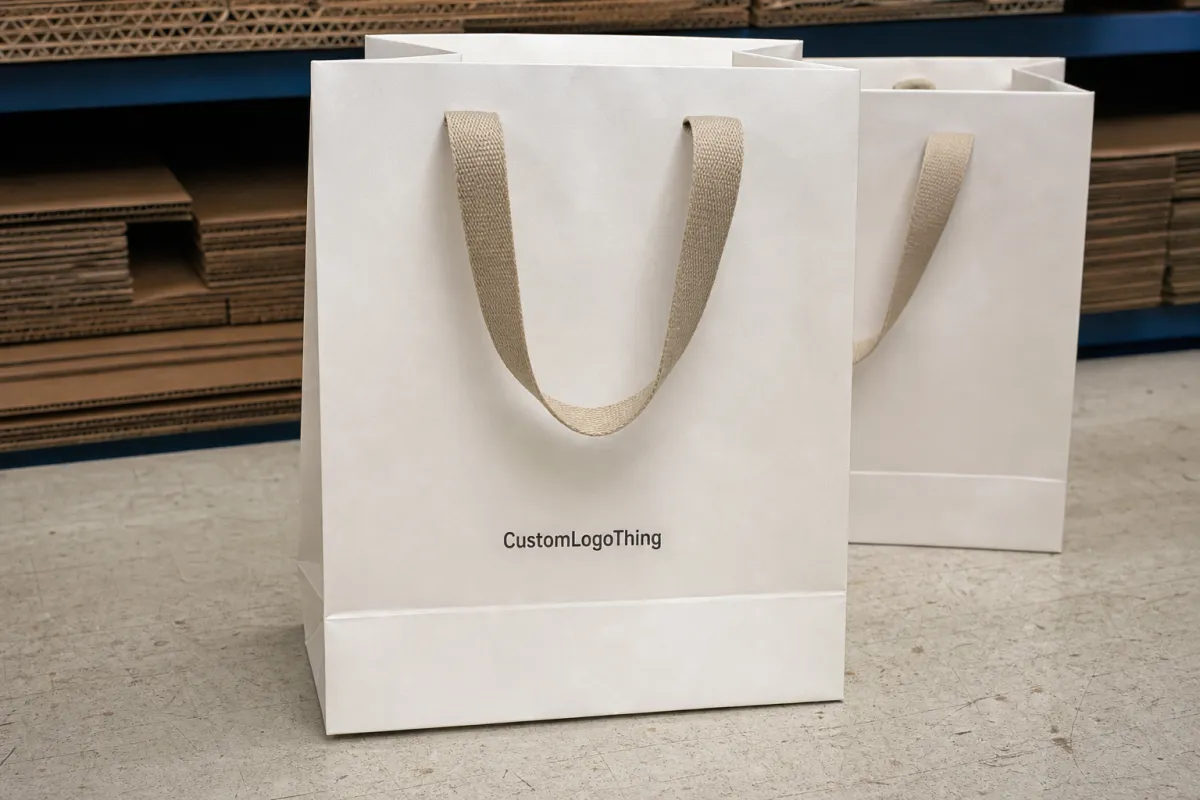
The lowest quote is not always the lowest spend. A weak paper bag can cause rebagging at checkout, dropped product, damaged corners, and complaints from stores that do not want to explain why their “premium” pet treats are riding home in a bag that folds in half. Once those issues show up, the savings from a light spec disappear quickly.
That is especially true for pet treat packaging because the inner product is often already in a pouch, tray, jar, or carton. The outer shopping bag has to deal with a mix of shapes and weights. A flat pouch behaves differently from a rigid box of biscuits. A holiday bundle is another animal entirely. If the outer bag cannot stay upright and hold the load cleanly, the store gets the problem.
I usually look at total cost of ownership instead of unit price alone. That includes bag price, freight, setup, packing labor, waste, and the chance of a rushed replacement if the first run misses the mark. A bag that costs a few cents more can still be the smarter choice if it avoids those headaches. Nobody misses the “savings” from a bag that tears in front of a customer.
A retail bag should do three things well: carry the load, keep the brand looking intentional, and move through the packing line without extra handling.
There is also a practical brand issue. Pet treat shoppers notice more than brands like to admit. They notice whether the handle feels secure, whether the print rubs off, whether the bag stands upright, and whether the surface still looks clean after a short drive home. A slightly better-built bag usually pays for itself in fewer complaints and fewer embarrassing moments at the register.
So yes, the construction matters. The cheapest paper bag is not a win if it creates waste, stress, and a store associate quietly muttering at the packing table.
Paper grades, handles, and finishes that fit pet treat retail
Paper grade is the first real cost decision. Natural kraft, white kraft, and coated paper all have a place, but they behave differently. Natural kraft gives a sturdy, earthy look that fits organic, farm-style, or natural-positioned brands. It also tends to keep material cost in check. White kraft gives a cleaner print surface and usually looks more polished on shelf. Coated paper improves image quality and sharpness, but the extra finish should earn its keep.
For most pet treat shopping bags, paper weights in the 120-200 gsm range cover a lot of use cases, though the right number depends on bag size and fill weight. Lighter stock can work for single pouches. Heavier builds make more sense when the bag holds multiple items, jars, or dense treat packs. If the fill is awkward or heavy, chasing the lowest gsm is a good way to buy trouble.
Handle choice changes both feel and price. Flat handles are the most economical and usually work for lighter retail loads. Twisted paper handles feel stronger in the hand and are common on mid-range retail bags. Reinforced handles add confidence for heavier products, but they also add material and labor. If the bag only carries one light pouch, there is no prize for overbuilding it.
Surface finish is where buyers sometimes get vague and then pay for the vagueness later. A matte finish gives a softer, more natural appearance. Gloss can sharpen color and contrast, but it also shows scuffs differently. Aqueous coating is often a practical middle ground because it adds handling resistance without pushing the bag into a more expensive laminated structure. For oily treat packs or stores with humid conditions, that modest protection can matter more than decorative extras.
- Kraft paper suits natural branding and usually keeps the base cost lower.
- White kraft gives cleaner graphics and a more premium shelf look.
- Coated stocks improve print quality, but should be justified by the brand position.
- Twisted or reinforced handles improve carry confidence, while flat handles hold cost down.
- Aqueous protection often solves handling wear without moving into a heavier finish.
The cleanest buying rule is simple: start with the lightest paper and least complex handle that still meets the actual load. Add only what the product, artwork, or retail environment truly needs. That keeps pet treat Paper Shopping Bags cost under control and avoids paying for features that look nice but do not improve performance.
Sizes, weight limits, and artwork details to lock before quoting
Bag size is not a minor detail. Width, gusset, and height affect material usage, carton packing, and how the finished bag behaves on the shelf. A quarter-inch change can alter the fold pattern or the way a treat pouch sits inside the bag. That sounds small until a cashier is trying to load it fast and the gusset keeps collapsing.
The quote should be built around the real fill, not a generic bag size pulled from a catalog. A flat 8-ounce pouch is not the same as a rigid biscuit box. A mixed holiday bundle is another load entirely. If the bag is too shallow, the contents sit awkwardly. If it is too narrow, the side seams take too much stress. If the opening is wide but the structure is weak, the handles and gussets carry more than they should.
Artwork needs the same discipline. Print colors, coverage area, bleed, barcode placement, and side-panel copy all affect setup. A single-color logo on the front panel is not the same as a wraparound design with art on both gussets. More coverage means more prep, more press time, and more chances for alignment issues. Lovely in a mockup. Less lovely when the registration is off by a few millimeters and nobody wants to explain it.
Before asking for pricing, lock these items down:
- Finished dimensions for width, gusset, and height.
- Expected fill weight and product shape.
- Number of print colors and where the art will sit.
- Handle style and any coating or barrier requirement.
- Whether the order is stock, custom printed, or a hybrid program.
The tighter the input, the cleaner the quote. That is especially true for custom logo bags. If the brief is loose, the pricing will be loose too, and the revision cycle tends to multiply because everyone is guessing at different things.
One more detail that saves time: confirm whether the bag needs to be retail-ready out of carton or whether store staff will assemble or fill it. That affects packing method, carton count, and the practical cost of each unit. A bag that is easy to pack is cheaper than one that needs constant handling. Labor still counts, even when it does not show up cleanly on the quote.
Pet Treat Paper Shopping Bags Cost: Unit Price Drivers and MOQ
Pet treat Paper Shopping Bags cost usually comes down to five things: quantity, paper weight, handle style, print coverage, and any finish or barrier treatment. Quantity is the biggest lever because fixed prep work gets spread across more units as the run gets larger. Small orders carry more setup burden per piece. Bigger orders usually pull the price down, sometimes enough to make the decision obvious.
MOQ matters because it shapes both the pricing and the buying plan. A supplier may quote one tier at 3,000 pieces, another at 5,000, and a better unit price at 10,000 or more. That does not automatically make the largest run the right choice. It just means the buyer needs to balance the savings against storage space, cash flow, forecast confidence, and the risk of changing artwork later. Cheap stock is not cheap if you are stuck with it after a redesign.
Here is a practical range example for custom printed bags. These are not universal prices, but they do reflect how construction and quantity tend to move together.
| Construction | Typical use | Approx. cost per piece at 5,000 pcs | Cost pressure |
|---|---|---|---|
| Natural kraft, flat handle, 1-color print | Light retail treats, simple branding | $0.18-$0.28 | Low setup burden, modest material cost |
| White kraft, twisted handle, 2-color print | Broader retail use, cleaner shelf presentation | $0.24-$0.36 | Higher print and handle cost, still efficient at scale |
| Coated stock, reinforced handle, full coverage print | Heavier or more premium treat programs | $0.32-$0.48 | More material, more setup, more finishing time |
The production number is only part of the story. Many buyers get surprised by tooling, prepress, plates, sample charges, and packing terms. Freight can also move the landed cost more than expected, especially on smaller orders or if the shipment is split across destinations. A cheap unit price with padded shipping is not a good comparison. It is just a cheaper-looking spreadsheet.
That is why pet treat Paper Shopping Bags cost should be judged as a landed number, not a vanity number. Add waste, freight, storage, and the chance of a second revision run. If the bags are part of a seasonal program, factor in the shelf life of the artwork too. A low-cost order that becomes obsolete in three months is not a low-cost order. It is inventory with a bad attitude.
Ask for tiered pricing in the same quote. A 3,000-piece price, a 5,000-piece price, and a 10,000-piece price side by side make the decision easier. Sometimes the larger run earns a real break in cost. Sometimes the jump is too small to justify the storage. Either way, you want the data before the PO is signed.
Process, timeline, and production steps from proof to shipment
The buying process should be boring, and boring is good. Inquiry, quote, artwork review, dieline confirmation, proof approval, production scheduling, conversion, inspection, carton packing, shipment. That is the normal sequence, and the smoothest orders move through it because the specs are clear and the buyer responds quickly when something needs approval.
Proofing is where a lot of expensive mistakes get caught. It shows whether the logo sits too close to a fold, whether the barcode is readable, whether the color blocks hold their shape, and whether the side panel copy is actually legible. A proof is cheap insurance. A bad full run is not.
For many standard custom paper shopping bag jobs, a realistic production window is about 12-20 business days after proof approval. Simple builds on common paper grades can move faster. Specialty finishes, unusual dimensions, or complex print coverage can stretch the timeline. If the order supports a launch date or retail reset, give yourself time for proofing, production, and freight transit. Rush planning usually means somebody forgot to plan.
Quality control should not be a mystery box. A dependable production run usually includes checks on size tolerance, print registration, handle attachment, seam integrity, and carton count. For treat bags, I also like to see attention paid to rub resistance and the way the paper behaves when loaded. If the bag scuffs too easily in transit, the retail shelf will look tired before the product even sells.
Two outside references help frame the conversation. Transit abuse and package performance can be informed by organizations such as ISTA, and responsible fiber sourcing can be supported by documentation associated with FSC. Neither one replaces a real spec review, but both are useful when a buyer wants to ask better questions instead of relying on pretty language.
Delays usually come from the same handful of issues: artwork changes after approval, missing measurements, a paper grade that needs validation, or a handle style that is not standard on the current line. If the supplier is slow to answer those questions, the schedule usually drifts later. Fast, specific replies at the quote stage are a good sign. Vague answers tend to stay vague all the way through shipping.
What a dependable supplier should prove before you place the PO
A dependable supplier proves the spec instead of hoping nobody asks. It should state the paper weight, handle construction, print method, size tolerance, and whether the quoted price includes samples, plates, proofing, and packing terms. If every answer sounds like a shrug dressed up in sales language, the quote is not ready.
Look for direct answers on load expectation and print consistency. A factory that understands its process can talk clearly about seam strength, registration tolerance, and which artwork layouts need extra attention. That is not the same thing as overexplaining. It is just competence. There is a difference.
Food-contact or retail packaging documentation matters too, even when the paper bag is only an outer carrier. Pet treat products can involve oils, powders, and handling conditions that make the outer bag look dirtier faster than expected. A supplier that understands that is usually better at recommending the right paper grade and finish. The goal is not a fancier bag. The goal is a bag that still looks like a bag after a few days in retail.
Response time tells you something useful. A quote that comes back quickly, with assumptions and exclusions spelled out, usually signals a better-run operation. Slow replies and blurry numbers are a warning sign. Not always a disaster, but a warning sign. Buyers learn to respect those.
Before placing the PO, ask whether the supplier can provide a sample or a comparable production reference, and whether the quoted cost includes packaging configuration details such as carton size and pallet plan. Those details affect both the landed cost and the likelihood that the bags arrive in a format that is easy to handle at the warehouse. A fair quote is not just about the unit price. It is about knowing exactly what is in the box.
Common mistakes that push bag quotes higher or cause reorders
Vague measurement is the classic mistake. A bag sized from memory instead of a dieline often leads to poor fit, extra waste, or a second quote that starts from zero. Half an inch sounds harmless until the product sits crooked or the gusset refuses to settle. Measure the actual pack, not the version of it living in somebody’s head.
Overprinting is another common trap. Heavy coverage can look impressive in a mockup, but it also adds print complexity, setup burden, and potential registration risk. If the whole bag is covered edge to edge, the press has less room to hide small issues. Sometimes that is the right creative decision. Sometimes a cleaner layout gives better shelf impact and lower cost. Fancy is not a strategy by itself.
Underestimating product weight is expensive too. A bag that works for a single light pouch may fail when the retailer bundles in more items or the product shifts to a denser format. Buyers sometimes save a few cents by selecting lighter stock and then discover the bag sags, tears, or looks exhausted before it reaches the customer’s home. That is not a good savings story.
Storage and shipping are easy to ignore until the cartons arrive. Carton count, pallet plan, and warehouse space all affect the real cost of the program. If the bags are hard to store or awkward to pick, the line slows down. Larger MOQs can help on price, but they also create more inventory pressure. Useful only if the forecast is real.
- Confirm the exact bag size from a dieline or sample.
- Match paper weight to the real filled load.
- Keep artwork coverage tied to brand value, not habit.
- Ask which setup charges, plates, or tooling fees are included.
- Check cartons, pallets, and storage before approving the run.
One simple rule helps: if a detail affects how the bag is filled, carried, stacked, or shipped, it belongs in the quote request. That keeps the supplier from guessing, and guessing is usually where reorders begin. Simple enough. Not always easy.
Next steps for a clean quote and a smoother first order
If you want a clean quote, send the details that actually drive cost. Finished bag dimensions, quantity, print colors, artwork files, preferred handle style, target ship date, and shipping destination are the basics. If you already know the product weight or the retail bundle format, include that too. The more complete the brief, the less the number drifts after the first pass.
Ask for tiered pricing so you can compare one run against a higher-volume option before locking the PO. That makes the break point in unit cost much easier to see. It also helps if you are deciding between a smaller test order and a larger run that better uses the setup already paid for. Both can work. The right call depends on sales confidence, storage space, and how stable the artwork is.
Put the assumptions in writing. Confirm lead time, proof schedule, carton packing, and freight terms so every vendor is answering the same request. A useful comparison only works when the quotes are built on the same spec. If one supplier quotes a light kraft bag with basic packing and another quotes a reinforced handle with surface protection, the difference is not just price. It is construction.
That is the real answer on pet treat paper shopping bags cost: judge the number against spec, timing, and risk, not against the lowest line item alone. The right bag protects the product, supports the shelf image, and keeps the packing line moving. That is the job.
Frequently Asked Questions
What affects pet treat paper shopping bags cost the most?
Quantity is usually the biggest lever because setup and prep work get spread across more pieces as the run gets larger. After that, paper weight, handle style, print coverage, and any finish or barrier treatment move the number up or down. Freight, carton packing, sample requirements, and storage can also change the landed price more than buyers expect.
What MOQ should I expect for custom pet treat paper shopping bags?
MOQ depends on the print method, paper construction, and whether the bag is stock-based or fully custom. Simple printed runs can start lower than complex multi-color or specialty-finish orders. Ask for tiered pricing so you can see where the better unit cost begins and decide whether the larger run is worth the storage commitment.
How long does production usually take after approval?
Most schedules start with proof approval and then move into production, inspection, packing, and freight booking. For many standard builds, 12-20 business days from approval is a realistic planning range, although simple jobs can move faster and specialty requests can take longer. Artwork changes after approval are one of the most common reasons for delay.
Can these bags handle greasy or heavier pet treats?
Yes, if the paper weight and finish are chosen for the actual load and surface condition. Greasy products may need a stronger stock or a better surface treatment to keep the bag looking clean in retail use. It is smart to test the filled bag before committing to a full run, especially if the treat bundle is heavier than a standard pouch.
What should I send to get an accurate pet treat paper shopping bags cost quote?
Send finished dimensions, quantity, print colors, artwork files, the preferred handle style, shipping destination, and the target date. If you have retail requirements or food-contact expectations, include those as well. If you already have a budget target, share it so the spec can be adjusted toward the right price point without wasting time on unusable options.

