Vitamin Brand Paper Shopping Bags Cost
The bag is usually the last piece of packaging a customer touches before leaving the store, and that makes it a bigger branding tool than most teams assume. For supplement and vitamin brands, the right paper shopping bag can make the whole purchase feel cleaner, more considered, and more retail-ready. The wrong one does the opposite in about three seconds.
vitamin brand Paper Shopping Bags cost is not just a line item. It reflects paper grade, print method, handle build, reinforcement, size, and how much work the bag has to do after checkout. A simple kraft bag for a single bottle is a very different job from a laminated bag carrying a multi-item wellness kit. Treating both as the same product is how budgets get skewed and quotes get messy.
That last impression matters because paper bags travel farther than the shelf display. They move through a checkout counter, a car, a gym bag, a kitchen, a clinic, or a desk before they get recycled or tossed. If the bag feels thin, smudges easily, or sags at the handle, people notice. If it stands up well and carries cleanly, the brand looks more disciplined without saying a word.
A bag that buckles at the bottom or scuffs at the corner can undo a careful retail presentation. In supplements, that kind of slip usually reads as weak control, not a small packaging issue.
The goal is not to overspend on packaging flourishes that no one asked for. The goal is to build a bag that fits the load, holds the brand look together, and survives real retail handling. That is where smart buyers separate useful upgrades from expensive distractions.
Why Paper Bags Can Raise Perceived Value Fast
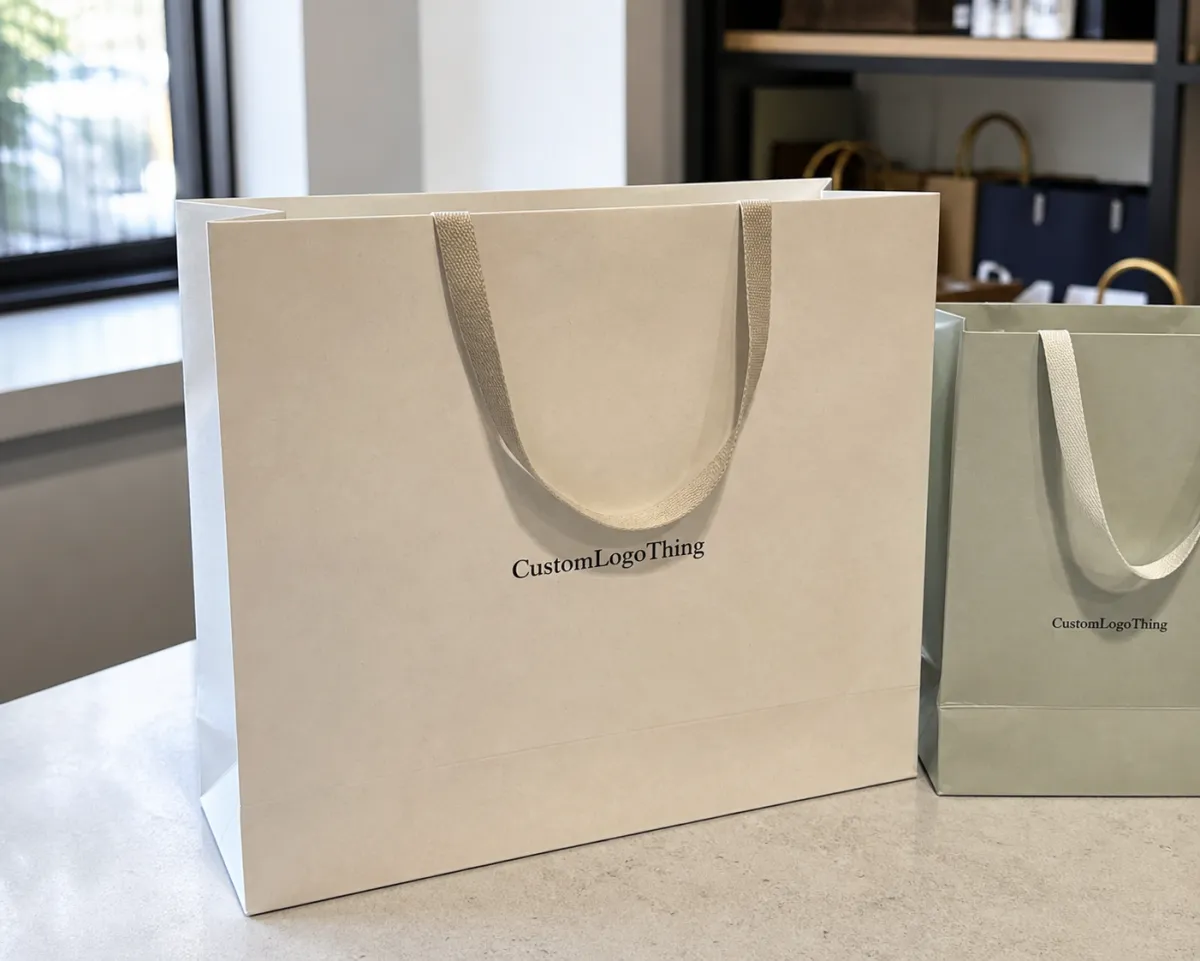
Paper Shopping Bags work because they are visible, tactile, and immediate. You feel the structure before you even look at the print. For vitamin and supplement brands, that first impression helps more than flashy artwork usually does. A clean, well-made bag suggests order. An overstretched or flimsy one suggests the brand cut corners somewhere else too.
That matters in a category where customers are already judging trust, purity, and consistency. A supplement bag does not need to look luxury for the sake of it. It needs to look intentional. Sharp fold lines, straight print, a balanced proportion, and handles that do not twist under load often do more for perceived value than a complicated design ever could.
There is also a practical side. Paper is easy to brand, easy to size, and easy to align with the rest of the packaging system. A matte white bag may match a clean clinical carton. Kraft may better fit a natural or wellness-oriented line. The point is not the material by itself. It is how the material supports the brand’s tone without fighting the product label or shelf display.
For many buyers, the bag is the one package component that gets handled by store staff, customers, and sometimes third parties before it reaches home. That means structural quality is visible to more people than the bottle label itself. It also means small flaws become repeat problems, not one-off annoyances.
If your broader packaging program already includes cartons, inserts, or retail displays, the paper bag should feel like part of the same system. Visual consistency is easier to maintain when all the pieces are specified together rather than pieced together late in the process.
Paper Stock, Laminating, and Print Choices
Paper stock is one of the biggest cost drivers because it affects both appearance and performance. Kraft paper usually gives a natural, sturdy look. It is familiar, practical, and often the lowest-friction option for basic carry-out bags. White paper supports sharper contrast, which helps when the artwork uses small text, fine lines, or a cleaner clinical style. Coated stocks sit higher on the finish scale and are usually chosen when the bag needs a more polished surface or better print hold.
Kraft is not automatically the cheapest finished option. If the artwork needs heavy ink coverage, extra white underprint, or more careful color control, the savings can shrink fast. White paper often prints more cleanly for supplement brands that rely on restrained typography and small logo marks. Coated paper can look better still, but it brings added material and finishing cost, so it should have a clear purpose.
Lamination is where the budget can climb faster than expected. Matte lamination usually softens the look and helps with scuff resistance. Gloss lamination gives more shine and can make colors pop, but it can also expose fingerprints and scratches more easily in some retail settings. Neither is inherently better. The right choice depends on whether the bag needs a premium feel, more protection, or just a decent visual finish for standard carry-out.
Print method matters too. Spot colors are efficient for simple branding and limited palettes. CMYK is better when the design needs gradients, more complex imagery, or a broader color range. The tradeoff is setup complexity and a higher risk of variation if the color management is not handled well. For supplement packaging, cleaner artwork usually beats crowded artwork. The bag has one job: support the brand, not compete with it.
Special finishes can add value, but they should be earned. Foil, embossing, and spot varnish are useful on premium ranges or launch programs where presentation is part of the sales strategy. If the product line is priced for everyday retail, those finishes can become unnecessary cost very quickly. They also increase the number of process steps, which means more points where defects can appear.
Paper sourcing is another useful question. FSC-certified paper can support a responsible sourcing claim, and buyers who need documented material standards should ask for it early. The certification itself does not make the bag better, but it can matter if the brand needs traceability or sustainability reporting.
In practice, the material choice should follow the load and the retail role. A small single-bottle bag does not need the same build as a campaign bag for a bundle promotion. A paper stock that feels adequate in a sample can still underperform once the bag is filled, stacked, and carried out in real conditions.
Bag Size, Handles, and Structural Specs to Confirm
Size drives both cost and performance. Buyers should confirm width, gusset, and height before asking for pricing. A bag that is too tight makes product loading awkward. A bag that is too large wastes material and can look sloppy at the counter. The right size gives the product room without turning the package into a floating box of empty space.
Common retail dimensions for vitamin programs often fall into sizes like 8 x 4 x 10 inches, 10 x 5 x 13 inches, or 12 x 6 x 15 inches. Those are not fixed standards, just practical ranges for single bottles, small bundles, or mixed kits. The actual fit should be based on the carton or bundle, not on the bottle standing alone. Inserts, discount cards, and sample packs all add bulk.
Handles deserve more attention than they usually get. Twisted paper handles are efficient and work well for lighter loads. Flat paper handles are simple and economical. Rope handles cost more, but they usually feel sturdier and more premium, especially if the bag carries multiple items or heavier cartons. Handle attachment points should be reinforced, not just glued on and hoped for.
The bottom construction matters just as much. A weak bottom fold can fail during a normal carry-out, which is a bad look for any brand. If the bag will hold several bottles or a heavier promotion kit, a stronger base board and better seam control are worth the added cost. That is a structural upgrade, not a nice-to-have.
Before approving a quote, confirm the core spec list below:
- Product load: single bottle, multiple bottles, or bundled kit
- Exact dimensions: width, gusset, and height
- Handle style: twisted paper, flat paper, or rope
- Print coverage: front only or all panels, including gussets
- Finish: no lamination, matte, or gloss
- Strength target: expected carry weight and package contents
That list does two things. It reduces back-and-forth, and it keeps the quote honest. If a supplier has to guess the load or the finished size, the pricing will be fuzzy too. Fuzzy pricing becomes expensive when the bags are already in production.
Vitamin Brand Paper Shopping Bags Cost, MOQ, and Unit Pricing
vitamin brand Paper Shopping Bags cost usually moves with five variables: size, paper grade, print coverage, handle style, and finish. Add reinforcement, inserts, or special packaging requirements, and the number changes again. None of that is surprising. What surprises buyers is how quickly a seemingly minor upgrade changes the final per-bag cost.
MOQ is the second big lever. Smaller runs carry a heavier share of setup cost because printing plates, press setup, handle assembly, and packing labor are spread across fewer units. Larger runs usually reduce the unit price, but only if the design is locked. If the artwork is still changing, ordering a big run just scales the mistake.
Here is a practical pricing range for common paper shopping bag builds used in vitamin and supplement retail:
| Bag Build | Typical MOQ | Indicative Unit Cost | Best Fit |
|---|---|---|---|
| Simple kraft bag, 1-2 spot colors, twisted paper handle | 1,000-3,000 pcs | $0.20-$0.42 | Basic carry-out and budget-conscious retail use |
| White paper bag, CMYK print, reinforced handle, no special finish | 2,000-5,000 pcs | $0.32-$0.60 | Cleaner branding and sharper shelf-to-carry presentation |
| Coated bag, matte or gloss lamination, rope handle, specialty finish | 3,000-8,000 pcs | $0.55-$1.10+ | Premium vitamin lines, launch programs, and pharmacy campaigns |
These are realistic working ranges, not fixed quotes. Shipping method, carton packing, proofing, and artwork complexity can move the final number in either direction. A quote that looks cheaper can turn out more expensive once freight, plates, or packing fees are added. That is why comparing only the headline unit price is usually a mistake.
Ask what is included. Is the pre-production sample part of the price or extra? Are printing plates included? Does the quote cover freight to your warehouse, or just ex-factory pricing? Are bags packed loose in cartons or bundled in retail-friendly counts? Those details matter because they change both the real landed cost and the approval timeline.
For brands managing more than one store, region, or replenishment cycle, landed cost matters more than a clean unit number. A slightly higher unit price can still be the better buy if it reduces damage, short shipments, or packing headaches. Cheap bags are not cheap if they have to be replaced early.
One more thing that gets missed often: if the bag has to match a product launch calendar, a promo window, or a seasonal retail reset, the MOQ should be aligned with actual demand, not just with the minimum the factory is willing to run. Overstocking paper bags is a waste. Underordering them is worse because it creates rush costs and mismatched packaging later.
Production Steps and Lead Time Expectations
The process is straightforward on paper. First comes artwork review and size confirmation. Then comes proofing, which may be digital or physical depending on the complexity. After approval, production moves into printing, cutting, gluing, handle attachment, inspection, and packing. If the bag has lamination or special finishing, those steps are inserted into the schedule as well.
Lead time for a simple build is often around 12-15 business days after proof approval. More complex bags can stretch into the 15-25 business day range, especially if they use heavier paper, custom rope handles, or multiple finishing steps. Artwork revisions can add more time than the actual production itself. A clean file package saves days. A messy one burns them fast.
Physical samples are worth requesting for launches, regulated retail programs, or higher-value product lines. A sample lets you check color, bag stiffness, handle position, fold accuracy, and overall presentation before the full run starts. That is especially useful in supplement packaging because the bag is often part of a larger retail identity, not a standalone item.
If the bags are going into broader distribution, transit behavior matters too. A bag that leaves the factory looking perfect can still arrive with corner crush, scuffing, or warped stacking if the packing is weak. Testing standards from groups such as ISTA are a useful reference point for thinking about handling and shipping stress, even if your program does not need formal certification.
The simplest timeline rule is this: lock the launch date first, then build the packaging schedule backward from it. If the date is fixed, the supplier can plan material sourcing, proofing, and finishing around it. If the artwork keeps shifting after the quote, expect the schedule to shift too. Paper bags are not complicated, but they are not instant either.
Quality Controls That Protect Color, Strength, and Shelf Appeal
Good bag production is mostly invisible when it is done right. The logo lands in the correct spot. The seams close cleanly. The handles pull evenly. The bag stands square on the counter instead of collapsing into a soft rectangle. Buyers usually only notice these things when they go wrong.
Color consistency is especially important for supplement brands. A vitamin label, carton, and carry bag should feel like they belong to the same system. If the bag color shifts from one reorder to the next, the whole program starts to look less controlled. That is a real problem in categories built on trust and repeat purchase.
There are a few checks worth asking about before final approval. Print registration should keep typography and graphics aligned across panels. Glue adhesion should hold through handling and shipping. Handle pull strength should be tested against the expected load, not just checked by hand. Fold accuracy should keep the bag square so it behaves properly at checkout.
Surface finish deserves a close look too. Matte lamination can hide handling marks better than gloss in some programs, but it can also mute color if the artwork depends on strong visual pop. Gloss can sharpen the look but may show scuffs sooner. Neither choice is perfect. The right answer depends on how the bag will be used, stored, and carried.
- Print registration: logos and text should stay aligned on every panel.
- Handle pull test: the attachment should support the real load, not just visual inspection.
- Glue bond: side seams and bottoms should stay secure under pressure.
- Fold quality: the bag should stand square and load easily at checkout.
- Finish resistance: coating or lamination should limit scuffing during packing and transit.
Small defects add up fast in retail. One weak seam may not matter in a sample. In a full run, it becomes a repeated failure. That is why suppliers should check structure and appearance before packing, not after the cartons are already closed. A decent-looking stack is not enough if the first customer to carry the bag sees the problem immediately.
For buyers, the best quality signal is simple: the bag feels crisp, opens cleanly, and holds its shape once loaded. Fancy finishes are optional. Consistent construction is not.
Common Quoting Mistakes That Slow Down Approval
The biggest reason quotes drag is incomplete information. Missing dimensions, unclear artwork, no handle choice, or a vague quantity target force the supplier to guess. Guessing leads to revisions. Revisions lead to delayed pricing. Then everybody pretends the delay was unavoidable.
Shipping details cause problems too. If the bags are for a store launch, an event, or a replenishment schedule, say that upfront. The supplier needs to know whether the order is going to one warehouse, multiple locations, or a staggered delivery plan. Freight and packing method can shift the real cost enough to matter.
Artwork is another common stall point. Vector files, correct panel layouts, and clear color references make a big difference. If the dimension keeps changing during review, the price will keep changing too. That is normal to a point, but it usually means the structure has not been locked before quoting starts.
Here is the shortest possible list that keeps the process moving:
- Exact bag dimensions
- Target quantity and reorder expectation
- Paper stock preference
- Handle style and reinforcement needs
- Finish requirement, if any
- Print colors and artwork count
- Shipping destination and delivery window
Those basics allow an apples-to-apples quote. Without them, a low price may simply be incomplete. A complete quote is far more useful, even if the number is not as flattering at first glance. That is the reality of buying packaging well.
What to Send for an Accurate Quote and Fast Start
Send the whole picture the first time: bag size, quantity, print colors, handle style, finish, shipping destination, and in-hand date. If you have artwork files, include them. If you have reference packaging you want to match or avoid, include that too. The more complete the brief, the fewer rounds it usually takes to get to a usable quote.
Reference images are useful because vitamin packaging often sits inside a larger brand system. The bag has to work with the bottle label, carton design, and store display. If the bag is too glossy, too busy, or too soft in tone, it can weaken the system. A restrained bag with good proportions often does more for brand identity than a dramatic one with weak structure.
Be clear about how the bag will be used. A single bottle needs less structure than a promotional kit. A checkout bag used by staff every day needs stronger handle performance than a one-time event giveaway. A warehouse-packed seasonal program needs better stackability and scuff control than a short-run local order. Each use case changes the spec and the cost.
Once the quote is reviewed, the next step should be proof approval, not another round of vague design exploration. Tight decisions on size, handle, paper, and finish keep the process efficient. More importantly, they keep the packaging aligned with the product and the budget. That is the practical value of a well-built paper bag program.
For vitamin brands that want the carry-out package to feel as considered as the bottle on the shelf, vitamin brand paper shopping bags cost should be treated as part of the packaging strategy, not a side expense. The right bag supports the sale, holds up in use, and leaves a better final impression than a cheap substitute ever will.
What affects vitamin brand paper shopping bags cost the most?
Bag size and paper grade usually move the price first because they change material usage and structural needs. Print coverage, handle style, and finish add cost through setup and additional production steps. MOQ also matters because smaller runs carry more of the fixed cost per unit.
What MOQ is typical for custom vitamin brand paper shopping bags?
MOQ depends on size, print complexity, and finishing requirements. Simpler bags usually support lower minimums than laminated or heavily printed builds. Ask for MOQ in writing so you can compare suppliers on the same basis.
How long is the lead time for vitamin brand paper shopping bags?
Simple orders often land around 12-15 business days after proof approval. More complex builds can take 15-25 business days or longer if artwork revisions, special finishes, or custom handles are involved. Fixed launch dates should be shared early.
Which paper stock works best for vitamin and supplement bags?
Kraft gives a natural, sturdy look. White paper offers a cleaner print surface for sharper graphics. Coated stock can improve color appearance and scuff resistance if the bag needs a more premium feel. The best choice depends on brand style, load weight, and budget.
What should I send to get an accurate quote for vitamin brand paper shopping bags?
Provide dimensions, quantity, artwork, print colors, handle type, finish requirements, shipping destination, and target delivery date. If you have a reference bag or packaging photo, include it to reduce revision time and avoid guesswork.


