Buyer Fit Snapshot
| Best fit | Custom Kraft Pouches for Coffee projects where brand print, material claims, artwork control, MOQ, and repeat-order consistency need to be specified before quoting. |
|---|---|
| Quote inputs | Share finished size, material target, print colors, finish, packing count, annual reorder estimate, ship-to region, and any compliance wording. |
| Proofing check | Approve dieline scale, logo placement, barcode or warning zones, color tolerance, closure strength, and carton packing before bulk production. |
| Main risk | Vague material claims, crowded artwork, missing packing details, or unclear freight terms can make a low unit price expensive after revisions. |
Fast answer: Custom Kraft Pouches for Coffee: Sustainable Packaging should be specified like a repeatable production item. The safest quote records material, print method, finish, artwork proof, packing count, and reorder notes in one written spec.
Production checks before approval
Compare the actual filled-product size with the drawing, then confirm tolerance on folds, seals, hang holes, label areas, and retail display edges. Reserve space for logos, QR codes, warning copy, and material claims before decorative graphics fill the panel.
Quote comparison points
Review material grade, print process, finish, sampling route, tooling charges, carton quantity, and freight assumptions side by side. A quote is only useful when the supplier can repeat the same color, closure quality, and packing count on the next order.
Custom Kraft Pouches for coffee have a simple job on the shelf and a demanding one everywhere else. They need to signal craft, hold back oxygen, protect aroma, survive roasting and filling lines, and stay intact through shipping, warehousing, and the slow drift of inventory turnover. A bag can look refined in a mockup and still fail the only test that matters: whether the coffee tastes the way the roaster intended when the customer finally opens it.
That tension turns coffee packaging into more than a design exercise. Barrier performance comes first. Retail performance comes second. Brand story comes after those two. Brands that understand that order usually end up with packaging That Feels Premium, moves cleanly through the supply chain, and supports a sustainability message without pretending kraft paper alone can preserve freshness.
For coffee brands, the pouch is part Custom Packaging Products, part storefront, and part quality-control tool. The question is never only whether kraft looks good. The real test is whether the structure under that kraft face matches the roast level, fill weight, sales channel, and amount of time the coffee will sit in market before it is opened. A 250g subscription bag, for example, has a very different risk profile than a 1kg wholesale pouch that may sit in a cafe back room for weeks.
There is also a practical reason this category deserves more than a visual review. Coffee is one of the few products where a packaging mistake can be tasted. A weak seal, a thin barrier, or a poor valve placement can flatten flavor before the bag ever reaches a grinder. That makes the packaging decision less like choosing a label and more like choosing part of the product formula.
What Custom Kraft Pouches for Coffee Actually Do
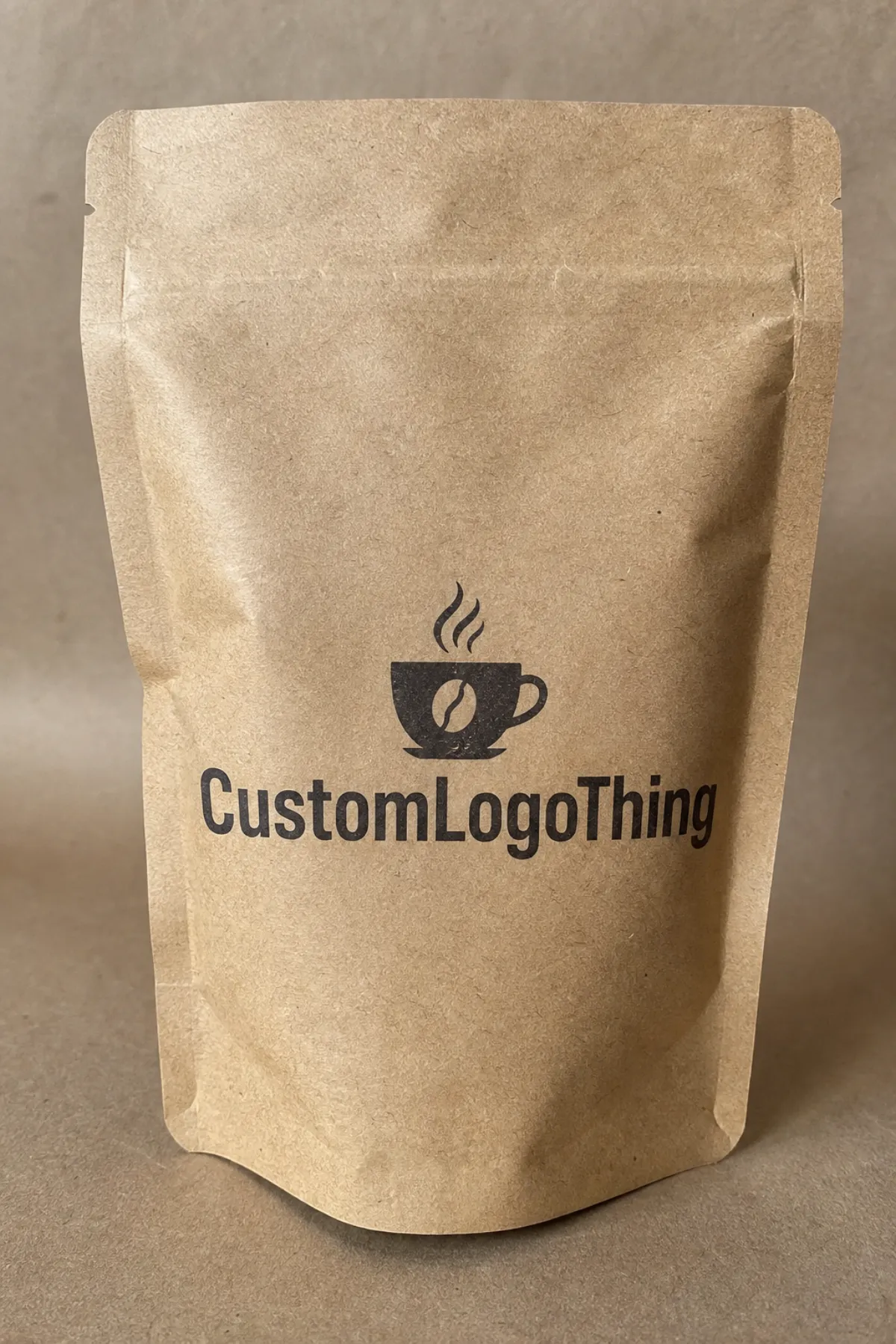
At first glance, custom kraft pouches for coffee communicate warmth, small-batch production, and a lower-gloss brand attitude. They feel less industrial than a shiny laminated film bag and more in step with a specialty roaster that wants to look deliberate rather than mass-market. That visual language matters. Yet the package still has to protect the product. A pouch that wins the eye and loses the aroma has not done its job.
Four forces work against roasted coffee: oxygen, moisture, light, and odor transfer. Coffee beans are sensitive to each one. Whole bean coffee can lose top-note clarity quickly if the seal is weak or the barrier is thin. Ground coffee is even more vulnerable because grinding increases surface area dramatically, which speeds up aroma loss and staling. Packaging design has to solve that technical problem before it solves the branding problem.
There is also a difference between the kraft look and the underlying construction. Some pouches use a paper face on the outside with a multi-layer barrier film hidden underneath. Others are built from recyclable mono-material structures that print or finish in a kraft style. A few are paper-heavy on the outside but not curbside recyclable because the paper is bonded to films that extend shelf life. The surface can look almost identical. The end-of-life path can be nothing alike.
Buyers usually end up making a practical tradeoff. Kraft can strengthen the brand story, but only if the seal, closure, and barrier layer suit the coffee format. A seasonal blend sold quickly through a local shop can tolerate a different structure than a single-origin lot that may sit in a cafe, warehouse, or subscription pipeline for weeks. The bag should match the sales cycle, not the mood board.
"A pouch that looks sustainable but fails to protect flavor is not sustainable in any practical sense. The coffee gets stale, the customer notices, and the package has done half its job."
Many roasters now treat the pouch as part of the product formula rather than a separate print purchase. That makes sense. Packaging choices influence aroma retention, shelf life, and customer perception as directly as roast profile or grind consistency. The package is not decoration around the coffee. It is part of how the coffee survives the market.
That view also changes how procurement works. A packaging buyer who only asks for size and artwork tends to miss the variables that matter most: oxygen transmission rate, water vapor transmission rate, closure reliability, and whether the line can actually run the pouch at speed. The suppliers who understand coffee will talk about more than print quality, because print quality alone does not keep a bag from going flat on the shelf.
How Custom Kraft Coffee Pouches Work
A coffee pouch is usually a layered system. The outer layer creates the print surface and shelf appearance. Beneath that sits the barrier layer, which slows oxygen and moisture transfer. The inner sealant layer supports heat sealing or zipper closure. Depending on the format, the pouch may also include a one-way valve, a tear notch, a tin tie, or a hang hole. Each of those features changes how the bag behaves in the real world.
That structure matters because roasted coffee keeps releasing carbon dioxide after roasting. Fresh beans can off-gas for days, and sometimes longer depending on roast level and storage conditions. A one-way degassing valve lets gas escape without letting outside air rush back in. Without that valve, pressure can build inside the pouch, which can distort the shape of the bag or stress the seal. With the right valve, the pouch stays tidy and the closure stays reliable.
Barrier performance is the quiet variable that often separates a bright cup from a flat one by the time the bag reaches the customer. Oxygen transmission rate, moisture protection, and odor barrier sound technical, but the outcome is easy to understand: a better barrier slows staling. Whole bean coffee keeps more of its aroma and sweetness. Ground coffee needs even more protection because volatile compounds disappear faster after grinding.
For buyers comparing structures, the material stack matters more than the marketing description. A paper/PE pouch, a paper/foil/PE pouch, and a mono-PE recyclable pouch can all be sold as "kraft" in casual conversation, yet they behave differently in production, storage, and disposal. A foil layer usually gives stronger barrier performance. A recyclable mono-material may be a better fit for a brand trying to simplify end-of-life claims. Neither option is automatically right for every roast profile or sales channel.
Different pouch shapes change both retail presence and shipping efficiency.
- Stand-up pouches display well on shelves and work well for direct-to-consumer orders and retail displays.
- Flat pouches can be economical for smaller fills, samples, or lighter products.
- Side-gusset bags offer a classic coffee silhouette and often stack efficiently in cartons and on pallets.
Printing and finishing on kraft surfaces deserve careful attention. Paper-like surfaces reflect light differently than white film, so colors often appear warmer, darker, or slightly muted. Deep greens, black line art, restrained typography, and strong contrast usually translate well. Pale tones and highly detailed illustrations can lose crispness if the print process is not tuned to the material. Matte finishes usually support the kraft aesthetic more convincingly than high gloss, which can make the bag feel less grounded.
There is no single correct format. A cafe-focused roaster may want a tin tie for quick resealing. A DTC brand may prefer a zipper and a stronger barrier. A fast-moving wholesale blend may benefit from a side-gusset bag that packs tightly, while a premium gift line may need a stand-up pouch that feels more presentation-ready. The structure should follow the sales channel and distribution path, not the other way around. That distinction sounds small until the first shipment arrives and the packing table slows down.
For broader packaging standards and sustainability context, industry references from organizations such as the Institute of Packaging Professionals and the Forest Stewardship Council help separate marketing language from material facts. Coffee packaging is crowded with claims. The useful ones are the claims that can be traced to the actual construction of the pouch.
Roasters also pay attention to shelf life testing because the market punishes assumptions quickly. A coffee that tastes lively on day one can seem dull after a few weeks if the barrier is weak or the storage environment is humid. Packaging is not a substitute for good roasting, but it can either preserve that roast or erase it. The difference often shows up first in aroma and then in repeat purchase rates.
Key Factors That Decide Whether Kraft Is the Right Fit
Product form comes first. Whole bean, ground, flavored, decaf, and single-serve coffee create different packaging demands. Whole bean coffee usually needs strong oxygen and odor protection, but ground coffee can be more sensitive because its aroma dissipates faster. Flavored coffee can be trickier still, since added aromatics can migrate or fade if the barrier is weak. A pouch that works for a quick-turn house blend may fall short for a slower specialty lot.
Roast level and sell-through speed matter too. A light roast sold quickly through a direct channel may be forgiving if the distribution path is short and controlled. A darker roast moving through several warehouses, retail shelves, and regional climate swings needs more protection. Hot freight lanes punish marginal packaging. So do humid storage rooms and warehouses with uneven temperature control. A buyer who has spent a summer receiving complaints about stale coffee rarely forgets that lesson.
Sustainability claims need discipline. "Kraft" does not automatically mean recyclable, compostable, or lower impact. Those are separate questions. Some structures are paper-forward. Some are fully recyclable depending on local infrastructure. Some are designed mainly for shelf appeal with a kraft face. If the goal is to reduce environmental impact, ask for the exact material stack, not just the visual finish. That keeps the packaging claims grounded and reduces the risk of greenwashing.
Brand positioning also matters. Kraft pouches often suggest artisan roasting, earthy sourcing, small-batch production, and lower-waste values. That works beautifully for many specialty brands. It can also clash with a premium price point if the artwork is too plain or the finish feels thin. A good package branding strategy uses kraft as a signal, not a substitute for quality. The design still needs hierarchy, legibility, and a clear reason to stand out in a crowded aisle.
A useful way to think about the decision is to ask what your customer sees first and what your logistics team has to live with after that. A cafe shopper may respond to texture and tone. A warehouse manager cares about case count, pallet stability, and whether the bags arrive intact. A subscription brand cares about aroma after transit. Custom kraft pouches for coffee can serve all three, but only if the structure matches the path the coffee actually travels.
Practical design variables to lock down early
These details sound small, but they shape the buyer experience and the cost structure:
- Window size - a clear window can show product, but too much exposure can undercut barrier performance and shelf consistency.
- Zipper style - press-to-close zippers are common, while some formats use slide zippers or no zipper at all.
- Valve placement - it should support degassing without interfering with artwork or branding.
- Label area - important for roast dates, lot codes, and compliance details.
- Case pack count - affects warehouse handling, freight efficiency, and retail replenishment.
- Filling equipment compatibility - a pouch must work with the line, not just the mockup.
One more practical lens matters for brands that sell beyond coffee. If your line includes product packaging across boxes, sleeves, and secondary shipper formats, the coffee pouch should feel like part of the same system. That does not mean every SKU has to repeat the same artwork. It does mean the visual language should be coherent enough that customers recognize the brand whether they are holding a pouch, a carton, or one of your custom printed boxes.
That consistency can also make internal operations easier. When the same brand architecture shows up on bags, cartons, and gift sets, the team has fewer decisions to make during reorder season. Artwork templates become simpler, and the risk of mismatched claims across SKUs drops. The packaging system starts to behave like a system instead of a pile of separate jobs.
Custom Kraft Pouches for Coffee: Cost, Pricing, and MOQ
Pricing usually follows a predictable pattern. Material construction sits near the top of the list. Print complexity comes next, followed by barrier performance, closures, valves, order volume, and shipping weight. The more custom the pouch, the more those variables shape the final number.
MOQ, or minimum order quantity, is often where buyers get surprised. Smaller runs carry a higher per-bag cost because setup, printing, and conversion expenses are spread across fewer units. Larger runs usually lower unit price, but they also increase cash tied up in inventory. That tradeoff matters more for coffee brands than for many other packaged goods because roast capacity, monthly sell-through, and seasonal blends can shift quickly. A roaster who only burns through a few hundred bags a month should not price a 10,000-unit order as if cash flow were unlimited.
Here is a practical pricing frame. These are directional ranges, not promises, and they change with print coverage, structure, and volume.
| Format | Typical Features | Indicative MOQ | Approx. Unit Price | Best For |
|---|---|---|---|---|
| Label-ready kraft pouch | Stock base, simple branding, zipper optional | 500-2,000 | $0.18-$0.32 | Small roasters, test SKUs, short runs |
| Custom printed kraft stand-up pouch | Printed design, zipper, tear notch, optional valve | 3,000-10,000 | $0.28-$0.55 | Main retail line, DTC, cafe shelves |
| Kraft side-gusset bag | Classic coffee profile, valve, top seal, optional tin tie | 5,000-15,000 | $0.30-$0.60 | Wholesale, larger formats, pallet-friendly packing |
| Premium custom pouch | Special finishes, stronger barrier, zipper, valve, high coverage print | 5,000+ | $0.40-$0.75 | Premium coffee, gifts, high-margin retail |
Compare those numbers with jars, tins, and plastic laminate bags, and the cheapest sticker price is not always the cheapest total cost. Glass jars add weight and breakage risk. Tins can look excellent but are expensive to ship. Heavier packaging also raises freight expense, which becomes visible fast at scale. Kraft pouches usually win on shipping efficiency and shelf display, even if the unit price is not the lowest line item in the quote.
A solid quote request should separate the following:
- Unit cost for the pouch itself.
- Setup or plate fees if the print method requires them.
- Freight from factory or distributor to your location.
- Sample charges for physical proofs or test runs.
- Testing costs if barrier or fit validation is needed.
That breakdown matters because a low pouch price can hide a high landed cost. Buyers often compare only unit price and then discover the freight was heavier than expected, or the setup fee was large enough to change the economics. A full landed-cost view gives a much clearer picture of the purchase. It also protects against the common mistake of approving a cheap-looking structure that forces extra handling on the packing line.
One more budget point deserves attention: if the package is meant to support a premium retail price, the cost of a failed run is far higher than the cost of samples. A few sample units and one filled trial often save more money than they cost. Packaging buyers who skip that step usually learn the hard way that art approval is not the same thing as product approval.
Production Process and Timeline for Custom Kraft Pouches
The production path usually starts with a brief and ends with freight, but the details between those two points decide whether the order runs smoothly. A good workflow includes product specs, material selection, artwork preparation, proofing, sampling, production, inspection, packing, and shipment. Each step can move quickly if the inputs are clean. Each step can stall if the artwork or structure is vague.
- Define the brief - bag size, coffee format, fill weight, closure, valve, finish, and target price.
- Choose the structure - kraft-faced, paper-forward, recyclable mono-material, or multi-layer barrier.
- Prepare artwork - include brand marks, legal copy, barcode, and roast date area.
- Review proof - check color, placement, seal margins, and panel orientation.
- Approve samples - test with actual coffee if possible.
- Run production - confirm print quality, sealing, and counts.
- Inspect and ship - verify cartons, lot numbers, and damage control.
What slows the schedule most often? Artwork revisions, custom color matching, changes to structure after proofing, and waiting for sample approval. A buyer may assume the bag is nearly finished and then lose a week because the barcode sits too close to a fold line or the legal text disappears against the kraft background. Those errors are minor in the abstract. They become expensive once production starts.
Lead times vary by supplier and order type. Stock-based options can move faster because the base pouch already exists and only the branding changes. Fully custom printed programs usually need more time for tooling, proofing, and run setup. A realistic planning window is often 10-15 business days for simpler stock-based programs and 15-30 business days or more for fully custom printed runs after proof approval, plus transit time. Complex artwork or a new structure adds more time. Build in a buffer rather than betting the launch on a perfect calendar.
Approval checkpoints are not paperwork for the sake of paperwork. They are where the problems that escape a screen mockup usually appear: barcode placement, seal alignment, zipper operation, and legal copy clarity. A bag that looks fine on a laptop can look wrong on a pallet. A bag that seals on one test unit can fail when the line runs at full speed. Physical review catches what digital approval misses.
The safest launch schedules are built backward from roasting, filling, and retail delivery dates, not from the day the quote arrives. That sounds obvious until the calendar gets tight. Coffee brands live inside recurring production cycles, and packaging delays can ripple into inventory shortages very quickly. A two-day delay on pouches can become a missed shipment window, which then becomes a stockout on the shelf two weeks later.
For context on shipping and handling expectations, the transit side of packaging can matter as much as print quality. The International Safe Transit Association publishes widely used test standards that help verify whether packages survive distribution stresses. Even a beautiful pouch still has to make the trip from converter to warehouse to shelf without damage.
Experienced buyers often ask for a simple filled-line trial before full approval. That step reveals whether the seal width is adequate, whether the valve placement interferes with a filling nozzle, and whether the bag stands well after filling. Those questions are far cheaper to answer on 100 units than on 10,000.
Common Mistakes When Buying Kraft Coffee Pouches
The first mistake is assuming a natural-looking pouch is automatically a good coffee package. The visual signal is easy to like. Aroma retention is harder to measure. A kraft face can communicate sustainability, but it cannot rescue a weak seal or a thin barrier layer. If freshness is the promise, the package has to defend that promise in actual storage conditions.
The second mistake is under-specifying barrier needs. Premium beans that stay in inventory longer, or coffee that travels through hot and humid distribution routes, need stronger protection than a quick-turn local program. The difference shows up in the cup. In many cases, the buyer does not notice the issue until customers begin saying the flavor seems muted or the aroma fades sooner than expected. By then, the same packaging choice can be hurting repeat purchases.
The third mistake is ignoring filling equipment compatibility. A pouch can look ideal in a mockup and still jam a line. Seal geometry, pouch width, zipper profile, and valve placement all affect how smoothly the bag runs through filling and sealing equipment. If the line is manual, the pouch still has to be easy to open, fill, and close without slowing operators down.
Branding mistakes are common too. Kraft surfaces are usually more forgiving for earthy, minimal designs than for ultra-bright, delicate artwork. Thin type can disappear. Low-contrast logos can turn muddy. Labels need enough room to carry lot codes, roast dates, origin notes, and regulatory copy without crowding the front panel. Good branding on kraft is not about filling every inch. It is about designing for the material already chosen.
Cost traps show up all the time. Some buyers order a low MOQ just to test the waters, then discover the unit cost is too high for the target margin. Others skip samples to save a few hundred dollars and pay for the mistake later in wasted inventory. A pouch should be checked for seal quality, stackability, shipping performance, and print clarity before a full order goes live. That testing is not optional if the packaging supports a premium product price.
Another common miss is treating sustainability language as if it were a design asset rather than a claims issue. If a pouch is only paper-faced, that does not automatically make it recyclable. If a supplier says a structure is compostable, ask whether that claim is certified and what conditions are required. Industrial compostability and home compostability are not the same thing, and a vague claim can create more confusion than trust.
One useful rule holds up across categories: if the coffee is expensive enough to require strong brand presentation, the package should be tested like a real product, not approved like a graphic file. That sounds harsh. It is simply how packaging risk works. The cost of one failed launch usually exceeds the cost of a few deliberate checks.
Expert Tips and Next Steps for Coffee Brands
Start with a one-page packaging brief. Keep it concrete. Include roast level, bean or ground format, fill weight, bag size, valve need, zipper style, sustainability goals, target unit cost, and expected monthly volume. That brief makes supplier conversations sharper and cuts down on the back-and-forth that usually burns time early in the project.
Request two or three pouch options side by side whenever possible. Compare shelf presence, seal quality, and perceived value. A spec sheet can tell you one structure has a better barrier than another, but it cannot tell you which one feels more credible to a buyer standing in front of a shelf. Packaging design lives in both engineering and instinct. You need both to make the right call.
Test with real coffee, real fill weights, and real retail conditions. A pouch that feels fine in a sample room may behave differently once it is filled, sealed, stacked, and displayed under store lights. If possible, keep a few units in a warm area and a few in a controlled environment, then compare aroma and seal performance over time. That kind of check is simple, but it reveals more than a digital proof ever will.
It also helps to build a launch checklist before the first shipment arrives:
- Artwork approved with barcode and legal copy checked.
- Sample tested with actual coffee.
- Warehouse labels ready for intake and storage.
- Reorder plan set before inventory gets tight.
- Sustainability claims reviewed against the exact material spec.
If your brand uses several formats, keep the visual system aligned across coffee bags, secondary cartons, and promotional packs. That is where branded packaging starts to create real recognition. The pouch should not feel like a side project separate from your broader retail packaging or product packaging line. It should feel like the same brand speaking through a different material.
For brands building a more complete packaging system, it helps to think beyond the pouch alone. Coffee often ships in corrugated cartons, subscription mailers, and sometimes custom printed boxes for gift sets or wholesale packs. A consistent visual logic across those formats makes the brand feel more established, even if the team is still small.
Shortlist suppliers, request samples and quotes, and compare which custom kraft pouches for coffee actually balance freshness, cost, and brand story. That balance is the real brief. Not the color of the paper. Not the trend language. The balance. If the answer is still unclear after a quote, ask for film specs, seal samples, and a filled test run before you approve artwork. That order of operations saves more launches than a polished presentation ever will.
FAQ
Are custom kraft pouches for coffee actually recyclable?
Only some are recyclable, and the kraft look on the outside does not tell you enough. Recyclability depends on the full material structure, including the inner barrier layer, sealant layer, and any zipper or valve components. Ask for the complete film specification and the supplier's recycling guidance before making any environmental claim. If the structure uses mixed materials, that should be disclosed clearly.
Do kraft coffee pouches keep beans fresh as well as foil bags?
They can, if the barrier layer and seal quality are strong enough for the coffee's shelf-life needs. Freshness depends more on oxygen and moisture protection than on the outer kraft layer itself. For specialty coffee, request barrier data and sample testing rather than assuming the package is adequate. A well-made kraft pouch can perform very well; a weak one can fail quickly.
What is the usual MOQ for custom kraft pouches for coffee?
MOQ varies by supplier, pouch size, and print method, so there is no universal minimum. Lower MOQ usually means a higher unit cost because setup is spread across fewer bags. Ask whether the vendor offers stock bases, digital print options, or staged ordering to reduce upfront volume. That can be useful for seasonal blends or pilot launches.
How long does it take to produce custom kraft coffee pouches?
Lead time depends on whether the pouch is stock-based or fully custom printed. Artwork approvals, sample review, and shipping all affect the final timeline. Build extra time if you need structural changes, special finishes, or first-run testing. A realistic schedule also needs room for small corrections after proofing.
What should I include in a quote request for coffee pouches?
Include bag size, coffee format, target order quantity, valve and zipper needs, and print details. Add your sustainability goals so the supplier can recommend the right material structure. Request a breakdown of unit cost, setup fees, freight, and any sample charges so pricing is easy to compare. If you know the filling equipment model, include that too.
Custom kraft pouches for coffee work best when the buyer treats them as a quality-control tool, a sales tool, and a brand signal all at once. That is a demanding brief, and it is the correct one. If the pouch preserves freshness, supports the shelf story, fits the filling line, and stays within the landed-cost target, it earns its place. The practical next step is not choosing the prettiest bag. It is choosing the structure that matches your roast, your route to market, and the time the coffee must survive before the first cup is brewed.

